Escalating cross-border hostilities between Israel and Hezbollah in southern Lebanon have triggered fresh urgent warnings from the United Nations, with global officials emphasizing that unrelenting exchanges of fire are putting civilian lives at grave risk and unraveling fragile regional de-escalation efforts. The unfolding violence is closely tied to the broader Israel-Iran conflict that has pulled neighboring states and armed factions into an expanding crisis, leaving Lebanese civilian populations to bear the worst consequences of intensifying clashes.
In defiance of widespread international calls for an immediate end to hostilities, military activity along the Israel-Lebanon border spiked dramatically earlier this week. New data from the United Nations Interim Force in Lebanon (UNIFIL) reveals that over a 16-hour window on Tuesday, nearly 500 projectiles crossed the UN-demarcated Blue Line separating the two countries.
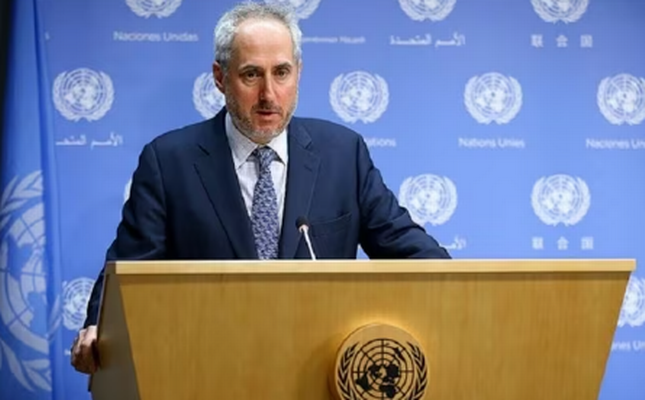
During a Wednesday press briefing, Stéphane Dujarric, spokesperson for UN Secretary-General, confirmed that UNIFIL peacekeepers continue to document heavy aerial activity and near-constant fire exchanges across southern Lebanon, all within the mission’s official area of operations. “As we stressed during the emergency Security Council session yesterday, we call on all parties to exercise maximum restraint and fully adhere to the cessation of hostilities that was agreed to,” Dujarric stated.
Breaking down the latest toll of military activity, Dujarric shared that between midnight and 4 p.m. local time Tuesday, UNIFIL tracked 478 separate projectile trajectories. Of those, 468 were traced to the Israel Defense Forces (IDF), while 10 were linked to Hezbollah. The mission also confirmed nine Israeli airstrikes and 46 separate violations of Lebanese sovereign airspace during the same period.
Tuesday’s surge in violence came on the heels of an even more intense day of clashes Monday, when UNIFIL recorded 702 projectile launches from IDF positions and an additional 47 firings from Hezbollah. Peacekeepers reported large-scale air operations and strikes that damaged critical road infrastructure across both sectors of UNIFIL’s area of responsibility.
The sustained escalation, which includes heavy artillery shelling, mortar attacks and rocket fire, has raised urgent security concerns for both local civilians and UN peacekeeping personnel deployed to the region. In two separate recent incidents, UNIFIL forces themselves came under threat. On May 31, two machine gun rounds hit a prefabricated accommodation block in the mission’s Sector East, penetrating three rooms. No peacekeepers were injured, as personnel assigned to the building had already moved to shelter. A second incident on Monday saw an intercepted IDF drone detonate over a UNIFIL position southwest of Naqoura, with no reported injuries or infrastructure damage. Both incidents remain under active UN investigation.
Even amid mounting security risks, UN peacekeeping personnel have continued their critical humanitarian work to support conflict-affected communities. On Tuesday, UNIFIL coordinated two aid delivery missions to the hard-hit Lebanese city of Tyre in partnership with the UN Office for the Coordination of Humanitarian Affairs (OCHA). On Wednesday, Italian peacekeepers formally donated an ambulance and a stockpile of essential medical supplies to the Lebanese Armed Forces Military Hospital in Badaro, Beirut, at a ceremony attended by UNIFIL Force Commander Major General Diodato Abagnara.
Looking ahead, a revised UN Flash Appeal for Lebanon will be launched Friday in Beirut by Imran Riza, UN Humanitarian and Resident Coordinator, and Lebanese Prime Minister Nawaf Salam. The updated appeal will seek additional funding to scale up life-saving aid for vulnerable Lebanese communities impacted by the ongoing conflict. Dujarric also provided a funding update for the original Flash Appeal, launched in March with a target of $308.3 million. As of early June, donor contributions have reached $185.9 million, covering approximately 60 percent of the total requested funding.