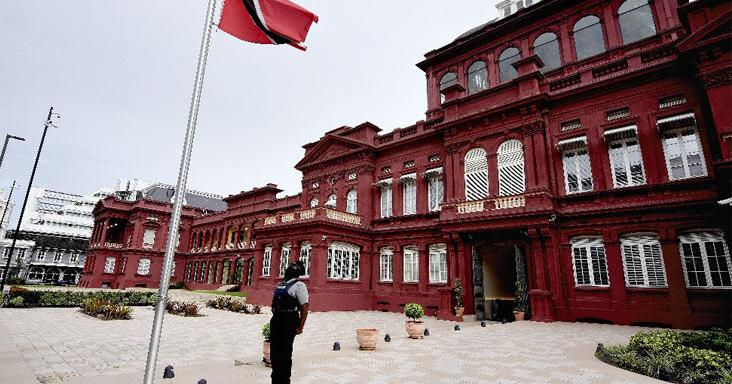
On May 27, 2026, Trinidad and Tobago’s Police Commissioner Allister Guevarro signed a new Emergency Powers Order that has reshaped the parameters of public protest across the twin-island nation. The order creates 500-meter no-protest buffer zones surrounding 15 critical state and security institutions, a policy that has ignited fierce debate over civil liberties and state security amid an ongoing national state of emergency.
The protected sites listed under the new regulations include key government hubs such as the Parliament building, Office of the President, Office of the Prime Minister, and the Ministry of Finance; core security infrastructure including all police stations, national prisons, army bases, the TTPS Police Headquarters, and the Office of the Director of Public Prosecutions (DPP); and key transportation assets including Piarco International Airport, ANR Robinson International Airport, and the Port Authority of Trinidad and Tobago. This marked a notable shift from earlier state of emergency (SoE) rules, which focused broadly on curfews, expanded police detention powers, and general public order, without the targeted, detailed list of restricted locations for protest activity that the new order establishes.
Guevarro’s order was signed on the same day that supporters of Kaia Sealy held an unauthorised demonstration outside the DPP’s office in Port of Spain. The protest was part of the group’s ongoing “19 Bullets, 19 Protests” campaign, launched after a January 20 police-involved shooting in St Augustine. The incident, which unfolded following a police chase, left Sealy’s common-law husband Joshua Samaroo dead and Sealy wounded. Authorities dispersed the Wednesday demonstration, and three people including protest organiser Allysa Phillip were taken into custody. Prior to the protest, the Trinidad and Tobago Police Service (TTPS) had publicly stated that no official permission had been granted for the gathering, warning that any unauthorised assembly during the SoE would be treated as a violation of emergency regulations.
Prime Minister Kamla Persad-Bissessar publicly criticised the demonstrators on the day the order was signed, accusing participants of intentionally provoking police and seeking undue media attention. The current SoE first entered into force on March 3, 2026, and was extended for an additional three months by Parliament 10 days later. It is currently scheduled to expire in June 2026, though the Prime Minister has already indicated she supports a further three-month extension if the National Security Council recommends the move. The SoE was originally declared to address widespread gang violence across the nation.
The new no-protest zone policy has drawn divided reactions from legal and political figures. Attorney and temporary People’s National Movement Senator Larry Lalla, SC, condemned the order as an overreach of executive power. In a social media statement, Lalla argued that the blanket ban on all protest activity within the buffer zones—including protests outside Parliament—was not a proportional use of the Police Commissioner’s emergency powers, given the SoE’s stated narrow goal of curbing gang violence. He stressed that the policy violates core constitutional rights guaranteed to Trinidad and Tobago citizens, including freedom of thought, freedom of expression, and the right to share political dissent, noting that even small, single-person peaceful protests are prohibited under the new order.
However, Israel Khan, SC, president of the Criminal Bar Association, defended the policy as a reasonable and justified measure during the temporary state of emergency. Speaking to local outlet *Express*, Khan called the Commissioner’s decision “sagacious,” arguing that the restrictions are necessary to maintain public order at critical state sites and prevent disruptive action that could sow confusion across government operations. Khan clarified that he fully supports the right to peaceful protest, freedom of expression, and freedom of the press, but added that no small group has the right to disrupt the day-to-day peaceful function of the country for their own publicity. He added that any parties who believe the order oversteps state authority have access to judicial review, noting that democratic processes remain in place to resolve the dispute. Khan also noted that while Sealy faces pending criminal charges, that does not equal a finding of guilt — a determination that will be made exclusively by the courts, as is required under the rule of law.