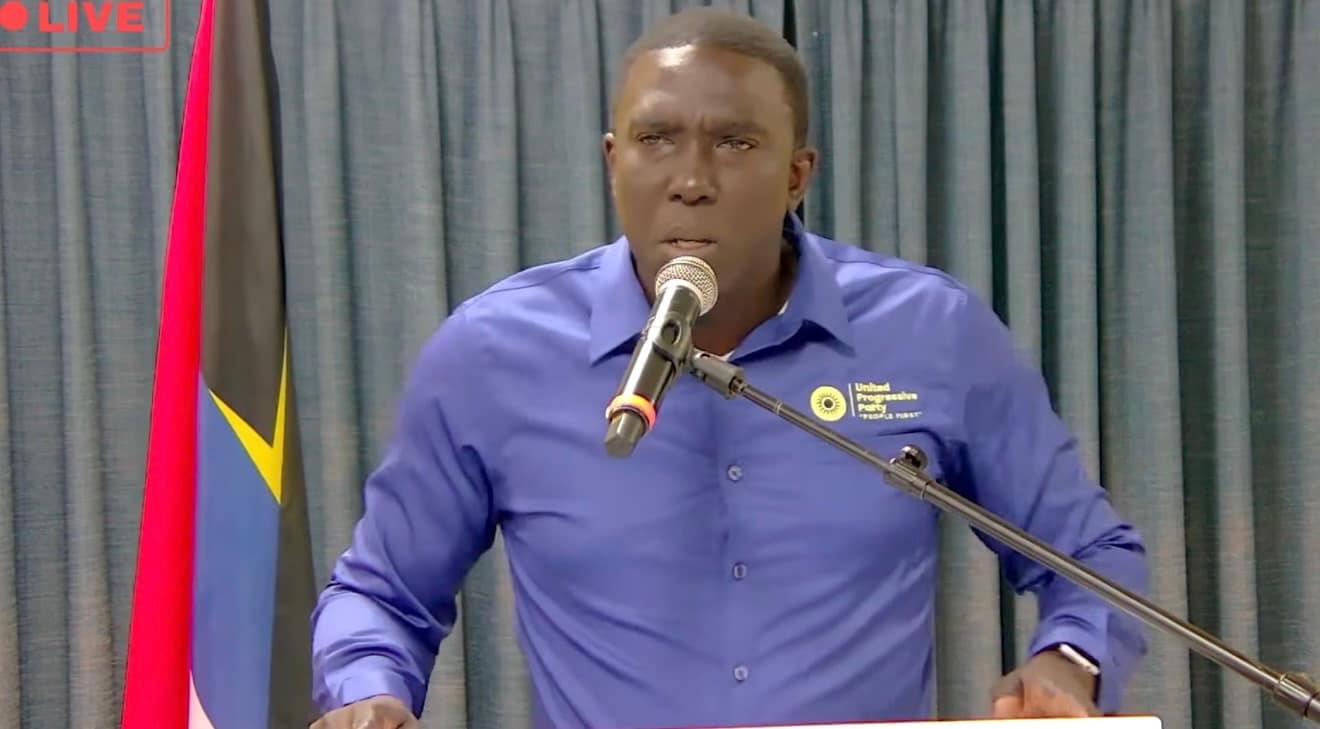
As Antigua and Barbuda approaches a general election, sitting Prime Minister Gaston Browne has sounded a sharp alarm over the opposition United Progressive Party (UPP)’s flagship campaign pledges, arguing the unfunded policy slate threatens to collapse the nation’s public finances and trigger widespread economic disruption.
Speaking during an appearance on the popular local Pointe FM’s Browne and Browne Show, Browne broke down the full cost of the opposition’s commitments, which combine targeted tax cuts and expansive public sector pay hikes to a staggering total of $250 million. The critical flaw, he emphasized, is the UPP’s complete failure to outline any matching revenue-generating measures to offset these massive expenditures.
“Not a single revenue-raising initiative has been put forward by the UPP to cover these giveaways,” Browne told listeners. “If there’s no compensatory revenue stream, how can any government justify handing out even one cent in tax cuts or pay increases?”
Two of the opposition’s most high-profile proposals sit at the center of Browne’s criticism: a broad cut to vehicle taxes, which he estimates would cost the public purse $50 million annually, and a pledged across-the-board salary increase for public servants that would add more than $100 million to annual government spending. Combined with other smaller commitments, the total hits the $250 million mark – a sum Browne says would blow a massive hole in the country’s existing fiscal balance sheet, worsening the current deficit far beyond sustainable levels.
If implemented, Browne argued, these unfunded promises would leave the government with no option but to take on massive new levels of national debt to cover operating costs. Over time, that ballooning debt would erode the government’s ability to meet its core payroll obligations, ultimately leading to public sector layoffs even for the workers the UPP claims to support.
“What you get is a larger deficit, and that means your debt explodes,” Browne said. “If revenues keep falling short of spending, at the end of the day public sector workers could face retrenchment. This isn’t a guess – we’ve seen what happens when UPP puts these unworkable policies in place.”
Browne drew a direct parallel between the current UPP proposal and the party’s previous time in national office, claiming that tenure resulted in roughly 10,000 lost jobs across the country. “We have seen this movie before,” he said, warning that a repeat of that economic turmoil would follow if voters hand the UPP power again. He dismissed the entire opposition platform as an empty illusion designed only to win votes, with no plan to deliver on its promises long-term. “This is a mirage. You’re chasing something that is not real,” he added.
In contrast to the opposition’s approach, Browne outlined his own administration’s deliberate, fiscally responsible strategy for raising worker pay centered on a gradual transition from a minimum wage to a full “livable wage” for all public sector employees. The government’s plan targets a minimum monthly earnings floor of roughly $2,200 for public servants, with adjusted roles and reclassified positions seeing pay rise to close to $2,500 per month.
Browne confirmed that the Ministry of Finance is currently in active negotiations with public sector unions to finalize the size and timeline of these increases, stressing that the phased approach is fully achievable within the country’s current fiscal framework. “We believe that that type of adjustment is doable,” he said.
Even so, he acknowledged that all wage adjustments require careful fiscal management, noting that any increase to the minimum wage triggers corresponding pay adjustments across every public sector pay scale to maintain internal parity, pushing the total cost well above $100 million. Without dedicated new revenue to cover that cost, Browne argued, even well-intentioned pay hikes become unaffordable and put economic stability at risk.
Ahead of the upcoming general election, Browne urged voters to carefully evaluate the long-term fiscal impact of every party’s policy proposals, warning that short-term campaign giveaways that lack sustainable funding can ultimately leave the country and its workers far worse off.