标签: Trinidad and Tobago

特立尼达和多巴哥

  • A calling to tell people’s stories

    A calling to tell people’s stories

    After nearly two decades of dedicated journalism, photojournalist Angelo Marcelle is reflecting on an extraordinary career built on immersive storytelling that transcended conventional reporting. Since 2005, Marcelle has pursued what he describes as both a calling and a responsibility—documenting the diverse human experiences that define his nation through firsthand participation rather than mere observation.

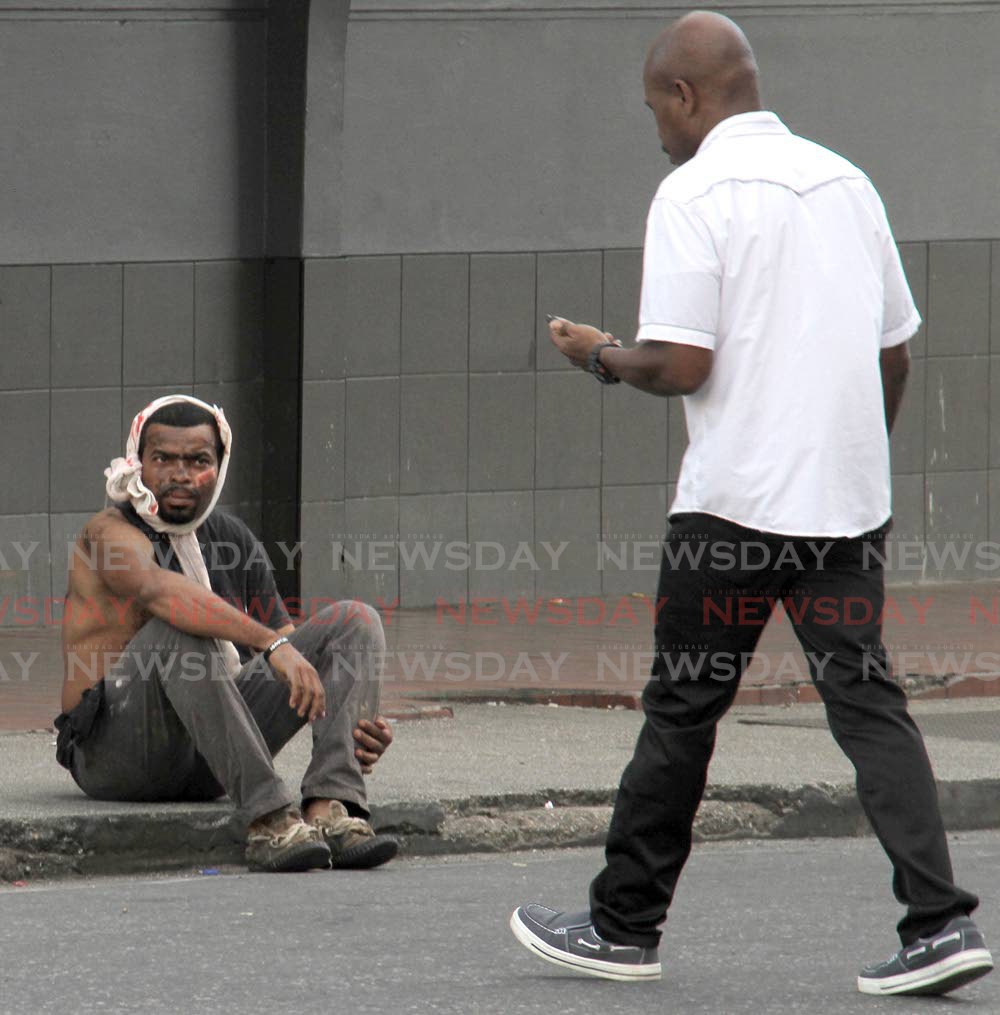
    Marcelle’s methodology involved extraordinary immersion into marginalized communities. He spent nights homeless on the streets of Arima, not for dramatic effect but to genuinely comprehend the isolation, hunger, and resilience that characterize street life. His commitment extended to working as a sanitation laborer, performing grueling waste collection under intense heat to highlight the undervalued workers who maintain urban cleanliness without adequate recognition.

    In one particularly powerful experiment, the journalist confined himself to a wheelchair to navigate Arima’s infrastructure, directly experiencing the physical barriers and accessibility challenges that disabled citizens confront daily. These experiential investigations fundamentally transformed Marcelle’s perspective, cultivating what he describes as empathy that transcends statistical reporting and headline journalism.

    Throughout his career, Marcelle maintained that authentic journalism must honor human narratives, amplify silenced voices, and challenge systemic failures. His work represents a fusion of photojournalism and social advocacy, creating documentary evidence that both informs and inspires societal reflection. The journalist credits his readers with giving purpose to these stories through their engagement, discussion, and shared concern for the communities he documented.

    Marcelle’s approach demonstrates how journalism can serve as a bridge between segregated social realities, fostering greater understanding through empathetic immersion and visual storytelling that respects both its subjects and audience.
  • The ‘newbie’ who ‘got the shot’ behind the lens

    The ‘newbie’ who ‘got the shot’ behind the lens

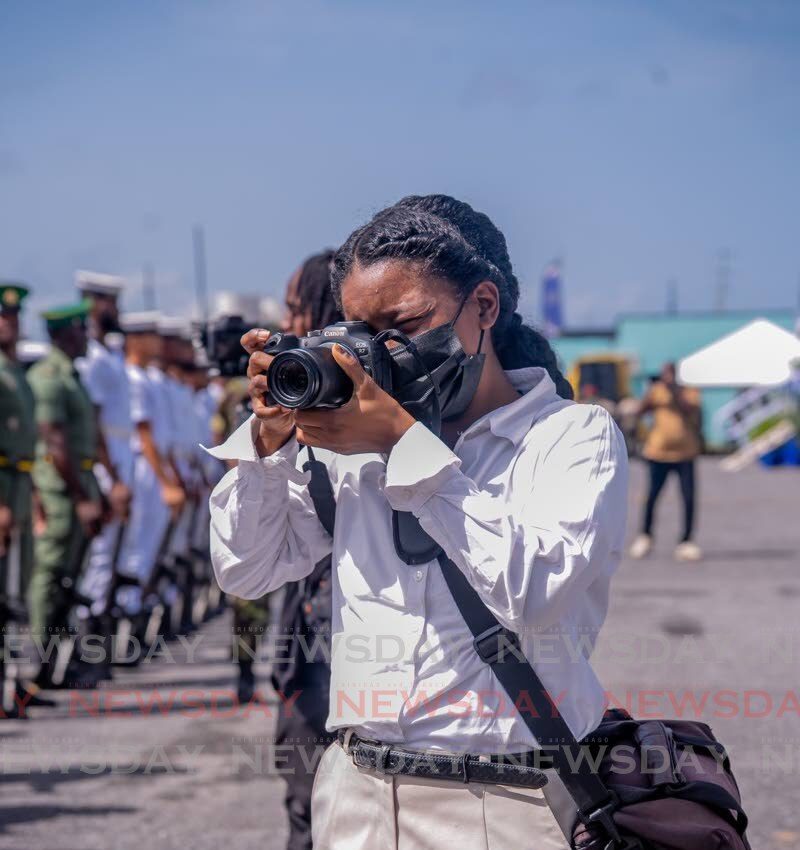
    Faith Ayoung, Newsday’s youngest photographic recruit who joined the organization on January 3, 2024, has reflected on her transformative journey from university graduate to seasoned photojournalist. Her career began during one of Trinidad and Tobago’s most significant state events—the funeral of former Prime Minister Basdeo Panday—which she describes as a ‘baptism of fire’ rather than a conventional introduction to journalism.

    Under the mentorship of then-Chief Photographer Jeff K Mayers, Ayoung learned to navigate the complexities of major event coverage, from capturing crowd reactions and atmospheric details to documenting the core proceedings of a state funeral. The emotional and physical exhaustion of that first major assignment became a recurring theme throughout her tenure, with days spent ‘running, hopping, climbing, and brisk walking’ across Port of Spain to secure the perfect shot that could tell a thousand words.

    Ayoung credits her growth not only to photographic development but also to acquiring writing skills with the support of colleagues including Debra Greaves, Carol Quash, Veela Mungal, Angelo Marcelle, Paula Lindo, and Melissa Doughty. She particularly acknowledges Melanie Waithe for enduring her constant queries and the broader team of sub-editors, reporters, and management who supported her journey.

    The photographer expressed profound gratitude for the opportunity to work alongside what she describes as ‘an amazing group of talented and naturally gifted individuals.’ She concluded with optimistic anticipation for her colleagues’ future endeavors, hoping they would continue to ‘dance and celebrate blessings’ in their next chapters, just as they did at their farewell gathering on January 27.

  • US lawsuit alleges Trinidadian men were unlawfully killed

    US lawsuit alleges Trinidadian men were unlawfully killed

    In a landmark legal action, the families of two Trinidad and Tobago citizens killed in a US military strike have filed a wrongful-death lawsuit against the United States government. The case, lodged in the US District Court for the District of Massachusetts on January 27, challenges the legality of America’s maritime security operations in the Caribbean region.

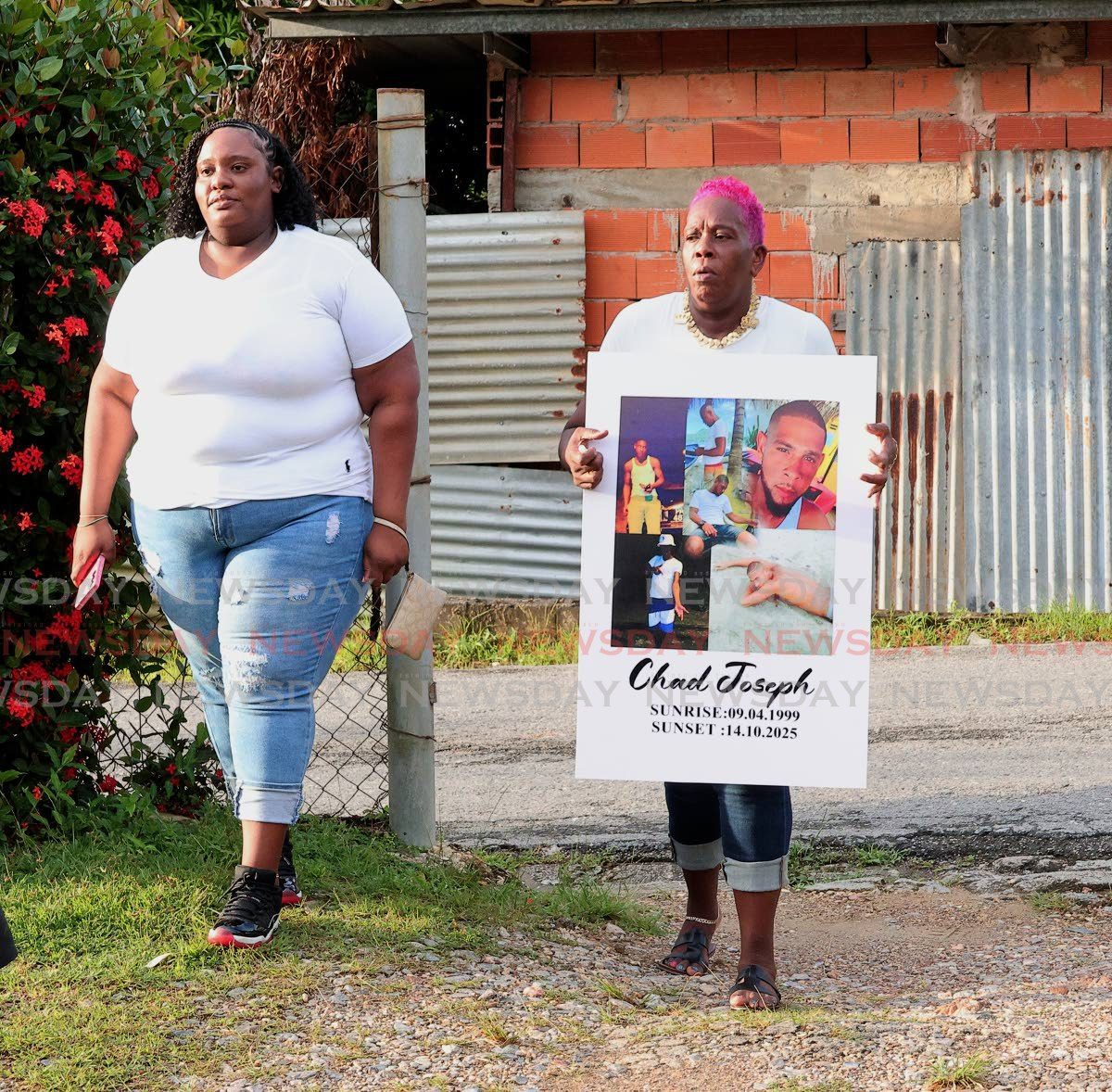
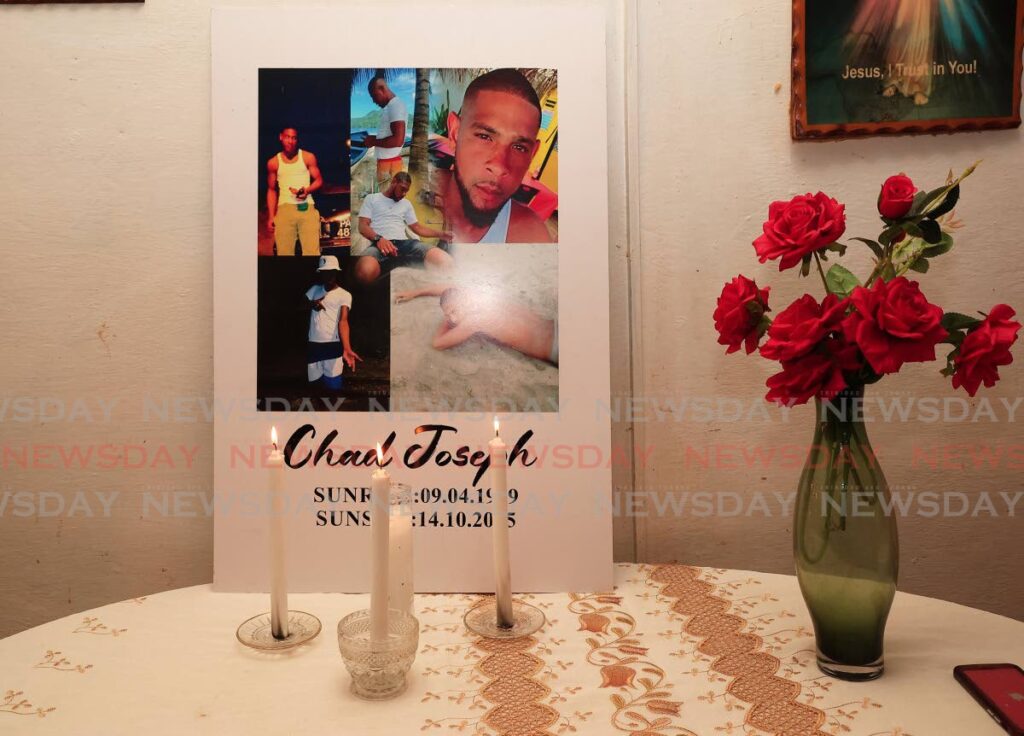
    The plaintiffs allege that a October 14, 2025 missile attack destroyed a civilian vessel traveling from Venezuela toward Trinidad, resulting in the deaths of all six persons aboard. Among the victims were Chad Joseph, 26, and Rishi Samaroo, 41, both residents of Las Cuevas who their families maintain were returning from legitimate fishing and agricultural work in Venezuela.

    Legal representatives for the families are pursuing compensation under the Death on the High Seas Act and the Alien Tort Statute, contending the strike constituted both wrongful death and extrajudicial killing under international law. The suit invokes the Suits in Admiralty Act to overcome sovereign immunity protections typically afforded to the US government.

    According to court documents, the incident formed part of what plaintiffs describe as an ‘unprecedented’ military campaign initiated in September 2025, involving approximately 36 armed attacks on maritime vessels in Caribbean and eastern Pacific international waters. The lawsuit estimates these operations resulted in roughly 125 casualties.

    The complaint references former President Donald Trump’s public acknowledgment of authorizing the October 14 strike via social media, including shared footage showing a stationary boat being destroyed by munitions. Families maintain neither Joseph nor Samaroo presented any imminent threat, and their vessel was unequivocally civilian in nature.

    US officials have previously defended such strikes as lawful operations within a non-international armed conflict against regional drug cartels. Government representatives have cited a classified Office of Legal Counsel memorandum purportedly supporting this legal position.

    The families’ lawsuit systematically dismantles this justification, arguing drug trafficking does not constitute armed conflict under international humanitarian law. The filing emphasizes that neither victim had documented connections to criminal organizations, noting Trinidadian authorities have publicly stated they possess ‘no information linking Joseph or Samaroo to illegal activities.’

    The legal action seeks not only financial compensation but also accountability for senior officials who authorized the strikes. It represents a significant challenge to the legal frameworks governing maritime security operations and the boundaries of lethal force in counter-narcotics missions.

  • How taxes impact air connectivity in the Caribbean

    How taxes impact air connectivity in the Caribbean

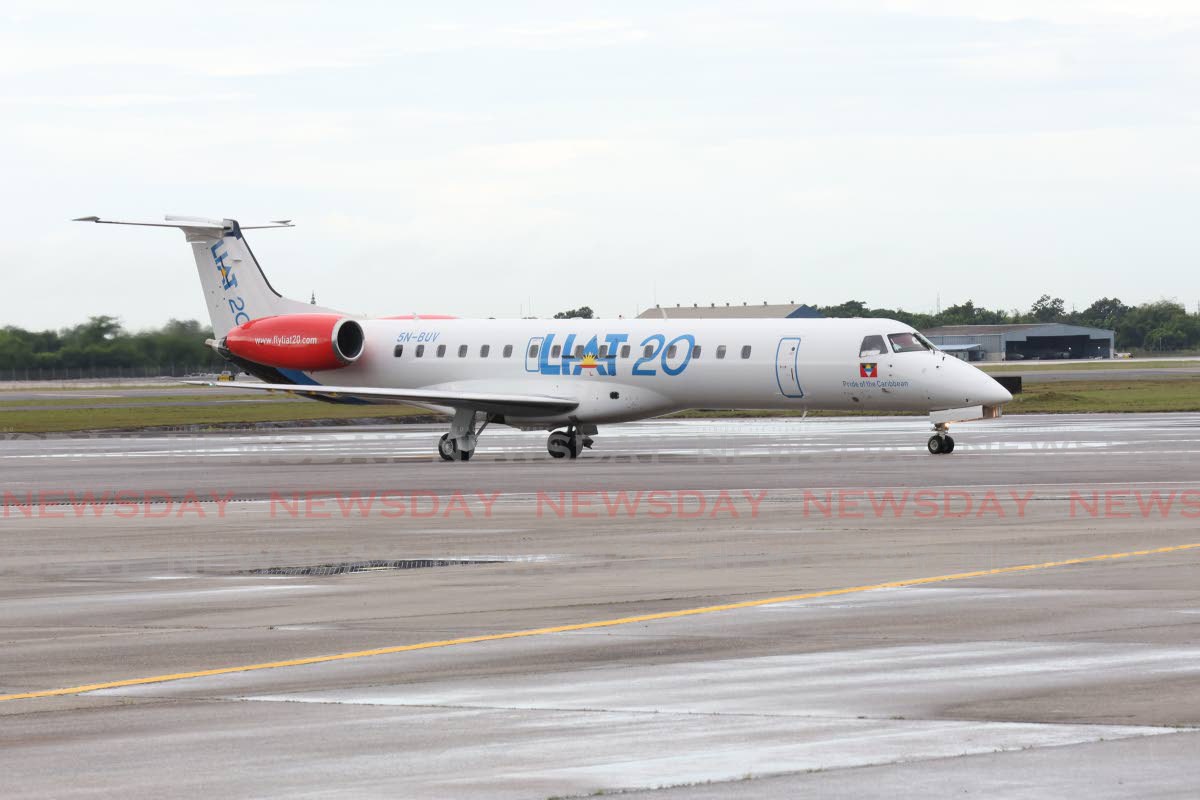
    The Caribbean aviation sector faces mounting pressure as airlines and industry leaders decry exorbitant taxation rates that threaten regional connectivity. Windward Islands Airways International NV (Winair) has launched cautious twice-weekly service between Trinidad and Sint Maarten, with CEO Hans van de Velde acknowledging the challenging economic landscape. ‘Operating an airline in this region is inherently expensive,’ van de Velde stated, revealing that approximately 50% of their introductory $200 one-way fare consists of government taxes.

    This taxation crisis isn’t new. Since at least 2018, when CaribSKY alliance members first raised concerns, regional carriers have struggled with escalating fees. LIAT 1974 documented a startling 56% increase in taxes between 2009-2016 while base fares rose merely 3%. The consequences are stark: annual passenger numbers plummeted from one million to 750,000, with taxes identified as the primary deterrent.

    The International Air Transport Association (IATA) has issued stern warnings, noting Caribbean destinations risk pricing themselves out of the global market. While global taxes average 15% of ticket prices, Caribbean routes endure 30-50% taxation—significantly higher than competing destinations like Cancun (23%). IATA’s Peter Cerdá emphasized that modern travelers prioritize total cost, making the Caribbean increasingly uncompetitive.

    At the recent State of the Tourism Industry Conference in Barbados, the tax dilemma dominated discussions. Barbados Tourism Minister Lisa Cummins defended the fees as necessary for infrastructure funding, acknowledging the challenge of reducing taxes without compromising service quality. Meanwhile, LIAT Air CEO Hafsah Abdulsalam stressed the urgent need for efficiency improvements and tax reform to enable regional expansion plans, including future routes to South America and Africa.

    A Caribbean Development Bank working paper from 2018 remains critically relevant, recommending reductions in both aviation taxes and airport charges to stimulate connectivity. The report highlighted that high costs particularly distort intra-regional travel markets, where demand proves highly price-sensitive. Without intervention, the Caribbean’s aviation ecosystem risks further contraction, potentially isolating islands and undermining tourism recovery efforts.

  • Undercover cooler fete full of vibes, energy

    Undercover cooler fete full of vibes, energy

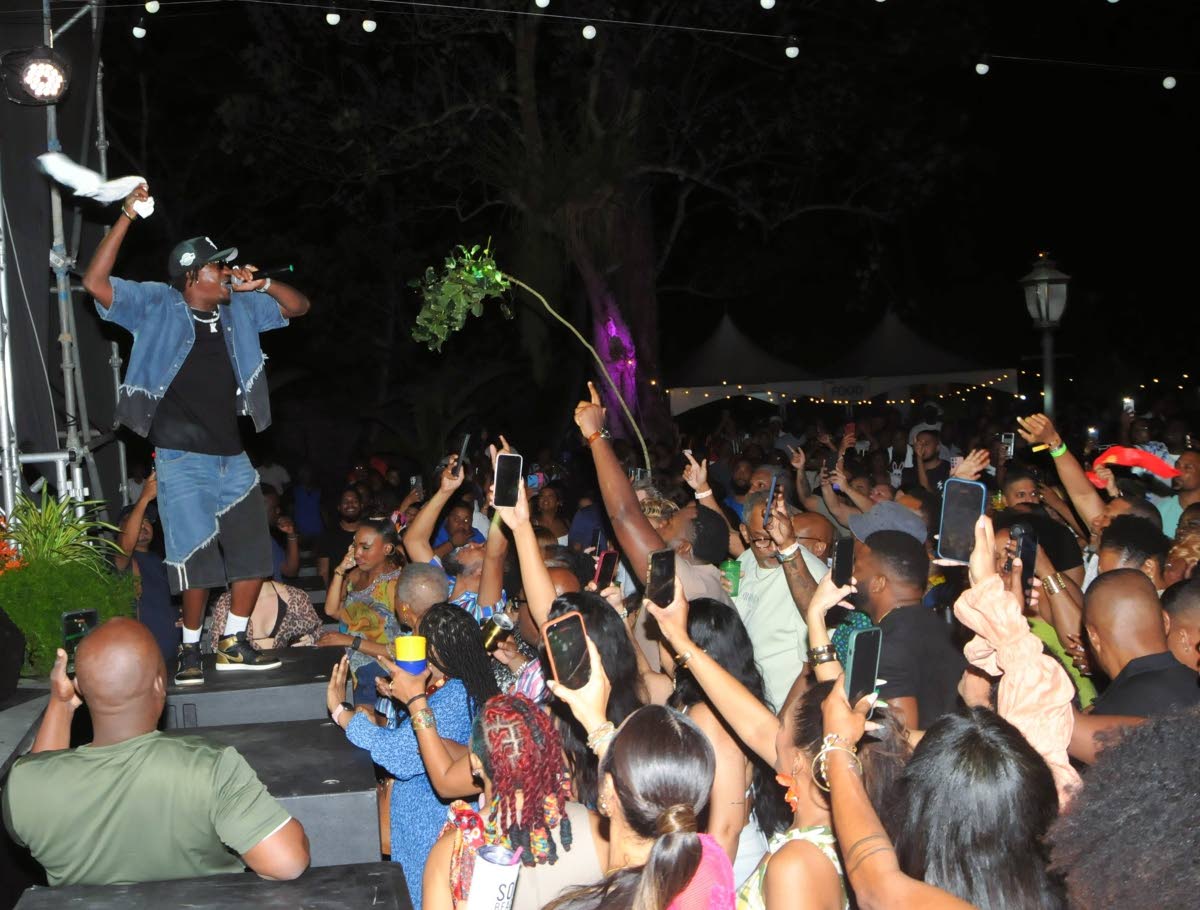
    Farmhouse Events’ ‘Undercover’ cooler experience at Drew Manor in Santa Cruz transformed into an electrifying celebration of Caribbean music and culture last Saturday, with Grenadian artists delivering particularly memorable performances that captivated attendees.

    The meticulously curated event featured an impressive lineup of musical talents including DJs Wayne Small, Team Joy, Adam, Gonzo, and Kenez who maintained infectious energy throughout the night. Local favorites Freetown brought their signature wholesome aesthetic, while Viking Ding Dong entertained with comedic interludes. The dynamic duo Full Blown revived their 2025 hit ‘Big Links riddim,’ adding R&B romance to the diverse musical offerings.

    However, the evening’s most explosive moments came from Grenadian sensations Alex ‘Muddy’ Cuffie and Keron ‘Lil Kerry’ Noel, whose authentic jab energy and cultural connection ignited the massive crowd. Their charismatic stage presence and undeniable talent earned enthusiastic encores as the audience embraced their northern neighbors’ distinctive sound and style.

    Beyond the music, the event offered a visually stunning experience with Instagram-ready photo backgrounds, vibrant decorations, and twinkling overhead lights that created a backyard bashment atmosphere. Attendees elevated the glamour quotient with sophisticated outfits and hairstyles, while Next Level Devils, moko jumbies, and the One Band One Sound rhythm section provided traditional Carnival elements that enhanced the cultural authenticity.

    MC Ancil ‘Blaze’ Isaac skillfully coordinated the evening’s presentations, ensuring seamless transitions between performances. The overall production demonstrated Farmhouse Events’ commitment to creating immersive entertainment experiences that celebrate Caribbean musical heritage while fostering cross-cultural connections within the region.

  • High Court to rule on ex-TTFA marketing director’s unpaid fees claim

    High Court to rule on ex-TTFA marketing director’s unpaid fees claim

    A legal confrontation between former Trinidad and Tobago Football Association (TTFA) marketing director Peter Miller and the association’s trustee will reach a pivotal moment on February 26 when Justice Frank Seepersad delivers his ruling. Miller claims substantial unpaid compensation for services rendered during the association’s financial restructuring phase.

    The crux of the dispute centers on whether Miller continued fulfilling his contractual obligations beyond March 2020, when FIFA installed a normalization committee to oversee TTFA operations. Miller maintains he persistently worked through the association’s financial crisis, while trustee Maria Daniel has disallowed portions of his claim based on advice that he ceased services during that period.

    Miller’s employment commenced January 1, 2020, under a two-year contract stipulating a monthly salary of US$25,000, plus an additional US$30,410.95 for services predating his formal contract. During virtual testimony, Miller faced rigorous cross-examination from Senior Counsel Kerwyn Garcia, who challenged the evidentiary support for Miller’s assertions of continued work.

    The judicial proceedings revealed complexities in documenting marketing achievements. Miller acknowledged completing several initiatives outlined in a February 2020 brief from then-TTFA president William Wallace, including securing kit deals, launching a new association website, and identifying broadcast rights partners. However, he conceded that his court submissions lacked documentary evidence for alleged sponsorship agreements with international companies and arranged friendlies with UK and Brazilian clubs.

    Trustee Maria Daniel, appointed in November 2021 to manage TTFA’s debt proposal process, testified that her mandate focused exclusively on financial rehabilitation assessment. While acknowledging email correspondence suggesting Miller maintained sponsor communications after March 2020, she maintained insufficient context existed to validate these exchanges as substantive work.

    Robert Hadad, chairman of FIFA’s normalization committee, corroborated the verification challenges, stating his position required confirming active employees before approving payments.

    The TTFA’s debt proposal, ultimately approved by creditors in May 2022, provided legal protection while the association pursued financial recovery. An Ernst and Young report estimated outstanding liabilities at approximately TT$98.5 million, with the enhanced proposal increasing committed funds to US$3.5 million.

    Justice Seepersad’s impending decision will hinge principally on whether evidence substantiates Miller’s claim of continued contractual performance after March 2020.

  • TCL warns: Price hike coming

    TCL warns: Price hike coming

    Trinidad Cement Ltd (TCL) has issued a formal notification to its customers regarding impending price adjustments for cement products, directly linking the potential increase to the proposed natural gas price hike currently under consideration. The company’s general manager, Gonzalo Rueda Castillo, emphasized in a January 26 statement that natural gas serves as a fundamental component in cement manufacturing processes, making the proposed energy cost increase particularly impactful.

    The National Gas Company’s anticipated decision on January 31 regarding natural gas pricing will determine the extent of necessary adjustments. Castillo clarified that should the gas price increase receive approval, TCL would be compelled to implement corresponding price revisions to maintain operational sustainability. The company highlighted that recent months have witnessed substantial cost escalations across multiple production aspects, including raw materials, packaging, and general inflationary pressures.

    Despite expressing opposition to the proposed energy cost increase and ongoing engagement with relevant stakeholders, TCL acknowledges the unavoidable financial implications. The cement manufacturer emphasized its commitment to maintaining reliable supply chains and supporting Trinidad and Tobago’s construction sector while navigating these economic challenges.

    In response to the announcement, former Energy Minister Stuart Young launched criticism against the current administration, characterizing the situation as evidence of governmental incompetence. Young’s social media statements warned citizens to anticipate broader economic repercussions, including potential increases in food prices and negative impacts on employment and foreign exchange stability.

  • Families of Trinidadian fishermen killed in US missile strike sue US government

    Families of Trinidadian fishermen killed in US missile strike sue US government

    In a significant legal challenge against US military operations, the families of two Trinidadian men killed in a missile strike have filed a wrongful death lawsuit against the US government. The complaint, lodged in the US District Court for Massachusetts on January 27, alleges extrajudicial killing and seeks accountability for what plaintiffs describe as unlawful lethal force.

    The case centers on the deaths of Chad Joseph, 26, and Rishi Samaroo, 41, who were among six civilians killed when a US missile struck their small boat traveling from Venezuela to Trinidad and Tobago on October 14, 2025. According to court documents, the victims were returning to their homes in Las Cuevas when the attack occurred.

    Legal representatives from the American Civil Liberties Union, the Center for Constitutional Rights, and Seton Hall Law School argue the strike was part of a broader pattern of military actions targeting civilian vessels in Caribbean and Pacific waters. The lawsuit claims at least 36 similar strikes have occurred since September 2025, resulting in approximately 125 fatalities.

    Lenore Burnley, Joseph’s mother, and Sallycar Korasingh, Samaroo’s sister, filed the action on behalf of all surviving family members. Burnley described her son as a devoted family man who frequently traveled to Venezuela for fishing and agricultural work to support his wife and three children. Korasingh remembered her brother as a hardworking individual rebuilding his life after completing a 15-year prison sentence.

    The legal action invokes two jurisdictional foundations: the Death on the High Seas Act, which permits lawsuits for deaths occurring in international waters, and the Alien Tort Statute, which allows foreign nationals to seek redress in US courts for severe violations of international human rights law.

    The complaint systematically challenges the legal basis for the strikes, arguing they lack proper congressional authorization and violate both international humanitarian law and US constitutional principles. Legal director Baher Azmy of the Center for Constitutional Rights characterized the killings as ‘absurd and dangerous,’ warning against unilateral state declarations of war to justify lethal force.

    The case has drawn attention to the Trump administration’s maritime security operations, with President Trump and Defense Secretary Pete Hegseth having publicly acknowledged the strikes and released footage of the operations. Notably, US authorities have not publicly identified any of the victims.

    Trinidad’s Foreign Affairs Minister Sean Sobers previously stated the government had no information linking either man to illegal activities, while Attorney General John Jeremie asserted the strikes were consistent with international law based on advice from an unidentified external expert.

    The lawsuit seeks to establish judicial oversight of military actions that plaintiffs argue constitute ‘manifestly unlawful’ killings ordered by highest levels of government. Professor Jonathan Hafetz of Seton Hall Law School warned the case carries profound implications for international legal norms and US standing in the global community.

  • Kamella Carmino unleashes Sōk-D’M, a fusion of soca, EDM

    Kamella Carmino unleashes Sōk-D’M, a fusion of soca, EDM

    Trinidadian entrepreneur and cultural innovator Kamella Carmino has pioneered a groundbreaking musical genre titled Sōk-D’M (pronounced Soak Dem), representing an intentional fusion of Caribbean soca rhythms and electronic dance music (EDM). This innovative soundscape bridges traditional Carnival energy with global festival appeal, creating what industry observers are calling a transformative moment for Caribbean music on the world stage.

    The genesis of Sōk-D’M emerged from a strategic conversation between Carmino and ABM of Platinum Trini Hot 97FM Internet Radio, based in Los Angeles. During their discussion, ABM—who holds promotional licensing rights in Las Vegas—revealed the challenging reality that while EDM dominated the Vegas entertainment market, virtually no platform existed for traditional soca music. This market gap inspired Carmino’s immediate creative response: “So why don’t we fuse soca and EDM and call it Sōk-D’M?”

    Within hours of this conceptual breakthrough, Carmino collaborated with her son Jesus Carmino-Garraway to produce the inaugural Sōk-D’M single “Cross De Stage,” released through JuJu Multimedia. This pioneering track established the genre’s technical parameters and artistic vision, blending soca’s characteristic drum patterns, call-and-response vocal arrangements, and steelpan heritage with EDM’s synthesizer textures, powerful basslines, and dramatic build-and-drop structures.

    Carmino has since expanded the Sōk-D’M catalog with additional compositions including “High on Love” and “Jump Up on Down,” further refining the genre’s sonic identity and emotional resonance. Operating within a tempo range of 125-132 BPM, Sōk-D’M occupies a unique musical space that merges the visceral energy of Trinidad’s J’Ouvert celebrations with the spectacular production values of international festivals like Tomorrowland.

    The term “Sōk-D’M” itself carries profound cultural meaning, with Carmino explaining: “To Soak Dem is to be drenched in rhythm, culture and spirit.” Beyond its musical innovations, the genre represents a philosophical movement advocating for borderless Carnival expression and electronic music with authentic Caribbean soul. This creative initiative invites global producers, DJs, and music enthusiasts to engage with Caribbean culture through rhythm-based connection and collective celebration.

    As Sōk-D’M gains traction across international markets, Carmino envisions the genre transforming how Caribbean music is perceived and consumed worldwide, creating new pathways for cultural exchange and artistic collaboration across continents.

  • Sampson in, Evin Lewis out; WI pick squad for T20 World Cup

    Sampson in, Evin Lewis out; WI pick squad for T20 World Cup

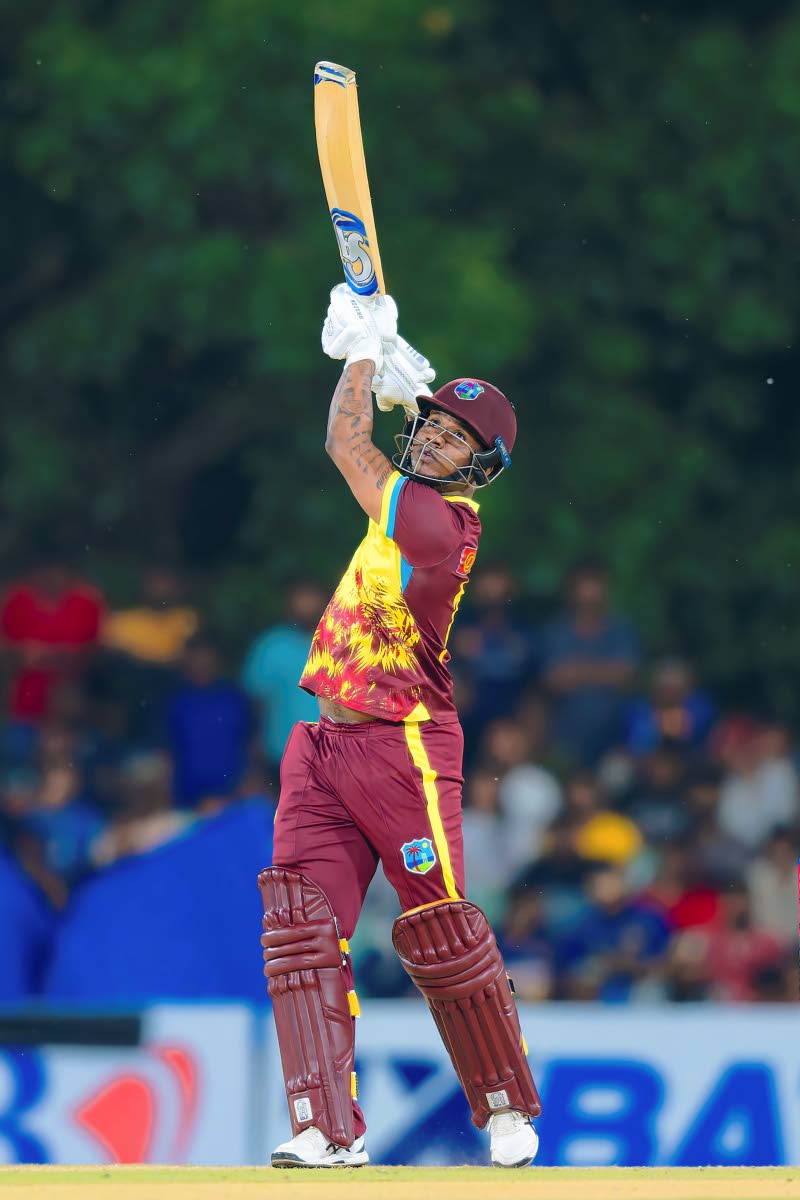
    Cricket West Indies (CWI) has officially announced its 15-player roster for the upcoming 2026 ICC Men’s T20 World Cup, set to be co-hosted by India and Sri Lanka from February 7 to March 8. The selection, revealed through a digital presentation on January 26, features a blend of experienced campaigners and one surprising new face under the leadership of captain Shai Hope.

    The squad retains several key figures from the 2024 tournament campaign, including Test captain Roston Chase, spin specialists Akeal Hosein and Gudakesh Motie, along with power hitters Rovman Powell, Sherfane Rutherford, and Romario Shepherd. The most conspicuous absence is explosive left-handed opener Evin Lewis, whose international future appears uncertain after he hinted at retirement via social media. Also missing from the lineup is recovering pace bowler Alzarri Joseph.

    The most debated selection is 25-year-old Guyanese batsman Quentin Sampson, who receives his maiden World Cup call-up despite a modest debut series against Afghanistan in January where he scored 30, 2, and 3 across three matches. Sampson’s inclusion represents coach Daren Sammy’s calculated gamble on emerging talent.

    Lewis, a veteran of 67 T20 internationals with 1,799 runs at a strike rate of 152.07, posted a cryptic message on Instagram suggesting his international career might be over: “Just wanna thank everyone who supported me in my ten years of international cricket, but I think the time has come for me to depart. Stay tuned.”

    The two-time champions have been drawn into Group C alongside England, Italy, Nepal, and Scotland, who replaced Bangladesh as a late tournament addition. The West Indies will commence their campaign against Scotland on February 7 at Kolkata’s historic Eden Gardens stadium.