标签: Trinidad and Tobago

特立尼达和多巴哥

  • $2.3m ‘VAT fraud’

    $2.3m ‘VAT fraud’

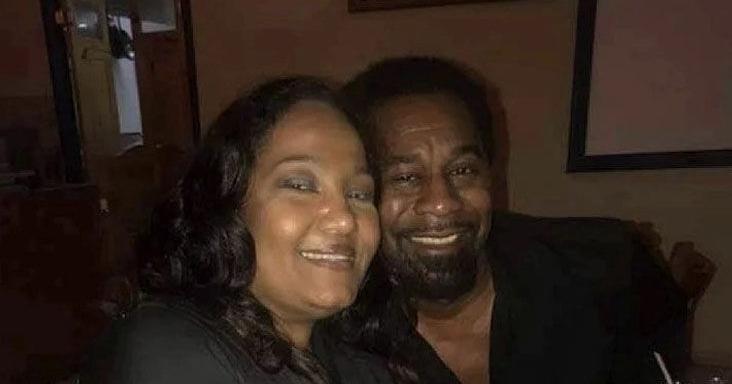
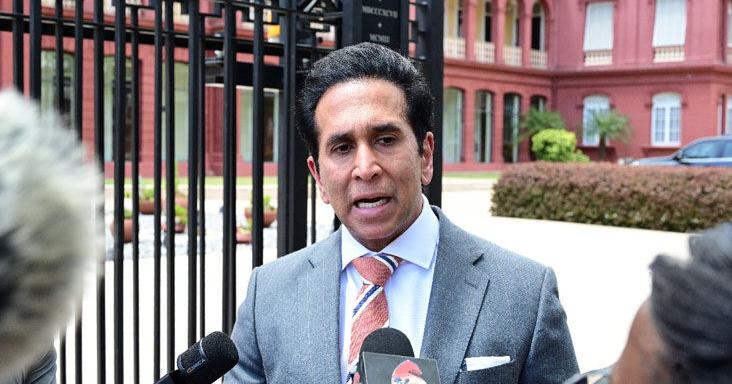
    Three defendants from Tobago have been formally committed to stand trial in the High Court following a judicial ruling that found sufficient evidence of their alleged involvement in a major Value Added Tax (VAT) fraud scheme totaling approximately $2.3 million. The accused parties include businessman Richie Habib, businesswoman Yolande Clarke, and their company Habib International Ltd.

    The case centers on allegations that between August 2016 and December 2021, the defendants conspired to defraud the Tobago House of Assembly (THA) by issuing 65 invoices that improperly included VAT charges. According to court documents, Habib International Ltd. was not registered under the Value Added Tax Act during the period in question, making the company ineligible to collect VAT payments.

    Prosecutors assert that the scheme involved the fraudulent use of a VAT registration number belonging to Springer Property Development Ltd., which was utilized with Clarke’s permission. The prosecution contends that while VAT was collected from the THA on these invoices, the funds were never remitted to the Board of Inland Revenue (BIR), effectively cheating the public revenue system of $2,361,801.14.

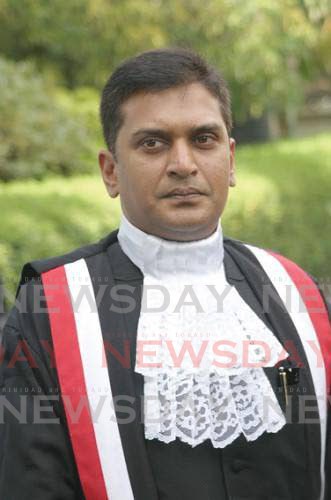
    The case came to light following an investigation by Rawle Sookhoo of the BIR’s Criminal Tax Investigation Unit, who initiated proceedings after receiving reports of fraudulent invoicing practices targeting the THA. During a virtual hearing on March 2, Master Kimitria Grey reviewed the documentary evidence and determined that the State had established a prima facie case sufficient to warrant a full trial.

    All three defendants remain on bail with surety set at $800,000 pending the commencement of High Court proceedings scheduled for September 18. The prosecution is being handled by special prosecutor Evans Welch representing the BIR, while the defendants are represented by senior counsel Gilbert Peterson, attorney Dawn Pallackdarrysingh, and attorney Criston J. Williams.
  • US shares ‘persons of interest’ list with T&T in anti-cartel push

    US shares ‘persons of interest’ list with T&T in anti-cartel push

    In a significant development for Caribbean security cooperation, Trinidad and Tobago’s Homeland Security Minister Roger Alexander has confirmed that United States officials have provided the island nation with a comprehensive list of individuals connected to narcotics trafficking, illegal firearms, and organized violence. This intelligence sharing occurs within the framework of the newly established Americas Counter Cartel Coalition, a Trump administration initiative that includes Trinidad and Tobago among 17 Latin American nations.

    Minister Alexander, while maintaining discretion regarding specific operational details for national security reasons, emphasized the transformative nature of this bilateral partnership. “The United States gathers massive intelligence on countries, organizations, and individuals,” Alexander stated. “They know exactly who they can work with and who they can trust regarding security efforts against cartels and narco-traffickers.”

    The coalition represents a strategic shift in hemispheric security policy, with U.S. President Donald Trump characterizing criminal cartels as a “cancer” requiring decisive military response. Official proclamations from the coalition’s inaugural meeting indicate participating nations will receive training and mobilization support to create “the most effective fighting force necessary to dismantle cartels.”

    Concurrently, Defence Minister Wayne Sturge revealed that Prime Minister Kamla Persad-Bissessar’s diplomatic efforts have positioned Trinidad and Tobago among twelve key nations engaged in critical hemispheric security discussions. Sturge noted that the country’s geographic location places it at the forefront of combating narcotics trafficking and transnational criminal operations in the Caribbean region.

    This enhanced cooperation includes advanced surveillance capabilities, improved intelligence sharing mechanisms, and acquisition of sophisticated equipment to secure borders against criminal networks. Both ministers characterized this partnership as facilitating a “national security reset” for Trinidad and Tobago, which is currently operating under a state of emergency due to escalating criminal violence.

    Minister Alexander defended the coalition’s potentially aggressive stance: “We support aggressive action against those who continue to kill our citizens through trafficking. They are killing entire society with nefarious activities impacting our youth. We are fed up with this criminality.”

  • Al-Rawi downplays ‘new’ US security move

    Al-Rawi downplays ‘new’ US security move

    Opposition Senator Faris Al-Rawi has characterized Trinidad and Tobago’s recent engagement in the US Southern Command Counter Cartel initiative as an extension of longstanding security cooperation rather than a novel development. Speaking to journalists outside Parliament, Al-Rawi emphasized the nation’s historical collaboration with American agencies while issuing a stark warning against constitutional overreach in crime prevention measures.

    The Shield of the Americas security framework, which Trinidad recently joined, represents continuity rather than innovation in bilateral relations according to the senator. He referenced decades of operational partnerships including Operation Tradewinds military exercises, Status of Forces Agreements (SOFA), and routine collaboration with the Drug Enforcement Administration and Federal Bureau of Investigation. “These are standard operating procedures,” Al-Rawi noted, highlighting that transshipment drug operations fundamentally drive criminality in the region.

    Al-Rawi expressed particular concern about the government’s deployment of a state of emergency (SoE) as a primary crime-fighting tool. He clarified that constitutional emergency powers should remain reserved for genuine crises, noting that existing legislation already enables joint patrols and coordinated operations with presidential authorization. “What will be novel is the duration of this emergency declaration,” he cautioned, adding that “permanent emergency powers cannot constitute a sustainable security strategy.”

    Regarding diplomatic implications, the senator dismissed anxieties about compromised sovereignty, stating the US partnership hasn’t negatively influenced Trinidad’s regional relationships. He emphasized that “political framing and presentation” matter more than the operational details of security cooperation.

    Concurrently, Legal Affairs Minister Saddam Hosein voiced strong support for strengthened US-Trinidad security collaboration, rejecting claims of eroded sovereignty. “The United States has historically been both trading partner and security ally across various administrations,” Hosein stated, noting “enhanced diplomatic engagement” under the current government.

    The minister separately addressed global conflicts, expressing solidarity with oppressed Muslim communities worldwide. During the holy period of Ramadan, Hosein called for peace in Gaza and other conflict zones, stating that while his views might not alter geopolitical outcomes, collective prayers could alleviate global suffering.

  • Defence partnership

    Defence partnership

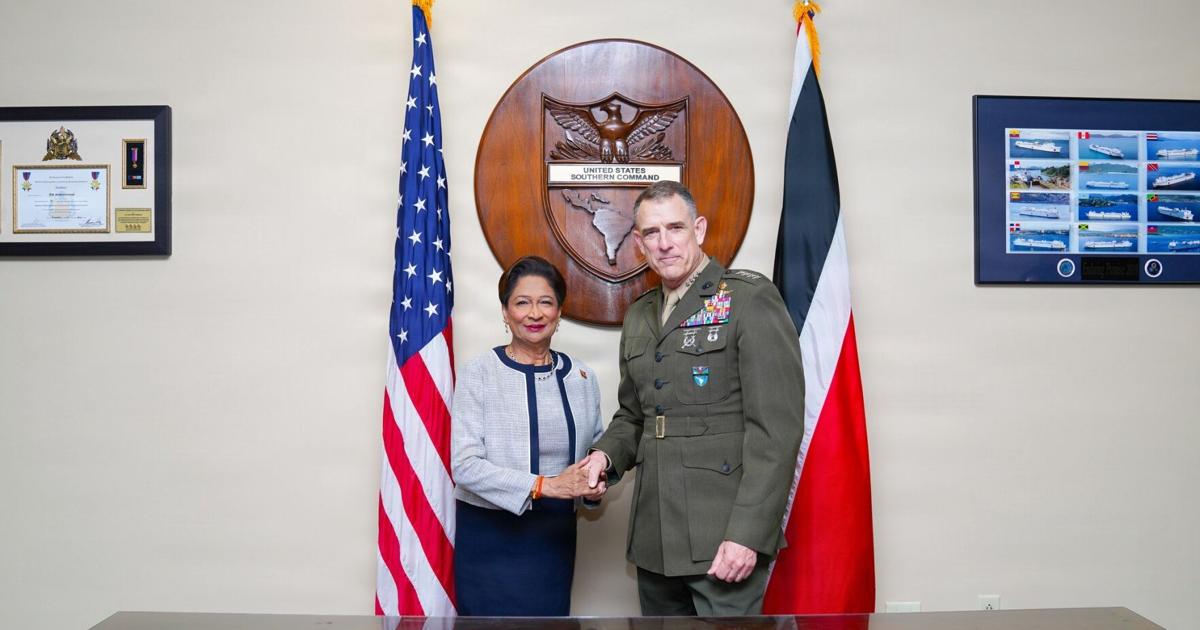
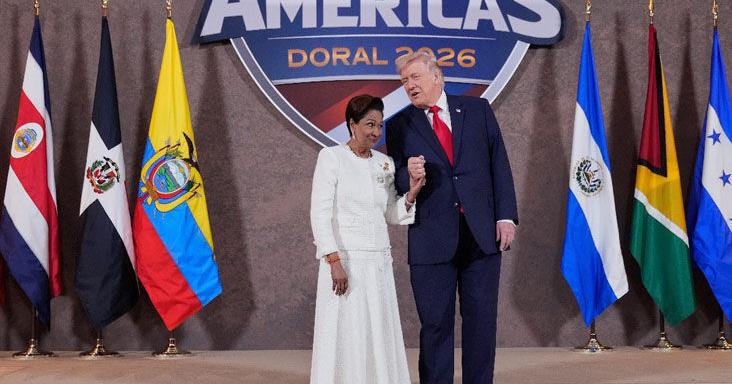
    In a significant development for Caribbean security cooperation, the United States has pledged enhanced support to Trinidad and Tobago’s ongoing battle against drug trafficking networks and designated terrorist organizations. Prime Minister Kamla Persad-Bissessar conducted high-level talks at the US Southern Command (SOUTHCOM) headquarters in Doral, Florida, marking a strategic escalation in bilateral defense partnerships.

    The diplomatic engagement focused on concrete measures to strengthen collaborative security initiatives, particularly addressing the critical challenges of narco-terrorism and transnational criminal operations proliferating throughout the Caribbean region. Prime Minister Persad-Bissessar emphasized the urgent requirement for advanced US assistance in cybersecurity capabilities, forensic analysis, and ballistic technology to effectively combat sophisticated criminal enterprises.

    This high-stakes meeting occurred against the backdrop of Trinidad and Tobago’s currently active state of emergency, declared on March 3rd to address escalating security concerns. The discussions built upon previous multilateral agreements, including the recent Americas Counter-Cartel Conference where Defense Minister Wayne Sturge advocated for increased operational assets for Caribbean nations.

    Notably, the partnership already demonstrates tangible outcomes with the operational deployment of a US-funded radar surveillance system at Tobago’s ANR Robinson International Airport, representing a daily investment of $3 million in regional security infrastructure. Prime Minister Persad-Bissessar characterized the collaboration as essential, stating: ‘We cannot do it alone; the assistance of the US will help us win the war against the criminals.’

    The bilateral talks also produced commitments for expanded operational support and technological exchange, with SOUTHCOM commander Francis L. Donovan receiving an official invitation to continue strategic discussions in Trinidad and Tobago later this year. Both nations reaffirmed their shared dedication to regional stability through enhanced intelligence sharing and coordinated counter-narcotics operations.

  • Tyrico horror

    Tyrico horror

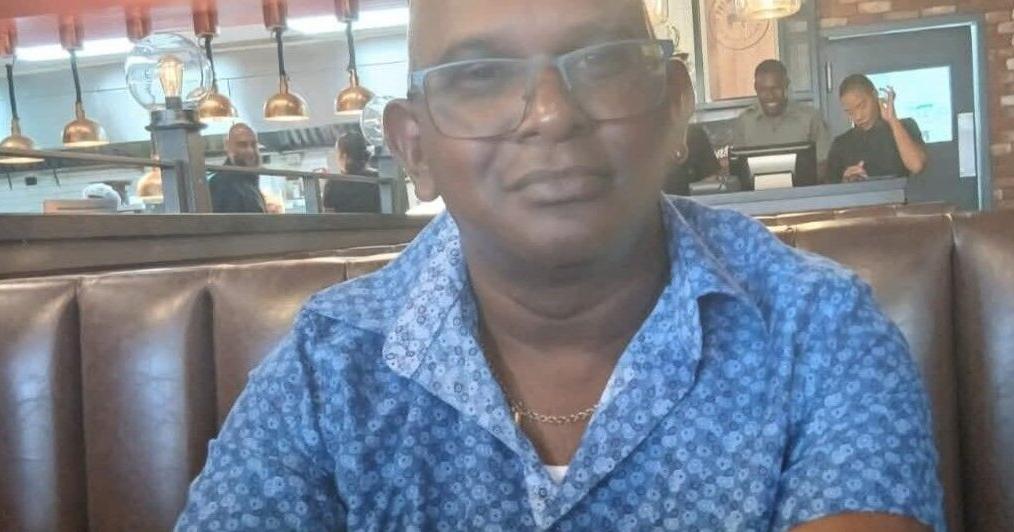
    The tranquil community of Longdenville has been plunged into mourning following the brutal murder of 44-year-old Homadath Sookdeo, whose bound body was discovered at Tyrico Bay last Sunday morning. The discovery has triggered widespread condemnation of Trinidad’s ongoing crime epidemic and raised serious questions about the effectiveness of current security measures.

    Sookdeo, described by neighbors as a ‘quiet, humble man who wouldn’t even harm a fly,’ failed to appear for his customary Sunday family lunch, immediately alerting relatives to potential danger. His body was found with hands and feet bound and mouth gagged, wearing only red three-quarter pants, near the main carpark of the popular beach area.

    According to investigation details, Sookdeo was last seen alive on Saturday afternoon around 4 p.m. when he departed to collect rental payments from Venezuelan nationals residing in an apartment building he managed for his brother overseas. His abandoned pick-up truck was later recovered in Maracas, though police confirmed no visible gunshot or stab wounds were present on his body. An autopsy has been ordered to determine the exact cause of death.

    The tragedy has exposed deep-seated frustrations with the government’s crime prevention strategies. A family member, who requested anonymity, directly criticized the current state of emergency: ‘(Sookdeo) was killed during an SoE. So the SoE is clearly not working. The Government needs more stringent measures to deal with crime.’

    Neighbors and colleagues expressed profound shock at the violent death of a man known for his predictable routines and gentle nature. Gopalak Baboolal, a neighbor for over 15 years, recounted: ‘We lived like brothers. His sister said he sends her good morning message every day and she didn’t get none Sunday.’ Another colleague from Kallco Ltd, where Sookdeo worked as a supervisor, described him as exceptionally cautious with his vehicle, making the circumstances of his abduction particularly mysterious.

    The case has mobilized multiple police units including Region One Homicide Bureau, Crime Scene Unit, and Morvant CID. Investigators believe Sookdeo was murdered elsewhere and transported to Tyrico Bay sometime Saturday night. Authorities are attempting to locate the Venezuelan tenants Sookdeo was scheduled to meet before his disappearance.

  • Ankle-monitored accused gunned down near home

    Ankle-monitored accused gunned down near home

    In a brazen morning attack that raises serious questions about judicial monitoring systems, 38-year-old Isiah Garcia—a man under court-ordered electronic surveillance—was ambushed and executed near his D’Abadie residence on Thursday. The shooting occurred just hours before Garcia was scheduled to reappear in court for serious charges dating back to 2021.

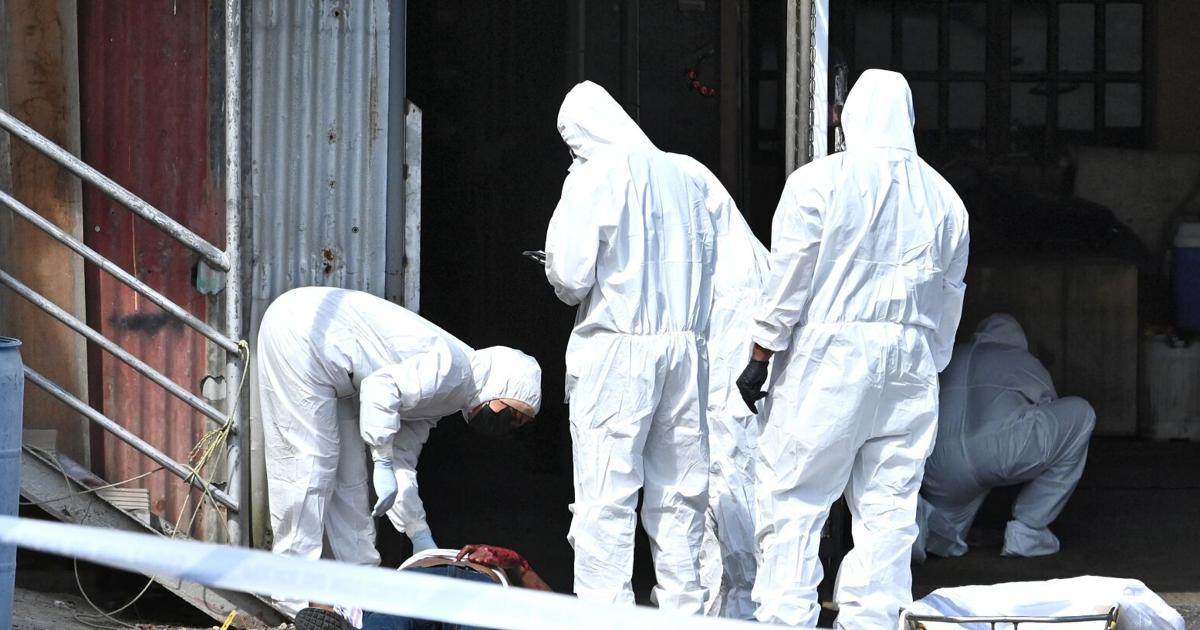
    According to Trinidad Police reports, residents of First Street West off Recreation Road were startled by multiple gunshots around 7:15 a.m. Upon investigation, they discovered Garcia’s lifeless body bearing multiple gunshot wounds. Crucially, the deceased still wore the ankle monitoring device mandated as a condition of his bail in a pending attempted murder case.

    Garcia’s legal troubles stemmed from a violent August 2021 incident in Carapo, where he allegedly attacked a man and woman with lethal intent. Following his arrest days after the shooting by Region Two Homicide Bureau detectives, he faced an extensive list of charges including attempted murder, common assault, firearm possession, and ammunition-related offenses.

    Despite the severity of these charges, judicial authorities had granted Garcia bail with the specific condition of continuous electronic monitoring. This monitoring system, implemented in April 2021 through the National Security Ministry’s Electronic Monitoring Unit, represented the judiciary’s attempt to balance bail rights with public safety concerns.

    The assassination occurs against a troubling backdrop of violent crime in Trinidad. Official statistics indicate the nation’s murder toll had reached 66 by Thursday night, showing a modest decrease from the 75 recorded during the same period last year.

    Law enforcement authorities have launched a comprehensive investigation into both the execution-style killing and the apparent failure of the monitoring system to prevent this tragedy. The case has ignited urgent discussions about the effectiveness of electronic surveillance measures for defendants facing serious violent charges.

  • Notice of Appointment of Liquidator Order 2026

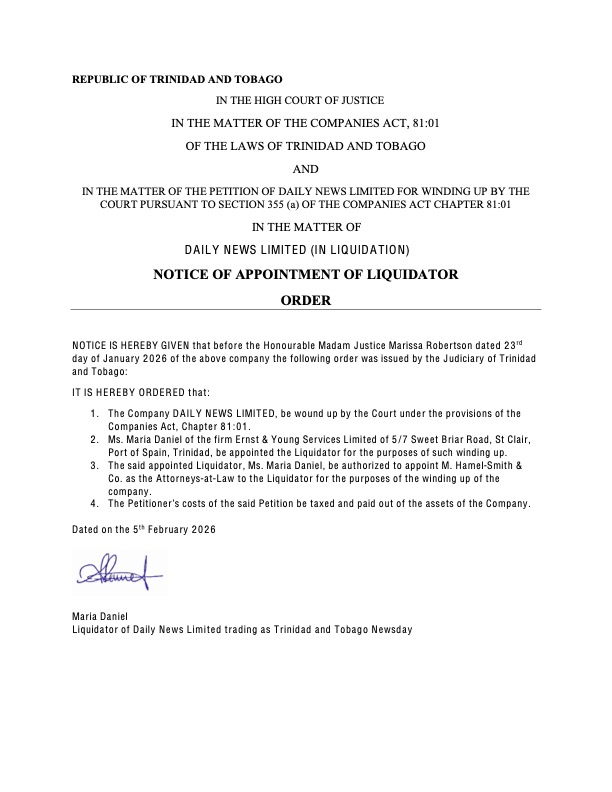
    Notice of Appointment of Liquidator Order 2026

    In an era dominated by complex digital infrastructures, the role of the webmaster has undergone a remarkable transformation from basic site maintenance to becoming the cornerstone of organizational digital strategy. This professional evolution reflects the increasing sophistication of online platforms that require multifaceted expertise in cybersecurity, user experience optimization, and technical infrastructure management.

    The contemporary webmaster functions as a digital architect, balancing technical proficiency with strategic vision. These professionals now oversee critical aspects including cloud server management, advanced SEO implementation, comprehensive analytics interpretation, and cross-platform compatibility assurance. Their responsibilities extend beyond traditional coding to encompass data protection compliance, accessibility standards adherence, and continuous performance monitoring.

    This professional category has gained unprecedented significance as businesses increasingly rely on digital presence for revenue generation and customer engagement. The modern webmaster ensures operational continuity during traffic surges, implements robust security protocols against cyber threats, and optimizes digital experiences across diverse devices and browsers. Their role has become particularly crucial for e-commerce platforms, educational institutions, and government services where uninterrupted digital access is essential.

    The evolution of this position demonstrates how technological advancement creates specialized hybrid roles that merge technical expertise with business acumen. As artificial intelligence and machine learning become integrated into web services, the webmaster’s function continues to adapt, incorporating emerging technologies while maintaining the fundamental stability of digital operations. This professional trajectory highlights the dynamic nature of tech careers in responding to evolving digital demands.

  • Trinidad and Tobago Newsday – Saturday January 31st 2026

    Trinidad and Tobago Newsday – Saturday January 31st 2026

    The global dietary supplement industry, a multi-billion dollar market, operates in a regulatory gray zone that continues to challenge consumers and health professionals alike. Unlike pharmaceutical drugs that undergo rigorous FDA testing for safety and efficacy before market entry, supplements benefit from considerably more lenient regulations under the Dietary Supplement Health and Education Act (DSHEA) of 1994.

    This regulatory framework places the burden of proof on the FDA to demonstrate a supplement is unsafe after it has already reached consumers, rather than requiring pre-market approval. This fundamental difference means new supplement products can appear on store shelves and e-commerce platforms with minimal oversight, relying primarily on manufacturer integrity for quality and accuracy in labeling.

    Recent analyses reveal concerning gaps between marketing claims and scientific evidence. While some supplements demonstrate clear benefits for specific nutrient deficiencies or health conditions, many products make ambitious claims that lack robust clinical validation. The industry faces ongoing challenges with product contamination, inconsistent dosing, and occasionally, the inclusion of undeclared pharmaceutical ingredients in products marketed as ‘all-natural’.
    Health experts emphasize the importance of consulting healthcare providers before beginning any supplement regimen, particularly for individuals with pre-existing conditions or those taking prescription medications. Potential interactions between supplements and medications can produce unintended consequences that consumers may not anticipate.

    The digital age has further complicated the landscape, with social media influencers and targeted advertising creating unprecedented demand for various supplements often without adequate context about their appropriate use or limitations. Regulatory bodies worldwide are increasingly examining how to modernize oversight approaches for these products that occupy the complex intersection between food, medicine, and consumer wellness.

  • ‘Batman’ pleads guilty to manslaughter, apologies to victim’s family

    ‘Batman’ pleads guilty to manslaughter, apologies to victim’s family

    A decade-long legal proceeding reached its conclusion this week as Shervon Darvick “Batman” Grant received his final sentencing for the 2014 fatal stabbing of Damien Alexander. Justice Devan Rampersad presided over the case at the High Court, delivering a sentence that accounts for Grant’s extensive pre-trial incarceration and guilty plea.

    The incident traces back to June 7, 2014, when a violent confrontation erupted outside the Universal Bar in St. James at approximately 4:10 am. Surveillance footage and witness accounts detailed how Grant, then 32, engaged in a heated argument with Alexander that escalated dramatically. During the altercation, Grant shattered a Carib beer bottle and wielded the broken implement, resulting in a severe neck wound that proved fatal.

    Emergency responders transported Alexander to St. James Hospital before transferring him to Port of Spain General Hospital, where he succumbed to his injuries. Crime scene investigators documented critical evidence including the broken bottle, blood samples, and a blood-soaked bandana. Grant was apprehended shortly thereafter at Freddie’s Bakery on Church Street.

    Forensic pathologist Dr. Hugh Des Vignes confirmed the cause of death as a single stab or incised wound to the neck. During police interrogation on June 9, 2014, Grant acknowledged his presence at the scene and admitted to the stabbing after reviewing CCTV evidence.

    The judicial process spanned eleven years, beginning with murder charges filed on June 13, 2014. The case progressed through preliminary inquiries from 2015-2017, culminating in indictment proceedings in 2021. A breakthrough occurred in November 2025 when Grant, through his legal representatives Tristle Khan-Leu and Tracy Wiltshire, negotiated a plea agreement with the Office of the Director of Public Prosecutions, reducing the charge to manslaughter.

    In mitigation arguments, the defense emphasized the spontaneous nature of the offense, noting Grant’s intoxication during the incident and his immediate cooperation with authorities. The court received documentation of Grant’s rehabilitation efforts during his 11-year, 7-month pre-sentence detention, including academic pursuits, prison programming, and his role as assistant pastor with The Way of Holiness ministry.

    Justice Rampersad evaluated multiple sentencing factors including retribution, deterrence, public protection, and rehabilitation. The final judgment incorporated substantial credit for time served and the guilty plea, resulting in a remaining sentence of just over four years.

    A profound letter of remorse from Grant was entered into the court record, expressing deep regret to Alexander’s family: “I know that what I did was wrong, and I take full responsibility for my actions. I know that being ‘out of it’ is no excuse. A person’s life is precious, and I had no right to take his.” Grant additionally apologized to his own family for the shame and pain caused by his actions, detailing his spiritual transformation and commitment to societal reintegration.

  • Playwrights Workshop Trinbago explores perspective with Sashta Jebodh

    Playwrights Workshop Trinbago explores perspective with Sashta Jebodh

    Playwrights Workshop Trinbago (PWT) is set to showcase emerging theatrical talent with its February installment of the Monthly Readers Theatre Series (MRTS), featuring actress and playwright Sashta Jebodh’s provocative new work ‘A Work of Art’ on February 4th.

    The ongoing series, held at Trinidad Theatre Workshop in Port of Spain, provides a crucial developmental platform for local dramatists to present works-in-progress and engage in meaningful discourse with live audiences. The monthly gatherings occur on the first Wednesday of each month at 7 PM, fostering Trinidad and Tobago’s growing theatrical community.

    Jebodh’s ‘A Work of Art’ presents a compelling philosophical confrontation between two museum workers divided over their interpretations of an artwork. The narrative delves into the subjective nature of perception and the meanings we assign to objects, challenging conventional notions of ‘right’ or ‘wrong’ perspectives. Through this artistic confrontation, the play invites audiences to contemplate whether reality exists as fixed truth or as fluid interpretation shaped by individual experience.

    The playwright brings substantial credentials to her emerging writing career, holding a bachelor’s degree in theatre arts and English literature from the University of the West Indies. Jebodh further cultivates her creative practice through involvement with Playwrights Workshop Trinbago, Torch Theatre Company, and her podcast venture ‘Waiz Dat?’

    The event welcomes public participation, encouraging theater enthusiasts, students, and community members to attend the reading and contribute to the post-performance feedback session. This collaborative process assists writers in refining their scripts, with selected works potentially advancing to full dramatic readings in future programming.

    Admission to the February 4th event at Trinidad Theatre Workshop, 6 Newbold Street, St Clair, remains free of charge. Those interested in script submissions, future events, or additional information may contact the organization via email at playwrightsworkshoptt@gmail.com, phone/text/WhatsApp at 351-6293, or through their social media channels @playwrightsworkshoptt.