标签: Trinidad and Tobago

特立尼达和多巴哥

  • Leave sacred artefacts alone, says IRO head

    Leave sacred artefacts alone, says IRO head

    A brazen early-morning break-in at a Roman Catholic church in Trinidad and Tobago has sparked widespread condemnation from both interfaith leaders and opposition political figures, who are calling out the act as a desecration of sacred space and a violation of the nation’s core shared values.

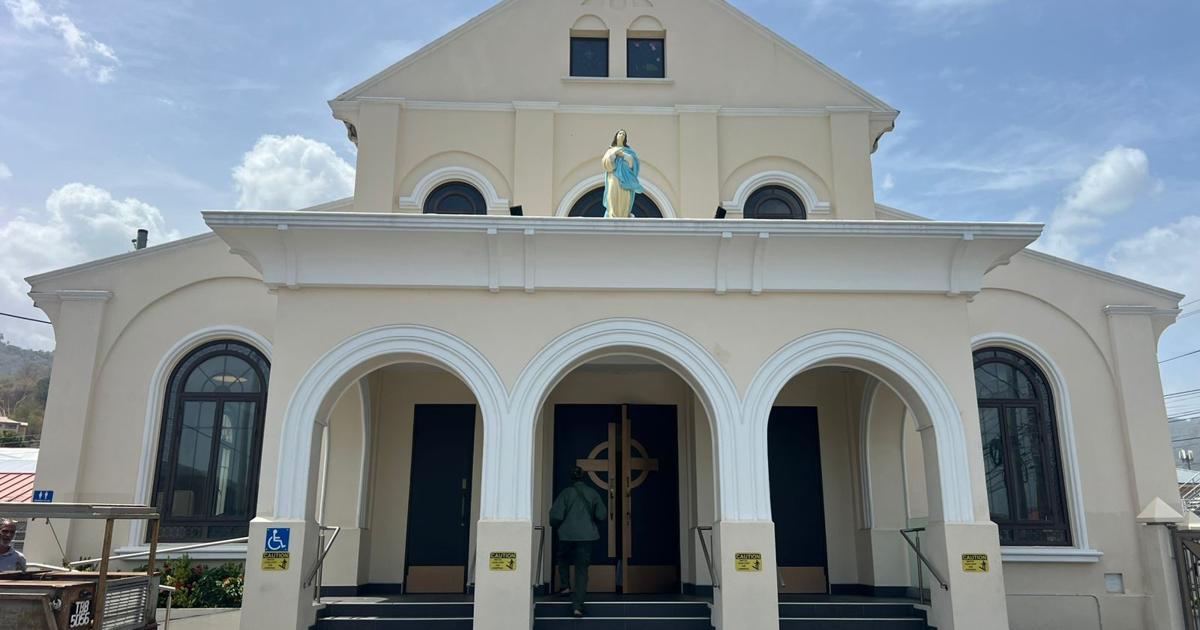
    The incident unfolded on a Tuesday last week at St Mary’s RC Church in St James. When parish priest Fr Emmanuel Pierre arrived at the property at approximately 5:15 a.m. to prepare for the 6:15 a.m. mass, he encountered an unknown intruder inside the building. After the intruder left, a thorough check revealed that the sacristy had been completely ransacked, and two gold-plated monstrances were missing. These sacred vessels, valued at an estimated $15,000, are specifically used to display the consecrated Eucharistic host during public adoration and veneration, making their theft especially distressing for the local faith community.

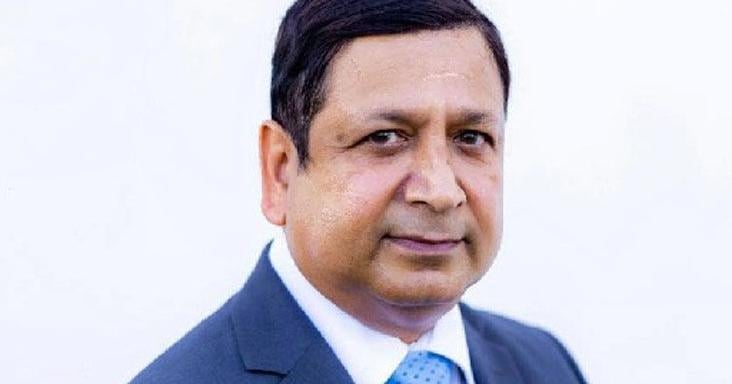
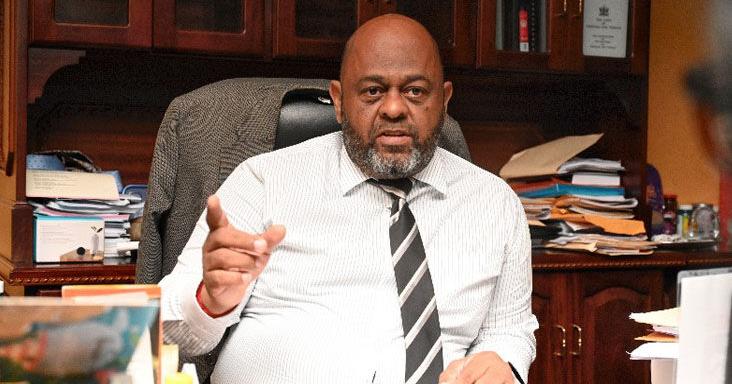
    In a telephone interview conducted from his Scarborough, Tobago residence, Dr. Ellis Burris, president of the Inter-Religious Organisation (IRO), issued a firm rejection of the criminal act. “I don’t condone it. We (IRO) would not support the disruption and desecration of sacred places of worship. People should not be tampering with the sacred vessels used in worship. We want to dissuade people from engaging in these nefarious acts,” Burris stated. He emphasized that communities across all faith traditions hold religious artefacts in deep reverence, adding, “Don’t interfere with peoples’ religious artefacts. Don’t tamper with the artefacts that they hold sacred. The items which they cherish.”

    Beyond condemning the theft, Burris issued a public call to all citizens of Trinidad and Tobago to turn to prayer for the nation and its governing leadership. “Let us pray and ask Almighty God to bless each other and our country. Pray for our leaders and elders. Continue to worship God in spirit and in truth. The Holy Bible says, ‘The prayer of a righteous man availeth much,’” he said, urging collective spiritual reflection amid rising concerns about criminal activity targeting religious sites.

    Opposition Leader Penelope Beckles joined Burris in condemning the break-in, addressing the incident during her official Corpus Christi message. “I must address the recent desecration and theft at St Mary’s RC Church. The breaking into a house of worship and the theft of sacred vessels, including the monstrances used in the Holy Eucharist, is deeply painful and unacceptable,” Beckles said. She framed the offense as far more than a simple property crime, noting, “It is not only a crime against property, but also an assault on the spiritual dignity of a community and the conscience of the nation. Any violation of a house of worship strikes at the heart of our shared values and must be condemned in the strongest possible terms.”

    Beckles also highlighted a message of hope from the parish priest who encountered the intruder, praising Fr Pierre’s calm, principled response to the traumatic incident. “Despite the present-day realities, I am inspired by the words of courageous Fr Emmanuel Pierre, ‘There’s a better way to live.’ That message must reach beyond the church and into every community affected by crime, violence, and despair. We must ensure our young people see a path that is not defined by destruction, but by dignity and hope,” she added.
  • Burden of proof on Govt

    Burden of proof on Govt

    As Trinidad and Tobago’s parliament weighs the future of its active state of emergency (SoE) deployed to curb rising violent crime, lawmakers from across the political spectrum have clashed over the legality, necessity and long-term implications of extending the extraordinary measure. Speaking to reporters outside the parliamentary complex on Friday, independent senator Anthony Vieira laid out a clear challenge to the ruling administration, arguing that the government now carries the legal and political burden of proof to justify another extension of the emergency order.

    Vieira emphasized that past appeals to widespread public anxiety over crime are no longer sufficient to win approval. “They can no longer simply say the country has serious crime,” he noted, calling on officials to release concrete crime data, demonstrate tangible progress from the current SoE, and outline a clear rationale for why the extraordinary step remains necessary. Under the country’s constitution, Vieira stressed, fundamental civil rights and liberties are meant to be the default governing arrangement, with emergency powers reserved only for rare, temporary exceptions that cannot become a permanent fixture of governance. “A state of emergency is the exception,” he reiterated.

    His independent caucus colleague, Senator Dr. Marlene Attzs, said she fully expects the government to move forward with an extension request, pointing out that the existing SoE has so far failed to deliver meaningful reductions in crime, despite its original mandate to address public safety failures and widespread public disquiet over violence. Attzs added that it remains unclear if the administration could pursue an alternative policy path if the extension is blocked, but framed crime and emergency governance as an unavoidable priority for the national legislature. She also noted that Trinidad and Tobago’s recent seating on the United Nations Security Council adds an extra layer of global attention to the country’s domestic security policy, as security governance will be a key topic of the nation’s work during its UNSC term.

    The debate over the SoE’s legality has drawn new energy from a recent landmark ruling from Jamaica, where courts struck down repeated use of targeted local states of emergency as unlawful. Political scientist Dr. Hamid Ghany drew a clear distinction between the two Caribbean nations’ constitutional frameworks to guide the current debate. In Jamaica, Ghany explained, repeated 14-day emergency proclamations were issued without the required parliamentary supermajority approval, violating core separation of powers principles. That set of circumstances, he argued, is not directly analogous to Trinidad and Tobago’s system.

    Under Trinidad and Tobago’s constitution, the President can issue an initial 15-day state of emergency without prior parliamentary approval, and any subsequent extensions only require a simple majority vote rather than a two-thirds supermajority. Extensions are capped at three months per vote and a total of six months cumulative, creating a formal parliamentary oversight structure that was absent in the Jamaican case. As a result, Ghany concluded, the separation of powers challenge that succeeded in Jamaica would not carry the same legal weight in Trinidad and Tobago.

    Opposition Senator Faris Al-Rawi acknowledged that Ghany’s distinction between the two legal frameworks is factually correct, but argued that the core constitutional question of whether an SoE can legitimately be used for routine crime fighting still needs to be tested in the courts. Al-Rawi pointed out that the constitution explicitly frames states of emergency as responses to extraordinary events such as natural disasters, earthquakes, floods and pestilence, not as a tool for ongoing law enforcement. “I certainly do not think that anti-crime measures, policing is what you use a state of emergency for,” Al-Rawi said, adding that the constitutional interpretation of emergency powers remains open for judicial review.

  • Sturge backs SoE extension

    Sturge backs SoE extension

    As Trinidad and Tobago approaches the June 17 expiration of its current state of emergency (SoE), the nation’s Defence Minister has publicly backed a three-month extension of the extraordinary security measure, arguing that recent progress against violent organized crime still needs more time to be cemented. In an extensive late-May interview with the *Sunday Express* held at his ministry’s Port of Spain headquarters, Minister Wayne Sturge laid out his nuanced position on the controversial policy: while the country can ultimately function without a state of emergency, he says that moment has not yet arrived.

    Since the Kamla Persad-Bissessar administration took office in May 2025, the government has deployed two separate states of emergency to counter a sharp escalation in gang-linked violence, drug trafficking, and illegal gun smuggling that threatened public safety across the twin-island nation. The first SoE was enacted on July 18, 2025, after Trinidad and Tobago Police Service (TTPS) intelligence uncovered coordinated criminal plots tied to gang and prison networks. When national security advisors warned of a resurgence in gang violence and serious organized crime earlier this year, a second state of emergency was put in place on March 3, 2026. This latest measure also included new regulations that restrict public demonstrations in specific security-sensitive zones, adding fuel to existing political debate over the policy.

    Opposition from the centre-right People’s National Movement (PNM) has already been made clear: the party will not vote to support any extension of the current SoE. Following the opening of Parliament last Friday, Prime Minister Persad-Bissessar convened an emergency meeting of the National Security Council (NSC) to weigh the future of the order, with a final decision expected shortly before the June 17 deadline. Sturge emphasized that while his personal recommendation is for a 90-day extension, the ultimate call rests with the full NSC, which includes leadership from the TTPS, the Chief of Defence Staff, and the Strategic Services Agency.

    Sturge argued that the current SoE has already delivered tangible, meaningful results that have reversed the country’s trajectory on crime. A key win, he noted, was dismantling criminal networks that had infiltrated the national Unemployment Relief Programme (URP) — a move he says prevented what would have been a catastrophic explosion of gang violence across the country. Working alongside U.S. counter-narcotics authorities, security forces have also sharply curbed the flow of drug shipments into the country, blocking dozens of smuggling vessels from reaching shore and tightening control over the nation’s maritime borders. A recent high-profile successful rescue of a kidnap victim, Sturge added, demonstrates just how much more effective border security has become, even as authorities acknowledge they cannot intercept 100% of illegal traffic.

    These enforcement efforts have already changed criminal dynamics on the ground, the minister claimed. Inland, cocaine availability has dropped dramatically, and the inflow of illegal firearms and ammunition that has long fueled gang wars over drug territory has been significantly stemmed. After over 100 guns were lost from a single municipal police station — with additional missing weapons reported at other departments across the country — authorities have already recovered a large portion of the diverted firearms, reducing the easy access to weapons that gang members previously enjoyed. Sturge confirmed that a full audit of firearms stockpiles at all municipal corporations is ongoing, though he had no updated findings to share, noting the final results will be presented to the NSC once the review is completed.

    The SoE has also allowed authorities to neutralize a longstanding problem: criminal operations directed by gang leaders from inside the nation’s prison system. High-profile kingpins have been transferred to two newly designated prison facilities at Staubles Bay and Teteron, where communication with outside gang networks is effectively blocked. Critically, Sturge explained, this transfer arrangement does not expire with the SoE: both sites have been formally designated as permanent prisons, meaning that incarcerated criminal leaders will remain isolated from outside networks even after the emergency order is lifted.

    While official crime data shows a roughly 50% drop in major violent offences, Sturge acknowledged that public anxiety around crime remains high. He attributed this disconnect to the pervasive spread of social media, where every criminal incident is now widely shared and circulated, creating a perception of higher violence than statistics actually reflect. Even with the progress made to date, Sturge said, key operational objectives against transnational criminal networks are still ongoing, and consolidating those gains requires more time under the emergency framework.

    Addressing the core question of whether the nation can be governed without a state of emergency, Sturge reaffirmed that long-term governance without extraordinary measures is possible, but the country is not ready to end the policy yet. He added that no society with the complex social challenges facing Trinidad and Tobago can ever eliminate violent crime entirely — noting that non-gang homicides linked to domestic disputes and land conflicts will always exist. The main priority of the current crackdown is cutting gang-related murders, which have already dropped sharply as top criminal leaders are cut off from their networks. The remaining challenge, he said, is gathering admissible court evidence to secure long-term convictions against criminal leaders, a process that will be boosted by upcoming investments in new detection and enforcement assets.

  • Wage boost wins business support

    Wage boost wins business support

    A planned $2.93 billion supplementary budget allocation earmarked for public sector wage adjustments in Trinidad and Tobago has earned cautious approval from domestic business groups, who frame the injection as a near-term boost to household spending, while prompting widespread calls for clear long-term fiscal planning to avoid worsening national economic imbalances.

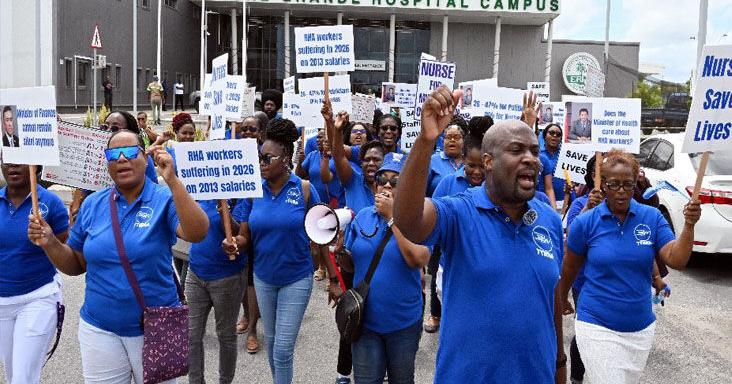
    Speaking in Parliament Friday, Prime Minister Kamla Persad-Bissessar confirmed the funding, included under the 2026 Finance Bill, will cover updated salary obligations for more than 62,000 public servants across the country. Of the total supplementary request, $2.83 billion is classified as recurrent expenditure, allocated to cover the already implemented wage and salary increases for public sector workers.

    Local business chambers have largely backed the move, framing it as a necessary policy step that will put immediate discretionary spending power into the hands of thousands of households, in turn stimulating stagnant domestic demand.

    Baldath Maharaj, president of the Chaguanas Chamber of Industry and Commerce, noted that the public sector wage increases will deliver a direct, immediate lift to retail activity and the small and medium-sized enterprise (SME) sector, which forms the backbone of domestic commercial activity. “This income injection will provide a very welcome boost to retail trade and overall consumer spending,” Maharaj explained, adding that businesses across every region of Trinidad and Tobago stand to gain from increased market liquidity. Even so, Maharaj emphasized that the government’s upcoming midyear budget review must lay out a clear roadmap for how the new expenditure will be managed without undermining macroeconomic stability, particularly amid ongoing foreign exchange pressures and the need for sustained long-term growth. “Fulfilling these State obligations is a critical step forward, and we trust that the Government’s upcoming fiscal presentation will balance this necessary payroll injection with continued strategies to support private sector growth, manage foreign exchange stability, and drive long-term economic development for Trinidad and Tobago,” he added.

    Kiran Singh, head of the Greater San Fernando Chamber of Commerce, echoed Maharaj’s perspective, noting that the wage adjustment delivers on the government’s long-stated commitments to public servants at a time of soaring national living costs. “The chamber views this decision as part of the Government’s broader effort to stabilise the economy while addressing long-standing financial obligations to its employees. Public sector wages support consumer spending, which in turn benefits businesses across the country, particularly small and medium-sized enterprises that rely heavily on domestic economic activity, thereby sustaining a nationwide positive multiplier effect,” Singh said. He added that the government’s long-term policy focus must center on expanding the national economy to generate consistent, sustainable revenue streams, reduce chronic fiscal pressures, and support broad-based employment growth. Singh also noted his organization remains encouraged by ongoing government efforts to revitalize the economy, including initiatives to attract foreign direct investment, strengthen partnerships with multilateral institutions, support SME growth, and diversify the national economy away from its historic reliance on traditional energy sectors.

    Even as business groups broadly welcome the wage adjustment, industry leaders have stressed the urgent need for transparency around the government’s funding strategy. Dianne Joseph, president of the Trinidad and Tobago Coalition of Services Industries (TTCSI), said the organization does not oppose the supplementary budget request, given that public sector workers have faced more than a decade of near-stagnant real wage growth. Even so, TTCSI has called for clear public disclosures around how the additional spending will be financed, to avoid drawing further down on strained national reserves or widening existing fiscal gaps. “The TTCSI urges the Government to clearly outline its revenue-generation strategies to replenish these funds without destabilising national reserves. Without a clear, proactive plan to rapidly expand alternative income streams, there is a risk of compounding local economic pressures,” Joseph warned.

    Leading local economist Dr. Vanus James framed the supplementary budget request as an entirely predictable development, noting that the government had already made binding wage commitments, and the domestic economy has not expanded fast enough to generate the revenue required to cover the new expenditure. Dr. James predicted the funding will most likely be drawn from a mix of increased fines, higher public service fees, tax hikes, and new public debt, with a small portion potentially coming from official development assistance if the government is successful in securing external grants. “There is no doubt that the country needs to move quickly to a path of rapid productivity growth to cover its rising labour costs,” he added.

  • ‘PNM will win the next election’

    ‘PNM will win the next election’

    Twelve months ago, Pennelope Beckles stepped into the role of People’s National Movement (PNM) political leader after the party’s 2025 general election defeat, and for much of her first year in opposition, she operated largely under the radar. Rarely commenting on pressing national matters and maintaining only a faint footprint across social media platforms, the opposition leader was often described as unreachable and invisible to the general public. Today, that narrative has shifted dramatically: Beckles has emerged from the shadows, making a deliberate pivot from behind-the-scenes internal party rebuilding to a bold, highly visible public and digital engagement strategy that has put her political agenda front and center.

    Speaking at the PNM National Women’s League membership gathering held at the Fyzabad Regional Community Complex this week, Beckles made an unflinching prediction: the PNM is on track to secure victory in both the upcoming 2026 local government election and the 2030 general election, and the party has already begun laying the groundwork to turn that forecast into reality. She stressed that the priority right now is strengthening the party’s internal structure ahead of the two upcoming electoral contests, announcing that candidate screening for the August 2026 local government poll is already underway. Unlike previous election cycles, candidates will be selected and deployed to their constituencies far earlier than usual, a move designed to give each hopeful the maximum possible advantage on voting day.

    Beckles reminded party faithful that the PNM has spent time in opposition before, and that a return to governing is only possible through consistent, intentional work from every member. “We lost in 2025, and we will rise to power again – but that victory will only come if we put in the work today,” she told attendees. “I want every one of you to know you have a leader who is ready to put in that work alongside you.” Rejecting vague promises of coming improvement, she urged members to take active steps to prepare for a PNM return: “I don’t want to just say ‘better days are coming.’ I want you to prepare for better days. Put in the work, lift each other up, practice compassion, embrace inclusion, and we will take back government.”

    Longtime PNM member and former party vice-chairman Robert Le Hunte framed Beckles’ new, more assertive public profile as not a sudden change of heart, but the intentional next phase of a long-game strategy the leader has been executing since taking office in May 2025. In a telephone interview with the *Sunday Express*, Le Hunte said he is not surprised by the current shift, noting that the first year’s focus on internal rebuilding was always a necessary first step, even if it lacked flashy public fanfare. “This might not be glamorous work, but it is work that had to be done,” he explained.

    Le Hunte pointed to the severe hit the PNM took in the 2025 election, when it lost roughly one-third of its support base as disenchanted voters stayed home on election day. Over the past 12 months, Le Hunte said Beckles has worked tirelessly to rebuild the party’s foundation and re-energize lapsed supporters, work that was always the first priority of her leadership plan. “What you are seeing now is just the execution of the next part of that strategy,” he said. “Over the past year, Beckles has done tremendous work to repair the party’s base, including reaching out to members who felt neglected after past internal missteps. She even issued public apologies to those who were wronged, which has cemented her standing with the rank and file.”

    Le Hunte expressed unwavering confidence in Beckles’ leadership, noting that she was elected unopposed to the top post and would still win as much as 90% of the party membership’s support if a new leadership vote were held tomorrow. While other politicians have been rumored to harbor leadership ambitions, none command the same level of grassroots support that Beckles enjoys, he added. Drawing a parallel to construction, he noted: “If you are building a house, you first have to make sure the foundation is solid before you start raising the walls. That is exactly what Beckles has done over this first year.”

    A PNM member for more than 35 years, Le Hunte said Beckles’ approach to leadership is unprecedented in his decades of party involvement: she is the first PNM leader to fully leverage the party’s existing internal leadership structure, empowering vice-chairs and other party officials to contribute fully to the rebuilding effort. He rejected claims that Beckles’ rising public profile is the result of a carefully orchestrated PR campaign, arguing instead that the shift is a natural, authentic reflection of her broader leadership purpose.

    “This isn’t some managed publicity push,” Le Hunte explained. “Beckles genuinely believed that reaching out to members and mobilizing the base was the most important work to do in her first year. Now that that foundation is solid, her focus has naturally shifted to other priorities, and there is another key factor driving this change: growing public frustration with the current ruling United National Congress (UNC) government.”

    Le Hunte argued that many voters were initially won over by the UNC’s campaign promises, but after a year in office, Trinbagonians are facing increasing daily hardship, and the government has failed to deliver on most of its key pledges. “As time goes on, public disappointment is only growing, which means there are more and more pressing national issues for Beckles to speak out on than there were in her first months in office,” he said. “This shift in focus is not arbitrary – it is a response to what the people of this country are going through right now.”

  • MATT seeks meeting with PM over media access

    MATT seeks meeting with PM over media access

    Trinidad and Tobago’s leading media advocacy organization has formally requested a sit-down with Prime Minister Kamla Persad-Bissessar to address growing gaps in formal press access to state-funded government events, marking a push for greater governmental transparency amid long-standing questions about the prime minister’s limited formal press engagement.

    The Media Association of Trinidad and Tobago (MATT), which recently installed a new executive board, submitted the formal request dated May 11, 2026, laying out key concerns about the persistent exclusion of journalists from pre-announcing and inviting media to cover ministry-hosted events that are funded by public resources. In the letter, MATT clarified that it does not view the current administration as posing an overall threat to press freedom, noting that working conditions for most journalists remain stable and access to most cabinet ministers and government officials has generally been available.

    Even so, the association warned that the emerging pattern of barring or failing to notify media of certain public events undermines core democratic principles and erodes the public’s legal and normative right to hold government actors accountable. Local outlet the Sunday Express first reported on the correspondence after MATT initially declined to release the letter publicly, with MATT president Prior Beharry later confirming the details of the request to reporters.

    Contrary to early public speculation, the formal letter does not explicitly reference the prime minister’s year-long absence from regularly scheduled post-Cabinet press conferences, a break from the standard practice that has drawn criticism from press advocates. However, in separate comments responding to queries from another local media outlet, Guardian Media Ltd, Beharry expanded on MATT’s broader concerns, tying the restricted event access to the prime minister’s withdrawal from formal unscripted press briefings.

    “Journalism serves as the Fourth Estate and is a fundamental pillar of our democracy. As such, the media must be allowed to scrutinise all arms of government—including the executive, the legislature, and the judiciary,” Beharry stated in his comment. “By asking questions and holding all bodies and individuals in society to account, we are fulfilling our constitutional duty. It is our mandate to question everyone in society on behalf of the public.”

    Beharry noted that while the prime minister has occasionally spoken informally to reporters outside of parliamentary sessions and at a small number of public events, these ad-hoc interactions cannot replace the value of structured, unscripted formal press briefings where journalists can raise unplanned questions on matters of public concern. “Having the Prime Minister respond to unscripted questions at a formal press conference is essential to the transparent functioning of our democracy,” he added.

    Beyond the issue of the prime minister’s press conference attendance, Beharry emphasized that the growing trend of excluding media from state-funded ministry events is a troubling operational gap that requires immediate discussion with the nation’s top leader. MATT’s core request is for an introductory meeting to introduce the association’s new executive board and open a constructive dialogue to resolve gaps in government communication protocols that block press access.

    As of the latest updates, Persad-Bissessar has not yet responded to MATT’s request for a meeting. Beharry confirmed that the association remains ready and willing to meet at the prime minister’s earliest convenience to address these concerns, reiterating that MATT’s core mission is protecting press freedom and public right to information, both of which are foundational to Trinidad and Tobago’s democratic system.

  • The season of discontent

    The season of discontent

    It has been just 12 months since the United National Congress (UNC) swept to power in the April 28, 2025 general election of Trinidad and Tobago, but a wave of public discontent has already swept across the nation. Multiple civil society and advocacy groups have taken to the streets and issued public challenges to a range of the new administration’s governance policies, with grievances spanning from lack of police accountability and unresolved labor disputes to persistent public transportation failures and controversial state of emergency (SoE) regulations.

    Political analyst and trade unionist Dr. Indira Rampersad, who also serves on the management committee of the West Indies Group of University Teachers (WIGUT) and practices as an attorney, broke down the roots of this unrest in an interview with the *Sunday Express* this week. She explained that public expectations for the UNC-led government are inherently far higher than those placed on the long-governing People’s National Movement (PNM), the party that has held power for the vast majority of Trinidad and Tobago’s post-independence history.

    “Voters hold UNC administrations to a much higher bar than PNM governments,” Rampersad noted. “The public comes in expecting progress on long-stalled salary negotiations, improved worker benefits and working conditions, upgraded public infrastructure, and more responsive delivery of critical public goods and services.”

    Rampersad traced this gap in expectations to the PNM’s decades of incumbency, which had fostered a widespread sense of political complacency among the public over time. Previous changes in government in 1995 and 2010, followed by returns to PNM rule, meant that the 2025 UNC victory carried unprecedented weight: voters saw it as a rare opportunity for systemic change, and poured all their unmet demands from years of PNM governance into the new administration.

    As a trade unionist, Rampersad pointed out that public protest was far less common during the PNM’s most recent term, even though workers went nearly a decade without salary increases starting in 2014. “Our union protested repeatedly because the PNM administration refused to negotiate fair settlements, but widespread national protests never gained traction,” she said. She acknowledged that the current UNC government has already moved to address many of these long-simmering issues, a point Prime Minister Kamla Persad-Bissessar highlighted in a recent parliamentary address last Friday. The PNM’s longstanding apathy toward public grievances, she argued, has created a different standard by which the UNC is judged.

    “Expectations are not just higher – the public is demanding immediate, fast results,” Rampersad added. “The timeline people have set for these changes is very compressed, and in many cases, simply unrealistic, given the scale of the problems the UNC inherited.”

    Not all protests reflect broad national discontent, Rampersad stressed. High-profile demonstrations calling for justice for Joshua Samaroo and Kaia Sealy, for example, are driven by a small, dedicated group rather than widespread public anger. She also emphasized that many citizens lack awareness of legal processes surrounding active court cases: the matters are currently under review by the Director of Public Prosecutions and the judiciary, and police operate as an independent branch of government, meaning the executive branch cannot intervene to direct police actions. Rampersad called for greater public education on the principle of sub judice, noting that uninformed public commentary can create prejudicial publicity that risks undermining the integrity of ongoing judicial proceedings.

    Turning to objections to the current state of emergency regulations, Rampersad argued that critics must contextualize the measures within their original purpose: preventing violent unrest at key state institutions including Parliament. Far from targeting opposition voices, the regulations protect all elected officials, regardless of party affiliation, who use these public spaces. She also clarified that the SoE does not ban peaceful protest entirely – demonstrations are still permitted in unrestricted zones, as long as organizers follow legal protocols to obtain permission.

    Rampersad pushed back forcefully against opposition claims that Trinidad and Tobago is sliding into a police state. If the country were a police state, she argued, violent crime would not remain one of the nation’s most pressing unresolved problems. “This is a plural democracy, and people retain full rights to express their views freely,” she said. “No one is suppressing the right to protest.”

    She also pointed to a major recent diplomatic win to counter claims of widespread government unpopularity: Trinidad and Tobago recently secured a seat on the United Nations Security Council, winning 181 out of 190 total global votes – a resounding show of international confidence that would not have been possible if the nation’s government lacked broad domestic and global credibility. “A small handful of protests do not automatically mean the government is unpopular,” she concluded, reaffirming that peaceful, lawful protest remains a protected right in the country’s functioning democracy.

  • Man accused of choking woman cleared of charges

    Man accused of choking woman cleared of charges

    After a weeks-long legal proceeding at the Port of Spain High Court, a San Juan resident has been cleared of serious assault charges stemming from a 2019 incident in which he was accused of choking a woman at his private residence. On Wednesday, a nine-member jury delivered a unanimous not guilty verdict before Justice Sherene Murray-Bailey, dismissing two alternative counts of grievous bodily harm brought against 44-year-old Stefan O’Brien.

    The charges date back to July 13, 2019, when prosecutors from the Office of the Director of Public Prosecutions alleged that O’Brien first encountered the complainant, Zakiya Penn, in the early hours of the morning along Ariapita Avenue. According to the prosecution’s narrative, the pair left the area together in O’Brien’s vehicle, after which he drove them back to his San Juan home. Prosecutors claimed that once inside, O’Brien made unwanted sexual advances toward Penn, then physically attacked her by choking her on two separate occasions.

    Penn took the stand during the trial to confirm the prosecution’s account, stating that she ultimately managed to flee the property, flag down help from a neighbor who lived close by, and was transported to a local medical facility for treatment the same morning. To build their case, state prosecutors led by attorneys Chenelle Moe and Roger Hinds presented testimony from Penn, her then-boyfriend Rakeem Moses, independent witness Kyle Caesar, and medical evidence provided by examining physician Dr Christiana Ramnarine.

    Dr Ramnarine told the court that her examination of Penn conducted hours after the alleged incident revealed visible redness and bruising along Penn’s neck, as well as small hemorrhages in both of her eyes. Prosecutors argued that these clinical findings aligned directly with Penn’s claim that O’Brien had applied sustained, forceful pressure to her neck during the attack.

    O’Brien has consistently denied all accusations against him from the time he was first charged. Represented by court-appointed public defenders Ayanna Norville-Modeste and Janeil Chuck, O’Brien told the court that Penn’s entire version of events was entirely fabricated, and that the violent encounter she described never took place at his home.

    Over the course of the trial, the defense team systematically challenged the credibility of every witness called by the prosecution, identifying multiple inconsistencies between Penn’s testimony and the physical medical evidence entered into the court record. They also raised major questions about the conduct of the initial police investigation, pointing out several key investigative shortcomings: investigators never obtained nearby CCTV footage that could have corroborated or refuted Penn’s account of leaving the area with O’Brien, nor did they collect fingerprint or DNA evidence from the scene of the alleged attack. The defense also noted significant unexplained delays in progressing the case from initial investigation to trial.

    Norville-Modeste and Chuck further emphasized that the medical findings documented by Dr Ramnarine did not support the extreme severity of the assault Penn alleged, and added that medical records confirmed Penn remained clinically stable immediately after the incident, contradicting claims of a near-fatal strangulation attack. After more than six hours of deliberation, the jury ultimately accepted the defense’s arguments and returned the not guilty verdict on both counts.

  • Death toll climbs to 3 in Malick

    Death toll climbs to 3 in Malick

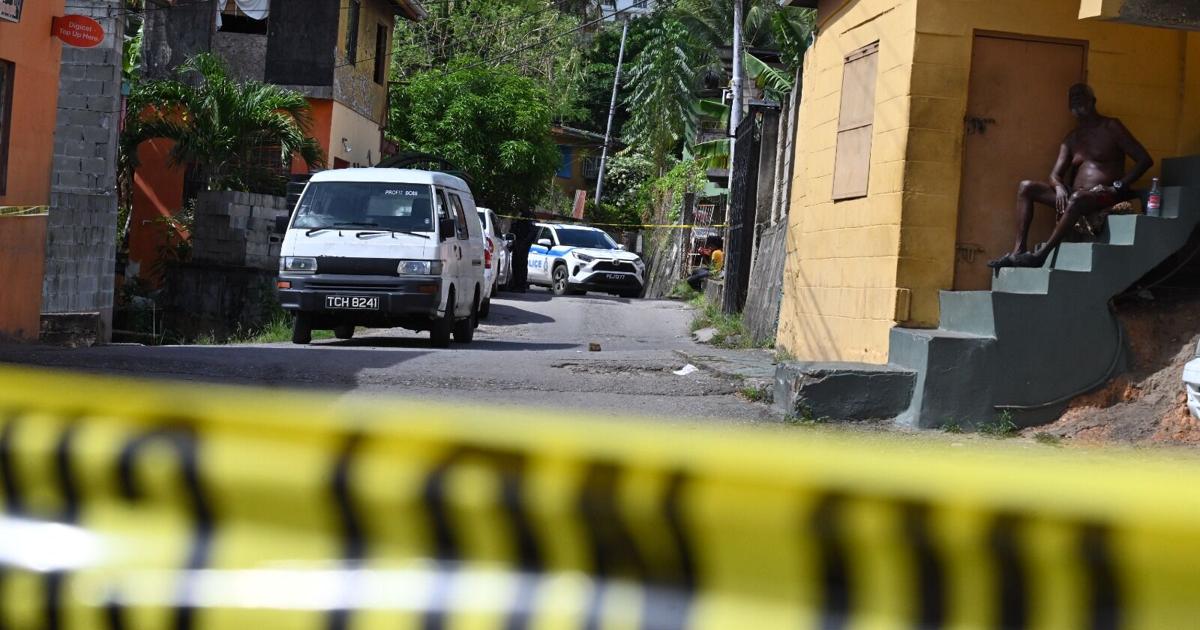
    A brutal midday attack in the Trinidad and Tobago community of Malick has left three men dead and three other people wounded, triggering an extensive homicide investigation from local law enforcement. The targeted shooting unfolded just after 1 p.m. on Friday along Upper Seventh Avenue, catching residents off guard and plunging the quiet neighborhood into chaos. According to official police accounts, a group of people had gathered casually in a residential yard when a white sport utility vehicle pulled up to the area. Three masked, armed suspects stepped out of the vehicle and immediately opened fire on the group, unleashing volleys of bullets from high-powered military-style rifles. Panic erupted as dozens of shots echoed through residential streets, forcing nearby residents to scramble for shelter behind walls and inside their homes to avoid stray gunfire.

    When the gunmen fled the scene and gunfire stopped, first responders arrived to find five people with life-altering gunshot wounds. Oren Danglade, 38, who was also known by the street name “Grimey”, had sustained multiple gunshot injuries and was pronounced dead directly at the attack site. Akins Phillip, Keron Paul, and two other unidentified men were rushed to local medical facilities for emergency care, while a third injured victim—who had been left in critical condition—was transported by police personnel directly to the Eric Williams Medical Sciences Complex in Mt Hope. Tragically, Phillip did not survive his injuries, passing away while undergoing emergency intervention at Port of Spain General Hospital. Shortly after, Paul also succumbed to his wounds at the Eric Williams Medical Sciences Complex, bringing the total number of fatalities from the attack to three.

    As of late Friday evening, the two surviving male gunshot victims remained hospitalized in stable condition for ongoing care. A woman who suffered a grazing wound from a stray bullet also received outpatient medical treatment for her minor injury and has since been released. Local residents told responding investigators that they recognized the rapid, deafening barrage of gunfire shortly after 1 p.m. Once the shooting stopped, they ventured out to check the area and found the victims clustered near a pink-painted house along the main roadway. Detectives from the Trinidad and Tobago Police Service’s Northern Division and specialized homicide unit have already processed the crime scene, collecting bullet casings, witness statements, and forensic evidence as they work to unpack the possible motive for the public attack.

    This triple killing has pushed the national murder toll for Trinidad and Tobago in 2026 to 162. For comparison, the country recorded 168 homicide deaths over the same period last year, marking a slight downward trend in overall murders, but reigniting longstanding public conversations about violent gun crime plaguing residential communities across the twin-island nation.

  • ROSE picked

    ROSE picked

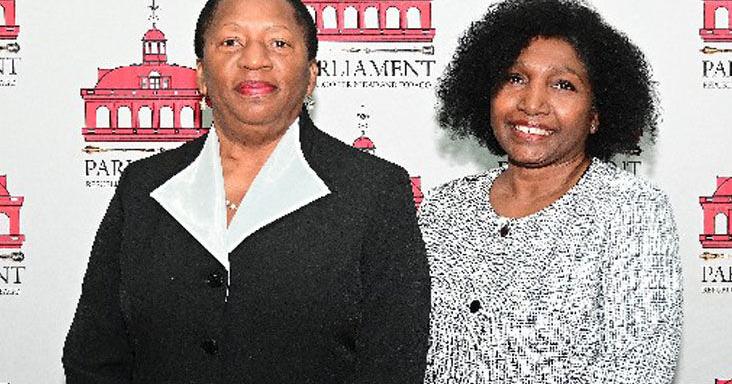
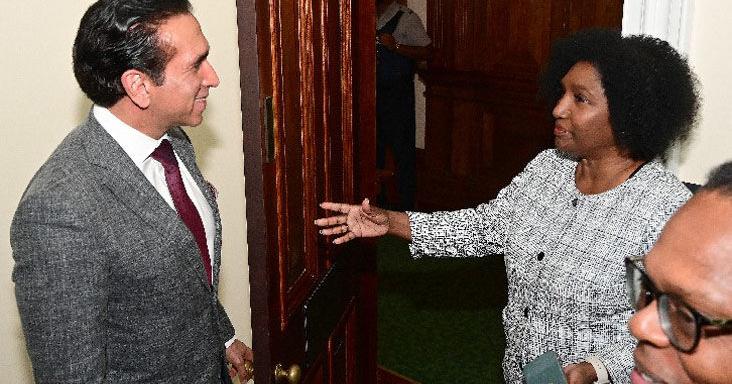
    More than four weeks after former Opposition Senator Janelle John-Bates formally submitted her resignation to Opposition Leader Pennelope Beckles, a successor has finally taken her seat on Trinidad and Tobago’s Opposition Senate bench. At the opening of Tuesday’s Senate sitting, attorney Dr. Margaret Satya Rose was officially sworn in as the new People’s National Movement (PNM) senator, capping a weeks-long period of political speculation over the vacancy.\n\nBeckles opened the new chapter by publicly acknowledging John-Bates’ past service to the party and the nation, while doubling down on the PNM’s controversial decision to keep another high-profile senator, Faris Al-Rawi, in his position. Speaking to reporters after the Senate adjourned at the Red House in Port of Spain, the Opposition Leader expressed full confidence in Rose’s capabilities, highlighting her deep specialized experience in public procurement as a major asset to the opposition bench.\n\nThe leadership shake-up traces back to a public controversy that erupted in April, when it was revealed that John-Bates, while sitting on the parliamentary Public Administration and Appropriations Committee (PAAC), assisted former health minister Terrence Deyalsingh in editing a statement he was set to submit to the committee during an enquiry into public health pharmaceutical acquisitions. Al-Rawi was also linked to the preparation of the statement, though he noted he was serving as Deyalsingh’s personal attorney in the matter.\nGovernment senator David Nakhid subsequently referred both John-Bates and Al-Rawi to Parliament’s Privileges Committee for alleged rule violations. However, no investigation ever launched, as the procedural lapsed when the First Session of the 13th Republican Parliament dissolved on May 22. Even so, John-Bates was removed from her roles on the PAAC and the Joint Select Committee on National Security, and she submitted her Senate resignation on May 1.\nFor weeks following the resignation, Beckles faced mounting criticism from the governing party and scrutiny from political analysts over her refusal to immediately confirm John-Bates’ departure and name a replacement. Addressing that backlash on the day of Rose’s swearing-in, Beckles pushed back, arguing that the party needed time to handle the sensitive personnel matter through proper procedures. She emphasized that John-Bates is a young politician, and that mistakes do not need to spell the end of a public servant’s career, adding that the door remains open for her future political service. Responding to widespread calls for Al-Rawi to also step down, Beckles clarified that Al-Rawi was never a member of the PAAC, the committee where the controversy originated, justifying the decision to keep him in place.\n\nBeckles lavished praise on Rose, highlighting what she called the new senator’s “rich and outstanding record of professional achievement, public service and academic excellence.” She noted that Rose’s specialized expertise in governance, accountability and legislative scrutiny will meaningfully strengthen the Opposition’s work in the Senate. \”I am confident that she will serve the people of Trinidad and Tobago with distinction, integrity and commitment,\” Beckles said in her official welcome statement.\nRose is not only a practicing attorney but also an accomplished public policy researcher and educator, with globally recognized expertise in public procurement, governance, commercial law and anti-corruption frameworks. In an official release, the PNM described her as a respected leading professional whose career spans both the legal and public policy sectors. She holds a Doctor of Policy Research and Practice from the University of Bath in the United Kingdom, and has previously advised national governments, public institutions, and major international organizations on procurement governance, regulatory compliance, and public sector reform. She has also served as counsel in multiple high-profile public commissions of enquiry and significant legal cases, including appearances before the Judicial Committee of the Privy Council, the region’s highest appellate court.\n\nFor her part, John-Bates issued a measured statement following the swearing-in, thanking the PNM and Beckles for the chance to serve the nation. She extended well wishes to the Opposition Leader, saying, \”I wish [Beckles] strength and God’s guidance as she continues, in these difficult times, to defend our democracy and the rule of law.\” She also offered sincere congratulations to Rose on her new appointment.\nA civil lawyer by training, John-Bates said she has spent the past weeks reflecting deeply on the controversy and the core responsibilities that come with public office. \”I remain committed to serving the people of Trinidad and Tobago in any capacity that I am asked to by the Opposition Leader in the future,\” she said.\nBeckles echoed that collaborative tone in her official remarks, reaffirming her gratitude for John-Bates’ service over the past year. \”I wish to place on record my gratitude to former Senator Mrs Janelle John-Bates for her commitment and her contribution as an Opposition Senator over the past year. We will all continue to work together to restore good governance to Trinidad and Tobago,\” she said.