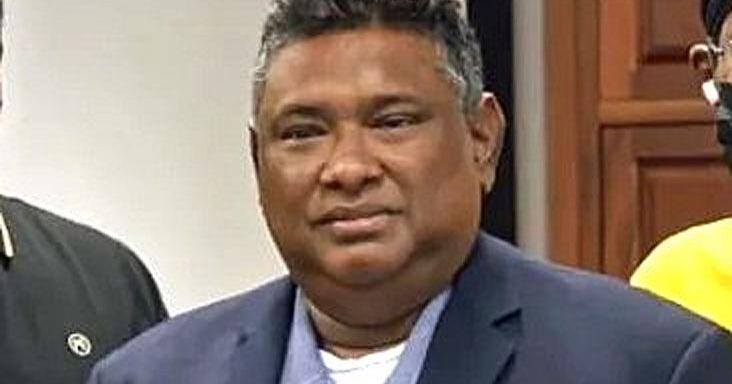
Trinidad and Tobago’s leading media advocacy organization has formally requested a sit-down with Prime Minister Kamla Persad-Bissessar to address growing gaps in formal press access to state-funded government events, marking a push for greater governmental transparency amid long-standing questions about the prime minister’s limited formal press engagement.
The Media Association of Trinidad and Tobago (MATT), which recently installed a new executive board, submitted the formal request dated May 11, 2026, laying out key concerns about the persistent exclusion of journalists from pre-announcing and inviting media to cover ministry-hosted events that are funded by public resources. In the letter, MATT clarified that it does not view the current administration as posing an overall threat to press freedom, noting that working conditions for most journalists remain stable and access to most cabinet ministers and government officials has generally been available.
Even so, the association warned that the emerging pattern of barring or failing to notify media of certain public events undermines core democratic principles and erodes the public’s legal and normative right to hold government actors accountable. Local outlet the Sunday Express first reported on the correspondence after MATT initially declined to release the letter publicly, with MATT president Prior Beharry later confirming the details of the request to reporters.
Contrary to early public speculation, the formal letter does not explicitly reference the prime minister’s year-long absence from regularly scheduled post-Cabinet press conferences, a break from the standard practice that has drawn criticism from press advocates. However, in separate comments responding to queries from another local media outlet, Guardian Media Ltd, Beharry expanded on MATT’s broader concerns, tying the restricted event access to the prime minister’s withdrawal from formal unscripted press briefings.
“Journalism serves as the Fourth Estate and is a fundamental pillar of our democracy. As such, the media must be allowed to scrutinise all arms of government—including the executive, the legislature, and the judiciary,” Beharry stated in his comment. “By asking questions and holding all bodies and individuals in society to account, we are fulfilling our constitutional duty. It is our mandate to question everyone in society on behalf of the public.”
Beharry noted that while the prime minister has occasionally spoken informally to reporters outside of parliamentary sessions and at a small number of public events, these ad-hoc interactions cannot replace the value of structured, unscripted formal press briefings where journalists can raise unplanned questions on matters of public concern. “Having the Prime Minister respond to unscripted questions at a formal press conference is essential to the transparent functioning of our democracy,” he added.
Beyond the issue of the prime minister’s press conference attendance, Beharry emphasized that the growing trend of excluding media from state-funded ministry events is a troubling operational gap that requires immediate discussion with the nation’s top leader. MATT’s core request is for an introductory meeting to introduce the association’s new executive board and open a constructive dialogue to resolve gaps in government communication protocols that block press access.
As of the latest updates, Persad-Bissessar has not yet responded to MATT’s request for a meeting. Beharry confirmed that the association remains ready and willing to meet at the prime minister’s earliest convenience to address these concerns, reiterating that MATT’s core mission is protecting press freedom and public right to information, both of which are foundational to Trinidad and Tobago’s democratic system.