标签: Trinidad and Tobago

特立尼达和多巴哥

  • Trinidad and Tobago Newsday – Monday January 19th 2026

    Trinidad and Tobago Newsday – Monday January 19th 2026

    The academic publishing landscape is undergoing a revolutionary transformation with the emergence of a groundbreaking digital platform dubbed ‘Special Publications.’ This AI-powered system, which processes new research submissions in approximately seven minutes, represents a seismic shift from traditional peer-review models that often take months.

    Developed by an anonymous team of digital archivists and AI specialists, the platform utilizes advanced machine learning algorithms to analyze, categorize, and validate scientific submissions. The system’s ‘webmaster’ functionality autonomously handles everything from initial manuscript screening to final publication readiness, dramatically accelerating the dissemination of knowledge.

    This innovation addresses critical inefficiencies in academic publishing, where valuable research frequently faces prolonged delays before reaching the scientific community. The platform’s seven-minute processing capability—signified by the ‘7 Minutes Ago’ timestamp—ensures near-instantaneous publication while maintaining rigorous academic standards through algorithmic validation protocols.

    The implications for research communities are substantial, particularly for time-sensitive fields where rapid knowledge sharing can accelerate discoveries. The platform’s architecture also promises to reduce administrative burdens on researchers and institutions while potentially democratizing access to cutting-edge findings across global scientific networks.

  • Newsday’s winding-up petition adjourned to January 23

    Newsday’s winding-up petition adjourned to January 23

    The High Court has postponed the critical winding-up petition against Daily News Ltd, publisher of Trinidad and Tobago’s Newsday newspaper, until January 23 following a brief hearing on January 19. Justice Marissa Robertson granted the adjournment request after company attorneys cited procedural requirements under the Companies Act.

    Legal representatives Gregory Pantin and Miguel Vasquez of Hamel-Smith and Co. appeared before the court, explaining that the petition filed on December 31 was officially gazetted on January 15—later than initially anticipated. This timing complication affected the company’s ability to meet the mandatory seven-day statutory period for advertisement in both the Gazette and at least one local daily newspaper before the hearing.

    Pantin clarified that the delay prevented the company from filing its certificate of compliance with the court registry. He further noted that no creditors or contributories had submitted notices of intention to appear at Monday’s hearing, despite the published invitation for interested parties to support or oppose the winding-up order.

    Justice Robertson reviewed her judicial calendar before scheduling the rescheduled hearing for 10 am on January 23. The proceedings mark a pivotal moment for Newsday, which launched on September 20, 1993, as the youngest among the nation’s three daily newspapers. The outcome could determine whether the publication ceases operations after more than three decades of service.

  • Archbishop wants laws to protect children: ‘Social media more addictive than alcohol’

    Archbishop wants laws to protect children: ‘Social media more addictive than alcohol’

    In a groundbreaking appeal, Archbishop Charles Jason Gordon has called for comprehensive legislation to shield children from social media’s addictive dangers, drawing parallels to substance abuse regulations. Speaking at a January 19 press conference, the religious leader emphasized that digital platforms are deliberately engineered to foster dependency through sophisticated algorithms.

    Archbishop Gordon’s proposal directly references Australia’s pioneering ban prohibiting children under 16 from accessing major platforms including Facebook, Instagram, TikTok, and YouTube. His intervention comes just two days after Prime Minister Kamla Persad-Bissessar announced sweeping age restriction reforms for alcohol, cannabis, and gambling activities.

    The Australian model—currently under global scrutiny—represents the world’s first comprehensive youth social media prohibition. Under these regulations, minors cannot establish new accounts while existing profiles face deactivation. Prime Minister Anthony Albanese’s administration justifies this radical measure based on government-commissioned research revealing alarming statistics: 96% of Australian children aged 10-15 actively use social media, with 70% exposed to harmful content including violence, misogyny, and self-harm promotion.

    Archbishop Gordon specifically praised Trinidad and Tobago’s recent disciplinary measures, including increased traffic fines and the proposed age restriction hikes. ‘We have become an undisciplined society,’ Gordon observed, characterizing these policy shifts as crucial ‘national building levers’ rather than mere revenue-generation tactics.

    The proposed Trinidadian legislation would mirror Australia’s three-pronged criteria for identifying regulated platforms: services primarily facilitating online social interaction, enabling user-to-user communication, and allowing content posting capabilities. This framework potentially affects ten major platforms currently accessible without restrictions in the Caribbean nation.

    Gordon’s endorsement adds significant moral weight to the government’s broader protective agenda, creating unusual alignment between religious and governmental institutions on public welfare policy. The archbishop’s characterization of social media as ‘more addictive than alcohol’ echoes recent Congressional testimony from tech executives acknowledging their platforms’ dependency-building design philosophies.

  • Central Bank lawsuit against CL Financial directors halted

    Central Bank lawsuit against CL Financial directors halted

    A landmark legal battle stemming from Trinidad’s massive financial collapse has been temporarily suspended as authorities examine a long-awaited official report. The Central Bank of Trinidad and Tobago has secured an adjournment until January 26 in its billion-dollar lawsuit against former CL Financial directors, including late chairman Lawrence Duprey, to review the recently published Colman Commission report.

    The 676-page document, tabled in Parliament on January 16 after eight years in preparation, details the catastrophic failure of Colonial Life Insurance Company (Trinidad) Ltd and its parent conglomerate CL Financial. Attorney General John Jeremie revealed the state has expended approximately $28 billion in bailout funds plus $3-4 billion in associated costs since the 2009 collapse that threatened national economic stability.

    Despite the enormous expenditure and decade-long investigation, no criminal charges have resulted from the failure that wiped out millions in policyholder investments. The civil case alleges gross mismanagement, misappropriation of funds, and improper governance within the insurance giant that served as CL Financial’s ‘cash engine.’

    The suspension comes as the Central Bank evaluates whether the commission’s findings—based on millions of emails, forensic accounting records, and over 1,600 document boxes—could impact ongoing litigation. The bank acknowledged the ‘voluminous’ nature of the report and the ‘protracted’ process while promising independent consideration of its implications.

    The case represents one of several legal actions stemming from the collapse that absorbed more than $5 billion in taxpayer funds during initial rescue efforts. With Duprey’s passing in August 2024 at age 89, the proceedings continue against remaining defendants including former corporate secretary Gita Sakal and companies linked to former executives.

  • Woman seeks closure 7 years after mother’s murder

    Woman seeks closure 7 years after mother’s murder

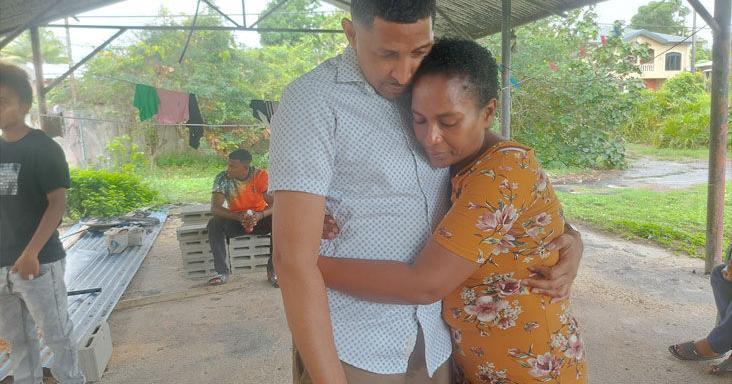
    A grieving daughter continues her relentless pursuit for justice nearly seven years after the horrific murder of her mother, a case that remains shrouded in mystery within Trinidad’s criminal investigation system.

    Carolyn McKenzie, daughter of the late Angela Elizabeth McKenzie, maintains her vigil for answers regarding the brutal chopping death that claimed her 64-year-old mother’s life on January 30, 2019. The elderly victim was discovered in the front yard of her Quinam Road residence in Siparia, situated within a densely forested area, bearing catastrophic chop wounds that nearly decapitated her.

    Forensic evidence examination revealed a disturbing blood trail originating from inside the residence, suggesting the violent attack commenced indoors before culminating in the exterior premises. Notably, investigative reports indicated no apparent theft or robbery, eliminating conventional motives and deepening the mystery surrounding the crime.

    Despite comprehensive investigations conducted by the Homicide Bureau of Investigations, Region Three, the case remains officially categorized as ongoing with no arrests made. The deceased, remembered as an active agriculturalist and devout congregant of La Divina Pastora RC Church, lived independently at the time of her tragic demise.

    As the seventh anniversary approaches, Carolyn McKenzie plans to honor her mother’s memory through religious commemorations, seeking spiritual solace while confronting the painful reality of unresolved justice. She emphasizes the broader context of unaddressed violent crimes nationwide, expressing both personal anguish and societal concern over investigative delays.

    The emotional toll continues to manifest unexpectedly, with Carolyn describing sudden episodes of overwhelming grief that underscore the persistent trauma affecting victims’ families in unsolved homicide cases.

  • Regional Carnival $$ distribution begins Jan 21

    Regional Carnival $$ distribution begins Jan 21

    The Trinidad and Tobago government has initiated substantial financial support for regional Carnival celebrations, with Culture and Community Development Minister Michelle Benjamin announcing imminent disbursements totaling $35 million. Pan Trinbago is slated to receive $20 million while the Trinbago Unified Calypsonians’ Organisation (TUCO) will obtain $15 million in structured tranches throughout the Carnival period.

    Minister Benjamin, speaking at a UNC media briefing in Chaguanas on January 18, emphasized the government’s commitment to timely funding distribution and accountability standards. She directly addressed criticisms about insufficient support for cultural organizations, stating: “There are a lot of claims that this government does not like pan, does not fund pan, and I would like that to stop.” She confirmed that prize monies would not see reductions despite economic pressures.

    The ministry has pioneered new cultural initiatives including Flava Village, John Cupid Carnival Village, and the traveling Welcome to the Gayelle program that has visited Moruga, Debe, Tunapuna, and will soon reach Mayaro. These developments respond to public demand for expanded cultural spaces beyond Port of Spain. Benjamin highlighted the remarkable public response, noting that the John Cupid Village nearly reached capacity closures due to overwhelming attendance.

    NCC chairman Peter Kanhai provided infrastructure updates, revealing that the North Stand is 85% complete with handover expected by January 25. Construction efficiency has significantly improved with current pricing for major structures running 40-45% lower than 2025 figures. The Downtown stand and Skinner Park stage for Calypso Fiesta are progressing according to schedule.

    Economic indicators show robust Carnival engagement with hotels at full capacity and incoming flights fully booked. Vendors at Flava Village report exceptional earnings, surpassing their entire 2025 revenue within the first week of operation. The NCC is considering maintaining the village year-round to accommodate tourist demand and cruise ship visitors.

    The cultural calendar remains packed with events including a free Patrice Roberts concert, chutnight night, and rhythm and steel performances, demonstrating the expanded footprint of Carnival celebrations across Trinidad and Tobago.

  • West Indies Under-19s bruised at World Cup

    West Indies Under-19s bruised at World Cup

    In a stunning display of cricketing prowess, Afghanistan’s Under-19 team delivered a comprehensive 138-run victory over the West Indies in their ICC Under-19 World Cup encounter on January 18th in Windhoek, Namibia. The emphatic win secured Afghanistan’s advancement to the Super-Six stage of the tournament while leaving the Caribbean side facing significant challenges.

    Afghanistan’s decision to bat first after winning the toss proved strategically sound as their batting lineup demonstrated remarkable resilience and partnership building. Openers Khalid Ahmadzai and Osman Sadat established a solid foundation with an 86-run stand, effectively neutralizing the early threat posed by West Indian seamers Jakeem Pollard and Shaquan Belle.

    The West Indies briefly found hope through spinner Vitel Lawes, who broke the opening partnership and claimed two quick wickets to reduce Afghanistan to 110-3 in the 26th over. Lawes’ breakthroughs included dismissing Ahmadzai for 34 and clean bowling Faisal Shinodza for 4, followed by removing Uzaiullah Niazai for 12.

    However, Afghanistan’s recovery was orchestrated by captain Mehboob Khan and the composed Sadat, who constructed a decisive 77-run partnership. Both batsmen reached well-deserved half-centuries, with Sadat anchoring the innings with a top score of 88 while Khan contributed a crucial 86 runs. Their partnership propelled Afghanistan to a competitive total of 262-6 from their allotted 50 overs.

    Afghanistan’s bowling response was immediate and devastating. Their combined pace and spin attack dismantled the West Indies top order within the first five overs, reducing them to a precarious position with three quick wickets. Off-spinner Wahidullah Zadran was particularly destructive, claiming the wickets of opener Tanez Francis (9), Zachary Carter (3), and captain Joshua Dorne for a duck.

    West Indies wicketkeeper-batsman Jewel Andrew mounted a lone resistance with a classy 57 from 70 deliveries, featuring four boundaries and three sixes. Despite Andrew’s valiant effort, the disciplined Afghan bowling attack maintained constant pressure, with Nooristani Omarzai leading the charge with an impressive four-wicket haul. Supported by Khatir Stanikzai (3-20) and Zadran (3-36), Afghanistan bundled out the West Indies for a meager 124 in the 32nd over.

    The victory marks Afghanistan’s confident progression to the Super Six stage, where they will next face Tanzania on January 21st. The West Indies, meanwhile, must regroup quickly for their crucial encounter against South Africa on January 22nd as they seek to keep their tournament hopes alive.

  • West Indies bowl off T20 series against Afghanistan

    West Indies bowl off T20 series against Afghanistan

    DUBAI – The West Indies cricket team embarks on their final preparatory campaign before the ICC T20 World Cup with a high-stakes three-match series against Afghanistan, commencing January 19 in Dubai. This encounter serves as a critical testing ground for squad combinations and strategic refinements ahead of the global tournament.

    Stand-in captain Brandon King underscored the significance of these fixtures during his pre-match media briefing. “With the World Cup approaching, strong performances and cohesive team play become paramount,” King stated. “Our primary objective is to maintain the standards we’ve established internally and carry that momentum into the World Cup.”

    The Caribbean side welcomes back explosive opener Evin Lewis and pace sensation Shamar Joseph, significantly strengthening their lineup despite several absences due to franchise commitments and scheduled rest periods. King expressed particular enthusiasm about rookie Guyanese batsman Quentin Sampson, noting his “exciting performances in our domestic T20 league this season.”

    The series’ central narrative revolves around the captivating duel between West Indies’ formidable batting power and Afghanistan’s world-class spin attack, spearheaded by Rashid Khan – who needs just nine wickets to reach the historic 700-wicket milestone in T20 cricket – and Mujeeb Ur Rahman.

    King acknowledged the formidable challenge posed by Afghanistan’s spin arsenal while maintaining a confident stance. “They rank among the world’s elite T20 spinners, presenting a substantial challenge that I personally relish,” he remarked. “While giving due respect to their quality, T20 cricket demands bravery and self-belief to prevail in such confrontations.”

    This Dubai showdown offers both teams invaluable insights into their World Cup readiness, pitting Caribbean flair against Afghan spin mastery in what promises to be a compelling contest of contrasting cricketing philosophies.

  • Trinidad and Tobago Newsday – Sunday January 18th 2026

    Trinidad and Tobago Newsday – Sunday January 18th 2026

    A groundbreaking scientific investigation has revealed significant health hazards associated with widely consumed dietary supplements, challenging long-held assumptions about their safety and efficacy. The comprehensive study, conducted by an international consortium of researchers, identified potentially dangerous contaminants and inaccurate dosage labeling across numerous products available in the global market.

    The research team employed advanced spectroscopic analysis and biochemical screening methods to examine over 300 popular supplement formulations. Their findings demonstrated that approximately 23% of tested products contained undeclared pharmaceutical compounds, while nearly 35% showed substantial discrepancies between labeled and actual ingredient concentrations. Several products were found to contain heavy metal contaminants exceeding safety thresholds established by regulatory agencies.

    Medical experts have expressed particular concern about supplements marketed for weight loss and athletic performance enhancement, which showed the highest incidence of problematic formulations. The study also identified potential interactions between supplement ingredients and prescription medications that could lead to serious adverse health outcomes, including cardiovascular complications and hepatic toxicity.

    Regulatory authorities are reviewing the findings to determine appropriate policy responses, while consumer advocacy groups are calling for stricter manufacturing standards and more transparent labeling requirements. The research team recommends that consumers consult healthcare professionals before incorporating any dietary supplements into their wellness routines and purchase products only from reputable manufacturers that undergo third-party quality verification.

  • UNC PRO: Government policy formed at UNC headquarters

    UNC PRO: Government policy formed at UNC headquarters

    In a politically charged statement during a United National Congress (UNC) media briefing on January 18, party PRO Dr. Kirk Meighoo asserted that the Trinidad and Tobago government’s policy formulation occurs at the opposition party’s headquarters in Chaguanas. The controversial remarks have ignited debate about the separation between party operations and governmental functions in the Caribbean nation.

    Addressing journalists and online viewers at the UNC’s Mulchan Seuchan Road facility, Meighoo declared, “We are here at the UNC headquarters, which is where the policy of the government of TT has been formulated.” He characterized the UNC as “a national party open to all” with members “dedicated to making sure that everybody wins.”

    When questioned about non-governmental UNC members participating in policy development, Meighoo affirmed this practice occurs through party committees and manifesto formation processes. He defended the arrangement as normal democratic practice, stating, “The UNC forms the government, we were voted in by the majority and this is how democracy works.”

    The location and branding of government briefings have drawn public scrutiny, with observers noting the consistent use of UNC facilities and party banners rather than traditional government venues like the Red House or Diplomatic Centre in St. Ann’s. This departure from previous administrative practices has raised questions about the transparency and separation of party versus state activities in the current political landscape.

    Meighoo further positioned the UNC as “the largest organisation in TT and perhaps the English-speaking Caribbean,” asserting the party’s continued central role in the nation’s democratic processes despite its official opposition status.