标签: Trinidad and Tobago

特立尼达和多巴哥

  • Sister: Our family is broken

    Sister: Our family is broken

    A quiet, tight-knit Trinidadian community is grappling with unfathomable pain after the brutal killing of 12-year-old Mercedez Layne, a promising Standard Four student who dreamed of becoming a doctor, leaving her family shattered and the entire nation in mourning.

    In an emotional social media post shared publicly this week, Mercedez’ older sister Shereeka Layne opened up about the family’s overwhelming heartbreak, describing the gap left by the young girl’s violent death. “I love you so much babygirl, this really breaks my heart. I wish there was something I could do to keep you with us. You were so beautiful, and you didn’t deserve this,” Shereeka wrote, adding that she is forcing herself to stay strong for their mother and younger siblings. She remembered Mercedez as the funniest, most lovable person she had ever known, ending her tribute: “Rest in paradise, til we meet again my sweet sister.”

    For the small community of Erin, where everyone knows every child by name, Mercedez’s death is far more than a headline crime story. Residents watched her grow from a toddler into a focused, ambitious young girl, with a future that seemed full of endless possibility. That future was violently cut short on Saturday, when Mercedez — who was supposed to attend a dance class that afternoon — was abducted while traveling home. Her body was discovered the following morning, just a few minutes’ drive from her family’s Los Iros Beach Road home, dumped in dense bushes along a secluded dirt road near oil pipelines and a local well, roughly 500 feet from the main route.

    Investigators paint a chilling picture of the crime scene, where law enforcement recovered a broken glass bottle, a piece of lumber, a black plastic bag holding four ramen noodle packs, one half of a slipper, assorted clothing, and a packet of cigarettes. Official post-mortem results confirmed the 12-year-old died from severe blunt force trauma to the head. When family members and local residents spotted Mercedez’ partially clothed body in the brush, the area was filled with screams of agony from loved ones who had joined the frantic search for the missing girl.

    Just days before her killing, Mercedez was excitedly counting down to a school field trip to northern Trinidad. She had been looking forward to exploring the capital, visiting a local mall, and seeing the national landmarks she and her classmates had studied in their lessons at St Francis Erin RC Primary School. Less than a year away from sitting her secondary school entrance exams, Mercedez had already shared her dream of following in her older sister’s footsteps to become a doctor, driven by a deep desire to help other people and create change in her community. Today, her empty desk at school stands as a quiet, devastating reminder of a young life stolen too soon, and teachers and classmates gather to mourn their lost friend.

    Local government councillor Arlene Ramdeo, a lifelong resident of the greater Erin area who has known Mercedez’ father Ronald Cabrera since they were children growing up together in Arena Village, explained that the small community of roughly 200 residents raises its children collectively. For generations, neighbors shared responsibility for every child’s safety: doors were left unlocked, children walked freely between relatives’ homes, and every adult looked out for every young person in the area. “I watched Mercedez grow up when she and her family lived with her dad in Arena. She was a petite, quiet little girl, always respectful and focused on her goals. Her teacher said she gave 100% to everything she did, and last year she was even a model in the school’s annual fashion show,” Ramdeo recalled.

    After Mercedez’ parents separated, her mother moved her and her siblings out of Arena Village but stayed within the greater Erin community. A family member, who asked to remain anonymous to protect their privacy, shared that Mercedez spent the Thursday before her death at her aunt’s home in Lorensotte North Trace, Rancho Quemado, adjacent to her grandfather’s property. Around 11 a.m. the following Saturday, her grandfather placed her in a private hire (PH) car for the short three-minute drive to her family’s home on Los Iros Road. “But she never made it home,” the relative said.

    When Mercedez failed to arrive, the village immediately raised an alert, filed a missing person report with police, and launched a large-scale search involving family members, local law enforcement, and a volunteer hunter search and rescue team. The search ended early Sunday morning, when searchers found the child’s body in the wooded area not far from her home.

    Police investigators currently believe the PH taxi driver abducted Mercedez, diverted from the planned route, and drove her to the secluded forested area where she was attacked and killed. Law enforcement has already taken a 26-year-old suspect from Palo Seco — who operates as a PH driver along the Siparia to Erin route — into custody. The suspect remains held at a police station as detectives from the Region Three Homicide Bureau of Investigations continue to process evidence and interview witnesses.

    As news of the brutal crime spread across the country, an outpouring of grief and anger has swept through Trinidad. Thousands of citizens have shared prayers and tributes for Mercedez and her family on social media, alongside widespread calls for swift justice and action to prevent similar tragedies. For the tight-knit community that raised Mercedez, healing will take time, Ramdeo says: “This village will heal one day, but it will never, ever forget.”

  • Prisoner beaten to death in MSP cell

    Prisoner beaten to death in MSP cell

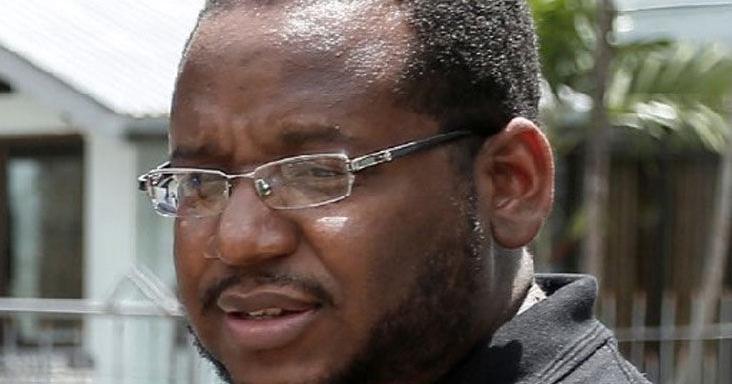
    A deadly violent incident at Trinidad and Tobago’s maximum-security correctional facility in Arouca has left one remand prisoner dead and thrown a harsh spotlight on long-standing, dangerous infrastructure and operational failures plaguing the institution. The victim has been publicly identified as 48-year-old Christopher Banfield, who was killed in a fatal beating carried out by a mentally ill fellow inmate between Monday evening and early Tuesday morning.

    The attack unfolded inside a shared cell at the G&R Division building of the facility’s Remand Unit. Unverified accounts from the prison have indicated that other incarcerated people were present in the cell during the assault, but were too intimidated to step in and stop the attack. Prison staff first discovered Banfield’s motionless body during a standard routine headcount conducted when shift changes took place early Tuesday. First responders found his body in a fetal position, with clear visible trauma, and he showed no signs of life when found.

    In the wake of the incident, prison authorities have launched a full investigation. All inmates who shared the cell with Banfield at the time of his death have been moved out of the general prison population to a separate section of the facility, as investigators work to collect witness statements and other critical evidence. Both the Trinidad and Tobago Police Service and the national Prison Service are running parallel investigations to map out the full sequence of events that led to Banfield’s killing.

    In an official statement released Tuesday, Prisons Commissioner Carlos Corraspe confirmed the details of the discovery and extended the Prison Service’s formal condolences to Banfield’s family and loved ones. Corraspe noted that responding medical staff were called immediately after the body was found just after 6 a.m., and administered first aid and attempted lifesaving measures before the death was confirmed. He added that an assigned Prison Welfare Officer has already reached out to Banfield’s next of kin to notify them of his passing.

    Gerard Gordon, head of the Prison Officers Association (POA), spoke publicly Tuesday to frame the fatal incident as an avoidable tragedy rooted in long-unaddressed systemic problems at the Arouca Maximum Security Prison. Gordon stressed that the facility lacks the capacity to properly categorize and separate incarcerated people based on their physical and mental health needs, a gap that directly created the conditions for the attack.

    Gordon identified severe overcrowding as one of the most critical contributing risk factors, noting that the facility was never originally designed to hold remand prisoners in the first place. Beyond overcrowding, the prison suffers from widespread neglected maintenance and crippling infrastructural deficiencies. “From no lighting, no ventilation, no water, faulty gates or the gates not working at all and that’s just the tip of the iceberg when it comes to that facility,” Gordon explained.

    He also called out overcrowding in individual cells, confirming that cells in the division where the attack occurred were engineered to hold a maximum of three men, but often hold far more. While he could not confirm the exact number of people in the cell on the night of the killing, he made clear that three occupants is far from the norm. Gordon added that understaffing also exacerbates risk, noting that it is common for only a single officer to cover overnight shifts, creating an unsafe environment for both staff and incarcerated people.

    Gordon framed the deadly incident as a broader failure of society, noting that people are confined in conditions that no one would keep a pet in. “As long as you are dealing with the human condition, with a man, a mind, a desire, hopes, dreams, all of these things in an environment that you wouldn’t even keep your dog in, it says something about us as a society,” he said. Gordon emphasized that any death behind prison walls is a profound tragedy, and called for urgent action to address the dangerous conditions at the facility.

  • PM: Law-abiding citizens back SoE

    PM: Law-abiding citizens back SoE

    As debate over an extension of the national State of Emergency (SoE) prepares to kick off in Trinidad and Tobago’s Parliament, Prime Minister Kamla Persad-Bissessar has doubled down on the policy, pushing back against growing criticism from labor unions, business groups, and the main opposition party while affirming that most law-abiding residents and enterprises back the government’s security crackdown.

    Hours before the scheduled parliamentary vote, 13 national trade unions delivered a formal letter of protest to the Prime Minister’s Port of Spain office, specifically opposing a new restriction that bans all protests within 500 meters of 15 high-priority government sites. These restricted zones include Parliament, courthouses, prisons, police stations, and other key state facilities. Questioned by local outlet *Trinidad Express* immediately after receiving the letter, Persad-Bissessar brushed aside the unions’ concerns, arguing that protecting public safety is the state’s non-negotiable primary duty.

    To counter claims that the ban unjustly limits the right to protest, the Prime Minister broke down the country’s geography to put the restriction in context. Trinidad and Tobago spans 5,131 total square kilometers, she noted, and the 500-meter buffer zones around the 15 sites add up to just 11.77 square kilometers – less than 0.23% of the nation’s total territory. That leaves more than 99.77% of the country open for peaceful assemblies, she emphasized. Persad-Bissessar also explained the security logic behind the 500-meter rule: the distance is sufficient to neutralize the lethal threat of small arms and rifle fire from outside the restricted zones. The ban, she added, was implemented after repeated incidents of provocation against the Trinidad and Tobago Police Service (TTPS), including a mass gathering outside the Director of Public Prosecutions (DPP)’s office intended to intimidate and harass staff working there.

    The Prime Minister warned that previously permitted gatherings near high-security sites have been infiltrated by dangerous actors, including gang members, individuals with criminal records, and bad-faith political agitators. That puts both legitimate protesters and public servants working in or visiting these facilities at risk, she argued. In a sharp rebuke to critics who claim the SoE violates freedom of speech and assembly, Persad-Bissessar pointed out the absurdity of current opposition: opponents hold public rallies to complain they cannot host public rallies, and post widespread statements across mainstream media and social platforms claiming their voices are being censored.

    She urged skeptical union and business group leaders to stop focusing on political posturing and instead prioritize delivering tangible benefits for their members, noting that most rank-and-file members actually support the government’s measures. Responding to calls from some business organizations for the government to release public evidence proving the SoE is effective at curbing violence, Persad-Bissessar argued that most criticism from elite business leaders amounts to nothing more than self-promotion, and does not reflect the views of the majority of law-abiding business owners and residents who back the security policy.

    Addressing decades of systemic violence that has shaken the nation, the Prime Minister laid out the urgent rationale for the SoE: over the past 25 years, Trinidad and Tobago has recorded more than 10,000 murders, over 20,000 reported rapes and sexual assaults, and tens of thousands of robberies, assaults, and other violent crimes. She recounted the human cost of the ongoing gang violence, noting that children and women have been brutalized, and men have been murdered for refusing to join gangs or resisting extortion schemes. “The protection of law-abiding, God-fearing citizens of this country from violent threats supersedes everything,” she said, emphasizing that the emergency measures are temporary, designed to break a cycle of violence that has devastated communities for a generation.

    While the Chaguanas Chamber of Industry and Commerce has publicly endorsed the SoE and even proposed adding targeted hotspot curfews, Persad-Bissessar confirmed that additional curfew measures are not currently under consideration by the government.

    On the opposition side, the country’s main opposition party, the People’s National Movement (PNM), has already announced it will vote against the SoE extension during Wednesday’s parliamentary debate. Persad-Bissessar blasted the PNM’s pre-vote position, claiming that party leadership has received direct orders from powerful backers to reject the extension regardless of the government’s evidence. She argued that the PNM has ignored the fact that the majority of murder victims across the country come from the party’s own traditional electoral strongholds, accusing the opposition of prioritizing the interests of its wealthy backers over public safety. She added that if the PNM chooses to walk out of the debate entirely, the party is within its constitutional rights to do so.

    Asked whether she expected support from independent senators for the extension, Persad-Bissessar dismissed the idea, claiming independent lawmakers are effectively aligned with the PNM regardless of official party status. To critics who argue the SoE violates constitutional rights, she issued a blunt response: she has no intention of debating with bad-faith political and racial agitators who are only seeking publicity.

    Closing with a message on the government’s core priority, Persad-Bissessar noted that communities across the country are united in demanding peace and security. For the first time in years, she said, young people can hold public walks for peace – events that would not have been safe amid previous waves of violence. Young Trinidadians and Tobagonians are fed up with seeing their loved ones killed in senseless gang wars that oppress entire communities, she said, and the government and security services will take all necessary steps to give these young people and communities a shot at a safer, better future, even in the face of opposition from small, self-serving segments of society.

  • Unions seek meeting with PM

    Unions seek meeting with PM

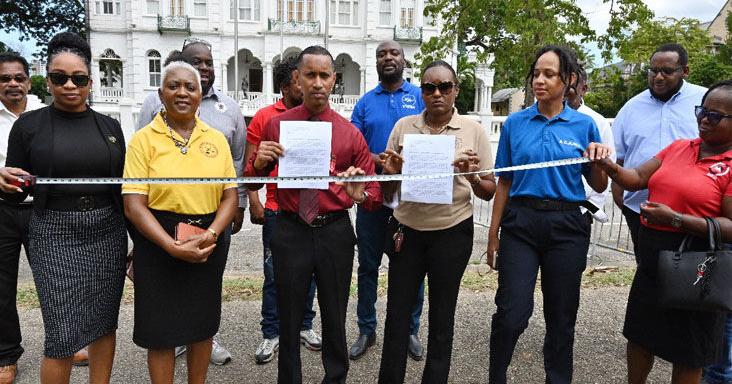
    A coalition of 13 trade unions across Trinidad and Tobago has formally requested a meeting with Prime Minister Kamla Persad-Bissessar to address mounting grievances over newly established 15 no-protest zones, arguing that the restrictions have negatively impacted their members and undermined core democratic rights.

    Shortly before 11 a.m. local time yesterday, the group, led by the Trinidad and Tobago Unified Teachers’ Association (TTUTA), hand-delivered a formal letter of request to the Prime Minister’s Office, kicking off a public push for negotiation over the controversial policy outlined in Legal Notice No 40 of 2026.

    The regulation, signed by Police Commissioner Allister Guevarro on May 27, bans all public protest and demonstration within 500 meters of 15 critical state sites. The restricted locations include the country’s national legislature the Red House, both the Trinidad and Tobago international airports, the Ministry of Finance, the Office of the Director of Public Prosecutions (DPP), and every police station across both islands. Notably, the order was signed on the same day that supporters of activist Kaia Sealy held a demonstration near the DPP’s Port of Spain office, which was ultimately dispersed by law enforcement.

    Speaking to reporters gathered outside the Prime Minister’s Office after delivering the letter, TTUTA president Crystal Ashe emphasized that the coalition is not seeking confrontation with the ruling government, but is pushing for open discussion to reach a mutually acceptable solution.

    “The letter’s core purpose is to secure an audience with the honorable Prime Minister, so we can identify common ground and resolve the concerns we have over this legislation,” Ashe explained. He pushed back against the sweeping restrictions, noting that the 500-meter buffer requirement poses practical and ideological challenges to democratic activism: “Do we need to carry a measuring tape every time we gather to voice our opinions? This is ridiculous. Trinidad and Tobago is a democracy, and governments should not strip citizens of their long-held rights to peaceful protest.”

    Ashe was careful to clarify that the unions support public safety measures put in place by the administration, but argue that the no-protest zone policy was developed without any input or consultation with organized labor or civil society groups. “We are not attacking the government,” he stressed. “We back any reasonable action to keep the Trinidad and Tobago public safe. But this specific move was not well thought out, and it was done without any dialogue or communication with the groups that will be most affected by it.”

    Addressing questions about the absence of the Joint Trade Union Movement (JTUM) from the action, Ashe rejected claims of division within the labor movement, saying “there is no rift, no split between us. We could not wait for every organization to join this effort, because our members are hurting, and people need their voices heard now. That is what the trade union movement was created to do.”

    Ashe said he remains optimistic that Prime Minister Persad-Bissessar will agree to meet, saying he is confident she “will do the right thing” and not ignore the unions’ request. While the 13 unions have held preliminary discussions about next steps if the request is denied, Ashe declined to share specific alternative plans publicly.

    In a formal news release following the delivery of the letter, the coalition expanded on its concerns, framing the policy as a direct threat to democratic rights for workers and labor organizations. “The trade union movement views this development as a direct attempt to restrict and weaken the ability of workers and their representative organisations to exercise their democratic right to peaceful protest and public demonstration,” the release stated.

    Closing his public remarks, Ashe reaffirmed that the request for dialogue is made in good faith, aligned with the country’s long democratic traditions. “We remain hopeful that constructive discussions will take place in the spirit of cooperation, respect and partnership that has traditionally characterised industrial relations in Trinidad and Tobago. Such an approach would be consistent with the customs, practices and democratic traditions of our beautiful twin island Republic. The trade union movement stands ready to engage in respectful dialogue and looks forward to a positive response from the Office of the Prime Minister.”

  • ‘No child should live in fear’

    ‘No child should live in fear’

    A senseless act of violence has plunged the small southern community of Erin, Trinidad and Tobago, into grief and anger, after the brutal murder of 12-year-old elementary school student Mercedez Layne. Her battered body was discovered in dense off-road bushes just hours after she was reported missing, leaving her family, peers and the entire nation reeling from the avoidable tragedy.

    According to official police reports, Mercedez’s grandfather, Morriso Gastoigne, filed a missing person report at approximately 4 p.m. on Saturday. He told investigators that he last saw his granddaughter around 11:30 a.m. that same day, when she got into a pink station wagon driven by an unidentified man. The driver was reportedly traveling toward Mercedez’s home along Los Iros Beach Road, but the child never reached her destination. At roughly 6:43 a.m. on Sunday, search teams located Mercedez’s remains in bushes off Carapal Road, Erin. She was found lying face down, wearing only a green t-shirt, with the lower half of her body unclothed. Investigators recovered a number of pieces of evidence near the site, including the child’s missing underwear and shorts, a pack of Ramen noodles, an unopened packet of cigarettes, a circular segment of wood and a shattered beer bottle.

    A post-mortem autopsy conducted by forensic officials confirmed that Mercedez died as a result of severe blunt force trauma to the head. In the days following the discovery of her body, the entire community has been united in mourning. Mercedez was a Standard Four student at Erin RC School, where faculty and fellow students described her as a bright, warm-hearted child who brought joy to everyone she met. The entire school community has been left distraught by her sudden, violent death. Neighboring Siparia Road KPA School also joined in tribute on Monday, holding a coordinated moment of silence at 12:30 p.m. to honor Mercedez’s memory. In a public statement posted after the service, school leaders explained that the reflection period included meditation, communal prayer and the singing of Bhajans, as the community extended collective condolences to Mercedez’s grieving family. Following the tribute, Siparia Road KPA School held mandatory safety briefings for all students to reinforce personal safety awareness, and issued a public appeal to all guardians across the country to prioritize constant vigilance over children’s well-being.

    Public outrage has grown rapidly over the past two days, as citizens demand answers for how another innocent child’s life was cut short by violence. The Children’s Authority of Trinidad and Tobago has responded by issuing an official media statement calling for an exhaustive, transparent investigation into every aspect of Mercedez’s death. The Authority urged the national justice system to leave no stone unturned in the investigation, and to ensure that every individual responsible for the child’s murder is held fully accountable under the country’s laws. Beyond the immediate investigation, the Authority also called for long-term systemic action to protect children across the nation, urging expanded public education campaigns and public awareness initiatives designed to build safer, more supportive environments for all young people. To encourage community participation in child protection, the Authority has reminded the public that anyone with concerns about a child’s safety can report their suspicions directly to police via the 999 emergency line, or to the Children’s Authority via its dedicated hotline at 996.

    As investigators continue to process evidence and follow leads in the case, the tragedy has reignited longstanding national conversations about child safety and the prevention of violent crime against minors in Trinidad and Tobago.

  • Penny: John-Bates could return to the Senate

    Penny: John-Bates could return to the Senate

    On Saturday, at the People’s National Movement (PNM) National Women’s League Membership Meeting and Afternoon Tea held at the Fyzabad Regional Community Complex, Opposition Leader Pennelope Beckles delivered a key address pushing back against narratives that the political career of former PNM senator Janelle John-Bates has ended following her exit from the Senate. Beckles emphasized that John-Bates’ current absence from the Upper House does not close the door on a future return to the legislative body, drawing on her own political history to reinforce her argument.

    Beckles reminded attendees that she herself was removed from the Senate on two separate occasions — first in 1998, and again in 2013 — yet she now holds the position of Political Leader of the PNM. This personal trajectory, she argued, demonstrates that temporary exits from parliamentary positions do not mark the end of a political career.

    The Opposition Leader also criticized the double standard she says is applied to PNM members versus their political rivals from the United National Congress (UNC). She argued that while PNM members are held to an unusually high bar, the UNC tolerates and retains members facing corruption allegations, individuals out on bail, and those who have been subject to public commissions of inquiry, without similar consequences. “Everybody could make mistakes,” Beckles noted, adding that PNM politicians are held to “a different standard” than their opponents.

    The shakeup in the Opposition Senate bench began in April, when controversy emerged over John-Bates’ actions during a Public Administration and Appropriations Committee (PAAC) inquiry into public health service pharmaceutical procurement. It was revealed that John-Bates had assisted former PNM Health Minister Terrence Deyalsingh in editing a statement prepared for submission to the investigative committee. PNM Senator Faris Al-Rawi, who served as Deyalsingh’s attorney, also participated in drafting the statement.

    Government Senator David Nakhid referred both John-Bates and Al-Rawi to Parliament’s Privileges Committee for potential disciplinary action over the incident. However, no investigation was ever completed, as the matter expired when the First Session of the 13th Republican Parliament concluded on May 22. John-Bates was already removed from her positions on the PAAC and the Joint Select Committee on National Security following the controversy, and she formally resigned from the Senate on May 1. For weeks after her resignation, Beckles declined to publicly confirm whether John-Bates would be replaced, a decision that drew sharp criticism from the ruling government and prompted concern from independent political analysts over the unexplained delay. Last Friday, as the Senate convened, John-Bates was officially replaced on the Opposition bench by attorney Dr. Margaret Satya Rose.

  • Tour operators call for reopening of Bush Bush Sanctuary

    Tour operators call for reopening of Bush Bush Sanctuary

    For months, a key protected eco-tourism destination in Trinidad and Tobago has remained shuttered, and the nation’s leading inbound tour operator collective is pushing authorities to reverse the closure, calling the current public health measure disproportionate and damaging to local livelihoods.

    The Trinidad and Tobago Incoming Tour Operators Association (TTITOA) is demanding a targeted, evidence-based rewrite of the current policy governing access to the Bush Bush Sanctuary, a protected natural area located within the Nariva Swamp. The site was sealed off to all visitors and entry permits suspended in March 2026, after local health authorities confirmed yellow fever viral traces in a deceased howler monkey found within the sanctuary’s boundaries.

    In an official statement released this week, TTITOA Vice President Stephen Broadbridge highlighted that the prolonged full closure has already caused immediate, measurable harm to local eco-tourism businesses and community members who rely on visitor activity for stable income. Unlike many casual tourist destinations, guided tours of Bush Bush Sanctuary have operated as a core community-led sustainable tourism offering for more than 30 years, providing a consistent livelihood for hundreds of people living in surrounding settlements.

    Broadbridge added that past yellow fever scares in the region do not support a full, long-term closure. More than a decade ago, a similar event unfolded when dead howler monkeys linked to yellow fever were discovered in the sanctuary. At that time, officials allowed tours to continue, the outbreak faded on its own, and no cases of human infection were ever recorded, he noted.

    TTITOA argues that the current blanket suspension of access fails to stand up to scrutiny on both public health and economic grounds. The association points out that yellow fever risks cannot be contained to the Bush Bush Sanctuary alone: both howler monkey populations (the species in which the virus was detected) and mosquito vectors that can spread yellow fever are distributed across multiple regions of Trinidad. If risk exists nationwide, closing just one site does little to improve overall public health safety, the group says, creating an issue of policy consistency that stakeholders have repeatedly questioned.

    Further, the association notes that eco-tourists who travel to Trinidad and Tobago specifically to visit sites like Bush Bush Sanctuary are typically well-informed about regional health risks, and the vast majority obtain required yellow fever vaccinations before arriving, which drastically reduces the chance of viral transmission.

    Instead of a full site closure, TTITOA has put forward a series of alternative policy recommendations that balance public health protection with the economic survival of the local tourism sector. The group is calling for strengthened public health advisories that mandate or strongly encourage vaccination for all visitors entering the sanctuary, clear, transparent risk communication strategies for tour operators and guests, and the resumption and expansion of the government’s game warden program. The warden program would allow the state to consistently monitor the sanctuary’s ecosystem, track yellow fever activity in local animal populations, and protect the ecologically sensitive site from unsustainable activity.

    The tourism sector in Trinidad and Tobago has already faced prolonged economic strain in recent years, and TTITOA emphasizes that overly restrictive, unbalanced measures threaten the long-term viability of a sector that supports thousands of livelihoods across the country. The association is urging public health and tourism authorities to open direct dialogue with industry stakeholders to craft response measures that are both effective at protecting public health and considerate of the sector’s economic needs.

    As of press time, repeated attempts by local media to reach Tourism Minister Satyakama Maharaj and Agriculture, Land and Fisheries Minister Ravi Ratiram for comment on TTITOA’s demands have not been successful.

  • Autopsy: Mercedez died from blunt force trauma

    Autopsy: Mercedez died from blunt force trauma

    The brutal murder of 12-year-old primary school student Mercedez Layne has thrown a Trinidad and Tobago community into mourning, after an official autopsy this week confirmed the young girl died from severe blunt force trauma to the head. Her father, Ronald Cabrera, broke down in tears while speaking to reporters from his home in Erin, describing unfathomable pain that no legal punishment could ever ease. In the wake of his daughter’s senseless killing, Cabrera is now publicly calling for authorities to reinstate capital punishment, arguing that it is the only meaningful deterrent for violent offenders who target innocent children.

    The tragedy unfolded late last week, when Mercedez, a student at Erin RC Primary School, was reported missing Saturday afternoon after failing to return home from what should have been a short five-minute trip. Cabrera recalled that when his older daughter called to report Mercedez had not arrived, he immediately feared the worst. “From the time I heard it was more than half an hour and she didn’t reach home, especially a girl, I knew it was a cause for concern,” he said. His worst fears were confirmed Sunday morning, when Mercedez’s partially clothed body was discovered in a grassy area near an oil well along Erin’s Carapal Road. Investigators cataloged a range of strange items left near the body: a pack of Lucky Strike cigarettes, one right slipper, a black plastic bag holding four packs of Top Notch Ramen Noodles, a pair of short blue denim pants, a scrap of cloth, a round wooden disk, a broken beer bottle, and an undergarment.

    The autopsy, conducted at the Forensic Science Centre in Federation Park, backed Cabrera’s initial suspicion that his daughter had been violently beaten. He told reporters he had already connected the bleeding from Mercedez’s ears to severe head injury, even before official results were released. “I stood long enough to realise that they beat her in a very violent manner in her head. I am not a doctor, but I say that because why would she be bleeding through the ears?” he asked. As of Thursday, a 26-year-old man from nearby Palo Seco remains in police custody, with detectives continuing their probe into the killing.

    Cabrera, who shared Mercedez with her mother Annarese Layne as one of five children, remembered his daughter as a quiet, loving child who was excitedly looking forward to a school field trip to Mt St Benedict scheduled for the day after autopsy results were released. “She was shy, so shy that if she don’t know you, she recoils immediately,” he said, adding that even though he was no longer in a relationship with Mercedez’s mother, the two remained close, and he last spoke to her just a week before her death. “She tell me she was supposed to go on a field trip to Mt St Benedict with school. She was looking forward to it. She was so elated,” he recalled.

    In raw, emotional comments to local outlet Express, Cabrera questioned why taxpayers should shoulder the cost of incarcerating violent child killers, and argued that the current criminal justice system is failing to protect the nation’s children and deter repeat offenders. “Could anything bring back my daughter? You could get a million years. Could you bring back my daughter? And if I get a million years and I put my hands on him, would that bring back my daughter? Why taxpayers have to be paying for people who do certain crimes?” he asked. He has long supported reinstating hangings, a position he holds not only because of his daughter’s murder, but because of repeated failures in the system that allow violent offenders to return to the streets to reoffend. “Is years these people doing things and nothing really happening. Most of them going in jail, spending a few years and they back out on the street. How could I get justice? What justice it have for me? So how could I say I will be getting justice? They should bring back hangings. That will deter others. These guys are coming back out in society. A lot of them are repeat offenders for the same crime as they come out, so why not implement public hanging? I’ve been saying this for years, not just because it is my daughter,” he said. “The system is failing. A lot of kids are dying and nothing is coming out of it. Let we be real. Nothing is coming out of it.” He added that the nation’s older generations and leadership have failed in their core duty to keep children safe across the country.

  • Call for ‘PH’ taxi drivers to be legalised

    Call for ‘PH’ taxi drivers to be legalised

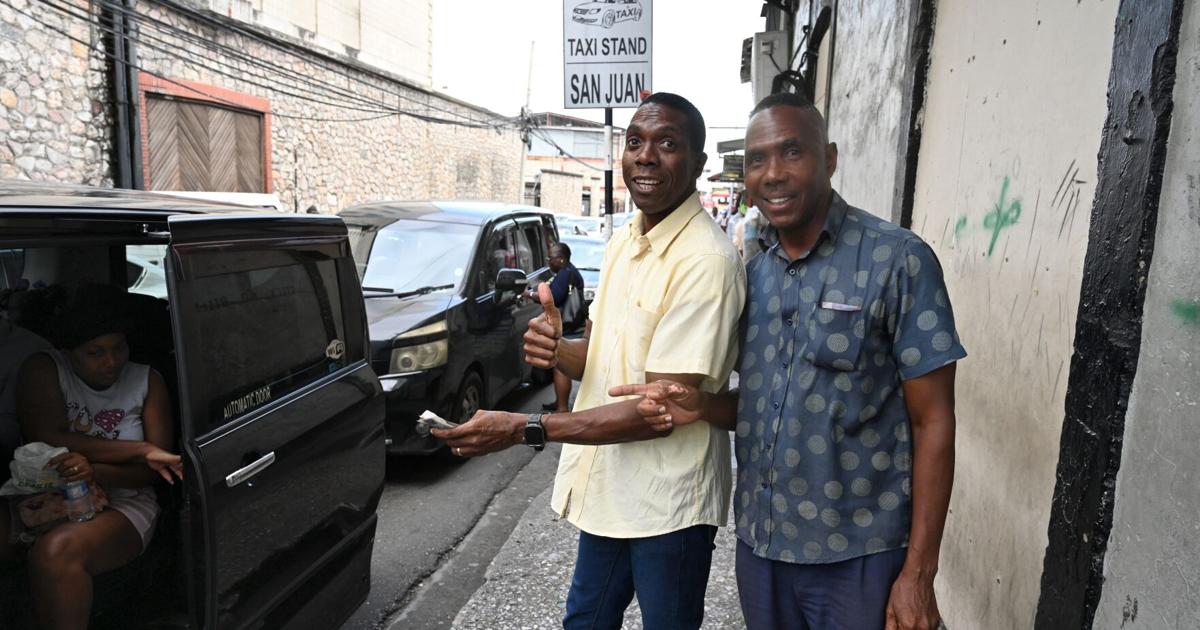
    A fresh wave of calls for the formal regulation of private hire (PH) vehicle drivers has swept through Trinidad and Tobago’s transport sector, triggered by the brutal murder of 12-year-old Mercedez Layne. Speaking to local media outlet the Express on Tuesday, leaders and drivers from both registered taxi and private hire circles across the Morvant and San Juan transport routes uniformly demanded that policymakers finally move to formalize the unregulated segment of the industry, more than a decade after discussions on the reform first began.

    Brenton Knights, president of the Route 2 Maxi-Taxi Association, said the repeated cycle of public outcry after violent tragedies linked to unregulated transport must end. He noted that the issue of PH regularization first sparked national fury following the 2021 murder of 22-year-old court clerk Andrea Bharatt, who accepted a ride from an unlicensed driver she mistook for a legitimate taxi in Arima. Bharatt’s body was discovered a week later dumped on a precipice in the Heights of Aripo, and despite nationwide calls for reform, no substantive regulatory changes were ever implemented.

    “It should have been done a long time ago,” Knights told the Express in a phone interview. “We had the Andrea Bharatt issue. There was a national outcry. We are in pain again. We should not have to revert to that discussion again. It’s heartbreaking. Every time a tragedy like this happens, we come out complaining. Then it becomes a nine-day wonder. It opens old wounds again. I don’t mind sharing my ideas. It’s no ifs, buts or maybes—PH drivers should be regularised.”

    For Kern Warner, a Morvant-based PH driver with 15 years of experience working the route, regularization would not only improve public safety but also level the playing field for all transport workers. In an on-the-record interview at Port of Spain’s Independence Square, Warner said formal licensing would address longstanding systemic flaws in the sector. “They should regularise everybody. Give the PH drivers their taxi badges. It would take care of some of the problems in the system. Give everybody a fair playing field,” he said, echoing the widespread grief over Layne’s killing. As a father of three, Warner extended his deepest condolences to Layne’s family: “It’s sad. It’s not nice to know what happened to Mercedez. My heart goes out to her family and loved ones. She did not deserve to die like that.”

    At the San Juan taxi stand, long-time registered taxi driver Samuel “Sam” Blades noted that discussions around PH regulation stretch all the way back to 2010, when Jack Warner held the post of Transport Minister – and that decades of talk have never translated into action. Blades pointed out that unregulated PH operations have become a permanent fixture of the sector, and that attempts to eliminate the segment have failed completely. “They have been talking about regularising it since 2010. Since (then-Transport Minister) Jack Warner was in charge. Nothing has happened. You can’t stop the PH drivers,” he said. Pointing to chronic congestion from unregulated PH vehicles on Port of Spain’s Charlotte Street, Blades noted that unlicensed drivers operate with no oversight, while all drivers earn roughly the same income regardless of licensing status. “Just look at what his happening there. There are clogging up the streets. They don’t care how they come out to work. How they dress. But what can you do? Everybody is making the same $6,” he added.

    Fellow San Juan registered taxi driver Garvin Boynes echoed Blades’ frustration, noting that licensed drivers bear the full cost of regulatory compliance including insurance, while unlicensed PH drivers pay no such fees, creating an uneven playing field. Both Blades and Boynes shared the broader community’s sorrow over Layne’s murder, with Blades calling the killing “not easy” to process. For his part, Charlotte Street-based PH driver Joel Peter said regulators should not only formalize the sector but also allocate dedicated pick-up stands for licensed PH operators.

    Regular commuters at the Morvant stand also weighed in on the debate, noting that PH drivers fill critical gaps in the island’s public transport network that traditional taxis do not cover. Many PH operators offer door-to-door “village” taxi services that drop commuters directly at their homes, are willing to travel to remote, underserved areas, and adjust their fares to fit low-income passengers’ budgets. Despite these benefits, drivers across all segments of the sector agree that formal regulation is long overdue to prevent further tragedies like the deaths of Bharatt and Layne.

  • Heerah: Don’t extend SoE without clear objectives

    Heerah: Don’t extend SoE without clear objectives

    As Trinidad and Tobago’s government prepares to table a three-month extension of the national state of emergency in parliament, a prominent regional security consultant is pushing back against a vague, open-ended extension, while also sounding the alarm over a growing pattern of child killings across the country. Dr. Garvin Heerah, a leading voice on regional security issues, made his remarks to local outlet Express on Wednesday, just two days after the Office of the Attorney General announced Prime Minister Kamla Persad-Bissessar would bring the extension resolution for parliamentary debate.

    Heerah emphasized that extending a state of emergency—an extraordinary constitutional measure that curtails some normal civil liberties—cannot be justified purely by procedural momentum. If the prime minister and defence minister deem additional time under the emergency framework necessary, he argued, they have a non-negotiable responsibility to lay out specific, measurable goals for the extension period. He pushed back against the common framing that cites general improvements in security as both the reason for extending the measure and the only metric for its success, noting that the public is owed far more than vague assurances.

    “The population deserves more than assurances—they deserve benchmarks,” Heerah said. He called on the government to publish concrete crime reduction targets, clear operational milestones for security forces, and explicit safeguards to protect civil liberties during the extension, as well as a clear outline of the independent body tasked with monitoring those safeguards. “If it is to retain public legitimacy, and that legitimacy is not guaranteed, it must be time-bound, goal-specific, and subject to independent accountability,” he stressed, adding that a three-month extension is a substantial period that should be deployed with intentional planning, rather than treated as a default continuation of existing policy. “Three months is a meaningful window. It should be used with the same precision and intent the State expects of its security forces on the ground,” he added.

    Beyond the state of emergency debate, Heerah also addressed the recent killing of 12-year-old Mercedez Layne, whose body was discovered in a grassy area off Carapal Road in Erin on Sunday morning. Layne’s death is far from an isolated tragedy, Heerah argued: at least eight minors have been killed in Trinidad and Tobago in the first half of 2026 alone, and more than 75 juvenile fatalities from violence have been recorded over the past decade. This steady trend reveals deep, unaddressed failures in the country’s security and law enforcement systems that demand urgent, comprehensive scrutiny from all national institutions.

    “The violent deaths of children are among the most disturbing indicators a society can confront,” Heerah said, noting that the consistent death toll reflects a systemic pattern that requires what he termed “serious institutional interrogation.” He raised pointed questions about resourcing for law enforcement agencies tasked with investigating these child homicides, asking whether every case—regardless of the victim’s age or socio-economic background—is receiving the full level of forensic and investigative rigor that a homicide investigation requires. He also voiced concern over the lack of a standardized, publicly visible profiling framework for perpetrators of child killings, arguing that authorities must clarify whether the deaths are tied to unaddressed psycho-social crises, connected to organized criminal activity, or the result of opportunistic violence.

    “That distinction matters enormously, both for prevention and prosecution,” Heerah said. “A regional security posture that cannot distinguish between these categories is one that will continue to bury children.” He concluded by noting that the rate of child violent deaths serves as a critical benchmark for the state’s core responsibility to protect its most vulnerable populations. “The deaths of minors reflect on us all. They are a measure of how well—or how poorly—the State protects its most vulnerable,” he said.