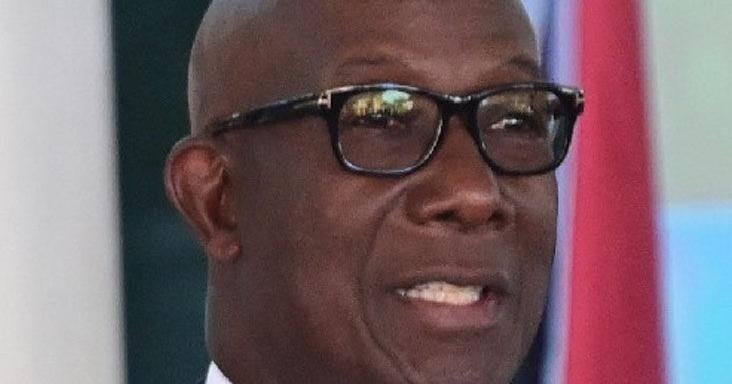
A bitter political dispute has erupted in Trinidad and Tobago after sitting Prime Minister Kamla Persad-Bissessar exposed an internal ‘protected’ list at the state-run Trinidad and Tobago Electricity Commission (T&TEC), triggering fierce pushback from top figures of the opposition People’s National Movement (PNM), including former Prime Minister Keith Rowley. During a Monday address to Parliament, Persad-Bissessar revealed the names of high-profile individuals included on the list, which prominently featured Rowley, Opposition Leader Pennelope Beckles, multiple former PNM government officials, and the PNM Tobago Council. The Prime Minister noted the controversy came to light during a government review of operational issues tied to Flavorite Foods Ltd, a firm chaired by ex-PNM treasurer Andre Monteil. She also pointed out a striking omission: no current ruling United National Congress (UNC) politicians appear on the list, implying the roster was curated by PNM-affiliated officials during the previous administration. In a jab at the opposition, she joked that the PNM should launch a GoFundMe campaign to settle their outstanding power bills. The opposition has responded with unanimous, scathing denials of any improper favoritism, challenging the Prime Minister’s claims point by point. Former Prime Minister Rowley, who leads the PNM, flatly rejected any knowledge of the special list, even posting photographic evidence of his most recent electricity bill for his private Goodwood Park residence to prove he has no outstanding arrears. In a public Facebook statement, Rowley emphasized that he and his wife consistently pay all power bills on time for all their properties across Trinidad and Tobago, and he has never requested nor accepted any special exemptions from standard T&TEC billing processes. ‘For the benefit of those who have been misled by your leader, I hope you can read what I said and also decipher the T&TEC bill with particular reference to Payment of April 15 and Net Arrears of 0.00,’ Rowley wrote. ‘I repeat: I am UNAWARE of any list. For those who take that as proof, then please accept my sympathy.’ Marvin Gonzales, the opposition chief whip and former public utilities minister under the PNM administration, has also pushed back hard, labeling Persad-Bissessar’s claims a ‘wicked and monstrous lie’. Gonzales acknowledged that T&TEC does maintain an internal database of high-profile customers including sitting and former government ministers, judges, and foreign diplomats, but clarified the list serves only one procedural purpose: to alert senior T&TEC staff to reach out directly to the customers if their accounts are flagged for potential disconnection or other unusual account activity. Crucially, Gonzales stressed that the customers on the list have no knowledge their accounts are flagged, and the process is entirely internal to the commission with no political interference from outside officeholders. ‘I can personally say for a fact that no one in T&TEC informed me that my account was flagged in this manner and I have consistently paid my bills before and after holding ministerial office,’ Gonzales said, publicly authorizing T&TEC to release his full billing records for the past decade to prove his claims. He accused the Prime Minister of irresponsible fearmongering, arguing she deliberately selectively named only former PNM-affiliated customers while omitting UNC-aligned figures, non-political judges, and other high-profile customers on the list to score political points. He slammed Persad-Bissessar for abusing parliamentary privilege to spread falsehoods and wage a campaign of ‘politics of hate and revenge’ against the opposition. Other senior PNM figures have echoed these criticisms, uniformly denying knowledge of the list and framing the controversy as a deliberate distraction from the current government’s failures to address pressing national issues. Opposition Leader Beckles called Persad-Bissessar a ‘desperate woman grasping at straws’ who is hiding the UNC government’s inability to solve the country’s core problems by manufacturing a fake scandal. ‘Her actions yesterday paint a sorry picture: that of a Prime Minister cowering behind parliamentary privilege and trying to distract the population from the glaring fact that the UNC is unable to address the real issues affecting Trinidad and Tobago,’ Beckles said, adding that she has always paid her utility bills on time and has never needed special protection. Former PNM senator Renuka Sagramsingh-Sooklal echoed the distraction claim, noting that the real issue demanding public attention is the ongoing controversy over the old $100 Trinidad and Tobago dollar banknote, not her personal power bill. Former education minister Nyan Gadsby-Dolly dared the Prime Minister to release public evidence that she has failed to pay her bills, dismissing the entire scandal as the ‘lamest’ political distraction she has ever seen. Former national security minister Fitzgerald Hinds compared the UNC government’s focus on the list to a nationwide public health epidemic, saying the administration prioritizes political chaos over governing the country. Former sport minister Shamfa Cudjoe-Lewis added that she always pays her bills on time and maintains a credit balance on her account, calling the controversy ‘wicked, worthless and weak’ political theater that will not fool the Trinidad and Tobago public.
标签: Trinidad and Tobago
特立尼达和多巴哥
-
TTPWU: NOTHING LESS THAN 10%
A recent announcement from Trinidad and Tobago’s Finance Minister Davendranath Tancoo has sparked mixed reactions from the nation’s trade unions, as the government commits to setting aside funds in the 2027 national budget to cover all obligations stemming from ongoing wage negotiations with public sector workers, including nurses and teachers.
Tancoo made the pledge during parliamentary debate Monday, while discussing the government’s request for an additional $2.9 billion in supplementary funding to cover urgent recurrent and capital spending through September 30, 2026. He clarified that the necessary tabulation and quantification of negotiated wage increases will take several weeks or months to complete, making the 2027 budget the appropriate place to allocate for these settled obligations. “Appropriate provisions will be made in the budget fiscal 2027 to meet all obligations settled between now and budget 2027,” he told parliament.
In interviews following the announcement, union leaders have offered a range of responses, with some welcoming the commitment and others expressing skepticism over the extended timeline. David Forbes, general secretary of the Trinidad and Tobago Postal Workers Union (TTPWU), said his organization welcomed the plan, noting that the commitment includes postal workers who have been negotiating back wages for the 2013 to 2019 period. Forbes confirmed that non-cost items in the negotiations are nearly finalized, with the union awaiting cost guidance from the Chief Personnel Officer (CPO). “We anticipate nothing less than 10%,” Forbes said, adding the union’s most recent proposal was for a 12% increase, with a pending job evaluation to be addressed once negotiations conclude.
Forbes added that the announcement was not unexpected, saying the timeline aligned with the government’s fiscal calendar. He also noted that some unions, including the Amalgamated Workers Union and the Trinidad and Tobago Unified Teachers’ Association (TTUTA), have already accepted a 4% increase. Ahead of the national Labour Day holiday Friday, Forbes called on all workers to participate in the traditional historical march, to honor the struggles of past workers and push for progress. He also shared that Joint Trade Union Movement (JTUM) president Ancel Roget is expected to address the finance minister’s announcement alongside other pressing labor issues — including the planned reopening of the Petrotrin refinery — during the day’s events.
Michael Annisette, general secretary of the National Trade Union Centre (Natuc), echoed Forbes’ positive opening stance, emphasizing that granting workers long-overdue compensation is not just fair, but beneficial for the national economy. “I welcome the idea every effort has been made to give workers their just due. It’s good for the economy. The workers have been patient and continued working assiduously,” Annisette said. He called for the commitment to extend to all categories of public sector workers, noting that outstanding collective agreements should not leave workers waiting a decade or more for resolution. “Workers should be able to recover their purchasing power that was lost. We have to ensure there’s no recurrence of this kind of delay,” he stressed, adding that collective agreements should be settled within their standard three-year term. Echoing International Labour Organisation standards, he added: “People are our greatest resource, and every effort should be made to ensure they are respected and properly remunerated. There must be sustainable growth and sustainable employment.”
Gerard Gordon, president of the Prison Officers’ Association, said the announcement signals the government’s intent to resolve outstanding negotiations quickly. His association is currently preparing a counter-proposal for the CPO, covering the outstanding 2020 to 2022 wage period, and Gordon said the group looks forward to reaching a settled agreement that delivers necessary salary adjustments for correctional officers moving forward.
Not all union leaders have backed the timeline, however. TTUTA president Crystal Ashe rejected the government’s 2027 timetable, pointing out that previous timelines set by the administration have been revised multiple times, questioning whether negotiations will stretch all the way to the end of the current government’s term. On the other hand, Idi Stuart, president of the Trinidad and Tobago National Nursing Association (TTNNA), said his organization welcomes the announcement and will consult its full membership on the proposed timeline for salary adjustments.
As of Wednesday, attempts by reporters to reach Ancel Roget, Public Services Association president Felisha Thomas, and Transport and Industrial Workers’ Union president Shawn Roberts for comment were unsuccessful.
-
Tancoo: Budget 2027 for union settlements
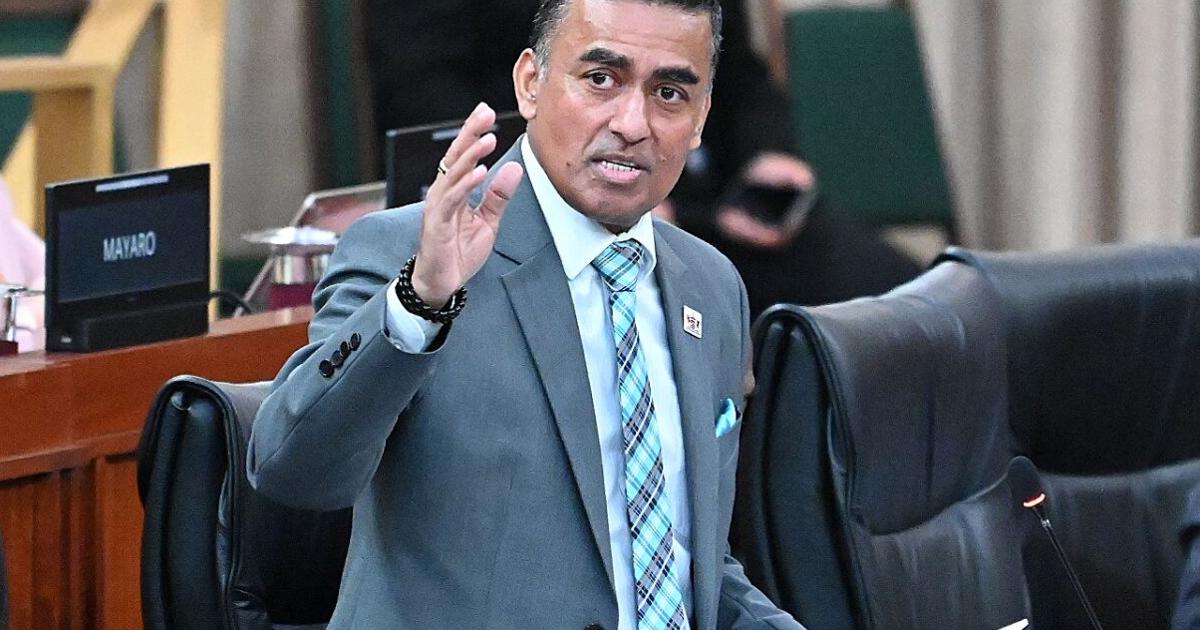
During a parliamentary sitting in Port of Spain focused on approving the Standing Finance Committee’s report, Trinidad and Tobago’s Finance Minister Davendranath Tancoo made two key fiscal announcements that shape the country’s near-term economic and public policy trajectory. First, he confirmed that dedicated budget line items will be included in the 2027 national fiscal budget to cover all obligations finalized through ongoing collective bargaining negotiations with public sector worker unions, including those representing nurses and teachers. Addressing growing anxiety among union members waiting for negotiation outcomes, Tancoo noted that the full tabulation and quantification of outstanding settlement costs will take several more weeks to complete, assuring workers that promised relief will be formalized once the 2027 budget is introduced later this year. “Relief is coming, the documentation is being provided now and in fiscal 2027 the relevant appropriations will be made,” he stated to Parliament. Beyond the union negotiation announcement, Tancoo used the debate to defend the current administration’s request for an additional $2.9 billion in supplementary government funding, explaining the allocation is needed to cover urgent recurrent and capital expenditure obligations through September 30, 2026. He clarified that until a full new Appropriation Bill is tabled at the end of the current financial year, the supplementary funding will be allocated under existing expenditure heads, with administrative safeguards in place to keep all government operations running without disruption. Tancoo also used the parliamentary session to outline the current UNC administration’s economic progress over its first year in office, contrasting its performance with the former PNM government led by previous Finance Minister Colm Imbert. He emphasized that the current government has reversed years of sustained national economic decline within 12 months, acknowledging that global external shocks continue to shape domestic economic outlooks, impact investment conditions, drive cost-of-living changes and affect citizen livelihoods. “Governments are not judged by whether economic storms arise, but by how they respond,” Tancoo told the chamber. A core point of criticism directed at the previous administration was the 2010s closure of the Petrotrin state-owned refinery, which Tancoo labeled a critical strategic national asset. He argued its closure eroded the country’s energy security and forced increased reliance on more expensive imported refined fuel. Looking forward, he confirmed the current government will continue supporting the domestic energy sector, but will not rely on energy as the country’s sole long-term economic growth strategy. Tancoo also highlighted responsible management of the country’s Heritage and Stabilisation Fund (HSF), reporting that as of June 4, 2026, the sovereign wealth fund held US$6.6 billion in assets – a roughly US$620 million increase from the US$5.98 billion valuation recorded on April 30, 2025. Defending the $2.9 billion supplementary funding request, Tancoo emphasized the allocation is tied to active government programs, ongoing infrastructure projects and core public services currently being delivered to citizens. “The machinery of Government has accelerated, projects are being executed, and the nation’s development agenda is gaining momentum,” he said, noting the funding supports school repairs, critical infrastructure upgrades, public servant payrolls and institutional restoration. “Public servants are being paid. Obligations are being honoured. We are supplementing because we are delivering.” To counter opposition criticism of the supplementary request, Tancoo compared the current ask to supplementary funding approved under the previous PNM administration, noting that between 2016 and 2024, former Finance Minister Colm Imbert greenlit a total of $20.7 billion in expenditure increases, including $17.7 billion in additional draws from the national Consolidated Fund. He accused Imbert of hypocrisy, noting that what the previous government labeled standard fiscal practice is now being framed as irresponsible by the opposition. “The financial crises that this country has been placed in, must be bolted to his chest. He and the PNM are responsible,” he said. Tancoo then laid out key fiscal improvements delivered in the administration’s first year: when the UNC took office, the national fiscal deficit stood at $10.07 billion, equal to 5.8% of GDP; that figure has now been cut to $7.01 billion, or 4% of GDP – a nearly two percentage point reduction in just 12 months. Interest payments on national debt have also fallen from $7.13 billion under the PNM to $6.91 billion, freeing up additional resources for public investment rather than debt servicing. Most notably, the country’s primary fiscal balance has shifted from a $2.93 billion deficit under the previous government to a near-balanced position of a $101 million surplus, bringing Trinidad and Tobago to the threshold of a primary surplus after years of consecutive primary deficits. On the revenue front, Tancoo highlighted new revenue reforms introduced in the 2026 national budget designed to boost collection and strengthen long-term fiscal sustainability. Three new measures – the Commercial Bank Asset Levy, Electricity Surcharge, and Landlord Registration Fee and Business Surcharge – have generated approximately $224 million in new revenue since they launched in January 2026. Broader administrative and digital reforms are also underway, including modernization of the Inland Revenue and Customs and Excise Divisions and their information technology systems, the creation of a Real Estate Investment Trust (REIT) to monetize high-value state-owned assets, and preparation for the launch of NIF Bond 3 in September 2026. Work is also progressing on a new transfer pricing regulatory regime to improve tax compliance, boost foreign exchange earnings and strengthen the country’s external position. For the first seven months of the 2026 fiscal year (October 1, 2025, to April 30, 2026), total national revenue hit $30.1 billion, exceeding the original projection of $28 billion. Total expenditure came in at $31.8 billion, below the projected $34.5 billion, resulting in a deficit of approximately $1.7 billion for the period. Oil prices averaged US$62.09 per barrel in the first quarter of 2026 and US$77.64 in the second quarter, compared to the full-year budget assumption of US$73.25 per barrel, while natural gas prices averaged US$4.20 per MMBtu, matching initial projections. Tancoo acknowledged that first-half expenditure was inflated by long-outstanding liabilities, legacy debt and structural weaknesses inherited from the previous administration, including unpaid VAT bond obligations, delayed VAT refunds owed to local businesses, accumulated subsidy liabilities, and ongoing operational and financial challenges at state-owned enterprises. The minister also highlighted the administration’s progress in resolving long-stalled public sector wage negotiations, including a finalized settlement with the Public Services Association that delivered a 10% base salary increase for public servants. To ease immediate cost-of-living pressures, tens of thousands of public workers received one-time cash advances of between $10,000 and $20,000 against their retroactive back pay, with roughly $224.8 million disbursed across multiple sectors to date. Between October 1, 2025, and May 30, 2026, the government also spent $395 million on fuel subsidies to shield domestic consumers from volatile global energy price increases. Updated projections for the remainder of the 2026 fiscal year forecast average oil prices of US$85 per barrel and natural gas prices of US$4.50 per MMBtu, up from the original budget assumptions. Combined with other adjustments, these higher commodity prices are expected to boost total annual revenue by $381.7 million, resulting in a projected full-year fiscal deficit of $7.0 billion. Tancoo confirmed the $2.9 billion in supplementary expenditure will be financed through a mix of domestic and external borrowing, including partnerships with major multilateral development institutions.
-
PM: Report made to Fraud Squad to probe Scotland
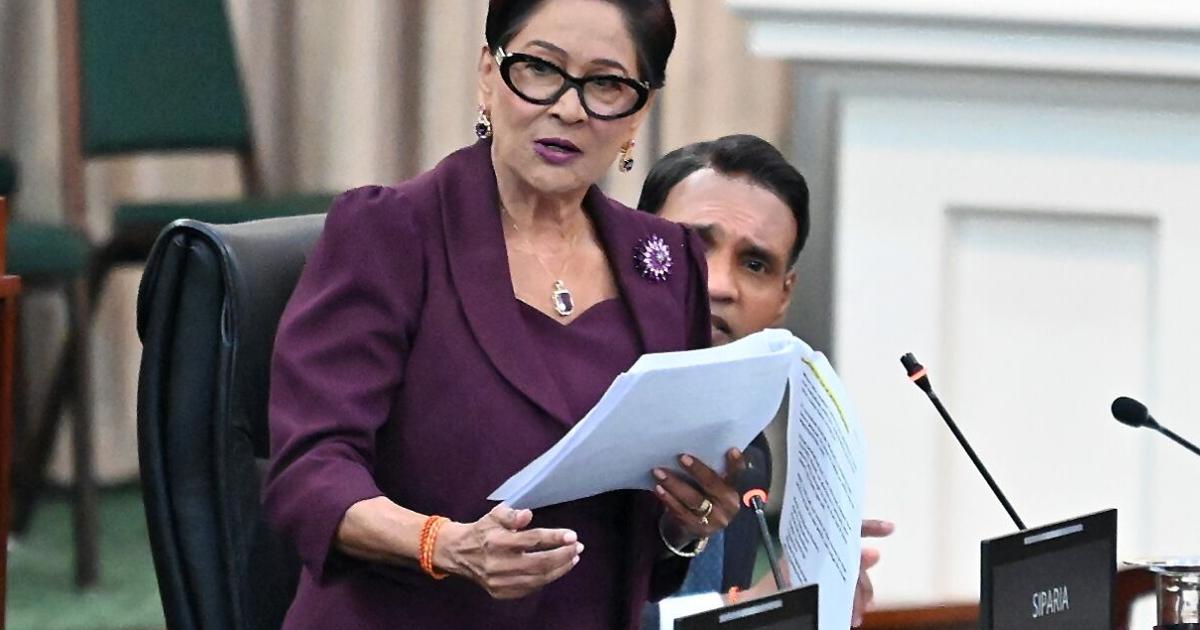
In a bombshell announcement delivered to Trinidad and Tobago’s Parliament this week, Prime Minister Kamla Persad-Bissessar has opened the door to a full criminal investigation into Keith Scotland, an Opposition Member of Parliament and senior counsel, over allegations of corruption, malfeasance, and conspiracy to defraud connected to a multi-million-dollar uncollected utility debt case. The allegations center around a years-long dispute between state-owned energy provider Trinidad and Tobago Electricity Commission (T&TEC) and Flavorite Foods Ltd., a food processing firm chaired by Andre Monteil, a former treasurer of the opposition People’s National Movement (PNM).
According to the Prime Minister’s detailed account, Flavorite Foods accumulated more than $2.39 million in unpaid electricity bills between April 2017, when the arrears began to accrue, and January 2022, when the company was finally permanently disconnected from the power grid. The arrears built up steadily over that five-year window: by April 2019, the company owed roughly $572,000, despite multiple negotiated payment plans that Flavorite repeatedly breached. Even after a temporary disconnection that year, power was surprisingly restored the same day without any payment being applied to the outstanding balance. T&TEC continued to tolerate repeated missed payments for nearly three more years, cutting off service permanently only when the total debt crossed the $2.4 million threshold in January 2022.
Nine months after the permanent disconnection, T&TEC moved to recover the lost funds by retaining legal services from Scotland’s Virtus Chambers, specifically contracting Scotland and junior attorney Keisha Kydd-Hannibal to pursue the claim. The legal firm filed an initial High Court claim for the full $2.4 million in December 2022, but for 11 months, T&TEC’s legal team received no substantive updates despite repeated requests for information. When a meeting was finally scheduled in October 2023, Kydd-Hannibal only stated that Flavorite’s legal team had requested an extension to file a defense, offering no explanation for why Scotland had not moved to secure a default judgment after the required legal window elapsed, and refusing to disclose basic details including the identity of Flavorite’s legal representation.
Court rules require a defendant to enter an appearance and file a defense within eight days of being served a claim, but Prime Minister Persad-Bissessar confirmed that no appearance or defense was ever submitted by Flavorite. Rather than proceeding with a default judgment as required, Scotland’s chambers advised that the claim would be refiled due to the unexplained delays, and a second claim for the same amount was submitted in September 2023. For another year, T&TEC continued to push for updates, with Scotland’s chambers repeatedly assuring the utility that a default judgment application had been filed and was being processed by court staff. As recently as November 2024, the firm confirmed the application had been withdrawn and refiled to address procedural issues.
The entire scheme unraveled earlier this year, when T&TEC’s own attorneys directly requested confirmation from the Supreme Court Registrar as to whether any default judgment applications had ever been filed in either the 2022 or 2023 claims. In responses dated April 2026, Registrar Antonya Pierre confirmed that no such applications existed on court record for either case. A subsequent follow-up check by Registrar Dion Phillip in June 2026 reaffirmed the finding: thorough searches showed no default judgment requests had ever been submitted, and there was no evidence that the claim had ever been formally served to Flavorite Foods at all.
As a result of the delays caused by the false representations from Scotland’s chambers, the Prime Minister confirmed, the entire $2.4 million claim has now become statute-barred, meaning the debt can no longer be pursued through the courts, leaving Trinidad and Tobago taxpayers on the hook for millions in lost public funds.
In response to the findings, Persad-Bissessar has already ordered two parallel actions to hold those involved accountable. First, she has instructed Minister of Public Utilities Barry Padarath to direct T&TEC to file a civil lawsuit against Scotland and his chambers, alleging fraudulent misrepresentation, professional negligence, and breach of contract over the botched debt recovery effort. Second, the Prime Minister has ordered that a formal disciplinary complaint be prepared for submission to the Law Association of Trinidad and Tobago’s Disciplinary Committee, alleging violations of the professional Code of Conduct laid out in the country’s Legal Profession Act. Most notably, a formal report has already been filed with the national Fraud Squad, which will now lead a criminal investigation to determine whether conspiracy to defraud, malfeasance, and corruption charges are warranted against Scotland.
As of the announcement, media outlets have been unable to reach Andre Monteil for comment on the allegations, and Scotland has not yet issued a public response to the Prime Minister’s claims in Parliament.
-
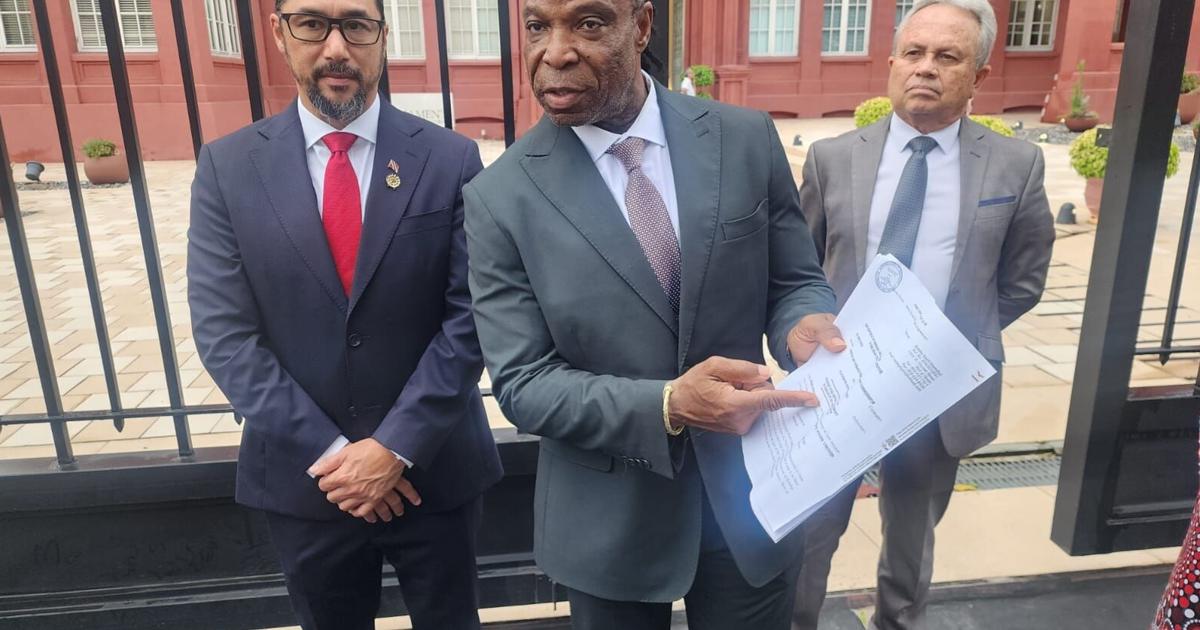
Scotland hits back at PM’s T&TEC claims
A high-stakes political clash has erupted in Trinidad and Tobago after Opposition Member of Parliament for Port of Spain South Keith Scotland, SC, issued a bold public challenge to Prime Minister Kamla Persad-Bissessar, demanding she repeat damaging allegations about his professional conduct in a high-profile legal case outside the protection of parliamentary privilege.
Speaking to journalists outside Parliament this week, flanked by fellow Opposition lawmakers, Scotland pushed back forcefully against claims the Prime Minister leveled during a House of Representatives debate on the Standing Finance Committee’s adoption report. The allegations center on Scotland’s legal work handling a debt claim brought by the state-owned Trinidad and Tobago Electricity Commission (T&TEC) against local company Flavorite Foods Ltd. Scotland has labeled the Prime Minister’s remarks “very egregious attacks” on his professional reputation and firmly denied any misconduct in the case.
After reviewing the Prime Minister’s claims in the hours following the parliamentary debate, Scotland systematically refuted each allegation, laying out clear documentary evidence to back his denial of wrongdoing. The case hinges on whether proper legal procedures were followed for T&TEC’s claim against Flavorite Foods, and Scotland outlined three core points to support his position.
First, he confirmed there is no official documentation that bears his signature confirming any required court filing was never submitted to the court. Second, he rejected the claim that the case was invalid due to exceeding the statutory limitation period, noting that the claim was officially refiled with the court in 2024, and the court has already stamped a request for entry of default judgment after Flavorite Foods failed to enter a formal response to the claim. Scotland also pointed out that Trinidad and Tobago’s courts suspended all statutory limitation periods for two years during the COVID-19 pandemic, a critical legal detail he says the Prime Minister overlooked in her allegations.
Scotland explained that after his legal team completed the initial refiling and default judgment application, the client took over the case files, meaning any subsequent developments are not the responsibility of his team. He also noted that he suspended his active legal practice during a previous term serving in the country’s Cabinet, further clarifying the timeline of his involvement.
The Opposition MP stressed that he holds full documentary proof to corroborate every part of his account, including court records confirming the refiled claim, the submitted default judgment application, and an official query from the court registrar addressing outstanding procedural points in the judgment filing — information that has not previously been made public. Scotland accused the ruling government of orchestrating the attacks to damage his reputation in retaliation for his ongoing public criticism of injustice facing Trinbagonian citizens and parliamentary staff, vowing that the efforts to silence him would not succeed.
“They will not silence my voice with attacks on my character, attacks on me and, by extension, my family,” Scotland said, adding that he would continue to speak out against unfair treatment of the public. “I want to set the record straight. What we will not do is that I will not be silenced. I will stand against injustice meted out against any parliamentary staff, meted out against people of Trinidad and Tobago.”
Responding to questions about whether all required procedural steps were completed before he ended his active involvement in the case, Scotland confirmed that to his knowledge, all initial issues with the claim were resolved, the claim was refiled within the legally allowed timeframe, and the default judgment application was properly submitted. He also noted that he plans to reach out directly to T&TEC leadership to clarify the full details of the case and resolve any lingering confusion.
-
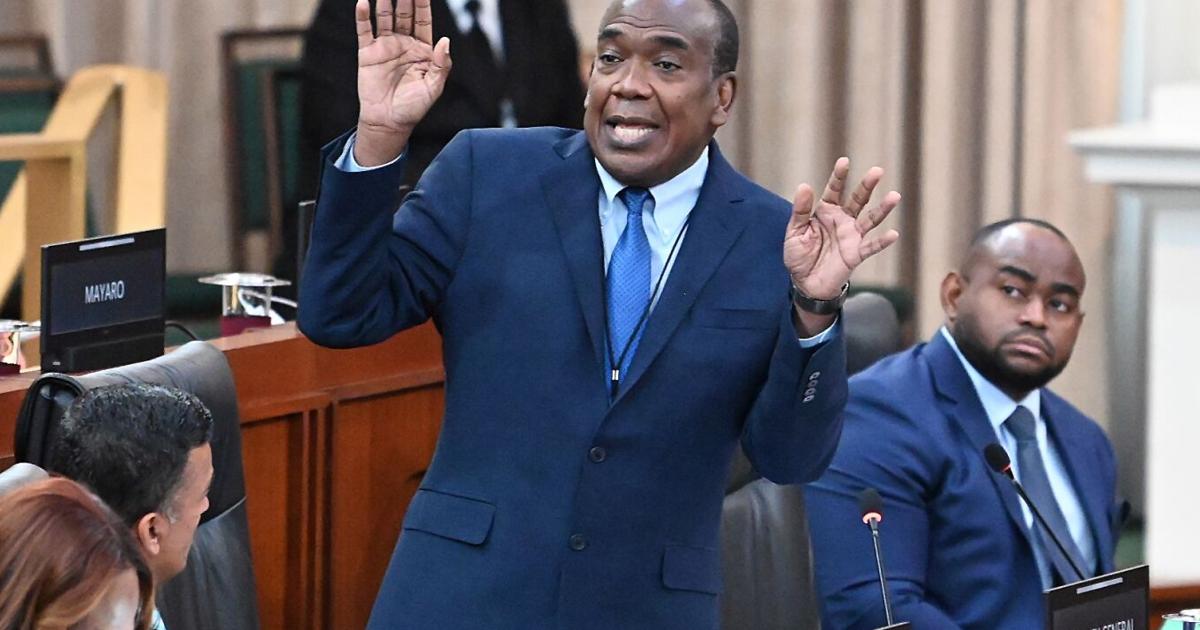
‘Money spent on cheese paste, champagne’
In a fiery address to Trinidad and Tobago’s Parliament during a vote to approve the Standing Finance Committee’s report, Attorney General John Jeremie launched a scathing attack on the prior People’s National Movement (PNM) administration, accusing it of wasting $1 million in public funds on a premature, extravagant opening ceremony for the Port of Spain General Hospital’s new Central Block back in March 2025.
Jeremie detailed that the event, which drew three-quarters of the former PNM cabinet, centered on unnecessary luxury spending that included cheese paste and champagne, even as the facility remained wholly unequipped to deliver even the most basic patient care. At the time of the high-profile opening, he explained, the Central Block only held a certificate of practical project completion—a designation that meant full operational readiness was still far from achieved. More than 10,000 pieces of medical equipment had yet to be installed, plumbing infrastructure remained unfinished, rendering all restrooms unusable, and the building held no beds, no stock of medications, not even common over-the-counter pain relievers like Panadol for event attendees who might have fallen ill. Construction on the structure would drag on for months after the ceremony concluded, Jeremie added.
Beyond the hospital spending controversy, the Attorney General pinned the blame for recent international credit and economic downgrades for Trinidad and Tobago squarely on the PNM’s previous term in office. He defended the current United National Congress (UNC) administration’s economic management, arguing that the former finance minister Colm Imbert and his colleagues were responsible for the country’s ongoing economic challenges. Jeremie also pushed back against opposition criticism of the current government’s new fiscal measures, clarifying that recent increased penalties across multiple sectors are not new taxes, but enforcement penalties for violations of the law. He accused the PNM opposition of deliberately spreading misinformation to stoke public fear and anger toward the ruling administration.
Jeremie also used the parliamentary address to reinforce the current government’s commitment to equal application of the law, stating that no person—regardless of their social status, political connections, or ties to powerful institutions like banks or former prime ministers—is above the law. He contrasted this with what he claimed was the PNM’s long-standing culture of applying different rules to people based on their connections, adding that the opposition’s default response to policy disagreement is to incite unrest rather than engage in constructive debate.
The Attorney General claimed that recent attempts at unrest have included collaborations between opposition-aligned elements and two notorious local gangs, known as Sixx and Seven, to stir up public disorder. He closed by reiterating his accusation that opposition lawmakers have spread ignorance and stoked dangerous social tension in recent debates, with one unnamed opposition representative engaging in particularly “loathsome and repugnant” rhetoric to drive division.
-
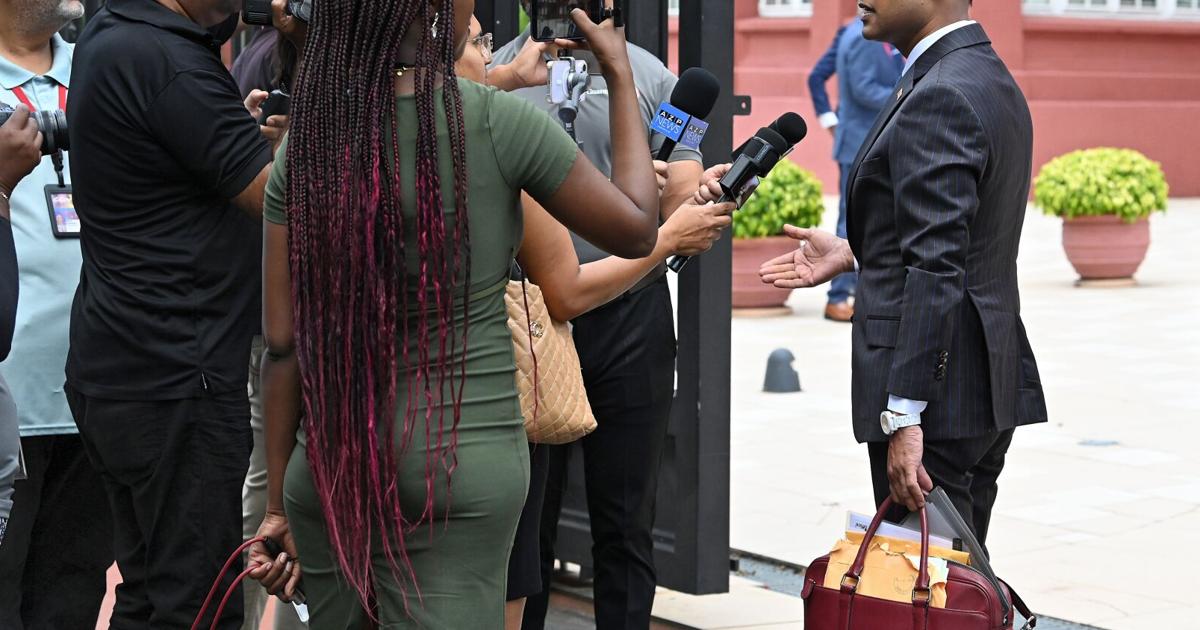
Padarath denies staff intimidation
A contentious confrontation between the ruling United National Congress (UNC) and opposition People’s National Movement (PNM) has erupted in Trinidad and Tobago following a heated Standing Finance Committee meeting last Friday, centered on a photograph taken by Government Business Leader Barry Padarath of a parliamentary audio technician. The incident has escalated into a broader political firestorm, with accusations of intimidation, institutional overreach, and even seditious racial rhetoric flying between the two major parties.
Speaking to reporters outside the Port of Spain Parliament building on Abercromby Street one day after the clash, Padarath, who also serves as the Member of Parliament for Couva South, pushed back hard against claims that his decision to photograph the technician was intended to intimidate parliamentary staff. He explained that the snapshot was taken solely for identification purposes, rooted in a simmering dispute over alleged improper muting of government lawmakers’ microphones during proceedings.
During the Friday committee session, UNC government representatives raised formal complaints that their microphones had been cut off unexpectedly while they were attempting to speak. Padarath subsequently approached the technical staff member responsible for managing the chamber’s audio system and captured the photograph. The interaction immediately devolved into shouting matches between government and opposition lawmakers across the floor of the House of Representatives, turning a routine committee meeting into a high-stakes partisan standoff.
Padarath defended his choice to photograph the staff member, noting that identification is a required step for any formal complaint brought before Parliament’s Broadcasting Committee. “It is the only way that we can identify them, because we don’t know the staff of the Parliament,” he told reporters. He stressed that the act was never meant to function as an intimidation tactic: “It was meant just to identify where the possible challenges are, so when we go to the Broadcasting Committee, we can say, ‘Well, these are the technicians. These are the persons who were muting the mics at that point in time.’”
Pressed on the combative tone his party has taken in Parliament amid the ongoing dispute, Padarath rejected any suggestion that the UNC’s approach was inappropriate. “Politics is not a tea party; the war is on and the UNC will not roll over and play dead,” he stated. He added that the ruling party has endured unfair treatment and biased procedural practices for far too long, and that the incident was simply meant to draw public attention to ongoing problems inside and outside the legislature.
The Couva South MP also dismissed opposition demands for a criminal investigation into his conduct, arguing that PNM lawmakers were only using the incident as a distraction from inflammatory comments made by one of their own colleagues. He fired back by calling for a criminal probe into PNM MP Kareem Marcelle, questioning whether Marcelle’s recent remarks amounted to sedition.
The comments in question date back to a PNM public rally held Thursday night at the Laventille Community Centre, where Marcelle accused the UNC-led government of using the “PNM” label as a racial slur targeting Afro-Trinidadians. Marcelle declared at the rally: “They don’t like we, and they will never like we. But I want them to know that we don’t like them and we will never like them.” He went further, claiming that “Whenever they say ‘PNM people’ on social media, to me, it is the new N-word. They hate African people. They hate black people…A bunch of racist clowns in this country.”
Over the weekend, Padarath doubled down on his position, saying he was “ready for war” and accusing the PNM of deflecting attention from what he labeled Marcelle’s “racist and seditious” comments.
PNM MP Stuart Young, representing Port of Spain North/St Ann’s West, pushed back against Padarath’s framing during his own press briefing outside Parliament Monday. Young questioned the meaning of Padarath’s repeated “war” rhetoric, asking: “Is it a war against public servants? Is it a war against independent parliamentary staff? That is the question that needs to be asked.”
Young said he was speaking on behalf of all “civic-minded and right-thinking citizens of Trinidad and Tobago” to condemn any and all attacks on non-partisan parliamentary staff and public servants. He noted that all elected parliamentarians have a duty to uphold the standards of public office, even within the inherently adversarial structure of the Westminster parliamentary system.
While Young acknowledged that robust partisan clash is a normal part of legislative debate, he argued that Friday’s incident crossed a fundamental line. “What we saw on Friday is not in that category. Parliamentarians on either side of the aisle thrusting against each other is expected,” he said. “That was a line crossed.”
Addressing the core complaint of improper mic muting, Young clarified that the audio system operates according to long-standing, standard parliamentary procedure. “Once a person has the floor, that is the person whose mic is going to be on. The Speaker will stand up, the Speaker’s mic will be on and everybody’s mic is off; so it is whoever has the floor and command of the floor and it is their turn to speak,” he explained. “Everybody’s mic can’t be turned on at the same time, so there’s absolutely nothing abnormal with that.”
Young concluded by accusing the current ruling UNC of exploiting procedural questions to force their uninvited comments onto the official parliamentary record, a practice he said runs counter to established legislative norms.
-
Plane that went missing en route to Tobago found
KINGSTOWN, St. Vincent — Authorities from St. Vincent and the Grenadines announced Monday that the Dominican-registered aircraft that vanished over the Southern Caribbean during a flight to Tobago over the weekend has been successfully located, with all people on board confirmed alive. Deputy Prime Minister and National Security Minister St. Clair Leacock shared the update during a public radio interview, confirming that coordinated search efforts by international, regional, and local security agencies led to the discovery of the twin-engine plane. However, he declined to disclose the exact site where the aircraft was found.
According to an official statement released by the Ministry of Tourism, Civil Aviation and Sustainable Development, the aircraft, a Beechcraft B58T or 58P Pressurized Baron registered as HI-1145, departed Argyle International Airport in St. Vincent at 11:52 a.m. local time this past Friday. Two people were on board when the plane took off, and it was scheduled to complete its 65-minute flight and land at ANR Robinson International Airport in Tobago shortly after departure.
Leacock told radio listeners that he had maintained constant communication with local police leadership and key regional security bodies throughout the search operation. These partners included the Barbados-headquartered Regional Security System (RSS) and the Implementation Agency for Crime and Security (Impacs), a security arm of the Caribbean Community (Caricom) based in Trinidad. He confirmed that authorities have already compiled identifying information on the people connected to the missing flight, but stated that “I cannot share all of the information that we have on it.”
The senior official explained that disclosing sensitive operational details at this stage could put ongoing investigative work by participating agencies at risk. He added that intelligence and security teams are continuing to closely monitor the situation to determine next steps. Notably, Leacock emphasized that authorities are prioritizing the people on the aircraft rather than the plane itself, noting “aircraft don’t fly [by] itself — [it is] the people who fly in that aircraft” that are the central focus of the ongoing operation, as officials work to determine an appropriate course of action moving forward.
Before all contact with the plane was lost, it was being tracked via the popular public flight monitoring platform Flightradar24. Data from the site showed the aircraft was operating under visual flight rules, cruising at an altitude of 4,025 feet with a ground speed of 142 knots. Tracking signals cut off abruptly mid-flight over the Southern Caribbean Sea, with the last known signal placing the aircraft in the vicinity of Grenadian or Venezuelan territorial waters.
-

Missing plane heading for Tobago has been located
A missing small twin-engine aircraft that vanished mid-flight between St Vincent and Tobago has been successfully located, with no loss of life reported, according to top security officials from St Vincent and the Grenadines. Deputy Prime Minister and National Security Minister Major St Clair Leacock confirmed the breakthrough in an interview on a local radio program Monday, but has kept key details including the plane’s exact location and the events that led to its disappearance under wraps. Leacock emphasized that sensitive operational details cannot be released to the public at this stage, as disclosing information could jeopardize the active security probe still underway. Unlike conventional search efforts that prioritize recovering the aircraft first, authorities are centering their work on the two people who were on board when the plane went missing. “Aircraft do not pilot themselves, so our priority is the individuals aboard this flight, not the machine itself,” Leacock explained. Since the aircraft was reported missing on Friday, Leacock said he has maintained continuous communication with local police leadership, the Regional Security System (RSS), and the Caribbean Community Implementation Agency for Crime and Security (CARICOM IMPACS) to coordinate the response. Leacock’s announcement came just hours after Trinidad and Tobago’s Transport and Civil Aviation Minister Eli Zakour publicly stated that search operations remained the government’s top priority, and that no contact had been established with the missing craft at that time. Zakour shared flight details that identified the plane as a Beechcraft Baron 58, registered under the name HI-1145 to the Dominican Republic. It departed Argyle International Airport in St Vincent at 11:52 a.m. Friday, carrying two people on a scheduled 65-minute flight bound for ANR Robinson International Airport in Tobago. Records confirm the aircraft was fueled for roughly five hours of flight time, far exceeding the duration of the planned journey. The last recorded radio contact with the plane happened at approximately 12:11 p.m. through Argyle Approach Control, just moments before all communication cut off unexpectedly. Immediately after contact was lost, Piarco Area Control Centre activated full emergency search-and-rescue protocols, launching a coordinated operation with the Trinidad and Tobago Coast Guard and multiple regional search-and-rescue organizations. Both private and military aircraft were dispatched to scour the plane’s last recorded position, but initial search teams returned without finding any wreckage or visual signs of the downed craft. Flight tracking data from popular aviation monitoring platform Flightradar24 shows the twin-engine plane was operating under visual flight rules, cruising at an altitude of roughly 4,025 feet at a speed of 142 knots, before tracking stopped abruptly over the southern Caribbean Sea. In the days before its disappearance, the plane is reported to have operated without any mechanical issues, completing multiple routine flights between the island of Canouan and mainland St Vincent. To date, neither Leacock nor any participating regional authority have released additional details: the location of the recovered plane, the current condition of the two people on board, and whether any formal criminal investigation has been opened remain undisclosed. The full circumstances that led to the plane’s disappearance remain the subject of an active, ongoing investigation.
-

Couple in ICU after attack that killed 13-year-old
A deadly shooting that left a 13-year-old dead at a Marabella residential property on Thursday night has left two injured adults in a precarious medical state, with the pair still receiving critical care at the San Fernando General Hospital’s intensive care unit. The young victim, Krishan Khanhai, was pronounced dead at the scene of the attack, which unfolded at a home on Tramline Road in Union Park East. The two wounded victims—43-year-old Krishna Khanhai and 53-year-old Leela Pariag—were rushed to the hospital for emergency treatment following the gunfire, while a 5-year-old child who escaped to a nearby neighbor’s house escaped the incident uninjured. Law enforcement investigators working the case have said they believe the shooting was carried out during an attempted or completed robbery at the home of the couple, who worked as local street food vendors selling doubles, a popular local flatbread wrap dish. When first responders arrived at the property, crime scene investigators recovered three spent 9mm bullet casings from the area of the shooting. A close relative of the injured couple, who spoke to reporters on condition of anonymity, confirmed that the pair’s condition remains unstable as they receive ongoing intensive care. The relative declined to share further details about the incident or the family’s reaction to the violence, only reiterating that the two wounded adults were not showing signs of improvement as of the latest update from medical teams. Local residents have expressed shock over the violent incident in the quiet residential community, with law enforcement yet to announce any arrests or identify potential suspects connected to the shooting. Investigators are still reviewing evidence collected from the crime scene and interviewing witnesses to piece together the sequence of events that led to the fatal attack.