标签: Trinidad and Tobago

特立尼达和多巴哥

  • Saathi founder’s generous giving – Rosemarie Dipnarine’s lifelong service

    Saathi founder’s generous giving – Rosemarie Dipnarine’s lifelong service

    For decades, 76-year-old Rosemarie Dipnarine has dedicated her existence to alleviating suffering and creating opportunities for Trinidad and Tobago’s most vulnerable populations. As the visionary founder and president of the Saathi Foundation, her humanitarian work transcends religious, cultural, and generational boundaries, establishing a legacy of compassion that began in her childhood home in Longdenville.

    Born into a modest Hindu household where happiness outweighed material wealth, Dipnarine learned the principles of service from her parents—a factory worker and homemaker who frequently labored in canefields to secure secondary education for their eight children. Her earliest philanthropic memory dates to age eight, when her mother instructed her to sell breadfruit from their tree to assist a struggling village family. “I remember asking people to buy a breadfruit, please, only eight cents for one,” Dipnarine recalled. “That is where my social work started.”

    Following a 40-year career in public service—including statistical roles at the Ministry of Planning and Development and Ministry of Health—and contributions to major cultural events like Carifesta VII and VIII, Dipnarine formalized her charitable efforts. In June 2010, she established Saathi Foundation (Serving and Aspiring Towards Helping Individuals) to address poverty systematically rather than through informal begging. The organization’s logo—designed by her son-in-law—features hands transferring food grains, symbolizing the act of giving oneself to prevent hunger.

    Saathi’s multifaceted approach encompasses food security, housing assistance, medical support, and educational sponsorship. The foundation operates on the fundamental belief that “without proper education, you are nothing,” committing to support promising students from primary school through university when necessary. Their success stories include a chemical engineering graduate who lost both parents, whose entire education and living expenses were covered by the foundation.

    Beyond education, Saathi has rebuilt homes after fires, relocated families from makeshift shelters, and constructed dignified housing for terminally ill individuals. Dipnarine emphasizes that all assistance must be provided unconditionally and respectfully: “When we give, we do not advertise or show the faces of children in need. They also have their pride.”

    The foundation sustains its operations primarily through annual fundraising events, including an upcoming lunch at Passage to Asia restaurant in Chaguanas on April 26. Dipnarine, awarded the Hummingbird Medal (Silver) in 2000 for cultural and community service, defines success as “bringing someone out of the dark part of their life and showing them the light.” Despite her advanced age, she continues leading with an instinct-driven, urgency-based approach, relying on what she describes as “angels on earth” who enable Saathi’s transformative work.

  • Clico Investment Bank claim against Clico thrown out

    Clico Investment Bank claim against Clico thrown out

    In a significant ruling with implications for corporate insolvency proceedings, Trinidad and Tobago’s High Court has definitively rejected CLICO Investment Bank Ltd’s attempt to reclaim over US$43 million from its parent company, CL Financial Ltd. Justice Kevin Ramcharan delivered the decisive judgment, affirming the joint liquidators’ earlier determination that the substantial financial claim was legally time-barred and evidentially unsupported.

    The complex litigation centered on CIB’s effort to challenge liquidators Hugh Dickson and David Holukoff’s rejection of its proof of debt submission. This claim originated from eight commercial papers issued between November 2006 and December 2008, totaling US$33,067,718.95 in principal with additional interest claims of US$10,282,990.84. The Deposit Insurance Corporation, serving as CIB’s appointed liquidator since October 2011, had endorsed the application against CL Financial.

    Justice Ramcharan’s thorough examination revealed critical flaws in CIB’s legal position. The court determined that the contractual claim had expired long before CL Financial entered liquidation proceedings, rendering it statute-barred under applicable limitation laws. The unsigned loan schedules presented as evidence were deemed insufficient to revive the limitation period, as they failed to demonstrate clear purpose or constitute unequivocal acknowledgment of outstanding debt.

    The judiciary further dismantled CIB’s alternative legal arguments seeking to circumvent the limitation issue. Claims alleging fiduciary duty breaches, constructive trust arrangements, and unjust enrichment were systematically rejected. The court found no evidence that CL Financial exercised the necessary control over CIB to qualify as a shadow or de facto director, noting that former financial director Michael Carballo’s statements failed to establish the requisite level of oversight for such fiduciary obligations.

    Regarding unjust enrichment allegations, Justice Ramcharan agreed with the liquidators’ characterization that the dispute remained fundamentally contractual in nature. The court warned against allowing creative legal reframing to bypass statutory limitation periods, emphasizing that such approaches would undermine the foundational principles of debt limitation law.

    With both entities undergoing compulsory liquidation, the court ordered each party to bear its own costs, bringing finality to this protracted intra-group financial dispute that has spanned over a decade.

  • Psychologist: Society can benefit from sustained, equitable law enforcement

    Psychologist: Society can benefit from sustained, equitable law enforcement

    Recent substantial increases in traffic penalties and government service fees have sparked widespread public discontent across Trinidad and Tobago. While authorities justify these measures as necessary to address pervasive road lawlessness, citizens counter that the hikes impose additional burdens on a population already struggling with unemployment, soaring living costs, and economic despair.

    A behavioral psychologist, speaking anonymously, criticized the government’s historical laissez-faire approach to regulation enforcement. “We must recognize that law is law and rules are rules,” the expert stated. “Enforcement doesn’t require harshness but rather firm, consistent application. Our pattern has been enthusiastic crackdowns that gradually fade into neglect—recall the initial enthusiasm with speed guns that ultimately vanished from roads.”

    The psychologist noted that societal behavior often involves risk-taking tendencies, citing last-minute Christmas shopping and event ticket purchases as examples of cultural patterns that influence policy decisions. The specialist predicted citizens would scrutinize whether enforcement would be applied equitably across geographic regions, particularly between areas with different political affiliations.

    University of the West Indies sociologist Dr. Shelene Gomes emphasized that effective societal functioning requires consensus-based rules serving majority interests. “The core issue emerges when legislation and institutions fail most citizens,” Gomes explained. “Simultaneously reducing social protections while increasing fines creates a combustible situation. The working class faces extreme difficulty, and even the middle class has diminished financial cushioning.”

    Dr. Gomes referenced historical parallels from decades past when oil revenue declines and structural adjustments similarly strained citizens, urging authorities to learn from previous experiences.

    Public testimony reveals deep frustration. Tobago taxi driver Sean Guerra acknowledged the need for penalties but condemned the 100% increases: “This will cause societal chaos. People can barely afford groceries—the majority are suffering.” Guerra reported cases where minor vehicle imperfections, including torn seats, were being penalized, questioning their relevance to road safety.

    An anonymous school teacher and single mother of three described the fines as “ridiculous,” noting that even gainfully employed individuals would struggle to pay penalties for minor infractions like windshield chips. She anticipated having to reduce grocery and bill payments if fined.

    The government has proposed amendments allowing motorists 3-7 days to rectify vehicle defects before facing penalties, with legislation expected for parliamentary debate late January. However, the fundamental tension remains between public safety objectives and their economic impact on an already strained population.

  • Media bodies warn of democratic and industry fallout as Newsday winds up operations

    Media bodies warn of democratic and industry fallout as Newsday winds up operations

    The Caribbean media landscape faces a severe crisis as Newsday, Trinidad and Tobago’s prominent daily newspaper, initiates winding-up procedures after 32 years of operation. This development has triggered widespread alarm among media organizations and professionals who warn of significant implications for democratic discourse and media pluralism throughout the region.

    The Trinidad and Tobago Publishers and Broadcasters Association (TTPBA) expressed profound concern over the closure, attributing it to a convergence of economic challenges, technological disruption, and structural pressures reshaping the media industry. The association highlighted how evolving consumption patterns and rapid digital transformation have fundamentally impacted print media worldwide, creating increasingly difficult operating environments for traditional news organizations.

    Regional media watchdog Media Institute of the Caribbean (MIC) characterized the closure as symptomatic of a deeper structural crisis affecting traditional media across the Caribbean. MIC president Kiran Maharaj emphasized that Newsday’s shutdown represents more than an isolated corporate decision—it reflects a regional pattern marked by declining advertising revenue, escalating production costs, and shifting audience behaviors.

    The institute’s research applying UNESCO’s Media Viability Indicators has repeatedly demonstrated the fragility of media ecosystems in small island developing states. Studies conducted across the region reveal that dependence on limited advertising bases, underdeveloped digital revenue strategies, and insufficient policy support have created intense pressure on traditional news organizations.

    MIC vice president Wesley Gibbings described Newsday as “a bastion of quality journalism” established by working journalists over three decades ago. He called for enhanced regional collaboration among media stakeholders to address shared challenges and develop sustainable solutions.

    Former Media Association of Trinidad and Tobago president Ira Mathur characterized the situation as a “perfect storm” threatening journalism’s survival, citing shrinking advertising revenue, overreliance on government spending, social media competition, and chronic underpayment of journalists. Mathur warned these conditions are fostering self-censorship and undermining journalism’s crucial role as the fourth estate in democratic societies.

    Media leaders agree that Newsday’s potential closure represents not merely the end of a newspaper but a critical test for journalism’s resilience throughout the Caribbean region, with profound implications for democratic governance and citizen access to verified information.

  • Ministry: Launch of Carnival village a success

    Ministry: Launch of Carnival village a success

    Trinidad and Tobago’s Carnival 2026 celebrations commenced officially with the inauguration of two dedicated village spaces at Queen’s Park Savannah in Port of Spain, though the launch was met with contrasting public reactions to organizational changes.

    The Ministry of Culture and Community Development, in partnership with the National Carnival Commission (NCC), formally opened the John Cupid Carnival Village on January 9, following the successful debut of the culinary-focused Flava Village the previous day. The dual launch marks the official beginning of the nation’s premier cultural festival.

    High-ranking officials including Minister of Culture and Community Development Michelle Benjamin, Parliamentary Secretary Dr. Narindra Roopnarine, and NCC chairman Peter Kanhai presided over the ceremonies alongside several government ministers and stakeholders. Notably, Minister Benjamin did not deliver a public address during the events.

    The unveiling of the John Cupid Carnival Village proved contentious as NCC chairman Kanhai faced audible public disapproval when explaining the venue’s relocation from the east to the west side of the grandstand. Despite Kanhai’s assurances that the new layout offered improved convenience, accessibility, and spaciousness, attendees responded with loud boos and shouts of disagreement.

    “You will notice right off the bat that we are doing things differently this year,” Kanhai stated during his address, which was immediately met with crowd disapproval. He maintained that both new and returning visitors would recognize the dramatically enhanced quality of the village experience despite the vocal opposition.

    In contrast to the mixed reception of the Carnival Village, the Flava Village culinary component reported exceptional success. The ministry revealed that numerous food vendors completely sold out their inventory before closing time on the inaugural night, with one entrepreneur reporting by 8 PM and subsequently doubling his stock for the second night to meet unprecedented demand.

    Minister Benjamin extended gratitude to the NCC Board of Commissioners and all involved parties for their dedication toward ensuring Carnival 2026’s success. The ministry confirmed that festival events are now fully underway, including the heating Panorama 2026 competitions, the launched Chutney Soca Monarch 2026, and final costume preparations ahead of the main celebrations.

  • Liam Bryden, Victoria Seenath hold on to Brechin Castle Open leads

    Liam Bryden, Victoria Seenath hold on to Brechin Castle Open leads

    Liam Bryden has established a formidable three-stroke advantage following the second round of the Brechin Castle Open Golf Championship at Sevilla Golf Course. The 2022 titleholder, who held a marginal one-shot lead after day one, dramatically expanded his margin as defending champion Ryan Gomez encountered significant difficulties on Couva’s front nine, conceding three critical shots.

    Despite Gomez reclaiming one shot during the back nine, Bryden’s consistent performance secured him a comfortable cushion heading into the championship’s decisive final round. Meanwhile, Marcus Ling delivered an impressive 70-shot round to catapult into third position, trailing the leader by four strokes, while Alex Kangoo matched Ling’s score to claim fourth place.

    In the women’s division, defending champion Victoria Seenath strengthened her position with an 80-stroke round, establishing a five-shot dominance over her closest competitor. Isabella Ramdeen advanced to second place with an 83, as Elise LaBorde slipped to third after carding an 85.

    The First Flight category witnessed a compelling familial rivalry unfold, with Asa Roopchand maintaining a two-shot lead over his teenage son Aba Bally Roopchand. Despite the younger Roopchand firing a superior 77, Asa’s steady 78 preserved his advantage. Amir Ali remains in contention just two strokes back after an 82-round performance.

    Notably, overnight leaders Dr. Solaiman Juman and Shazad Ali experienced dramatic declines, plummeting to 16th and 11th positions respectively. Defending champion Hollis George revitalized his campaign with a flight-best 77, positioning himself for a potential title defense from sixth place.

    The tournament concludes on January 11 with the third and final round determining all championship winners.

  • Gonzales: Constituents being harassed

    Gonzales: Constituents being harassed

    Opposition MP Marvin Gonzales has raised serious concerns about aggressive law enforcement tactics targeting his Lopinot/Bon Air West constituents, linking the alleged harassment to recently intensified penalties for traffic violations. The PNM chairman and Opposition Chief Whip detailed numerous complaints from community members who endured extensive transportation delays and widespread inconvenience during January 7 enforcement operations.

    In a formal Facebook statement dated January 8, Gonzales described how vulnerable demographics—including elderly citizens, students, young women, and children—faced hours-long waits for transportation due to the stringent enforcement measures. He characterized the situation as creating an atmosphere of ‘great fear and anxiety’ within the community, further exacerbating social tensions.

    The former national security minister condemned what he termed the ‘weaponization of law enforcement,’ emphasizing that successful policing requires citizen cooperation and community engagement. Gonzales advocated for educational initiatives and collaborative approaches rather than punitive measures, warning that oppressive tactics would ultimately undermine social order and stability.

    In response to inquiries about his planned course of action, Gonzales committed to leveraging his parliamentary position to address these concerns, stating: ‘I will use my voice as an MP.’

    The developments occur against the backdrop of Prime Minister Kamla Persad-Bissessar’s announced parliamentary reforms regarding traffic enforcement. Through social media channels on January 7, the Prime Minister revealed plans to implement mandatory grace periods allowing drivers to rectify vehicle defects before fines are imposed. Persad-Bissessar simultaneously defended the strengthened enforcement measures, citing rampant traffic infractions and deliberate lawlessness as justification for the crackdown.

  • Diego’s deadly dawn: Residents cry for hangman’s return

    Diego’s deadly dawn: Residents cry for hangman’s return

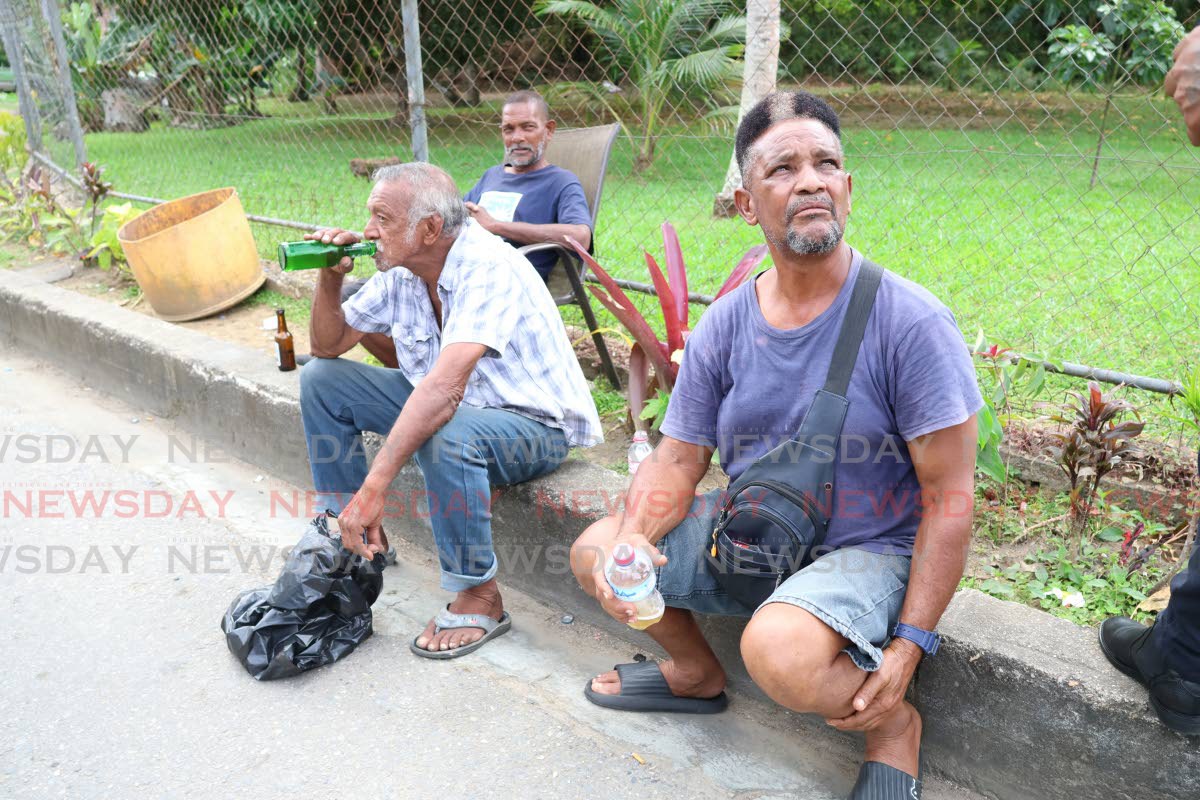
    The community of Diego Martin finds itself grappling with a surge of violence that starkly contrasts with Trinidad and Tobago’s overall improvement in homicide rates. While the nation closed 2025 with its lowest murder count in ten years, this western region has witnessed three of the country’s eleven murders within the first week of 2026, creating palpable tension among residents.

    The latest victim, 33-year-old Elijah Williams from Blue Basin, was fatally shot on January 7th, marking the second homicide in that specific area within 24 hours. Newsday’s visit to the borough on January 8th revealed a community oscillating between somber resignation and simmering anger, with residents proposing radically different solutions to the escalating violence.

    Larry Duprey, a local resident speaking from Beausejour Road, advocated vehemently for the reinstatement of capital punishment. “When criminals realize there is a life-or-death consequence for their actions, they will reconsider more seriously,” Duprey asserted while acknowledging that chronic unemployment and economic desperation contribute significantly to criminal behavior among youth.

    Further along at Patna Recreational Ground, Zachary Looney (known locally as “DJ Versatile”) offered an alternative perspective while spending time with his young son. Rejecting purely political solutions, Looney suggested utilizing sentenced offenders for community maintenance under police supervision instead of defunct social employment programs. “It solves two problems in one—it saves taxpayer money and actually gets the work done,” he reasoned.

    Amanda Francis represented another viewpoint, opposing the death penalty while emphasizing socio-economic empowerment and judicial reform. “We need to focus on improving detection rates and court processing times,” Francis argued, noting that rehabilitation should become the prison system’s primary focus rather than pure punishment.

    At Bagatelle Junction, longtime resident Ms. Judy highlighted foundational issues, stating, “It starts at home with good family values,” while acknowledging the challenges of guiding youth amid negative peer influences. She expressed appreciation for visible police presence but called for intensified patrols.

    The political context surrounding this debate has gained renewed momentum following the 2025 General Election. Prime Minister Kamla Persad-Bissessar, who had campaigned on reinstating executions, has instructed her security and legal teams to investigate the death penalty’s resumption. However, despite these campaign promises, the government has not provided a definitive timeline for any policy changes. Newsday’s attempts to obtain current government stance on the matter remained unanswered at press time.

  • Over one month after Monos Island kidnapping: Tardieu, wife reunited

    Over one month after Monos Island kidnapping: Tardieu, wife reunited

    In a dramatic development following a month-long kidnapping crisis, Claribel Tardieu has been successfully rescued by Trinidad and Tobago police forces. The 47-year-old was discovered bound and blindfolded but without visible injuries during an intelligence-led operation conducted along North Coast Road, Maracas Bay between January 7-8.

    The sophisticated rescue mission involved multiple elite police units working in coordination, including the Anti-Kidnapping Unit, Northern Division Gang Unit, Northern Division Task Force, and National Operations Task Force. The operation was overseen by senior police officials including ACP Smith, ACP Singh, W/Snr Supt Maynard-Wilson, Supt McKenzie and Supt Pariman.

    This conclusion comes after the December 6 abduction of Claribel and her husband Derrick Tardieu, a 70-year-old former powerboat racer and businessman, from their Monos Island residence. The couple’s captivity gained public attention when kidnappers released a disturbing video showing them held at gunpoint with a grenade positioned near Derrick’s face. The captors initially demanded US$2.5 million ransom, later reducing it to $100,000.

    Derrick was previously recovered on December 17 along the same North Coast Road area, with reports indicating partial ransom payments totaling $150,000 and US$5,000. Family attorney Leslie-Ann Lucky-Samaroo had previously issued statements requesting privacy and emphasizing the need for medical recovery following the traumatic experience.

    Mental health professionals have highlighted the potential long-term psychological impact of such traumatic events. Psychologist Kelly McFarlane previously emphasized to Newsday that respecting victims’ boundaries and addressing their specific needs are critical components of the recovery process.

    Police authorities continue their investigation into the abduction case while the reunited family focuses on recovery from their prolonged ordeal.

  • DCP Martin assures safety for THA elections

    DCP Martin assures safety for THA elections

    In preparation for the January 12 Tobago House of Assembly (THA) elections, Deputy Commissioner of Police Suzette Martin, serving as Gold Commander for election security operations, has conducted comprehensive high-level consultations with key political stakeholders across the island.

    The security preparations entered a critical phase on January 7 when DCP Martin engaged in detailed discussions with Chief Secretary Farley Augustine regarding the Trinidad and Tobago Police Service’s comprehensive safety and security framework for election day. Augustine subsequently praised the exceptional professionalism demonstrated by Tobago-based officers and expressed full confidence in the elaborated security arrangements. The Chief Secretary further emphasized his anticipation of continued collaborative efforts with Assistant Commissioner of Police Earl Elie and Superintendent Mark Joseph of the Tobago Division.

    DCP Martin concurrently affirmed her assurance regarding the effectiveness of implemented security protocols designed to guarantee both the safety of participants and the transparent administration of electoral proceedings. Her diplomatic outreach extended to meetings with senior representatives of the PNM Tobago Council, chaired by Learie Paul, and Dr. Denise Tsoiafatt-Angus, political leader of the Innovative Democratic Alliance (IDA).

    Throughout these engagements, Martin reiterated the TTPS’s unwavering commitment to safeguarding democratic processes through strict political neutrality. The service is coordinating extensively across all operational divisions and inter-agency partners to facilitate a peaceful electoral environment free from incidents, while ensuring complete protection for citizens, stakeholders, and institutional infrastructure.