标签: Trinidad and Tobago

特立尼达和多巴哥

  • Farley: Never a permanent fixture

    Farley: Never a permanent fixture

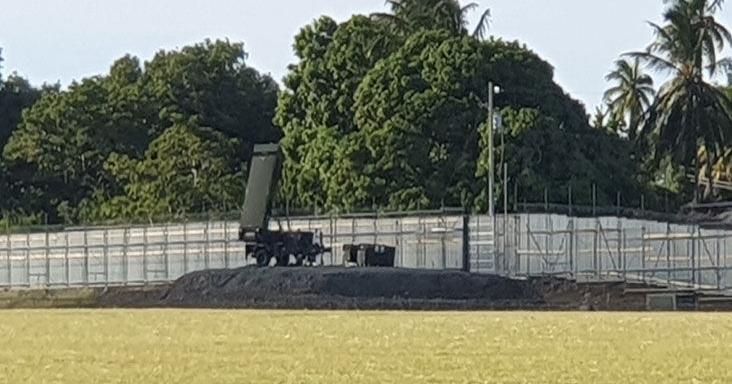
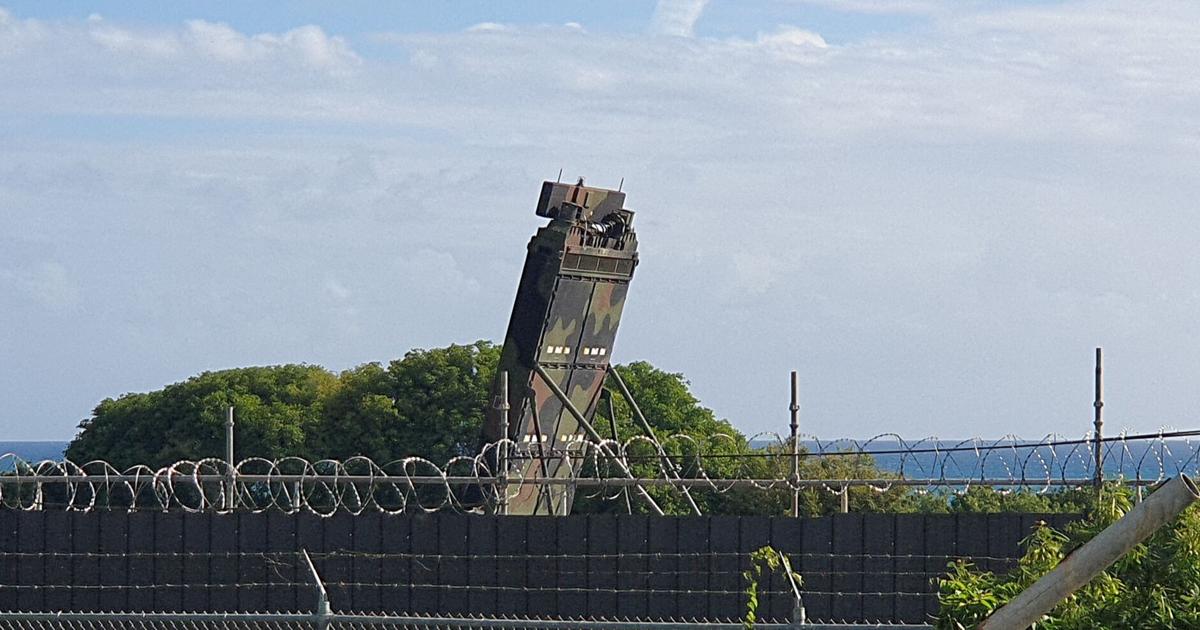
    The controversial United States military radar system previously stationed at ANR Robinson International Airport in Crown Point, Tobago, has been formally dismantled and removed from the site. Visual confirmation yesterday revealed no traces of the equipment at its previous location, with airport security personnel now monitoring the area.

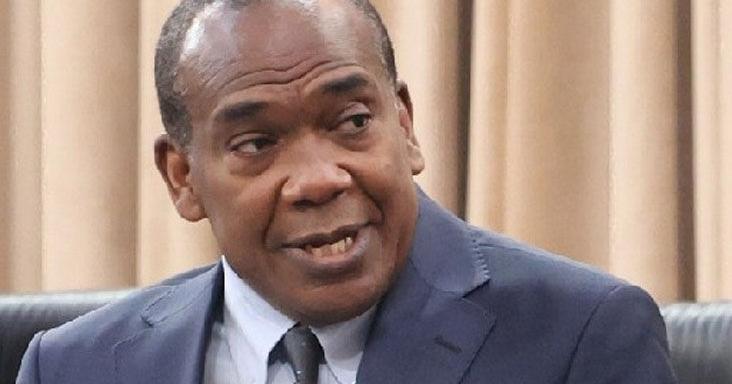
    Chief Secretary Farley Augustine confirmed to media outlets that his office received advance notification about the equipment’s removal, characterizing the development as unsurprising. “The radar system that was temporarily installed in Tobago has now been dismantled and preparations are under way for the equipment and associated US military personnel to leave the island,” Augustine stated.

    The Chief Secretary emphasized that the dismantling aligned perfectly with the original schedule presented to him, noting that the temporary nature of the installation made previous concerns about permanent militarization unfounded. “This was always a temporary fixture,” Augustine remarked, “which makes the alarmists quite laughable because they engaged in fearmongering about making us a military target.”

    Augustine framed the episode as a crucial lesson in national security sovereignty, asserting that Trinidad and Tobago must invest in its own defense infrastructure. “We cannot permanently rely on the capabilities of other countries; we must make our own investments into our national security infrastructure to strengthen our surveillance, maritime and air defense systems,” he emphasized.

    Prime Minister Kamla Persad-Bissessar had previously disclosed that the radar system operation cost the United States approximately $3 million daily. While unable to confirm the exact number of US personnel stationed at Grafton Beach resort, the Prime Minister indicated their phased departure would conclude by month’s end. She acknowledged the intelligence-sharing collaboration between US forces and the Trinidad and Tobago Police Service had proven instrumental in recent security operations.

    Despite the removal of US military assets, Augustine maintained that “Tobago remains safe and focused on its development,” highlighting the island’s continued commitment to both security and economic progress.
  • Children’s Authority board rejects call

    Children’s Authority board rejects call

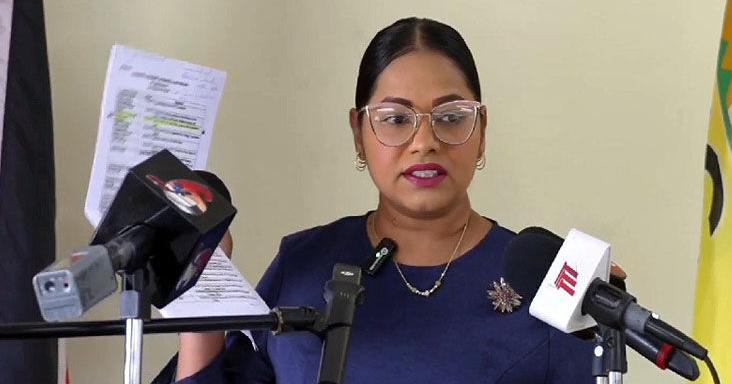
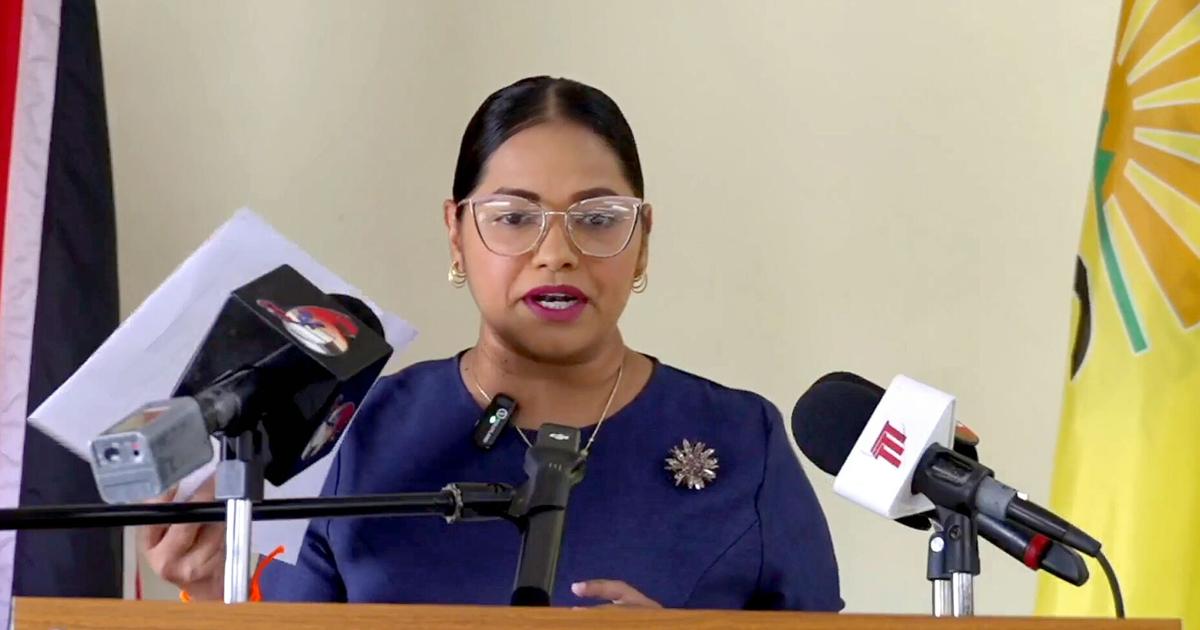
    A significant institutional standoff has emerged between Trinidad and Tobago’s Children’s Authority board and its overseeing minister, with board members firmly rejecting resignation demands despite revelations of substantial financial liabilities. Minister of People, Social Development and Family Services Vandana Mohit publicly called for the board’s resignation during a Sunday news conference, citing a troubling $77 million liability and alleged operational mismanagement within the agency.

    Board Chairman Marsha Bailey explicitly stated the board’s intention to serve through its appointed term until October 2026, countering the minister’s demands. The authority’s governing body expressed astonishment at Mohit’s public statements, revealing that numerous formal requests for ministerial meetings had gone unanswered throughout their tenure.

    The conflict appears rooted in fundamental disagreements regarding financial oversight and operational responsibilities. The board emphasized its compliance with the Children’s Authority Act, which establishes that presidential appointees serve fixed terms, suggesting the minister lacks direct authority to demand resignations.

    Financial constraints have significantly hampered the Authority’s operations, affecting critical areas including personnel costs, foster care programs, facility maintenance, and infrastructure upgrades. These challenges were formally communicated to the ministry following the 2026 national budget passage, yet the board claims it received inadequate ministerial support.

    The current confrontation escalated after the board implemented disciplinary measures regarding non-payment of statutory deductions—a violation of national law. Minister Mohit subsequently requested a comprehensive report on these actions, which the board provided within 24 hours despite having received only a brief five-minute meeting with the minister in February.

    The board maintains that operational management falls under the director or chief executive officer’s purview, while their role focuses on governance and oversight. They expressed concern that public criticism potentially damages the Authority’s reputation and undermines the professionals serving on the board.

    Both parties have committed to providing additional clarifications regarding the $77 million liability, though neither side had issued further statements by press time. The minister indicated a response would be forthcoming regarding potential government actions should the board maintain its position.

  • BLOODY 6 HOURS

    BLOODY 6 HOURS

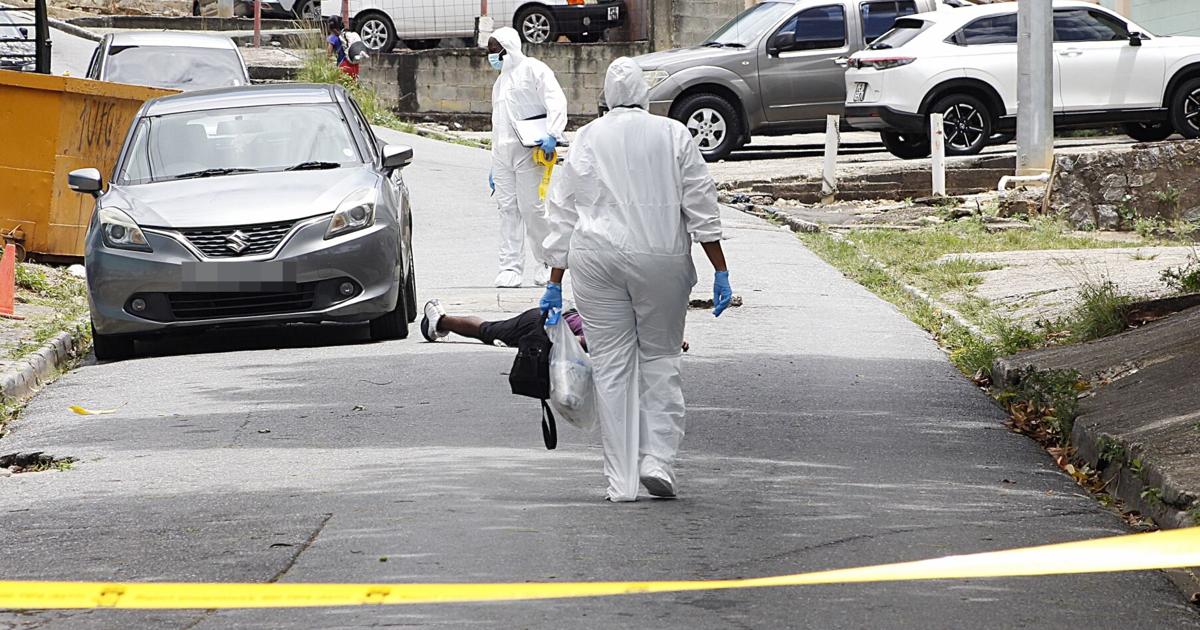
    A wave of violence swept through Trinidad’s capital on Sunday, resulting in the fatal shootings of three men in separate incidents across the Port of Spain Division within a narrow six-hour timeframe.

    The first tragedy unfolded at approximately 4:30 p.m. in the McShine Lands area of Laventille. Romello Edingborough, a 29-year-old from Maraval, was engaged in renovation work with his father when six individuals clad in dark clothing approached the property. Two of the assailants, armed with firearms, reportedly seized Edingborough and executed him at the property’s entrance with multiple gunshots before fleeing towards Desperlie Crescent. Despite being rushed to Port of Spain General Hospital by his father, Edingborough was declared deceased upon arrival at 4:39 p.m. Law enforcement officials, including Ag/Cpl Nunez and teams from Homicide Region One, secured the scene and collected ballistic evidence comprising eight 5.56mm shell casings, two .40 caliber casings, one 9mm casing, and a blood sample.

    Approximately two hours later, at 6:10 p.m., officers from the Port of Spain Task Force responded to reports of gunfire at Joe Sam Hill in Laventille. Their investigation led to the discovery of 29-year-old Shaquille Woods from Morvant, who was found deceased at the base of a staircase with multiple fatal gunshot wounds to his head. Emergency medical personnel confirmed no vital signs were present. Homicide detectives and forensic specialists processed the location, recovering a single 5.56mm spent shell casing.

    The third homicide occurred near 9:40 p.m. along Picton Road in Laventille. Prince Moses, 35, was fatally shot outside his residence after stepping into his yard. Relatives reported hearing explosive gunshots before discovering Moses wounded. He was transported to Port of Spain General Hospital by PC Lewis and other responders but was pronounced dead at 10:05 p.m. Crime scene investigators subsequently retrieved multiple 9mm spent shell casings from the location.

    In a related development, another shooting incident claimed the life of 22-year-old Umar Mohammed in Cocorite on Monday morning, bringing the nation’s murder toll to 73 for the year. This figure represents a decrease from the 83 homicides recorded during the corresponding period last year.

  • Minister: Board must resign

    Minister: Board must resign

    In a dramatic political development, Minister of People, Social Development and Family Services Vandana Mohit has issued a forceful demand for the immediate resignation of the entire board of management overseeing Trinidad and Tobago’s Children’s Authority (CATT). The call comes amid revelations of a staggering $77 million financial liability that has compromised the institution’s operational stability.

    During a press conference at the United National Congress headquarters in Chaguanas, Minister Mohit presented a comprehensive indictment of the Authority’s financial management practices, describing the situation as a ‘serious financial debacle’ with liabilities accumulating since 2020. The minister asserted that these financial troubles represent not isolated incidents but a systemic pattern of governance failure that threatens the institution’s ability to protect vulnerable children.

    Detailed documentation revealed multiple areas of financial concern, including outstanding security service payments exceeding $23 million collectively owed to two firms, unpaid staff health insurance contributions surpassing $1.5 million, and the startling acquisition of an ice-maker costing $343,000—an expenditure characterized as frivolous given the Authority’s financial constraints.

    Perhaps most seriously, Minister Mohit disclosed that the Authority had failed to remit statutory deductions to national insurance and revenue authorities despite deducting these amounts from employee salaries. As of September 2025, these unremitted payments totaled over $10 million, creating what the minister described as ‘serious legal and ethical implications’ that expose the state to potential litigation.

    The minister further questioned the timing of disciplinary actions against the Authority’s former chief executive officer, suggesting these measures appeared reactive rather than responsible, implemented only after ministry auditors began examining the institution’s finances.

    In response, Children’s Authority Chair Marsha Bailey expressed astonishment at the minister’s statements, asserting that the presidentially-appointed board had ‘made every effort to work with the minister’ and remained committed to fulfilling their responsibilities under the governing legislation. Bailey noted the board stands by its record of doing ‘what is right’ for the nation’s children.

    The developing crisis has drawn commentary from former government officials, including Ayanna Webster-Roy, who emphasized the traditional separation between ministerial policy direction and operational management of the Authority. The Children’s Authority has indicated it will issue a comprehensive statement addressing these allegations.

  • Armed soldier killed in night-time ambush

    Armed soldier killed in night-time ambush

    In a brazen attack that has shocked the local community, 30-year-old Defence Force soldier Jaelani Garcia Williams was fatally shot during an ambush outside a Chaguanas mini-mart on Saturday evening. The incident occurred approximately at 9:30 p.m. along La Clave Street in the Edinburgh 500 area as Williams was returning to his black SUV after visiting the establishment.

    According to police reports, another vehicle traveling southbound abruptly stopped adjacent to Williams’ position. An armed assailant emerged from the right rear passenger side of the vehicle and discharged multiple rounds at the soldier before swiftly re-entering the getaway car, which immediately fled the scene. Despite being armed with his service weapon, Williams sustained fatal injuries and collapsed on the roadway.

    Central Division Task Force officers, alerted through the E999 Command Center approximately twenty minutes after the shooting, discovered Williams lying face down without vital signs upon their 10 p.m. arrival. Crime scene investigators subsequently recovered significant evidence including the victim’s pistol with a magazine containing 17 rounds of 9mm ammunition, alongside 16 spent 9mm shell casings, five .40 caliber casings, one projectile, and a black fisher’s hat.

    The Trinidad and Tobago Defence Force has issued an official statement extending profound condolences to Williams’ family, friends, and colleagues, emphasizing that the loss deeply affects the entire national security community. The military organization has pledged full cooperation with the Trinidad and Tobago Police Service, which maintains primary investigative jurisdiction over the case. WPC Knights is leading the ongoing investigation amid a palpable atmosphere of tension and reluctance among local residents to discuss the incident publicly.

  • US soldiers to leave Tobago soon

    US soldiers to leave Tobago soon

    Tobago House of Assembly (THA) official Keigon Denoon has announced the impending departure of United States military personnel from the island territory. The disclosure came during a press conference at the Hochoy Charles Administrative Complex in Calder Hall, where Denoon serves as Secretary for Youth Empowerment and Sport Division.

    While confirming the withdrawal, Denoon emphasized the sensitivity surrounding operational timelines, stating: “That is a sensitive issue in terms of homeland security, and so the exact timeline would not have been given, but they will be leaving shortly.” The deployment formed part of established security cooperation agreements between the United States and Trinidad and Tobago.

    The military presence, which has lasted approximately four months, centered on the installation and operation of a sophisticated radar system near the ANR Robinson International Airport. Government officials previously identified the system’s purpose as detecting narcotics trafficking and illegal weapons movement, with operational costs reaching $3 million daily borne by the United States.

    Questions regarding the extended deployment have drawn concern from local leaders, including outgoing PNM Tobago Council leader Ancil Dennis, who characterized the continued presence as “potentially dangerous” after the initial mission’s completion. Critics have demanded transparency regarding operational scope and potential long-term implications.

    THA Chief Secretary Farley Augustine corroborated the withdrawal timeline last week, indicating departure within days while confirming soldiers’ accommodation at Grafton Beach Resort. Augustine clarified that no access restrictions were imposed on the property during their stay, noting the unnecessary nature of such measures given the imminent withdrawal.

  • Police pursue leads in Guerra murder

    Police pursue leads in Guerra murder

    Authorities are actively investigating multiple investigative angles in the fatal ambush of prominent businessman Danny Guerra, who was gunned down outside his Sangre Grande office last Friday. While police confirm pursuing several substantial leads, they emphasize that no official motive has been established as of yesterday.

    According to law enforcement sources, investigators are currently examining at least three distinct theories regarding why Guerra was specifically targeted. The murder occurred approximately at 5:15 p.m. when Guerra entered his black Toyota Hilux vehicle after concluding work at his DG Homes headquarters located at the intersection of Guy Trace and North Oropouche Road.

    Two masked assailants emerged from a white Nissan Tiida that pulled alongside Guerra’s vehicle, unleashing a barrage of gunfire before swiftly returning to their car and fleeing eastward along Oropouche Road. The attack left Guerra with multiple gunshot wounds, and despite being transported to Sangre Grande Hospital by a passing motorist, he was pronounced dead at 5:38 p.m.

    Law enforcement response was immediate, with WPC Joseph and PC Mohammed of the Sangre Grande Criminal Investigations Department arriving at the crime scene by 5:25 p.m. to initiate preliminary investigations. The Scene of Crime Unit conducted comprehensive processing of the area, photographing evidence and collecting items of potential evidentiary value.

    In a significant development, Eastern Division Task Force officers located an abandoned white Nissan Tiida along River Road off the Toco Main Road during subsequent searches within the Sangre Grande district. Both vehicles were transported to the Special Evidence Recovery Unit camp in Cumuto for detailed forensic examination.

    Minister of Homeland Security Roger Alexander addressed the media on Saturday, urging public restraint against circulating unverified theories about the killing. He emphasized that speculative narratives could potentially compromise ongoing investigative efforts and appealed for anyone with credible information to contact homicide detectives directly.

    The business community has expressed profound shock at Guerra’s death, with the Trinidad and Tobago Aggregate Producers Association issuing an official statement recognizing his significant contributions to the country’s quarrying and construction materials sector. Association president Nigel Tenia extended condolences to Guerra’s family, friends, and colleagues, noting his essential role in supplying materials for national infrastructure projects.

    The investigation gains additional complexity considering Guerra’s recent legal history, including his arrest among 17 individuals during a major police operation in Manuel Congo, Guanapo, on October 9th of last year. During that operation, authorities shut down what they described as an illegal quarry operation, seizing processing plants, trucks, and heavy machinery. Guerra had been granted bail of $50,000 on October 11th following those charges.

    Cpl Ali of the Homicide Bureau of Investigations, Region 2, continues to lead the ongoing investigation into Guerra’s murder.

  • ‘A journey of boundless faith’

    ‘A journey of boundless faith’

    Trinidad and Tobago’s Spiritual Shouter Baptist community is commemorating a landmark anniversary—75 years of religious freedom—marking a transformative journey from persecution to prominence. The celebrations, themed “A journey of boundless faith,” honor not only historical remembrance but also the faith’s evolution into a significant spiritual and cultural institution.

    Patriarch Wayne Jones, Ecclesiastical Head of the National Congress of Incorporated Baptist Organisations, emphasized the faith’s substantial growth, noting increased public identification and youth engagement. The Congress, representing the community through 13 archdioceses locally and internationally, has witnessed remarkable expansion under Jones’s three-year leadership.

    Despite its current recognition, the faith’s history is marred by repression. Outlawed and driven underground for decades, Spiritual Baptists faced imprisonment and social stigma, leading to persistent misconceptions. Jones, a pastor for 40 years, explained that clandestine worship practices during the prohibition era fostered misunderstandings, with some mischaracterizing their rituals as witchcraft or dark magic. In reality, the faith emphasizes spiritual healing, prayer, and community support through the power of Jesus Christ.

    The community now actively contributes to societal development through initiatives like educational assistance, youth mentoring, and prison outreach programs. Thanksgiving services often include aid for the poor and needy, reflecting the faith’s commitment to social uplift.

    Significant infrastructure projects are underway on government-allocated land in Couva, funded partly by state support. An administrative building already serves as the Congress headquarters, with plans for a cathedral, canopy structure for gatherings, and a heritage park.

    The National Congress unites diverse archdioceses under a common purpose: holistic member empowerment and societal engagement. While worship styles may vary, beliefs remain unified through the Holy Spirit.

    The faith’s influence extends to national leadership, with figures like first Prime Minister Dr. Eric Williams and labour leader Uriah Butler among its practitioners. Today, Spiritual Baptists excel across professions—doctors, teachers, professors—demonstrating the community’s progressive trajectory and enduring contributions to Trinidad and Tobago’s development.

  • Legal opinion clears T&T over US drug boat strikes

    Legal opinion clears T&T over US drug boat strikes

    A landmark legal opinion prepared for the Trinidad and Tobago government has concluded that U.S. military strikes against suspected drug trafficking vessels in the Caribbean constitute lawful acts of self-defense under international law. The analysis, authored by renowned British King’s Counsel Harish Salve of Blackstone Chambers, provides significant legal justification for operations targeting narcotics networks allegedly supported by the Venezuelan government.

    The legal assessment, commissioned by Attorney General John Jeremie, addresses the complex intersection of national security, non-state actors, and international jurisprudence. Central to Salve’s argument is Article 51 of the UN Charter, which recognizes the inherent right of self-defense. The opinion contends that modern security threats increasingly emanate from non-state actors operating with state support, requiring updated interpretations of international law.

    Salve’s analysis establishes that when criminal organizations operate with governmental support, their actions become attributable to the sponsoring state. The opinion references specific allegations against the Maduro government, including providing diplomatic passports to traffickers, offering diplomatic cover for illicit transport operations, and partnering with armed groups like Colombia’s FARC guerrillas.

    The legal framework acknowledges that affected states may implement preventive measures—including vessel destruction—when facing narcotics trafficking that threatens national security. However, Salve emphasizes that such actions must meet established international law principles of necessity and proportionality.

    Regarding Trinidad and Tobago’s potential liability, the opinion clarifies that the nation would not automatically bear responsibility for U.S. operations conducted in or near its waters. International law principles developed by the International Law Commission indicate that a state is only responsible if it knowingly assists another state in committing wrongful acts.

    The document further notes that Trinidad and Tobago itself suffers significantly from regional drug trafficking, having expended over $60 billion on national security during the past decade while continuing to combat smuggling networks and manage migration flows resulting from Venezuela’s humanitarian crisis.

    Salve’s opinion characterizes the global narcotics trade as a fundamental threat to national sovereignty, referencing UN treaties that recognize connections between drug trafficking, money laundering, arms trading, and terrorism financing. The analysis concludes that the profits from illicit drug operations frequently fund violence and governmental destabilization, imperiling the security of affected nations.

  • Mixed reviews from travellers

    Mixed reviews from travellers

    Piarco International Airport became the testing ground for Trinidad and Tobago’s newly launched digital immigration platform this weekend, yielding sharply divided reactions among early users. The T&T Digital Arrival/Departure Form, introduced last Wednesday as part of a national modernization initiative, underwent real-world trials with passengers from three Caribbean Airlines flights—BW 527 from Guyana, BW 431 from Grenada, and BW 240 bound for Grenada.

    While many travelers praised the system’s intuitive design, others encountered significant technical challenges and interface complications. Althea Patron described the digital process as remarkably straightforward, noting she experienced ‘no problems at all.’ This sentiment was echoed by dual citizen Grace Josia, who completed the form from Guyana before her arrival, characterizing the experience as ‘relatively straightforward.’

    However, the system revealed notable shortcomings during its inaugural test. Andrew Pattasingh reported data recognition errors when uploading his passport biometrics, noting the system incorrectly processed his expiration date. Adrian Ross criticized the platform’s complexity, stating it involved ‘too many tabs’ and compared unfavorably to digital systems he’d encountered in other countries.

    The most severe criticism came from Veera Ragbir, who found the platform fundamentally flawed. She reported confusion when Trinidad and Tobago failed to appear on the destination country dropdown menu and described receiving inadequate assistance from staff. ‘It was real harassing,’ Ragbir stated. ‘They just brought it out and not everybody understands it.’

    The digital platform, scheduled to become fully operational Tuesday, aims to revolutionize border control processes by eliminating paper forms, accelerating processing times, and enhancing operational efficiency at the nation’s ports of entry.