标签: Trinidad and Tobago

特立尼达和多巴哥

  • ‘Irreparable harm’ to Caricom

    ‘Irreparable harm’ to Caricom

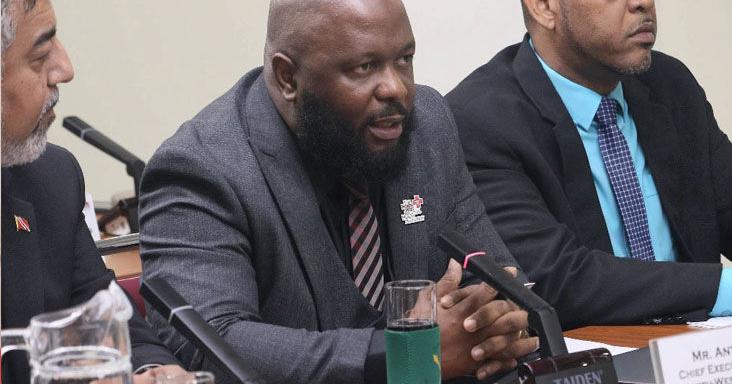
    Trinidad and Tobago’s Foreign Minister Sean Sobers has launched a formal condemnation against the Caribbean Community (CARICOM), alleging procedural violations in the reappointment of Secretary-General Dr. Carla Barnett. During a parliamentary address on Thursday, Minister Sobers characterized the process as ‘surreptitious’ and fundamentally damaging to the regional body’s integrity.

    The controversy centers on claims that Trinidad and Tobago—CARICOM’s largest financial contributor—was systematically excluded from decision-making processes. Minister Sobers revealed that the nation provides approximately $127 million annually to various CARICOM institutions, representing 22% of the organization’s total budget. This substantial investment includes $35.5 million to the CARICOM Secretariat, $25 million to the Development Fund, and significant allocations to agencies including CARPHA ($14 million) and the Caribbean Examinations Council ($10.3 million).

    According to Sobers, the first indication of Dr. Barnett’s reappointment came via telephone on March 24, despite the matter never appearing on official agendas during February’s 50th Regular Meeting in St. Kitts. The minister emphasized that neither the preliminary Community Council discussions nor the final Plenary Session included this critical decision, with subsequent communiqués and decision summaries similarly omitting any reference to the reappointment.

    Prime Minister Kamla Persad-Bissessar has aligned with her minister’s position, publicly declaring non-support for Barnett’s continued leadership and signaling intentions to reduce Trinidad and Tobago’s financial commitments to CARICOM. The government maintains that any decisions made without proper participation of all member states violate Article 24 of the Revised Treaty of Chaguaramas, rendering them ‘ultra vires’ or beyond legal authority.

    Despite this confrontation, Minister Sobers reaffirmed Trinidad and Tobago’s commitment to CARICOM’s revitalization, particularly emphasizing the importance of the regional market where Trinidad serves as both largest importer and exporter of goods. The government has called for emergency discussions during the upcoming July meeting in St. Lucia, demanding increased transparency and adherence to established protocols for all future decisions.

  • Moonilal, Young apologise for name-calling

    Moonilal, Young apologise for name-calling

    Trinidad and Tobago’s Parliament witnessed a heated exchange between Energy Minister Dr. Roodal Moonilal and Opposition MP Stuart Young, culminating in mutual apologies after devolving into personal insults during official proceedings. The confrontation emerged during questioning about procurement practices at state-owned energy companies.

    MP Young initiated the inquiry by demanding transparency regarding Phoenix Park Gas Processors Ltd’s alleged acquisition of medical imaging equipment, specifically a GE MRI machine and CT scanner. He pressed for details including the supplier identity, individual item costs, and procurement methodology. Minister Moonilal categorically denied any such procurement activities by PPGPL.

    The exchange intensified when Young questioned whether PPGPL and National Gas Company (NGC) chairman Gerald Ramdeen had instructed staff to cancel orders from original manufacturer GE and redirect procurement to an inexperienced vendor. Moonilal’s dismissive response prompted Young to label him a “class clown,” triggering intervention from House Speaker Jagdeo Singh who mandated an apology.

    The scrutiny extended to NGC’s executive appointments, particularly the hiring of vice-president of Finance Shiva Ramnarine. Minister Moonilal detailed a rigorous September 2025 recruitment process involving five candidates, emphasizing compliance with NGC’s employment policies. Young attempted to question Ramnarine’s professional history, suggesting previous terminations from Caribbean Airlines and Telecommunications Services of Trinidad and Tobago, but the Speaker ruled these inquiries irrelevant.

    Further controversy arose regarding the Cabinet-appointed committee for reopening the Guaracara refinery. Moonilal disclosed that former energy minister Kevin Ramnarine chairs the committee, confirming that no members have received compensation to date. The minister clarified that Trinidad Petroleum Holdings Ltd would administer honoraria payments pending government and board approvals.

  • A LYING COWARD

    A LYING COWARD

    A deepening conflict between Trinidad and Tobago’s nursing leadership and health authorities has erupted into public confrontation, with TTNNA President Idi Stuart filing formal reports with police and telecommunications regulators over an alleged threat made by North Central RHA Chairman Dr. Tim Gopeesingh during a radio appearance. The allegation prompted Gopeesingh to publicly denounce Stuart as “a lying coward” in response.

    The tension manifested visibly during a spirited protest at Sangre Grande Hospital, where dozens of nursing personnel marched while chanting criticisms toward Health Minister Dr. Lackram Bodoe. Demonstrators carried placards highlighting wage disparities (“47% for politicians, 0% for nurses”) and the vital role of healthcare workers (“nurses save lives”).

    Stuart, invoking former Prime Minister Basdeo Panday’s famous lion-fighting metaphor, vowed unwavering commitment to advocating for nurses’ rights. He revealed that salary negotiations remain deadlocked, with medical staff still operating under 2013 compensation structures while facing critically low staffing ratios—reportedly five nurses to 124 patients in NCRHA facilities.

    The union leader described a tragic consequence of understaffing: a patient reportedly died unattended in the Accident and Emergency holding bay at Eric Williams Medical Sciences Complex, prompting a distressed nurse to call him in tears.

    With a major demonstration scheduled for April 10 in Port of Spain, Stuart warned that thousands of healthcare workers would converge outside the Health Minister’s office to protest what they characterize as governmental indifference. He emphasized that Minister Bodoe bears ultimate responsibility for securing funding and improving conditions, not subordinate officials like Gopeesingh.

    Gopeesingh, when contacted, dismissed Stuart as “a nondescript person fighting for his survival as a trade unionist” and threatened legal action if the allegations continue.

  • “Fruit from a poison tree”

    “Fruit from a poison tree”

    In a dramatic political development, Trinidad and Tobago’s parliamentary opposition has formally demanded the immediate dismissal of Defense Minister Wayne Sturge from both cabinet and government positions. The call comes amid explosive allegations connecting the minister and the ruling United National Congress (UNC) administration to recently assassinated businessman Danny Guerra.

    Opposition Chief Whip Marvin Gonzales presented what he characterized as compelling evidence during a People’s National Movement (PNM) press conference in Port of Spain on Wednesday. Drawing extensively from law enforcement documents and investigative media reports predating Guerra’s death, Gonzales constructed a narrative of concerning associations between government officials and alleged criminal activities.

    Guerra, a real estate developer and DG Homes proprietor, met his demise on March 13 when unidentified assailants ambushed him outside his Sangre Grande business establishment. His violent death occurred precisely two months after his January 2 release from preventive detention, where he had been held for nearly six weeks under a state of emergency order.

    The previously issued preventive detention order outlined serious allegations against Guerra, identifying him as the leader of an organized criminal gang with purported involvement in arms trafficking, money laundering, and illegal quarrying operations. Most alarmingly, the document asserted the gang maintained access to ‘a cache of high-powered firearms’ and intended to ‘imminently execute the assassination of a Government minister’ while escalating attacks against rival factions in public spaces.

    Gonzales specifically highlighted media reports suggesting Guerra had contributed approximately $20 million to the UNC’s electoral campaign, a financial injection allegedly instrumental in securing the crucial Toco/Sangre Grande constituency during last year’s election. The opposition whip further referenced visual evidence showing Minister Sturge socializing with Guerra during campaign events.

    ‘Wayne Sturge as Minister of Defence has access to confidential information relating to the security of Trinidad and Tobago,’ Gonzales asserted. ‘Based on these reports, he is an example of a fruit from a poison tree that benefited significantly from what appears to be criminal wrongdoing in the election campaign.’

    The opposition contends that the minister’s alleged connections represent a severe national security threat that demands immediate prime ministerial intervention. The unfolding scandal raises profound questions about political financing, national security protocols, and the integrity of governmental institutions in the Caribbean nation.

  • Analyst: Country risks regional ties

    Analyst: Country risks regional ties

    A prominent Caribbean political analyst has sharply criticized the Trinidad and Tobago government’s rationale for opposing the reappointment of CARICOM Secretary-General Dr. Carla Barnett, labeling its reasoning as fundamentally flawed and jurisdictionally misplaced.

    Political scientist Peter Wickham asserted that the Trinidadian government’s justification falls entirely outside the mandate of the Caribbean Community (CARICOM). His comments follow the announcement by CARICOM Chairman and St. Kitts and Nevis Prime Minister Dr. Terrance Drew that a majority of heads of government had endorsed Dr. Barnett’s reappointment during last month’s regional summit.

    Trinidadian Prime Minister Kamla Persad-Bissessar publicly declared her opposition to the reappointment, stating that “CARICOM has been failing for 52 years and will continue to fail for the next 52 years,” while threatening to reduce her country’s financial contributions to the regional body.

    Wickham challenged the Prime Minister’s diplomatic approach, noting that her absence from the critical meeting where the decision was made undermined her authority to subsequently object to the outcome. He further argued that her treatment of regional partners demonstrated a concerning lack of respect for established CARICOM protocols.

    The analyst specifically dismissed the Prime Minister’s cited justification—related to the extradition of firearms dealer Brent Thomas from Barbados—as entirely irrelevant to CARICOM’s Secretary-General appointment process. Wickham emphasized that such national security matters fall outside CARICOM’s jurisdiction and should not influence personnel decisions within the regional organization.

    Warning of potential economic repercussions, Wickham highlighted Trinidad and Tobago’s dual role as both the largest contributor to and beneficiary of CARICOM arrangements. He cautioned that deteriorating relations could prompt other Caribbean nations to reconsider preferential trade agreements with Trinidad, potentially shifting their economic partnerships toward Latin American suppliers.

    International relations expert Dr. Anthony Gonzales noted significant unanswered questions regarding the circumstances under which Prime Minister Persad-Bissessar departed the regional meeting, suggesting the public has received only partial information about the diplomatic incident.

  • Cross-border kidnap network dismantled

    Cross-border kidnap network dismantled

    Trinidad and Tobago law enforcement authorities have successfully dismantled a sophisticated transnational criminal network specializing in cross-border abductions following the dramatic rescue of 73-year-old Tara Poliah. The elderly woman was violently seized from her San Juan residence on Wednesday evening in a brazen kidnapping operation that triggered a massive multi-agency response.

    The incident unfolded approximately at 7:12 PM when Poliah, captured on security footage, was engaged in conversation with a tenant dressed in black clothing regarding rental payments. Without warning, two additional assailants rushed the elderly woman from behind, forcibly covering her mouth and dragging her into a waiting white Nissan AD Wagon despite her desperate screams for help.

    Police Commissioner Allister Guevarro immediately activated an extensive inter-agency operation involving the Traffic and Highway Patrol, Emergency Response Patrol, Anti-Kidnapping Unit, North Eastern Division Task Force, Coastal and Air Support Unit, and the Trinidad and Tobago Coast Guard. Strategic road checks were established across the Maracas Bay, Tyrico Bay, and Las Cuevas Bay areas as authorities tracked the movement of the getaway vehicle.

    In a critical breakthrough, Coast Guard personnel intercepted a small vessel approximately one nautical mile north-northwest of Corozal on Trinidad’s northern coast at 11:59 PM based on intelligence from the Radar Centre. Poliah was discovered aboard the craft alongside six Venezuelan nationals and two Trinidadian men. Authorities believe the kidnappers were attempting to transport their victim to Venezuela via Tyrico Bay. Subsequent operations resulted in the detention of three additional Venezuelan suspects—two men and one woman—bringing the total apprehended to eleven individuals.

    Commissioner Guevarro characterized the operation as “a significant breakthrough in our ongoing efforts to dismantle organised criminal groups involved in cross-border kidnappings,” praising the “speed, precision, and professionalism” demonstrated by participating agencies. The rescue operation involved senior police officials including DCP Intelligence and Investigations Natasha George, DCP Operations Suzette Martin, ACP Criminal Division Richard Smith, and Senior Superintendent of the CID Anderson Parryman.

    The successful intervention has prompted serious security concerns among San Juan residents, many of whom expressed profound relief tempered with heightened anxiety regarding community safety. Neighbors revealed that Poliah frequently rented portions of her two-story residence to Venezuelan nationals, highlighting how criminals exploited this familiarity. While grateful for the positive outcome, community members acknowledged the incident has fundamentally altered their perception of security and vulnerability within their own neighborhoods.

  • 4 dead in latest US strike on vessel in Caribbean Sea

    4 dead in latest US strike on vessel in Caribbean Sea

    The United States military has intensified its maritime counter-narcotics operations in the Caribbean basin, with the latest lethal strike marking the 47th such engagement in the region. Conducted on March 25th under the authority of General Francis L. Donovan’s Joint Task Force Southern Spear, this operation resulted in the deaths of four individuals aboard a suspected trafficking vessel.

  • Exam easy, easy!

    Exam easy, easy!

    Students across two primary schools in Arima, Trinidad, expressed widespread relief and satisfaction following yesterday’s Secondary Entrance Assessment (SEA) examination, with many describing the test as surprisingly manageable. The Express conducted interviews at Arima Presbyterian and Malabar Government Primary Schools, capturing the emotional responses from students and parents alike.

    Arianna Maharaj of Arima Presbyterian Primary School enthusiastically declared the exam ‘easy,’ a sentiment echoed by her father Vishal, who shared his overwhelming excitement and anticipation for the results. The day held double celebration for 11-year-old Annilie Amoroso, who emerged from the examination compound wearing a birthday crown and sash. Despite encountering one challenging mathematics question, Amoroso expressed confidence in her performance and hopes to secure placement at Bishop Anstey High School East.

    Maya Noreiga provided comparative insight, noting that ‘past papers were harder than the actual exams,’ while acknowledging her aspiration to attend St. Joseph’s Convent. Her mother, Natasha Caldon, attributed this confidence to thorough preparation that left her daughter ‘comfortable, happy and at peace.’

    The examination experience varied among participants. Caleb Austarlie reported minor difficulties with creative writing but found preparation exercises ‘relaxing,’ aiming to join his sister at Arima Central Secondary School. Conversely, Kemiley St Benard described mathematics as ‘kind of hard,’ though she maintained belief in her overall performance.

    Parental perspectives highlighted the emotional toll of preparation. Kerishma Johnson characterized her daughter’s study period as ‘frustrating,’ while Kristin Martinez acknowledged the ‘plenty work’ involved in completing numerous booklets. At Malabar Government Primary, Janae Bharose completed the exam with visual concessions, expressing happiness that the intensive ‘exam style’ preparation had concluded despite mathematics challenges.

    The collective mood reflected significant relief as families transition from examination stress to celebratory anticipation of results, marking both an educational milestone and personal achievement for Trinidad’s youth.

  • Sobers insists T&T excluded from Caricom decision

    Sobers insists T&T excluded from Caricom decision

    A significant diplomatic dispute has erupted within the Caribbean Community (CARICOM) following Trinidad and Tobago’s formal protest against the reappointment process of Secretary-General Dr. Carla Barnett. Foreign Minister Sean Sobers has emphatically stated that his nation was entirely excluded from consultation procedures prior to Barnett’s reappointment, learning of the decision only after it was finalized.

    Minister Sobers characterized the unilateral action as both ‘disrespectful and insulting,’ expressing profound disappointment that established diplomatic protocols were disregarded. The controversy emerged when CARICOM Chairman and St. Kitts and Nevis Prime Minister Dr. Terrance Drew announced that a ‘required majority’ of member states had approved Barnett’s second term during February meetings in St. Kitts.

    Prime Minister Kamla Persad-Bissessar has declared Trinidad and Tobago’s intention to reduce its substantial financial contribution to CARICOM, which currently constitutes 22% of the organization’s total budget. This financial leverage represents the largest single contribution among member states.

    The political conflict has intensified domestically, with Minister Sobers launching sharp criticism against Opposition Leader Pennelope Beckles for her support of the reappointment process. Sobers dismissed Beckles’ comments as ‘inane’ and indicative of her ‘continued pattern of supporting wrongdoing,’ while defending the government’s position as principled opposition to procedural violations.

    Central to the dispute is the allegation that three CARICOM members—Trinidad and Tobago, Antigua and Barbuda, and The Bahamas—were systematically excluded from critical discussions during the February retreat where Barnett’s reappointment was decided. Minister Sobers maintains this violates the revised Treaty of Chaguaramas governing CARICOM operations.

    The government has framed its stance as a defense of democratic principles and transparent governance, vowing to pursue formal review mechanisms while reconsidering its financial commitments to the regional body.

  • PM opposes Barnett renewal

    PM opposes Barnett renewal

    In a significant development for Caribbean regional politics, Trinidad and Tobago’s Prime Minister Kamla Persad-Bissessar has publicly opposed the reappointment of CARICOM Secretary-General Dr. Carla Barnett while announcing substantial reductions in her nation’s financial contributions to the regional bloc. This decisive stance emerges amid growing tensions regarding CARICOM’s governance transparency and operational effectiveness.

    The controversy centers on the reappointment process that occurred during February’s CARICOM meeting in St. Kitts, where a majority of member states approved Barnett’s second term beginning August 2026. Prime Minister Persad-Bissessar explicitly rejected this decision, stating bluntly: ‘Caricom has been failing for 52 years and will continue to fail for the next 52 years.’

    Financial implications form a critical component of this dispute. Trinidad and Tobago currently contributes approximately 22% of CARICOM’s annual budget—amounting to $4-5 million—under the organization’s funding formula that requires more developed economies to provide larger shares. The Prime Minister confirmed that these contributions would be substantially reduced, though specific figures remain undisclosed.

    Foreign Minister Sean Sobers formally articulated the government’s objections in an official letter to CARICOM leadership, obtained by media sources. The correspondence highlights procedural irregularities, noting that Barnett’s reappointment was neither included on the provisional agenda nor discussed during plenary sessions. Particularly concerning was the exclusion of Trinidad and Tobago, Antigua and Barbuda, and The Bahamas from critical retreat discussions where the reappointment was reportedly decided.

    The diplomatic communication references Article 24 of the Revised Treaty of Chaguaramas, emphasizing that the Secretary-General’s appointment must follow proper channels through the Community Council and Conference. Minister Sobers maintained that while Trinidad and Tobago remains committed to CARICOM’s revitalization, the current process violated both the spirit and letter of established protocols.

    Historical context reveals deeper tensions. Prime Minister Persad-Bissessar had previously criticized CARICOM’s silence during the 2022 incident involving Trinidadian national Brent Thomas, who was allegedly kidnapped from Barbados using Regional Security System aircraft. The Prime Minister’s unanswered inquiries to the Secretariat during her tenure as opposition leader apparently fueled perceptions of institutional bias toward governing parties.

    This development signals broader strategic shifts in Trinidad and Tobago’s foreign policy. The administration has clearly indicated it will no longer automatically align with CARICOM’s collective political ideologies, security frameworks, or foreign policy positions. Instead, the nation will pursue independent foreign and security policies prioritizing national sovereignty.

    Concurrently, Trinidad and Tobago is expanding its international engagements beyond traditional regional boundaries. The government has applied for associate membership in Mercosur—the South American trade bloc—while joining a new hemispheric coalition focused on combating drug cartels and external threats. These moves, coupled with strengthened bilateral relations with the United States and attendance at the Shield of the Americas Summit, illustrate a deliberate diversification of diplomatic and economic partnerships.

    The current impasse reflects fundamental questions about CARICOM’s relevance, governance transparency, and operational effectiveness. As one of the organization’s principal funders, Trinidad and Tobago’s reduced financial commitment and vocal criticism could prompt significant structural reevaluation within the regional body. How CARICOM addresses these challenges may determine its future viability in an evolving geopolitical landscape.