标签: Trinidad and Tobago

特立尼达和多巴哥

  • Kamla ‘unbothered’

    Kamla ‘unbothered’

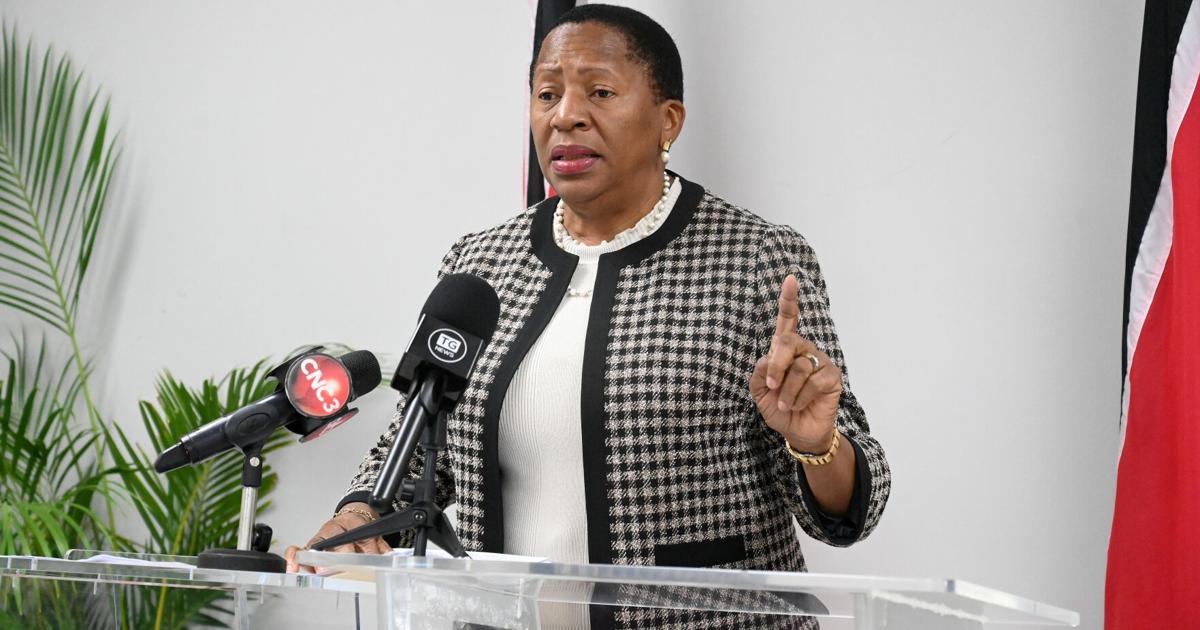
    In a striking display of political composure, Trinidad and Tobago Prime Minister Kamla Persad-Bissessar has publicly declared her indifference toward derogatory comments made by opposition leader Keith Rowley. The former prime minister had repeatedly used the term “jamette”—a historically derogatory term referring to women of low social standing—during a March 17 press conference to dismiss Persad-Bissessar’s allegations about drug money financing the opposition party’s headquarters.

    Speaking to TV6 News, Persad-Bissessar stated: “While it might appear superficially that I remain unbothered when Rowley and PNM affiliates direct such vulgar remarks toward me, the profound truth remains that internally, I am profoundly, thoroughly unbothered.” She confirmed she would not pursue legal action against Rowley or media outlets that broadcast his comments.

    The incident has triggered significant institutional response, with the Telecommunications Authority of Trinidad and Tobago (TATT) formally notifying Guardian Media Ltd about potential regulatory violations. In a March 20 correspondence, TATT referenced Section D9 of broadcasting licenses, which prohibits content that “degrades or portrays in a negative manner any person or group by reason of race, origin, class, religion or sex.”

    Rowley has intensified his stance despite mounting criticism, questioning TATT’s intervention as potentially infringing upon media freedom. He asserted his intention to continue publicly responding to parliamentary attacks, framing the regulatory scrutiny as a threat to democratic discourse. The confrontation highlights deepening political divisions and evolving debates about acceptable speech, gender politics, and regulatory oversight in Trinidad and Tobago’s media landscape.

  • Burkie’s son, 2 others shot dead

    Burkie’s son, 2 others shot dead

    A pre-dawn shooting in Penal has left three young men dead, including the 17-year-old son of deceased Port of Spain businessman Cedric “Burkie” Burke. The victims—Jordan Cudjoe Burke, Ishmael Matthews (22), and Roberto Samuel Carlos (21)—were discovered in a blood-soaked bedroom of a ground-floor apartment on the Burke family property around 2:56 a.m. Tuesday.

    According to police reports, the scene revealed a brutal execution-style killing with ten spent nine-millimeter shells and twelve live rounds recovered near the bodies. Burke was found leaning against a bed base, Matthews lay on his back on the floor, and Carlos was positioned beneath the bed.

    The tragedy has left families grappling for answers. A relative of Burke, who requested anonymity, recounted receiving a frantic call from Burke’s girlfriend screaming “Come fast, they shooting up the place.” She dismissed speculation that Burke was targeted because of his father’s notorious reputation, noting that other children from the family live normal lives without incident.

    Burke, a Form Five student at St. Benedict’s College preparing for CSEC examinations, had recently faced legal troubles involving counterfeit money charges. His mother has been incarcerated since November on firearm possession allegations, leaving the teenager to reside with his grandmother.

    At Matthews’ home, aunt Marinda Yearwood described the three victims as “the three Musketeers—always together.” She revealed Matthews was an academically gifted student who had earned nine subjects with distinction at Shiva Boys’ College but struggled to find steady employment despite numerous applications.

    Yearwood expressed frustration about rampant youth unemployment and lack of opportunities, stating “The Government is not giving enough opportunities for youths coming off the block.” She acknowledged hearing rumors about the victims “doing mischief by some people” but emphasized that nothing warranted execution.

    Homicide Bureau detectives from Region Three are actively investigating and have appealed for information through emergency hotlines and Crime Stoppers. The case highlights ongoing concerns about youth violence and socioeconomic challenges in Trinidadian communities.

  • US TROOPS LEAVE

    US TROOPS LEAVE

    A contingent of 108 United States military personnel formally concluded their four-month security deployment in Tobago yesterday morning, departing from ANR Robinson International Airport aboard an Atlas Air aircraft. The departure marks the end of a controversial security cooperation initiative between the US and Trinidad and Tobago governments that began in November last year.

    The exit follows last week’s dismantling of the advanced Ground/Air Task Oriented Radar (G/ATOR) system that had been operational since late November. Military personnel departed in full uniform, with some offering farewell gestures as they boarded the aircraft.

    Defence Minister Wayne Sturge expressed gratitude for the cooperation, stating, “We are thankful for their assistance and support and look forward to continuing our partnership.”

    However, the presence of foreign troops sparked significant political opposition in Tobago. Ancil Dennis, political leader of the Tobago Council of the People’s National Movement, accused the government of misleading citizens about the mission’s true nature and potentially exposing the nation to security risks. “The fact that it has been removed already shows us clearly that we were lied to and misled and our lives were placed at risk,” Dennis asserted.

    Dennis further contextualized the deployment within regional geopolitics, noting Trinidad and Tobago’s fortunate avoidance of potential conflict spillover from neighboring Venezuela. He emphasized the nation’s narrow escape from becoming entangled in international military tensions similar to current Middle East conflicts.

    Dr. Denise Tsoiafatt Angus of the Innovative Democratic Alliance welcomed the departure as “a great relief” and closure to a concerning chapter in Tobago’s history. While acknowledging some minimal economic benefits through troop spending at local businesses, she emphasized the importance of stabilizing Tobago’s tourism industry, which continues to face challenges due to ongoing travel advisories from the US Embassy.

    The logistical withdrawal process commenced last Tuesday when US military aircraft GROG71 arrived to transport the dismantled radar system off the island, setting the stage for yesterday’s final troop departure.

  • P/Town sisters missing

    P/Town sisters missing

    A concerned relative of two missing teenage sisters from Princes Town is urging the government to implement stringent restrictions on minors’ access to social media platforms, citing grave dangers posed by unsupervised online activity. The appeal follows the disappearance of Celina Balliram, 15, and her sister Alena Baksh, 12, from their grandmother’s home in St. Croix last Friday.

    The girls were last observed around 8:45 a.m. departing to purchase doubles from a local vendor. After their failure to return nearly two hours later, family members alerted authorities. Police descriptions detail Celina as 4’5″ with brown complexion, medium build, long black hair, brown eyes, and last seen in a blue short dress with black netting. Alena is described as 5′ tall with light brown complexion, slim build, long black hair, grey eyes, and was wearing a white crop top with a black short skirt.

    In an anonymous telephone interview, the relative expressed conviction that the sisters were deliberately targeted by older males through their active Instagram profiles. ‘The Government should impose a complete ban on social media for children,’ she asserted. ‘They are exposed to predatory individuals who conceal their identities behind false profiles. These platforms enable adults to systematically target vulnerable youth.’

    The relative revealed this marks the third disappearance incident for Celina, each spanning approximately two months, though notably the first for Alena. Despite attempted communication via WhatsApp, the sisters reportedly responded with hostility before blocking family contacts. Their father’s recent imprisonment for robbery and their mother’s inability to provide care have compounded familial challenges, leaving the grandmother to manage the household while simultaneously caring for her bedridden daughter and the sisters’ younger siblings, aged five and eight.

    Neither sister has attended school since Carnival period. Celina was enrolled in Form Two at Princes Town West Secondary School, while Alena attended Standard Four at St. Stephen’s Anglican Primary School. The relative emphasized the grandmother’s overwhelmed circumstances and appealed directly for the sisters’ safe return.

  • Rowley hit for  ‘wajang’ language

    Rowley hit for ‘wajang’ language

    Trinidad and Tobago’s Homeland Security Minister Roger Alexander has issued a scathing condemnation of former Prime Minister Dr. Keith Rowley, characterizing his recent statements on law enforcement protocols as “irresponsible and reckless.” The political confrontation emerged after Rowley suggested that legal advice obtained by the Attorney General could encourage security forces to employ lethal measures based solely on suspicion.

    At a Tuesday news conference, Rowley referenced a King’s Counsel opinion regarding the legality of US kinetic strikes against drug trafficking vessels in international waters. The former prime minister extrapolated this maritime precedent to suggest it created an “inducement” for Trinidadian law enforcement to apply similar lethal force standards on land. “If it is okay to kill people on the ocean on suspicion,” Rowley questioned, “isn’t it easier to kill people on land on the same suspicion?”

    Minister Alexander provided the Trinidad and Tobago Police Service’s explicit clarification to the Express, emphasizing that all officers operate under a strict “use of force” policy that clearly delineates when deadly force is legally permissible. Alexander expressed particular concern that Rowley’s commentary endangered police personnel by potentially emboldening criminal elements. “The former prime minister was reckless,” Alexander stated, “and only criminal elements will find great pleasure in that statement.”

    The security minister further criticized Rowley’s employment of derogatory language toward current Prime Minister Kamla Persad-Bissessar, who he reportedly called a “jamette” during the political exchange. Alexander characterized this terminology as “wajang” and “gutter language,” expressing profound disappointment as an African male who was taught to respect women as queens. “How can you sit aside and call a person’s name like that?” Alexander questioned, noting that such language reflects “shameful behavior” unbecoming of any former national leader.

    Rowley’s original comments referenced the Leahy Act, a United States human rights policy that prohibits military assistance to foreign security units implicated in gross human rights violations. The former prime minister revealed that during his administration, US authorities had approached him with concerns about extra-judicial killings by named police officers, suggesting that the current administration’s position might conflict with international human rights standards.

  • ‘Serious concern’ over  minister’s parking row

    ‘Serious concern’ over minister’s parking row

    A contentious incident involving Housing Ministry Minister Phillip Alexander has ignited nationwide discourse on disability rights and legal accountability after he was photographed occupying a reserved parking space for persons with disabilities at a Maraval SuperPharm on March 15. The images, disseminated on social media by former minister Randall Mitchell, prompted immediate public criticism and official responses from advocacy groups.

    Minister Alexander defended his actions by citing parking shortages caused by a nearby food court and claiming authorization from a security guard—an individual allegedly cropped from the circulated photograph. This justification was met with skepticism from disability advocates and law enforcement representatives.

    Kahaya Tuckerin, principal of the National Centre for Persons with Disabilities (NCPD), emphasized in a Wednesday interview that reserved parking spaces must be respected regardless of circumstances. “There should always be empathy whether the security guard gave the green light to park there or not,” she stated, highlighting that disabilities may be either visible or invisible and that proper permits displayed on dashboards are required for legal access. Tuckerin reinforced the organization’s advocacy message: “We always appeal to people to ‘see the ability, not the disability.’”

    The Estate Police Association (EPA) issued a strongly worded statement on Thursday expressing “serious concern” over the incident without directly naming Alexander. The association condemned the suggestion that security personnel could legally authorize parking in designated disabled spaces, calling such notions “troubling” and emphasizing that these spaces represent legal protections rather than privileges.

    EPA President Deryck Richardson underscored that no public official holds authority to circumvent national laws for personal convenience. The association highlighted the precarious position of security officers who may face pressure from powerful individuals to facilitate unlawful actions, warning that officers complying with such requests risk disciplinary consequences while those issuing directives often evade accountability.

    The association reminded all security personnel that their uniforms “represent the rule of law, not the will of any individual” and urged adherence to legal duties and professional standards. Public office holders were reminded that leadership requires exemplary conduct and that Trinidad and Tobago’s laws apply equally to all citizens.

    Current regulations stipulate a $2,000 fine for illegal use of disabled parking spaces, though the demerit points system previously associated with this violation has been abolished by the current administration.

  • Cricket farewell  for Rashme

    Cricket farewell for Rashme

    The Cedros cricket community gathered in solemn tribute yesterday to honor Rashme Deoajit, a prominent local cricketer whose life was tragically cut short by violence. Mourners wearing cricket uniforms raised their bats in a final salute during the emotional funeral service for the 28-year-old, who was cremated in her cricket attire at Mosquito Creek’s Shore of Peace.

    Deoajit, affectionately known as “Pumpkin” among her loved ones, was discovered murdered at her Granville residence on Tuesday. Contrary to initial speculation about stab wounds, autopsy results confirmed her cause of death as blunt force trauma to the head combined with strangulation. Investigators believe the fatal attack occurred mere hours before her body was found by a family member.

    Eulogist Carina Ramkissoon painted a vivid portrait of Deoajit as a multidimensional personality who embodied passion both on and off the cricket field. Beyond her athletic prowess, Deoajit served as the emotional anchor for her family, renowned for her nurturing nature and exceptional skill in preparing medicinal bush and fish teas for ailing community members. Her talents extended to culinary arts, fishing, card games, and spirited singing and dancing that often dominated gatherings.

    Remarkably, Deoajit demonstrated practical versatility as well, capable of handling home repairs including roof maintenance, plumbing, and landscaping. Her distinctive humor manifested in characteristically warm greetings where she would approach loved ones to place flowers behind their ears.

    Geraldine George, physical education teacher at Cedros Secondary School, highlighted Deoajit’s instrumental role in securing championship titles for the school’s girls’ cricket team between 2014 and 2016. “She was not only like a team member, she was like a sister to us and a daughter,” George stated while surrounded by grieving teammates.

    The ceremony included sobering reflections on community safety from notable attendees including former MP and government minister Glenn Ramadharsingh, who emphasized the importance of recognizing warning signs in interpersonal relationships. He urged vigilance regarding behavioral red flags such as unexplained rage, jealousy, extreme sadness, or signs of mental health challenges among those with access to personal spaces.

    Police reports indicate Deoajit had been socializing with a suspect at her home prior to her death, with witnesses noting subsequent arguing between the two. The tragic discovery occurred when her brother, receiving no response to repeated calls, entered through a window to find her lifeless in a bloodied bedroom.

    As the community grapples with this devastating loss, Ramkissoon’s words resonated with mourners: “Although it’s difficult today to see beyond the sorrow, may looking back in memory help to comfort you tomorrow.”

  • US Embassy to now cost US$.5b

    US Embassy to now cost US$.5b

    The United States has officially confirmed a major diplomatic infrastructure investment exceeding $500 million for the construction of a new embassy compound in Port of Spain, Trinidad and Tobago. This substantial financial commitment, announced through the US Embassy’s social media channels, signifies a significant upgrade from earlier projections of $400 million when initial work commenced last year.

    The ambitious project, situated on the former Trinidad Country Club property along Long Circular Road in Maraval, represents one of America’s most substantial diplomatic construction endeavors in the Caribbean region. Embassy officials emphasize that the modern facility will incorporate advanced eco-friendly designs and sustainable materials, aligning with contemporary environmental standards while preserving historical elements of the site, including protected trees.

    Beyond its architectural significance, the embassy highlights the project’s substantial local economic impact. The construction phase is projected to generate numerous employment opportunities for Trinidad and Tobago nationals, providing a boost to the local workforce. The completed compound will feature expanded consular services and enhanced facilities aimed at improving the experience for visa applicants and citizens engaging with U.S. government services.

    While specific timelines weren’t reiterated in the latest announcement, previous indications pointed toward a projected completion date in 2029. The investment underscores the United States’ continued diplomatic commitment to Trinidad and Tobago and the wider Caribbean region, with the new embassy serving as both a functional diplomatic hub and a symbol of bilateral relations.

  • Look down, not up

    Look down, not up

    Across Trinidad, from the capital Port of Spain to communities in Central, South, and East regions, a silent infrastructure crisis is endangering citizens’ daily lives. Pedestrians navigate a hazardous landscape of broken pavements, gaping manholes, and non-existent walkways, creating what residents describe as an ongoing public safety emergency.

    The human toll is both visible and painful. Farida Khan, 62, recounted her terrifying plunge into an uncovered manhole near her Enterprise home. “I just fell right in,” she said, describing how she stood crying for help in contaminated water filled with garbage. Her diabetic condition made the injuries particularly concerning. Adding to the danger, non-functional street lights have left the area in perpetual darkness despite repeated reports to authorities.

    This pattern repeats nationwide. Months after Khan’s accident, her 67-year-old brother suffered severe injuries from a fall on the same degraded pavement, requiring multiple stitches for deep cuts to his head and legs. Richard Gokool, a vendor from Longdenville, narrowly avoided catastrophe when his bicycle pitched into an open manhole on Old Southern Main Road. “What if I had pitched in front of a vehicle?” he questioned, highlighting the absence of compensation mechanisms for infrastructure-related injuries.

    The crisis disproportionately affects vulnerable populations. Elderly residents, children, and persons with disabilities face heightened risks when accessing essential services. Kerwyn Holder, who gained new perspective after a biking accident left him on crutches, emphasized that “pavements are life for the ordinary people” and directly impact living standards.

    Business owners like Chantelle Edward from Montrose acknowledge their role in pavement damage but stress that solutions remain elusive despite years of complaints. “They are unsightly and dangerous,” she stated, describing how some communities have begged for basic pavements for decades.

    In urban centers, the situation similarly deteriorates. Bank employees abandon high heels to avoid tripping on broken surfaces, while fast food workers describe walking in Port of Spain as “a miserable experience.” Beyond physical safety concerns, dark spaces created by faulty lighting increase opportunities for criminal activity.

    From Las Lomas to Cunupia, residents emphasize this transcends political blame games. Security officer Sherry Francis leaves for work at 3:30 a.m. in dangerous darkness, while her young children cannot walk to school safely due to missing infrastructure. As one resident summarized, functional pavements represent more than concrete—they “connect us to civilization” through safe access to transportation, education, and essential services.

  • I will respond as I see fit

    I will respond as I see fit

    In a significant escalation of Trinidad and Tobago’s political tensions, former Prime Minister Dr. Keith Rowley has declared he will publicly respond to any perceived slander from current Prime Minister Kamla Persad-Bissessar made within Parliament’s chambers. The opposition leader’s statement comes amid a brewing controversy surrounding media regulation and freedom of expression.

    The political clash intensified when the Telecommunications Authority of Trinidad and Tobago (TATT) issued a formal warning to CNC3 television on March 20th, citing potential violations of broadcast content regulations. TATT’s letter specifically referenced Section D9 of licensing agreements, which prohibits content that discriminates or portrays individuals negatively based on race, origin, class, religion, or sex.

    This regulatory intervention follows Rowley’s controversial reference to Persad-Bissessar as a ‘jamette’ during a news conference at his Glencoe residence. The remark came in response to the Prime Minister’s allegations that the People’s National Movement (PNM) utilized criminal funds for Balisier House renovations. Both television broadcasts and print media coverage disseminated these exchanges nationwide.

    Rowley, communicating via WhatsApp and later Facebook, expressed profound concerns regarding TATT’s timing and motives. He questioned whether the authority represented a novel establishment in Trinidad and Tobago, suggesting possible political influence behind its recent actions. The former PM drew parallels to international patterns of media suppression, asking rhetorically if this constituted ‘threatening of the media part of what is happening abroad.’

    Highlighting perceived inconsistencies, Rowley referenced former United National Congress minister Jack Warner’s past allegations during election campaigns, demanding to know TATT’s whereabouts during those controversies. He specifically mentioned Warner’s claims about a former prime minister allegedly using taxpayer money to benefit associates with state positions.

    Rowley maintained that Persad-Bissessar ‘is only a victim when she is challenged,’ while defending his right to respond to parliamentary allegations externally. He concluded with defiance, stating critics ‘could take a hike’ and reaffirming his commitment to answer any slanderous statements made within Parliament through appropriate public channels.