标签: Trinidad and Tobago

特立尼达和多巴哥

  • Fireworks hypocrisy

    Fireworks hypocrisy

    A scathing critique has emerged regarding Trinidad and Tobago’s approach to fireworks regulation, accusing authorities of engaging in political theater rather than implementing genuine public safety measures. The criticism, articulated in a letter to Newsday by Gordon Laughlin, highlights fundamental contradictions in current policy enforcement.

    The controversy centers on the apparent disconnect between official rhetoric and practical enforcement capabilities. While government officials publicly discuss imposing curfews on fireworks usage, the police service lacks adequate personnel and vehicles to effectively monitor hillside communities once celebrations commence. Historical patterns indicate that law enforcement typically avoids areas of high tension during festive periods, further undermining the credibility of these proposed measures.

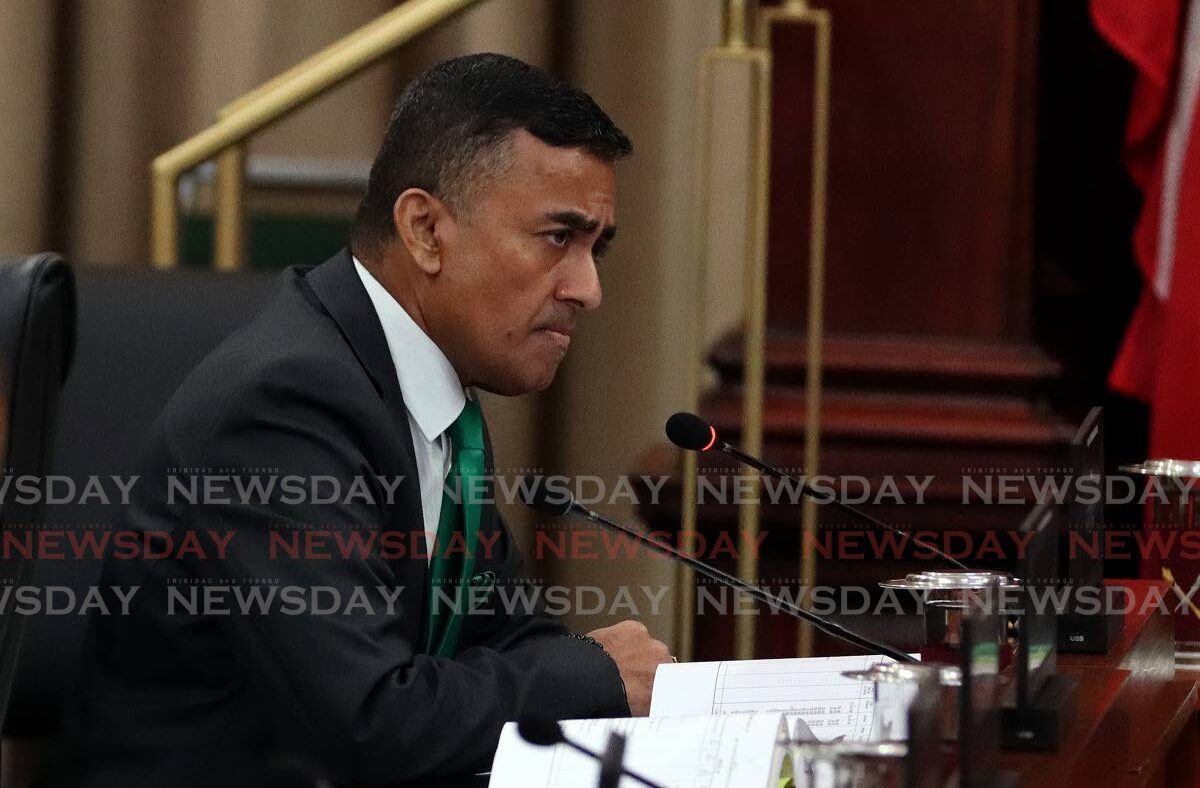
    At the heart of the accusation lies a significant procedural contradiction: Police Commissioner Allister Guevarro personally authorizes permits allowing fireworks to enter the country. This creates a situation where permits are granted through official channels first, followed by subsequent threats of enforcement against citizens who use these legally imported products. The writer characterizes this two-tiered approach as institutionalized double standards rather than legitimate public safety policy.

    The critique suggests that the entire fireworks debate serves as political performance rather than meaningful governance, with officials creating the appearance of action while failing to address practical realities of enforcement. This perspective challenges the authenticity of government commitments to community safety during celebratory events, pointing to systemic failures in policy coordination between permitting and enforcement agencies.

  • Private sector groups recommit to Caricom

    Private sector groups recommit to Caricom

    Amidst escalating diplomatic tensions between Caribbean leaders, the Caribbean Community Private Sector Organisation (CPSO) has issued a strong declaration of support for regional economic integration and the Caricom Single Market and Economy (CSME). The organization, serving as the umbrella body for seven national private sector associations, emphasized the critical importance of maintaining unity within the 15-member regional bloc.

    The CPSO highlighted the substantial economic benefits derived from the CSME framework, noting its significant contributions to intra-regional trade, supply chain reinforcement, and foreign exchange earnings across member states including Trinidad and Tobago. Since attaining associate institution status within Caricom, the private sector group has actively collaborated with business organizations to advance projects aligned with CSME objectives.

    This reaffirmation of commitment comes against the backdrop of heated exchanges between Antigua and Barbuda Prime Minister Gaston Browne and Trinidad and Tobago Prime Minister Kamla Persad-Bissessar regarding Caricom’s stance toward Venezuela. Persad-Bissessar had previously accused certain Caricom members of aligning with what she termed ‘the Maduro narco government,’ while expressing concerns about Venezuela’s territorial threats toward Guyana and Trinidad and Tobago.

    The CPSO statement strategically emphasized the complementary nature of Caricom’s trading relationships, noting that regional integration and strong external partnerships—particularly with the United States as Caricom’s largest external trading partner—are mutually reinforcing rather than contradictory. The organization stressed that in times of global economic uncertainty, private sector success depends fundamentally on confidence, stability, and constructive engagement among member states.

    Concluding with a call for solidarity, the CPSO endorsed the ‘stronger together’ principle, recognizing Caricom as essential for transforming regional vulnerabilities into assets through strategic global economic integration. The statement was jointly endorsed by private sector organizations from Jamaica, Barbados, Guyana, OECS, Suriname, and Belize.

  • Hello World makes it a hat-trick of Gold Cup titles

    Hello World makes it a hat-trick of Gold Cup titles

    In a spectacular display of equine excellence, the champion racehorse Hello World cemented its legendary status by capturing an unprecedented third consecutive Gold Cup (Grade I) victory at Santa Rosa Park in Arima on December 26. The Boxing Day event culminated with Hello World, under jockey Dillon Khelawan’s expert guidance, demonstrating remarkable dominance by pulling away from stablemate The Goddess Nike in the final stretch to secure a 2.5-length triumph.

    The historic victory places Hello World alongside racing immortal Airofaith, who last accomplished the Gold Cup three-peat in 1958. Trainer John O’Brien, celebrating his tenth Gold Cup victory, watched as his two top contenders—Hello World and The Goddess Nike—executed a strategic race after early leader Sneaky Cheeky set the pace.

    Despite a troubled start that nearly left him at the gates, El Chico Malo mounted an impressive recovery to claim third position under jockey Jovika Boodramsingh, with Valiante finishing fourth under Richard Balgobin.

    The day’s co-feature, the Grade II Juvenile Championship, delivered equal drama as King Jumbie produced a stunning late surge under jockey Jovika Boodramsingh to overtake Sweet Bird and Dream Maker in the final 40 meters. The Lexter Alexis-trained colt secured a half-length victory in a breathtaking finish that required photo review to confirm placements.

    With the racing calendar expanding from 12 to 15 events in 2026, O’Brien expressed optimism about the sport’s rejuvenation, noting the substantial turnout and Hello World’s potential for Horse of the Year honors following its Stewards Cup and Gold Cup successes.

    The 2026 season is scheduled to commence on January 24, with anticipation already building for Hello World’s next chapter in racing history.

  • Can police really monitor fireworks?

    Can police really monitor fireworks?

    A resident of Monte Grande has issued a compelling public appeal through a letter to the editor, expressing grave concerns regarding newly enacted legislation governing fireworks usage and noise pollution in residential neighborhoods. The author, S Bhagwandeen, poses a series of critical questions challenging the regulatory framework’s effectiveness and enforcement capabilities.

    The correspondence highlights a significant oversight in the legislation, which explicitly prohibits fireworks near hospitals, nursing homes, airports, zoos, animal shelters, and nature reserves while conspicuously omitting residential zones from protected areas. This exclusion raises urgent questions about the safety of vulnerable populations including elderly citizens, infants, and domestic animals who inhabit these communities.

    Further scrutiny is directed toward the enforcement mechanism, with the author questioning whether police departments possess adequate resources and personnel to address violations, particularly regarding prohibited explosive devices like scratch bombs that are frequently thrown near homes. The letter references recent legislation permitting fireworks between 8-9 PM on public holidays, expressing apprehension about its implementation.

    The critique extends to noise pollution from residential gatherings, describing how loud music from house parties causes structural vibrations in nearby homes until early morning hours, particularly affecting vulnerable residents including a recently injured neighbor with fractured ribs and hip. The author questions the practical enforcement capabilities of authorities when elderly and infirm residents require assistance.

    The letter concludes with a poignant rhetorical challenge regarding the beneficiaries of these regulatory gaps, specifically noting the commercial interests of fireworks companies promoting aggressive sales campaigns while enforcement mechanisms remain inadequate.

  • Caricom/TT tiff: Minister calls for closed-door meetings

    Caricom/TT tiff: Minister calls for closed-door meetings

    Amid escalating tensions within the Caribbean Community (CARICOM), Barbados Foreign Affairs Minister Kerrie Symmonds has proposed confidential high-level discussions to address mounting concerns across the 15-member regional bloc. The initiative comes as public disagreements threaten to expose deeper divisions within the organization.

    Minister Symmonds acknowledged the “uncompromising tone” emanating from Trinidad and Tobago Prime Minister Kamla Persad-Bissessar’s administration but characterized the situation as a temporary period of uncertainty rather than genuine disharmony. He emphasized that private dialogue would enable leaders to share security concerns without public posturing, noting that regional security constitutes a collective undertaking under CARICOM’s charter.

    The diplomatic friction intensified recently when Antigua and Barbuda Prime Minister Gaston Browne challenged Persad-Bissessar to substantiate claims that CARICOM members had aligned with Venezuela’s “Maduro narco government.” Symmonds suggested that Trinidad’s current economic pressures—including a severe credit squeeze limiting monthly US dollar access to approximately $2,000 per entity—might be influencing its stance.

    Despite the tensions, the Barbados minister highlighted compelling economic incentives for maintaining regional unity. Trinidad and Tobago generated nearly $1 billion from CARICOM trade in 2024, making the bloc its second-largest trading partner after the United States. The Common External Tariff (CET) system particularly benefits Trinidadian manufacturers by protecting domestic production through regional trade barriers.

    Symmonds concluded that while sovereign nations inevitably experience diplomatic tensions, CARICOM remains a proven partnership in an increasingly unpredictable global landscape. He expressed confidence that shared economic interests and institutional dependencies would ultimately preserve regional cohesion despite current challenges.

  • Ricky Jaipaul eyes Red Force first-class team place

    Ricky Jaipaul eyes Red Force first-class team place

    In an inspiring sports narrative, Trinidad and Tobago cricketer Ricky Jaipaul has dramatically reignited his national team prospects after nearly a decade in international wilderness. The left-arm orthodox spinner, now representing Marchin Patriots, has forced his way back into selection contention following an impressive performance in the 2025 CG United Super50 Cup tournament.

    Jaipaul’s return to the Red Force setup marks his first national appearance since 2017, when a split webbing injury prematurely ended his tournament participation against Barbados. His recent campaign saw him emerge as the team’s second-highest wicket-taker with six dismissals across three completed matches, while recording the tournament’s fifth-best economy rate at 3.48 runs per over.

    The 31-year-old’s journey back to elite cricket represents a testament to perseverance amid professional adversity. His original exit from the national team coincided with the emergence of fellow left-arm spinners Akeal Hosein and Khary Pierre, both of whom advanced to West Indies selection during Jaipaul’s absence.

    Rather than abandoning his ambitions, the Chaguanas-born athlete maintained his competitive edge through local club cricket with Merry Boys and Central Sports. During this period, he achieved the extraordinary feat of capturing all ten wickets in a single innings—a rare accomplishment in cricket history.

    Jaipaul’s resilience stems from challenging life circumstances that saw him leave his family home at age 15. Forced to mature rapidly, he balanced landscaping work with cricket development, eventually establishing his own landscaping business, RL Landscaping, which he continues to operate alongside his sporting career.

    The spinner’s motivation was further tested in 2023 when he suffered a severe compound thumb fracture during a championship final. Medical professionals warned he might never regain full finger mobility, making his subsequent return to competitive bowling particularly remarkable.

    His national recall came via a phone call from selector Rajindra Mangalie, which reduced the cricketer to tears of fulfillment. “It was my dream to actually play cricket for TT,” Jaipaul reflected. “It was the happiest moment of my cricketing career.”

    Despite his successful return, Jaipaul remains focused on continuous improvement, targeting selection for Trinidad and Tobago’s 2026 first-class campaign. His philosophy—”Even if you think it’s over, it never is until you give up”—encapsulates the determination that has defined his extraordinary comeback journey.

  • Everybody does not win with new fireworks rules

    Everybody does not win with new fireworks rules

    A recently enacted amendment to Trinidad and Tobago’s Summary Offences Act has ignited substantial public controversy over its potential societal and environmental consequences. The legislation, which eliminates permit requirements for fireworks usage on 14 designated public holidays, faces sharp criticism for prioritizing commercial interests over community welfare.

    The legislative changes have effectively transferred regulatory control to fireworks importers, creating concerns about unchecked noise pollution and public safety hazards. Critics characterize the constant explosions during holiday periods as “noise terrorism” that disproportionately affects vulnerable populations including elderly citizens, hospital patients, autistic children, and domestic animals.

    The economic implications are equally contentious, with foreign exchange reserves potentially being depleted through increased fireworks imports while generating substantial profits for a limited commercial sector. This development represents a significant policy reversal from previous governmental commitments to address noise pollution concerns nationwide.

    Tragic incidents, including the death of a child during Divali celebrations and numerous cases of traumatized pets, underscore the urgent safety concerns surrounding fireworks proliferation. The legislation provides only minimal protection measures, with just a half-mile buffer zone established around zoos and medical facilities.

    Community advocates are calling for comprehensive reforms that would prioritize public welfare over commercial interests, including potential restrictions on fireworks importation and sales. The government’s assertion that “with UNC everyone wins” faces direct challenge from those demanding greater quality-of-life protections for Trinidad and Tobago’s citizens.

  • Ex-soldier loses lawsuit over discharge

    Ex-soldier loses lawsuit over discharge

    In a significant judicial ruling, High Court Justice Joan Charles has unequivocally dismissed the constitutional challenge brought by former Defence Force soldier Jenna Jackson, affirming the legality of her 2014 discharge under the grounds of ‘completion of engagement.’ The court determined that military authorities acted within their statutory powers under the Defence Act, delivering a judgment that reinforces the discretionary nature of military re-engagement protocols.

    The case centered on Jackson’s assertion that her termination was premature, irrational, and violated constitutional protections under Section 4(b) regarding protection of the law. Represented by attorney Ronald Simon, she sought reinstatement, compensation for lost earnings, and damages claiming unfair treatment and denial of natural justice.

    Justice Charles’s comprehensive analysis revealed Jackson’s extensive medical history—including polycystic ovaries, back injuries, and postpartum complications—that resulted in prolonged sick leave and permanent restrictions preventing her from performing essential military duties. The court documented how these limitations affected her capacity for physical training, prolonged standing, and night operations.

    In her rationale, Justice Charles emphasized that military organizations retain ultimate authority in managing operational effectiveness and fitness standards. ‘Re-engagement is discretionary, not automatic,’ the judgment stated, noting that Jackson had ‘no legitimate expectation’ of continued service beyond her initial term.

    While acknowledging the Defence Force’s failure to provide a discharge certificate initially, the court found sufficient alternative remedies existed through the Defence Council petition process and judicial review mechanisms. The ruling establishes important precedent regarding the balance between military discretion and constitutional rights, with Justice Charles explicitly stating courts should not substitute their judgment for military operational decisions.

    Although the option of medical discharge existed, the court found the ‘completion of engagement’ rationale legally sound. In a concluding decision on costs, Justice Charles ordered each party to bear their own legal expenses.

  • New Year’s brunch in style

    New Year’s brunch in style

    As the calendar prepares to turn to 2026, culinary enthusiasts are presented with the perfect opportunity to welcome the new year with an exquisite seafood brunch that celebrates Caribbean culinary traditions. Food expert Wendy Rahamut presents an array of sophisticated yet accessible dishes that transform locally sourced ingredients into memorable gastronomic experiences.

    The centerpiece of this culinary celebration features a salt cod and potato casserole, a reinterpretation of Caribbean salted fish that combines flaky cod with tender potatoes in a creamy, herb-infused sauce. For elevated appetizers, individual shrimp thermidors make a remarkable comeback with their luxurious Parmesan gratin topping, while spicy crab fritters offer a crispy, flavorful bite that awakens the palate.

    The menu diversity continues with a Caribbean seafood quiche that beautifully incorporates local shrimp, fresh herbs, and creamy egg custard within a flaky pre-baked crust. Each dish demonstrates how traditional techniques can be adapted for contemporary celebrations while maintaining authentic flavor profiles.

    Critical to the success of these dishes is proper technique: the shrimp thermidor requires careful temperature control to prevent curdling while achieving perfect gratinization, while the salt cod casserole demands precise soaking and preparation of the salted fish to balance flavors. The crab fritters offer flexibility with both frying and baking options, accommodating different dietary preferences.

    All ingredients highlighted in these recipes are readily available within local markets, allowing home cooks to source fresh components while supporting regional producers. The comprehensive recipes provide detailed measurements, step-by-step instructions, and alternative preparation methods to ensure successful execution for cooks of varying experience levels.

    This culinary approach not only creates an impressive New Year’s spread but also honors Caribbean food heritage through modern interpretations that maintain cultural authenticity while appealing to contemporary tastes. The combination of textures, flavors, and visual presentation makes this seafood brunch an ideal way to commence 2026 with culinary sophistication and cultural appreciation.

  • Kerby Young bridges cultures at Swahili Fashion Week

    Kerby Young bridges cultures at Swahili Fashion Week

    Trinidad and Tobago-based designer Kerby Young, originally from Guyana, achieved a remarkable cultural synthesis at Swahili Fashion Week 2025, emerging as a standout advocate for sustainable fashion practices. The prestigious event, celebrating its 18th anniversary this December in Dar Es Salaam, served as a global platform for innovative designers who prioritize environmental consciousness alongside creative expression.

    Young made history last year as the first Caribbean designer featured at this acclaimed fashion gathering. His return in 2025 proved even more impactful with ‘The Journey’ collection—a deeply personal narrative exploring his evolution from Guyanese roots to his established presence in Trinidad and Tobago through his brand, Kerby Young Designs (KYD).

    The collection drew inspiration from Santorini’s iconic color palette, featuring deep Mediterranean blues evoking tranquil waters, crisp whites reminiscent of Grecian architecture, vibrant greens mirroring lush island foliage, and rich reds symbolizing the flowers adorning Santorini’s stone structures. Beyond color, Young incorporated traditional artisan techniques including intricate tie-dyeing, sophisticated fabric manipulation, and collaborative handcrafted crochet elements through partnership with Crochet Peace.

    Each garment became a testament to cultural fusion as models moved to the rhythm of African drums accompanied by the soulful vocals of Ella Andall and the late Devon Matthews’ ‘D Journey’. The finale, set to Square One’s ‘Lala’, transformed the show into an interactive celebration that had the audience clapping along—not merely observing fashion but participating in a story of resilience and self-belief.

    The commercial response was immediate, with half the collection finding new homes in Africa. Young plans to produce additional pieces upon returning to Trinidad, though certain signature designs will remain exclusive to their Tanzanian debut.

    Reflecting on the experience, Young shared: ‘This is one I will carry with me forever. It stands as testament to never abandoning your dreams. I’m profoundly grateful for Tanzania’s warm welcome and the unwavering support from my Caribbean and Guyanese heritage.’

    The growing momentum continues with expanding social media engagement and a successful pop-up shop accompanying his showcase. Swahili Fashion Week’s commitment to sustainability provided the ideal environment for Young’s vision, creating what the designer described as ‘a wonderful bridge of cultures’ that he anticipates crossing again in future collaborations.