标签: Trinidad and Tobago

特立尼达和多巴哥

  • A humble CJ amid bacchanal

    A humble CJ amid bacchanal

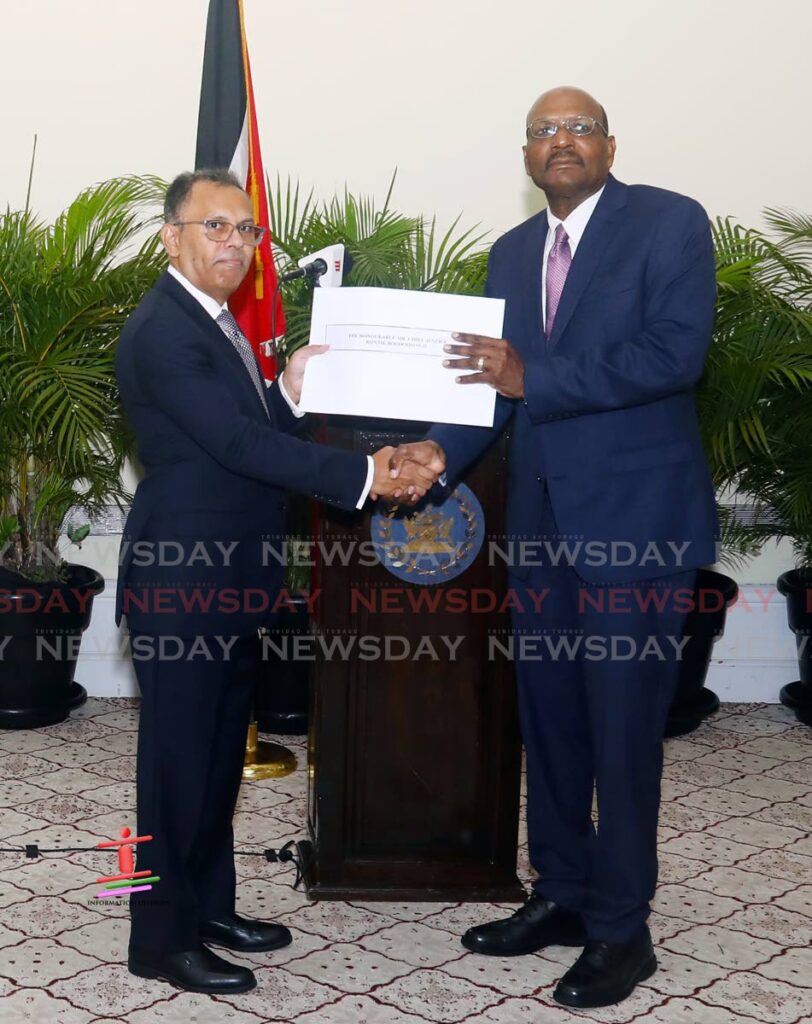
    Ronnie Boodoosingh officially commenced his tenure as Chief Justice on October 22, delivering a heartfelt and unscripted address that underscored his humility and dedication to the judiciary. Speaking extemporaneously, Boodoosingh emphasized his commitment to hard work and humility, setting a reassuring tone for his leadership. He paid tribute to his predecessors, including former Chief Justice Ivor Archie, and acknowledged the support of his family, stating, ‘They make me a better person.’

    The swift transition following Archie’s departure was met with relief, though the televised swearing-in ceremony appeared rushed, with key guests arriving late and logistical hiccups such as the absence of glasses during a toast. Behind the scenes, acting President Wade Mark faced objections from Opposition Leader Pennelope Beckles, who advocated for a more senior judge to act as Chief Justice. Despite these tensions, the Constitution grants the President the authority to appoint the Chief Justice after consulting with the Prime Minister and Opposition Leader.

    Boodoosingh’s recent ruling in the Court of Appeal, which affirmed a constitutional right to return home after international travel, highlights his focus on human rights. This commitment, coupled with his sponsorship of a human rights award at the Hugh Wooding Law School, suggests that fundamental rights will be a cornerstone of his tenure. As the dust settles, the nation looks forward to a judiciary led by a Chief Justice known for sound judgment, fairness, and dedication.


  • Bangladesh win ODI series 2-1 as Windies rolled over

    Bangladesh win ODI series 2-1 as Windies rolled over

    West Indies head coach Daren Sammy expressed deep disappointment following his team’s 2-1 One-Day International (ODI) series defeat to Bangladesh. The series, held at the Shere-e-Bangla Stadium in Bangladesh, highlighted the West Indies’ inability to adapt to spin-friendly conditions, culminating in a crushing 179-run loss in the final match on October 23. Chasing a formidable target of 297, the West Indies were bowled out for a mere 117 in 30.1 overs, with Akeal Hosein, batting at number ten, emerging as the top scorer with 27 runs. Bangladesh’s spin quartet—Nasum Ahmed, Rishad Hossain, Tanvir Islam, and Mehidy Miraz—dominated the proceedings, collectively claiming all ten wickets. Sammy lamented his team’s lack of consistency and skill, particularly in handling spin, and acknowledged Bangladesh’s superior performance. Despite the challenging pitch conditions, Sammy refused to use them as an excuse, emphasizing the need for better mindset and temperament. Bangladesh’s openers, Soumya Sarkar and Saif Hassan, set the tone with a 176-run partnership, propelling their team to a commanding total. The teams will now shift focus to a three-match T20 series starting on October 27.

  • ‘Pres’ blow SSFL title race open with win over rivals ‘Naps’

    ‘Pres’ blow SSFL title race open with win over rivals ‘Naps’

    In a thrilling encounter at the Naparima College Ground on October 22, Presentation College San Fernando delivered a significant blow to Naparima College’s unbeaten streak in the Secondary Schools Football League (SSFL) premier division, securing a hard-fought 1-0 victory. The decisive moment came in the second minute of first-half extra time when Josiah Bain’s audacious long-range effort from just outside the center circle found the back of the net, albeit with a stroke of luck. The ball ricocheted off the crossbar, evaded goalkeeper Mikhail Clement’s grasp, and ultimately bounced into the goal, sending the Presentation supporters into a frenzy. Despite Naparima’s relentless efforts to equalize in the second half, including opportunities for substitutes Adasa Richardson and Ryan Radellant, they were unable to break through Presentation’s resilient defense. The result narrows the gap between fourth-placed Presentation (24 points) and league leaders Naparima (27 points), reigniting the title race. Presentation’s coach, Dunstan Williams, expressed satisfaction with the outcome but acknowledged the challenges ahead, stating that their title hopes hinge on other teams’ performances. Meanwhile, defending champions Fatima College capitalized on the situation, moving within two points of the top after a high-scoring 6-4 victory over Arima North. The league now heads into its final phase, with several key matches scheduled for October 25, promising intense competition as teams vie for the coveted title.

  • Give CSO greater role in budget affairs

    Give CSO greater role in budget affairs

    The Central Statistical Office (CSO) recently announced a decline in inflation to one per cent for the previous month. While this is a positive development, questions arise about the timing of this information, released just four days after Finance Minister Davendranath Tancoo presented the national budget. The budget included fiscal measures directly impacting prices, such as reductions in super gasoline costs and increased duties on alcohol and tobacco. This raises concerns about the CSO’s role in forecasting the effects of such budgetary measures. Currently, the CSO collaborates with government departments in data collection and analysis but lacks a formal role in projecting budget impacts. Historically, the CSO’s data has been somewhat delayed, though this gap has significantly narrowed in recent years. The budget process is inherently forward-looking, with only a minor focus on past reporting. Given the CSO’s annual budget of at least $55 million, there is a strong argument for its involvement in estimating future fiscal impacts. Globally, independent fiscal oversight bodies, such as the UK’s Office for Budget Responsibility and the US Congressional Budget Office, are common. Locally, the establishment of an Economic Resilience Council is underway, but a neutral, independent body outside Parliament is deemed essential for thorough budget scrutiny. Utilizing existing institutions like the CSO and the Central Bank could enhance the timeliness and relevance of fiscal data, ensuring it remains useful rather than outdated.

  • Fitch upgrades Sagicor’s investment rating

    Fitch upgrades Sagicor’s investment rating

    Sagicor Financial Company Ltd has achieved a significant milestone as global credit rating agency Fitch Ratings elevated its long-term issuer default rating from BBB- to BBB. Additionally, the company’s senior unsecured debt rating was upgraded from BB+ to BBB-. Fitch also assigned Sagicor a ‘stable’ outlook, reflecting confidence in the company’s financial health. The upgrade was attributed to Sagicor’s improved core profitability, consolidated contributions from its Canadian subsidiary ivari over the past two years, reduced debt financing costs, and a robust capitalisation profile. Fitch further affirmed ivari’s financial strength rating at A-, maintaining a stable outlook. Andre Mousseau, Sagicor’s President and CEO, expressed satisfaction with the upgrade, emphasizing its validation of the company’s strong capitalisation and its alignment with stable and profitable growth strategies. He noted that the enhanced rating would improve Sagicor’s access to capital and support the execution of its strategic initiatives. Founded over 180 years ago, Sagicor is a leading financial services provider headquartered in Barbados, offering a diverse portfolio of products and services, including life, health, and general insurance, banking, pensions, annuities, investment management, and real estate across the Caribbean.

  • Padarath: No plan to fire WASA workers

    Padarath: No plan to fire WASA workers

    In a heated session before the Standing Finance Committee of the House of Representatives, Public Utilities Minister Barry Padarath assured that the government has no intention of dismissing workers at the Water and Sewerage Authority (WASA). This declaration came as the committee approved a substantial budgetary allocation of $3.27 billion to the Ministry of Public Utilities. Padarath emphasized the administration’s commitment to retaining WASA employees and enhancing the authority’s financial viability, stating, ‘This administration is hell-bent on keeping WASA employees in their jobs.’ He also highlighted collaboration with the Public Services Association (PSA), which represents the majority of WASA workers and is aligned with the ruling United National Congress (UNC).

    Opposition Chief Whip Marvin Gonzales, a former public utilities minister, criticized the UNC’s past actions, recalling that the People’s Partnership coalition, led by the UNC, had planned to lay off 30,000 workers during the 2010-2015 period. He credited the People’s National Movement (PNM) with thwarting this plan upon assuming office in 2015 and implementing a transformation strategy that improved water supply for many citizens. Padarath, however, dismissed these claims, asserting that the PNM’s efforts yielded no significant results and instead led to questionable state contracts benefiting certain individuals.

    The session grew contentious as opposition MPs, including Stuart Young and Colm Imbert, questioned Padarath about potential job cuts at WASA, particularly in light of a review of National Insurance System (NIS) contributions. Padarath maintained that the review would not result in job losses, but Young expressed skepticism, accusing the government of planning significant workforce reductions. The debate escalated into personal jabs, with Padarath suggesting Imbert consult a psychiatrist and Imbert dismissing Padarath’s remarks as irrelevant. Speaker Jagdeo Singh intervened multiple times to restore order.

    Padarath also addressed concerns about a $50 million reduction in contract employment at WASA, asserting that vacant positions would be filled through the government’s National Recruitment Drive, which aims to create 20,000 jobs in its initial phase. Finance Minister Davendranath Tancoo, in his recent budget presentation, announced the termination of the Cepep and URP programs, pledging to replace them with better-paid, full-time employment opportunities funded by a $475 million Employment Fund. The government’s focus remains on ending state funding of criminal gangs and improving public utility services.

  • Unleashing the creative industry

    Unleashing the creative industry

    Trinidad and Tobago’s 2025/2026 budget has been hailed as one of the most progressive in recent years, addressing key areas such as the green economy, agriculture, marginalized groups, and young families. However, the creative industries have once again been sidelined, reflecting a longstanding pattern of political and institutional neglect. Despite the sector’s potential to generate significant foreign exchange through music, carnival, fashion, and film, it received minimal attention in the budget speech, with only two brief mentions and a few buried items in budget documents. This lack of focus fails to align with international standards or the local reality, where the creative economy could thrive with proper policy, legislative, and institutional support. In response, a coalition of artists has called for a closed-door summit with the government to address these gaps. The budget’s vague references to a ‘Creative Value-Chain Fund’ and enhanced IP protection have left many in the sector confused, especially given the previous administration’s dismantling of key agencies like FilmTT, FashionTT, and MusicTT. These agencies were replaced with a new entity tied to Eximbank, created without stakeholder consultation and with unclear operational mechanics. The creative sector’s underfunding has been a persistent issue, with film grant funding once plummeting to just $1 million—insufficient even for catering on a small foreign production. To unlock the sector’s potential, experts propose several interventions, including a national ‘buy-local’ campaign, the enactment of local content policies, the establishment of a national arts council, increased funding for CreativeTT, and the launch of a national tour company to export Trinidad and Tobago’s creative IP. Additionally, addressing the human crisis among local creatives, building creative hubs, and setting growth targets for Carnival are seen as critical steps. Without these measures, the creative sector’s vast potential will remain untapped, leaving Trinidad and Tobago lagging behind global peers like the UK, where the creative industries generate billions annually.

  • UTC signs eKYC agreement with NPIC-TT, TSTT

    UTC signs eKYC agreement with NPIC-TT, TSTT

    In a landmark move towards digital modernization, Trinidad and Tobago has unveiled NOBIS, a national electronic Know Your Customer (eKYC) platform. The initiative, a collaborative effort between the Unit Trust Corporation (UTC), the National Payment and Innovation Company of TT (NPIC-TT), and the Telecommunications Services of TT (TSTT), was formalized through a recent agreement signing ceremony. The platform, developed locally by NPIC-TT’s Innovative Centre, aims to revolutionize identity verification and account onboarding processes by replacing traditional manual methods with a secure, efficient, and paperless system. UTC will be the first entity to implement NOBIS for digital onboarding, reflecting its commitment to customer convenience and trust. TSTT will provide the necessary telecommunications and cloud infrastructure to ensure a seamless national rollout. Dawn Nelson, Vice President of the Innovative Centre, emphasized the system’s scalability and security, underscoring its local development as a testament to Trinidad and Tobago’s technological capabilities. Beyond financial services, NOBIS will be extended free of charge to government ministries and state agencies, enabling a unified digital identity for services such as passport renewals, driver’s license updates, and government fee payments. This initiative positions Trinidad and Tobago as a regional leader in secure and inclusive digital services, setting the stage for a fully digital future.

  • The mystical oilbird

    The mystical oilbird

    In a serendipitous encounter, an oilbird was discovered roosting at St. Benedict’s College in La Romaine, south Trinidad, far from its known colonies. This rare sighting provided a unique teaching opportunity for the school staff. The oilbird, a nocturnal marvel, is one of the most remarkable yet overlooked species in Trinidad’s rich biodiversity. Unlike the vibrant hummingbird or the powerful hawk-eagle, the oilbird’s unassuming appearance belies its extraordinary adaptations and ecological significance. Native to Trinidad, which shares much of its ecology with South America, the oilbird thrives in darkness, spending its days in lightless caves and emerging at night to forage. With a wingspan exceeding one metre, these birds embark on nightly journeys, sometimes covering over 100 kilometres in search of their exclusive diet of fruits from palms, laurels, and bursera trees. This dietary specialization makes them vital seed dispersers, ensuring the propagation of their food trees. Oilbirds possess unique sensory adaptations, including echolocation and an unparalleled sensitivity to light, with retinal rod densities of one million rods per millimetre—the highest among vertebrates. Their social structure is equally fascinating, with monogamous pairs raising broods in large colonies that can number in the thousands. Despite their ecological importance, oilbirds face threats from human exploitation, historically hunted for their oil and meat. Conservation efforts are crucial to protect this enigmatic species and its habitat, ensuring its survival alongside humanity.

  • Unlocking the next generation economy

    Unlocking the next generation economy

    The Trinidad and Tobago Chamber of Commerce (TT Chamber) recently hosted its annual post-budget meeting at the Le Rêve Conference Centre in San Fernando, marking a historic milestone in its mission to strengthen engagement with the nation’s business communities. Under the theme *Unlocking TT’s Next Generation Economy*, the event emphasized the Chamber’s commitment to fostering economic resilience and diversification in a volatile global landscape.