标签: Trinidad and Tobago

特立尼达和多巴哥

  • Priest urges creative ways to deal with challenges

    Priest urges creative ways to deal with challenges

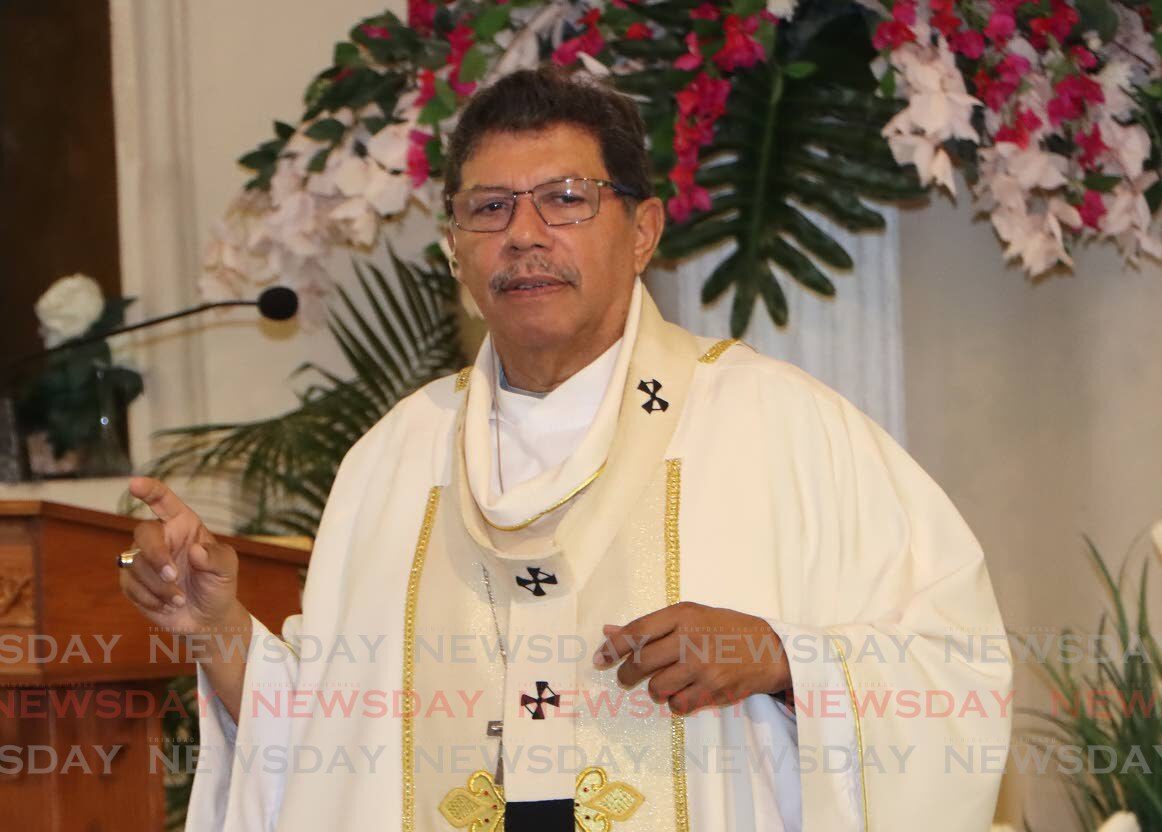
    In a powerful Christmas Day homily at the Pro-Cathedral of Our Lady of Perpetual Help RC in San Fernando, Fr Matthew D’Hereaux delivered a compelling message of resilience and hope amidst modern societal challenges. The priest articulated a theological perspective on confronting systemic pressures that threaten human dignity and community cohesion.

    Addressing the congregation on Thursday, D’Hereaux emphasized that divine message fundamentally embodies both hope and challenge. He identified multiple modern systems—including political structures, class divisions, and digital technology—as potentially destructive forces when allowed to dominate human relationships.

    “When systems attempt to grind us down through political manipulation, economic pressure, or technological isolation, we must not surrender our purpose,” D’Hereaux asserted. He specifically criticized political systems designed to create division, urging Trinidadians to employ their characteristic creativity in overcoming these divisions.

    The priest referenced recent electoral campaigns, noting how cultural expressions like street parties and dancing could potentially transform political division into community celebration. “A foreign observer might mistake our political campaigns for festive gatherings among friends,” he observed, suggesting this cultural approach could model bridge-building between opposing groups.

    D’Hereaux expressed particular concern about technology’s impact on human connection, noting the paradox of extensive contact lists accompanied by diminishing genuine friendships. “The pursuit of virtual validation through ‘likes’ cannot define our worth,” he cautioned.

    Drawing theological parallels, the priest reflected on the Nativity story, highlighting how Mary and Joseph faced political and economic pressures without surrendering to despair or violence. “Despite being displaced by political decrees and denied shelter, they maintained their dignity and hope,” he noted, presenting their story as a model for contemporary response to systemic challenges.

    The homily addressed multiple social concerns, including the priest’s criticism of promiscuity culture, warning against normalized open marriages. He emphasized strengthening family bonds through traditional games and shared activities as antidotes to technological isolation.

    D’Hereaux also condemned anti-immigrant sentiment and pornography’s pervasive influence, particularly highlighting concerns about adolescent exposure to explicit content. “We must challenge the sexualized culture and reject pornography’s destructive impact on healthy relationships,” he urged.

    Throughout the address, the priest consistently returned to themes of proactive faith, creative resistance to negative systems, and the preservation of authentic human relationships through spiritual practice and community solidarity.

  • The device that is poison

    The device that is poison

    The smartphone, once hailed as a revolutionary technological marvel, has evolved into a pervasive force eroding the fabric of contemporary family life and social cohesion. Despite its compact size fitting comfortably in one’s palm, this device wields unprecedented power to disrupt household dynamics and interpersonal relationships.

    Modern families have willingly embraced this digital intruder into their most intimate spaces—bedrooms, dinner tables, and private moments. The device has systematically replaced fundamental human interactions, with countless individuals prioritizing screen engagement over meaningful connection with partners, children, or personal reflection. This shift represents a profound transformation in daily rituals and emotional priorities.

    The irony deepens when considering Apple’s symbolic namesake—the biblical apple from Eden—while creating perhaps the most irresistible modern temptation. The parallel extends beyond symbolism to tangible consequences: smartphones have become primary news sources despite being flooded with misinformation. Fabricated content spreads uncontrollably, damaging reputations and distorting public perception before verification becomes possible.

    Political actors have capitalized on this digital landscape, weaponizing social platforms to manipulate emotions, polarize communities, and advance agendas through carefully engineered content. The device has effectively become the most potent brainwashing instrument ever created, operating with alarming efficiency and scale.

    Youth culture demonstrates particularly disturbing trends, with smartphones dominating holiday wish lists and commanding emotional attachment comparable to profound personal loss. Teenagers exhibit genuine distress over device damage that exceeds appropriate emotional responses, signaling dangerous prioritization of material objects over human relationships.

    Family structures suffer most visibly, with physical proximity no longer guaranteeing genuine connection. Couples coexist in parallel digital realities, parents offer divided attention to children, and younger generations absorb values from algorithms rather than family traditions. This erosion demands urgent countermeasures, potentially including licensed smartphone ownership similar to other regulated technologies.

    The solution requires conscious rejection of digital dominance and renewed commitment to foundational values: authentic presence, faith, familial bonds, and community engagement. While convenience offers superficial benefits, wisdom dictates reclaiming human connection from technological interference. The path forward necessitates choosing meaningful interaction over digital distraction.

  • MSJ advocates peace as war looms

    MSJ advocates peace as war looms

    Amid the festive season, a stark political divide has emerged in Trinidad and Tobago regarding regional military presence and the true meaning of Christmas peace. Movement for Social Justice (MSJ) leader David Abdulah has issued a solemn Christmas message warning that the core message of peace is being overshadowed by escalating global conflicts and commercial exploitation.

    Abdulah invoked biblical symbolism, drawing parallels between contemporary conflicts and historical oppression. He specifically referenced Christ’s actions in overturning money changers’ tables, condemning the modern commercialization of religious observances. ‘Christmas has become totally commercialized as a rapacious capitalist system sees the opportunity to make significant profits,’ Abdulah stated, arguing that this undermines the spiritual significance of the season.

    The political leader expressed particular concern about multiple global conflict zones, drawing direct comparisons between Israeli military operations in Gaza and West Bank to King Herod’s biblical massacre of infants. He further cited conflicts in Ukraine, Sudan, and Democratic Republic of Congo as examples where mineral wealth acquisition drives violence beneath surface-level narratives.

    Closer to home, Abdulah characterized US military deployment near Venezuela’s territorial waters as ‘old-style gunboat diplomacy’ aimed at forced regime change. He referenced President Trump’s recent statements suggesting objectives beyond initial anti-narcotics claims, including potential seizure of oil assets. Abdulah interpreted these actions through the lens of US National Security Strategy 2025, which explicitly aims to ‘restore American pre-eminence in the Western Hemisphere.’

    In stark contrast, Prime Minister Kamla Persad-Bissessar has publicly endorsed US military presence in the region, defending both the establishment of a US radar facility in Tobago and military actions against alleged drug vessels. She has openly broken with CARICOM’s traditional ‘zone of peace’ consensus, stating Trinidad and Tobago ‘wants no part of alignment’ with what she termed the ‘Maduro narco government.’

    Persad-Bissessar’s Christmas message employed different biblical references, focusing on liberation from oppression. Citing Luke 4:18 and John 1:9, she emphasized Christ’s role as liberator while drawing parallels between Herod’s tyranny and contemporary regional governance. Without explicitly naming Venezuela, she described populations ‘forced to live under repression, violence, and economic hardship’ in neighboring countries.

    The fundamental disagreement between these political perspectives highlights deeper ideological fractures regarding sovereignty, regional policy, and the interpretation of peace during the Christmas season.

  • Self-belief driving force to success

    Self-belief driving force to success

    In a compelling examination of personal development, a recent editorial explores the transformative power of self-confidence as the fundamental driver of human progress. The piece, originally published in Newsday, presents a thorough analysis of how self-belief serves as the critical differentiator between stagnation and achievement.

    The discourse begins by defining self-confidence as the unwavering conviction in one’s ability to overcome obstacles and accomplish goals. This psychological foundation emerges as particularly vital when facing new challenges—whether professional interviews, business negotiations, or academic presentations—where innate fears and uncertainties typically surface.

    Stanford Graduate School’s Matt Abraham provides scholarly reinforcement, noting that anxiety itself can be harnessed as a source of courage and significance indicator. The editorial further distinguishes between two archetypes: those who remain confined within their comfort zones and those who courageously venture into fear and learning zones, with self-confidence being the decisive factor.

    Dr. Ivan Joseph, renowned motivational coach, contributes the perspective that self-confidence constitutes a developable skill rather than an innate trait. The article outlines four practical strategies for cultivation:

    1. Embracing failure as an essential component of growth, illustrated by Thomas Edison’s persistent experimentation before inventing the lightbulb
    2. Eliminating internal negative dialogue that psychologist Peter Sage identifies as self-sabotaging behavior
    3. Curating social circles exclusively with positive influences that elevate mental states
    4. Committing to relentless preparation and practice, exemplified by world-class performers like Muhammad Ali, Usain Bolt, Keshorn Walcott, and JK Rowling

    The editorial concludes by emphasizing self-confidence’s broader societal implications—preserving family structures, determining children’s futures, and enhancing national productivity. Without this crucial attribute, the author argues, industries would operate suboptimally, children would underachieve, and workers would lack direction, ultimately diminishing collective potential.

  • Gunmen storm Arima house on Christmas morning — Man, boy shot dead

    Gunmen storm Arima house on Christmas morning — Man, boy shot dead

    The festive spirit in the quiet community of Pinto, Arima, was shattered by a brutal Christmas morning attack that left two dead and a child wounded. Armed assailants stormed a residential home on Sesame Street shortly before 6 am on December 25th, executing a targeted shooting that claimed the lives of 14-year-old Fabius Malchan and an unidentified 23-year-old male resident.

    According to family members who spoke with Newsday under condition of anonymity, the violence was directed toward another individual who had been staying at the property for approximately three months. This intended target reportedly escaped through a window during the chaos, evading capture while leaving the household vulnerable to the attackers’ bullets.

    The aftermath revealed a scene of profound tragedy: Fabius’s eight-year-old brother, Jordan, sustained injuries from stray gunfire and remained hospitalized at Arima General Hospital. Family members were observed scrbbing bloodstains from the premises hours after the incident, with visible traces of violence marking the interior walls and floors.

    Relatives expressed both grief and frustration, indicating they had repeatedly warned about suspicious activities occurring at the residence since the intended target’s arrival. ‘Different vehicles started pulling up regularly,’ one relative disclosed. ‘They began engaging in illegal operations despite our warnings.’

    The incident has raised urgent questions about community safety and the involvement of minors in criminal violence. Local authorities have maintained silence regarding ongoing investigations, while attempts to reach Homeland Security Minister Roger Alexander and Police Commissioner Allister Guevarro for commentary proved unsuccessful.

    This Christmas Day tragedy follows another violent incident on Christmas Eve, where a 68-year-old grandmother was fatally beaten in Bamboo Settlement No. 1, highlighting concerning patterns of violence during the holiday period.

  • Misconduct body misconducts itself

    Misconduct body misconducts itself

    In a stunning judicial rebuke, the Court of Appeal of Trinidad and Tobago has delivered a damning verdict against the Law Association’s disciplinary committee, exposing profound procedural failures within the legal profession’s self-regulatory system. The December 17 ruling, issued during the holiday season, represents one of the most significant embarrassments in the association’s history.

    The case emerged from a 2020 complaint filed by a citizen regarding legal representation in a land dispute. Rather than upholding professional standards, the disciplinary committee itself violated fundamental principles of due process and procedural fairness. According to Chief Justice Ronnie Boodoosingh’s detailed assessment, the proceedings lacked any structured approach to disciplinary hearings that both complainants and attorneys rightfully expect.

    The judgment revealed that the committee bypassed essential procedural stages, including the preliminary evaluation to determine whether a prima facie case existed. Instead of conducting proper hearings, the panel engaged in informal discussions allowing accused attorneys to comment directly on complaints without formal evidentiary procedures. The process then abruptly transformed into guilt determinations and penalty discussions, completely omitting standard protocols for complaint particularization, evidence presentation, and cross-examination.

    Justice of Appeal Nolan Bereaux, in a concurring opinion, characterized the committee’s approach as ‘plainly wrong’ and described the chairman’s conduct as ‘almost cavalier’ in its disregard for proper procedure. The severity of these findings is magnified by the committee’s composition, which included senior counsel (a ‘silk’), a former independent senator, and multiple experienced attorneys.

    This ruling highlights a critical failure within the legal profession’s self-governance mechanisms at a time when public scrutiny of judicial and law enforcement institutions remains intense. The case potentially heads toward further appeal, but currently stands as a remarkable instance where the body responsible for legal misconduct has itself been found guilty of violating legal standards.

  • Former UNC MP cautions TT against supporting US military build-up in Caribbean

    Former UNC MP cautions TT against supporting US military build-up in Caribbean

    Former United National Congress (UNC) parliamentarian and diplomat Rodney Charles has issued a stark warning to Trinidad and Tobago’s government regarding its unwavering support for the ongoing US military deployment across the Southern Caribbean. In a detailed Facebook post dated December 20, the seasoned statesman articulated profound concerns about the strategic implications of current foreign policy directions.

    Charles, who previously served as Trinidad and Tobago’s Ambassador to the United Nations during Prime Minister Kamla Persad-Bissessar’s initial administration (2010-2015) and later as shadow foreign minister until April 2025, emphasized that his critique stems from patriotic concern rather than anti-American sentiment. The veteran diplomat referenced his personal connections to the United States, including his postgraduate tenure at Carleton University where he briefly served as a White House press intern and State Department participant, plus family members who have served in US military capacities.

    His central argument challenges the government’s assumption that current US political dynamics under President Donald Trump will remain permanent. Charles highlighted upcoming US midterm elections in November 2026, suggesting potential significant Democratic gains that could dramatically alter foreign policy trajectories. He warned that Trinidad and Tobago risks positioning itself on ‘the wrong side of even their foreign policy realities’ in a potentially transformed political landscape.

    The former ambassador expressed particular concern about deteriorating regional relations, noting that Caribbean Community (CARICOM) partners are viewing Trinidad and Tobago’s stance with increasing skepticism. He suggested current policies are ‘undermining that regional body’ and creating conditions that could lead to ‘likely recolonization of the region’ as external powers exploit apparent divisions.

    Charles also pointed to concerning regional developments including the growing isolation of Antigua and Barbuda plus Dominica, alongside negative travel advisories affecting tourism-dependent economies like Barbados, Grenada and St. Lucia during critical winter tourist seasons. He connected these developments to President Trump’s revival of the Monroe Doctrine through the National Security Strategy 2025 document, which explicitly seeks allied support for executing US policy objectives.

    The former diplomat concluded that current foreign policy approaches appear predicated on three precarious assumptions: the perpetual reign of Trumpism in US politics, successful regime change in Venezuela, and the permanent eradication of Bolivarian nationalism in any subsequent Venezuelan government—all of which he considers dangerously speculative foundations for national strategy.

  • Hitting a sour note

    Hitting a sour note

    The Trinidad and Tobago government’s communication approach has once again demonstrated significant shortcomings, particularly evident in its recent handling of the national emblem transition timeline. Through a discreet legal notice issued on December 18, Homeland Security Minister Roger Alexander authorized a five-year extension for continued use of the former coat of arms, pushing the full implementation deadline to January 2, 2031.

    This administrative decision was enabled by amendments to the National Emblems of Trinidad and Tobago (Regulation) Act, which received unanimous parliamentary support from both the ruling PNM and opposition UNC parties in January. Notably, then-Opposition Leader Kamla Persad-Bissessar had previously observed that the legislation granted ministers unrestricted authority to extend implementation timelines through ministerial orders.

    While the extension itself represents practical governance—allowing existing inventory of official materials featuring the old emblem to be depleted—the government’s execution has raised eyebrows. The choice to implement this significant national symbol change through a mere legal notice, without public consultation or formal announcement, contrasts sharply with the administration’s approach to other national matters. Notably, the government had convened a press conference to announce the cancellation of the 2025 Independence Day parade, making the low-profile emblem decision particularly conspicuous.

    The Rowley administration’s handling of the emblem modification process has been characterized by missed opportunities. While the incorporation of the steelpan into the national coat of arms received widespread support, the government bypassed comprehensive public consultation regarding other potential modifications. The removal of Christopher Columbus’s ships from the emblem was widely viewed as long overdue, but the process lacked the democratic engagement that could have strengthened national unity.

    This approach has unnecessarily exposed the government to allegations of operating surreptitiously, creating a self-inflicted controversy that could have been avoided through transparent communication and inclusive decision-making processes.

  • San Fernando mayor hosts Christmas Day luncheon

    San Fernando mayor hosts Christmas Day luncheon

    In a heartwarming display of community spirit, San Fernando Mayor Robert Parris organized a special Christmas Day luncheon at the city corporation auditorium on Harris Promenade. The event, designed to spread holiday cheer, specifically targeted families facing economic hardships during what the mayor characterized as a particularly challenging year.

    The initiative emerged as a direct response to rising unemployment levels, which Parris partially attributed to government decisions to terminate public work programs including Cepep, UPR, and reforestation projects. Despite financial constraints affecting municipal funds—especially in opposition-controlled corporations like PNM—the event proceeded through collaborative efforts.

    Through strategic partnerships with private sector organizations, the San Fernando City Corporation secured over 400 holiday hampers for distribution, though Parris acknowledged these were modest compared to previous years. The mayor emphasized the philosophical foundation of the event, stating, “Christmas embodies the spirit of giving rather than receiving. These principles guided my upbringing and continue to direct our actions today.”

    Addressing practical employment solutions, Parris revealed that the corporation has been engaging short-term workers from Pleasantville and San Fernando West districts to maintain community spaces until more permanent arrangements can be established. He concluded with a message of resilience, acknowledging current economic difficulties while pledging continued support for vulnerable residents, and extended seasonal greetings to all citizens of San Fernando and Trinidad and Tobago.

  • Minister vows to tackle deficit owed to MTS: Barry Padarath’s $850m promise

    Minister vows to tackle deficit owed to MTS: Barry Padarath’s $850m promise

    In a stark revelation of financial mismanagement, Trinidad and Tobago’s National Maintenance Company (MTS) faces a crippling $850 million deficit inherited from the previous administration. Newly appointed Minister of Public Utilities Barry Padarath has pledged urgent action to resolve the crisis, which has left hundreds of retirees without promised benefits and exposed systemic failures in public administration.

    The staggering shortfall was uncovered by Ombudsman Jacqueline Sampson-Meiguel in a special parliamentary report, revealing that accumulated receivables—primarily from government ministries including Education—have rendered MTS unable to meet its obligations. The state-owned enterprise, responsible for providing security services to schools and law courts, now struggles to pay retirement benefits to its largely low-wage workforce of 6,500 employees.

    Minister Padarath, whose United National Congress (UNC) government took office last April, described the situation as ‘a runaway horse’ characterized by absent accountability and transparency. He alleged that ‘friends, family and financiers’ of the former People’s National Movement (PNM) regime received inflated contracts through improper channels, compounding the financial turmoil.

    Current negotiations focus on recovering outstanding payments from major clients, particularly the Ministry of Education. Padarath emphasized due process in reviewing contracts to ensure legitimate claims while preventing payments to ‘ghosts’ or improperly connected beneficiaries.

    The human impact is devastating. The Ombudsman’s report documents retirees waiting up to two years for partial payments, forcing many into debt, medication rationing, and severe emotional distress. With 200 employees retiring annually—mostly security officers and maintenance staff earning modest wages—the $20 million annual retirement liability has become unsustainable without immediate intervention.

    The report condemns the ‘systemic administrative failure’ that created this injustice, noting that persistent Ombudsman intervention has been required to resolve individual cases. Padarath has committed to restructuring MTS leadership and implementing transparent processes to restore accountability and prevent future crises.