标签: Trinidad and Tobago

特立尼达和多巴哥

  • Angostura gets spicy! Launches new rum & cola blend, non-alcoholic bitters on the horizon

    Angostura gets spicy! Launches new rum & cola blend, non-alcoholic bitters on the horizon

    In a strategic move aligning with Carnival 2026 festivities, Angostura Holdings has launched Cubata—a premium ready-to-drink (RTD) beverage combining spiced rum and cola. The product debuted at a media event on January 20th at the company’s Laventille headquarters, attended by acting CEO Ian Forbes, Chairman Gary Hunt, and brand ambassador Imran ‘GI’ Beharry.

    Cubata represents Angostura’s innovative take on the classic rum-and-cola cocktail, specifically formulated with Angostura Tamboo Spiced Rum rather than traditional white rum. With an alcohol content of 7%—positioned at the higher end of the RTD market—the beverage targets lifestyle-driven consumers aged 21-35, including urban professionals, creatives, and hospitality workers.

    Forbes emphasized that Cubata addresses growing consumer demand for convenience and experimentation within the rapidly expanding RTD sector. Unlike conventional Cuba Libre cocktails, this pre-mixed formulation offers consistent quality and quick service capabilities for bar environments.

    Chairman Gary Hunt revealed broader strategic initiatives accompanying the launch. The company will rebrand its Solera Wines and Spirits outlets as ‘House of Angostura Wines and Spirits’ to strengthen brand recognition and international appeal. This rebranding, already approved by the board, facilitates clearer market association with the Angostura name.

    Looking toward global expansion, Hunt outlined plans to establish House of Angostura outlets in cities with significant Trinidad and Tobago diaspora communities, including Brooklyn and Toronto. The company is simultaneously exploring non-alcoholic product lines, including alcohol-free bitters, to align with emerging consumer trends among Gen Z and millennial demographics.

    These developments form part of Angostura’s ‘2.0 x3’ growth strategy aiming to double revenue and triple profits by 2028. The Cubata launch strategically precedes Carnival celebrations, leveraging shifting consumer preferences toward convenience, flavor innovation, and brand identity.


  • Government policy only from government offices

    Government policy only from government offices

    The United National Congress (UNC), having secured a decisive victory in last April’s general election with a 29-12 parliamentary majority, followed by a clean sweep of all 15 seats in the January 12 Tobago House of Assembly election by its Tobago allies, now faces mounting criticism over its administrative practices. Despite this commanding mandate, concerns have emerged regarding the apparent conflation of party and state functions.

    Over the past month, multiple government ministers have chosen to deliver official policy announcements from the UNC’s party headquarters in Chaguanas rather than from government offices. This practice, while common when the party was in opposition, has raised eyebrows now that the UNC holds governmental power. The briefings have featured prominent cabinet members including Foreign Affairs Minister Sean Sobers, Housing Minister David Lee, Transport Minister Eli Zakour, and several others, all speaking from party premises flanked by both national and party flags.

    Journalists have reported difficulties in accessing these events, with many briefings announced merely as online occurrences without clear venue information until the last moment. Notably, only a January 14 briefing by Attorney General John Jeremie and Minister of Lands Saddam Hosein was conducted at an appropriate government ministry.

    When questioned about this blending of party and government functions, UNC Public Relations Officer Dr. Kirk Meighoo offered a straightforward defense: ‘Our members form the government and that is government policy. The UNC forms the government. We were voted in by the majority and that is how democracy works.’

    However, editorial analysis suggests that if the previous administration had similarly conducted government business from PNM headquarters, the UNC would have undoubtedly criticized such practices. The current approach raises important questions about institutional separation between governing party and state apparatus, with advocates emphasizing that utilizing proper government offices for official announcements would better serve democratic norms and transparency in Trinidad and Tobago.

  • From resolution to reality: making safety a daily lifestyle

    From resolution to reality: making safety a daily lifestyle

    As Trinidad and Tobago enters 2026, Hazel Mohan-George, Secretary of the nation’s Safety Council, has issued a comprehensive call for safety to become embedded as a fundamental cultural value rather than merely a seasonal resolution. This urgent appeal comes against the backdrop of recent preventable tragedies, including a significant blaze at Products Central toy store in San Fernando that required coordinated emergency response efforts.

    The analysis emphasizes that true safety extends beyond workplace compliance to encompass all aspects of daily life—homes, roadways, public gatherings, and seasonal celebrations including the upcoming Carnival festivities. Mohan-George systematically outlines critical risk areas: residential hazards ranging from electrical overloads and unattended cooking to improper chemical storage; road safety concerns including distracted and impaired driving; and Carnival-specific dangers such as overcrowded venues, unsafe temporary electrical installations, and alcohol-related incidents.

    The framework presents a multilayered approach to accident prevention, advocating for both individual responsibility and collective action. Household recommendations include maintaining functional smoke detectors, creating emergency evacuation plans, and securing basic emergency kits. For road safety, the Council emphasizes vehicle maintenance, defensive driving training, and heightened consideration among all road users.

    Particular attention is given to seasonal events, where the convergence of large crowds, temporary infrastructure, and alcohol consumption creates complex safety challenges. The guidance specifies practical measures including designated driver programs, venue capacity management, and thorough safety checks for water vessels and temporary event structures.

    The Council positions safety as a continuous practice requiring proactive leadership, employee engagement, and community-wide cooperation. By intervening against unsafe conditions, acknowledging positive behavior, and educating children, Trinidad and Tobago can build what Mohan-George describes as ‘a more responsible and safety-conscious nation’ where protective measures become second nature throughout 2026 and beyond.

  • Congrats on icons support

    Congrats on icons support

    The Ministry of Culture and Community Development has unveiled a significant new initiative designed to provide sustained support for the nation’s cultural pioneers and veterans. Announced by Minister Michelle Benjamin, the program specifically targets those individuals who have played foundational roles in shaping the country’s cultural identity.

    This comprehensive support framework aims to ensure that cultural icons and practitioners receive meaningful assistance during difficult periods, addressing concerns about their welfare and recognition. The initiative represents a formal commitment to protecting those who have contributed substantially to the nation’s cultural heritage.

    The announcement, which featured Minister Benjamin alongside renowned calypso legend Timothy ‘Baron’ Watkins, has been welcomed as a necessary step in honoring cultural contributors. According to the ministry’s statement, the program will focus on three primary objectives: recognizing artistic achievements, securing the well-being of aging artists, and preserving their legacies for future generations.

    In a letter to the editor, commentator Gerald Agostini praised the initiative as “long overdue” and expressed hope that the support system would remain in place for years to come. The program addresses growing concerns about the welfare of aging cultural figures who have historically received inadequate institutional support despite their significant contributions to national identity.

  • Passports, visas, and access to the world

    Passports, visas, and access to the world

    In an era of rapidly shifting global dynamics, Caribbean nations are confronting a fundamental transformation in how they perceive travel documentation. What was once considered mere paperwork for occasional journeys has evolved into critical instruments of global access and economic resilience.

    The geopolitical landscape has undergone profound changes, with borders tightening, immigration policies becoming increasingly selective, and international relations growing more complex. Small island developing states like Trinidad and Tobago find themselves particularly vulnerable to these shifts, often experiencing the downstream effects of decisions made thousands of miles away.

    Recent developments underscore this new reality. Throughout 2025, significant policy changes emerged: the United States increased visa application fees, suspended immigrant visa processing for 75 countries, and most notably for Trinidad and Tobago, the United Kingdom implemented new visa restrictions. These moves represent more than bureaucratic adjustments—they signal a fundamental restructuring of global mobility access.

    Modern passports and visas now function as keys to multiple dimensions of international participation:

    Financial System Access: Certain visas unlock banking relationships and financial infrastructure. The US B1/B2 visa, for instance, enables professionals to establish non-resident bank accounts requiring physical presence verification. Estonia’s innovative e-Residency program allows entrepreneurs to register EU-based companies and access fintech platforms remotely.

    Global Connectivity: Transit and multi-entry visas maintain crucial connections through major international hubs. These documents facilitate movement to educational opportunities, medical care, business conferences, and cultural exchanges that would otherwise become prohibitively expensive or inaccessible.

    Talent Mobility: Nations worldwide are actively competing for skilled professionals through specialized visa programs. Technology experts, healthcare workers, engineers, and creative professionals now have pathways to global engagement that don’t necessarily require permanent relocation.

    Lifestyle Flexibility: Long-term residency options are emerging across Asia, Europe, and Latin America, offering individuals and families alternatives beyond traditional employment-based migration.

    This paradigm shift demands a strategic reevaluation from Caribbean citizens and policymakers alike. Rather than viewing travel documents as symbols of migration, they should be understood as tools for risk diversification and opportunity access. In an increasingly volatile global environment, multiple access points create resilience against economic shocks, political instability, and sudden policy changes.

    The contemporary approach to international documentation isn’t about abandonment of home countries, but about building adaptive capacity for individuals, families, and businesses operating in an interconnected world.

  • Long, winding road to self-government

    Long, winding road to self-government

    The recent electoral triumph of a Tobago-based political party in the Tobago House of Assembly (THA) elections has created a pivotal moment for advancing the island’s long-standing pursuit of genuine internal self-government. This development comes after decades of unfulfilled promises and political maneuvering that have repeatedly raised and dashed the hopes of Tobagonians.

    Audley Graham, in a compelling editorial submission, argues that any legitimate legislative arrangement must fundamentally treat the Tobagonian people with fairness, dignity, and respect. This necessitates establishing frameworks that enable Tobago to generate its own revenue, develop critical infrastructure, and exercise substantial control over local resources.

    Rather than initiating new legislative drafts, Graham recommends that Chief Secretary Farley Augustine appoint a dedicated secretary for devolution and governance matters. This official should synthesize existing proposals dating back to the Seemungal draft of the 1970s through the most recent bill from the Rowley administration, creating a robust legislative document that reflects Tobago’s aspirations.

    The editorial highlights how successive central governments—both PNM and UNC administrations—have consistently demonstrated insufficient political will to facilitate authentic self-government for Tobago. These administrations have typically employed token approaches that disregard the unique intersectional identity of Tobagonians within the unitary state of Trinidad and Tobago.

    Graham points to Tobago’s proven governance capabilities, noting that key architects of the nation’s early independence era—including Doddridge Alleyne, Eugenio Moore, Victor Bruce, and ANR Robinson—hailed from Tobago. The current practice of delaying tactics, such as appointing joint select committees under the guise of bipartisan cooperation, only serves the self-interest and neo-colonial ambitions of Trinidad-based parties.

    The prolonged denial of Tobago’s self-determination aspirations not only harms Tobagonians economically and psychologically but also weakens the nation’s overall economic potential. Graham warns that continued delays risk hardening the resolve of minority elements who might advocate for secession—an outcome beneficial to no party, least of all Tobago itself.

    With the people of Tobago having clearly expressed their political will through the ballot box, the editorial concludes that their democratic voice must now be respected through concrete action toward meaningful self-governance.

  • Enhancing traveller experience at Trinidad and Tobago airports

    Enhancing traveller experience at Trinidad and Tobago airports

    A technological transformation is sweeping global border security systems with over 178 nations, including most Caribbean Community (CARICOM) states, now implementing electronic passport systems. This shift toward automated border control represents a fundamental reimagining of international travel security, combining advanced technology with operational strategies to streamline legitimate travel while maintaining rigorous security protocols.

    The International Civil Aviation Organization (ICAO) has established comprehensive standards through Annex 9 of the Chicago Convention, mandating global interoperability for travel documents. Since January 1, countries issuing e-passports must implement Password Authenticated Connection Establishment (PACE) security protocols. This advanced encryption technology creates secure communication channels between passport chips and border control systems, replacing older Basic Access Control methods and providing robust protection against data skimming and eavesdropping.

    Modern e-passport systems extend beyond physical documents, with capabilities to integrate with passengers’ mobile devices enabling seamless travel experiences with minimal physical touchpoints. The implementation of electronic gates and kiosks that authenticate documents and verify biometric data has significantly reduced processing times at border control checkpoints worldwide.

    While this global transformation advances, Trinidad and Tobago’s implementation has encountered significant obstacles. The Airports Authority of Trinidad and Tobago (AATT), an active member of Airports Council International, initially awarded a contract to NOVO Technology Incorporation Limited in December 2017 for automated border control systems at both Piarco and ANR Robinson International Airports. The system was partially commissioned in July 2018 with 12 automated kiosks at Piarco International Airport.

    However, in May 2019, the newly appointed National Security Minister Stuart Young raised concerns about “red flags” in the contracting process, leading to an investigation headed by retired judge Rolston Nelson. Despite the investigation finding no breaches of AATT’s Act or tender rules, the Cabinet suspended the contract, creating questions about executive overreach.

    Contrasting with Trinidad’s stalled progress, NOVO Technology has successfully implemented a comprehensive nationwide border control management system in Guyana. The system allows passengers to complete immigration forms online before departure and clear biometric e-gates at Cheddi Jagan International Airport in under 20 seconds. Guyana’s participation in ICAO’s Public Key Directory further enables its citizens to access e-gates worldwide, dramatically reducing processing times.

    As a signatory to the Chicago Convention, Trinidad and Tobago maintains international treaty obligations to comply with Annex 9 standards, yet the nation continues to lag in implementing automated border control systems that would enhance security while improving passenger experiences at ports of entry.

  • Enjoyable timeat Savannah

    Enjoyable timeat Savannah

    In a heartfelt letter to the editor published by Newsday, young professional Allison Chang has publicly commended the National Carnival Commission for creating accessible Carnival experiences through the John Cupid Carnival Village and Flava Food Village at Queen’s Park Savannah.

    Chang, representing many young working women with limited disposable income, described her initial hesitation about attending this year’s events due to online complaints about relocation. However, her decision to maintain the annual tradition with friends revealed what she characterized as ‘a refreshing and thoroughly enjoyable experience.’

    The free admission event demonstrated remarkable inclusivity, attracting diverse demographics from elders to youth in a genuinely family-friendly environment. Chang highlighted electrifying performances by prominent female soca artists including Destra, Patrice Roberts, and Nadia Batson, who delivered powerful sets to packed, energetic crowds.

    Beyond the musical entertainment, attendees engaged enthusiastically with Carnival characters for photographs while actively supporting local vendors. Chang reported multiple visits to the Flava Food Village, noting consistent enjoyment across all occasions.

    These complementary venues have successfully created an accessible gateway to Carnival culture within a familiar public space, effectively removing financial barriers that typically exclude budget-conscious individuals and families from full participation in Trinidad’s premier cultural celebration.

    The letter serves as both appreciation and validation for the National Carnival Commission’s efforts to democratize Carnival experiences amid economic challenges facing many citizens.

  • 35 training courses in agriculture in 2026 — Ratiram: 20,000 to participate

    35 training courses in agriculture in 2026 — Ratiram: 20,000 to participate

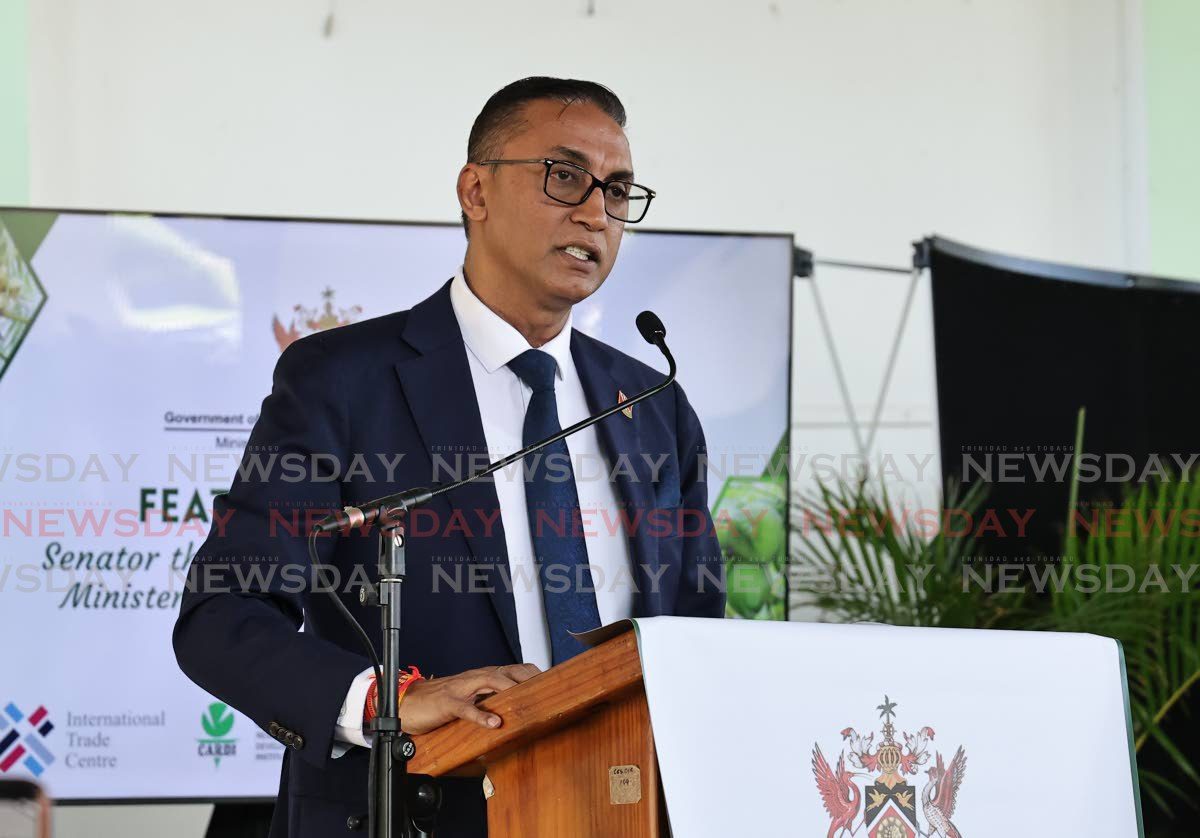
    The Ministry of Agriculture and Fisheries has unveiled an ambitious training program set to transform Trinidad and Tobago’s agricultural sector through comprehensive skills development. Minister Ravi Ratiram announced the initiative following the launch of a specialized artificial insemination training program on January 15th.

    The groundbreaking program will consolidate approximately 35 distinct training courses under a unified framework, marking a significant departure from the previous fragmented approach where various ministry divisions conducted separate training sessions. This consolidation will include regional administrative north and south operations along with extension training information services, all coordinated through a single umbrella program.

    Minister Ratiram revealed that the training curriculum encompasses diverse agricultural disciplines including advanced crop cultivation techniques, innovative hydroponics systems, greenhouse farming methodologies, climate-resilient agricultural practices, aquaculture development, and livestock enhancement programs. The courses will be accessible across all eight counties nationwide, with projections indicating participation from at least 20,000 individuals throughout 2026.

    The announcement coincided with the commencement of a two-day Artificial Insemination Technician training course, conducted in collaboration with the University of the West Indies at the School of Veterinary Medicine. This specialized program, funded by the Livestock and Livestock Products Board (LLPB), brought together 20 officers for intensive training in bovine artificial insemination techniques.

    Minister Ratiram emphasized the strategic importance of these initiatives, noting that enhanced livestock capacity directly addresses the nation’s substantial food import bill reduction goals. He stressed that livestock represents a primary protein source for the population, making capacity building in this sector crucial for meeting domestic demand.

    The ministry’s approach positions science and technology as central pillars of agricultural development, with participants being encouraged to view their training as both professional responsibility and national service. The program aims to bridge critical skills gaps in artificial insemination services while supporting improved service delivery, enhanced food security, and long-term self-sufficiency in the livestock industry.

  • Judge calls for legislative reform: ‘Let errant police pay for misconduct’

    Judge calls for legislative reform: ‘Let errant police pay for misconduct’

    In a landmark ruling with profound implications for police accountability, High Court Justice Frank Seepersad has issued a powerful call for legislative reform to hold officers personally financially responsible for unlawful arrests. The January 20th decision came in the case of Jawanza Simmons, a Sangre Grande businessman who was wrongfully arrested and detained for 12 hours in 2019.

    The court found that Special Reserve Constable Cleon Smith acted maliciously and beyond legal authority when he arrested Simmons outside the Shops of Cunapo on November 20, 2019. According to evidence presented, Simmons was merely smoking a cigarette and conversing with his brother when Smith approached without justification, slapped the cigarette from his hand, and demanded identification without stating any suspected offense.

    Justice Seepersad described the officer’s conduct as “arbitrary and not rooted in the rule of law,” noting that speaking in a loud tone does not constitute disorderly conduct, and there was no reasonable basis for the resisting arrest charge. The court particularly condemned Smith’s repeated failure to appear in both magistrates’ and High Court proceedings, calling this non-cooperation “intolerable and unacceptable.”

    The judge awarded Simmons $100,000 in total damages – $75,000 compensatory and $25,000 exemplary – to be paid by the state. However, Seepersad emphasized that taxpayers should not bear the burden of officer misconduct, recommending that legislation be amended to require offending officers to pay damages through salary deductions or forfeiture of accrued benefits.

    Seepersad warned against what he described as a “frequent modus operandi” of threatening arrest without probable cause, stating that while Trinidad faces significant lawlessness, police must still exercise authority responsibly. “There is a saying that ‘fish often rots from the head,’” the judge noted, “so for the level of lawlessness to be addressed, there has to be cooperation between police and the public.”

    The ruling represents a significant judicial challenge to police practices and accountability mechanisms, with the court explicitly urging parliamentary intervention to create meaningful consequences for officer misconduct.