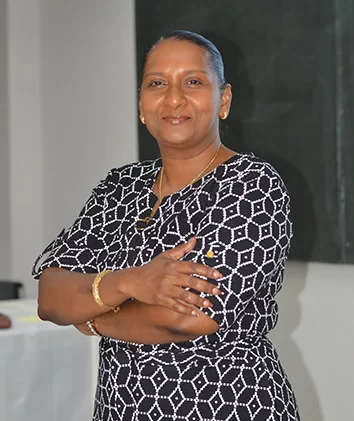
After 13 years at the helm of EFS College COVAB, a leading Surinamese nursing education institution, Angèle A. Wallerlei-Kumbangsila is preparing to hand over her leadership role and pursue a new international career, leaving behind a dramatically transformed organization that has grown from a small training center into a robust public health knowledge institute.
标签: Suriname
苏里南
-
OWRO vraagt SRD 1 miljard extra: huidige begroting onvoldoende voor infrastructuurambities
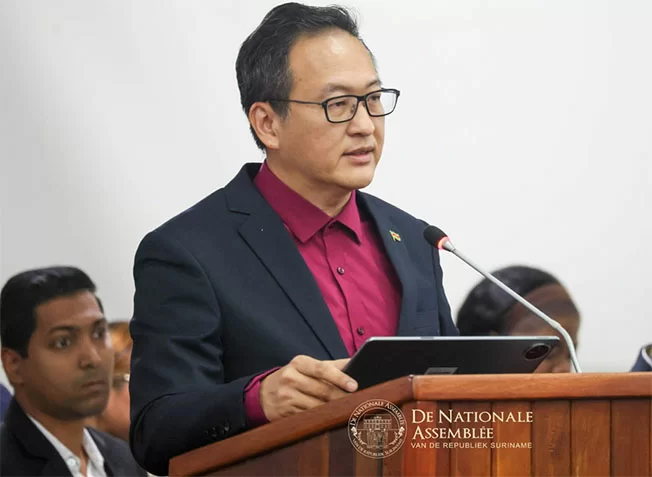
Suriname’s Ministry of Public Works and Spatial Planning (OWRO) has confirmed it requires an additional 1 billion Surinamese dollars (SRD) on top of its current 2026 allocation to deliver all planned infrastructure upgrades and maintenance projects across the country. Minister Stephen Tsang made the funding request public during ongoing budget deliberations in the National Assembly, noting that the current approved budget is insufficient to cover critical investments in roads, drainage systems, pumping stations, waste processing, and residential housing development.
Following last year’s government transition, Tsang told lawmakers his department inherited a massive accumulated backlog of deferred maintenance across nearly all core infrastructure assets, including roads, bridges, piers, drainage canals, water locks, and pumping stations. While targeted repair work has already been completed at multiple sites across the country, the minister stressed that far more resources are needed to deliver long-term, structural improvements to Suriname’s aging public infrastructure network.
Minister Tsang presented parliament with a detailed breakdown of how the requested additional funding would be allocated. The largest share, 440 million SRD, is earmarked for the rehabilitation of paved and unpaved roads across the districts of Paramaribo, Wanica, and Saramacca. Another 251.3 million SRD is allocated to cleaning primary and tertiary drainage canals, while 117 million SRD would go toward expanded drainage works and coastal protection projects. More than 107 million SRD is requested for the construction and rehabilitation of pumping stations, with remaining funds allocated to housing development, waste management upgrades, and new early warning flood systems.
The minister also outlined the alarming current state of Suriname’s national infrastructure, sharing ministry data showing more than 60 percent of the country’s entire road network is classified as being in poor or fair condition. OWRO’s analysis found secondary and tertiary rural roads in particular have suffered from decades of chronic underfunding for routine maintenance.
In total, Suriname maintains roughly 5,000 kilometers of public paved and unpaved roads. Ministry calculations show eliminating the full maintenance and rehabilitation backlog across the entire road network would require an estimated 116.28 billion SRD. By comparison, the 2026 national budget only allocates 1.75 billion SRD to road infrastructure. At current funding levels, OWRO estimates this annual allocation will only clear around 1.5 percent of the total accumulated backlog. When the cost of maintaining and repairing bridges and piers is added, that figure drops below 1 percent of the total backlog cleared per year.
During budget deliberations, Tsang clarified that the 2026 OWRO budget currently allocates 1.75 billion SRD to dry civil works, which include roads, bridges, and piers. Roughly 1.09 billion SRD is allocated to wet infrastructure projects, covering drainage systems, canals, water locks, and pumping stations.
Despite the severe financial constraints facing the department, Minister Tsang reaffirmed the ministry’s long-term ambitious development goals. The core strategic objective is to eventually pave all unpaved sand roads across Suriname. As a symbolic milestone tied to the 170th anniversary of the founding of the public works department, Tsang set a target to pave at least 170 roads in the coming period. The ministry is also progressing on work to build new pumping stations, strengthen national drainage networks, modernize aging water locks, and advance pre-construction planning for major long-term infrastructure projects, including a proposed cross-border bridge to Guyana and a potential second bridge crossing the Suriname River.
Tsang noted that if parliament cannot approve the full 1 billion SRD in additional funding, lawmakers will need to collaborate with the ministry to set clear priorities for which projects move forward. This signals that debate over the allocation of limited public resources to Suriname’s infrastructure sector will remain a central topic of budget negotiations in the coming months.
-
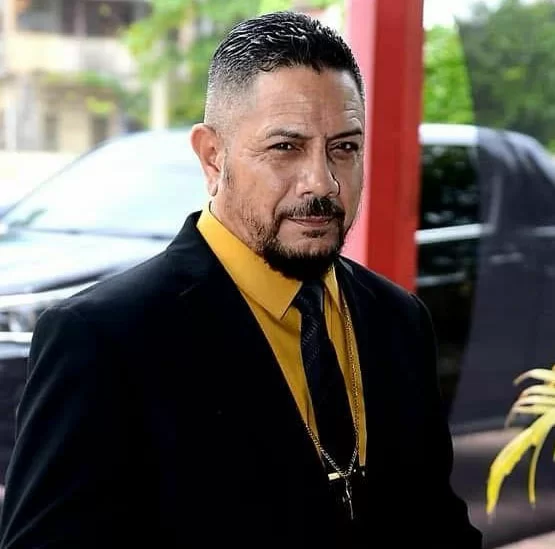
Baarden, tatoeages en professionaliteit binnen politiekorps: tijd voor een moderne benadering
Social norms and cultural values are in constant flux, shifting alongside broader societal evolution. Practices that were deemed unprofessional, inappropriate or unacceptable just a few decades ago are increasingly accepted by mainstream communities today. This shifting landscape has now reached the Korps Politie Suriname (Suriname Police Corps), sparking a debate over long-standing grooming bans on full beards and visible tattoos among serving officers.
For generations, the Suriname Police Corps has adhered to a strict policy that prohibited officers from wearing full beards, with the restriction rooted in outdated perceptions that linked facial hair to poor grooming, a lack of discipline and diminished authority. Similarly, tattoos were historically stigmatized as markers of criminal activity and negative public image, barring officers from displaying visible ink.
But as societal attitudes have transformed dramatically across the globe, the Suriname Police Union (SPU) is now questioning whether these decades-old restrictions still reflect 21st century social reality. Today, well-groomed full beards are a common personal choice for men across all professional sectors, including public service. For many officers, wearing a beard is also a core expression of their religious identity, required by their personal faith. Tattoos, meanwhile, are widely recognized globally as a legitimate form of body art and personal expression, worn by professionals across every walk of life – from doctors and lawyers to teachers, military personnel and police officers.
As the representative body for Surinamese police officers, the SPU argues that true professional competence is defined by an officer’s conduct, integrity, discipline, expertise, and commitment to carrying out their duties – not by superficial appearance. A neatly maintained beard or a visible tattoo says nothing inherently about an officer’s character, authority, trustworthiness, or ability to serve the public. “Police work is carried out by the officer, not their facial hair or body art,” the union emphasizes.
Beyond shifting social norms, the SPU frames the debate as a matter of fundamental constitutional and human rights. Suriname is a democratic constitutional state, and Article 8 of its constitution enshrines the principle of equality, banning discrimination on the grounds of religion or personal status. Article 9 further guarantees every citizen the right to physical, psychological and moral integrity. When personal appearance such as a beard is directly tied to an officer’s religious belief or core personal identity, the union questions whether any restriction on that choice can be considered necessary, reasonable, or proportionate under the law.
These protections are also reinforced by international human rights treaties that Suriname has ratified. Article 18 of the International Covenant on Civil and Political Rights (ICCPR) protects freedom of thought, conscience and religion, while Article 26 of the same treaty guarantees the right to equal treatment and freedom from discrimination. International human rights norms also explicitly protect personal dignity and personal privacy, rights that are implicated by overly broad grooming restrictions.
The union is careful to note that this argument does not mean police forces should abandon all grooming and conduct rules. It acknowledges that any police corps has both the right and the responsibility to set reasonable expectations for public representation, discipline and professional standards. But any such rules must be objective, reasonable, proportionate, and applied consistently across all ranks, the SPU says.
The debate has been sparked by a recent internal incident, in which an officer was reassigned over claims that his beard violated standards of public representativeness. The case has raised urgent, unresolved questions: Is a neatly groomed full beard truly a threat to public representation? Are there objective, evidence-based criteria to back up such a claim? Have fundamental rights and personal religious convictions been adequately considered in disciplinary decisions? And does this outdated approach align with modern societal expectations?
The SPU points to a growing global trend of police forces updating their policies to reflect changing social norms. A growing number of countries around the world now allow well-groomed beards and visible tattoos for officers, as long as they do not conflict with safety requirements or interfere with an officer’s ability to perform their duties.
At its core, the debate is not about appearance – it is about what the public actually expects from its police force, the union argues. Modern Surinamese society does not demand superficial uniformity of appearance at the expense of individual rights. Instead, it expects police officers to demonstrate consistent professionalism, integrity, fairness, and high-quality service to the community.
To drive home this core message, the union concludes: A beard does not do police work. A tattoo does not do police work. That is the work of the police officer.
This opinion piece was written by Revelino R.M. Eijk, LLB, Chair of the Suriname Police Union, published on June 24.
-
Inflatie stijgt naar 11,4 procent; prijzen in mei met 1,3 procent omhoog
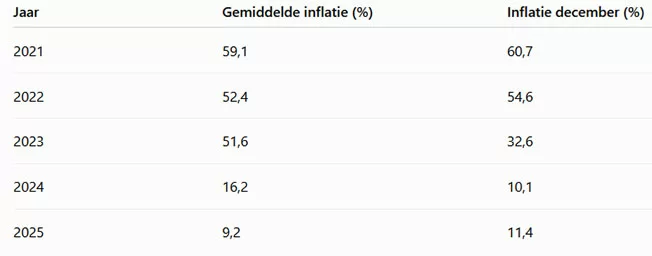
Preliminary official data released this week confirms that Suriname’s annual inflation rate reached 11.4% in May 2026, according to the country’s Central Bureau of Statistics (ABS). The latest consumer price tracking also shows that overall consumer prices rose by a monthly average of 1.3% between April 2026 and May 2026, pushing the national Consumer Price Index (CPI) up from 947.4 points in April to 960.0 points at the end of the measurement period.
ABS collected all price data for the May report between May 4 and May 29, 2026. When breaking down monthly price shifts across categories, the communications sector recorded the largest proportional jump, with prices climbing 14.4% over April’s levels. Fresh produce also saw dramatic monthly growth: fruit and vegetable prices rose 16.3% in May alone, pushing the annual increase for this essential consumer category to 32.5% year-over-year.
Other food categories also posted noticeable monthly upticks. Prices for fish, seafood and shrimp rose 2.9% compared to April, while soft drinks, bottled water and juices saw an identical 2.9% monthly increase. Other general food goods recorded a 2.5% monthly price hike in May.
On an annual basis, the most staggering price growth has hit healthcare services. Medical and paramedic services have surged 124.2% since May 2025, far outpacing all other measured categories. Other sectors with double-digit annual inflation include communications equipment and services (17.5%), out-of-home beverages (17%), pet care supplies and services (15.5%), and processed fish products (14%).
ABS officials emphasize that the headline 11.4% average inflation rate does not reflect uniform price growth across all consumer goods and services. Out of the 316 goods and services included in the national CPI basket, price movements in May ranged from a 39% price decrease to an extreme 600% price increase, demonstrating widespread unevenness in cost pressures across the Surinamese economy.
The 12-month moving average inflation rate, which smooths out short-term monthly volatility by comparing the average of the last 12 months to the preceding 12-month period, hit 10.7% in May. This result extends a gradual upward trend in average inflation that has been observed across Suriname over recent months.
-
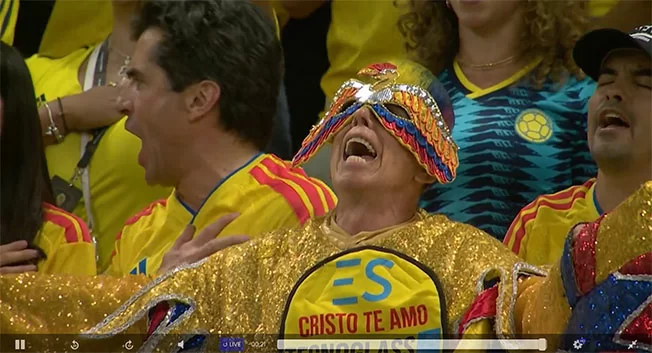
Derde helft WK 2026: Colombia breekt Congolees verzet en zet grote stap richting achtste finales
The 2026 FIFA World Cup delivered another tightly contested group stage clash on June 24, as Colombia secured a hard-fought 1-0 victory over a tenacious DR Congo side at Guadalajara’s Estadio Akron. A 76th-minute finish from defender Daniel Muñoz proved the difference between the two sides, pushing Nestor Lorenzo’s South American outfit to six points from two opening Group K matches and putting them on the cusp of knockout stage qualification.
From the first kickoff, the match lived up to its billing as a test of contrasting styles. DR Congo, one of the tournament’s surprise packages after holding Portugal to a draw in their opening fixture, came into the clash with a clear gameplan: organize a compact, disciplined defense and hit Colombia on quick counterattacks. For the vast majority of the 90 minutes, that strategy worked nearly to perfection. The first half ended goalless, with neither side able to carve out a clear-cut opening, and the balance of play stayed deadlocked through the opening 20 minutes of the second half.
Colombia, enjoying the bulk of possession through attacking playmakers James Rodríguez, Luis Díaz and Jhon Arias, steadily increased the pressure as the clock ticked down. The South American side pushed more players forward, probing the DR Congo defensive line for gaps that had been hard to find for most of the game. The decisive breakthrough finally came in the 76th minute, after Juan Fernando Quintero crafted a clever build-up deep in DR Congo’s half. Muñoz, who had ventured forward from his right-back position, arrived unmarked in the penalty area and slotted the ball home to break the deadlock, sending the large contingent of Colombia supporters into celebration.
In the final 15 minutes plus stoppage time, DR Congo threw everything forward in search of an equalizer to salvage a point. The African side pushed numbers into the attack, but Colombia’s defense held firm under the growing pressure, conceding few clear chances as the match stretched into added time. Tensions rose in the closing minutes, with referee issuing yellow cards to Colombia’s Jhon Lucumí (56th minute), DR Congo’s Charles Pickel (90+3) and Colombia’s Jefferson Lerma (90+4) as tackles became increasingly urgent. When the final whistle blew, Colombia’s players and staff celebrated a hard-earned three points.
The result reshapes the standings in Group K, which also includes European side Portugal and Asian representative Uzbekistan. Earlier on the same matchday, Portugal cruised to a 5-0 win over Uzbekistan, leaving both Portugal and Colombia sitting on six points from two matches, in a strong position to claim the two knockout stage spots from the group. The two sides are now set to face off in the final group round in a clash that will likely decide the winner of Group K.
For DR Congo, the defeat leaves their knockout stage hopes hanging in the balance, but they are still mathematically in contention to advance. Their final group fixture against Uzbekistan will be a winner-takes-all clash, where they will need to secure all three points to keep their 2026 World Cup run alive. For Colombia, this victory is far more than just three points: it is proof of the side’s ability to grind out results against organized, determined opposition, a quality that will prove critical if they advance deep into the tournament. Coach Néstor Lorenzo’s side had to dig deep against a DR Congo side that refused to back down, and their ability to stay patient, capitalize on a single moment of defensive lapse, and see out the result will give the team a major confidence boost heading into their final group stage match.
-

SEOGS groeit uit tot breed zakelijk platform rond energieontwikkeling
The sixth iteration of the Suriname Energy, Oil & Gas Summit (SEOGS) officially launched on Tuesday at Roeli’s Event Venue in Wanica, marking another milestone for the country’s fast-growing energy sector. This year’s flagship international gathering has attracted an unprecedented scale of participation: 260 exhibiting organizations, 233 expert speakers, 1,200 international delegation members, and an expected total attendance of roughly 14,000 visitors over the four-day event.
What began as a niche trade show focused exclusively on oil and gas has evolved into far more than a specialized industry exhibition. Across three large exhibition halls, companies and institutions from across the globe showcase their latest products, services, cutting-edge technologies and long-term development plans for the regional energy market. The summit has become a core hub for forging new business partnerships, exchanging innovative industry insights, and finalizing concrete commercial agreements.
Beyond traditional oil and gas segments including extraction, transportation, storage, logistics and refining, the 2026 summit features a growing presence of companies from adjacent and supporting sectors, creating a far more diverse exhibition landscape than ever before. Attendees can explore offerings ranging from legal and banking services, hospitality, on-site medical support and emergency first aid, to helicopter transport services, physical and digital security solutions, communication infrastructure, data storage, advanced monitoring technology, industrial robotics and artificial intelligence. Local Surinamese producers of fresh food and beverages also have a prominent spot at the event, highlighting the growing local integration of the offshore energy sector.
Anand Jagessar, CEO of Staatsolie, Suriname’s state-owned oil and gas company, told reporters on site that SEOGS has grown increasingly targeted as offshore oil and gas developments move from planning phases to concrete operational projects. “More discoveries and new offshore developments are coming online, such as the Gran Morgu project. And now Petronas has announced it will move forward with a major gas development here,” Jagessar explained.
He noted that this accelerating project pipeline has drawn a growing number of contractors and supporting service providers to establish operations in and around Suriname’s energy sector. This growth has also spurred the development of concrete logistics hubs, including ports purpose-built to support offshore industry operations.
According to Jagessar, the economic spillover from the expanding energy sector is now being felt across a much broader swath of Suriname’s domestic economy. “A large volume of locally produced food and beverages is already being supplied to offshore operations. As more developments move forward, the opportunities become clearer, and local businesses are stepping up to seize those chances,” he said.
The Staatsolie chief emphasized that sector growth is creating opportunities not just for established businesses, but also for Suriname’s younger generation. Young people can now pursue targeted education and training to prepare for in-demand roles in the future oil, gas and energy industry, he added. “There are now real opportunities for young people to get involved and pursue focused studies. That makes for a very bright future ahead,” Jagessar said.
Reflecting this focus on youth, one full day of the four-day summit is dedicated exclusively to young people, designed to build a connection between current economic growth and the country’s future workforce.
During the opening ceremony, speakers from Suriname and across the globe highlighted the critical importance of building a robust regional oil and gas industry. Discussions covered not just investment and production targets, but also international collaboration, knowledge sharing, and the urgent need to ensure projected economic prosperity translates to tangible benefits for all of Suriname’s society.
The event was officially opened by Suriname President Jennifer Simons, Vice President Gregory Rusland, Minister of Foreign Affairs, International Trade and Cooperation Melvin Bouva, and Minister of Oil, Gas and the Environment Patrick Brunings. With the expanded scale of this sixth edition, SEOGS has cemented its position as one of the most important business platforms in Suriname, centered on energy development, offshore activities, and the broad range of cross-sector economic opportunities these developments bring to the country.
-

Derde helft WK 2026: Kroatië wint nipt van Panama en zet koers naar knock-outfase in Groep L
At Toronto Stadium, Croatia secured their first three points of the 2026 FIFA World Cup on Tuesday with a hard-fought 1-0 victory over Panama, boosting their hopes of advancing to the knockout round. The only goal of the match came from striker Ante Budimir after halftime, leaving Panama winless and eliminated from knockout contention despite a spirited, attack-heavy performance.
Both sides entered their second Group L fixture still searching for their first win of the tournament, and the night carried extra significance for Croatian legend Luka Modric, who made his 200th senior international appearance just days before his 41st birthday, in what is widely expected to be his fifth and final World Cup campaign.
Panama set up to frustrate Croatia from the opening whistle, deploying a compact deep block and looking to hit the European side on rapid counterattacks, particularly down the right flank through full-back Amir Murillo. Croatia dominated possession from the first minute, with Modric pulling the strings in midfield as expected. Just two minutes in, the playmaker rose to meet a cross from Marco Pasalic, but his header drifted just over the crossbar. Modric received a rapturous welcome from the crowd, with hundreds of fans in the stands displaying his name on shirts and banners to honor his milestone.
Murillo’s early deliveries tested Croatian goalkeeper Dominik Livakovic early on, with the keeper forced into a smart save to deny a Jose Luis Rodriguez header that clipped the top of the crossbar. The first half remained tightly contested, with Croatia holding the bulk of possession and territorial advantage but unable to break through a stubborn Panama defense marshaled by center-back Jose Cordoba. Panama held firm to keep the scoreline locked at 0-0 going into halftime, a result that left their defensive unit proud of their first-half work, while Croatia entered the break knowing they would need to increase their attacking edge after the restart.
The match also highlighted a standout trend of this 2026 tournament: the ongoing influence of veteran “golden oldies” at the top of the game. Alongside the 40-year-old Modric, 41-year-old Cristiano Ronaldo (Portugal), 40-year-old Fernando Muslera (Uruguay), 40-year-old Manuel Neuer (Germany) and 40-year-old Edin Dzeko (Bosnia and Herzegovina) are all playing key roles for their national sides at this World Cup.
Croatia manager Zlatko Dalic made aggressive attacking substitutions to open the second half, withdrawing Josko Gvardiol and Petar Musa to bring on Andrej Kramaric and Budimir, who made an instant impact. In the 54th minute, Budimir broke the deadlock, slotting home a clinical finish from a pinpoint right-wing cross provided by Josip Stanisic, sending the Croatian fanbase in the stadium into wild celebrations.
Modric remained the heart of Croatian play throughout the second half, displaying his trademark vision and precision to control the tempo of the match, create attacking chances, and marshal his side’s midfield. When he was substituted in the 81st minute, he received a standing ovation from the entire stadium, and his teammates honored his milestone with special warm-up shirts emblazoned with the words “Infinite Legacy”.
Panama threw everything forward in the closing stages of the match, winning multiple corner kicks and pressing hard for an equalizer that would keep their knockout hopes alive. Despite their relentless effort and fighting spirit, they lacked the final cutting edge to break through a resolute Croatian defense, with Livakovic turning away all their dangerous attempts on goal.
When the final whistle blew, Croatia claimed a deserved three points that leaves them perfectly positioned in Group L. A win over Ghana in their final group fixture this coming Saturday will almost certainly secure their place in the round of 32. For Panama, the result confirms their elimination from knockout contention, but they can still turn their focus to their final group match against third-placed England, where they will look to end their campaign on a high note and pull off a surprise upset.
-
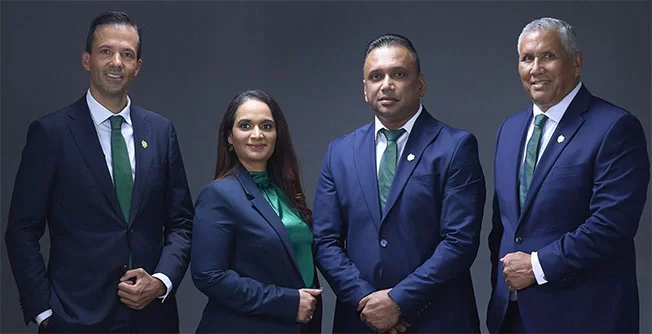
DSB boekt recordwinst van bijna SRD 789 miljoen en keert dividend uit
Leading Surinamese financial institution De Surinaamsche Bank (DSB) has delivered robust financial results for the 2025 fiscal year, posting a net profit of 788.9 million Surinamese dollars (SRD), representing a 44% year-over-year increase that outpaces prior performance expectations. The strong bottom-line growth, announced Tuesday during the reconvened session of a previously adjourned Annual General Meeting of Shareholders, adds more than 242.6 million SRD to the bank’s 2024 net profit of 546.3 million SRD, cementing the lender’s solid position in Suriname’s evolving financial sector.
Following board approval tied to the 2025 results, DSB will distribute a total dividend payout of 161 million SRD to shareholders, equal to approximately 4.27 SRD per outstanding share. The majority of the annual profit, however, will be retained to boost the bank’s total equity, which now stands at 4.24 billion SRD. This capital buffer is intended to strengthen DSB’s overall financial standing and create flexible capacity for targeted strategic investments in coming years.
Bank leadership emphasized that the 2025 financial metrics reflect sustained, healthy organizational growth across all core business segments. DSB’s loan portfolio expanded by 40% compared to 2024, while total client deposits and entrusted funds grew 19% to reach 35.56 billion SRD. Operational efficiency also improved, with the bank’s efficiency ratio dropping from 53% to 49% — a shift that signals more streamlined, cost-effective operations. Additionally, DSB’s solvency ratio reached 20.9% for the fiscal year, far exceeding the 11.25% minimum regulatory requirement set by Suriname’s central banking supervisor.
Beyond financial performance, the annual general meeting focused heavily on DSB’s ongoing service modernization and digital transformation efforts. In 2025, the bank rolled out multiple key digital initiatives, including full automation of the personal loan application process, upgrades to its online banking platform, and the launch of DSB Buddy, a new virtual assistant to handle customer inquiries and digital service requests. DSB also collaborated with the Central Bank of Suriname and other domestic financial institutions to speed up interbank payment processing for consumers and businesses across the country.
The meeting also addressed updates to corporate governance and leadership. Shareholders approved the expansion of DSB’s executive management team with the appointment of Raveen Koelfat as the bank’s new Chief Commercial Officer (CCO). They also endorsed the nomination of Stanley Mathura to the bank’s Supervisory Board, a move that remains pending formal regulatory approval from the Central Bank of Suriname.
Looking ahead to 2026, DSB has outlined a clear strategic agenda centered on further digital service upgrades, enhanced customer experience, the development of innovative financing products, and strengthened information security frameworks. A key priority for the year is achieving the international ISO 27001 certification for information security management, a milestone that will align the bank’s data protection practices with global best practices. With its strong 2025 performance building a solid financial foundation, DSB says it is well-positioned to continue its growth trajectory and reinforce its leading role in Suriname’s banking sector.
-
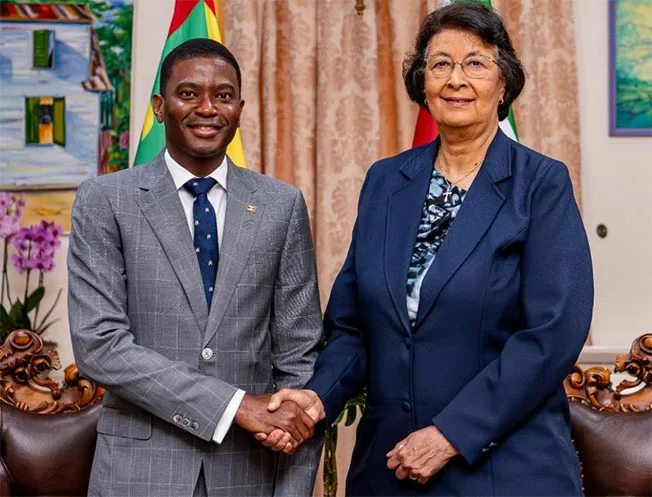
Simons en Mitchell zien kansen voor nauwere samenwerking binnen Caricom
On the sidelines of the 6th annual Suriname Energy, Oil & Gas Summit and Exhibition (SEOGS), top leaders of Suriname and Grenada have held high-level talks focused on expanding bilateral and regional collaboration across multiple priority sectors, laying new groundwork for strengthened ties within the Caribbean Community (Caricom).
Suriname’s President Jennifer Simons hosted Grenada’s Prime Minister Dickon Mitchell for the closed-door meeting at the Surinamese presidential palace on Tuesday, during the energy conference that has drawn regional and global industry and government leaders this year. This meeting marked Mitchell’s first participation in a major regional energy-focused conference, after he accepted a personal invitation from Simons to attend the 2026 SEOGS.
In statements released by Suriname’s Communication Service following the meeting, President Simons emphasized the fundamental value of robust bilateral partnerships among Caricom member states as small island and developing Caribbean nations navigate shifting global economic conditions and shared cross-border challenges. “As nations working to unlock new economic opportunities while confronting pressing global challenges, it is essential that we continue exchanging expertise and exploring pathways for closer collaboration, particularly in energy development, sustainable growth, climate resilience, and economic diversification,” Simons said. She added that Mitchell’s attendance at the 2026 SEOGS created an ideal opportunity to deepen bilateral relations and advance aligned policy goals shared by the two countries.
For his part, Prime Minister Mitchell commended Suriname’s approach to developing its emergent oil and gas sector, noting that the South American Caribbean nation has emerged as a responsible model for resource development. “We look to Suriname as an example of a country that pursues oil and gas exploration in a responsible manner while advancing the core economic interests of its people,” Mitchell said. Like Suriname, Grenada is currently working to develop its own domestic oil and gas industry, making knowledge-sharing and collaboration in this sector a top talking point for the bilateral meeting.
Beyond energy development, the two leaders covered a wide range of shared regional priorities, including renewable energy expansion, food security, improved regional connectivity, and the growing impacts of climate change. Mitchell noted that these cross-cutting issues form a strong foundation for deeper collective action across all Caricom member states. He also highlighted that small island developing states (SIDS) like Grenada remain disproportionately vulnerable to climate change, and require increased international financial support to build resilience and recover from climate-linked disasters.
The Grenadian prime minister also extended praise for Suriname’s longstanding environmental leadership, noting the country has maintained its status as one of the world’s few carbon-negative nations through the conservation of its vast tropical forest landscapes. Both leaders reaffirmed their commitment to continued high-level engagement to advance collaborative projects that deliver mutual benefit and support shared regional development goals within Caricom.
-
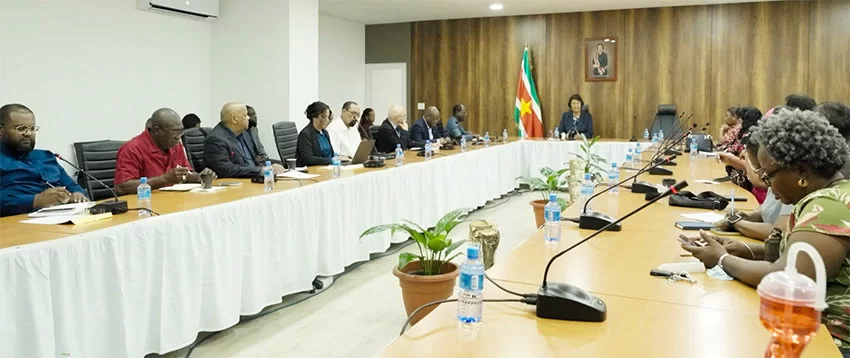
Regering wil achterstallige betalingen examinatoren uiterlijk vrijdag afhandelen
A months-long payment dispute that sparked widespread frustration among Suriname’s education sector is moving toward resolution after President Jennifer Simons led emergency high-level talks with education union representatives on June 23. The meeting, held at the President’s Cabinet, was convened directly in response to growing discontent over the failure to complete outstanding overdue payments to hundreds of examiners and committee members tied to national education assessments.
In attendance alongside President Simons were key cabinet officials: Dirk Currie, Minister of Education, Science and Culture; Marinus Bee, Minister of Home Affairs; and representatives from the government’s central negotiation body. The meeting was organized and its outcomes announced by Suriname’s Communications Service.
The root of the dispute stretches back to an agreement signed earlier this June between the Ministry of Education, Science and Culture and the country’s leading education unions. Under that initial deal, all overdue payments to eligible education workers—including examiners, committee members, and a group of teachers based in Moengotapoe—were scheduled to be disbursed starting June 1, with full completion promised by the end of the month during a follow-up meeting on June 12. As of the June 23 emergency summit, however, more than 300 examiners had still not received their owed compensation.
Minister Currie acknowledged that bureaucratic red tape within the national government is a persistent source of payment delays, a issue that has fueled consistent irritation among union leadership. To address both the current backlog and prevent future disruptions, two key structural changes were agreed upon during the talks. First, the Ministry of Education will now hold weekly coordination meetings with education union representatives to flag and resolve bottlenecks early. Second, a permanent cross-government consultation framework will be established, bringing in officials from the Ministry of Finance and Planning, the Ministry of Home Affairs, and the President’s Cabinet for all payment-related discussions. Currie explained that cross-ministerial inclusion is necessary, as many payment processes and approvals span multiple government departments and occasionally require formal sign-off from the presidency itself.
Vincent Fernandes, Director of Finance at the Ministry of Finance and Planning, detailed the specific administrative bottleneck that caused the current delay. Before any payments can be processed, rosters of eligible workers submitted by the Ministry of Education must first go through a formal verification check by the ministry’s Accounting Department. Fernandes noted that inconsistencies between submitted rosters and verified records are a recurring issue, and these discrepancies were the direct cause of the current holdup. Following the emergency talks, all parties have committed to completing all required administrative processing by the end of Friday at the latest.
Union leaders have expressed cautious confidence that the agreement will resolve the long-running backlog. Reshma Mangre, chair of the Suriname Teachers’ Union/Alliance of Suriname Teachers (BvL/ALS), stated that unions trust the president-led process will deliver results for the unpaid examiners. She did, however, note that a previously proposed cross-stakeholder commission including union and ministry representatives has not yet been formally established, leaving the sector without sustained structural coordination and leaving unions often unclear about the status of payment processes.
Bernice Barron, chair of the Federation of Suriname Teachers’ Organizations (FOLS), echoed that confidence, adding that the majority of eligible workers will see their back pay processed under the new deadline. “There is a small subset of workers that are not yet eligible for payment at this stage,” Barron explained. “Officials are currently working directly with that group to identify and resolve their individual issues, and the minister will send formal correspondence to each of them outlining next steps. For everyone else, the process is now on track to be finalized.”