标签: Suriname

苏里南

  • Premier Trinidad en Tobago noemt Caricom onbetrouwbare partner

    Premier Trinidad en Tobago noemt Caricom onbetrouwbare partner

    Prime Minister Kamla Persad-Bissessar of Trinidad and Tobago has launched a remarkable diplomatic offensive against the Caribbean Community (CARICOM), publicly disassociating her nation from the regional body’s collective statement regarding recent U.S. travel restrictions. In a striking declaration, she characterized CARICOM as “currently not a reliable partner.

    The controversy stems from the United States’ December 16 implementation of partial travel restrictions targeting citizens of Antigua and Barbuda and Dominica. These measures primarily address security concerns surrounding Citizenship by Investment programs operated by these nations. In her Saturday media address, Persad-Bissessar explicitly stated that Trinidad and Tobago declined endorsement of CARICOM’s official expression of concern regarding American policy.

    The Prime Minister offered a robust defense of Washington’s position, asserting that sovereign nations must accept consequences for their policy decisions. She maintained that the U.S. response represents a measured reaction to risk management deficiencies within the investment citizenship programs of affected countries.

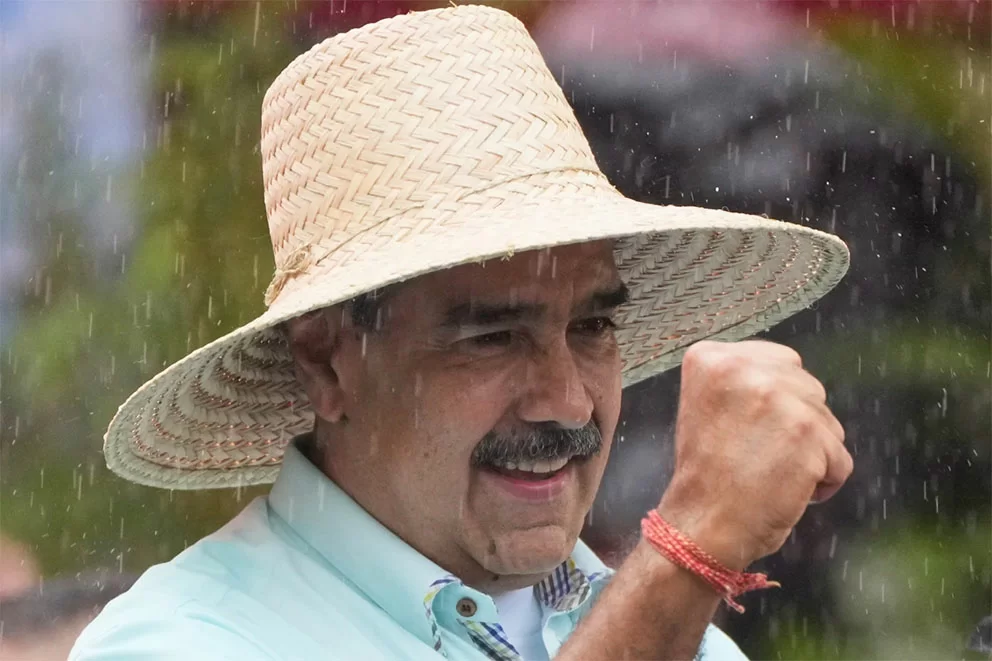
    Persad-Bissessar escalated her criticism to include fundamental structural issues within CARICOM, citing poor governance mechanisms, inadequate accountability protocols, internal divisions, and inappropriate interference in member states’ domestic affairs. She further identified CARICOM’s support for Venezuela’s Maduro regime—accused of human rights violations and regional aggression—as significantly undermining the organization’s credibility.

    Emphasizing national sovereignty, the Prime Minister declared that Trinidad and Tobago would prioritize its independent interests above regional consensus. “CARICOM does not determine our nation’s future. That choice belongs to our citizens,” she stated, framing the debate as a fundamental matter of self-determination.

    The statements have ignited intense domestic debate. Former Prime Minister Stuart Young accused Persad-Bissessar of damaging CARICOM relations and undermining ties with the United States, characterizing her approach as “alarming” and “reckless.” Former Foreign Minister Amery Browne similarly criticized the Prime Minister’s rhetoric as evading political responsibility through confrontational public statements.

    Despite mounting criticism, Persad-Bissessar maintained her position, affirming Trinidad and Tobago’s commitment to an independent foreign policy distinct from CARICOM’s political, security, and economic directives. She reiterated that American measures resulted from individual national choices and called for comprehensive reassessment of CARICOM’s effectiveness as a regional institution.

  • Jeugdraad evalueert en gaat voor sterkere jeugdparticipatie in 2026

    Jeugdraad evalueert en gaat voor sterkere jeugdparticipatie in 2026

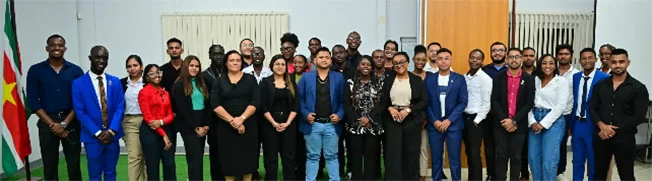
    Suriname’s National Youth Council concluded its 2025 operational year with a comprehensive evaluation meeting on December 20th, setting strategic directions for 2026 with enhanced youth participation in policy and governance as its cornerstone. The meeting, attended by key stakeholders including youth ambassadors and institutional leaders, served as both a retrospective analysis and forward-looking planning session.

    Operating under the National Youth Institute (NJI), the Youth Council presented a detailed overview of its annual achievements and challenges. NJI Director Dinesh Parag and Deputy Director Santoucha Redan joined SDG Ambassador Drusila Blinker and CARICOM Youth Ambassador Arantxa Swedo in delivering progress reports on ongoing initiatives and lessons learned throughout 2025.

    Youth Development and Sports Minister Lalinie Gopal expressed strong appreciation for the Council’s efforts, particularly emphasizing the strategic rationale behind combining Youth and Sports within a single ministry portfolio. Minister Gopal highlighted sports’ critical role in youth development, noting its contributions to building discipline, collaborative skills, and mental resilience among young Surinamese.

    The minister specifically commended youth involvement in community initiatives such as the Krin Kondre project and school backpack program, recognizing young people’s unique position to identify local needs through their district-level connections. Minister Gopal assured continued full ministerial support for the Youth Council throughout 2026.

    NJI Director Parag stressed the importance of systematic evaluation and multi-year planning frameworks, stating that clear situational analysis is essential for targeted policy development. He cited the World AIDS Day school program, implemented through multi-stakeholder partnerships, as a successful example of effective youth engagement.

    Youth Council Chairman Shemar Rier reflected positively on 2025 as a foundational year that established robust organizational structures. Looking ahead, the Council will prioritize expanding youth influence within policy processes and governance mechanisms, including targeted training and mentorship programs for youth aspiring to leadership positions.

    The annual meeting concluded with a unified commitment from all participating organizations to sustain collaborative efforts and continue investing in sustainable youth development throughout Suriname.

  • Advocaat moordverdachte vraagt om contra-expertise

    Advocaat moordverdachte vraagt om contra-expertise

    In a significant development within the ongoing murder trial of suspect A.H., defense attorney Maureen Nibte has formally petitioned the Military Court to authorize an independent forensic examination. The case involves allegations that A.H. murdered his best friend, Mike Wolfgang, during June of this year.

    Attorney Nibte substantiated her request by highlighting critical evidentiary gaps. She emphasized that the victim’s remains were discovered inside his vehicle approximately 24 hours after his death. “Given the extremely high temperatures within the car interior,” Nibte argued before the court, “it becomes imperative to obtain a precise description of the body’s condition upon discovery. This crucial contextual information is absent from the official autopsy report, yet it could significantly contribute to establishing a more accurate time of death.”

    The defendant A.H. has consistently maintained his innocence, specifically denying that he is the individual visible on surveillance footage presented by prosecutors. Furthermore, A.H. provided an alibi stating that Wolfgang dropped him off at his residence at approximately 10:50 PM on the evening in question.

    However, Nibte countered that this alibi cannot be verified through the currently available video evidence. She revealed a potentially critical evidentiary shortcoming, noting that the digital footage compiled by the Digital Investigation Unit and presented in court lacks approximately five minutes of crucial footage. The defense contends that these missing segments might actually demonstrate the defendant being dropped off as claimed, thereby supporting his innocence.

    The Military Auditor is expected to deliver an official response to these defense motions during the next court session, which will determine whether the independent forensic analysis will be permitted.

  • Amerikaanse troepen stoppen opnieuw olietanker voor de kust van Venezuela

    Amerikaanse troepen stoppen opnieuw olietanker voor de kust van Venezuela

    For the second time in two weeks, US forces have intercepted an oil tanker off the coast of Venezuela, escalating President Donald Trump’s campaign against the government of Nicolás Maduro. The early morning operation on Saturday followed Trump’s recent announcement of a comprehensive “blockade” targeting all sanctioned oil vessels entering or leaving the South American nation.

    Homeland Security Secretary Kristi Noem confirmed that the US Coast Guard, with Defense Department support, halted the Panama-flagged crude oil tanker Centuries. Through social media, Noem shared declassified footage showing US helicopter personnel boarding the vessel, which according to MarineTraffic data had been operating near Venezuelan waters. The sanction status of the intercepted ship remains unclear.

    Noem declared on platform X: “The United States will continue intercepting the illegal movement of sanctioned oil funding narco-terrorism in the region. We will locate and stop you.” An anonymous US official characterized the operation as a “consensual boarding,” indicating the vessel voluntarily stopped and permitted US forces to come aboard.

    The Venezuelan government condemned the actions as “criminal” and pledged legal recourse through the UN Security Council. Caracas issued a statement accusing the US of “theft and hijacking of a private vessel transporting Venezuelan oil, and the forced disappearance of its crew.”

    This latest seizure follows the December 10th interception of the tanker Skipper and coincides with Trump’s increasingly aggressive rhetoric toward Maduro, whom he claims will soon be removed from power. Trump justifies the blockade by demanding Venezuela return assets previously seized from American oil companies, stating: “They illegally took all our energy rights and oil. We want it back.”

    The tanker targeting forms part of a broader military campaign against drug smuggling in the Caribbean and Eastern Pacific. Since September, US forces have conducted at least 28 strikes on suspected smuggling vessels, resulting in 104 fatalities. These operations face criticism from US legislators and human rights advocates who cite lack of evidence and allegations of extrajudicial killings.

    As the US significantly reinforces its military presence in the region—the largest buildup in generations—Trump has repeatedly hinted at impending ground operations. White House Chief of Staff Susie Wiles recently stated Trump would “continue blowing up boats until Maduro surrenders,” while Maduro characterizes US military actions as attempted regime change.

    The historical context reveals deeper tensions: American oil companies once dominated Venezuela’s oil sector until nationalization began in the 1970s and expanded under Hugo Chávez and Maduro. In 2014, an arbitration panel ordered Venezuela to pay $1.6 billion in compensation to ExxonMobil.

  • Kerstviering voor senioren in tuin van het presidentieel paleis

    Kerstviering voor senioren in tuin van het presidentieel paleis

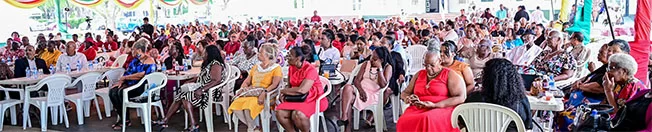
    Suriname’s Presidential Palace gardens transformed into a festive holiday venue on December 21st as more than 500 senior citizens gathered for a special Christmas celebration. The annual event, designed to honor elderly citizens for their lifelong contributions to society, created a warm and joyful atmosphere through music, food, and communal spirit.

    President Jennifer Simons personally attended the gathering, which featured performances by the Military Band and various singing and dancing acts. Attendees were treated to refreshments, beverages, a warm meal, and Christmas gift packages, fostering a convivial and celebratory environment.

    In her address, President Simons reflected on the profound meaning of Christmas, emphasizing how significant transformations often originate from humble beginnings—drawing parallels to the nativity story of Christ’s birth under modest circumstances. The Head of State highlighted how this narrative underscores the enduring values of hope, faith, and simplicity.

    Noting Suriname’s diverse religious landscape, President Simons acknowledged that across various faith traditions, God represents a fundamental source of strength. She employed light as a powerful metaphor for hope and love, stating that “darkness is merely the absence of light” and that “when people become lights for one another, darkness disappears.”

    The President called for national unity and mutual support, particularly during the country’s current challenging period. She stressed that meaningful progress can only be achieved when both government and society share responsibility and demonstrate genuine care for one another.

    Concluding her speech, President Simons referenced Christ’s central message of loving one’s neighbor as oneself. She encouraged attendees to implement this principle in their daily lives and extended warm wishes for blessed Christmas celebrations and a prosperous 2026 to all senior participants.

  • Agronomisch debat: landbouw vast in vicieuze cirkel

    Agronomisch debat: landbouw vast in vicieuze cirkel

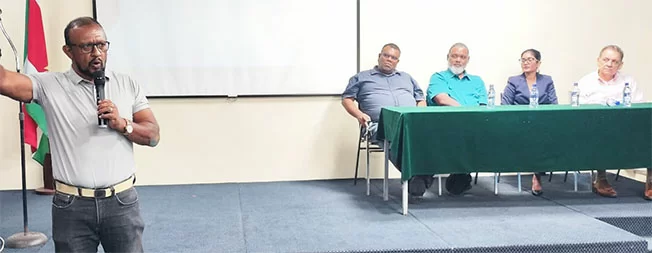
    Suriname’s agricultural industry faces a critical juncture as it grapples with a self-perpetuating cycle of small-scale operations, stagnant productivity, and insufficient investment. This stark assessment emerged during the inaugural public forum of the newly established Association of Agronomists in Suriname (VAS), held Thursday evening at the Anton de Kom University Guesthouse.

    The gathering, themed ‘Challenges Within the Agricultural Sector,’ featured extensive dialogue among stakeholders who unanimously characterized the event as both intellectually substantial and motivationally impactful. Attendees expressed particular appreciation for the initiative and anticipation for subsequent activities. VAS Chairman Soedeshchand Jairam declared the evening a resounding success, noting that ‘despite the festive season, attendance was excellent and the discussion was of exceptionally high quality.’

    Industry representatives from fruit and vegetable production, coconut cultivation, livestock farming, fisheries, and rice sectors provided comprehensive insights into both the sector’s potential and its systemic challenges. The expert panel included Gerald Tjon A San (LVV), Rewish Somai (Anton de Kom University), Vijantie Awadhpersad (NOB), and Gilbert van Dijk (Suriname Business Development Center).

    According to Jairam, the consensus was unmistakable: Suriname possesses significant agricultural capabilities but lacks the fundamental conditions to leverage them effectively. ‘Our small-scale structure inherently limits innovation capacity. Technological adoption remains minimal, productivity persists at low levels, and investment continues to lag—all factors that maintain the sector’s constrained size.’

    Stakeholders identified multiple governmental shortcomings, including outdated laboratory facilities, inadequate irrigation and drainage systems, weak storage and cold chain infrastructure, and insufficient transportation options. Research and innovation initiatives were similarly deemed deficient, with insufficient attention to disease management, improved crop varieties, and modern technologies such as sensor systems and precision agriculture methodologies.

    Additionally, participants criticized institutional fragmentation, noting poor inter-ministerial collaboration on critical issues including land policy, financial mechanisms, and taxation frameworks.

    Jairam emphasized that agricultural research represents an urgent priority, particularly given the rapid pace of global sector innovation. ‘While other nations deploy drones, sensor networks, and advanced cultivation techniques, we remain entrenched in traditional practices. Without research into competitive varieties and more efficient production systems, we risk complete market irrelevance.’

    The VAS intends to position itself as a central hub for knowledge consolidation and dissemination, bridging policy, practical implementation, and scientific advancement. Jairam stressed that research enhancement is indispensable, warning that ‘without innovation, we will lose our competitive positioning entirely.’ He further highlighted broader societal implications, stating that ‘oil alone cannot achieve national self-sufficiency. Food security remains a fundamental prerequisite for development.’

    Through this inaugural forum, the VAS has established itself as both a critical and constructive voice in national agricultural discourse. The message is unequivocal: without visionary planning, collaborative effort, and technological modernization, the sector faces continued stagnation—a scenario Suriname cannot afford.

  • Simons: Reparatie in het onderwijs gaat door in 2026

    Simons: Reparatie in het onderwijs gaat door in 2026

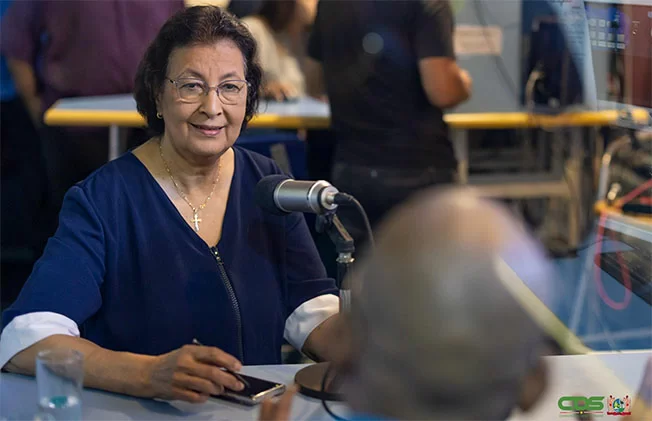
    Surinamese President Jennifer Simons has declared that the comprehensive restoration of the nation’s education system will extend throughout 2026, with particular emphasis on addressing the needs of children requiring specialized educational support. The announcement was made during her weekly address on Radio 10’s “90 Seconden” program on Saturday.

    The educational overhaul initiative, termed “education repair,” entails structural improvements across the entire academic framework. President Simons emphasized the fundamental right of every child to secure classroom placement while acknowledging systemic shortcomings in accommodating students with special needs. “Our current school system indeed lacks proper adaptation for these children,” Simons conceded. “We previously maintained better facilities, and we must restore those capabilities.”

    A national education congress scheduled for March 2026 will convene all stakeholders to establish definitive policy directions. The president expressed confidence that this collaborative effort would produce a clear, widely-supported action plan to elevate educational standards. Simons projected an approximate one-year timeline to bring the system to acceptable operational levels.

    The administration acknowledges persistent challenges, including teacher shortages that disrupt regular instruction in some schools. International support is being provided through the Inter-American Development Bank to assist Suriname’s educational enhancement efforts.

    During the radio program, listeners raised concerns about delayed teacher salary payments. President Simons confirmed addressing this issue with Education Minister Dirk Currie, noting that partial arrears have been cleared with remaining cases undergoing resolution. The head of state suggested that increased government digitalization could systematically reduce such administrative complications in the future.

  • Pinas: Ondanks beperkingen blijft KPS inzet tonen en vernieuwen

    Pinas: Ondanks beperkingen blijft KPS inzet tonen en vernieuwen

    Acting Police Commissioner Melvin Pinas has revealed that the Suriname Police Force (KPS) continues to drive innovation and maintain operational continuity despite facing severe economic and organizational constraints. During a promotion ceremony for police officers, Pinas portrayed an organization frequently operating in crisis mode yet achieving tangible results under challenging circumstances.

    The economic situation in Suriname has significantly impacted the implementation of established policy plans, forcing the police force to prioritize crisis management over structured execution. This approach has focused on meeting the minimal security needs of society while maintaining essential services. “Nevertheless, several policy objectives have been accomplished,” Pinas affirmed.

    Notable achievements include substantial progress in digital transformation, particularly through specialized applications for driver’s license applications, fuel management, payment processing, and managing confiscated assets such as vehicles and passports. The police force also presented a crucial document to the Minister of Justice and Police that will serve as the foundation for career development and personnel policy within the organization.

    Significant investments have been made in training and education programs. Officers have received specialized instruction in financial investigation, intelligence-based investigation techniques, and language proficiency. The basic training program has been completed, with approximately 300 new police officers expected to join the force in the first half of 2026. The curriculum now includes enhanced focus on domestic violence, recognizing its direct impact on public safety and citizen welfare.

    Pinas acknowledged several critical challenges, including personnel depletion through retirement, international migration, and the reassignment of officers to other security duties. These factors have increased operational pressure on the organization, with adequate staffing remaining a primary concern.

    The acting commissioner also addressed the inherent risks of police work, referencing a young officer who recently lost his life while responding to an emergency call during off-duty hours. “This reflects who we are: servants of society,” Pinas stated emotionally.

    He further highlighted the impact of social media on the force’s public image, emphasizing the need for increased carefulness in operations and communications due to the rapid spread of misinformation and potential reputation damage.

    Pinas concluded by emphasizing that promotions entail greater responsibilities requiring additional commitment, professionalism, and exemplary conduct. He urged promoted officers to take their new roles seriously while continuing to serve their communities. The commissioner also appealed for stronger societal collaboration: “Safety begins with cooperation. We cannot do it alone.”

  • DSB sluit 2024 af met sterke cijfers, dividend en nieuwe betaalmogelijkheden

    DSB sluit 2024 af met sterke cijfers, dividend en nieuwe betaalmogelijkheden

    Suriname’s financial sector witnessed a landmark achievement as De Surinaamsche Bank (DSB), the nation’s largest financial institution, concluded its 2024 fiscal year with exceptional results. With a total balance sheet reaching SRD 36.7 billion (equivalent to approximately $1 billion USD), DSB has solidified its status as Suriname’s premier billion-dollar financial enterprise.

    During a press conference held at their headquarters on Friday, the bank’s executive leadership unveiled impressive financial metrics. DSB reported an operational result of SRD 1.3 billion and a net profit of SRD 546.3 million. The institution will contribute over SRD 500 million in tax payments to the national treasury. Notably, the bank’s equity capital grew to SRD 3.7 billion while its solvency ratio strengthened significantly to 27.2%, up from 24.2% in 2023.

    The management highlighted three particularly noteworthy accomplishments that distinguished their successful year. First, the bank reintroduced its DSB Easy Card, enabling customers to conduct international transactions from any location for services such as streaming subscriptions and online purchases, subject to holders maintaining a USD account with monthly and daily limits of $2,000 and $1,000 respectively.

    Second, the bank executed rapid dividend distributions totaling SRD 160 million to shareholders. Following approval at the General Shareholders Meeting, the amount was promptly credited to shareholders maintaining accounts with DSB, while other shareholders can claim dividends by presenting their receipts.

    Third, in celebration of its 160th anniversary, the bank has undertaken numerous corporate social responsibility projects and extended donations to various institutions. The bank has extended an open invitation to the public to join their year-end celebration at the headquarters on December 31st at noon.

    Looking ahead, DSB’s leadership emphasized their strategic intention to reinforce their dominant market position throughout 2026, with particular focus on playing a central role in Suriname’s emerging oil and gas sector developments. The bank committed to continued substantial investments in innovation and digital transformation initiatives in the coming years.

  • De toekomst is van ons, Surinamers

    De toekomst is van ons, Surinamers

    Suriname stands on the brink of a transformative economic era as it prepares to join the ranks of oil-producing nations within the coming years. This transition promises substantial foreign investments and sectoral growth extending beyond energy into logistics, infrastructure, maritime services, and financial sectors. However, this development brings to the forefront a critical challenge: ensuring that the wealth generated from Suriname’s natural resources actually benefits its citizens rather than being diverted through international corporate structures.

    At the heart of this challenge lies transfer pricing—the practice of setting prices for transactions between companies within the same multinational corporation. When entities like TotalEnergies conduct internal transactions involving services, equipment rentals, licenses, royalties, and technical expertise across different jurisdictions, the assigned prices determine where profits are recorded and taxes are paid. If these internal prices don’t reflect Suriname’s economic reality, value created locally can easily shift abroad.

    The stakes are considerable. Even during the current preparatory phase, significant tax revenues are potentially being lost. As more international corporations establish operations across energy, logistics, construction, and service sectors, this leakage could accelerate. Suriname maintains a 36% corporate tax rate, among the highest in the region, creating incentives for multinationals to report profits in lower-tax jurisdictions despite conducting economic activities within Suriname’s borders.

    This issue transcends mere taxation—it represents a fundamental question of economic justice. Surinamese citizens have long endured high tax burdens, inflation, and economic uncertainty. Proper transfer pricing regulations would enable the country to secure future revenues without further increasing pressure on households. By establishing clear rules for profit allocation and taxation rights aligned with contemporary global developments, Suriname can claim its fair share of resource wealth.

    Globally, countries have served as profit transit points for corporations like Apple, Shell, and Starbucks, where wealth generated in one jurisdiction is shifted elsewhere through fiscal engineering. Suriname now has the opportunity to learn from these experiences and implement robust transfer pricing policies before production and capital flows become entrenched. Such measures could secure substantial revenues throughout the oil and gas production lifecycle.

    The choices made today regarding fiscal governance will determine whether future income streams benefit Surinamese society or disappear invisibly abroad. The nation’s deep-sea wealth won’t automatically translate into prosperity—it requires deliberate policy design to ensure value remains where it’s created.