标签: Suriname

苏里南

  • Suriname zet stap richting gereguleerde integratie van traditionele geneeskunde

    Suriname zet stap richting gereguleerde integratie van traditionele geneeskunde

    Suriname has reinforced its commitment to incorporating traditional and complementary medicine into its national healthcare framework following participation in the World Health Organization’s second global summit on traditional medicine. The high-level gathering, convened in New Delhi, India, assembled delegates from over one hundred nations to advance the implementation of the WHO Traditional Medicine Strategy 2025–2034.

    The conference culminated in the adoption of the Delhi Declaration, which formally recognizes traditional medicine as both a shared bio-cultural heritage and an integral component of national health systems worldwide. This landmark document emphasizes evidence-based integration, rigorous regulatory standards, patient safety protocols, and meaningful engagement with indigenous communities and traditional knowledge holders.

    Suriname’s multidisciplinary delegation included officials from the Ministry of Health, Welfare and Labor, the Ministry of Foreign Affairs, International Trade and Cooperation, and the National Assembly. The nation used the platform to reaffirm its phased, responsible approach to integrating traditional, complementary, and integrative medicine within its healthcare architecture.

    On the sidelines of the summit, Surinamese representatives engaged in bilateral discussions with Indian counterparts to explore enhanced cooperation in traditional medicine. India has expressed willingness to provide technical support in regulatory development, capacity building, and knowledge exchange, with particular attention to Suriname’s multicultural demographic landscape.

    This participation signals accelerated parliamentary consideration of Suriname’s draft legislation on the Regulation and Development of Traditional and Integrative Medical Systems Industry. The move aligns with broader policy initiatives aimed at ensuring safe, regulated, and inclusive application of traditional medical practices across the nation’s diverse population.

  • China uit ernstige onvrede over sloop van Chinees monument in Panama

    China uit ernstige onvrede over sloop van Chinees monument in Panama

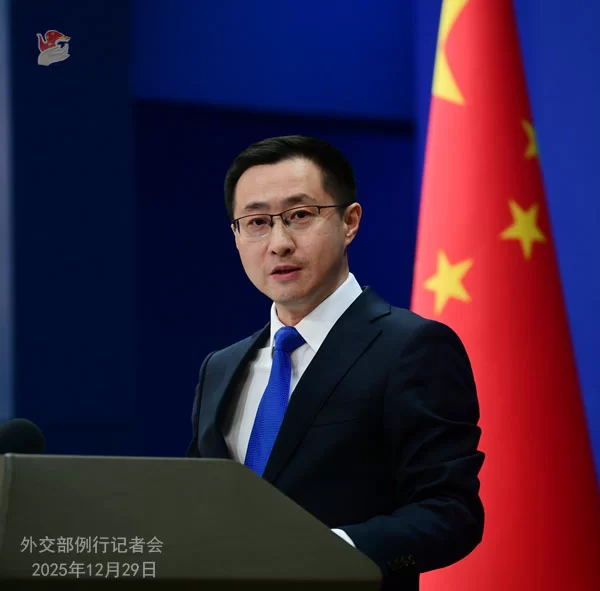
    China has formally expressed profound dissatisfaction regarding the demolition of a commemorative monument by local authorities in Panama’s Arraiján district, West Panama Province. The declaration came from Chinese Foreign Ministry spokesperson Lin Jian during a regular press briefing on Monday.

    The monument, originally erected to honor Chinese contributions to the construction and development of the Panama Canal—one of the world’s most vital maritime passages—was dismantled by local Panamanian officials citing safety concerns and the expiration of the land concession. The structure had stood for several years as a symbol of bilateral cooperation and friendship between China and Panama.

    The removal has sparked indignation among the local Chinese community and drawn criticism from Panama’s president. Spokesperson Lin Jian condemned the forced demolition as “highly undesirable,” emphasizing that the action severely hurt the sentiments of the Chinese diaspora in Panama and runs counter to the generally positive bilateral relations.

    The incident emerges amid ongoing efforts by both nations to strengthen collaboration across trade, infrastructure, and cultural exchanges. It remains unclear whether Panamanian authorities intend to relocate the monument or establish an alternative memorial site. The Chinese Embassy in Panama has reportedly initiated communication with local officials seeking a constructive resolution.

    This situation underscores the sensitivity surrounding symbols of international partnership and highlights the importance of preserving cultural and historical sites, particularly within the context of China’s expanding economic ties with Latin America.

    While no direct evidence links the monument’s removal to recent geopolitical statements—such as those from former U.S. President Donald Trump regarding China’s growing influence in the region—broader concerns over Chinese presence in Latin America may contribute to an atmosphere of political caution. Previous U.S. administrations have openly criticized China’s expanding role in countries like Panama, potentially heightening sensitivities around Chinese-sponsored symbols and investments.

  • Bedrijven investeren gezamenlijk in hoogwaardige training voor chemische veiligheid

    Bedrijven investeren gezamenlijk in hoogwaardige training voor chemische veiligheid

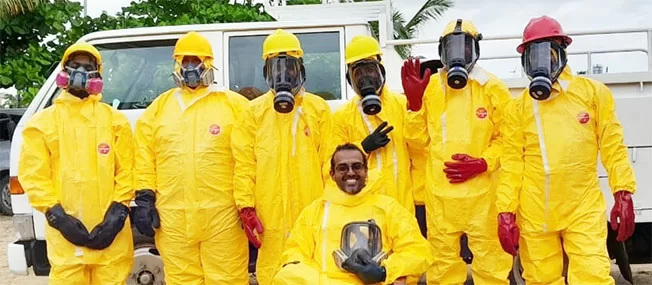
    Suriname has marked a significant milestone in industrial safety with the completion of an intensive chemical security training program, the first of its kind in the nation meeting international standards. The three-week program, concluded Monday at Bux Engineering facilities, equipped specialists with advanced techniques to handle hazardous materials and counter CBRN threats—Chemical, Biological, Radiological, and Nuclear hazards.

    Anwar Alibux, CEO of Bux Engineering, emphasized the program’s critical importance given Suriname’s regular importation of radioactive sources for medical applications and oil/gas sector operations. The training utilized specialized equipment and methodologies previously unavailable in the country, addressing significant gaps in handling explosives, laboratory chemicals, industrial cleaning agents, and mining raw materials.

    The curriculum extensively covered transport and storage protocols for dangerous substances—areas where Suriname has historically underperformed. Participants received instruction on identifying chemicals potentially misused for manufacturing chemical/biological weapons or illegal narcotics. Additional modules included oil spill cleanup procedures and emergency response techniques.

    This initiative became possible after Surinamese specialists successfully completed the international Associate Program of the Organisation for the Prohibition of Chemical Weapons (OPCW) in October. The OPCW, a United Nations-affiliated independent body based in The Hague, oversees the global chemical weapons ban.

    Twelve specialists from four private companies—Muhaarib Security NV, Yamuna NV, Suriname Drones Services NV, and Bux Engineering—participated in this inaugural session. The program will expand in 2026 to include more private enterprises and government agencies, offering modular training ranging from three days to six weeks depending on specialization.

    Alibux highlighted the urgent need for such investment: ‘Dozens of annual chemical incidents in Suriname go unreported, while improper chemical handling causes chronic health issues among laboratory and industrial workers. The critical missing element is a 24/7 HAZMAT response capability for inspections and emergencies. Currently, adequate response to chemical incidents or disasters often takes days.’

  • Trump bevestigt aanval op havenfaciliteit nabij Venezuela

    Trump bevestigt aanval op havenfaciliteit nabij Venezuela

    In a significant escalation of its campaign against narcotics trafficking, the United States has conducted a military strike targeting a coastal facility in Venezuela, as confirmed by President Donald Trump during his recent public appearances. The operation marks a dramatic shift from previous interdiction efforts focused on maritime interception to direct attacks on mainland infrastructure.

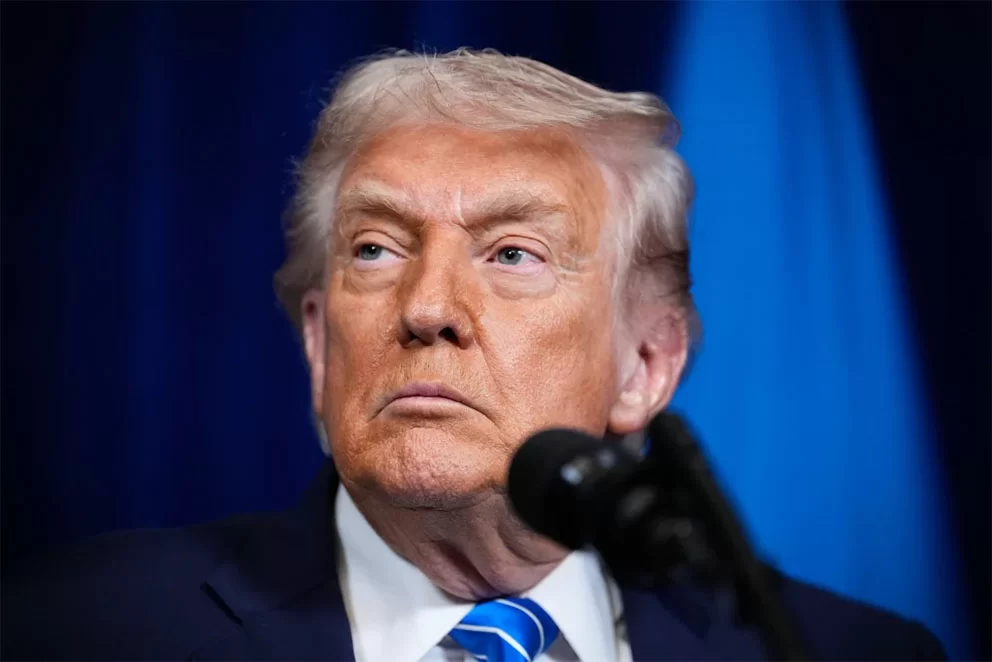
    Speaking spontaneously during a radio interview with host John Catsimatidis on Friday, followed by additional comments during his Monday meeting with Israeli Prime Minister Benjamin Netanyahu in Florida, Trump revealed details of the offensive action. “We’ve struck all the boats and now the area itself,” the president stated, referencing a “major explosion in the port area where they load drugs onto boats.”

    The targeted facility, described by Trump as a major processing or launch point for drug shipments, was reportedly destroyed in an operation conducted two nights prior to his comments. While refusing to confirm whether U.S. military forces or CIA operatives executed the strike, Trump asserted, “I know exactly who it was, but I don’t want to say. But it was along the coast.”

    This development represents a substantial intensification of Washington’s pressure campaign against Venezuelan President Nicolás Maduro’s government. Since September, American forces have conducted at least 29 known attacks on suspected drug smuggling vessels in international waters of the Caribbean and eastern Pacific, resulting in over 105 casualties.

    The Pentagon has deferred all inquiries regarding the operation to the White House, which has not issued an official statement. Venezuelan authorities similarly remained silent on Trump’s claims.

    The Trump administration has increasingly characterized its anti-narcotics efforts as an “armed conflict” with drug cartels, deploying warships, bolstering military presence throughout the region, and seizing multiple oil tankers. White House Chief of Staff Susie Wiles recently indicated that Trump intends to continue “blowing up boats until Maduro gives up,” while Maduro perceives these actions as attempts to forcibly remove him from power.

    Background context reveals that Trump confirmed in early October that he had authorized CIA covert operations in Venezuela, suggesting the potential for further mainland attacks in South America as part of the administration’s comprehensive strategy to stem the flow of illicit substances into the United States.

  • Column: Waar was de hulp toen het nog kon?

    Column: Waar was de hulp toen het nog kon?

    A devastating domestic incident in Richelieu, Suriname, has escalated into a national tragedy claiming ten lives, including the perpetrator, exposing profound institutional failures across multiple sectors. The catastrophe began when a man assumed custody of five young children following their mother’s departure from the family, creating a pressure cooker environment that culminated in mass murder.

    Multiple warning signs preceded the violence, with close contacts aware of the deteriorating situation. Yet despite clear indicators of escalating tension, no effective intervention occurred. The tragedy highlights critical deficiencies in Suriname’s crisis response infrastructure, particularly the absence of 24/7 emergency hotlines and specialized agencies equipped to handle pre-criminal emergencies.

    The sequence of failures continued after the initial violence. When neighbors attempted intervention, they became additional victims. Police responding to the scene reported being forced to use lethal force against the threatening suspect, who sustained injuries before being transported to emergency care. Following medical treatment, authorities deemed him fit for incarceration.

    In a shocking development, the suspect subsequently died by suicide within his police cell using medical bandages—raising serious questions about institutional protocols. How could someone with gunshot wounds, experiencing severe psychological distress, be discharged from hospital care directly into police custody? What observation and safety measures were implemented? Who determined his suitability for detention, and who ultimately bore responsibility for his welfare?

    This case represents not isolated errors but systemic collapse across social services, mental health support, law enforcement, and judicial systems. The tragedy underscores the absence of coordinated crisis management and preventive mechanisms in Surinamese society.

    Suriname now faces urgent questions about creating functional safety networks before situations escalate into violence. The nation must establish clear protocols for overload, domestic violence, and despair cases while ensuring proper safeguards for individuals in state custody, regardless of their crimes.

    As the country declares a National Day of Mourning, the conversation must extend beyond sympathy toward concrete institutional reform. Without implementing substantive changes and learning from these catastrophic failures, society risks repeating similar tragedies through continued systemic neglect.

  • Tijdelijk nazorgfonds voor getroffen families na drama in Commewijne

    Tijdelijk nazorgfonds voor getroffen families na drama in Commewijne

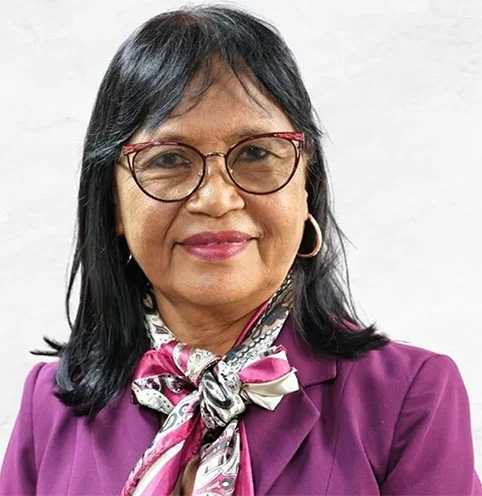
    In the wake of the devastating family tragedy in Richelieu, Commewijne district, Suriname has established a temporary relief fund to provide comprehensive aftercare support for three severely affected families. The initiative was spearheaded by Assembly member Ann Sadi (NDP), who collaborated with two others to create the Community Service Commewijne fund.

    Sadi, a Commewijne resident with personal connections to the impacted families, explained the fund emerged from overwhelming public demand. “I received countless calls from both within Suriname and abroad from people desperate to help but lacking proper channels,” Sadi stated. Accepting personal donations directly was not an option—transparency and accountability were paramount.

    In coordination with banking authorities, the fund established three separate accounts denominated in SRD, USD, and EUR. The structure incorporates stringent financial controls: none of the three authorized signatories can independently withdraw funds. All transactions require unanimous consent among all three parties with direct bank supervision, ensuring complete transparency for donors.

    The authorized signatories include Melanie Drakenstein (family representative), Ann Sadi, and Gloria Bottse of Tra Fas De. Sadi emphasized her involvement is separate from her political role: “This transcends politics—it’s about humanity. These families have been completely shattered and require sustained support.”

    Fund resources are exclusively dedicated to aftercare services including psychosocial counseling, social support, medical and therapeutic care, child guidance, and potential school transition assistance when necessary. The fund will publish weekly financial reports for two months to maintain public accountability.

    While the Surinamese government is covering funeral expenses, the fund specifically addresses the long-term emotional and practical challenges families face. Among the affected are the immediate family of the deceased children’s mother, relatives of two elderly victims, and the family of a temporary Suriname resident. Sadi noted one family member remains in critical condition at a local hospital.

    Within hours of account activation, the fund received initial donations including SRD 1,000 and €50, demonstrating strong community solidarity. “People want to help immediately,” Sadi observed. “This fund complements government commitments.”

    The temporary nature of the fund underscores its focused mission. “This is about care, dignity, and trust,” Sadi concluded. “And trust can only be earned through absolute transparency.”

    Community Service Commewijne fund account details at Godo Bank:
    SRD: 2002595607
    EUR: 2002595615
    USD: 2002595623

  • Firm Engineering kent studiebeurs toe aan uitblinkende student Infrastructuur

    Firm Engineering kent studiebeurs toe aan uitblinkende student Infrastructuur

    In a heartwarming ceremony marking Firm Engineering’s annual scholarship lottery, 20-year-old Janille Kardi became this year’s fortunate recipient, securing full funding for her studies at Suriname’s Anton de Kom University. The emotional moment unfolded as Education, Science, and Culture Minister Dirk Currie drew the winning ticket during the company’s Owru Yari Konmakandra event.

    The scholarship program targets exceptional first-year students enrolled in the comprehensive Infrastructure program, which comprises thirteen distinct subjects. Participants qualify automatically by achieving the highest score in any course, with multiple top grades increasing their chances through additional lottery entries. This year’s selection process featured ten accomplished candidates, all of whom gained access to Firm Engineering’s educational initiatives despite only one securing the grand prize.

    Kardi distinguished herself academically with outstanding performances across four courses: a perfect 9 in Practical Orientation, 8.8 in Academic Skills, 8.6 in Technical Drawing, and 8.3 in Design. Her achievement continues a thirteen-year tradition interrupted only by the 2020 COVID-19 pandemic.

    Company Director Guido Koorndijk emphasized the program’s broader significance, noting that past recipients—dubbed Firm Performers—have excelled professionally. “Most pursue advanced studies while others join our ranks, work with competitors, or serve clients,” Koorndijk observed. “We intentionally invest in young talent because it benefits Suriname’s development. With emerging industries on the horizon, cultivating local expertise through strategic investment becomes imperative rather than optional.”

    The celebration incorporated traditional elements, including the scholarship winner igniting an extended pagara firecracker, symbolizing the bright future awaiting Suriname’s next generation of engineering professionals.

  • Linger president-commissaris EBS en Felicia Zerp CFO

    Linger president-commissaris EBS en Felicia Zerp CFO

    PARAMARIBO – Suriname’s national electricity provider NV Energiebedrijven Suriname (EBS) has implemented a comprehensive leadership overhaul effective December 24th, following an extraordinary Shareholders’ Meeting convened at the utility’s headquarters. The restructuring introduces a newly constituted Board of Commissioners and appoints a fresh Chief Financial Officer.

    Minister David Abiamofo of Natural Resources, acting as authorized representative for the State of Suriname as majority shareholder, formally executed the appointments. The proceedings were supervised by NH Energy Director Valerie Lalji, with EBS General Director Leo Brunswijk and other senior management personnel in attendance.

    The revamped Board of Commissioners now features Dean Linger as President-Commissioner. The board’s composition includes Jonathan Wesenhagen, Jerrel Macintosch, Subhash Goerdat, Leon Brunings, and Madhavi Bholasingh. Notably, former President-Commissioner Kenneth Profijt returns to the board as a regular member. This reorganization sees the departure of Clifton Lienga and Radha Rosiek from the supervisory body.

    Simultaneously, Felicia Zerp assumes the role of Chief Financial Officer, succeeding Leslie Rahan who concludes his tenure on December 31st upon reaching retirement age.

    Minister Abiamofo addressed significant challenges confronting the energy sector during the assembly, emphasizing the critical need for financing new electricity generation capacity and accelerating the transition toward sustainable energy solutions. He further stressed the societal importance of establishing fair and transparent electricity pricing structures.

    The newly inaugurated Board of Commissioners has received immediate directives to conduct a comprehensive quick-scan assessment. This preliminary evaluation aims to provide crucial insights into EBS’s current financial viability and operational performance metrics. Minister Abiamofo concluded proceedings by expressing formal appreciation for the contributions of outgoing commissioners and retiring CFO Leslie Rahan.

  • Regering zet brede zorg- en beschermingsmaatregelen in na drama Commewijne

    Regering zet brede zorg- en beschermingsmaatregelen in na drama Commewijne

    In response to the devastating violence that unfolded on December 28th in Richelieu, Commewijne district, the Surinamese government has committed to implementing comprehensive reforms to strengthen child protection and psychosocial care systems. The tragic incident resulted in nine fatalities, including four children of the perpetrator, Dennis Aroma, who subsequently took his own life in police custody. Two additional victims remain hospitalized with injuries.

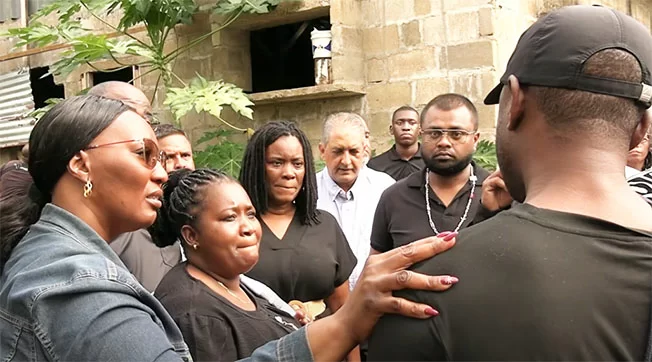
    Government ministers Harish Monorath of Justice and Police and Diana Pokie of Social Affairs and Housing visited the affected community on Sunday, conveying official condolences to bereaved families, local residents, and the broader society. President Jennifer Simons has declared state sponsorship for all funeral expenses and initiated psychological support services for those impacted.

    Minister Pokie acknowledged the profound trauma inflicted upon the community and emphasized the government’s dual responsibility to both empathize with victims and implement systemic improvements. She highlighted critical needs for enhanced social protection mechanisms, early problem detection protocols, and efficient referral systems between Social Affairs, Justice, Police, and Health departments.

    The Ministry of Social Affairs and Housing has deployed social services to provide comprehensive support to affected families, including basic care, insurance assistance, aftercare, and community guidance. Additional support is being organized for schools and students emotionally impacted by the tragedy, according to Suriname’s Communication Service.

    Minister Monorath expressed profound grief and helplessness while detailing coordinated victim support services through the Suriname Police Corps and trauma care collaborations with the Health Ministry. Beyond funeral arrangements, the government will designate a central location for national condolences and has called for unity and solidarity throughout this difficult period.

  • Eerste vuurwerkslachtoffer van het jaar geregistreerd

    Eerste vuurwerkslachtoffer van het jaar geregistreerd

    Suriname has documented its inaugural firework-related incident of the year, prompting urgent safety warnings from emergency services. A 24-year-old male presented at the Academic Hospital Paramaribo’s Emergency Department on Sunday evening at approximately 10:00 PM, sustaining significant incense-related trauma to his right eye. The patient has been scheduled for follow-up consultation with an ophthalmologist today.

    The emergency medical staff and Suriname Fire Brigade Corps have intensified their campaign for stringent safety protocols during firework celebrations. Authorities emphasize that adult supervision of minors remains absolutely critical during these activities. While acknowledging the entertainment value of fireworks, the fire brigade underscores that enjoyment must be balanced with serious responsibility.

    Official guidelines mandate comprehensive eye protection through certified safety goggles and strictly prohibit hand-launched ignition of fireworks. The utilization of extended ignition sticks or incense cones is compulsory to minimize severe injury risks. The fire brigade has specifically advised against purchasing or activating so-called ‘bang fireworks’ known for their explosive properties.

    Dangerous stunts involving pyrotechnics must be avoided at all times, according to the safety directive. Tampering with fireworks or attempting to relight dud devices that failed to ignite constitutes particularly hazardous behavior. Additionally, targeting animals with fireworks constitutes prohibited conduct due to risks of grave physical harm and psychological distress.

    Special precautions apply to rocket-type fireworks, with recommendations to secure all windows and doors when neighborhood displays occur. Age-specific regulations establish that children under 7 years must have zero contact with fireworks, while those aged 7-16 may only participate under direct adult supervision.

    Finally, authorities urge public vigilance regarding surroundings, particularly near vulnerable establishments including places of worship, healthcare facilities, and residential areas.