标签: Suriname

苏里南

  • Wereldleiders bespreken kansen en risico’s van AI op grote top in India

    Wereldleiders bespreken kansen en risico’s van AI op grote top in India

    The fourth Global Artificial Intelligence Summit in New Delhi witnessed significant diplomatic engagement as world leaders gathered to address the rapidly evolving AI landscape. United Nations Secretary-General António Guterres and French President Emmanuel Macron delivered keynote addresses emphasizing the need for global cooperation and equitable access to artificial intelligence technologies.

    Guterres issued a stark warning against allowing AI’s future to be determined by “the whims of a handful of billionaires,” advocating instead for a $3 billion global fund to ensure open access to AI systems. He emphasized that technological development must not exacerbate existing inequalities between developed and developing nations.

    French President Macron articulated Europe’s balanced approach, stating: “Europe is not a place of blind trust in regulation, but rather an ecosystem that fosters innovation and investment while maintaining safety standards.” He reaffirmed France’s commitment to collaborative rule-making with international partners including India.

    The summit, notable as the first global AI conference hosted by a developing nation, provided India with a platform to showcase its emerging AI capabilities. Prime Minister Narendra Modi highlighted recent launches of indigenous AI models, asserting that “AI solutions successful in India can be deployed globally.” He emphasized India’s belief in open systems and shared benefits, noting that millions of young Indian minds could contribute to making AI safer and more effective.

    A notable absence was Microsoft founder Bill Gates, who withdrew his participation shortly before his scheduled speech amid ongoing questions about his associations with the late financier Jeffrey Epstein. A representative from the Gates Foundation attended in his place.

    Despite India’s rise to third place in Stanford University’s global AI competitiveness ranking, experts acknowledge the country still faces significant challenges in competing with AI superpowers the United States and China. The five-day conference, concluding Friday, continues to serve as a critical forum for discussing AI’s potential benefits while addressing its associated risks and ethical considerations.

  • Suriname bereidt zich voor op ratificatie VN-verdrag voor bescherming volle zee

    Suriname bereidt zich voor op ratificatie VN-verdrag voor bescherming volle zee

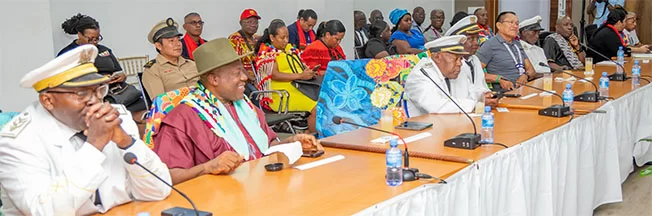
    Suriname has commenced a comprehensive three-day national workshop to prepare for the ratification and implementation of the United Nations Biodiversity Beyond National Jurisdiction (BBNJ) Agreement. The initiative, launched Wednesday, represents a significant step toward global marine conservation efforts.

    The workshop, organized by the Ministry of Foreign Affairs, International Business, and International Cooperation in collaboration with the High Seas Alliance, brings together policymakers, scientists, civil society organizations, and private sector representatives. This diverse participation aims to equip Suriname with both the technical expertise and institutional framework necessary for successful adoption of the binding international instrument.

    Adopted under the UN Convention on the Law of the Sea (UNCLOS) in June 2023, the BBNJ Agreement establishes legal frameworks for conserving and sustainably using marine biodiversity in areas beyond national jurisdiction—commonly known as the high seas.

    A recent regional analysis titled ‘High Seas, High Stakes: A Cost-Benefit Analysis of the BBNJ Agreement in the Caribbean (2025)’ indicates that Caribbean nations similar to Suriname stand to gain substantial long-term economic benefits. These advantages include improved fisheries management, enhanced monitoring of offshore activities, and reduced losses from illegal, unreported, and unregulated fishing practices.

    Furthermore, the global biotechnology sector utilizing marine genetic resources is currently valued at approximately $400 to $650 million annually. By strengthening national research and innovation capabilities, Suriname could potentially tap into this growing market segment.

    The agreement holds particular strategic importance for Suriname, which possesses an Exclusive Economic Zone exceeding 130,000 km² and a coastline forming part of the ecologically significant Guianas Shield ecosystem. The nation faces emerging environmental challenges due to expanding offshore operations, increasing maritime traffic, and growing energy sector activities.

    Through the BBNJ framework, Suriname will gain opportunities to intensify international cooperation, access specialized funding mechanisms, facilitate technology transfer, and participate in decision-making processes concerning marine protected areas on the high seas.

    Having signed the agreement in June 2025, Suriname has demonstrated its commitment to actively engage in the new global governance structures that will become operational once the treaty enters into force internationally.

  • Asabina erkent fouten rond bezoldigingswetten: Corrigerend optreden nodig

    Asabina erkent fouten rond bezoldigingswetten: Corrigerend optreden nodig

    In a striking admission of institutional failure, BEP parliamentary leader Ronny Asabina has publicly acknowledged that Suriname’s National Assembly severely mishandled controversial legislation governing financial provisions for the three branches of government. The assemblyman described the situation as “a blow to public trust” and called for immediate consultations to rectify the widely criticized arrangements.

    Asabina conceded that parliament has become the target of intense societal criticism and distrust, noting that the experience feels “sometimes hurtful and intimidating” for elected representatives. The laws originally intended to harmonize financial provisions across the legislative, executive, and judicial branches have instead created a public perception of self-enrichment and excessive benefits rather than achieving synchronization and balance.

    While rejecting suggestions of bad faith, Asabina stated unequivocally: “We have failed miserably. No branch excluded. Society rightly feels misled.” He expressed particular regret about the compensation structure for the judiciary, which has provoked widespread public outrage. The politician acknowledged that his own BEP faction couldn’t have anticipated how disproportionately and inappropriately the decisions would unfold.

    Asabina revealed critical flaws in the legislative process, noting that parliament didn’t serve as the first stop in the lawmaking process and that certain elements escaped notice during legal translation and formulation of articles. He questioned whether designers and direct stakeholders fully comprehended the scope of the controversial provisions.

    The assemblyman highlighted unmet promises regarding financial transparency, revealing that commitments to share the financial consequences with parliament remain unfulfilled. He also criticized the lack of substantive depth during parliamentary deliberations, which were often overshadowed by mutual accusations and populist rhetoric.

    Asabina called for emergency consultations among the three branches of government, followed by thorough review and repair of financial provisions, including budgeting for the financial implications. He emphasized this isn’t pressure tactics but a call for shared responsibility within the separation of powers framework.

    Additionally, he proposed broader reforms including establishing an independent Integrity Chamber to promote governance integrity and considering international examples that implement maximum income limits for top officials to reduce legal inequality. Asabina stressed that transparency, accountability, and restored trust must form the foundation of the recovery process.

  • Voormalig Zuid-Koreaans president Yoon veroordeeld tot levenslange gevangenisstraf

    Voormalig Zuid-Koreaans president Yoon veroordeeld tot levenslange gevangenisstraf

    In a landmark ruling that has sent shockwaves through South Korea’s political landscape, the Seoul Central District Court has sentenced former President Yoon Suk Yeol to life imprisonment for orchestrating a rebellion during his controversial attempt to impose martial law in December 2024. The court found Yoon guilty of conspiring with then-Defense Minister Kim Yong-hyun to undermine constitutional order by deploying military forces to paralyze parliamentary functions.

    Presiding Judge Jee Kui-youn, speaking for the three-judge panel, declared that “dispatching armed troops to the parliament and using equipment to make arrests constitute acts of rebellion.” The court determined that Yoon’s actions on December 3, 2024, resulted in significant societal damage through his emergency declaration, which lasted merely six hours but triggered massive public demonstrations and parliamentary rejection.

    Alongside Yoon, seven other defendants received sentences, including Kim who was handed a 30-year prison term. The former president maintained composure during the verdict reading while his legal team immediately announced plans to appeal, with lead attorney Yoon Kab-keun denouncing the judgment as “completely unjust” and lacking evidentiary basis.

    The case represents one of the most consequential trials in South Korea’s modern history, exposing deep political divisions that have persisted since Yoon’s ouster. Public reaction remains sharply divided, with hundreds of supporters gathering outside the courthouse demanding his release, while other citizens expressed support for even harsher punishment.

    Current President Lee Jae Myung, who assumed office through interim elections following Yoon’s impeachment, praised the South Korean public for peacefully resisting the emergency measures. He suggested the populace deserved Nobel Peace Prize consideration for their democratic resilience.

    This conviction adds to Yoon’s existing legal challenges, including his ongoing appeal of a separate five-year prison sentence. Legal experts anticipate the full judicial process may extend for years, though Thursday’s verdict delivers a clear condemnation of actions that severely tested democratic institutions in one of Asia’s most important economies and U.S. allies.

  • Voormalig Britse prins Andrew gearresteerd op verdenking van ambtsmisdrijf

    Voormalig Britse prins Andrew gearresteerd op verdenking van ambtsmisdrijf

    In a dramatic development for the British royal family, Andrew Mountbatten Windsor, the younger brother of King Charles III and former senior working royal, was taken into police custody on Thursday following allegations of official misconduct. The Thames Valley Police confirmed the arrest of a man in his sixties from Norfolk as part of an ongoing investigation, with simultaneous search operations conducted at properties in both Berkshire and Norfolk.

    The arrest marks another significant fall from grace for the Duke of York, who was stripped of his military affiliations and royal patronages in 2022 following his association with convicted sex offender Jeffrey Epstein. The investigation represents one of the most serious legal challenges ever faced by a immediate member of the royal family in recent decades.

    Police spokesperson Oliver Wright emphasized the meticulous nature of the investigation, stating: “This inquiry is being conducted with the utmost professionalism and objectivity. We recognize the considerable public interest in this matter and will provide updates at appropriate stages while maintaining the integrity of the judicial process.”

    The arrest comes amid mounting pressure from British Prime Minister Keir Starmer, who has publicly urged the former prince to fully cooperate with both UK authorities and ongoing investigations by American law enforcement agencies regarding the Epstein connections.

    Buckingham Palace has maintained official silence regarding the arrest, with no immediate statement from King Charles III himself. However, palace representatives had previously emphasized the royal family’s commitment to respecting the legal process and rule of law, suggesting the monarch would not interfere in judicial matters.

    Legal experts suggest the charges could relate to potential abuse of royal privilege or position during his tenure as a working member of the royal family. The investigation remains ongoing, with further developments expected in coming days as authorities continue their examination of evidence seized during the property searches.

  • Suriname eist klimaatrechtvaardigheid: Wij koelen de aarde, maar warmen op door onrecht

    Suriname eist klimaatrechtvaardigheid: Wij koelen de aarde, maar warmen op door onrecht

    Suriname has emerged as a vocal advocate for climate justice and fair compensation mechanisms during the recent Parliamentary Assembly of the Organization of African, Caribbean, and Pacific States (OACPS) in Antigua. Leading the delegation, Parliamentarian Ebu Jones presented a compelling case for nations that contribute significantly to global carbon storage while facing disproportionate climate impacts.

    Jones emphasized Suriname’s unique environmental status as one of the world’s few carbon-negative countries, with over 93% of its territory covered by tropical rainforests that serve as among the planet’s most efficient natural carbon sinks. “We are not part of the climate problem but rather the solution,” Jones declared, highlighting the paradox of a nation that “cools the Earth while warming under the pressure of climate injustice.”

    The parliamentarian drew attention to Suriname’s vulnerability as a low-lying coastal nation where most of the population resides, facing increasing risks from sea-level rise and extreme weather events. He identified what he termed “structural climate injustice” – where Suriname provides essential global ecological services without receiving adequate compensation.

    Jones called for the establishment of robust and transparent carbon credit markets, arguing that standing forests should be recognized not as “empty lands” but as measurable and valuable global assets. “If the world benefits from our forests, the world must invest in their preservation,” he asserted, demanding that climate finance evolve from symbolic commitments to structural redistribution.

    Beyond financial mechanisms, Suriname requested concrete implementation of technological cooperation in renewable energy, water management, and disaster resilience. Jones emphasized that “a just energy transition is impossible without technological justice.”

    Domestically, Suriname is undertaking significant institutional reforms to embed sustainability principles. These include modernizing anti-deforestation legislation, enhancing nature conservation efforts, and developing a transparent national carbon credit framework. Notably, the country has merged energy development and environmental management under a single ministry portfolio – the Ministry of Oil, Gas, and Environment – ensuring that resource exploitation and ecological responsibility are guided by a unified national compass.

    The Surinamese delegation, which included Assembly members Ronny Asabina (BEP) and Dewanchandrebhose Sharman (VHP), demonstrated the importance of active parliamentary diplomacy and strengthening the Caribbean voice within the broader OACPS-EU partnership. Jones called for regional unity, stating that “coastal erosion respects no borders, hurricanes recognize no sovereignty. Climate risk is shared, therefore our strategy must be shared.”

    In his concluding remarks, Jones challenged the OACPS assembly to move beyond declarations and “dare to demand a climate finance architecture rooted in justice. Dare to reward protection rather than destruction. Carbon-negative countries are not peripheral players – we are pillars of planetary stability.”

  • VS waarschuwt Iran: ‘Doe verstandig, sluit akkoord’

    VS waarschuwt Iran: ‘Doe verstandig, sluit akkoord’

    Amid escalating military deployments and fragile diplomatic negotiations, the United States has intensified pressure on Iran to reach a comprehensive agreement while simultaneously bolstering its military presence in the Middle East. White House spokeswoman Karoline Leavitt declared it would be “highly prudent” for Iran to accept a deal with the Trump administration, following the second round of indirect nuclear talks held in Geneva.

    The Pentagon has significantly enhanced its regional capabilities, deploying two aircraft carriers, multiple destroyers, and advanced fighter aircraft including F-22 Raptors and F-15s. This military reinforcement has raised concerns about potential conflict escalation, particularly as Iranian Revolutionary Guards conducted demonstration exercises in the strategic Strait of Hormuz.

    Geneva negotiations proceeded with considerable difficulties. While Iranian officials referenced progress on “guiding principles,” US Vice President JD Vance maintained that Tehran had not yet met all of Washington’s “red lines.” Chief negotiator Vladimir Medinsky characterized the discussions as “challenging yet businesslike.”

    President Donald Trump has repeatedly threatened military action against Iran, referencing Tehran’s harsh crackdown on protests last month. In a notable expansion of rhetoric, Trump also cautioned British Prime Minister Keir Starmer regarding any agreement on the Chagos Islands, emphasizing the strategic importance of the US Air Force base at Diego Garcia for potential operations against Iran.

    Iranian President Masoud Pezeshkian asserted Wednesday that his nation “seeks no war” but would not submit to what he termed “humiliating” American demands. Supreme Leader Ayatollah Ali Khamenei previously warned that new US attacks would trigger broader regional escalation.

    The core dispute remains Iran’s nuclear program, which Tehran maintains is strictly civilian and subject to concessions in exchange for sanctions relief. The US continues to demand restrictions on Iran’s ballistic missile program—a condition Iran finds unacceptable.

    Negotiations were led by US envoy Steve Witkoff and Jared Kushner, Trump’s son-in-law, with continued United Nations involvement. Iranian diplomat Abbas Araghchi met with Rafael Grossi, head of the UN nuclear watchdog, to discuss frameworks for future dialogue.

    Since Trump’s 2018 withdrawal from the JCPOA nuclear agreement and implementation of maximum pressure sanctions, attempts to forge new agreements have repeatedly stalled. The current military buildup and diplomatic stalemate have created heightened uncertainty about peaceful resolution prospects.

  • Pinautomaat gemanipuleerd, verborgen camera en kaartlezer onderschepten pincodes

    Pinautomaat gemanipuleerd, verborgen camera en kaartlezer onderschepten pincodes

    A sophisticated ATM fraud operation has been uncovered in Suriname after criminals digitally manipulated banking equipment to intercept PIN codes and clone payment cards. The scheme was detected when an alert employee from Banking Network Suriname (B-NETS) noticed irregularities at an automated teller machine.

    According to police spokesperson Michel Elskamp, who confirmed the incident to Starnieuws, perpetrators had installed a concealed camera at the top of the ATM’s display unit. The device was cleverly hidden behind a panel and equipped with memory storage to record customers’ entered PIN codes.

    The fraud extended beyond visual surveillance. Investigators discovered that criminals had additionally placed a ‘card reader’ device inside the machine’s card slot. This apparatus captured and cloned the data from inserted payment cards, enabling the creation of counterfeit cards. When combined with the stolen PIN codes, this allowed unauthorized access to unsuspecting customers’ accounts and subsequent cash withdrawals.

    The security breach came to light when a B-NETS technician, responsible for managing payment and cash withdrawal systems, identified suspicious alterations to the ATM. During inspection, the employee removed the upper display panel and uncovered the hidden camera complete with its data storage component.

    Law enforcement authorities from the Livorno resort police station have launched a formal investigation following the employee’s immediate reporting of the crime. Police are working to identify those responsible for the ATM manipulation and determine the number of account holders potentially affected by the financial fraud.

  • Column: Evaluatie voetbalopleidingen

    Column: Evaluatie voetbalopleidingen

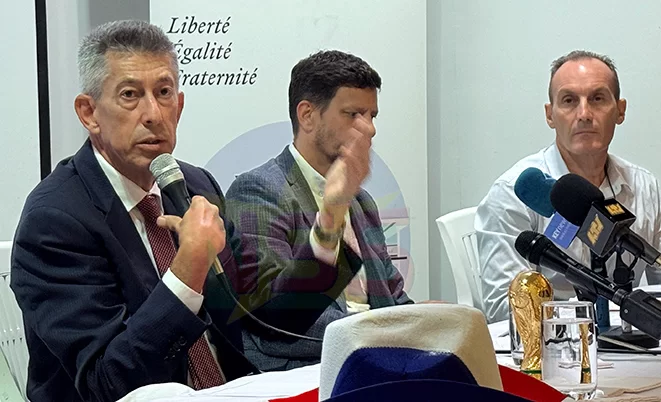
    The Surinamese Football Association (SVB) has pursued World Cup qualification for decades with unwavering determination, yet the elusive goal remains just beyond reach. Despite numerous strategic approaches and promising campaigns, the national team continues to face heartbreaking near-misses in international competitions.

    During the most recent qualification cycle, Suriname’s ‘Natio’ squad appeared poised to secure direct qualification until a final-match collapse forced them into a precarious playoff position scheduled for March. This pattern of disappointment has become familiar to Surinamese football enthusiasts, who have watched talented generations fail to reach the sport’s highest international stage.

    The current debate centers on team composition strategy. SVB has recently implemented the ‘Natio New Style’ approach, fielding a Surinamese-origin head coach leading a squad primarily composed of professional players with Surinamese heritage playing abroad. This strategy has gradually reduced local player representation to just one reserve goalkeeper, raising concerns about domestic development.

    While this formula has produced Suriname’s strongest team to date, a vocal contingent of coaches and sports journalists advocates for greater inclusion of local talent. However, several local players who have trained alongside international professionals have honestly acknowledged their technical shortcomings, prioritizing national team success over personal participation.

    Football analysts suggest the solution lies not in sentimental selection but in structural reform. The focus must shift to evaluating and enhancing local training programs, revising curricula, and upgrading coach qualifications. Professional clubs may need to implement higher coaching standards, with mandatory continuing education for existing staff and replacement of those unwilling to improve.

    The most promising path forward appears to be strengthening collaboration between SVB and Surinamese-origin football experts working abroad, with emphasis on knowledge transfer to domestic training programs. Comprehensive improvements across all development facets offer the best hope for elevating local football standards and finally achieving that long-awaited World Cup appearance.

  • Guyana Energy Conference: Interesse in nauwere samenwerking met Suriname groeit

    Guyana Energy Conference: Interesse in nauwere samenwerking met Suriname groeit

    Georgetown witnessed significant developments in regional energy cooperation during the fifth Guyana Energy Conference and Supply Chain Expo held at the Marriott Hotel. President Irfan Ali of Guyana articulated a strategic vision for leveraging energy resources to drive national development, while simultaneously revealing potential collaborative ventures with neighboring Suriname in gas development.

    Staatsolie CEO Annand Jagersar, attending the conference, confirmed in an exclusive interview that formal dialogue regarding bilateral partnerships is imminent. “Exxon has approached us to initiate discussions, and there’s concurrent interest from the Guyanese government,” Jagersar stated. He outlined multiple potential cooperation frameworks, including Suriname’s possible procurement of Guyanese gas, joint infrastructure development such as pipelines and transportation networks, and the consolidation of gas discoveries from both nations to achieve necessary project scale.

    “Gas projects fundamentally require scale economics. By combining discoveries from both countries, we can establish stronger economic viability,” Jagersar emphasized, highlighting the strategic rationale behind the proposed collaboration.

    The CEO revealed that scheduled discussions with Exxon are already set for this week, with parallel negotiations involving Guyanese government officials expected shortly. Jagersar identified the Berbice region as a geographically logical hub for cross-border cooperation, suggesting potential economic development activities on both sides of the river.

    President Ali reinforced the critical connection between infrastructure and sustainable development during his address. “Large-scale development must begin with infrastructure foundations,” he asserted, noting that economic growth only becomes sustainable when supported by robust transportation networks, port facilities, and energy infrastructure. He specifically referenced Guyana’s gas-to-energy project, scheduled to become operational later this year.

    Since his re-election in September 2025, President Ali has prioritized optimal utilization of Guyana’s gas reserves. Beyond the current project, authorities are evaluating a second gas-to-energy initiative in Berbice. The president emphasized that energy sector development should not only strengthen Guyana’s economy but also generate regional opportunities.

    The conference served as a platform for industry experts, regional partners, and stakeholders to discuss investment opportunities, local participation, and supply chain expansion. With increasing oil and gas activities in both Guyana and Suriname, strategic cooperation focusing on scale optimization, infrastructure development, and joint market approaches is receiving heightened attention.