标签: Suriname

苏里南

  • VS vangt Maduro: herinneringen aan Noriega en Saddam

    VS vangt Maduro: herinneringen aan Noriega en Saddam

    In a stunning geopolitical development, President Donald Trump has announced the capture of Venezuelan leader Nicolás Maduro and his wife Cilia Flores amid what he described as “large-scale” offensive operations against Venezuela. The unprecedented move has sent shockwaves through international diplomatic circles and drawn immediate comparisons to previous US-led captures of foreign leaders.

    The Venezuelan government, through Vice President Delcy Rodríguez, has expressed grave concerns about Maduro’s whereabouts. In an audio message broadcast on state television, Rodríguez demanded concrete evidence that both Maduro and Flores remain alive, indicating complete uncertainty within Caracas about their president’s status.

    This dramatic escalation follows sustained military operations by US forces in the Caribbean Sea and Eastern Pacific targeting vessels suspected of drug trafficking. Washington has long accused Maduro’s administration of involvement in narcotics smuggling, providing the stated justification for these recent actions.

    The capture evokes historical precedents including the 1989 US invasion of Panama that ousted Manuel Noriega. Like Maduro, Noriega faced US drug trafficking charges before being captured, tried in American courts, and imprisoned. The Panama operation represented the largest US combat mission since Vietnam at the time, justified variously as protecting American citizens, combating dictatorship, and stopping drug trafficking.

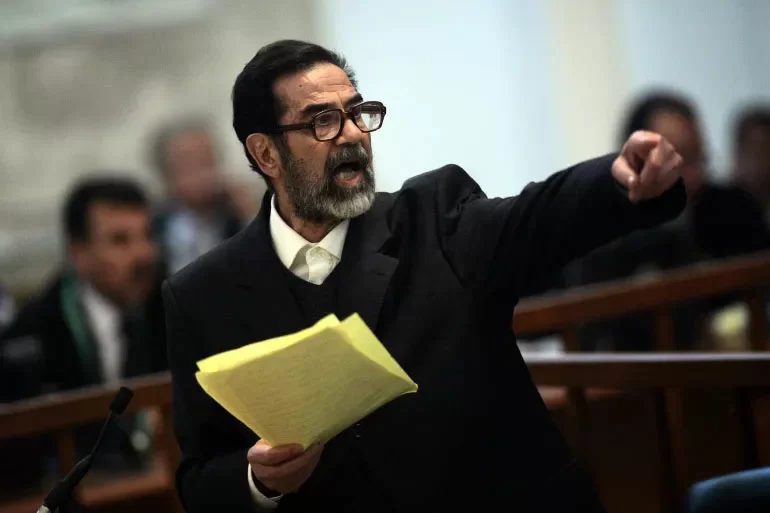
    Similarly, the 2003 capture of Iraqi leader Saddam Hussein by US forces following the invasion based on disputed weapons of mass destruction intelligence presents another parallel. Both Noriega and Hussein had previously been US allies before falling out of favor with Washington.

    Adding contemporary complexity, the recent case of former Honduran President Juan Orlando Hernández demonstrates the unpredictable nature of US foreign policy. Despite being convicted on drug and corruption charges and sentenced to 45 years in US prison, Hernández received a presidential pardon from Trump in December 2025, only to subsequently face an international arrest warrant from Honduran authorities.

    The capture of a sitting head of state represents an extraordinary escalation in US-Venezuela relations and raises profound questions about international law, sovereignty, and the future of regime change operations in the 21st century.
  • Wij vermoeden dat het geld wegvloeit, maar hoe gebeurt dat eigenlijk?

    Wij vermoeden dat het geld wegvloeit, maar hoe gebeurt dat eigenlijk?

    Suriname stands at a pivotal economic juncture as major hydrocarbon developments threaten to expose significant structural vulnerabilities in the nation’s tax framework. With TotalEnergies advancing the GranMorgu oil project in Block 58 and PETRONAS developing gas resources in Block 52, the country must urgently address fundamental gaps in its international taxation and transfer pricing regulations to prevent substantial revenue leakage.

    These multibillion-dollar projects represent transformative economic opportunities yet simultaneously create systemic fiscal risks. Without contemporary legislation and explicit transfer pricing rules, a considerable portion of generated value could bypass Suriname’s economy entirely, moving beyond reach of both government revenues and citizens.

    The core challenge lies in Suriname’s current inability to verify whether taxed profits genuinely reflect the economic reality of local operations. Multinational corporations like TotalEnergies and PETRONAS operate within extensive, highly integrated global networks—not through isolated Surinamese entities. These complex structures encompass group companies providing financing, technical services, intellectual property management, contract administration, and commodity marketing.

    Several mechanisms directly impact taxable profits in Suriname:

    Intragroup services represent a primary concern, with technical, commercial, and support functions often centralized within corporate groups. Surinamese entities routinely utilize engineering, drilling support, project management, procurement, financial, logistical, and managerial services. Determining whether these services provide independent economic benefit requires transparent documentation and cost allocation practices currently lacking.

    Licensing and royalty arrangements present additional challenges. Both TotalEnergies and PETRONAS maintain extensive portfolios of specialized intellectual property including geological models, seismic software, drilling technology, project management systems, and safety protocols. When this intellectual property is held outside Suriname, local entities may be required to pay license fees—even at relatively low percentages, these payments can substantially reduce taxable profits.

    Intragroup financing arrangements significantly influence fiscal outcomes. Projects requiring billions in investments employ complex capital structures featuring high debt financing, interest charges, and guarantee fees that can suppress Surinamese profits for years, particularly during early development phases if not properly aligned with commercial benchmarks.

    Procurement structures further affect profit allocation, with major contracts often routed through group-related hubs outside Suriname that embed margins into cost allocations. Additionally, permanent establishment considerations require attention during intensive preliminary phases when significant activities already occur within the country.

    These mechanisms collectively produce higher reported costs within Suriname, resulting in lower profits and diminished tax bases. This reality demands specialized expertise and analytical frameworks that look beyond reported figures—capabilities Suriname currently lacks.

    The existing situation extends beyond hydrocarbon development. Multinational operations in capital-intensive sectors like gold mining (including Zijin Rosebel Gold Mines and Newmont operations) already demonstrate similar tax base erosion risks. The expanding oil and gas sector will amplify these effects by attracting broader value chains.

    Addressing these challenges requires urgent policy action. Suriname must establish comprehensive transfer pricing regulations, implement targeted documentation requirements, and critically reassess existing tax treaties. Crucially, the nation should avoid mechanically adopting OECD frameworks designed for developed economies, instead crafting fiscal policies aligned with its unique economic reality and development objectives.

    This modernization effort concerns not only the tax authority but all stakeholders—government regulators and particularly Staatsolie must incorporate these fiscal considerations into contract formation and project structures immediately to secure Suriname’s economic interests for decades to come.

  • Guyana activeert veiligheidsplan na VS aanval op Venezuela

    Guyana activeert veiligheidsplan na VS aanval op Venezuela

    Guyana has escalated its national security preparedness in response to heightened military tensions between the United States and Venezuela, President Irfaan Ali announced on Saturday. The activation follows intensive American airstrikes targeting multiple Venezuelan military bases, raising concerns about regional spillover effects.

    President Ali confirmed the implementation of comprehensive security measures to safeguard Guyanese citizens, though specific operational details remain classified. This decisive action aligns with earlier presidential warnings regarding potential regional consequences from escalated Venezuela-US hostilities.

    Defense Chief Brigadier General Omar Khan maintains continuous communication with regional security partners, with the nation’s full security architecture remaining on heightened alert since early morning. The government has committed to providing public updates as new intelligence becomes available.

    Regional diplomatic efforts have intensified through the Caribbean Community (Caricom), whose Conference of Heads of Government convened an emergency session on January 3rd following reports of military operations in Venezuela. Caricom officials expressed serious concern about potential impacts on neighboring states and pledged ongoing monitoring of the volatile situation.

    Internal regional divisions have emerged among Caribbean leaders regarding international approaches to the conflict, prompting urgent consultations within Caricom’s governance framework.

    Regarding Guyana’s substantial offshore oil production—approximately one million barrels daily—President Ali confirmed coordination with ExxonMobil Guyana President Alistair Routledge. While emphasizing close collaboration with energy operators, the administration withheld specifics about enhanced security protocols for critical offshore infrastructure.

  • Internationale verontwaardiging over Amerikaanse aanval in Venezuela

    Internationale verontwaardiging over Amerikaanse aanval in Venezuela

    In a dramatic escalation of tensions, the United States launched a large-scale military operation in Venezuela during the early hours of Saturday morning. According to former President Donald Trump’s announcement on his Truth Social platform, Venezuelan President Nicolás Maduro and his wife have been captured and expelled from the country. Trump stated the operation was conducted in coordination with American law enforcement agencies.

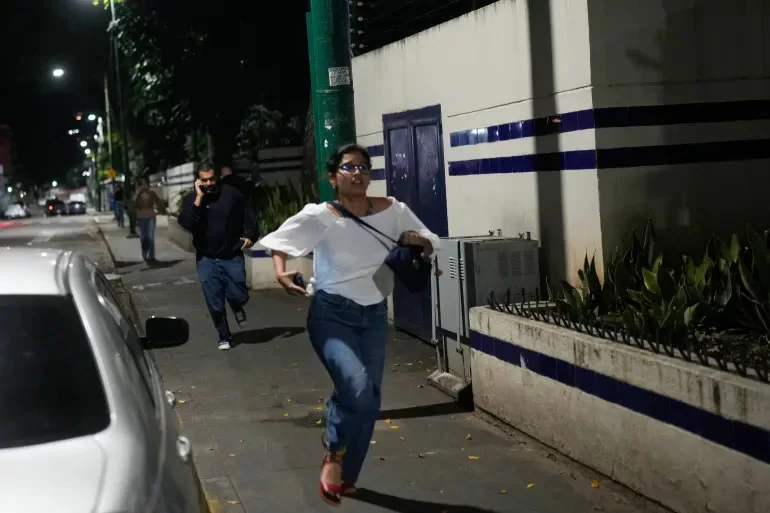
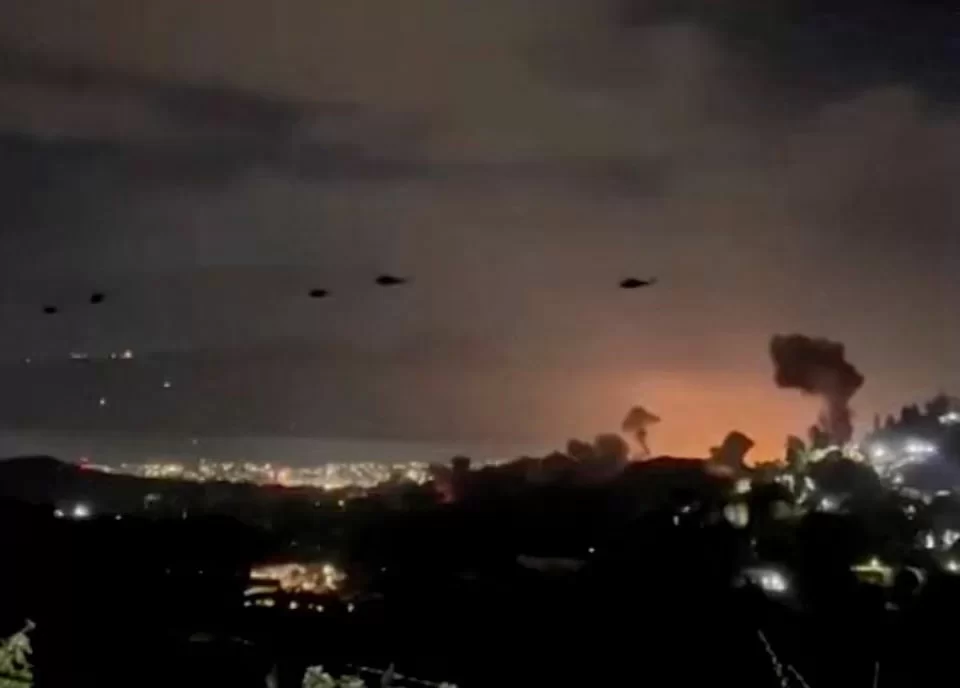
    The assault triggered multiple explosions and low-flying aircraft over Caracas, causing panic among residents who reported hearing blast sounds and witnessing aerial movements. Maduro’s government condemned the action as “extremely serious military aggression” and urgently called upon the international community to denounce what they characterize as an unlawful intervention.

    Current power dynamics within Venezuela remain uncertain, with no independent verification regarding Maduro’s whereabouts or status. Venezuelan Vice President Delcy Rodríguez has publicly demanded “proof of life” regarding President Maduro’s condition.

    International reactions have been swift and polarized. Colombian President Gustavo Petro expressed deep concern, emphasizing the necessity for peace and respect for international law. Cuban President Miguel Díaz-Canel strongly condemned the operation, labeling it “criminal aggression” and “state terrorism” targeting both Venezuela and Latin America at large. Iranian Foreign Ministry officials issued a formal statement condemning the attack as a blatant violation of Venezuela’s national sovereignty and territorial integrity.

    This military action follows months of increasing pressure from Washington on Maduro’s regime, which has struggled with profound economic crisis, political instability, and comprehensive international sanctions. The U.S. has long characterized Maduro as an oppressive dictator and supported opposition forces demanding his removal.

    The situation continues to develop amid calls from Maduro’s administration for public demonstrations, potentially escalating civil unrest. The international community monitors closely, with many nations urging restraint and peaceful dialogue to prevent further regional destabilization.

  • VS voert grootschalige aanval uit op Venezuela

    VS voert grootschalige aanval uit op Venezuela

    In a stunning pre-dawn operation on Saturday, the United States executed what former President Donald Trump described as a “large-scale attack” in Venezuela, reportedly resulting in the capture and extraction of Venezuelan President Nicolás Maduro and his wife. Trump announced the unprecedented military action through his Truth Social platform mere hours after explosions rocked the Venezuelan capital.

    Residents of Caracas reported multiple detonations echoing through city streets as low-flying aircraft circled overhead. The Venezuelan regime immediately condemned the operation as an “imperialist assault” targeting both civilian and military installations, calling for mass public demonstrations against foreign intervention.

    The current power structure in Venezuela remains unclear, with uncertainty surrounding Maduro’s exact whereabouts. Venezuelan Vice President Delcy Rodríguez utilized state media channels to demand “proof of life” for the president, highlighting the ambiguous status of the nation’s leadership.

    Trump indicated that additional operational details would be revealed during a Saturday morning press conference, noting the mission was conducted in coordination with U.S. law enforcement agencies. This development represents a dramatic escalation in the long-standing tensions between Washington and Caracas.

    The United States has maintained consistent pressure on Maduro’s administration through economic sanctions and support for opposition movements, citing concerns over political repression and systemic corruption. Venezuela’s government has consistently emphasized national sovereignty and resisted foreign influence, particularly from Western nations.

    International observers await responses from global powers including Russia and China, both of which have maintained significant economic and diplomatic ties with Venezuela. Neighboring Latin American nations also face potential ramifications from this sudden military intervention in a region historically sensitive to U.S. involvement.

    The operation occurs against the backdrop of Venezuela’s prolonged economic crisis and political instability, raising questions about potential power transitions and future governance structures. The situation remains fluid with significant uncertainty regarding both domestic consequences and international reactions to this extraordinary development in hemispheric relations.

  • Jaarverslag Centrale Bank 2023: Economisch herstel en versterking monetaire reserves

    Jaarverslag Centrale Bank 2023: Economisch herstel en versterking monetaire reserves

    The Central Bank of Suriname (CBvS) has documented a sustained economic recovery and significantly reinforced financial standing in its recently published 2023 annual report. Under Governor Maurice Roemer’s leadership, the institution highlighted that strict monetary policy, fiscal consolidation, and successful completion of the IMF program served as foundational pillars for this progress.

    The implementation of the International Monetary Fund’s Extended Fund Facility (EFF) program returned to full compliance in 2023 after Suriname missed several reviews in 2022. The nation successfully completed four IMF reviews last year, substantially boosting confidence among both domestic and international partners.

    Economic activity demonstrated positive momentum with real GDP growth reaching 2.5% in 2023, slightly above the previous year’s 2.4% expansion. This growth was primarily driven by wholesale and retail trade sectors, markets, and manufacturing industries. Additional contributions came from mining sector recovery, modest service industry improvements, and normalized trade activities.

    Inflation showed significant improvement throughout the year, declining approximately 22 percentage points to reach 32.6% by December 2023. This reduction resulted from tight fiscal policies, the Central Bank’s constrained monetary approach, and stabilization of the foreign exchange market. However, the Bank emphasized that inflation remained elevated compared to regional benchmarks, continuing pressure on purchasing power.

    The Central Bank concluded 2023 with a positive financial outcome, reporting an operational result of SRD 6.15 billion. After accounting for unrealized portions of monetary asset and foreign currency liability revaluations, the institution recorded an allocable positive result of SRD 4.49 billion, which has been transferred to the Bank’s reserve fund.

    The financial statements, prepared according to International Financial Reporting Standards (IFRS) and audited by BDO Assurance NV with an unqualified opinion, revealed substantially strengthened capital position. This improvement was facilitated by provisions in the 2022 Banking Act that enable self-adjusting capital and reserve fund mechanisms.

    Looking beyond 2023, Governor Roemer emphasized the critical importance of further consolidating macroeconomic stability and deepening structural reforms. Economic diversification, improved business climate, and targeted investments in productive sectors remain essential for achieving sustainable and inclusive growth while developing a more resilient economic model.

  • Trump dreigt Iran over hardhandig optreden tegen protesten

    Trump dreigt Iran over hardhandig optreden tegen protesten

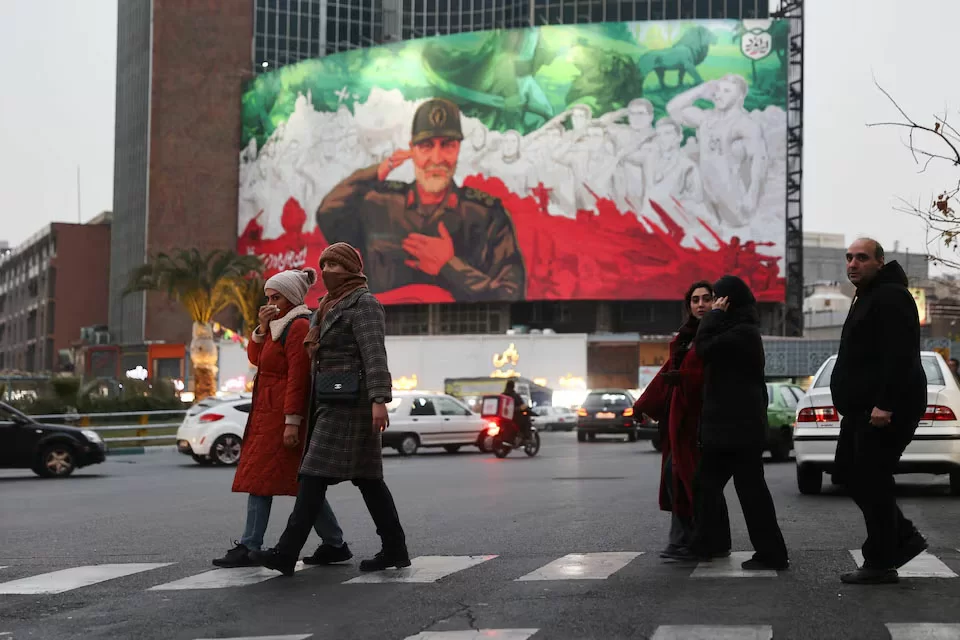
    Amid escalating civil unrest in Iran, U.S. President Donald Trump issued a stark warning on Friday, threatening to support Iranian protesters if security forces employ violence against them. This declaration comes as Iran faces its most severe domestic crisis in years, with widespread demonstrations against soaring inflation and economic hardship resulting in multiple casualties.

    “We stand ready and are fully prepared,” Trump declared via social media, echoing his administration’s previous military actions against Iranian nuclear facilities earlier this year in coordination with Israeli airstrikes targeting Tehran’s atomic program and military leadership.

    Iran’s influential senior official Ali Larijani swiftly condemned Trump’s statements, warning that American interference in Iran’s internal affairs jeopardizes Middle Eastern stability. The Iranian regime, which supports various proxy groups across Lebanon, Iraq, and Yemen, responded through its UN Ambassador Amir-Saeid Iravani, who formally requested condemnation of Trump’s remarks from the United Nations Secretary-General and Security Council president.

    Current protests, while smaller than the massive 2022 demonstrations that paralyzed the nation, have spread nationwide with particular intensity in western provinces. State media and human rights organizations report at least ten fatalities since Wednesday, including one paramilitary Basij militia member. A local official in western Iran warned through state media that any unauthorized protest would be dealt with “decisively and without mercy.”

    The clerical establishment has historically suppressed dissent through mass arrests and severe security measures, though the current economic crisis has rendered the government increasingly vulnerable. The situation represents the most significant challenge to Iranian authorities since the 2022 protests triggered by the death of a young woman in custody, which resulted in hundreds of casualties.

    Trump provided no specific details regarding potential American support for protesters, though Washington has maintained severe sanctions against Tehran since Trump withdrew from the nuclear deal in 2018 and initiated a ‘maximum pressure’ campaign.

    The timing of Trump’s threat follows his meeting with Israeli Prime Minister Benjamin Netanyahu, known for his hardline stance against Iran. U.S. and Israeli airstrikes in June 2025 further increased pressure on Iranian authorities amid regional conflicts including the Syrian civil war and tensions with Hezbollah in Lebanon.

    Domestically, Iran’s elected President Masoud Pezeshkian has adopted a more conciliatory tone, promising dialogue with protest leaders regarding living costs despite reports of security forces using tear gas and live ammunition against demonstrators. Iran’s persistent economic troubles, exacerbated by international sanctions, have created regular social unrest with high inflation diminishing purchasing power.

    The historical tensions between Iran and the United States, deepened by regional conflicts and Iran’s nuclear program, continue to present challenges for international diplomacy. The involvement of Iranian-backed proxy groups adds geopolitical complexity to the situation, creating potential for escalations with significant implications for regional and global security.

  • Oecumenische dienst sluit nationale rouwdag af na tragedie in Commewijne

    Oecumenische dienst sluit nationale rouwdag af na tragedie in Commewijne

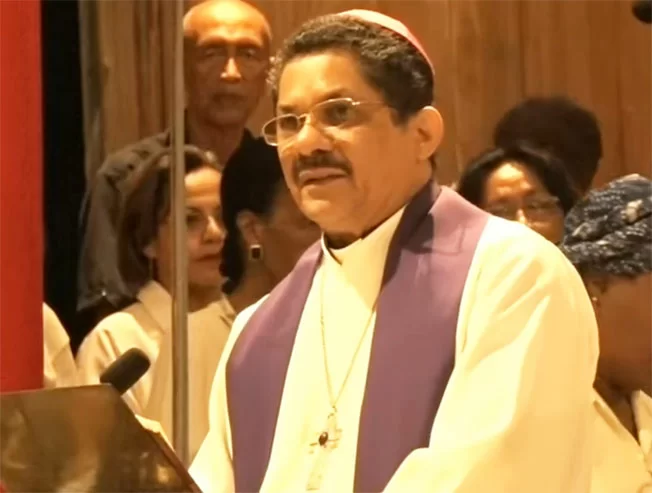
    Suriname observed a National Day of Mourning on Friday with an ecumenical service at the Cathedral Basilica, addressing the profound grief following the devastating Commewijne tragedy that claimed nine lives, including five children. Bishop Karel Choennie led the solemn ceremony, delivering a powerful sermon that explored the incomprehensible nature of evil while emphasizing communal solidarity and spiritual comfort.

    Addressing a congregation united in sorrow, Bishop Choennie selected Matthew 11:27-30 as his scriptural foundation, highlighting Jesus’ invitation to those burdened by life’s heaviest loads. “Jesus speaks not to those who have everything in order,” Choennie articulated, “but precisely to people like us today: weary, broken, and heavily laden with grief.” He clarified that faith offers no simple explanations for such tragedies but creates space for mutual comfort and shared suffering.

    The bishop addressed the additional complexity arising from the subsequent suicide of perpetrator Dennis Aroma in police custody, acknowledging this development deepened the community’s confusion. “Some questions remain temporarily unanswered,” Choennie noted. “Rather than judging, we must carry our pain together. This isn’t weakness—it is humanity.”

    Central to his message was the Christian symbolism of the cross as representing both senseless suffering and divine proximity within that suffering. Choennie encouraged attendees to entrust their grief, helplessness, and unanswered questions to God, whom he described as “not absent in any tear, but intimately near.”

    While acknowledging persistent sorrow, the bishop simultaneously called for hope—not as an eliminator of pain but as a destination for carrying that pain. He specifically requested prayers for surviving victims still fighting for their lives in hospitals and for all families shattered by the violence.

    The service concluded with heartfelt gratitude expressed by victims’ family members toward the community for their moral support. Bishop Choennie ended with an urgent appeal for social cohesion, stating: “Let us look out for one another, remain vigilant for signals of distress, and build tightly-knit communities. Only together can we bear this grief and gradually rise again.”

  • UvAV herhaalt zorgen bij president over ontwikkelingen bij NV EBS

    UvAV herhaalt zorgen bij president over ontwikkelingen bij NV EBS

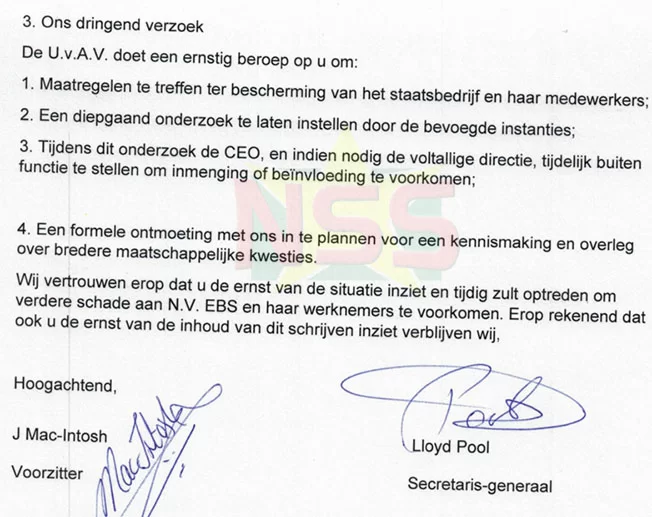
    In a formal communication addressed to President Jennifer Simons, the Union of Assertive Trade Unions (UvAV) has expressed profound concerns regarding escalating governance issues at N.V. Energiebedrijven Suriname (EBS), the national energy corporation. The labor organization contends that current operational practices within EBS are systematically eroding managerial credibility, disrupting workforce harmony, and diminishing public trust in both the state-owned enterprise and its fiscal management.

    Since July of the previous year, multiple correspondence attempts have been initiated by UvAV, all remaining unanswered by the presidential office. This includes urgent legal communications from the union’s legal counsel that similarly failed to elicit substantive response.

    The union’s allegations center on CEO Leo Brunswijk’s authoritarian leadership approach, accusing him of implementing unilateral decisions affecting collective labor agreements without consulting employee representatives. This management style has reportedly fostered significant internal unrest and created elevated risks of operational escalation.

    A particularly contentious development involves the recent termination of union chairman Marciano Hellings, which UvAV asserts constitutes retaliatory action for his critical stance toward management. Notably, this dismissal proceeded despite formal objections from the authorized termination commission, establishing what the union describes as an intimidating precedent for workforce representation.

    Further allegations include serious suspicions of fraudulent activities by senior leadership, unjustified employee terminations, and compromised salary distributions. These circumstances have allegedly resulted in both tangible and intangible damages to the state enterprise.

    The UvAV has urgently petitioned presidential intervention through comprehensive investigative measures by competent authorities. The union specifically requests potential temporary suspension of the CEO and entire executive board during any investigation to prevent potential evidence tampering or operational interference.

    Finally, the labor organization has formally requested presidential consultation to address both the EBS crisis and broader societal implications, expressing confidence that timely intervention could prevent further deterioration of the state enterprise and protect employee welfare.

  • Vuurwerk laat sporen na: acht slachtoffers rond jaarwisseling

    Vuurwerk laat sporen na: acht slachtoffers rond jaarwisseling

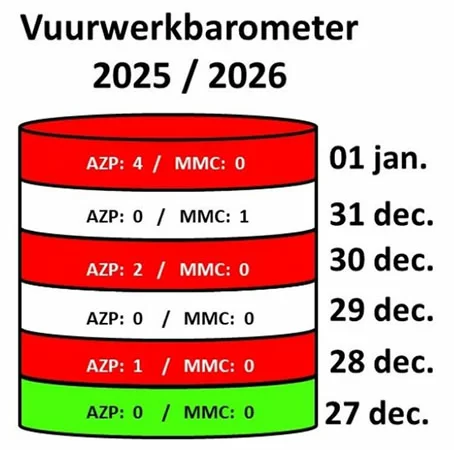
    The 2025-2026 fireworks period in Suriname has concluded with a total of eight registered fireworks-related accidents, according to official reports. This year’s casualty count shows a concerning increase from last year’s six documented cases, though it represents a significant improvement from two years prior when twelve incidents were recorded.

    The final incident occurred on Wednesday, January 1st, when a 48-year-old man presented himself at the Emergency Department of the Academic Hospital Paramaribo at approximately 9:00 PM. The individual sustained burns to his chest and abdomen but was discharged following medical treatment.

    In the Nickerie district, only one fireworks accident was registered on New Year’s Eve. A 50-year-old man received treatment at Mungra Medical Center (MMC) after sustaining injuries from a ‘pagara’ firecracker during fireworks festivities in the city center. The victim suffered second-degree burns to his lower lip.

    Notably, the youngest casualty during this fireworks season was merely six years old, while the oldest victim was 50. These statistics underscore the persistent risks associated with fireworks usage despite extensive public awareness campaigns and safety measures implemented during the year-end celebrations. The demographic spread of victims highlights that fireworks safety remains a universal concern affecting all age groups.