标签: Suriname

苏里南

  • Dossier houtexport 9: PG bevestigt: LVV kan onbeperkt aangifte doen van strafbare feiten

    Dossier houtexport 9: PG bevestigt: LVV kan onbeperkt aangifte doen van strafbare feiten

    A significant meeting occurred on Tuesday at the Office of the Prosecutor involving key legal and agricultural officials to address critical issues surrounding Suriname’s timber export sector. The discussion brought together Prosecutor General Garcia Paragsingh, Chief Prosecutor Roline Gravenbeek, and Deepak Jairam, legal counsel for the Ministry of Agriculture, Livestock and Fisheries (LVV) who also serves as state representative in the timber export case.

    The high-level consultation focused on resolving recent complications regarding the refusal of LVV’s criminal reports on January 10th. According to Jairam, these procedural misunderstandings have been completely resolved through constructive dialogue. The Prosecutor General confirmed that LVV now possesses unrestricted authority to file criminal reports for any suspected offenses and has pledged full cooperation in subsequent investigation and prosecution efforts.

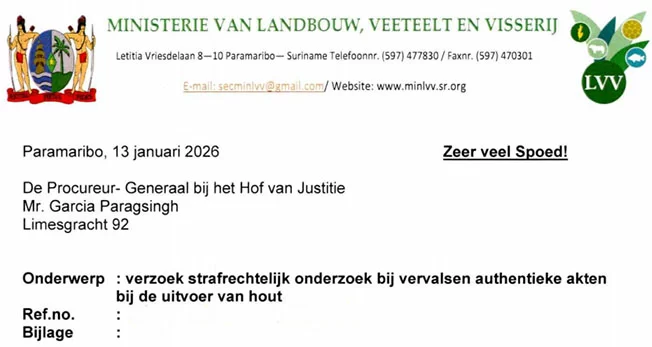
    This emergency meeting was convened following a formal written request from LVV Minister Mike Noersalim dated January 13th, which urgently demanded criminal investigation into potential forgery of authentic documents within the roundwood export process. Minister Noersalim’s communication highlighted severe risks to Suriname’s timber export industry and potential international consequences if immediate action wasn’t taken.

    LVV has announced its intention to file criminal charges against Anand Ramkisoensing, who has been removed from his position as Director of Agricultural Research, Marketing and Processing. The allegations center on suspected intentional misrepresentation of wood species on official phytosanitary documentation, resulting in timber being exported under classifications prohibited by importing countries. The ministry asserts these actions violate both national legislation and international obligations, potentially damaging Suriname’s credibility and threatening the continuity of its timber export operations.

    Despite initial procedural uncertainties, Jairam confirmed the meeting ultimately strengthened collaborative efforts between the Public Prosecutor’s Office and LVV. Both parties have agreed that the Chief Prosecutor will maintain close oversight of case developments, and that LVV’s criminal reports will receive regular processing without further administrative obstacles.
  • IPSC-schietsportseizoen officieel van start bij MTC Rijsdijk

    IPSC-schietsportseizoen officieel van start bij MTC Rijsdijk

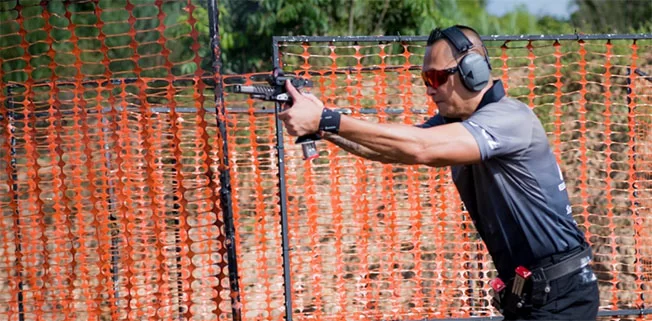
    The International Practical Shooting Confederation (IPSC) season commenced officially in Suriname on Sunday with the inaugural competition held at MTC Rijsdijk shooting range. Despite threatening rain clouds throughout the day, conditions remained dry during the event, allowing participants to perform under optimal circumstances.

    This year’s opener marked a historic milestone as Suriname introduced the Optics Division for the first time, following its official recognition by IPSC International in September 2025. Bruce Djosetiko dominated this newly introduced category with an impressive performance, securing first place ahead of Justin Heidanus (second) and Darren Tjon Kon Joe (third).

    The Open Division witnessed fierce competition with Desmond Chang emerging victorious, while Andrew Wilson and Gao Ming Pei claimed second and third positions respectively. Chang’s exceptional performance also earned him the prestigious Performance Award 2025.

    In the PCC Division, Jair Liauw Kie Fa demonstrated superior skill to overcome challengers Zheng Nicholson and Will Liu. The Production Optics Division saw Alex achieve a commanding victory, finishing well ahead of Yang Dong and Max Li.

    The most dramatic showdown occurred in the Standard Division where Roderick de Bye secured victory by an unprecedented narrow margin of merely 0.07 points against Andy Liu, with both competitors achieving a remarkable total score of 518 points. Marc Loor completed the podium in third position.

    Senior category honors went to Andy Liu who claimed redemption after his narrow Standard Division loss, outperforming Bai Hongan and Roy Lie. In women’s competition, Tamani Stuger continued her dominance by defeating Angelique Tjon Kon Joe.

  • Woning met inboedel afgebrand in Brokopondo

    Woning met inboedel afgebrand in Brokopondo

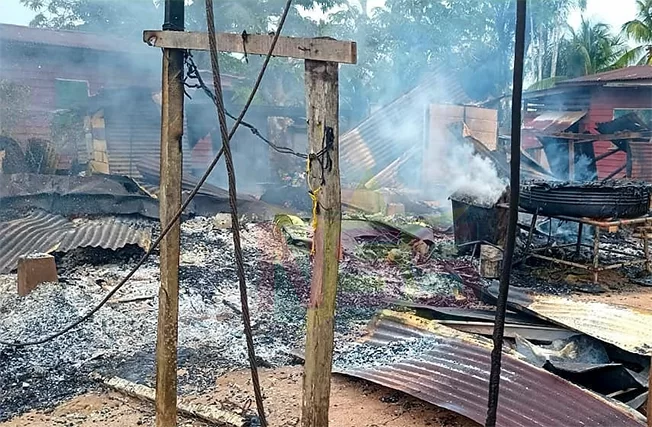
    A devastating afternoon fire has completely destroyed a residential property in the Victoria Assigron area, leaving nothing but ashes where a family home once stood. Emergency services responded to the emergency call as flames engulfed the wooden structure with such intensity that firefighters, despite their rapid intervention, could not salvage the building or its contents.

    The timber-frame construction contributed to the rapid spread of the blaze, which consumed the entire property along with all personal belongings within. Fortunately, all residents managed to evacuate safely and were accounted for at the scene, escaping physical injury in what authorities are calling a miraculous outcome given the severity of the destruction.

    Fire crews remained on site for several hours conducting containment and cooling operations to prevent any potential reignition. The complete loss of the property has raised questions about fire safety measures in the region’s wooden structures.

    Investigators from the appropriate authorities have launched a formal inquiry into the incident’s origins. While the exact cause remains undetermined pending examination of the scene, officials have indicated that the investigation will consider all potential factors including electrical faults, accidental ignition sources, and structural considerations. The community has begun mobilizing support efforts for the displaced residents who lost everything in the catastrophic event.

  • Assemblee mist quorum, ABOP-fractie tekent uit onvrede presentielijst niet

    Assemblee mist quorum, ABOP-fractie tekent uit onvrede presentielijst niet

    Suriname’s National Assembly encountered an unexpected political standstill on Wednesday as lawmakers failed to convene a scheduled parliamentary session due to insufficient attendance. The session was abruptly postponed after coalition partner ABOP, alongside VHP faction members, refused to sign the attendance registry, preventing the government from achieving the mandatory quorum required for legislative proceedings.

    Only 25 parliamentarians officially registered their presence, falling short of the 26-member threshold necessary for conducting official business. The dramatic development exposed deepening fractures within the ruling coalition, particularly surrounding the suspension of Grassalco director Wensly Rozenhout, an ABOP party member implicated in the disappearance of approximately 4 kilograms of raw gold valued at over $400,000 from the state-owned company’s vaults.

    NDP faction leader Rabin Parmessar expressed astonishment at ABOP’s maneuver, stating: ‘ABOP has surprised us by not providing quorum.’ According to parliamentary sources, ABOP Chairman Ronnie Brunswijk explicitly instructed his faction members to boycott the attendance registry signing process before the session’s commencement, a directive that was systematically followed.

    The gold disappearance incident, which remains unresolved despite governmental inquiries, has triggered significant internal discord. Rozenhout’s provisional suspension stems from his alleged failure to provide satisfactory explanations to government investigators regarding the missing precious metals.

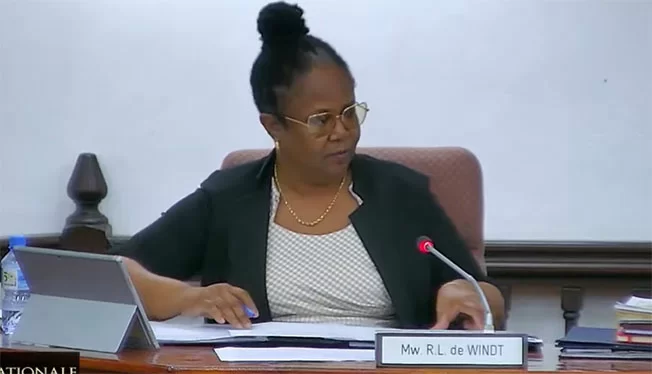
    Parmessar noted that with ABOP’s participation, the coalition commands 28 seats—two above the quorum requirement—but without them, legislative proceedings become impossible. The NDP leader indicated that had he received advance notice of ABOP’s intention to withhold quorum, he would have prevented absences within his own faction. Assembly President Ashwin Adhin formally postponed the session after clerk Ruth de Windt read aloud the names of legislators who had signed the attendance registry.

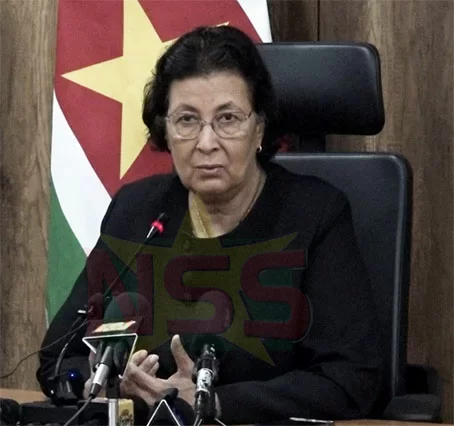
  • President verzwijgt dat echtgenoot meereisde naar Colombia

    President verzwijgt dat echtgenoot meereisde naar Colombia

    Surinamese President Jennifer Simons finds herself at the center of transparency concerns following revelations that her husband, Glenn Geerling, accompanied her on an official visit to Colombia despite his absence from the official delegation roster. The discrepancy emerged through photographs circulated after the January diplomatic mission, contradicting the president’s initial characterization of her traveling party.

    During a press briefing Monday, President Simons had characterized the visit as a technical policy examination of Colombian hospital facilities rather than a state visit, emphasizing her conscious effort to maintain a minimal delegation without media personnel. She stated the delegation consisted solely of a security official, Suriname’s ambassador to Colombia, Minister André Misiekaba, and Humphrey Hasrat—a physician advisor involved in medical referral programs for Surinamese patients.

    ‘We deliberately kept the delegation small and avoided media accompaniment to maintain low costs and a low profile,’ President Simons explained during her initial remarks, noting that additional security was provided by Colombian authorities with only one security official traveling ahead from Suriname.

    However, subsequent photographic evidence revealed the presidential spouse’s presence among the delegation, raising questions about the completeness of the official account. The president acknowledged the hospital had extended personal medical check-up invitations but maintained she declined these offers, insisting the visit focused exclusively on policy discussions regarding healthcare collaboration, preventive medicine, and aftercare coordination between medical institutions.

    The absence of official media coverage, initially attributed to the deliberate exclusion of press personnel, now appears compounded by the undisclosed participation of the first gentleman. This development has sparked discussions about transparency protocols within presidential travel delegations and the disclosure requirements for accompanying family members on official government business.

  • Hoe beleggers goud kopen en wat de markt drijft

    Hoe beleggers goud kopen en wat de markt drijft

    Gold achieved a historic milestone on Monday, breaching the $4,600 per ounce threshold for the first time in 2026. This remarkable surge continues the precious metal’s record-breaking trajectory from 2025, fueled by escalating geopolitical tensions and anticipations of looser US monetary policy.

    Investment Pathways in Gold:

    The spot market serves as the primary arena for major buyers and institutional investors, where prices fluctuate in real-time based on supply and demand dynamics. London dominates this sector through the London Bullion Market Association (LBMA), which establishes standards and trading frameworks for financial institutions. Significant trading activity also occurs in China, India, Middle Eastern markets, and the United States.

    Futures exchanges enable investors to trade gold at predetermined prices for future delivery dates. COMEX, operating under the New York Mercantile Exchange, represents the world’s largest gold futures marketplace. Asian markets participate actively through the Shanghai Futures Exchange and Tokyo Commodity Exchange (TOCOM).

    Exchange-Traded Products (ETPs) provide accessible exposure to gold prices without physical ownership. Gold-backed exchange-traded funds (ETFs) witnessed unprecedented inflows during 2025, particularly from North American investors who contributed $89 billion according to World Gold Council data.

    Retail investors frequently opt for physical gold bars and coins, available through both traditional dealers and online platforms.

    Market Driving Forces:

    Investment sentiment remains a powerful price catalyst, with fund managers responding to market trends, news developments, and global events through speculative positioning.

    Currency fluctuations significantly impact gold’s attractiveness. The metal traditionally moves inversely to the US dollar, becoming more affordable to foreign currency holders when the dollar weakens.

    Monetary policy decisions and political instability reinforce gold’s safe-haven status. Trade conflicts, such as those initiated through Trump-era tariffs, and geopolitical tensions involving Venezuela and Greenland have amplified market uncertainty. Interest rate environments further influence gold’s appeal, as lower rates reduce the opportunity cost of holding non-yielding assets.

    Central banks have emerged as substantial market participants, accelerating gold acquisitions amid macroeconomic and political uncertainties. The World Gold Council reports continued strengthening of this trend, with November 2025 purchases reaching 45 tons, bringing the eleven-month total to 297 tons. China spearheaded these acquisitions, expanding reserves beyond 74 million troy ounces.

    Gold maintains its position as a multifaceted investment vehicle, driven by complex interactions between market forces, geopolitical developments, and monetary policies. Market analysts will closely monitor its performance throughout 2026 as these dynamics continue to evolve.

  • Melkcentrale kijkt vooruit: kwaliteit, vertrouwen en nieuwe producten

    Melkcentrale kijkt vooruit: kwaliteit, vertrouwen en nieuwe producten

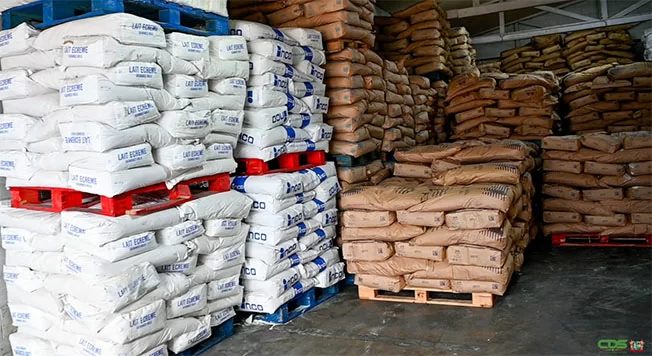
    Paramaribo Milk Center (MCP), Suriname’s prominent dairy institution, is undergoing a comprehensive organizational overhaul as it approaches its 65th anniversary in April 2026. Under new leadership since November 2025, Director Monché Atompai is steering the company through a critical period of financial recovery, quality enhancement, and strategic repositioning.

    Atompai inherited an organization still grappling with the aftermath of internal misconduct and an ongoing criminal investigation that has implicated twelve individuals and significantly damaged the company’s financial stability. Despite these challenges, the director emphasizes that operations continue while intensive recovery efforts are underway.

    The transformation strategy rests on three foundational pillars: organizational restructuring, enhanced transparency, and trust restoration both internally and within the broader community. Atompai acknowledges this represents a gradual process rather than a quick fix, though he reports encouraging progress already emerging through systematic implementation.

    A cornerstone of the revitalization effort involves substantial quality improvements. The center has successfully completed ISO certification procedures addressing previous public criticism regarding product standards. While acknowledging remaining challenges for 2026, management confirms active work toward addressing all outstanding quality concerns.

    In preparation for its April anniversary, MCP is developing multiple social initiatives aimed at promoting awareness about milk’s nutritional significance across all age demographics. These programs will specifically target children, elderly citizens, and vulnerable populations with educational content about healthy nutrition and beverages.

    Concurrently, the company is conducting extensive market research into new product development, including infant formula and innovative dairy alternatives. This expansion strategy encompasses Suriname’s interior regions and districts while exploring potential export opportunities to neighboring countries.

    The anniversary celebrations will feature the official launch of two novel dairy products currently in development under a dedicated project leader. This dual approach of social engagement and product innovation represents MCP’s comprehensive strategy to strengthen its market position while serving community nutritional needs.

  • VS overweegt militaire acties tegen Iran, maar geeft voorkeur aan dialoog

    VS overweegt militaire acties tegen Iran, maar geeft voorkeur aan dialoog

    The Trump administration has confirmed that airstrikes against Iran remain among the “multiple options” under consideration as the Islamic Republic faces nationwide protests that are placing the regime under mounting pressure. While emphasizing that diplomacy remains the primary approach, White House spokeswoman Karoline Leavitt stated on Monday that President Trump is known for keeping all possibilities open—including military action.

    The confirmation comes amid escalating civil unrest across Iran, where security forces have responded with severe crackdowns. Various sources report hundreds of casualties, including both protesters and security personnel. Independent verification remains challenging due to widespread internet disruptions and restrictions on international communications.

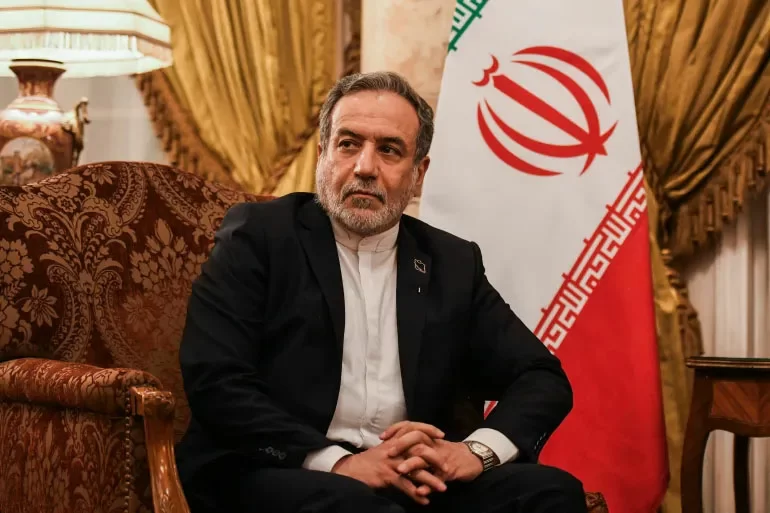
    Iranian Foreign Minister Abbas Araghchi issued a stark warning in response, declaring that Iran possesses a “large and comprehensive military readiness” and is prepared for war should the U.S. choose to test its capabilities. In an exclusive interview with Al Jazeera, Araghchi emphasized that communication channels with Washington remain open but cautioned that Tehran is ready for all scenarios.

    He accused the U.S. and Israel of fueling instability by infiltrating “terrorist elements” among demonstrators, and urged American leadership to choose the “wise path of dialogue” rather than being drawn into conflict serving “Israel’s interests.”

    Meanwhile, divisions appear within the U.S. administration. While some officials, including Vice President JD Vance, advocate for renewed diplomatic engagement, President Trump has pointed to Iran’s violent suppression of protests as justification for potential military action. The Wall Street Journal reports that the U.S. is currently evaluating an Iranian offer to resume military discussions despite ongoing threats of attack.

    The tension is further compounded by last year’s U.S. airstrikes on Iranian nuclear facilities during the Israel-Iran conflict. Iranian Parliament Speaker Mohammad Bagher Ghalibaf warned that U.S. military assets and Israel would become “legitimate targets” should Washington intervene in Iran’s domestic affairs.

    As developments continue to unfold, the international community is closely monitoring the situation, which represents one of the most significant geopolitical crises in recent months.

  • Suriname onderzoekt goedkopere medicijnen via gezamenlijke inkoop met Colombia

    Suriname onderzoekt goedkopere medicijnen via gezamenlijke inkoop met Colombia

    The Surinamese government is actively investigating a groundbreaking approach to reduce expenditures on high-cost specialty medications by aligning with Colombia’s bulk pharmaceutical procurement programs. President Jennifer Simons revealed this strategic initiative during a press briefing detailing her recent official visit to Colombia.

    This potential collaboration centers on leveraging Colombia’s massive purchasing power through the Hospital Internacional de Colombia (HIC), which negotiates multi-million dollar medication contracts. By tapping into these established procurement channels, Suriname could access substantially reduced prices for specialized drugs used in cancer treatments, transplant procedures, and rare disease management—treatments that typically involve exorbitant medication costs.

    President Simons emphasized the targeted nature of this initiative, clarifying that it specifically addresses expensive specialty drugs rather than standard medications. ‘For certain conditions, we’re dealing with a small patient population in Suriname, but the required medications are extremely costly. This is precisely where collective purchasing could potentially make a significant difference,’ Simons stated.

    The government maintains a cautious approach, with no automatic commitments being made. Suriname will conduct thorough objective comparisons to verify whether Colombian pricing genuinely offers advantages over current import channels through India and the Netherlands. The nation’s Drug Supply Company (BGVS) will play a central role in this evaluation process.

    According to Simons, Colombian pharmaceutical entities have expressed openness to including Suriname in their existing procurement frameworks. This arrangement could potentially grant Suriname direct access to manufacturers or established suppliers at identical pricing conditions enjoyed by the Colombian market. However, Simons stressed that ‘we won’t accept this at face value—the numbers must be presented and verified.’

    A technical working group comprising representatives from both nations will dedicate the next six to eight weeks to meticulously developing the proposal. This comprehensive assessment will examine price comparisons, logistics, regulatory considerations, and financial implications for Suriname’s healthcare sector. The findings will determine whether joint purchasing can deliver structural cost reductions.

    This initiative represents a crucial component of the government’s broader strategy to create a more affordable and sustainable healthcare system for Suriname without compromising quality standards or accessibility.

  • Wat we weten over de dodelijke anti-regimeprotesten in Iran…

    Wat we weten over de dodelijke anti-regimeprotesten in Iran…

    Iran has been engulfed by nationwide demonstrations for two weeks, with protests initially sparked by economic grievances rapidly escalating into violent anti-regime confrontations. The unrest, marked by significant casualties and widespread arrests, represents one of the most substantial challenges to Iran’s theocratic government in recent years.

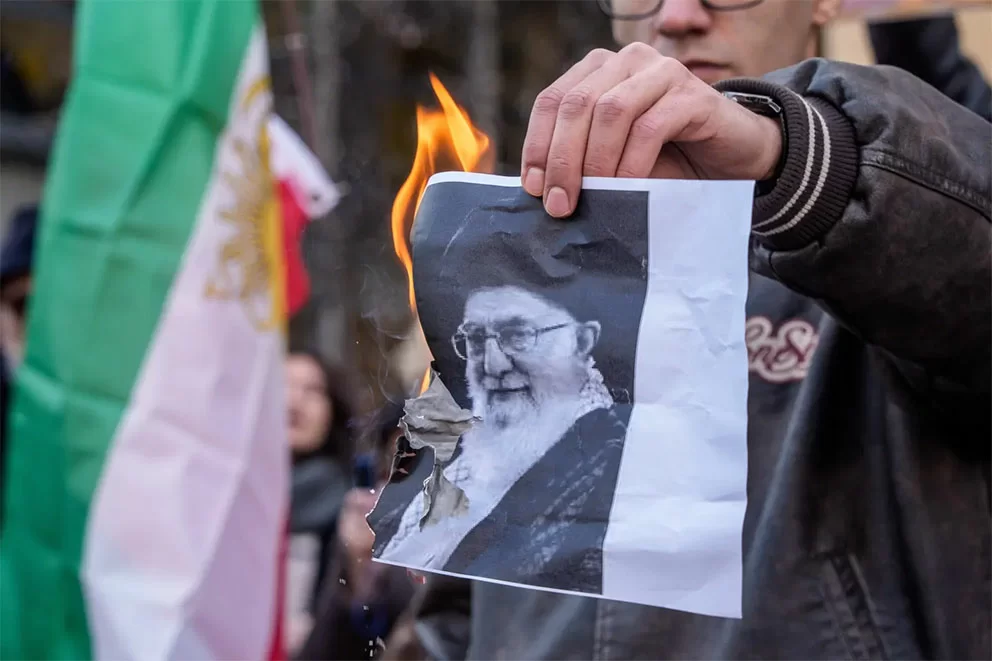
    The protests originated in late December among Tehran merchants before spreading across all 31 provinces. What began as demonstrations against economic deterioration—including currency collapse and soaring prices—quickly transformed into broader opposition against the regime itself. Protesters have been documented burning images of Supreme Leader Ayatollah Ali Khamenei, while some have expressed support for exiled Crown Prince Reza Pahlavi.

    Iran’s economic crisis has been exacerbated by multiple factors. Since the reimposition of UN sanctions in September due to Iran’s nuclear program, the Iranian rial has entered freefall, currently trading at over 1.4 million to the US dollar. This economic pressure was compounded by a twelve-day war in June involving Israeli offensives and US airstrikes on nuclear sites. Recent price hikes for subsidized gasoline—previously among the world’s cheapest fuels—and anticipated food price increases following the central bank’s elimination of preferential exchange rates for most goods have further inflamed public anger.

    The government response has been characterized by severe measures. Authorities have shut down communication and internet networks, making independent verification of events challenging. According to the Human Rights Activists News Agency, the protests have resulted in over 544 fatalities and approximately 10,600 arrests.

    Geopolitically, Iran’s regional influence has suffered significant setbacks. The ‘Axis of Resistance’—Tehran’s coalition of allied countries and militias—has been weakened by conflicts throughout the region. Israel decimated Hamas in the Gaza war, Hezbollah lost leadership figures, and Syria’s President Bashar al-Assad fell in December 2024 after years of conflict. Iran-backed Houthi rebels in Yemen have also been heavily targeted by Israeli and American airstrikes.

    International reactions have added complexity to the situation. President Trump warned that the US would respond ‘very hard’ if the regime violently suppresses peaceful demonstrators—a warning given additional context following the capture of Venezuelan leader Nicolás Maduro, a Tehran ally. Meanwhile, China remains a significant purchaser of Iranian oil but provides no overt military support, similar to Russia, which utilizes Iranian drones in the Ukraine conflict but offers limited other assistance.

    The nuclear dimension continues to loom large. While Iran maintains its nuclear program is peaceful, increased uranium enrichment and reduced cooperation with the UN’s International Atomic Energy Agency (IAEA) have raised suspicions. The IAEA director warns that Iran could produce sufficient material for approximately ten nuclear weapons should it decide to militarize its program. US intelligence agencies believe Iran hasn’t yet initiated a nuclear weapons program but is preparing to rapidly build one if desired.

    This crisis occurs within the broader context of strained US-Iran relations dating to the 1979 Islamic Revolution, which transformed Iran from a key American ally under Shah Mohammad Reza Pahlavi to a theocratic state under Ayatollah Khomeini. The relationship has oscillated between hostility and diplomacy, highlighted by the 2015 nuclear agreement from which the US unilaterally withdrew in 2018, reigniting regional tensions.

    Iran now confronts a multidimensional crisis testing its political stability, regional influence, and international relationships, with developments being closely monitored worldwide.