标签: Suriname

苏里南

  • Vicepresident naar Zwitserland voor World Tourism Forum

    Vicepresident naar Zwitserland voor World Tourism Forum

    Surinamese Vice President Gregory Rusland is set to embark on an official visit to Switzerland this Saturday to participate in the prestigious World Tourism Forum, convened during the influential World Economic Forum week. Accompanied by a delegation of three senior officials, the Vice President will engage in high-level discussions before returning the following week.

    Mr. Rusland received a specific invitation to join an exclusive assembly of forty international decision-makers, comprising heads of state, chief executive officers, and government ministers. This selective gathering represents some of the most influential figures in global governance and business leadership.

    The central theme of his participation will focus on translating commitments into actionable strategies under the forum’s agenda: “From Pledges to Implementation: Scaling Sustainable Tourism and Hospitality.” This dialogue aims to bridge the gap between theoretical frameworks and practical execution in sustainable tourism development.

    Unlike conventional tourism conferences, the World Tourism Forum operates as a high-level decision-making platform that reconceptualizes tourism not as an isolated industry but as a strategic pillar for global economic resilience. The forum emphasizes peer-to-peer interaction and strategic alignment among participants, moving beyond traditional presentation formats to foster genuine collaboration and policy development.

    The participation of Suriname’s Vice President signals the growing recognition of small nations in shaping global tourism policies and highlights the increasing importance of sustainable tourism in national economic strategies.


  • Chinese app ‘Are You Dead?’ verandert naam na grote populariteit

    Chinese app ‘Are You Dead?’ verandert naam na grote populariteit

    A groundbreaking safety application originally known as ‘Are You Dead?’ in China has achieved remarkable viral success and is now poised for international expansion under the new brand name ‘Demumu’. The app, specifically designed for individuals leading solitary lifestyles, has recently topped the charts of paid applications on Apple’s App Store following its surge in popularity.

    The application functions as a lightweight safety tool that requires users to designate one emergency contact. It then automatically sends notifications if the user fails to check in through the app for several consecutive days. This innovative approach to personal safety has resonated deeply with China’s growing population of single-person households, which according to state-run Global Times estimates reaches approximately 200 million people, representing over 30% of the population.

    The development team behind Demumu announced on their official Weibo platform that the international rebranding decision came after comprehensive deliberations. The Chinese version, called ‘Sileme’ (translating to ‘Are You Dead?’), will now transition to the global brand identity ‘Demumu’ in upcoming versions.

    To address rising operational costs, the company implemented a subscription model priced at 8 yuan (approximately $1.15) on Sunday. The App Store currently offers the application for 8 Hong Kong dollars (around $1.03). User responses have been overwhelmingly positive, with one commenter noting: ‘While some conservative individuals might struggle to accept this concept, it provides unmarried people like myself with genuine peace of mind about our chosen lifestyle.’

    The app’s sudden popularity and successful monetization strategy demonstrate the growing market for digital solutions catering to modern living arrangements and personal safety concerns in increasingly individualized societies.

  • PAHO: Druggebruikstoornissen nemen sterk toe in de Amerika’s

    PAHO: Druggebruikstoornissen nemen sterk toe in de Amerika’s

    A groundbreaking study from the Pan American Health Organization (PAHO) reveals substance use disorders have emerged as one of the top ten mortality and disability risk factors across the Americas, directly impacting approximately 17.7 million individuals. Published in the Pan American Journal of Public Health, the comprehensive analysis demonstrates the region faces a public health emergency with drug-related mortality rates quadruple the global average.

    In 2021 alone, nearly 78,000 deaths were directly attributable to drug use disorders across the hemisphere. The research, utilizing data from the Global Burden of Disease 2021 study, identifies opioid use disorders as responsible for over 75% of these fatalities, with young males experiencing disproportionately severe impacts. Disability-Adjusted Life Years (DALYs) linked to substance abuse have nearly tripled since 2000, escalating at an alarming annual rate of approximately 5%.

    PAHO Director Jarbas Barbosa emphasized that while “drug use disorders are both preventable and treatable, they increasingly burden families and communities.” He urgently appealed for nations to implement evidence-based prevention strategies, treatment protocols, and harm reduction initiatives, particularly targeting youth and vulnerable populations.

    Regional variations in substance abuse patterns reveal distinct epidemiological profiles. North America confronts a severe crisis driven by synthetic opioids like fentanyl and rising amphetamine disorders, while Caribbean, Central and South American nations grapple primarily with cannabis and cocaine-related disorders. When considering indirect deaths including opioid overdoses, liver cancer, cirrhosis, and drug-related suicides, the total mortality figure reaches approximately 145,515 annually—placing drug use alongside hypertension, obesity, poor nutrition, and tobacco as leading health risk factors.

    The COVID-19 pandemic accelerated substance abuse trends through multiple pathways: heightened psychological stress, disrupted healthcare services, and prolonged social isolation creating ideal conditions for addiction development and relapse.

    PAHO’s recommendations advocate for an integrated public health approach including: enhanced youth-focused prevention programs, expanded access to medication-assisted treatment for opioid disorders, integration of addiction services into primary care and community health systems, improved surveillance mechanisms for synthetic opioids, and gender-responsive interventions addressing rising substance abuse among women.

    The organization highlights WHO-developed screening tools (AUDIT and ASSIST) as cost-effective instruments for early detection and intervention. Renato Oliveira E Souza, head of PAHO’s Mental Health and Substance Use Unit, concluded: “We must position mental health and addiction care as central components of our health systems. Community-based, person-centered services supported by robust public health leadership and evidence-informed national strategies can reverse this alarming trajectory and save thousands of lives across the Americas.”

  • Vijf jaar zittingstermijn AAC: discussie nog open in DNA

    Vijf jaar zittingstermijn AAC: discussie nog open in DNA

    The National Assembly of Suriname witnessed intense deliberations on Thursday as parliamentary rapporteurs, chaired by NDP member Silvana Afonsoewa, examined proposed amendments to the Labor Advisory Council (AAC) Act. Central to the legislative revision is extending council members’ terms from two to five years—a move proponents argue would enhance institutional stability but critics warn requires stronger justification.

    Afonsoewa opened deliberations by characterizing the tripartite AAC—bringing together government, employers and workers—as vital for social dialogue and labor policy formulation. She contended that the current two-year term proves insufficient for maintaining continuity, developing expertise and preserving institutional memory. The proposed five-year term, she asserted, would foster stability and improve advisory quality, particularly amid significant economic and labor market reforms. Afonsoewa noted that members frequently serve beyond two years in practice.

    Opposition voices emerged swiftly. VHP representative Chuanrui Wang acknowledged continuity benefits but criticized the proposal’s inadequate substantiation. He cautioned that extended terms without mid-term evaluations, clear performance metrics or parliamentary accountability mechanisms risked stagnation rather than improved functionality. Wang emphasized that structural challenges—including limited capacity and advisory implementation—would persist merely through tenure extension.

    NDP member Jennifer Vreedzaam raised governance concerns, questioning why five years specifically was necessary when existing legislation already permitted exceptions and reappointments. She warned that unchecked continuity might breed stagnation without evaluation benchmarks. Colleague Claudie Sabajo countered that the AAC itself identified two years as insufficient for developing quality advisories, arguing longer terms would reduce administrative burdens and enable deeper policy engagement. She simultaneously requested government transparency regarding past advisory implementations.

    Representation issues took center stage when VHP’s Mahinder Jogi challenged whether the AAC adequately represented informal sector workers, small entrepreneurs and unorganized laborers. He deemed the amendment overly narrow and recommended broader legislative reconsideration. ABOP representative Edgar Sampie linked the reform to Suriname’s emerging oil and gas sector, stressing that international labor conventions demanded a robust, independent AAC. Without adequate resources and authority, he cautioned, the council risked becoming ‘a tiger without teeth.’

    NPS representative Jeffrey Lau highlighted that no labor legislation proceeds without AAC consultation. He endorsed five-year terms as better aligned with governmental periods, facilitating medium-term planning and measurable policy outcomes. The council itself, he noted, considered five years operationally feasible.

    While consensus existed on the AAC’s importance, divisions persisted regarding whether term extension sufficed or broader evaluation of composition and operations was prerequisite. Deliberations will continue Thursday with contributions from non-rapporteur assembly members.

  • SOC en ministerie willen Sportwet voor continu en toekomstgericht sportbeleid

    SOC en ministerie willen Sportwet voor continu en toekomstgericht sportbeleid

    Surinamese sporting authorities have initiated a groundbreaking push to establish comprehensive sports legislation, aiming to secure sustainable development and institutional continuity beyond changing political administrations. The landmark decision emerged from high-level policy discussions between the Surinamese Olympic Committee (SOC) and the Ministry of Youth Development and Sports.

    During the strategic meeting, both entities unanimously agreed that implementing a Sports Law represents an urgent necessity to prevent athletic development from remaining vulnerable to shifting governmental priorities. The proposed legal framework would establish stability, enable long-term planning, and guarantee structured financing mechanisms for Suriname’s sports sector.

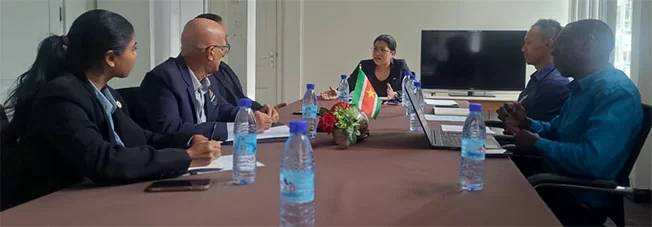
    The SOC delegation, led by President Ramon Tjon A Fat alongside Secretary Dennis MacDonald and Office Manager Ranoe Samlal, engaged with ministerial representatives including Minister Lalinie Gopal, Acting Director Enrique Ralim, and Deputy Director Jason Menso.

    Minister Gopal emphasized that her recently restructured ministry considers the current moment opportune for establishing clear agreements with the SOC regarding roles, collaborative efforts, and a shared vision for the future. Central to these discussions was the recognition that sports policy must prioritize long-term objectives supported by consistent budgetary allocations.

    The dialogue highlighted how comprehensive sports legislation could create cohesion between recreational, grassroots, and elite sporting initiatives. The framework would systematize talent development from early childhood through senior competition levels, specifically targeting success in regional and international events including Pan-American competitions and Olympic Games.

    Beyond competitive objectives, officials stressed the social dimensions of sports policy, identifying key pillars including the promotion of healthy lifestyles, safe sporting environments, and equal opportunities for girls and women.

    The SOC presented compelling international precedents from nations including Brazil and Paraguay, where legislative frameworks have yielded improved planning, greater transparency, and sustainable funding models. Consequently, the ministry has committed to collaborating with the SOC and additional stakeholders to develop preliminary legal and policy frameworks that will future-proof Surinamese sports.

  • Voorstel in DNA: halve vergoeding bij structureel ontbreken quorum

    Voorstel in DNA: halve vergoeding bij structureel ontbreken quorum

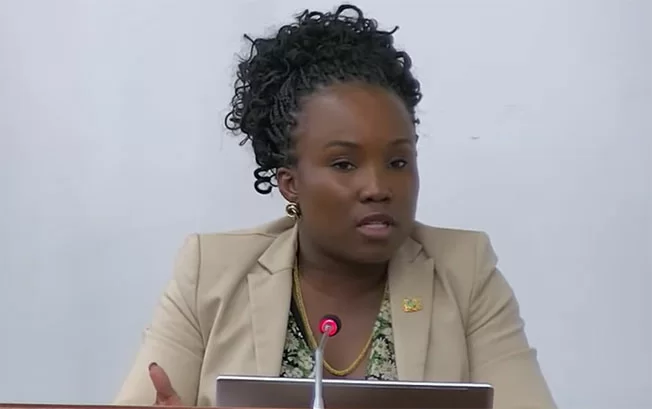
    In a significant move to address chronic parliamentary absenteeism, Surinamese Assembly members Bronto Somohardjo and Silvana Afonsoewa have submitted a formal proposal to amend the standing orders of De Nationale Assemblée (DNA). The initiative targets the persistent lack of quorum that has repeatedly paralyzed legislative and oversight functions, undermining both parliamentary efficiency and public trust in the nation’s highest representative body.

    The core provision of the proposed amendment would introduce Article 32a under the heading ‘Quorum Responsibility,’ establishing that any legislator absent without valid justification from two consecutive quorum-required meetings would be classified as structurally absent. Such members would face temporary suspension of fifty percent of their compensation for the following month, with automatic reinstatement upon resuming their attendance duties.

    Valid exemptions would include documented illness, official government duties, and circumstances of force majeure. Assembly Chair Ashwin Adhin, who received the formally registered proposal on Tuesday, would be empowered to implement the salary withholdings following consultation with the clerk, while also maintaining transparent records of absences and providing periodic reports.

    The proponents emphasize that the measure is not intended as punitive but as a proportional corrective mechanism. ‘Providing quorum is not a favor to the coalition or opposition—it is a duty to the people,’ stated Somohardjo. Both legislators assert that the initiative transcends political gamesmanship, seeking instead to reinforce institutional credibility and professional responsibility among elected representatives.

    The proposal now awaits formal consideration and scheduling by the National Assembly, potentially marking a transformative step toward greater parliamentary accountability in Suriname’s democratic processes.

  • Hoe Iran Starlink stoorde en hoe Iraniërs proberen dit te omzeilen

    Hoe Iran Starlink stoorde en hoe Iraniërs proberen dit te omzeilen

    Iranian authorities have escalated their digital suppression tactics by deploying sophisticated jamming technologies against SpaceX’s Starlink satellite internet service, which had become a vital communication tool for citizens amid widespread protests. The campaign represents a significant evolution in Tehran’s censorship capabilities, targeting both GPS signals and satellite transmissions simultaneously.

    The crackdown intensified on January 8, 2026, when Iranian regulators implemented massive internet and telephone network blackouts. While partial service was later restored, severe restrictions remain in effect. The regime’s latest offensive focuses on disrupting Starlink’s satellite connectivity through multiple interference methods.

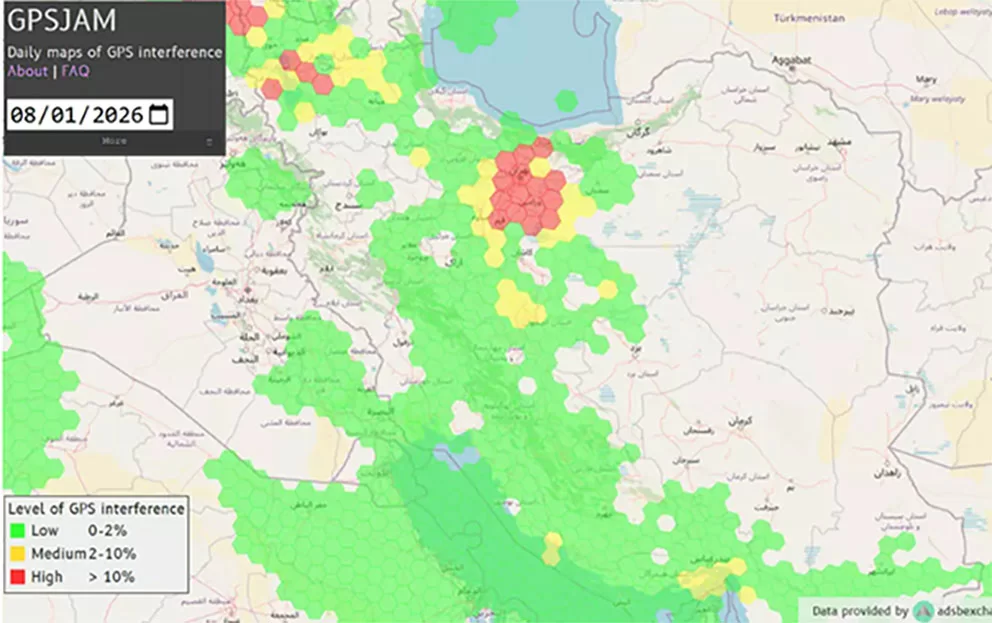
    According to data from gpsjam.org, significant GPS interference was detected in Tehran and surrounding areas on January 8, coinciding with the internet shutdown. Professor Kave Salamatian of Savoie University explains that GPS jamming represents a classical method for disrupting Starlink services, as terminals rely on GPS signals to orient their antennas toward satellites.

    However, the interference extends beyond GPS disruption. Victoria Samson of the Secure World Foundation reports data loss rates between 30-80%, indicating active signal jamming where transmission channels are saturated with noise or false signals. This sophisticated approach suggests Iranian authorities may be employing advanced electronic warfare systems, potentially including Russian-made Murmansk-BN jammers or domestic equivalents like the Cobra-V8 system developed at specialized institutions such as Imam Hossein University and Sharif University.

    SpaceX has responded with technical countermeasures. A recent software update enables Starlink terminals to bypass GPS jamming through satellite-based triangulation and automatically reroute signals to unaffected satellites when interference is detected. While this has significantly reduced data loss, the update compromises terminal mobility as devices struggle to maintain connections while in motion.

    According to Nasnet, Iran’s largest Starlink community, service remains functional despite concentrated interference around Tehran characterized by temporary, non-persistent disruptions. The cat-and-mouse game continues with approximately 50,000 Starlink terminals serving a small fraction of Iran’s 90 million population, highlighting both the technological arms race and the limitations of satellite internet as a comprehensive solution against state-level censorship.

  • Column: Eendracht maakt macht

    Column: Eendracht maakt macht

    Surinamese football faces a critical juncture as recent promising developments have given way to concerning regression. Several seasons ago, amateur-status national champions Robinhood achieved an unexpected triumph by capturing the Caribbean championship title, defeating professional clubs in a remarkable underdog story. This breakthrough generated widespread optimism for Suriname’s football future, but the success proved fleeting as the team suffered early elimination in subsequent tournaments.

    The club’s recent transition to professional status has paradoxically coincided with a decline in performance quality. This deterioration stems from the departure of key players and failure to develop adequate replacements through youth systems. This situation raises fundamental questions about the effectiveness of domestic player development programs and whether clubs must consistently recruit from competitors to maintain competitiveness.

    A growing trend of foreign player and coach recruitment has emerged throughout Surinamese football leagues. This development warrants thorough investigation to determine whether clubs pursue international talent for superior quality or simply because foreign professionals accept lower wages. Similarly, the increasing reliance on foreign coaches prompts examination of whether these appointments reflect quality improvements or desperate measures for organizational survival.

    Football associations must proactively address these developments through strategic partnerships and development initiatives. Collaboration with Natio Nieuwe Stijl could elevate coaching standards, subsequently improving player quality through enhanced training methodologies. Such cooperation could establish sustainable pathways for developing local talent capable of regional competition while providing coaches opportunities to demonstrate their capabilities through team performance.

    The Surinamese diaspora represents a valuable resource for football development, with internationally experienced professionals expressing willingness to contribute their expertise. Embracing this knowledge transfer while prioritizing quality and professionalism over individual egos could establish a new football culture where both players and coaches can thrive, potentially reversing the current decline.

  • VS stopt tijdelijk immigrantvisa uit 75 landen; Suriname en Guyana niet erbij

    VS stopt tijdelijk immigrantvisa uit 75 landen; Suriname en Guyana niet erbij

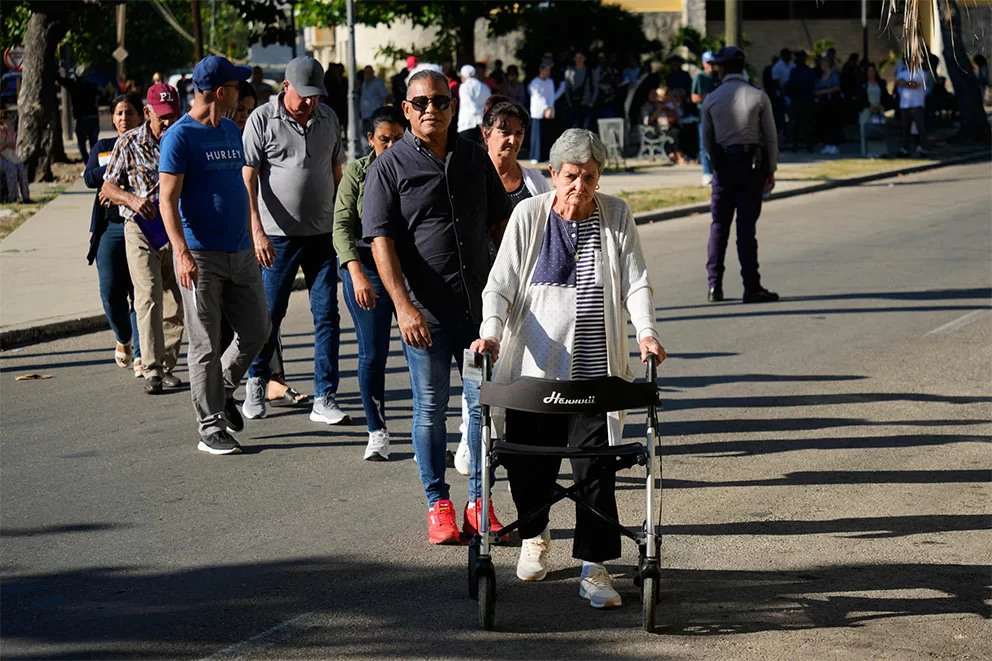
    The United States Department of State has implemented a temporary suspension of immigrant visa processing for citizens from 75 countries worldwide, citing concerns about potential dependence on public assistance programs. The policy shift, which takes effect January 21st, significantly impacts 26 nations across the Caribbean and Latin America including Cuba, Brazil, Colombia, Guatemala, Nicaragua, Uruguay, and Belize.

    Caribbean nations affected by the suspension include Antigua and Barbuda, Barbados, Dominica, Grenada, Saint Kitts and Nevis, and Saint Lucia. Notably exempted from the measure are Suriname, Guyana, and Trinidad and Tobago.

    Under Secretary Marco Rubio’s leadership, the State Department has instructed consular officials to halt processing immigrant visa applications from these countries while continuing to process non-immigrant visas such as tourist and business permits. The suspension aligns with broader immigration policy reforms announced last November that establish stricter criteria to prevent newcomers from becoming reliant on social welfare programs.

    The temporary visa freeze comes amid anticipated increased demand for non-immigrant visas ahead of major international events hosted by the United States, including the 2026 World Cup and 2028 Olympic Games. Most affected countries have adopted a wait-and-see approach pending formal notification, with the Caribbean Community (CARICOM) yet to issue an official response.

    The global list extends beyond the Western Hemisphere to include nations from Africa, Asia, and Europe, with Afghanistan, Iran, Russia, and Somalia among the designated countries.

    New consular guidelines require enhanced vetting of visa applicants based on multiple criteria including age, health status, family circumstances, financial resources, educational background, professional skills, history of public assistance, and English language proficiency. These assessments supplement existing medical screenings and vaccination requirements.

    The policy reflects continuity with the previous administration’s immigration framework aimed at restricting entry of individuals who might potentially burden American social support systems.

  • Wereldbank verhoogt groeiverwachting 2026, waarschuwt voor ongelijkheid

    Wereldbank verhoogt groeiverwachting 2026, waarschuwt voor ongelijkheid

    The World Bank has issued a cautiously optimistic yet concerning assessment of global economic prospects in its latest Global Economic Prospects report, published Tuesday. While upgrading its 2026 global growth forecast to 2.6%—a 0.2 percentage point increase from June’s projection—the institution simultaneously warned of significant headwinds including cooling international trade and widening disparities in living standards across nations.

    This modest upward revision still represents a slowdown from 2025’s 2.7% growth rate, continuing what the Bank describes as potentially “the weakest decade for global economic growth since the 1960s.” The report acknowledges unexpected economic resilience throughout the past year despite what it characterizes as “historic escalation of trade tensions and policy uncertainty.”

    Much of this uncertainty stemmed from the return of U.S. President Donald Trump to power last year and his administration’s implementation of broad import tariffs against major American trading partners. These measures significantly disrupted international supply chains and amplified volatility across global markets.

    The economy’s relative resilience was attributed partially to accelerated goods imports by U.S. companies stockpiling ahead of anticipated tariffs, alongside surging investments in artificial intelligence technologies that provided substantial economic stimulus.

    Looking ahead, the World Bank anticipates noticeable deceleration in global trade growth throughout 2026 as businesses complete inventory replenishment and the full effects of new trade restrictions become more pronounced. A tentative recovery in trade expansion isn’t expected until 2027, when nations presumably adapt to the new policy environment and uncertainty diminishes.

    Perhaps most alarmingly, the report highlights growing disparities in living standards between countries despite moderate overall growth. World Bank Chief Economist Indermit Gill warned that the global economy faces slower growth in coming years than even during the economically troubled 1990s, while simultaneously confronting record levels of both public and private debt.

    To avert prolonged stagnation and rising unemployment, Gill advocates for comprehensive policy measures including robust liberalization of private investments and trade, curtailment of government consumption growth, and substantial investments in emerging technologies and education systems across both emerging and developed economies.