标签: Suriname

苏里南

  • Trump lanceert militaire coalitie tegen drugskartels met Latijns-Amerikaanse leiders

    Trump lanceert militaire coalitie tegen drugskartels met Latijns-Amerikaanse leiders

    In a significant strategic move following recent military operations in Iran, former U.S. President Donald Trump convened leaders from Latin America and the Caribbean in Miami, Florida, to formally establish a multinational military coalition targeting drug trafficking organizations. The Saturday summit, dubbed “Shield of the Americas,” represents a cornerstone of Trump’s broader regional security initiative aimed at dismantling criminal networks operating throughout the Western Hemisphere.

    The gathering brought together at least twelve heads of state, including Argentine President Javier Milei, Salvadoran President Nayib Bukele, Chilean President-elect José Antonio Kast, Honduran President Nasry Asfura, and Ecuadorean President Daniel Noboa. During the proceedings, Trump characterized drug cartels as “savage animals” and signed an official proclamation launching the coalition framework. The former president appointed recently resigned Homeland Security Secretary Kristi Noem as special envoy to the initiative, despite congressional criticism surrounding her prior tenure.

    Analysts view the coalition as serving dual purposes: demonstrating domestic strength amid Middle East instability affecting energy prices, and countering China’s expanding influence across Latin America. The development comes ahead of Trump’s planned March meetings with Chinese President Xi Jinping in Beijing.

    Participants predominantly share Trump’s right-leaning approach to security and migration, favoring aggressive law enforcement tactics over social reforms and promoting private enterprise rather than state intervention. This alignment reflects a broader conservative shift in several Latin American nations as the region navigates competing influences from Washington and Beijing.

    China’s growing economic footprint in the region has raised concerns in U.S. policy circles. bilateral trade reached a record $518 billion in 2024, while Beijing provided over $120 billion in loans supporting infrastructure projects from Argentine satellite stations to Peruvian ports. In response, the U.S. has pressured regional governments to restrict Chinese involvement in critical infrastructure, recently supporting Panamanian actions against a Hong Kong-based company operating in the vital Panama Canal waterway.

    Additional measures include the January capture of Venezuelan President Nicolas Maduro and strengthened sanctions against Cuba, signaling a determined U.S. effort to diminish Chinese regional influence and end what officials characterize as an era of cheap oil in exchange for debt financing.

  • Chikungunya-besmettingen stijgen; import chemicaliën vertraagd

    Chikungunya-besmettingen stijgen; import chemicaliën vertraagd

    Suriname’s public health crisis has intensified as health authorities reported 207 new Chikungunya virus infections in the past week, bringing the total case count to 1,357 since the initial outbreak began in January. The mosquito-borne disease continues to spread rapidly due to critical shortages of specialized chemicals needed for large-scale containment operations.

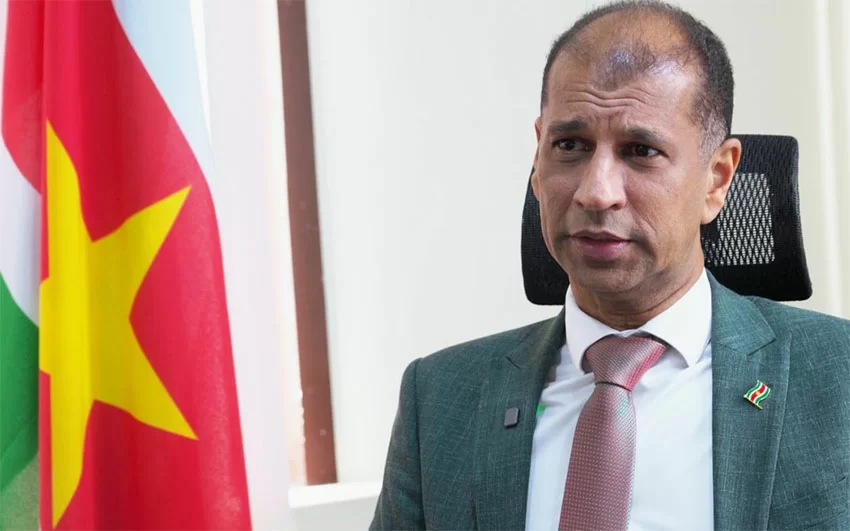
    Health and Welfare Minister André Misiekaba revealed during a government press conference that Brazil has only this week provided positive response to Suriname’s urgent request for importing the necessary insecticides. The minister acknowledged additional outreach to French Guiana authorities, from whom an informal positive response is anticipated regarding chemical supplies.

    Minister Misiekaba expressed unexpected difficulties in the procurement process, stating: “I was unaware of the complexities involved in importing these specialized chemicals. This knowledge will prevent similar situations during next year’s seasonal outbreak period.” He noted that according to the Bureau of Public Health (BOG), spraying operations occurred only once between 2020 and 2025, indicating insufficient prior attention to preventive measures.

    The health minister emphasized that logistical systems and professional contacts had to be reestablished from scratch, though communication channels are now properly organized. Authorities stand ready to commence spraying operations immediately upon chemical delivery.

    Meanwhile, health officials urge citizens to implement personal protective measures including eliminating mosquito breeding sites—particularly areas with stagnant water—sleeping under insecticide-treated nets, and strengthening immune systems through proper nutrition and hygiene practices.

  • Iran kondigt voorwaardelijke wapenstilstand aan buurlanden

    Iran kondigt voorwaardelijke wapenstilstand aan buurlanden

    Interim Iranian President Masoud Pezeshkian has declared that Iran will cease offensive operations against neighboring countries unless provoked by attacks from these nations. This significant announcement comes during the second week of intensified hostilities involving the United States, Israel, and Iran, marking a potential shift in regional dynamics.

    The interim government unanimously approved this policy measure on Friday, with Pezeshkian extending formal apologies to neighboring states for previous military actions. His televised address, broadcast through Iranian state media, represents a modest de-escalation gesture amid widespread devastation across more than 170 Iranian cities affected by aerial bombardments.

    In his pre-recorded statement, Pezeshkian strongly condemned attacks targeting residential areas, educational institutions, and medical facilities, emphasizing their violation of international legal standards. He called for national unity and solidarity among Iranians while delivering a firm message to the United States: unconditional surrender remains an illusion, and Iran remains committed to international law and humanitarian principles.

    Simultaneously, the Islamic Revolutionary Guard Corps (IRGC) issued a separate declaration affirming respect for neighboring nations’ sovereignty while maintaining their defensive posture. However, the powerful military organization warned that continued hostile actions would result in comprehensive targeting of all American and Israeli military assets throughout the region with overwhelming force.

    According to Al Jazeera analyst Resul Serdar, actual strategic security decisions reside with the IRGC rather than political figures like Pezeshkian. IRGC leader Ahmad Vahidi is recognized as one of the organization’s most radical commanders since its establishment.

    The conflict has extensively impacted Gulf states including Saudi Arabia, Qatar, the United Arab Emirates, Kuwait, Bahrain, and Oman due to their hosting of American military installations. Nations including Iraq, Jordan, Azerbaijan, and Turkey have also experienced collateral damage from retaliatory strikes.

    These military operations have resulted in numerous casualties, significant infrastructure damage, widespread aviation disruptions, and temporary airspace closures. The confrontation has severely affected global energy markets, with Qatar’s Energy Minister Saad al-Kaabi warning that prolonged conflict could halt regional oil and gas exports within weeks, potentially triggering global economic repercussions through energy price surges, product shortages, and manufacturing supply chain disruptions.

    Current casualty figures include six American personnel killed in an Iranian strike on a U.S. command center in Kuwait, while over 1,200 Iranians have perished during the conflict’s initial week from American and Israeli attacks.

  • Regering wil woningbouw weer op gang brengen met goedkope hypotheken

    Regering wil woningbouw weer op gang brengen met goedkope hypotheken

    The Surinamese government has announced the revival of its national housing construction program to address the country’s critical shortage of approximately 30,000 homes. President Jennifer Simons revealed that the newly operational National Housing Fund will provide affordable mortgage financing to citizens at interest rates ranging from 3% to 5%, significantly below previous rates.

    During a government press conference, President Simons confirmed the fund’s operational status and the appointment of dedicated staff to implement the program. The initiative will involve collaboration between government entities, banking institutions, and private construction companies to ensure comprehensive execution.

    The fund currently holds approximately SRD 270 million (Surinamese dollars) for mortgage distribution through banking channels. This institutional approach aims to ensure transparency and prevent favoritism in housing and financing allocations. Significant regulatory changes include the elimination of the previous requirement for applicants to purchase land before seeking mortgages, following consultations with the Central Bank of Suriname.

    The government will also focus on existing housing projects where landowners haven’t begun construction. In these areas, authorities will first establish essential infrastructure including roads, water, and electricity systems, enabling residents to concentrate solely on building their homes.

    The program includes partnerships with construction firms developing complete residential projects featuring diverse housing types to accommodate both low and middle-income families within the same neighborhoods. President Simons emphasized the economic benefits, noting that increased construction activity will generate employment in both the construction sector and building materials industries.

    Social Affairs and Public Housing Minister Diana Pokie acknowledged initial data deficiencies regarding housing applicants. While a new digital portal has been established for citizen registration, the government will initially prioritize existing registrations in the system’s first phase of implementation.

  • President: Lagere goudroyalty kan juist meer inkomsten opleveren

    President: Lagere goudroyalty kan juist meer inkomsten opleveren

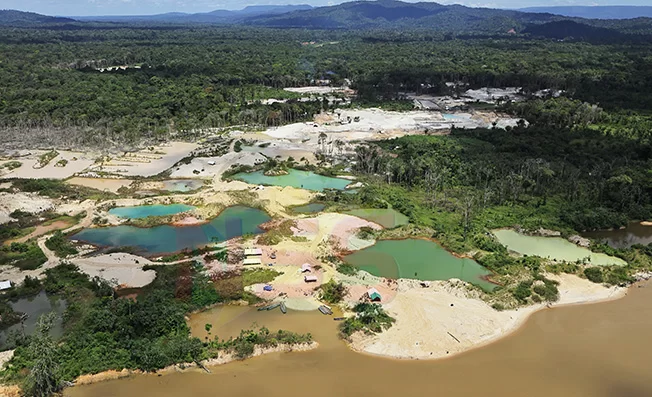
    Surinamese President Jennifer Simons has announced a strategic temporary reduction in gold royalties, outlining a calculated approach to stimulate legal gold sales and ultimately increase state revenues. The policy shift responds to persistent challenges in regulating the nation’s gold sector, where elevated taxation has historically driven transactions toward illegal channels.

    President Simons cited a successful precedent: a 50% temporary reduction in PSA license fees that resulted in application numbers surging from approximately 300 to 3,000 monthly. This previous intervention ultimately generated higher state revenues despite the lowered rate, demonstrating how strategic tax adjustments can expand the formal economic base.

    The gold sector presents similar dynamics. Historical data reveals that when royalties increased in previous years, legal gold exports declined despite rising global gold prices—clear evidence that significant quantities were diverted through illicit channels. The temporary royalty reduction aims to test whether lower rates can redirect gold flows back to legal export pathways, thereby increasing overall state income.

    Simultaneously, the government is implementing enhanced regulatory measures and strengthening oversight mechanisms. President Simons acknowledged that Suriname’s gold sector has suffered from insufficient organization and control for years. Multiple agencies, including police and specialized regulatory bodies, are now collaborating to improve tax collection and establish comprehensive sector oversight.

    The royalty collection currently occurs at points of sale and export. Additional measures are under development to combat smuggling and integrate more gold into the formal economy through official channels.

    President Simons emphasized the provisional nature of this intervention. Should the reduction fail to stimulate increased legal exports or higher revenues, the government stands ready to readjust royalty rates accordingly. This data-driven approach reflects a pragmatic strategy to optimize tax policy while addressing structural challenges in resource governance.

  • Cuba meldt vijfde dode na vuurgevecht met Florida-geregistreerde speedboot

    Cuba meldt vijfde dode na vuurgevecht met Florida-geregistreerde speedboot

    Cuban authorities have confirmed a fifth individual has died from injuries sustained during a violent maritime confrontation last month involving a Florida-registered speedboat. The incident, which occurred off Cuba’s northern coast, has escalated tensions between Havana and Washington while revealing alleged terrorist infiltration attempts.

    According to Cuba’s Ministry of the Interior, Roberto Alvarez Avila succumbed to his wounds on March 4th. The Ministry stated that remaining injured detainees continue receiving specialized medical treatment following the February 26th firefight that left four dead and six wounded.

    The confrontation unfolded when Cuban naval patrols intercepted a vessel carrying ten armed individuals approaching the island northeast of Cayo Falcones, approximately one mile from shore. Cuban investigators assert the passengers were U.S.-based Cuban nationals attempting to “unleash terrorism” on the island nation. Authorities displayed seized weaponry including a dozen high-powered firearms, over 12,800 rounds of ammunition, and 11 pistols.

    Cuban officials emphasized that suspect statements and forensic evidence have strengthened the case against the detainees, while new leads suggest possible accomplices within the United States. Six suspects now face formal terrorism charges, though Havana has released limited operational details about the incident.

    The event occurs amid deteriorating Cuba-U.S. relations under the Trump administration and increasing economic pressure on Havana. Cuba’s economy faces additional strain due to uncertain oil supplies from Venezuela following the U.S. military operation that extracted Venezuelan President Nicolás Maduro to American territory.

    Notably, the vessel’s Florida registration number remains unverifiable as boat registrations in the state are not publicly accessible records, complicating independent investigation of the incident.

  • Simons benadrukt ordening mediaveld en journalistiek via accreditatie

    Simons benadrukt ordening mediaveld en journalistiek via accreditatie

    Surinamese President Jennifer Simons has called for comprehensive regulation of the nation’s media landscape, citing how technological advancements have dramatically outpaced existing legal frameworks. Speaking at a government press conference on Friday, the head of state emphasized the urgent need to establish order within journalism practices, particularly addressing the proliferation of unverified information on social media platforms.

    The President identified specific concerns regarding content manipulation through artificial intelligence, noting that the deliberate falsification of text, imagery, and audio recordings would soon carry criminal penalties. “These actions are comparable to forgery in documents, but executed through words and visuals,” President Simons stated, highlighting how AI technology now enables the creation of fabricated statements attributed to individuals.

    This regulatory push emerged following an incident where Suriname’s Communication Service reportedly denied access to certain media outlets not appearing on the Surinamese Association of Journalists’ (SVJ) mailing list. SVJ President Naomi Hoever clarified that while discussions with the government are ongoing regarding a self-regulation system, the association currently only accredits its own members who commit to the organization’s code of conduct and professional ethics.

    Both leadership figures stressed that the proposed framework aims to establish systematic organization rather than content-based restrictions. “This structuring is not intended to limit press freedom or free expression,” Hoever affirmed. “Everyone may pursue journalistic activities, but press freedom is not absolute and should operate within responsible parameters.”

    The SVJ, celebrating its 35th anniversary, has initiated an accreditation process beginning with its existing membership while allowing non-members to obtain credentials upon committing to professional standards. Simultaneously, the Association of Radio and Television Companies in Suriname (VRTS) is developing a parallel system for registered media enterprises. Both organizations plan to host information sessions for media professionals in the coming weeks to clarify the emerging regulatory landscape.

  • VSB: prijsstijging consumptiegoederen gevolg van bredere economische factoren

    VSB: prijsstijging consumptiegoederen gevolg van bredere economische factoren

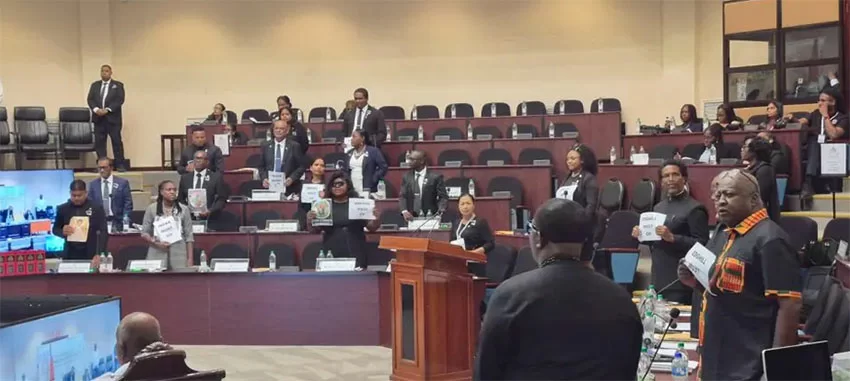
    The Association of Surinamese Business (VSB) presented a comprehensive analysis to the National Assembly on Monday, asserting that rising consumer prices in Suriname stem from multiple economic factors rather than corporate profit margins alone. The parliamentary Committee on Economic Affairs, Entrepreneurship and Technological Innovation (EZOTI) convened the meeting to address mounting concerns about price developments and their impact on household purchasing power.

    Recent data reveals Suriname’s year-on-year inflation reached approximately 11% in January 2026, creating significant pressure on living standards. The VSB identified external and structural elements as primary drivers, emphasizing the nation’s heavy reliance on imports which rapidly transmits international price increases and exchange rate fluctuations to domestic markets.

    Key contributing factors include import costs, currency exchange developments, logistical expenses, energy prices, and broader macroeconomic conditions. The business association clarified that companies operate within these economic constraints, making price increases not solely attributable to entrepreneurial decisions. Structural elements such as budgetary pressures, monetary developments, and rising operational costs equally influence pricing structures.

    The VSB advocated for sustainable inflation control through structural measures rather than short-term interventions. They emphasized the critical importance of macroeconomic stability, enhanced production capacity, export promotion, and predictable fiscal policies. The association warned that ad-hoc price controls without comprehensive economic reforms could eventually cause supply disruptions and additional market pressures.

    The dialogue expanded to encompass price regulation monitoring, tax burdens on businesses, the role of the informal economy, and Suriname’s preparation for emerging oil and gas opportunities. The VSB expressed commitment to collaborating with government and parliamentary entities to develop policy proposals that simultaneously protect citizens’ purchasing power while supporting entrepreneurship and economic growth. The committee has requested written recommendations from participants to inform future policy formulation.

  • Groeiende vraag naar Chinese EV’s zet druk op Tesla; BYD lanceert innovatieve Blade Battery

    Groeiende vraag naar Chinese EV’s zet druk op Tesla; BYD lanceert innovatieve Blade Battery

    Chinese automotive giant BYD has unveiled its revolutionary second-generation Blade Battery, marking a significant technological leap that strengthens China’s position in the increasingly competitive electric vehicle market. The announcement, made by Chairman Wang Chuanfu during a Shenzhen launch event, introduces battery technology capable of charging from 20% to 97% in under 12 minutes even at extreme temperatures of -20° Celsius.

    The advanced battery system delivers an impressive 777-kilometer range on a single charge while featuring higher energy density that extends the range of BYD’s luxury models—Denza Z9GT and Yangwang U7—to over 1,000 kilometers. Wang emphasized that the new batteries exceed China’s recently enhanced safety standards, addressing critical consumer concerns about EV reliability.

    Complementing its technological advancements, BYD is aggressively expanding its charging infrastructure with plans to deploy 20,000 Flash Charging stations by late 2026, including 2,000 strategically positioned along highways. The network already surpassed 4,000 stations in early March, demonstrating the company’s commitment to supporting its technological innovations with robust infrastructure.

    China’s EV manufacturers are experiencing unprecedented global growth, with exports surging over 70% in 2025 according to China Association of Automobile Manufacturers data. European and Southeast Asian markets have emerged as primary growth drivers, with Chinese brands rapidly gaining market share through competitive pricing, extended ranges, and technological innovations.

    The technological developments present substantial challenges for Tesla, which faces intensifying competition both in China—the world’s largest EV market—and internationally. Industry analysts suggest BYD’s focus on charging speed, range, and safety addresses key consumer pain points that could reshape competitive dynamics across global markets.

    This battery technology breakthrough signals a new phase in the global EV race where technological superiority and infrastructure development will determine market leadership in the accelerating transition to electric transportation.

  • Vrouwen cruciaal voor agrosector, maar eerlijke vergoeding blijft uitdaging

    Vrouwen cruciaal voor agrosector, maar eerlijke vergoeding blijft uitdaging

    Women constitute the fundamental pillar of Suriname’s agricultural sector, yet they consistently face inadequate recognition and compensation for their substantial contributions. Curt Delice, representative of the Inter-American Institute for Cooperation on Agriculture (IICA), emphasizes that targeted policy interventions are crucial to eliminate structural barriers and strengthen the position of women in farming.

    Delice asserts that while women’s role in agriculture has been historically secured and will remain unchanged in the coming decade, the challenge lies in ensuring they benefit more substantially from their essential contributions. He identifies numerous existing challenges that require specifically differentiated policies to address traditional obstacles faced by female agricultural workers.

    The digital era presents unprecedented opportunities for women to leverage information and communication technologies as powerful platforms. According to Delice, social media channels like Facebook and WhatsApp provide effective alternatives to mainstream bureaucratic channels, enabling women to promote their products, network effectively, lobby for their interests, and ultimately gain long-overdue recognition within the agro-sector.

    With over 80% of agricultural production based on family farming, women play a crucial role in Suriname’s food systems. “Women will always be the backbone of the agricultural sector, particularly within the rural space,” Delice affirmed.

    Maitrie Jagroep, Deputy Director of Agricultural Research at the Ministry of Agriculture, Livestock and Fisheries (LVV), confirms that gender mainstreaming has been incorporated into departmental policy for several years, though implementation is only now taking concrete shape. The ministry has initiated several projects emphasizing increased female participation, noting improved visibility of women in agricultural events and activities.

    Jagroep highlights the gender-specific challenges posed by climate change, noting women’s physical limitations in performing certain tasks during extended droughts when water carrying becomes necessary, while simultaneously managing household responsibilities. During prolonged rainfall, their crops face flooding vulnerabilities, making them particularly susceptible to climate impacts.

    The ministry is implementing innovative practices to benefit women in agriculture, including increased female involvement in hydroponic systems and greenhouse cultivation rather than open-field farming. Fertigation irrigation systems, requiring less water, present more favorable options for female farmers, demonstrating the government’s commitment to creating more equitable working conditions.