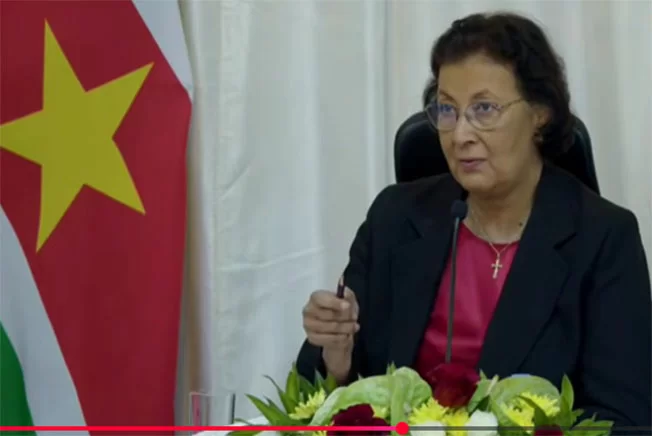
Surinamese President Jennifer Simons has called for comprehensive regulation of the nation’s media landscape, citing how technological advancements have dramatically outpaced existing legal frameworks. Speaking at a government press conference on Friday, the head of state emphasized the urgent need to establish order within journalism practices, particularly addressing the proliferation of unverified information on social media platforms.
The President identified specific concerns regarding content manipulation through artificial intelligence, noting that the deliberate falsification of text, imagery, and audio recordings would soon carry criminal penalties. “These actions are comparable to forgery in documents, but executed through words and visuals,” President Simons stated, highlighting how AI technology now enables the creation of fabricated statements attributed to individuals.
This regulatory push emerged following an incident where Suriname’s Communication Service reportedly denied access to certain media outlets not appearing on the Surinamese Association of Journalists’ (SVJ) mailing list. SVJ President Naomi Hoever clarified that while discussions with the government are ongoing regarding a self-regulation system, the association currently only accredits its own members who commit to the organization’s code of conduct and professional ethics.
Both leadership figures stressed that the proposed framework aims to establish systematic organization rather than content-based restrictions. “This structuring is not intended to limit press freedom or free expression,” Hoever affirmed. “Everyone may pursue journalistic activities, but press freedom is not absolute and should operate within responsible parameters.”
The SVJ, celebrating its 35th anniversary, has initiated an accreditation process beginning with its existing membership while allowing non-members to obtain credentials upon committing to professional standards. Simultaneously, the Association of Radio and Television Companies in Suriname (VRTS) is developing a parallel system for registered media enterprises. Both organizations plan to host information sessions for media professionals in the coming weeks to clarify the emerging regulatory landscape.