标签: Suriname

苏里南

  • China waarschuwt tegen regimewissel in Iran

    China waarschuwt tegen regimewissel in Iran

    Amid escalating tensions between the United States, Israel, and Iran, China has positioned itself as a vocal advocate for diplomatic resolution in the Middle East. Chinese Foreign Minister Wang Yi, speaking during a press conference at the sidelines of a major annual political gathering in Beijing, issued a stark warning against attempts to orchestrate regime change in Iran, emphasizing the critical importance of respecting national sovereignty.

    Wang characterized the ongoing conflict as ‘a war that should never have occurred’ and one that ‘benefits no party involved.’ He articulated China’s firm position that military solutions inevitably breed hatred and spawn new crises rather than delivering sustainable resolutions. The Foreign Minister underscored that Middle Eastern nations must independently determine their own affairs without external interference, stating that ‘the people of the Middle East are the true masters of their region.’

    The Chinese diplomat employed vivid metaphorical language, asserting that ‘a strong fist doesn’t equate to a strong argument’ and cautioning against reverting to the ‘law of the jungle’ in international relations. He called upon all involved parties to promptly return to negotiation tables, advocating for dialogue as the primary mechanism for resolving differences and establishing collective security frameworks.

    China has offered to collaborate with regional partners to restore order, provide stability for affected populations, and promote global peace. Simultaneously, Wang reaffirmed the resilience of China-Russia relations, describing them as ‘steadfast and indestructible’ despite Western criticism of Russia’s actions in Ukraine.

    The geopolitical context remains volatile, with the United States and Israel conducting strikes on Iranian targets—including Tehran’s oil storage facilities and refineries—triggering significant fires. Iran has responded with attacks on American bases throughout the Gulf region, with collateral damage affecting neighboring nations such as the United Arab Emirates, Kuwait, Qatar, Bahrain, and Saudi Arabia through missile and drone assaults.

    Notably, despite Iranian President Masoud Pezeshkian’s official apology for these attacks, Tehran has continued its military operations, drawing criticism from hardline factions within the country. A leaked assessment from the U.S. National Intelligence Council suggests that even large-scale American military operations would unlikely succeed in overthrowing Iran’s established military and religious power structures—directly contradicting claims that external forces could install preferred leadership.

    The conflict’s economic ramifications continue to intensify, with rising oil prices and disruptions to critical trade routes like the Strait of Hormuz. Regional leaders and international observers increasingly emphasize the dangers of further escalation and the urgent necessity for diplomatic solutions.

  • C-47 staat stil bij dubbele rol van werkende vrouwen

    C-47 staat stil bij dubbele rol van werkende vrouwen

    On International Women’s Day, labor federation C-47 delivered a comprehensive assessment of women’s multifaceted contributions to socioeconomic development, emphasizing their dual roles in both formal employment and domestic spheres. The organization presented a detailed analysis of how female workers sustain economic productivity while simultaneously maintaining household stability through often-unrecognized labor.

    The federation’s statement highlighted that women constitute a fundamental pillar of national economic infrastructure across diverse sectors including healthcare, education, retail, manufacturing, and public administration. Their professional engagement is characterized by exceptional dedication, discipline, and technical competence despite frequently challenging circumstances requiring substantial resilience.

    C-47’s analysis revealed that women’s economic participation extends beyond conventional metrics, as many commence secondary responsibilities following formal working hours. This includes child supervision, household management, and family support systems—critical functions that remain largely unquantified in economic statistics yet form essential societal foundations.

    The labor organization identified this dual role as both an economic necessity and social reality, noting that modern workplaces continue expecting professional excellence while women concurrently manage disproportionate domestic burdens. This paradigm necessitates broader recognition of women’s compound contributions beyond traditional economic measurements.

    International Women’s Day serves not merely as symbolic appreciation but as a catalyst for ongoing awareness regarding equitable workplace treatment, according to C-47. The federation emphasized that struggles for dignified working conditions, equal opportunity, and professional respect remain urgently relevant across numerous industries.

    The organization advocated for comprehensive labor market reforms including equitable compensation structures, safe working environments, and enhanced leadership development opportunities. Additionally, C-47 stressed the importance of policy frameworks that acknowledge women’s need to balance professional ambitions with familial and societal obligations.

    C-47’s proclamation characterized working women as multidimensional actors—simultaneously serving as organizational leaders, educators, mentors, and foundational supporters of communal success. While acknowledging generational progress in opportunity expansion, the federation insisted that sustained advancement requires continuous institutional commitment.

    The statement concluded with explicit solidarity expressions toward nurses, educators, administrative staff, industrial workers, entrepreneurs, mothers, and caregivers—recognizing their simultaneous contributions to economic development, family structures, and national future-building.

  • We zijn er nog niet; maar we zetten door

    We zijn er nog niet; maar we zetten door

    On March 8th, 2026, Suriname joins the global community in commemorating International Women’s Day—a moment dedicated to recognition, reflection, and renewed determination. While progress has been achieved, the journey toward full gender equality remains ongoing and demands persistent effort.

    This observance, established by the United Nations, transcends symbolism. It represents a continuous call to action for justice, equality, and human dignity worldwide. True advancement requires unwavering commitment, solidarity, and courage.

    Suriname marked a historic milestone on July 16, 2025, with the inauguration of its first female president since gaining independence in 1975, Her Excellency Jennifer Geerlings-Simons. This breakthrough signifies far more than a political shift; it embodies a transformative step in leadership representation and affirms national confidence in women’s capacity to guide the nation’s future. This achievement sends a powerful message to young girls across the country: their place is at every decision-making table.

    However, significant challenges persist. The UN Secretary-General’s 2026 message highlights that global gender equality faces substantial legal hurdles. Women worldwide possess approximately only 64% of the legal rights available to men, revealing inequality that is not merely social or cultural, but often embedded within judicial frameworks.

    The UN’s theme for 2026, aligned with the 70th session of the Commission on the Status of Women, emphasizes three critical pillars: the abolition of discriminatory legislation, the guarantee of full legal equality, and the transition from symbolic gestures to tangible action. This necessitates robust law enforcement and active combat against gender-based violence.

    Progress must be inclusive, reaching all women including those experiencing poverty, living with disabilities, residing in rural areas, and girls denied educational access. In Suriname, legislative protection alone proves insufficient, as evidenced by recent increases in violence against women. True justice requires enforcement mechanisms, public awareness campaigns, and cultivating a culture of respect. Women are not property but equal partners bearing inherent dignity, strength, and wisdom. Societies that fail to protect women ultimately undermine their own future.

    This day also calls for solidarity with women and children in conflict zones including Gaza, the West Bank, Ukraine, and other Middle Eastern regions. In wartime, they endure the heaviest burdens: loss of family, violence, displacement, and profound uncertainty. During the sacred month of Ramadan—a time for reflection, mercy, and protecting the vulnerable—we are reminded that true strength lies in compassion, not power, and that greatness is measured by protecting innocent lives, not military might. No woman should give birth under bombardment; no child should know sirens as the soundtrack to their childhood.

    The global community must urgently prioritize diplomacy, dialogue, and humanity. Our world suffers not from a lack of weapons, but from a deficit of wisdom and compassion.

    International Women’s Day represents unity rather than division. It concerns not only women but all humanity:
    • Secure women strengthen societies
    • Economies grow with equal opportunities for women
    • Peace flourishes when women are respected

    This day reinforces our conviction that progress is achievable—step by step, law by law, and heart by heart. While the destination remains ahead, the journey continues, together.

    – Rose-Anne Franklin

  • NDP benadrukt rol van vrouwen en wijst op leiderschap Simons

    NDP benadrukt rol van vrouwen en wijst op leiderschap Simons

    In a significant political statement marking International Women’s Day, Suriname’s National Democratic Party (NDP) has issued a powerful declaration celebrating women’s pivotal role in national development and governance. The party emphasized its longstanding commitment to advancing women’s rights, particularly highlighting its instrumental role in eliminating legal barriers through the landmark Decree 11C, which abolished women’s legal incapacity.

    The NDP pointed to its current leadership as embodiment of this vision, noting that ‘the ship of state is steered by a strong woman: our chairperson Jennifer Geerlings-Simons.’ The party characterized her leadership as representing stability, balance, and determination during a period requiring steadfastness, courage, and moral guidance.

    Beyond political representation, the statement acknowledged women’s multifaceted contributions across all societal sectors—as mothers, educators, healthcare professionals, entrepreneurs, civil servants, agricultural workers, and volunteers. The NDP articulated its foundational belief that women should not stand behind others but rather lead independently across ministries, corporations, directorates, and critical institutions.

    While asserting that women’s achievements are valued daily, the party designated March 8th as a particularly significant occasion to reflect on hard-won rights, societal contributions, and the continuing role of women in national advancement. The statement serves as both a celebration of progress and a reaffirmation of the party’s commitment to gender equality in Surinamese society.

  • Escalatie in VS-Iran conflict: Oekraïne biedt steun aan Saudi-Arabië tegen Iraanse drones

    Escalatie in VS-Iran conflict: Oekraïne biedt steun aan Saudi-Arabië tegen Iraanse drones

    The Middle East faces unprecedented escalation as military confrontations between the United States and Iran intensify, with expanding regional repercussions and global economic implications. Iranian forces have launched sustained attacks against American bases and allied installations across the Gulf region, while simultaneously, Ukraine has emerged as an unexpected player in the conflict by offering its hard-earned drone warfare expertise to Saudi Arabia and other Gulf states.

    Ukrainian President Volodymyr Zelenskyy announced via social media platform X that he has engaged in direct discussions with Saudi Crown Prince Mohammed bin Salman regarding cooperative measures to counter the Iranian drone threat. This development marks a significant geopolitical shift as Ukraine, having developed extensive experience intercepting Iranian-designed Shahed drones through its conflict with Russia, now positions itself as a defense technology exporter to wealthy Gulf nations.

    The Ukrainian defense industry has pioneered cost-effective drone interception systems that present a viable alternative to expensive American missile defense systems. While Iranian Shahed drones cost approximately $30,000 per unit and Patriot PAC-3 interceptor missiles require millions per launch, Ukraine produces interception drones for merely $1,000-$2,000 each, creating a potentially game-changing economic advantage in aerial defense warfare.

    Meanwhile, the United States and Israel have conducted precision airstrikes against Iranian strategic targets, including oil storage facilities and refineries in Tehran, resulting in significant fires throughout the Iranian capital. Top Iranian official Ali Larijani warned that the U.S. would ‘pay a high price’ for its military actions, while former President Donald Trump has threatened to further escalate strikes against Iranian interests.

    Despite Iranian President Masoud Pezeshkian’s official apology to neighboring nations for collateral damage, Iranian rocket and drone attacks continue against American bases throughout the United Arab Emirates, Kuwait, Qatar, Bahrain, and Saudi Arabia. Pezeshkian’s conciliatory gestures faced immediate criticism from hardline elements within Iran’s Revolutionary Guard, who emphasized that military responses would continue unabated.

    The Israel-Iran front has similarly intensified, with Prime Minister Benjamin Netanyahu vowing to continue military operations with ‘full force’ against Iranian targets. Israeli airstrikes against Hezbollah positions in Lebanon have resulted in hundreds of casualties, dramatically increasing regional tensions.

    The conflict’s economic impact continues to expand with reduced oil production in Kuwait, Iraq, and Qatar driving global oil prices to multi-year highs. The strategic Strait of Hormuz has become effectively closed to shipping, placing tremendous pressure on worldwide energy supplies and threatening global economic stability.

    In a controversial diplomatic move, former President Trump reiterated demands for Western involvement in selecting Iran’s next Supreme Leader, a proposal immediately rejected by Iranian leadership. Hardline clerics in Tehran are reportedly preparing for rapid appointment proceedings to ensure continuity in Iran’s political leadership structure.

  • President Simons: positie van vrouwen cruciaal voor sterke samenleving

    President Simons: positie van vrouwen cruciaal voor sterke samenleving

    Surinamese President Jennifer Simons delivered a powerful address commemorating International Women’s Day, emphasizing that women’s development constitutes the cornerstone of a robust society. In her official statement, the head of state called for intensified efforts to create greater opportunities and strengthen the position of women across all sectors.

    The President expressed profound appreciation for women who actively pursue their ambitions while contributing meaningfully to societal progress. “I extend congratulations to all women who relentlessly pursue their objectives,” Simons declared. “Our collective endeavor to build a stronger society remains fundamentally important.”

    While acknowledging significant advancements in legal frameworks and educational access for Surinamese women, the President candidly recognized that substantial challenges persist. “We operate under no illusion that everything is perfect for women in our nation,” she noted. “Nevertheless, measurable progress has been achieved, particularly within legal protections and educational opportunities.”

    Simons underscored the government’s pivotal role in fostering an environment conducive to female advancement. “When women thrive, their children consequently thrive,” the President asserted. “This fundamental interconnection necessitates our unwavering commitment to female development initiatives.”

    The address also highlighted the importance of collaborative responsibility between genders. Simons urged men to actively contribute to creating environments where women can achieve their goals, while simultaneously encouraging women to remain mindful of the positions of men, sons, and fathers within society.

    “Our path to a resilient society can only be forged through cooperative effort,” the head of state concluded, reinforcing the necessity of unified action across gender lines to achieve meaningful societal transformation.

  • Visserijsector waarschuwt voor aantasting onafhankelijkheid Viskeuringsinstituut

    Visserijsector waarschuwt voor aantasting onafhankelijkheid Viskeuringsinstituut

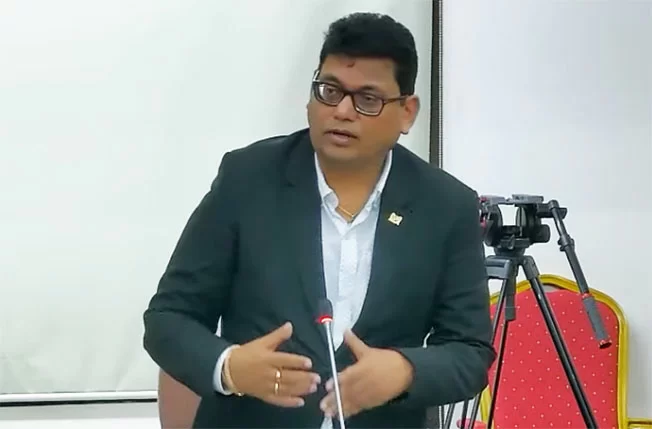
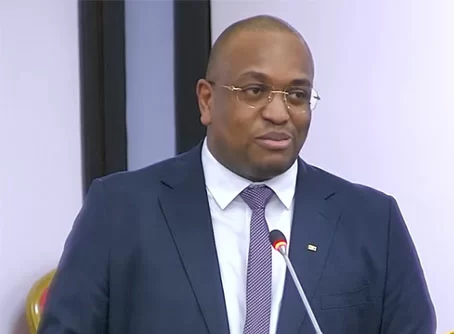
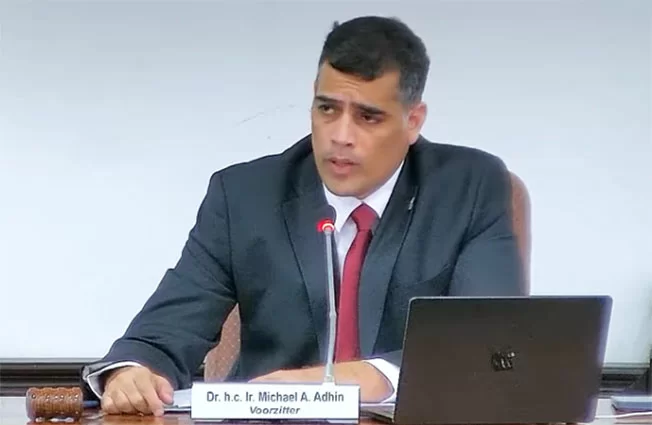
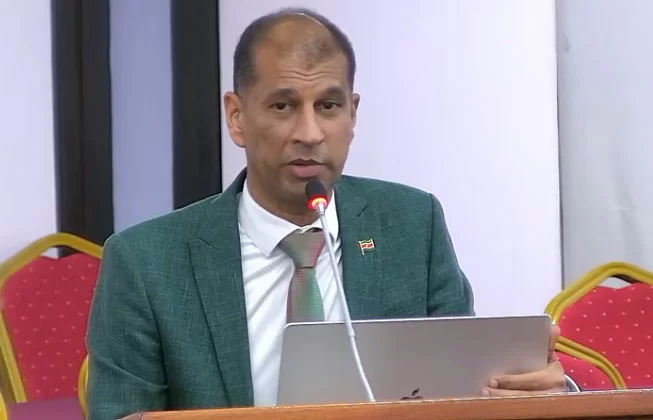
    Suriname’s parliamentary Committee on Agriculture, Livestock, and Fisheries recently convened to address growing concerns surrounding the Fish Inspection Institute (VKI), a critical regulatory body overseeing the nation’s seafood safety standards. During the session, Minister Mike Noersalim detailed the institution’s ongoing transformation and announced the appointment of a new supervisory board chaired by Emanuel Enjoem.

    The VKI maintains responsibility for monitoring fishery product safety throughout production, processing, import, and export operations, serving as a cornerstone in upholding international quality standards essential for Suriname’s global trade relationships. However, recent governmental moves have sparked significant apprehension within the fisheries sector.

    Udo Karg, President of the Suriname Seafood Association (SSA), expressed astonishment at the minister’s declarations, highlighting that the VKI has long been regarded as a model institution throughout the Caribbean region. Karg emphasized the institute’s international acclaim and recent commendations for its operational excellence. The sector further noted that the VKI operates with complete financial independence without relying on state funds—a crucial aspect that ensures its regulatory autonomy.

    Industry representatives warned that political interference could jeopardize Suriname’s standing in international markets, particularly the European Union. Any compromise to the inspection system’s independence might potentially affect the country’s export listings, with far-reaching economic consequences. The sector previously raised concerns about the supervisory board appointments, claiming initial selections disregarded legal requirements for industry representation, necessitating subsequent adjustments.

    Additional unease followed announcements of potential internal reorganization within VKI, prompting calls to prevent recurrence of issues experienced by other regulatory bodies. The fisheries sector has committed to vigilant monitoring of developments, emphasizing the imperative to preserve VKI’s autonomous status to maintain international credibility and market access.

  • Somohardjo bij Nationale Iftar: werk harder voor het land, niet voor groepen

    Somohardjo bij Nationale Iftar: werk harder voor het land, niet voor groepen

    Suriname witnessed a remarkable display of interfaith harmony during the second annual National Iftar gathering on Saturday evening, where thousands congregated to break fast collectively while reflecting on core principles of justice, respect, and national unity. The event, organized by initiator Bronto Somohardjo, transformed Roeli’s Event Centre into a vibrant tapestry of Suriname’s religious diversity.

    Addressing the substantial crowd, Somohardjo articulated the gathering’s fundamental purpose: bridging communities across cultural and religious divides. “The first edition represented initiative,” he stated. “This second edition demonstrates intention. We are building something enduring.” He highlighted Suriname’s unique religious synchrony, noting that while Muslims observe Ramadan, Christians concurrently undergo Lenten fasting, and Hindus recently celebrated Phagwa. “Different traditions, different rhythms, but one nation. That defines Suriname.”

    Bishop Karel Choennie, echoing sentiments from the previous year, emphasized the profound interconnectedness binding Suriname’s diverse populations. The ceremony transcended mere symbolic gesture, fostering genuine dialogue around shared societal values.

    Somohardjo further elaborated that principles like justice, responsibility, and respect transcend any single religion, instead forming the bedrock of effective leadership and robust civil society. “When I speak of justice,” he affirmed, “I advocate not solely for Muslims but for every Surinamese citizen—Christian, Hindu, Muslim, and all residents alike.”

    Issuing a compelling call to action, Somohardjo urged those in public service to rededicate themselves to national rather than partisan interests. “We who possess the privilege of serving the people must labor more diligently—not for a specific group or constituency, but for the entire nation.”

    The atmosphere within the venue radiated profound camaraderie as attendees, united in purpose, shared the transformative iftar moment, reinforcing the event’s role in strengthening the nation’s social fabric.

  • Suriname verkent samenwerking met VAE-bedrijf voor digitalisering overheid

    Suriname verkent samenwerking met VAE-bedrijf voor digitalisering overheid

    Surinamese President Jennifer Simons has engaged in high-level discussions with a delegation from United Arab Emirates-based technology firm Dalil to explore collaborative opportunities for the nation’s digital modernization initiatives. The meeting, held at the Presidential Cabinet, focused on accelerating the digital transformation of government services and enhancing the country’s digital infrastructure.

    During Friday’s meeting, President Simons outlined her administration’s policy objectives to digitize government operations and improve citizen service efficiency. The head of state emphasized that while this modernization represents a top government priority, the process must be implemented meticulously in accordance with established procedures and protocols.

    The Dalil delegation, representing an Abu Dhabi-based company specializing in secure identification systems and border management solutions, has conducted extensive site visits to multiple ministries and government institutions in recent days. Under the coordination of Suriname’s e-Government unit, a comprehensive assessment has been conducted to map the current state of digitalization across government agencies, according to the Communication Service Suriname.

    Llydion Dalfour, Director of e-Government, highlighted the significant learning opportunities for Suriname from the UAE’s expertise in digital government systems. “This is a highly regarded technical organization within the United Arab Emirates that plays a crucial role in their digital transformation journey and is now sharing their valuable experience with Suriname,” Dalfour stated.

    Ahmed Al Houti, Business Development Director at Dalil, expressed the company’s commitment to establishing a sustainable partnership with Suriname. He emphasized that the collaboration extends beyond technology implementation to strengthening government efficiency and enhancing citizen services. Dalil also identified potential cooperation opportunities in additional sectors, including aviation infrastructure.

    The productive discussions have resulted in the development of an initial action plan. Dalil is expected to submit a formal proposal in the near term based on the comprehensive data collected during their assessment. This proposal will undergo thorough evaluation by Surinamese authorities to determine feasibility and establish subsequent steps for the potential partnership.

  • Jagesar: Olieprijs stijgt ook in Suriname door oorlog rond Iran

    Jagesar: Olieprijs stijgt ook in Suriname door oorlog rond Iran

    Suriname’s state oil company anticipates significant economic repercussions from the Middle East conflict, with director Annand Jagesar confirming that rising global oil prices will directly impact domestic fuel costs. The escalating tensions between Iran, the United States, and Israel have triggered international market volatility, driving oil prices upward as investors anticipate potential supply disruptions from the critical oil-producing region.

    Jagesar explained that while increased oil prices will boost government revenues through the ‘government take’ mechanism—where approximately 68 cents of every dollar flows to state coffers—this financial gain comes with complex socioeconomic implications. The Staatsolie director dismissed suggestions that locally produced oil should translate to lower consumer prices, revealing that domestic refining capacity meets less than half of national gasoline demand. With daily consumption at 5,000 barrels versus a maximum production of 2,300 barrels, Suriname must import the substantial balance.

    The oil executive cautioned against artificial price suppression, citing Venezuela’s experience where decades of ultra-low fuel prices created unsustainable economic distortions. He emphasized that market-based pricing serves as crucial signals for energy transition, encouraging consumers and businesses to seek alternatives when prices rise. However, Jagesar advocated for targeted subsidies to protect vulnerable populations, particularly seniors living on fixed incomes, from bearing the brunt of energy cost increases.

    Global analysts warn that further disruptions to Middle Eastern oil trade could drive prices even higher, creating both revenue opportunities and affordability challenges for oil-producing nations like Suriname.