标签: Suriname

苏里南

  • CELOS slaat alarm: snelle toename cassaveziekte vraagt onmiddellijke alertheid

    CELOS slaat alarm: snelle toename cassaveziekte vraagt onmiddellijke alertheid

    Suriname’s agricultural sector faces an escalating biosecurity emergency as an aggressive strain of Cassava Witches’ Broom Disease demonstrates accelerated proliferation beyond initial projections. The Center for Agricultural Research in Suriname (CELOS) has issued heightened alerts to farming communities following concerning reports from multiple districts, particularly Marowijne, where cassava plants exhibit severe pathological manifestations.

    The pathogenic variant presents distinctive symptomatology including abnormal proliferation of branches, pronounced leaf deformities, and critically stunted growth patterns—rendering infected specimens entirely unsuitable for cultivation. CELOS Director Soedeshchand Jairam characterized the situation as epidemiologically urgent, emphasizing that “this disease manifestation represents a novel threat to Suriname’s ecosystem. Preventive inertia is not an option—our intervention velocity directly correlates with containment efficacy.”

    While cassava phytopathological conditions have historical prevalence across South America, this emergent strain demonstrates significantly heightened virulence. Previously documented in Southeast Asia since 2010 with substantial agricultural devastation, the pathogen breached Western Hemisphere defenses through initial 2023-2024 detections in French Guiana. Jairam notes this established “immediate cross-border contamination risks that current observations confirm have materialized at our national perimeter.”

    The disease transmission occurs primarily through human-mediated transportation of infected cassava cuttings, creating critical control challenges. CELOS advocates stringent phytosanitary protocols urging farmers to exclusively source planting materials from visually asymptomatic fields. The institution, supported by the International Center for Tropical Agriculture, is developing a national diagnostic certification system to validate planting material biosecurity.

    Digital surveillance reports indicate concentrated symptomatic manifestations across eastern and southern regions, with additional suspected cases identified in Brokopondo and Saramacca—suggesting potential multi-regional dissemination. CELOS is coordinating comprehensive field inspections to delineate contamination boundaries and severity gradients.

    Socioeconomic implications are substantial given cassava’s role as staple subsistence crop and primary income source for thousands of smallholder agriculturists. Pathogenic disruption of vegetative propagation mechanisms threatens direct production declines and severe livelihood impacts. Jairam emphasizes collaborative vigilance: “Farmers constitute our primary surveillance network—their observational acuity and willingness to report anomalies remain paramount to containment success.”

    The director concluded that effective pathogen management requires integrated response frameworks: “This battle transcends institutional capabilities—it demands consolidated action across farming communities, civil society, and governmental agencies as shared biological security responsibility.”

  • Chevron investeert US$ 19 miljard in 2026; sterke focus op VS en Guyana

    Chevron investeert US$ 19 miljard in 2026; sterke focus op VS en Guyana

    Energy giant Chevron has announced a comprehensive capital expenditure plan of $18 to $19 billion for 2026, positioning the company for strategic growth while maintaining financial discipline. The investment blueprint reveals a clear prioritization of upstream oil and gas production, particularly within United States shale operations and recently acquired offshore assets in Guyana.

    The announced spending range falls at the lower end of Chevron’s previously projected $18-21 billion annual investment guidance through 2030. This disciplined approach aligns with the company’s broader strategy to reduce operational costs, enhance efficiency, and deliver superior returns to shareholders amidst evolving energy market conditions.

    Chevron CEO Mike Wirth emphasized the strategic rationale behind the budget allocation: “Our 2026 capital budget targets the highest-return investments while maintaining discipline and efficiency. This approach enables us to further strengthen cash flow and profitability while positioning the company for sustainable long-term growth.”

    Approximately $17 billion of the total budget is dedicated to upstream activities, with $9 billion earmarked for United States operations. This includes a substantial $6 billion investment in shale development projects. The company projects it will maintain production exceeding 2 million barrels of oil equivalent per day from its US assets throughout 2026.

    Offshore developments receive significant attention with approximately $7 billion allocated to key projects including the prolific Stabroek Block offshore Guyana, Eastern Mediterranean operations, and production facilities in the Gulf of Mexico.

    The downstream division is expected to receive approximately $1 billion in funding, representing a slight decrease compared to current year allocations.

    Chevron’s strategic focus on Guyana follows its landmark $55 billion acquisition of Hess Corporation finalized in July. This transformative deal provided Chevron with a 30% stake in the highly productive Stabroek Block offshore Guyana, while simultaneously adding valuable assets in North Dakota’s Bakken shale formation to its portfolio.

  • Overheid zet cybersecurity hoger op agenda: e-Gov start bewustwordingstraject

    Overheid zet cybersecurity hoger op agenda: e-Gov start bewustwordingstraject

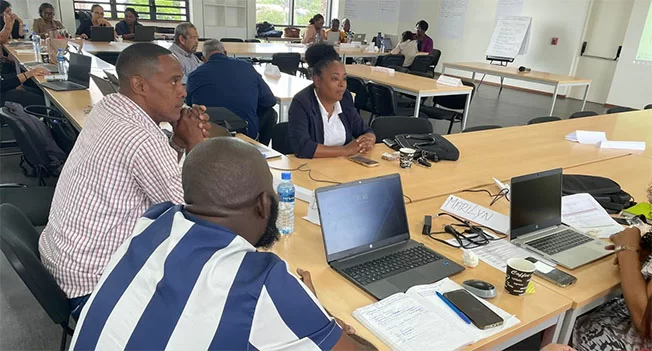
    Suriname’s E-Government (e-Gov) initiative has launched a comprehensive cybersecurity enhancement program through a strategic collaboration with global security leader Fortinet. The recently concluded Cybersecurity and Data Protection workshop brought together representatives from multiple ministries, security agencies, and government institutions to address growing digital threats.

    According to e-Gov Director Llydion Dalfour, cybersecurity has become a presidential priority under Jennifer Simons’ administration. “The President views digital transformation not merely as a technical upgrade but as a catalyst for efficiency, transparency, accessibility, and improved service delivery,” Dalfour stated. “Her vision encompasses a Suriname where technology empowers every citizen while strengthening trust in government institutions.”

    The workshop emphasized that modern, reliable, and secure systems are fundamental to digital governance. Dalfour highlighted the Head of State’s commitment to ensuring citizens can depend on systems that not only function effectively but also actively protect and defend sensitive data against evolving threats.

    Fortinet experts presented the latest global cybersecurity trends, current threat landscapes, and recommended protective measures during the knowledge-sharing session. The partnership between e-Gov and Fortinet dates back to the establishment of e-Gov, with the security firm having contributed significantly to developing GovGrid infrastructure—the digital backbone of Suriname’s government operations.

    This workshop forms part of a broader initiative to strengthen governmental digital security capabilities. Cybersecurity represents one of the foundational elements in the government’s wider digitalization agenda. “You can digitalize processes, but without trust, the system fails,” Dalfour emphasized. “Citizens and organizations must have absolute confidence that their data and systems remain secure.”

    Concurrently, the government is developing a national cybersecurity strategy that includes a framework for secure systems and standardized procedures for detecting and handling security incidents. e-Gov has committed to further refining and institutionalizing these protective structures to safeguard Suriname’s digital transformation journey.

  • LVV zet gezonde bodem centraal met minibeurs op World Soil Day

    LVV zet gezonde bodem centraal met minibeurs op World Soil Day

    In commemoration of World Soil Day, Suriname’s Ministry of Agriculture, Livestock, and Fisheries (LVV) organized an educational mini-fair in Groningen, Saramacca. The event, coordinated by the Directorate of Agricultural Research, Marketing, and Processing in collaboration with WUSC-Caribbean, aimed to elevate public awareness regarding the critical importance of soil health for sustainable agricultural practices.

    Farmers and students received comprehensive guidance on soil conservation, responsible fertilizer application, and sustainable cultivation techniques. A particularly popular feature allowed visitors to submit soil samples for immediate on-site analysis—a service demonstrating LVV’s recent initiative to provide complimentary soil testing for agricultural producers. This program enables farmers to optimize fertilization strategies and crop planning according to precise soil requirements.

    Addressing declining youth engagement in agricultural education, the fair placed special emphasis on inspiring student participation through interactive demonstrations. LVV showcased how modern agriculture integrates scientific knowledge, technological innovation, and environmental sustainability.

    Maitrie Jagroep, Deputy Director of LVV, emphasized that proper soil management directly contributes to national food security, climate resilience, public health, and environmental protection. The mini-fair provided Suriname’s agricultural community with an accessible platform for knowledge acquisition, experience sharing, and practical support—all centered on the fundamental principle that healthy soil forms the foundation of the nation’s agricultural future.

  • Duits luchtvaartbedrijf Aerothrive ingeschakeld om EU-veiligheidsverbod te beëindigen

    Duits luchtvaartbedrijf Aerothrive ingeschakeld om EU-veiligheidsverbod te beëindigen

    Suriname has initiated a comprehensive multi-year aviation safety overhaul program to remove the country from the European Union’s Air Safety List. The Civil Aviation Authority Suriname (CASAS) has formally contracted German-based international aviation security firm Aerothrive to lead the ambitious ‘SuriSafe-28’ initiative, designed to address critical deficiencies identified in recent audits conducted by both the International Civil Aviation Organization (ICAO) and the European Union.

    The partnership was officially sealed during a signing ceremony in Paramaribo, where CASAS Director Brian de Souza and Aerothrive CEO Patrick Lutz finalized the collaborative agreement. Aerothrive, a globally recognized aviation safety organization with a network of over 110 senior aviation experts worldwide, will coordinate the extensive program aimed at achieving full compliance with international aviation standards.

    CEO Lutz emphasized that the project extends beyond technical assistance, stating: ‘Our focus encompasses strengthening CASAS’s institutional capabilities, streamlining all improvement trajectories, and facilitating collaboration with key international partners including ICAO and the EU. Only through a coordinated, multifaceted approach can we achieve our shared objective.’

    Director de Souza characterized the initiative as a national priority, confirming: ‘This project enjoys the full support of our government. Removing the EU flight ban is absolutely crucial for our aviation safety standards, traveling public, and economic development. With Aerothrive’s expertise, we’re taking a substantial step toward sustainable improvement.’

    The aviation audits revealed decades of systemic underfunding and structural deficiencies within Suriname’s oversight system. According to CASAS officials, current conditions for recovery appear favorable, with increased political commitment, enhanced funding, and strategic international partnerships creating a solid foundation for meaningful progress.

  • Overstromingen Azië: Dodental blijft stijgen, meer regen verwacht

    Overstromingen Azië: Dodental blijft stijgen, meer regen verwacht

    A catastrophic flooding disaster across Southeast Asia has claimed over 1,500 lives, with rescue teams racing against time to reach survivors isolated by devastating landslides and floodwaters. The death toll includes 836 confirmed fatalities in Indonesia, 479 in Sri Lanka, 185 in Thailand, and three in Malaysia, while 859 individuals remain missing across the region.

    Environmental organizations are pointing to decades of systematic deforestation as a critical factor exacerbating the tragedy. The Indonesian Forum for the Environment (Walhi) revealed that uncontrolled mining operations, palm oil plantations, and illegal logging have stripped Sumatra of its natural defenses, removing the forests that once absorbed rainfall and stabilized soil. Satellite data from Global Forest Watch shows the affected Indonesian provinces of Aceh, North Sumatra, and West Sumatra have lost approximately 19,600 square kilometers of forest since 2000—an area larger than New Jersey.

    In response to growing public outrage, Indonesian President Prabowo Subianto has pledged policy reforms following his visit to the hardest-hit areas. “We must genuinely prevent deforestation and forest destruction. Protecting our forests is crucial,” the president stated. Environment Minister Hanif Faisol Nurofiq has announced investigations into eight companies suspected of contributing to the disaster through environmental degradation.

    The crisis continues to unfold as meteorological authorities warn of additional heavy rainfall and thunderstorms expected from Friday through Saturday. Teuku Faisal Fathani, head of Indonesia’s Meteorology, Climatology and Geophysics Agency, indicated saturated soils and swollen rivers remain primed for further flooding in vulnerable districts.

    Tens of thousands of survivors face severe shortages of food and clean water in isolated communities where floodwaters have washed away roads, bridges, and telecommunications infrastructure. In Batang Toru, the most severely affected region of North Sumatra, hundreds of hectares had been cleared for gold mining and energy projects, leaving slopes exposed and riverbeds clogged with sediment.

    For elderly survivors like 67-year-old Safnida, who now resides in an elementary school converted to an evacuation shelter in Padang city, the future remains uncertain. “We cannot expect life to always be good, right? I’m grateful to be alive while my house collapsed in the floods,” she reflected. “At my age, I don’t know if I can survive it again.”

  • Vier doden bij nieuwe VS aanval; Venezuela verwerpt aanval

    Vier doden bij nieuwe VS aanval; Venezuela verwerpt aanval

    The United States Navy has conducted another kinetic military strike against a vessel suspected of involvement in drug trafficking operations, resulting in four confirmed fatalities according to Pentagon officials. This incident represents the latest escalation in Washington’s intensified maritime campaign against narcotics smuggling that has targeted dozens of vessels since early September.

    Official statements from US Southern Command confirm the deployment of lethal force against what intelligence identified as a drug trafficking vessel. The operation, described as a ‘kinetic strike,’ eliminated four individuals aboard the suspect craft. This approach forms part of Operation Martillo, a broader multinational effort aimed at disrupting transnational criminal organizations operating in maritime transit zones.

    The Venezuelan government under President Nicolás Maduro has launched a vehement diplomatic response to the incident. Venezuela’s National Assembly has established a special commission to investigate the American military actions, with Parliamentary President Jorge Rodríguez promising a thorough examination of the circumstances. Venezuelan officials have condemned the strikes as illegal under international law and characterized them as part of broader US pressure tactics targeting the resource-rich nation, particularly its substantial oil and gas reserves.

    While the US government maintains that these military actions represent justified measures in the global fight against drug trafficking, international observers and legal experts have raised significant concerns. Critics argue that employing lethal force against suspected vessels on the high seas without judicial process or transparent evidence presentation may constitute extrajudicial executions. The legal justification for such attacks in international waters remains particularly contentious, with questions emerging about compliance with international maritime law and human rights standards.

  • Column: De transparante CEO die wantrouwen doorbreekt

    Column: De transparante CEO die wantrouwen doorbreekt

    In the heart of Suriname’s business landscape, Kuldipsingh Handelsmaatschappij has evolved from a modest construction materials shop into a diversified technical sector giant employing over 1,500 people. The company’s most remarkable transformation, however, lies in its port facility division—a venture that began as a speculative gamble on Suriname’s then-nascent oil and gas industry.

    A decade ago, Kuldipsingh made a bold strategic decision: investing in modern port infrastructure ahead of the anticipated energy boom. What many viewed as a mysterious and potentially suspicious expansion has now materialized into a fully operational facility serving international energy heavyweights including Halliburton, Shell, Staatsolie Blue Water shipping, Noble, and Petronas.

    The true revelation emerged during a recent masterclass on Local Content organized by Staatsolie, where journalists gained unprecedented access to the facility. The tour was led by an unassuming guide dressed in worn but neat jeans and shirt—later revealed to be Vinood Ramkhelawan, CEO of Kuldipsingh Port Facility NV. His accessible demeanor and humorous delivery contrasted sharply with corporate expectations, yet his operational expertise proved formidable.

    What distinguishes Ramkhelawan’s leadership approach is radical transparency. In an industry often characterized by defensive statements and polished corporate messaging, he openly discusses harsh business realities, political challenges, and daily obstacles facing Surinamese companies. This candor is gradually dismantling years of suspicion surrounding the company’s rapid growth.

    The operational reality visible behind the port gates demonstrates tangible results of vision and perseverance: future-proof infrastructure supporting Suriname’s energy sector. Rather than polished sales pitches, visitors witness factual operations, safety standards, and strategic planning.

    The success story highlights a crucial dichotomy: while Surinamese entrepreneurship demonstrates remarkable drive, knowledge, and courage to leverage the oil and gas sector, governmental support structures lag significantly—particularly regarding local content development. The political sphere emerges as the primary constraint on national energy development.

    Kuldipsingh’s journey exemplifies how vision, courage, and transparency can build not just infrastructure but trust. Under leadership that combines honest dialogue with operational excellence, the Surinamese dream becomes tangible—proof that calculated risks and centering local labor can transform national economic prospects.

  • Economie moet versneld transformeren naar ‘Suriname 3.0’

    Economie moet versneld transformeren naar ‘Suriname 3.0’

    Suriname stands on the brink of a historic economic transformation as its offshore oil and gas sector accelerates development, according to Oil, Gas & Environment Minister Patrick Brunings. The government has announced plans for a comprehensive national conference in April 2026 that will bring together government entities, private sector representatives, academic institutions, and international partners to establish a detailed roadmap for ‘Suriname 3.0’ – the nation’s transition to a modern, diversified, and sustainable economy.

    Minister Brunings, who comes from an oil industry background himself, emphasized the urgency of preparation: “We must make a structural leap. The offshore developments are real, investments are coming, and we must be ready.” The future oil and gas revenues are specifically intended not to maintain the status quo but to fundamentally reshape Suriname’s economic structure.

    The proposed roadmap outlines a strategic shift away from the gold sector toward multiple new revenue streams supported by oil income. Key development areas include water and climate industries, eco-tourism, high-tech agriculture, critical minerals, green technology, modern fisheries, natural pharmaceuticals, and renewable energy as a second economic pillar. Suriname aims to maintain and even expand its status as a >90% carbon sink nation through investments in solar, wind, hydro, bioenergy, geothermal, green hydrogen, and small-scale nuclear power.

    A crucial component involves reforming the government apparatus, with plans to gradually reduce the size of the public sector. Part of the civil service workforce will be retrained for positions in the oil, gas, and green industries. “The government cannot keep growing. Future jobs will emerge primarily in the productive sector. We must prepare personnel for that,” Brunings stated.

    The transformation faces significant challenges, particularly regarding local content capacity. A masterclass organized by Staatsolie highlighted growing gaps between industry requirements and current market capabilities. International companies operating in Suriname need local goods and services, technically specialized personnel, and supporting sectors including legal, financial, hospitality, logistics, and medical services.

    Despite evident motivation and potential among Surinamese businesses, substantial deficiencies remain – including shortages of well-trained technical staff, insufficient HSE and quality standards, lack of certifications, and inadequate training facilities. The Kuldipsingh Port Facility demonstrates both the rapid pace of offshore development and Suriname’s potential competitiveness, as major international players now operate locally rather than diverting to Trinidad & Tobago or Guyana.

    However, government preparedness lags behind market developments, particularly in policy formulation, regulations, local content requirements, and data collection. Without accelerated action, local small and medium enterprises risk exclusion from emerging opportunities. The April 2026 conference will establish foundations for a national oil and gas development plan, green economy investment strategy, public administration reform, robust local content agreements, and a long-term roadmap for Suriname’s economic future.

  • Cementpartnerschap Argos–Kersten bereikt 15-jarig jubileum

    Cementpartnerschap Argos–Kersten bereikt 15-jarig jubileum

    In a significant milestone for Suriname’s construction sector, Argos and Kersten Group today commemorate 15 years of strategic partnership that has fundamentally transformed the nation’s infrastructure landscape. This alliance represents a powerful fusion of international expertise and local legacy that has delivered exceptional value to Suriname’s development trajectory.

    The collaboration brings together Argos’s nine decades of pan-American construction expertise with Kersten Group’s remarkable 255-year heritage in Suriname. This unique synergy has enabled consistent delivery of premium cement solutions, comprehensive technical support, and reliable supply chain management even during global material shortages that have challenged construction industries worldwide.

    Melvin Ong A Kwie, Director of Massive and Industrial Business at Argos Suriname, emphasized the partnership’s significance: “Reaching this 15-year milestone fills us with immense pride. Our collaboration with Kersten has substantially enhanced our capacity to support Suriname’s growth while maintaining deep connections with the communities we serve.”

    Beyond their commercial operations, both companies have demonstrated profound commitment to social responsibility. The partnership has generated substantial local employment opportunities, supported numerous environmental initiatives, and funded community development projects that align with Suriname’s sustainable development goals.

    Imani Van Klaveren, CFO of Kersten Group, highlighted the partnership’s foundational principles: “These fifteen years demonstrate the immense value of a collaboration rooted in innovation, sustainability, and shared developmental vision. By combining Kersten’s local legacy with Argos’s technical expertise, we have significantly strengthened Suriname’s infrastructure sector and remain confident in our enduring positive impact.”

    Looking forward, both organizations have reaffirmed their commitment to continuing this transformative partnership. Their shared ambition remains unwavering: to continue building a stronger, more sustainable, and prosperous Suriname through innovative construction solutions and community-focused development initiatives.