标签: Suriname

苏里南

  • Venezolanen in  Salvadoraanse gevangenis willen hun deportatie aanvechten

    Venezolanen in Salvadoraanse gevangenis willen hun deportatie aanvechten

    A landmark judicial ruling has compelled the Trump administration to devise a repatriation strategy for hundreds of Venezuelan nationals who were controversially deported to El Salvador’s maximum-security prison system. The decision, handed down by US District Judge James Boasberg this week, mandates that the government must enable these individuals to challenge their deportations through proper legal channels in American courts.

    The case centers on approximately 252 Venezuelans who were removed from the United States in March under the rarely invoked Alien Enemy Act of 1798. This wartime legislation was employed by President Trump to bypass standard immigration proceedings and hearing requirements for those allegedly identified as members of the Tren de Aragua criminal organization.

    Speaking on behalf of the former detainees, Ysqueibel Peñaloza emphasized their demand for due process: “The judicial ruling now establishes that we must be granted the opportunity for fair proceedings in accordance with US law. We urgently call upon both the United States and Salvadoran governments to fully comply with this court order.”

    The deportees have requested unspecified national and international assistance for their legal defense. Many family members and attorneys have consistently disputed the gang affiliation allegations, noting that relatives were often left uninformed about the detainees’ whereabouts and legal status.

    This controversial deportation program has drawn substantial criticism from human rights organizations and triggered ongoing legal battles with the Trump administration. Judge Boasberg’s ruling gives the government a two-week deadline to present a comprehensive plan for facilitating the returnees’ access to US judicial review processes.

  • EBS voertuigen moeten gat in politiecapaciteit Regio Oost dichten

    EBS voertuigen moeten gat in politiecapaciteit Regio Oost dichten

    In a significant public-private partnership initiative, NV Energie Bedrijven Suriname (EBS) has provided two vehicles to the Eastern Region Police Force to enhance security measures during the upcoming holiday season. The vehicles will remain operational until January 25, 2026, with deployment focused on the border districts of Moengo and Albina.

    Regional Police Commander Chief Inspector John Krishnadath emphasized that this contribution underscores the shared responsibility of maintaining public safety. The donation comes amid heightened security preparations for the festive period, with authorities anticipating increased criminal activity in border regions.

    Justice and Police Minister Harish Monorath confirmed to Starnieuws the critical need for additional transportation resources, particularly in border areas. “We previously faced vehicle shortages in our border districts,” Monorath stated. “Two weeks ago, I authorized repairs for fourteen police vehicles that have now returned to active duty. The immediate results are evident from our routine traffic controls, where drug interceptions and smuggled goods seizures have increased significantly.”

    The minister revealed that EBS was specifically approached due to their proven track record of collaboration, having previously contributed to restoring power infrastructure in Santo Boma. “Although Justice and Police paid through an official order, the work was completed successfully. After years of darkness, Santo Boma finally has lighting again,” Monorath emphasized.

    The minister expressed optimism that additional vehicles could be repaired before January 25th to further strengthen police operational capabilities, indicating ongoing efforts to modernize law enforcement infrastructure across Suriname’s critical border regions.

  • China sanctioneert 20 Amerikaanse defensiebedrijven voor massale wapenverkopen aan Taiwan

    China sanctioneert 20 Amerikaanse defensiebedrijven voor massale wapenverkopen aan Taiwan

    In a significant escalation of geopolitical tensions, China has imposed comprehensive sanctions against 20 American defense corporations and 10 senior executives in response to Washington’s recently announced $10 billion arms package to Taiwan. The punitive measures, announced by China’s Foreign Ministry on Friday, include asset freezes within Chinese territory and comprehensive business prohibitions for both individuals and organizations dealing with the sanctioned entities.

    Among the targeted corporations are major defense contractors Northrop Grumman Systems Corporation, L3Harris Maritime Services, and Boeing’s St. Louis division. Notably, Palmer Luckey, founder of defense technology firm Anduril Industries, faces personal sanctions including travel bans to China and frozen assets within East Asia. Anduril had previously collaborated with Taiwan’s National Chung-Shan Institute of Science and Technology to develop the Barracuda 500 autonomous cruise missile, recently displayed at Taipei’s Aerospace & Defense Technology Exhibition.

    The Chinese Foreign Ministry characterized Taiwan as “the core of China’s fundamental interests” and “the first red line that must not be crossed in China-US relations.” Officials warned that “any enterprise or individual involved in arms sales to Taiwan will inevitably pay the price for their mistaken actions,” while urging the United States to cease what Beijing describes as “dangerous steps of arming Taiwan.”

    This development occurs against the backdrop of intensified Chinese military operations around Taiwan, with near-daily joint exercises involving warships and fighter jets in adjacent airspace and waters. The situation represents a critical flashpoint in US-China relations, with analysts expressing concern about potential escalation into military conflict between the two global powers.

    The $10 billion arms package, which would represent the largest US weapons transfer to Taiwan if approved by Congress, violates previous diplomatic agreements between Washington and Beijing according to Chinese officials. This confrontation further strains already tense bilateral relations complicated by ongoing disputes over trade, technology, and human rights issues.

  • Telesur lanceert nieuwe glasvezel-internetpakketten vanaf eerste kwartaal 2026

    Telesur lanceert nieuwe glasvezel-internetpakketten vanaf eerste kwartaal 2026

    Suriname is poised for a monumental digital transformation as telecommunications provider Telesur announces comprehensive fiber-optic internet upgrades set for implementation in Q1 2026. The initiative establishes new national standards for internet speed, reliability, and digital connectivity, positioning Suriname as a regional leader in telecommunications infrastructure.

    All existing fiber-optic customers will be automatically migrated to the enhanced service packages, representing the next phase in the country’s transition to future-proof network capabilities. Current data indicates approximately 70% of internet subscribers have already been successfully transitioned to the Telesur Fiber network, with remaining connections scheduled for completion throughout 2026.

    Telesur CEO Doric Ramlakhan characterized the upgrade as a pivotal moment in national development. “This transcends conventional service improvements—it represents a digital milestone for Suriname,” Ramlakhan stated. “Our complete fiber-optic infrastructure provides every citizen, student, entrepreneur, and organization with the foundation to participate fully in the global digital economy.”

    The upgraded network includes sophisticated business solutions offering speeds ranging from 1 Gbps to 10 Gbps at competitive rates. These enterprise-grade connections are specifically engineered for sectors requiring exceptional data reliability and capacity, including financial technology, logistics, creative industries, and healthcare.

    Consumer packages will support Suriname’s accelerating digitalization, enabling advanced applications in online education, streaming services, gaming ecosystems, smart-home technologies, and innovative business processes. This nationwide fiber transition reinforces Telesur’s position as the driving force behind Suriname’s digital future—delivering reliable, innovative connectivity prepared for the next phase of technological growth.

  • Maleisië: Voormalige premier Razak schuldig aan miljardenschandaal

    Maleisië: Voormalige premier Razak schuldig aan miljardenschandaal

    In a historic ruling that marks a significant milestone for Malaysia’s judicial system, former Prime Minister Najib Razak has been found guilty on all charges in his second major corruption trial related to the multi-billion dollar 1MDB scandal. The High Court of Kuala Lumpur delivered the verdict on Friday, convicting the 72-year-old politician on 21 counts of money laundering and 4 counts of power abuse involving the illicit transfer of 2.2 billion Malaysian ringgit ($543 million) from the state investment fund to his personal accounts.

    Presiding Judge Collin Lawrence Sequerah dismissed Najib’s claims of political persecution, stating that “the defendant’s assertion that the charges against him were a witch hunt and politically motivated was refuted by cold, hard, and irrefutable evidence indicating the defendant had abused his powerful position within 1MDB, combined with the extensive powers granted to him.”

    The conviction carries potential prison sentences of 15-20 years for each charge, though final sentencing remains pending. Prosecutors demonstrated how Najib exploited his roles as Prime Minister, Finance Minister, and chairman of 1MDB’s advisory board to orchestrate massive fund diversions over a decade ago.

    This verdict represents Najib’s second conviction, following a 2020 ruling that sentenced him to 12 years imprisonment for misappropriating $9.9 million in 1MDB funds, later reduced to six years. The current case has been widely regarded as the most significant to date due to its direct connection to 1MDB entities and substantially larger financial amounts.

    The marathon legal proceedings spanned seven years with 76 witnesses testifying, including Najib himself. Bridget Welsh, honorary research associate at the University of Nottingham’s Asia Research Institute Malaysia, noted the complexity of the case: “The trial has experienced many delays and it’s very complex to understand. These financial crimes are complex and it has been a long and extensive process.”

    Despite maintaining his innocence and blaming fugitive financier Jho Low—wanted by Interpol since 2016—for misleading him, Judge Sequerah established Najib’s “undeniable connection” with Low, who served as the prime minister’s “intermediary.” The court also rejected Najib’s defense that he mistakenly believed some illicit funds were “donations” from the Saudi royal family.

    The 1MDB scandal, first exposed in 2015, proved transformational for Malaysian politics, leading to the downfall of the United Malays National Organisation (UMNO) after six decades in power. Political analyst James Chai from Kuala Lumpur noted that despite the serious charges, Najib retains popularity among certain Malaysians, and his case remains a “red line” for UMNO, which currently participates in Prime Minister Anwar Ibrahim’s unity government.

    Chai warned that the conviction could threaten governmental stability, potentially accelerating calls for UMNO’s withdrawal from the coalition. “While the verdict was fair and appropriate without clear shortcomings, conviction on all charges might be interpreted as ‘harsh’ by Najib supporters amid shifting political sentiments in Malaysia,” Chai observed, adding that “the anti-corruption reputation that helped bring this government to power may now become a burden.”

    As the sentencing and appeal process awaits, experts emphasize that the outcome will demonstrate the strength of political accountability in Malaysia. Welsh concluded: “This is a test for the Malaysian judiciary, and it’s a test of the political will to let this continue, especially given that the involved party is also part of the government.”

  • Heisa rond onstatutaire benoemingen nieuw SBB-bestuur

    Heisa rond onstatutaire benoemingen nieuw SBB-bestuur

    A significant governance dispute has emerged within Suriname’s coalition government regarding the controversial appointment and installation of a new supervisory board at the Foundation for Forest Management and Supervision (SBB). The foundation’s director, Ruben Ravenberg, currently abroad, confirmed to Starnieuws that he has learned about the new board’s formation but questions whether the appointment process followed established statutes. Ravenberg intends to seek clarification from Minister Stanley Soeropawiro of Land Policy and Forest Management upon his return to Suriname.

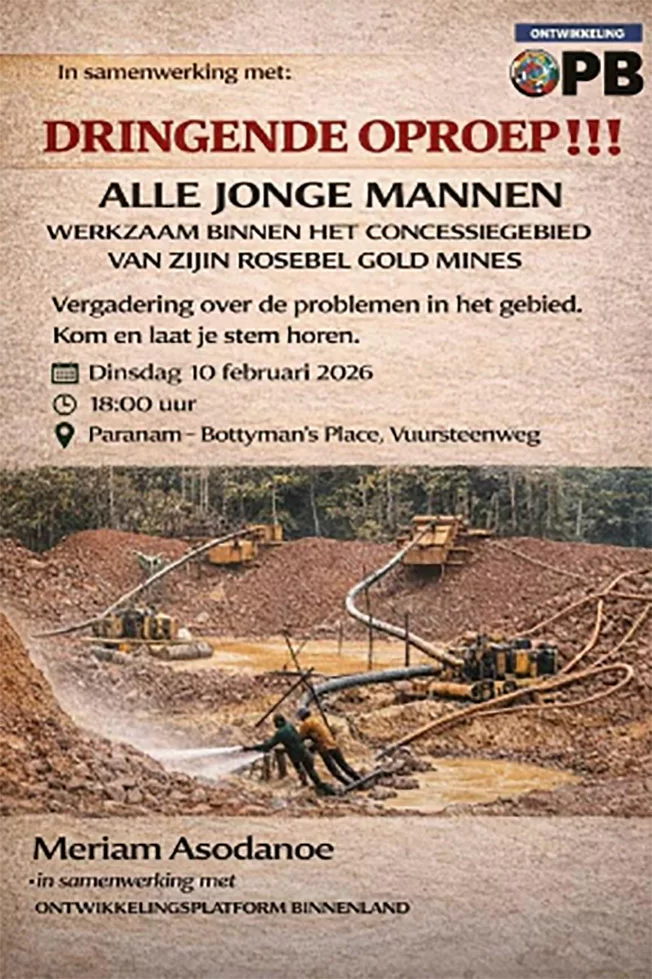
    Minister Soeropawiro formally installed the new board this past Wednesday, with only Robin Brunswijk from the previous administration retaining his position. The newly appointed members include Kaminie Tajib, Leon Boedhoe, Meriam Asodanoe, Fairouz Fredison Brunswijk, and Sayonara Asmo. Both Ravenberg and coalition circles have raised concerns about the apparent deviation from statutory procedures in these appointments. While Ravenberg maintains his dual role as SBB director and board chairman, the origins and nomination process for the new members remain unclear.

    Article 6 of the SBB statutes explicitly outlines board composition requirements: a seven-member structure with the SBB director serving ex officio as chairman and the Head of the National Forest Service as vice-chairman. Additional representatives should be nominated from concession holders, indigenous communities, environmental organizations, the Finance Ministry, university institutions, and the National Army. Sources indicate this appointment controversy initially surfaced as a discussion point back in August.

    The current conflict follows a year-long dispute between Ravenberg and the previous board. Four now-replaced members had previously sued the director over alleged unauthorized changes to SBB’s staff leadership structure. The former board insisted that SBB cover legal expenses for their lawsuit against Ravenberg, which the director refused. This led to the board’s lawyer separately taking legal action against Ravenberg. Despite having testified before a judge in this matter, Ravenberg maintains that since he didn’t initiate the lawsuit, SBB shouldn’t bear associated legal costs.

  • Caribisch toerisme blijft groeien ondanks geopolitieke risico’s rond Venezuela

    Caribisch toerisme blijft groeien ondanks geopolitieke risico’s rond Venezuela

    The Caribbean tourism sector is demonstrating remarkable resilience during the 2025-2026 winter season, though emerging geopolitical tensions near Venezuela are creating new challenges for the regional travel industry and economic markets.

    Winter tourism trends continue to show robust activity across the Caribbean archipelago, with destinations including Curaçao, Barbados, and the ABC islands experiencing significant benefits from increased winter cruise traffic. This surge has generated substantial revenue for hospitality sectors, service industries, and broader economic spillover effects for local businesses. Major cruise lines have expanded their itineraries to include more regional ports, capitalizing on growing global demand for winter vacation experiences.

    However, recent security developments have prompted operational adjustments. Several cruise companies have temporarily modified routes to avoid ports near Venezuela, including Curaçao, following heightened maritime security concerns. These precautions come in response to reported quarantine measures implemented by the United States along oil and shipping routes near Venezuela, which have elevated perceived risks among international shipping operators.

    While individual cruise operators seldom disclose specific reasons for route changes, tourism economists emphasize the economic implications: reduced port calls directly translate to decreased tourist spending at dockside facilities, retail establishments, restaurants, and transportation services, potentially slowing local economic growth.

    Caribbean tourism ministries and maritime authorities maintain that the vast majority of cruise operations continue safely, with regional port cities implementing enhanced security protocols to mitigate risks. Nevertheless, passenger perception of safety remains paramount in the cruise industry, where even temporary security concerns can influence booking patterns and itinerary decisions during peak travel planning periods.

    Industry analysts note that the Caribbean’s tourism economy remains fundamentally strong, supported by the combined strength of winter cruises, air connectivity, and recovering global travel demand. However, they caution that the region must maintain vigilance regarding geopolitical developments, maritime security, and international perceptions, as these factors can significantly impact tourism investment and economic performance.

  • Leider van Bangladesh, favoriet voor het premierschap, terug uit ballingschap

    Leider van Bangladesh, favoriet voor het premierschap, terug uit ballingschap

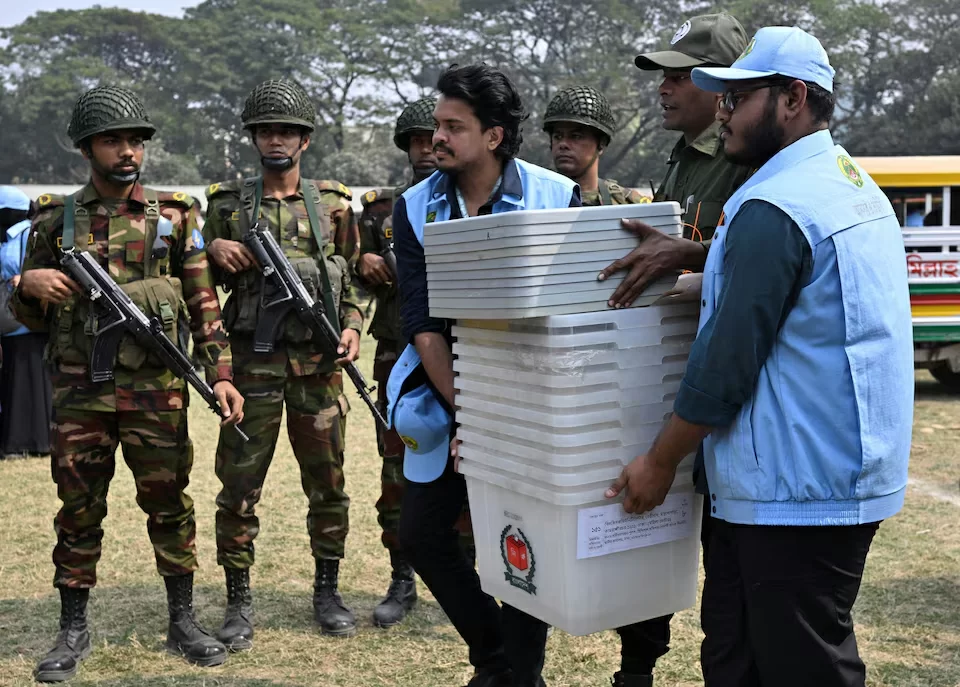
    In a dramatic political homecoming, Tarique Rahman, acting chairman of the Bangladesh Nationalist Party (BNP), returned to Dhaka on Thursday following nearly 17 years of exile in London. The carefully orchestrated return marks a pivotal moment in Bangladesh’s fragile political transition as the nation prepares for February elections.

    Hundreds of thousands of supporters lined the route from Dhaka airport to the reception venue, waving party flags and holding banners while high-level BNP officials welcomed Rahman under tight security. The 60-year-old son of ailing former Prime Minister Khaleda Zia made his symbolic return by removing his shoes to walk barefoot on Bengali soil and gathering a handful of earth as a gesture of homecoming.

    Addressing ecstatic crowds at the reception center, Rahman opened his speech with “Beloved Bangladesh,” promising to unite people of all faiths and ensure their safety. “We will build a Bangladesh that a mother dreams of,” he declared, urging Muslims, Hindus, Buddhists and Christians to join him in creating an inclusive nation. He emphasized his vision for a democratic, economically strong Bangladesh, stating: “I have a plan – a plan for the people of my country, for my country.”

    The return occurs during a sensitive electoral period in the Muslim-majority nation of nearly 175 million people, currently under an interim government led by Nobel laureate Muhammad Yunus. The elections are viewed as crucial for restoring political stability after nearly two years of turmoil. While authorities have promised free and peaceful elections, recent media attacks and sporadic violence have raised concerns about the electoral process.

    Rahman’s homecoming follows the quashing of his convictions in absentia for money laundering and alleged involvement in a plot to assassinate former Prime Minister Sheikh Hasina. The legal barriers disappeared after Hasina was ousted by student protests last year. The political landscape has shifted dramatically since Hasina’s fall, ending decades where she and Khaleda largely alternated power.

    The return also carries personal urgency as Rahman’s mother Khaleda has been seriously ill for months. Rahman visited her in hospital shortly after his arrival.

    According to a December survey by the U.S.-based International Republican Institute, the BNP appears positioned to win the largest number of parliamentary seats, with the Islamic party Jamaat-e-Islami also remaining in contention. Hasina’s Awami League party, excluded from the February 12 elections, has threatened unrest that some fear could disrupt the voting process.

    Nahid Islam, leader of the National Citizen Party that emerged from the youth protest movement that toppled Hasina, expressed hope that Rahman would help shape Bangladesh’s democratic future. “Our greatest challenge now is to create a culture of coexistence and healthy competition in the new political reality,” he stated.

  • Column: Kerstboodschap of zelfverheffende politieke mythe

    Column: Kerstboodschap of zelfverheffende politieke mythe

    In the Netherlands, political parties are exercising their right to utilize religious holidays for societal messaging, with several organizations having disseminated Christmas communications that meet journalistic standards in both content and tone. This demonstrates that political communication and festive periods need not be inherently incompatible. However, when religious symbolism is employed to bolster political assertions, such messaging must withstand scrutiny regarding factual accuracy, democratic principles, and accountability.

    The United Reformed Party (VHP) declared in its Christmas message that the May 25th elections positioned it ‘in opposition as the sole party safeguarding the people’s voice.’ This constitutes not merely an audacious claim but primarily an undemocratic characterization of political reality. Within a parliamentary democracy, no single party exclusively protects the popular will. All parties that secured votes—whether in coalition or opposition—share this responsibility, with The National Assembly serving as the supreme representative body.

    The implication that VHP uniquely champions the popular will disregards not only other parties’ roles but also voters themselves. Had VHP truly represented the people’s voice and compass, the electorate would not have relegated it to opposition benches after five years of governance. Elections represent democratic judgments rather than random occurrences.

    Notably, VHP’s message extensively expresses sympathy regarding poverty, rising prices, and daily living pressures. While this empathy sounds compassionate, it inevitably raises the question: where was this problem-solving capacity during the past five years? Between 2020 and 2025, VHP possessed both opportunity and power to implement structural alternatives. Poverty reduction, legal certainty, fundamental rights protection, nationwide uniform education, healthcare, and social policy constituted governmental responsibilities rather than opposition themes. That these issues are now revisited without self-criticism or acknowledgment of policy failures renders the message particularly bitter.

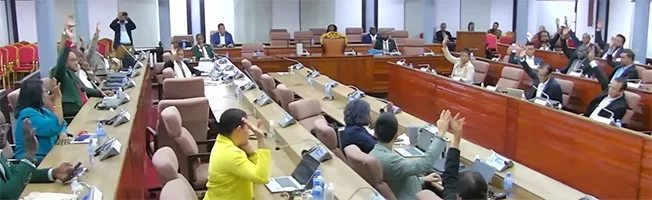
    The disconnect between rhetoric and action manifests equally in VHP’s parliamentary conduct. During debates concerning initiative nature conservation legislation, where substantive discussion, improvement, and constitutional diligence were expected, VHP engaged primarily in obstruction and questioning of proposers’ motives. Constructive contribution was scarcely evident. Ironically, coalition factions—despite the bill originating from their own coalition circle—subjected proposals to critical analysis and thoroughly dismantled the initiative. This exemplifies parliamentary craftsmanship and demonstrates legislative oversight in the public interest.

    VHP’s creation of a self-serving misleading myth represents particularly concerning undemocratic expression. Claims of ethnic exclusion from governing coalitions shortly after elections contradict factual reality. The truth remains that VHP pursued coalition participation until the final moment but was rejected by all other parties regardless of their reasons. No evidence supports allegations of ethnic discrimination.

    Nevertheless, VHP’s Christmas message positions itself as ‘the light in darkness,’ directly comparing Christ’s birth to its political role. Religious imagery can prove powerful but becomes problematic when suggesting political superiority. According Christian belief, Christ came not to rule but to serve—precisely the element absent in a message radiating primarily self-glorification.

    Christmas represents a moment for reflection, truth, and humility. Those claiming unprecedented freedom to warn and inspire should equally demonstrate courage examining their own choices, missed opportunities, and policy errors. Inspiration without honesty constitutes not light but illusion.

    VHP retains every right to dream, warn, and oppose—fundamental democratic privileges. However, distorting democratic reality and ignoring governmental responsibility undermines credibility. Christmas deserves more than political marketing; it deserves truth. And truth tolerates no deception, even when expressed in festive wording.

  • Suriname kan doorbreken op snelgroeiende kokosmarkt

    Suriname kan doorbreken op snelgroeiende kokosmarkt

    Suriname stands at the threshold of an extraordinary economic opportunity as global demand for coconut products surges while traditional producing nations face climate-induced production declines. Agricultural experts revealed during a recent debate hosted by the newly established Association of Agronomists in Suriname (VAS) that the international coconut market, expanding at approximately 10% annually, presents a strategic window for the South American nation.

    The unprecedented growth in coconut water consumption, particularly across North American markets, coincides with production challenges in major Asian and Caribbean coconut-growing regions affected by climate volatility. This supply-demand imbalance creates ideal conditions for Suriname to establish itself as a reliable supplier.

    Ricardo Vriesde, an experienced coconut producer with fifteen years in the industry, emphasized the timing advantage: “Current investors can tap into markets actively seeking new suppliers. New plantations require five to six years to become productive, giving countries with existing coconut stocks like Suriname significant competitive leverage.”

    VAS President Soedeshchand Jairam stressed the need for comprehensive stakeholder engagement, including government participation, to implement timely strategic actions. The association, founded in July 2025, aims to consolidate fragmented expertise into concrete policy and innovation frameworks.

    “Global food demand escalates while production systems face mounting pressure from climate change and diseases,” Jairam noted. “As an agriculturally potential-rich nation, we cannot afford inefficient knowledge utilization.”

    The consensus emerged that coconuts represent not merely a traditional crop but a strategic commodity for Suriname’s agricultural future. The historical production center of Coronie district, renowned for its ideal soil composition and coastal microclimate, is poised for revitalization following a period of decline partly caused by international aversion to coconut oil.

    Vriesde highlighted the coconut palm’s economic versatility: “This isn’t called the ‘tree of life’ without reason. Every component from root to leaf holds commercial value.” Beyond conventional products like oil, water, and milk, waste streams offer opportunities in cosmetics, medicinal applications, and personal care products.

    Despite promising prospects, the sector confronts challenges including scarce quality planting materials, inadequate financing, labor shortages, and limited research capacity. Innovative solutions like tissue culture technology, capable of generating hundreds of plants from a single embryo, show promise but require targeted policy support and collaborative implementation.

    According to industry analysis, strategic investments in coconut cultivation could significantly contribute to rural income growth and sustainable community development. The debate also featured insights from fruit, vegetable, cassava, rice, livestock, and fisheries sectors regarding structural constraints and market potential.