标签: Suriname

苏里南

  • Abrupte ommekeer Trump: na dreiging tot vernietiging, nu staakt-het-vuren met Iran

    Abrupte ommekeer Trump: na dreiging tot vernietiging, nu staakt-het-vuren met Iran

    On April 8, amid soaring regional tensions that pushed the Middle East to the brink of all-out war, former U.S. President Donald Trump announced an unexpected two-way ceasefire with Iran just hours before his own escalatory ultimatum was set to expire – a sudden reversal that pulled the globe back from the edge of major conflict.

    The 11th hour announcement came after a full day of rapidly escalating violence between allied U.S. and Israeli forces and Iran, which followed Trump’s dire warning hours earlier that an entire civilization would be erased overnight if Iran refused to reopen the Strait of Hormuz, the strategic global oil chokepoint. That stark threat had sent shockwaves through global markets and diplomatic circles, putting world leaders on high alert for a catastrophic regional war.

    Through the day preceding the announcement, U.S. and Israeli airstrikes targeted key infrastructure across Iran, hitting railway and road bridges, a major commercial airport, and a large petrochemical facility. Strikes also reached Kharg Island, Iran’s primary crude oil export terminal that handles the vast majority of the country’s overseas energy shipments. Iran quickly retaliated, launching new attacks on commercial vessels operating in the Persian Gulf and striking a large Saudi petrochemical complex. Late in the evening, explosions were also reported in the Qatari capital of Doha, further stoking fears of a spreading conflict.

    The six-week-long confrontation has already left a devastating human toll, claiming more than 5,000 lives across nearly a dozen nations, including over 1,600 civilian casualties inside Iran alone. Beyond the human cost, Iran’s temporary blockade of the Strait of Hormuz – through which roughly 20% of the world’s daily oil supplies transits – has sent global energy prices soaring, amplifying recession risks across the global economy.

    The ceasefire announcement also comes against a critical domestic political backdrop for Trump, with his approval ratings sitting at historic lows ahead of upcoming U.S. midterm elections. Polling shows broad opposition to the conflict among American voters, who have grown increasingly anxious over spiking fuel prices – a trend that threatens the Republican Party’s control of Congress in the upcoming vote.

    Breaking the news on his social media platform Truth Social, Trump confirmed the ceasefire would be bilateral, stating that U.S. forces had already achieved all core military objectives. He added that Washington had made significant progress toward negotiating a permanent peace agreement with Iran to stabilize the broader Middle East, noting that Iran had submitted a 10-point framework proposal that serves as a viable working foundation for formal talks. Trump expressed confidence that a final deal could be finalized within the 14-day ceasefire window.

    Iran’s Supreme National Security Council responded to the announcement with a cautiously worded conditional statement, confirming that negotiations would be held in Islamabad but making clear that Tehran retains deep distrust of the United States. Iranian officials agreed to the two-week negotiating timeline, stating that a ceasefire extension would be possible only if both sides mutually agree to the move.

    The Iranian statement emphasized the importance of domestic national unity, framing the upcoming talks as an extension of the country’s battlefield campaign under the oversight of Iran’s revolutionary leadership and top state institutions. “If the enemy’s retreat on the battlefield translates into a decisive political victory at the negotiating table, we will all celebrate this great triumph together,” the statement read. “If not, we will continue fighting until all the demands of the Iranian people are met.” The statement also carried a clear warning: “Our finger remains on the trigger, and the smallest mistake by the enemy will be met with a full force response.”

    In an unusually forceful public rebuke, Pope Leo also weighed in on the crisis, condemning Trump’s earlier escalatory threats as unacceptable. He called on people across the world to pressure their political leaders to bring the conflict to an immediate end, noting that “people everywhere want peace.” The Pope stressed the global moral responsibility to protect innocent civilians, including children and vulnerable people in medical facilities, and labeled attacks on civilian critical infrastructure a violation of international law – a direct reference to Trump’s open threats to target Iranian bridges and energy facilities.”

  • LVV streeft naar 70% zelfvoorziening in pluimveesector

    LVV streeft naar 70% zelfvoorziening in pluimveesector

    A cohort of 28 new and established small-scale farmers in the eastern Suriname city of Moengo has wrapped up a five-day intensive poultry farming training program, launched by the Directorate of Livestock under the country’s Ministry of Agriculture, Livestock and Fisheries (LVV), as part of a nationwide push to strengthen the domestic poultry sector across all administrative districts. The initiative is rooted in a clear national policy goal: to raise the share of locally produced poultry products on Suriname’s domestic market from the current 35% to at least 70%, cutting reliance on imported goods and strengthening national food security. Unlike many generic agricultural training programs, this course integrates both classroom theoretical learning and hands-on practical training, covering a full spectrum of critical topics that address common gaps for small producers. These include the design and construction of appropriate poultry housing, optimized nutritional strategies for different flocks, routine flock care, basic poultry anatomy, prevention and control of common poultry diseases, and essential business record-keeping to help farmers track costs and profits. LVV officials confirmed that this type of community-focused training is a core component of a national agricultural development program that will be rolled out across all districts and administrative ressort across the country. Trainees who completed the program reported high satisfaction, saying they leave the course motivated to put their newly acquired skills into practice on their own farms, and many expressed enthusiasm to encourage other aspiring farmers in their communities to enter the poultry sector. The LVV has emphasized that poultry farming represents an unusually accessible entry point for small entrepreneurs in Suriname, as it can be launched with a relatively low amount of starting capital and requires manageable levels of ongoing labor input. The sector, ministry officials note, offers viable growth opportunities for both small-scale subsistence producers and entrepreneurs looking to scale up their operations over time. Beyond boosting local supply, the expansion of domestic poultry production also directly contributes to two key national priorities: strengthening Suriname’s overall food security, and creating new, sustainable income streams for rural and community-based producers across the country. At the end of the five-day program, all participating farmers received official completion certificates to mark their participation. The program is one of several ongoing agricultural development initiatives the LVV has implemented to revitalize local food production and support smallholder farmers across the nation.

  • China en Rusland vetoën VN-resolutie ter bescherming van scheepvaart in Straat van Hormuz

    China en Rusland vetoën VN-resolutie ter bescherming van scheepvaart in Straat van Hormuz

    On Tuesday, a United Nations Security Council resolution aimed at promoting international cooperation to safeguard commercial shipping in the strategically vital Strait of Hormuz, proposed by Bahrain, was blocked by vetoes from China and Russia. Both permanent Council members argued that the draft resolution carried an unfair bias against Iran.

    The 15-nation council’s vote split clearly: 11 members backed the resolution, while two cast opposing votes (China and Russia), and two abstained from the decision. Following the veto, U.S. Ambassador to the UN Mike Waltz issued a sharp condemnation, framing the outcome as a “new low” for the Security Council. Waltz claimed that Iranian actions to threaten closure of the Strait have already disrupted deliveries of medical supplies and humanitarian goods to crisis zones including the Democratic Republic of Congo, Sudan and Gaza, saying “No nation should accept this reality.” He added that “Russia and China today chose to back a regime that terrorizes the Gulf region,” and called on “responsible nations” to join the U.S. in keeping the Strait open and secure to ensure unimpeded movement of free trade and humanitarian aid.

    France also expressed regret over the veto. French UN Ambassador Jerome Bonnafont emphasized that the resolution only sought defensive, de-escalatory measures to prevent regional tensions from spiraling further.

    In defending their veto, China and Russia said the draft unfairly criticized Iran. China’s UN envoy Fu Cong noted that adopting the resolution while the U.S. issues inflammatory threats targeting Iran would send the wrong signal to the region. Russia has announced it will put forward its own alternative draft resolution covering broader Middle East issues, including maritime security in the Strait of Hormuz.

    Iran’s UN Ambassador Amir Saeid Iravani welcomed the vetoes, stating they prevented the Security Council from being “misused to legitimize aggression.” He also revealed that the personal envoy of the UN Secretary-General is currently en route to Tehran for diplomatic consultations on the situation.

    The final draft of the Bahrain-proposed resolution was revised after China raised objections to a provision that could have authorized use of force. The amended text explicitly ruled out coercive measures, instead calling on UN member states to coordinate defensive, proportionate actions to protect navigation security in the Strait, including escorting commercial vessels and countering attempts to blockade the waterway, which handles roughly a fifth of global oil trade and is one of the world’s most critical maritime chokepoints.

  • Eervolle staatscrematie voor gewezen president Chan Santokhi te Uitkijk

    Eervolle staatscrematie voor gewezen president Chan Santokhi te Uitkijk

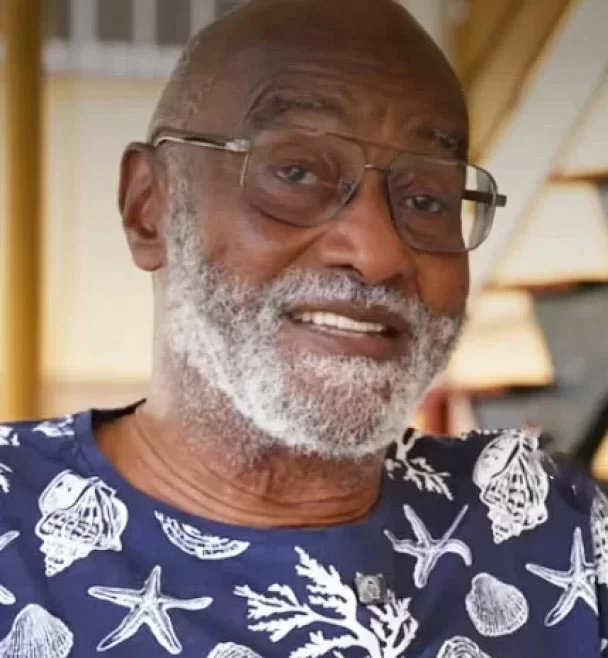
    On April 7, the nation of Suriname gathered to lay former president and Chairman of the Progressive People’s Party (VHP) Chan Santokhi to rest in a historic state cremation held at Uitkijk, a site where Santokhi contributed decades of public service. Santokhi died unexpectedly on March 30 at the age of 67, leaving a profound gap felt across the country and far beyond its borders.

    The day of remembrance began long before the final ceremony, starting in the early hours at the Poese mortuary. The funeral procession made its way through meaningful stops across the nation: Santokhi’s personal residence in Lelydorp, the Ministry of Justice and Police, the National Assembly, a local Boy Scouts facility, and finally the VHP party headquarters known as “De Olifant”. The official formal memorial service was hosted at De Olifant, where sitting Suriname President Jennifer Simons joined heads of state from Guyana, Saint Kitts and Nevis, and Curaçao to share eulogies honoring Santokhi’s life and legacy.

    Along the entire route of the hearse, thousands of ordinary Surinamese residents lined the streets to pay their final respects. Many carried Surinamese national flags and VHP party banners, bringing flowers and colorful confetti to bid farewell to the leader they had admired. Tears flowed freely among attendees from all walks of life, as the public grief reflected the deep respect Santokhi had earned during his decades of public service.

    When the procession reached Uitkijk, uniformed military personnel received the hearse to launch a solemn funeral procession. A military military band provided moving, dignified musical accompaniment, as family members, close friends, and official guests walked behind the casket to the open-air cremation site. The casket itself was crafted with intentional, touching detail: it featured a glass top that allowed mourners a final view of Santokhi, who rested peacefully in a three-piece suit paired with his signature bright orange tie, lined with soft white satin that lent the entire space an air of quiet serenity and dignity.

    Notably, the Uitkijk venue hosted this event under the covered cremation infrastructure that Santokhi personally approved and advanced during the final months of his presidential term. That infrastructure, a policy priority he championed to improve public access to dignified end-of-life services, served as a tangible reminder of his commitment to improving life for Surinamese people just one last time on the day of his funeral. This marked the first time a state cremation had ever been held at the Uitkijk location.

    After the casket was carried to the cremation site, an honor guard stood watch over the casket, which was draped in the Surinamese national flag. Following a ceremonial gun salute, the folded national flag was formally presented to Santokhi’s widow, Mellisa, bringing the official state ceremonies to a close. The cremation then proceeded, returning Santokhi’s remains to nature as crowds of mourners looked on in quiet grief. High-level diplomatic attendees also included Guyanese President Irfaan Ali, the Prime Minister of Curaçao, and members of the international diplomatic corps, a testament to Santokhi’s widespread regional influence and respect across the international community.

  • ‘Get a grip’: Iraanse ambassades bespotten Trumps grove dreiging

    ‘Get a grip’: Iraanse ambassades bespotten Trumps grove dreiging

    Tensions in the Middle East have escalated sharply after former U.S. President Donald Trump issued a profanity-laced threat targeting Iran over access to the strategic Strait of Hormuz, drawing a uniquely satirical response from Iranian diplomatic missions across the globe. On April 5, Trump took to his Truth Social platform to release a bombastic threat that immediately sparked international outcry, writing: “Tuesday will be Power Plant Day, and Bridge Day, all wrapped up in one, in Iran. There will be nothing like it!!! Open the F****** Strait, you crazy b*******, or you’ll be living in Hell – JUST WATCH! Praise be to Allah. President DONALD J. TRUMP.” This aggressive rhetoric was not an isolated incident; it followed an earlier warning from Trump that he would bomb Iran back to the “Stone Age” if the country refused to agree to a deal reopening the Strait, a critical waterway for global oil trade that carries roughly 20% of the world’s daily oil consumption.

  • Nationale en internationale eerbetonen bij afscheid Chan Santokhi

    Nationale en internationale eerbetonen bij afscheid Chan Santokhi

    On April 7, the South American nation of Suriname gathered to bid a solemn, formal farewell to one of its most prominent political figures: former president and chairman of the Progressive People’s Party (VHP) Chan Santokhi. The state funeral ceremony, hosted at the De Olifant Foundation venue, drew hundreds of attendees including top domestic leaders and high-level international delegates, who gathered to pay their final respects to the deceased statesman. Following the formal service, a ceremonial procession escorted by full military honors departed for the Shabier Ishaak Funeral Park in Uitkijk, where Santokhi’s cremation would take place.

    In her remarks during the ceremony, current Surinamese President Jennifer Simons reflected on the unprecedented string of losses the country has faced in recent years, noting that Santokhi is the fourth former head of state Suriname has lost in a short period, following the passing of Jules Wijdenbosch, Desi Bouterse, and Ronald Venetiaan. Simons emphasized that Santokhi’s death came as an unexpected shock to the nation, but added that the former leader had completed his life’s work and service to the Surinamese people.

    Chairman of the National Assembly Ashwin Adhin further highlighted Santokhi’s enduring commitment to public service, confirming that the former president remained an active member of the legislative body up until his death. Adhin used the occasion to remind fellow politicians that while ideological and political differences are a normal part of democratic governance, the national interest of Suriname must always take priority over partisan divides. He closed his remarks with a call for national unity in advancing the country’s shared progress.

    Tributes also poured in from international leaders across the Caribbean and South American region, who highlighted Santokhi’s key role in advancing cross-border cooperation and regional integration. Guyanese President Irfaan Ali spoke of a deep personal friendship with Santokhi, referring to him as “a brother” who dedicated significant effort to strengthening bilateral ties between Georgetown and Paramaribo. Curaçao Prime Minister Gilmar Pisas and St. Kitts and Nevis Prime Minister Terrance Drew also joined in honoring Santokhi, praising his reputation as a unifying figure and his decades of contributions to regional development.
    Albert Ramdin, Secretary-General of the Organization of American States (OAS), characterized Santokhi as a deeply committed, disciplined leader who consistently prioritized dialogue to resolve differences and centered all his work on the wellbeing of Suriname and its people. Ramdin urged current and future leaders to carry forward the policy and ideological legacy Santokhi left behind.

    On behalf of the entire Santokhi family, Mellisa Santokhi, the former president’s widow, delivered a closing thank-you address. She remembered her late husband as a loving, caring father and a man of deep faith and relentless action. She extended her family’s gratitude to the people and government of Suriname, as well as the international community, for the outpouring of sympathy and support following Santokhi’s passing.

    To accommodate the ceremonial procession, local authorities implemented a full traffic closure along the Mr. P. Chandie Shawweg between Lakatanweg and Wanicakanaalweg, which remained in effect through 5:00 PM local time. The closure allowed the funeral procession to travel without disruption to the Uitkijk cremation site for the final state ceremony.

  • Trump dreigt met vernietiging: ‘Een hele beschaving zal vannacht verdwijnen’

    Trump dreigt met vernietiging: ‘Een hele beschaving zal vannacht verdwijnen’

    As the April 2026 deadline for the reopening of the Strait of Hormuz draws near, U.S. President Donald Trump has issued increasingly aggressive threats against Iran, raising fears of a dramatic regional escalation that could reshape global energy security. In a incendiary post shared to his social media platform Truth Social, Trump warned that an entire civilization could be erased permanently if Iran did not comply with his order to reopen the key strategic waterway. The U.S. leader went further, framing the moment as a potential turning point that would bring about full regime change in Iran, claiming that 47 years of what he described as extortion, corruption, and death would finally be brought to an end. He suggested that less radical, more pragmatic leaders could seize control of the country if Tehran refused to back down.

    Iran’s Islamic Revolutionary Guard Corps (IRGC) responded immediately via state-run media, issuing a blunt counter-warning that the country would not hesitate to launch retaliatory strikes far beyond the Middle East if the U.S. targets Iranian civilian infrastructure. The IRGC made clear that any American attacks on key Iranian energy infrastructure or critical transport links including bridges would cut off oil and gas supplies to the United States and its regional allies for years, if not decades. “American leaders underestimate how many critical targets are already within our reach,” the IRGC statement read. “If U.S. military forces cross our established red lines, our response will extend far beyond the borders of this region.”

    Parallel to these escalating verbal exchanges, Iranian media has confirmed a recent attack on Kharg Island, the country’s primary hub for crude oil exports. While previous attacks on the island have targeted military positions, a strike on core oil export infrastructure would mark a dangerous new phase of escalation in the ongoing conflict, according to regional analysts.

    Meanwhile, U.S. Vice President JD Vance offered a contrasting narrative, stating that American military objectives in the ongoing conflict with Iran have largely been achieved. Vance added that the U.S. still holds out hope that Iran will respond to American peace proposals before the deadline set by President Trump.

    Hassan Ahmadian, a political science lecturer at the University of Tehran, told Al Jazeera that Trump’s increasingly harsh rhetoric signals growing frustration and desperation on the part of the American administration. “His tone gets more aggressive day after day. It looks like he is facing significant domestic and strategic problems,” Ahmadian explained. While Trump intends to force Iran to alter its policy through these extreme threats, Ahmadian argues the U.S. leader cannot ultimately follow through on all his warnings. That said, Trump does retain the ability to ramp up pressure and intensify ongoing attacks, to which Iran has already pledged a forceful and proportional response.

    Ahmadian concluded that the conflict has already devolved into a complex, tangled conflict that has produced little progress for the United States since it began, and is likely to drag on for the foreseeable future.

  • Afscheid van ex-president tevens VHP voorzitter Chan Santokhi

    Afscheid van ex-president tevens VHP voorzitter Chan Santokhi

    Early on the morning of April 7, formal ceremonies marking the state cremation of former Suriname President Chan Santokhi officially commenced, nearly a week after his sudden passing at the age of 67.

    The solemn procession began after a joint detachment of military and police personnel retrieved Santokhi’s remains from the morgue of Paramaribo Academic Hospital. Following the retrieval, the cortège embarked on a pre-planned processional route past multiple key government buildings, making its first major stops at the Presidential Palace and the National Assembly building. At these sites, official delegations and gathered dignitaries led formal tributes to bid farewell to the former leader, who died unexpectedly on March 30.

    From the National Assembly, the procession continued through Paramaribo’s inner city to De Olifant, the headquarters of the Progressive Reform Party (VHP). Santokhi had served as the party’s chairman from 2011 until his death, and crowds of residents had gathered along the processional route from early morning to pay their final respects to the fallen statesman.

    Another ceremonial stop was held along Eddy Brumastaat, near the national headquarters of the Boy Scouts Suriname (Weest Paraat). Santokhi held the title of Chief Scout for the organization for many years, and members of the scouting leadership rank-and-file scouts gathered to greet the procession, holding a formal farewell in accordance with scouting tradition.

    Local Surinamese media outlet Starnieuws is covering all events related to Santokhi’s state cremation via a continuously updated live blog to keep the public informed of the day’s proceedings.

  • Sluiting Straat van Hormuz verdeelt olie-inkomsten Midden-Oosten: winnaars en verliezers

    Sluiting Straat van Hormuz verdeelt olie-inkomsten Midden-Oosten: winnaars en verliezers

    Since late February, one of the world’s most critical energy chokepoints, the Strait of Hormuz, has been effectively closed by Iranian authorities, sending shockwaves through global energy markets and creating a stark divide in financial outcomes for oil-producing nations across the Middle East, a new Reuters analysis finds. Roughly 20% of the world’s daily oil and liquefied natural gas flows pass through this narrow waterway, making its disruption a major global economic flashpoint.

    The closure followed escalating regional tensions after the United States and Israel launched airstrikes on Iranian targets. While Iran later relaxed restrictions to allow vessels with no American or Israeli links to transit, keeping a small number of tankers moving through the strait, global energy markets have remained extremely volatile. Brent crude prices recorded a historic 60% jump in March alone, a surge that has reshaped revenue calculations for every major producer in the region.

    The uneven impact of the crisis boils down to one key factor: geography. Nations that control the strait or have pre-built alternative export routes are reaping massive financial windfalls from sky-high prices, while countries dependent entirely on Hormuz access are facing catastrophic revenue losses.

    Iran, which controls access to the strait, has seen its oil revenue climb 37% compared to last year. Oman and Saudi Arabia have also posted gains: Omani revenue rose 26% year-on-year in March, while Saudi Arabia recorded a 4.3% increase. The United Arab Emirates (UAE) saw a modest 2.6% dip in revenue, as higher global prices offset most of the losses from reduced export volumes.

    Saudi Arabia’s ability to weather the crisis stems from a key infrastructure investment made decades ago. During the 1980s Iran-Iraq War, the kingdom built the 1,200-kilometer East-West Pipeline, which connects its eastern oilfields directly to the Red Sea port of Yanbu, bypassing the Strait of Hormuz entirely. Since the closure, the pipeline has been operating at full capacity of 7 million barrels per day. Even though Saudi Arabia’s total crude export volume dropped 26% in March, the record-high oil prices pushed the total value of its exports up by more than $550 million compared to typical monthly levels. Exports through Yanbu have operated near maximum capacity despite recent attacks on the port, though the kingdom remains vulnerable to further strikes on its energy infrastructure and the nearby Bab el-Mandeb shipping lane from Iran and its Houthi allies in Yemen.

    For nations without alternative export routes, the picture is far grimmer. Iraq and Kuwait have been hit hardest, with year-on-year revenue drops of 76% and 73% respectively in March. Iraq’s total oil revenue for the month fell to just $1.73 billion, while Kuwait’s dropped to $864 million. Iraq saw limited support from cargoes that departed just before the escalation of tensions, but analysts warn April revenue will likely be even lower. Qatar has also suffered steep losses due to its lack of alternative export infrastructure for both oil and gas.

    The UAE, which operates the Habshan-Fujairah pipeline that can bypass Hormuz with capacity between 1.5 million and 1.8 million barrels per day, still saw its total revenue fall by more than $174 million in March after attacks targeted the Fujairah port, disrupting operations.

    Looking ahead, most Gulf states appear to have the financial buffer to absorb this short-term shock, according to Adriana Alvarado, vice president at ratings firm Morningstar DBRS. With the exception of Bahrain, most regional governments hold enough reserve savings and maintain public debt levels below 45% of GDP, giving them room to borrow or draw down savings to offset temporary revenue losses.

    In the longer term, the crisis has reignited global debates over energy security. Some Western oil companies and political leaders are calling for increased investment in fossil fuel production to avoid future supply disruptions, but many energy analysts argue that accelerating the transition to renewable energy is the only durable protection against future geopolitical price shocks. A recent high-profile example of this transition push came earlier this year, when French energy giant TotalEnergies and UAE-backed renewable firm Masdar announced a $2.2 billion joint venture to rapidly scale up renewable energy development across nine Asian nations.

    As the standoff over the strait continues, with U.S. President Donald Trump threatening severe retaliation against Iran if the waterway is not reopened by Tuesday, the global energy industry remains on edge, waiting to see how the crisis will reshape long-term energy policy and market dynamics.

  • Overwegend warme dag met bewolking en lokale buien

    Overwegend warme dag met bewolking en lokale buien

    Dated April 7, this official daily weather forecast outlines expected meteorological conditions across nearly all of Suriname, calling for a predominantly warm day with mild variability throughout the hours.

    In the early morning hours, most regions will see mostly sunny to partly cloudy skies. Low-lying fog will develop in isolated pockets across both the coastal plains and inland areas, but this fog is projected to gradually clear as temperatures rise through the morning.

    As the day progresses, cloud cover will steadily increase across the country, pushing up the probability of isolated rain showers. This chance of precipitation is highest during the mid-afternoon and early evening hours. In some cases, these passing showers can be accompanied by thunder and lightning, with the greatest risk of thunderstorms concentrated in inland regions and across the southern and eastern sections of Suriname.

    Temperatures will climb through the afternoon to reach a range between 31 and 33 degrees Celsius, a notably warm reading for the region. Overnight, as the sun sets, temperatures will cool down to a steady 24 degrees Celsius for evening and nighttime hours. The combination of high temperatures and elevated humidity will create sticky, muggy conditions that may feel uncomfortable for many residents.

    Winds will blow from eastern directions at weak to moderate speeds, which will offer a small amount of natural cooling relief, particularly for communities along Suriname’s coastline.