标签: Suriname

苏里南

  • Column: Wanneer een wet klopt, maar moreel ontspoort

    Column: Wanneer een wet klopt, maar moreel ontspoort

    A controversial compensation law passed in November 2024 has placed Suriname’s Prosecutor General among the highest-paid public officials in the nation, earning a staggering net monthly salary exceeding SRD 1 million (approximately USD 27,000). The legislation, championed by Asis Gajadien (VHP) and Geneviévre Jordan (ABOP) and enacted under President Chan Santokhi’s administration, has sparked widespread criticism for its timing and provisions.

    The Judicial Position Act establishes that the Prosecutor General’s base compensation reaches 95% of the presidential salary. However, this figure represents merely the foundation for additional benefits rather than a true cap. The law’s critical feature is its definition of ‘compensation’ as an aggregate of base salary, allowances, and reimbursements.

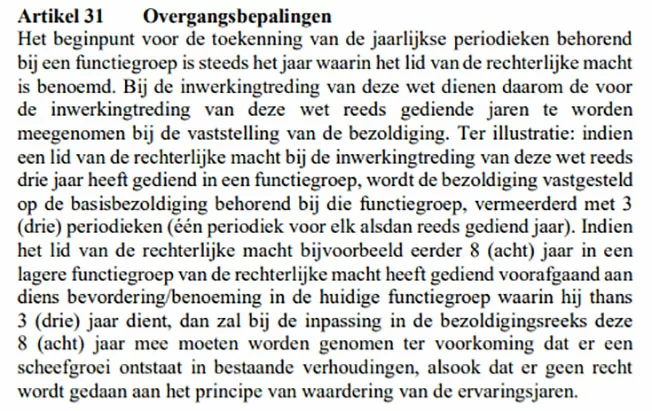
    Article 31 further compounds this structure by granting annual 5% increments based not on years served in current position, but on total tenure within the judicial system. For the current Prosecutor General—with six years in role but over forty years in judicial service—this translates to exponential salary growth rather than measured experience recognition.

    Beyond these provisions, tax-free allowances can reach 150-170% of base compensation, creating a system where officials technically remain under the 95% threshold while substantially exceeding it in practice. This design emerges as particularly controversial given its implementation during nationwide austerity measures that saw subsidy reductions, tax increases, and repeated government calls for public sacrifice.

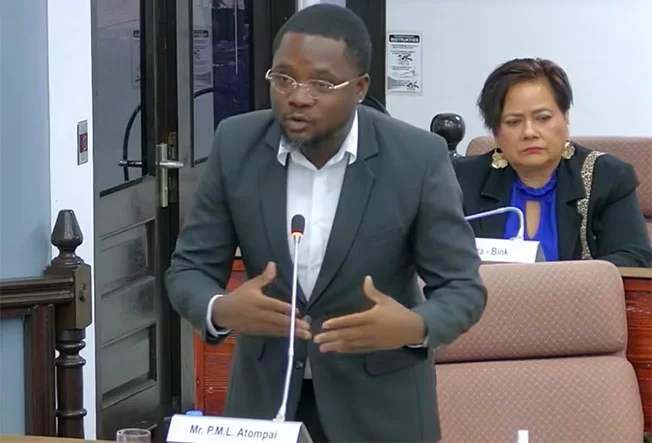
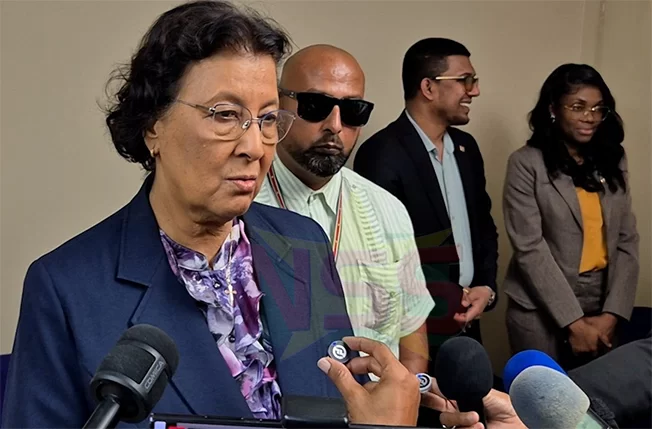
    The disparity has drawn sharp criticism from Assembly Member Poetini Atompai (NPS), who has demanded full governmental transparency regarding the judicial compensation structure and its burden on national finances. He rightly questions the proportionality, reasonableness, and executive accountability in this arrangement.

    Critics argue that the Dutch ‘Balkenende norm’—which establishes the prime minister’s salary as the absolute maximum for public officials—offers a more transparent alternative that prevents creative legislative constructions. The current system, while legally sound, represents a failure of legislative responsibility when laws become mathematically clever but socially indigestible.

    In a nation where nurses, teachers, and pensioners face genuine economic hardship, this judicial compensation model threatens to erode public trust in the justice system. The law requires immediate revision to prevent the moral derailment of Suriname’s judicial institutions and restore faith in governmental fairness.
  • LVV doet aangifte wegens onbevoegde beheersdaden op terreinen in Tibiti

    LVV doet aangifte wegens onbevoegde beheersdaden op terreinen in Tibiti

    The Ministry of Agriculture, Livestock, and Fisheries (LVV) in Suriname has initiated legal proceedings against unauthorized occupation of state-owned lands in the Tibiti region of Para district. The contested forestry territories were officially allocated to the ministry for agricultural purposes by the government in March 2023.

    During an inspection at kilometer 99 in the Tibiti area, ministry officials encountered workers who claimed to be operating under instructions from two individuals identified as R.M. and K.J. The workers asserted they had received authorization from the son of former LVV Minister Parmanand Sewdien, though the legal validity of such permission remains unclear.

    Through a formal legal notice delivered by attorney Deepak Jairam, the ministry has demanded the immediate evacuation of the premises from K.J. The document emphasizes that no authorization has been granted to any parties for activities on these parcels, except to a company responsible for installing an irrigation system for an official agricultural project.

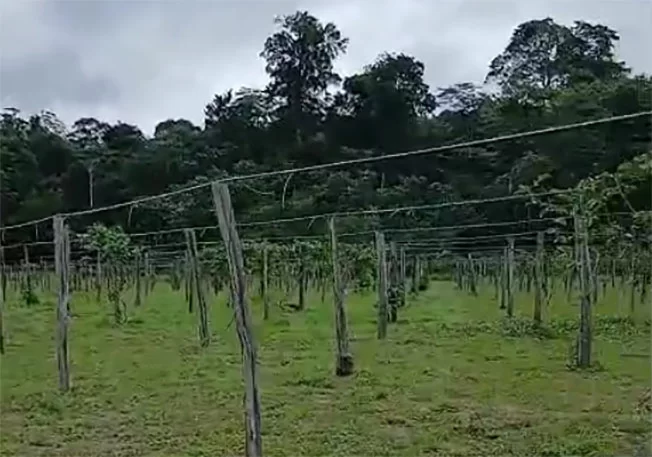
    LVV Minister Mike Noersalim confirmed to Starnieuws that significant investments have been made on the property, including equipment, a drip irrigation system, and solar panels valued at approximately €40,000. The Dutch company that executed and delivered these projects has reportedly not yet received payment. Additionally, the site contains a cultivated passion fruit (markoesa) plantation.

    The ministry has indicated that if evidence emerges of damage to state property, additional charges for destruction and/or theft will be filed. This incident has reignited concerns regarding the management and supervision of state lands designated for agricultural development. Local police have documented the case and are conducting an investigation into the matter.

  • Ultimatum Rosebel loopt af; president zet in op oplossing via overleg

    Ultimatum Rosebel loopt af; president zet in op oplossing via overleg

    A critical deadline looms in Suriname’s mining conflict as police have issued a Friday 8:00 AM ultimatum for gold miners to vacate the contested territory between New Koffiekamp’s border and the Royal Hill mine, including the Redi Bergi area. The confrontation between artisanal miners and multinational Zijin Rosebel Gold Mines has reached a pivotal moment following recent violent clashes that resulted in one fatality and the destruction of heavy machinery.

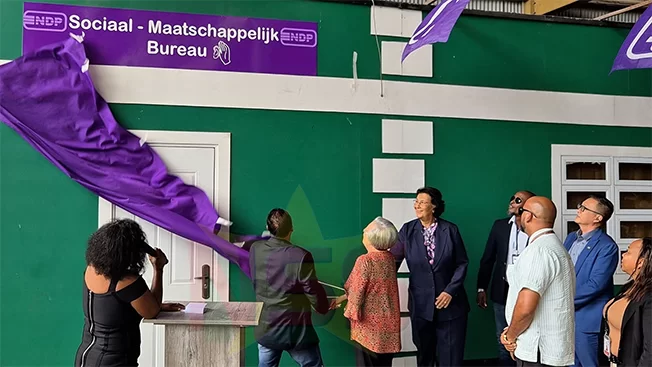
    President Jennifer Simons, speaking during the reopening of the NDP’s Social Services Bureau, emphasized diplomatic resolution over forceful measures. “If proper agreements are reached, harsh intervention becomes unnecessary,” Simons stated, acknowledging the complex historical dimensions of the land dispute. The President highlighted the economic stakes for Suriname, which holds a 30% stake in Zijin’s operations. “The government must enable Zijin to operate—when production halts, the entire nation suffers financial losses,” she explained.

    The escalating tensions follow an incident within Zijin’s concession area that claimed the life of a small-scale miner and prompted the company to withdraw its staff. Security forces have struggled to maintain order as miners, who assert their activities are legal, refuse to abandon the site. President Simons called for equitable solutions that address all stakeholders: “We must develop solutions for all parties to move forward peacefully. Gold seekers require designated areas rather than operating dangerously near active mining zones, while respecting the historical claims of local communities.”

  • NDP opent opnieuw Sociaal Maatschappelijk Bureau aan Hoogestraat

    NDP opent opnieuw Sociaal Maatschappelijk Bureau aan Hoogestraat

    In a significant move to strengthen community support mechanisms, Suriname’s National Democratic Party (NDP) has officially reopened its Social and Societal Bureau (SMB) after a five-year suspension. The new facility, located on Hoogestraat within the former party headquarters of the BVD, was inaugurated by NDP Chairwoman and President Jennifer Simons on February 12th.

    The bureau, operating under the Office of the NDP Chairman, will serve as a specialized center addressing public grievances that cannot be directly resolved through ministers, assembly members, or other government officials. Coordinator Yvonne Cheuk Alam explained that the facility will provide guidance and collaboratively seek solutions with citizens, potentially through engagement with relevant ministries depending on each situation’s specific circumstances.

    President Simons emphasized the bureau’s advisory nature during the unveiling ceremony, clarifying that it does not represent an institution where individuals can obtain everything they request. Rather, it functions as an information and guidance center within a nation where many administrative processes remain unclear and assistance doesn’t always arrive promptly. The SMB specifically will not replace existing institutions but will serve as a referral and advisory point, particularly for cases requiring immediate intervention.

    Cheuk Alam revealed that the bureau reactivation follows the successful operation of a similar office called the Ombudsman’s Bureau from 2010 to 2020 at the Ocer party center. That previous initiative proved effective through established agreements with ministers and assembly members, creating shorter pathways to problem resolution for citizens. The current reactivation responds to what officials describe as the dual responsibilities burdening administrators following the NDP’s assumption of national leadership under challenging circumstances.

    The bureau will address multiple societal issues including land matters, housing concerns, sexual assault cases, domestic violence incidents, educational challenges, and parent-school conflicts. While primarily established to serve party members, Cheuk Alam stressed that the facility remains open to all Surinamese citizens, emphasizing national unity beyond political affiliations in the post-election period.

  • Bangladesh: BNP wint cruciale parlementsverkiezing en zet koers naar politieke stabiliteit

    Bangladesh: BNP wint cruciale parlementsverkiezing en zet koers naar politieke stabiliteit

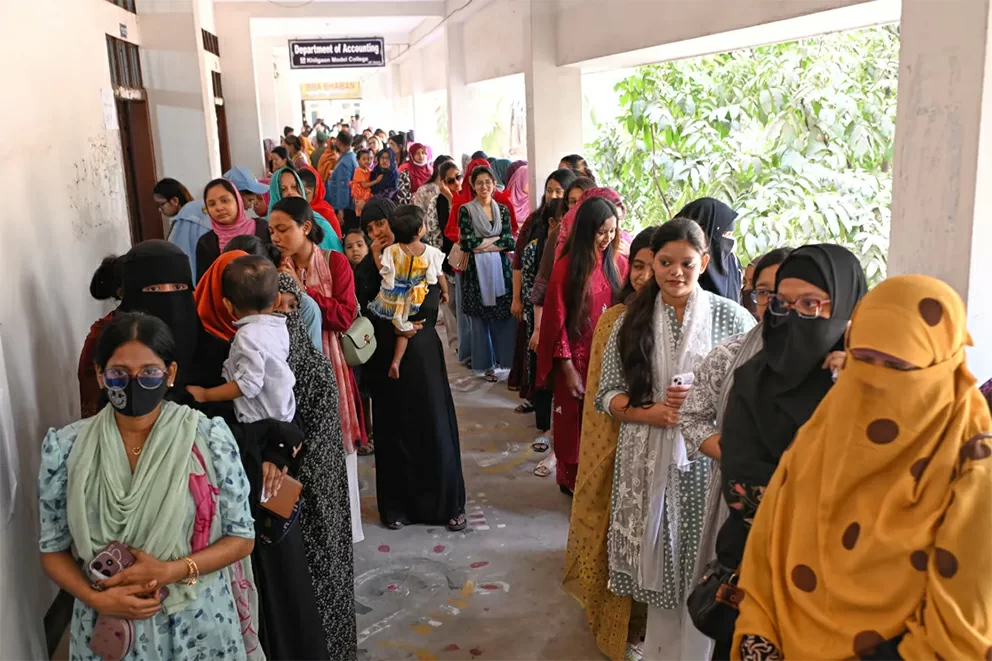
    In a historic political shift, the Bangladesh Nationalist Party (BNP) has achieved a decisive victory in Thursday’s parliamentary elections, marking a potential return to stability following the 2024 Gen Z uprising that toppled long-serving Prime Minister Sheikh Hasina. According to Ekattor TV’s projections, the BNP secured 151 of the 300 seats in the Jatiya Sangsad national parliament, substantially exceeding the required majority threshold.

    The elections featured unprecedented voter participation, with estimated turnout exceeding 60%—a significant increase from the 42% recorded in the contentious 2024 polls. The electoral landscape was notably competitive, with over 2,000 candidates representing a record number of at least 50 political parties, alongside numerous independent contenders.

    BNP’s primary rival, the Islamist Jamaat-e-Islami party, obtained 42 seats. Jamaat leader Shafiqur Rahman conceded defeat even before official confirmation of BNP’s majority was announced. The election in one constituency was postponed following the death of a candidate.

    Led by prime ministerial candidate Tarique Rahman—son of former Prime Minister Khaleda Zia and former President Ziaur Rahman—the BNP fielded candidates across 292 constituencies, allocating remaining seats to coalition partners comprising over half a dozen smaller parties.

    The party’s campaign platform included commitments to provide financial assistance to impoverished families, implement a ten-year term limit for prime ministers, stimulate economic growth through foreign investment, and combat systemic corruption.

    Simultaneously, Bangladesh conducted a referendum on the National Charter 2025—a governance framework document developed by the interim government led by Muhammad Yunus, which establishes foundational principles for future administration.

    Celebrations erupted among BNP supporters in Dhaka’s Gulshan district, where crowds chanted slogans upon unofficial reports of Tarique Rahman’s constituency victory. This electoral outcome positions the BNP to lead Bangladesh toward political normalization and economic revitalization, bearing the responsibility of fulfilling voter expectations and advancing national progress.

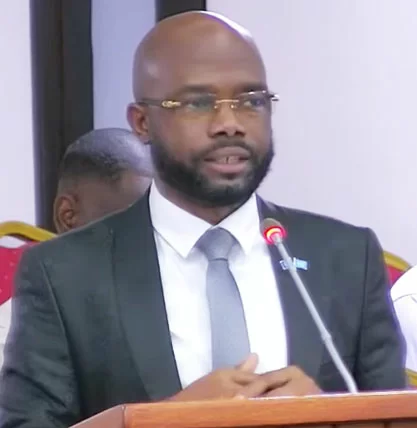
  • Atompai eist volledige openheid over salarissen rechterlijke macht

    Atompai eist volledige openheid over salarissen rechterlijke macht

    In a striking parliamentary session, National Assembly member Poetini Atompai (NPS) launched a rigorous interrogation into the compensation structure within Suriname’s judiciary, demanding immediate government transparency regarding its financial implications for the national treasury. The parliamentarian revealed concerning indications that certain judicial officials receive remuneration packages three to five times higher than the presidential salary, raising fundamental questions about proportionality, reasonableness, and governmental accountability.

    Addressing Justice and Police Minister Harish Monorath directly, Atompai insisted on receiving comprehensive answers by the day’s end. His inquiry specifically demanded a complete breakdown of gross salaries for all judicial branch personnel, categorized by position and rank. The request further extends to detailed information about implementation timelines, total monthly state expenditures, and cumulative financial impact since these compensation structures took effect.

    Beyond current figures, the parliamentarian seeks historical context—requesting pre-increase salary baselines, exact percentage increases, and the specific criteria governing these determinations. Atompai’s scrutiny extends to court clerks and their compensation relativity within the judicial hierarchy, emphasizing the need for complete structural transparency.

    In a significant expansion of his inquiry, the NPS representative highlighted concerning compensation disparities affecting National Assembly staff themselves. Despite their crucial role in parliamentary operations, Atompai asserted these employees receive inadequate compensation. He demanded detailed insights into their current salary scales by position and information about measures being implemented to achieve market-conform remuneration.

    Though time constraints prevented oral delivery of all inquiries, Atompai formally submitted his complete questions to Assembly Chairman Ashwin Adhin through official parliamentary channels, ensuring they enter the legislative record for mandatory government response.

  • Rusland verbiedt WhatsApp en stimuleert staatsalternatief

    Rusland verbiedt WhatsApp en stimuleert staatsalternatief

    In a significant escalation of digital control measures, Russian authorities have implemented a nationwide blockade of Meta’s WhatsApp messaging platform, citing alleged non-compliance with local legislation. The move represents the Kremlin’s latest effort to tighten its grip on digital communications amid the ongoing conflict in Ukraine.

    Kremlin spokesperson Dmitry Peskov formally announced the restriction, stating WhatsApp had demonstrated ‘unwillingness to adhere to Russian standards and laws.’ Russian citizens are being actively encouraged to transition to MAX, a government-backed communication application that integrates messaging capabilities with state services and payment functions.

    Digital rights experts have raised immediate concerns about MAX’s security architecture, noting the platform lacks end-to-end encryption—a fundamental privacy feature that protects message content from third-party access. This technical deficiency potentially exposes users to comprehensive state surveillance and interference.

    This development follows Russia’s systematic restriction of foreign communication platforms since last year, when authorities began limiting functionality on WhatsApp and Telegram under the pretext of insufficient cooperation with fraud and terrorism investigations. Human rights organizations including Amnesty International have condemned these measures as blatant digital repression disguised as citizen protection.

    WhatsApp responded to the blockade by pledging to ‘do everything possible’ to maintain connections for Russian users. Company representatives characterized isolating over 100 million Russians from secure communication as a ‘regressive step’ that compromises citizen safety. Many Russians have reportedly relied on virtual private networks (VPNs) since December to maintain WhatsApp access.

    Russia’s digital isolation strategy extends beyond WhatsApp, encompassing previous blocks on Twitter, Facebook, and Instagram, alongside restrictions on YouTube and Apple’s FaceTime. This pattern reflects a broader global trend where governments are increasingly asserting control over digital communication channels.

    Comparative analysis reveals similar approaches in multiple nations: China maintains long-standing blocks on WhatsApp while promoting state-approved WeChat; Iran regularly restricts WhatsApp and Telegram during political unrest; Turkey has implemented temporary WhatsApp blocks during conflicts; and both the UAE and Saudi Arabia limit VoIP functionalities to steer users toward government-approved alternatives.

    Human rights advocates warn that these restrictions fundamentally undermine freedom of expression and privacy rights while exposing citizens to unprecedented surveillance capabilities. The Russian case exemplifies how digital control measures are increasingly justified under national security pretexts while eroding democratic values and civil liberties.

  • Aanplant 6.000 zuurzakbomen moet productie en verwerking versterken

    Aanplant 6.000 zuurzakbomen moet productie en verwerking versterken

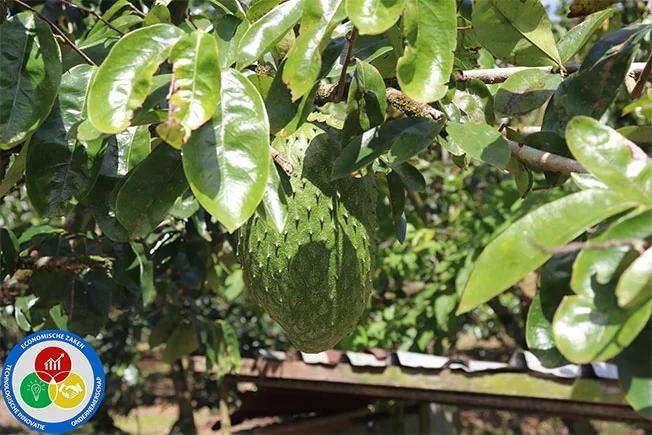
    In a significant development for the agricultural sector, Zudo Tropical Fruits and its network of affiliated farmers have embarked on a major expansion initiative by jointly planting approximately 6,000 soursop trees. This strategic move aims to substantially increase local fruit production while simultaneously advancing the processing industry’s capabilities.

    The project received high-level governmental attention during a working visit by Minister Andrew Baasaron of Economic Affairs, Entrepreneurship, and Technological Innovation (EZOTI). The minister toured the facilities of Zudo Tropical Fruits, which currently benefits from support through the innovative SURGE program.

    The company has developed an integrated business model that combines cultivation with fruit processing into pulp, creating additional value within the agricultural production chain. This expansion is being implemented in collaboration with outgrowers, ensuring direct involvement of multiple farmers throughout the production process.

    Through the SURGE program, Zudo Tropical Fruits secured a substantial grant of USD 250,000 specifically allocated for investments in production enhancement, processing infrastructure, and operational efficiency improvements. These funds have been strategically deployed to acquire agricultural machinery, state-of-the-art processing equipment, and essential support facilities.

    According to EZOTI officials, the project delivers multifaceted benefits that extend beyond corporate development. By integrating local farmers into both production and processing operations, the initiative strengthens the entire agricultural value chain. This approach contributes significantly to value addition, entrepreneurship development, and sustainable economic growth within the agricultural sector.

    During the working visit, ministry representatives expressed strong appreciation for the collaborative efforts within the sector and extended their best wishes for the company’s continued expansion success.

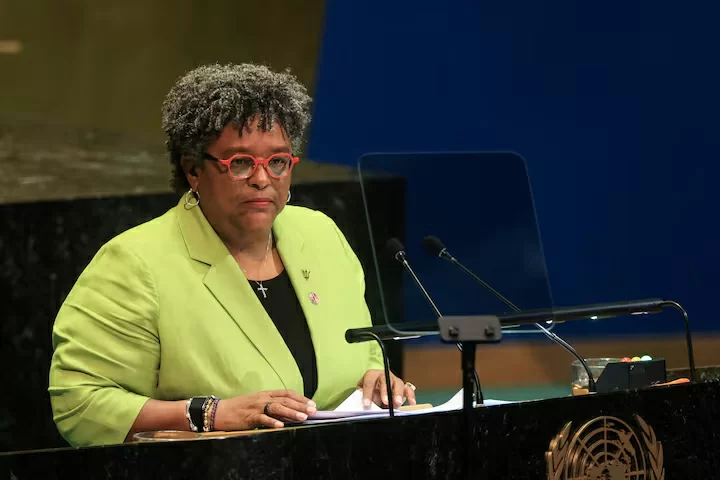
  • Mia Mottley wint derde termijn met volledige overwinning in Barbados

    Mia Mottley wint derde termijn met volledige overwinning in Barbados

    In a remarkable political achievement, Barbados Prime Minister Mia Amor Mottley has secured an unprecedented third consecutive term in office following a decisive electoral victory. Early Thursday morning, state broadcaster CBC Barbados confirmed that Mottley’s Barbados Labour Party (BLP) captured all 30 seats in the House of Assembly, solidifying her political dominance and defeating opposition leader Ralph Thorne.

    The 60-year-old leader, who has emerged as one of the Caribbean’s most influential political figures, enjoys widespread support across the island nation. In her victory address, Mottley emphasized her administration’s commitment to combating poverty and eliminating systemic injustices while creating opportunities for all citizens. She further pledged to safeguard Barbados’ democratic institutions, particularly significant as the nation recently celebrated the 75th anniversary of universal adult suffrage without property requirements.

    Under Mottley’s continued leadership, the BLP will maintain its focus on stimulating economic growth, managing cost-of-living pressures, and enhancing Barbados’ international standing. The opposition had criticized the government’s approach to security and infrastructure issues, with Thorne arguing for greater emphasis on domestic priorities affecting Barbadian residents.

    This electoral triumph marks a historic milestone for both Mottley and the easternmost Caribbean nation of approximately 283,000 inhabitants. With no term limits constraining leadership duration, Mottley becomes the first woman in Barbados’ history to serve three consecutive terms as prime minister, opening a new chapter in the island’s political narrative.

    Internationally recognized as a powerful advocate, Mottley has gained prominence through her role as chair of the Caribbean Community (Caricom) and her vigorous campaigning for stronger global climate action. In 2021, she spearheaded Barbados’ transition to a republic, formally severing colonial ties with Britain.

    The electoral process received validation from a Caricom observation mission, which confirmed the election was conducted transparently and orderly while praising Barbados’ stable democratic traditions. This historic victory provides Mottley with a mandate to continue implementing her policy agenda and pursuing socio-economic advancements amid rapidly changing global circumstances.

  • Nieuwe niervergruizer AZP niet volledig operationeel; oplossing binnen 2 weken verwacht

    Nieuwe niervergruizer AZP niet volledig operationeel; oplossing binnen 2 weken verwacht

    PARAMARIBO – Suriname’s healthcare sector faces a temporary setback as the newly installed kidney stone crusher at the Academic Hospital Paramaribo (AZP) is operating below capacity due to a technical incompatibility. Health Minister André Misiekaba confirmed the operational challenges during a session of the National Assembly, responding to inquiries from legislator Ivanildo Plein of the National Party of Suriname (NPS).

    The core issue, as detailed by the minister, stems from the supplier providing an incorrect ultrasound device during the installation process last month. This critical component was found to be non-compatible with the lithotripsy system’s core technology, severely limiting its functionality. Consequently, medical staff can only perform the non-invasive kidney stone procedures through improvisation and solely for patients in acutely urgent cases, exacerbating existing lengthy waiting lists.

    Hospital administration anticipates a resolution by the conclusion of February, with expectations for the advanced medical equipment to then achieve full operational status. Minister Misiekaba publicly appealed for patience from affected patients and the general public, emphasizing the institution’s commitment to resolving the supply chain error promptly. “We expect optimal crushing operations to resume within a fortnight,” the minister assured legislators, highlighting the short-term nature of the disruption despite its significant current impact on urological services.