标签: Suriname

苏里南

  • Staatsolie behaalt doelen in 2025 en verstevigt basis voor offshore-toekomst

    Staatsolie behaalt doelen in 2025 en verstevigt basis voor offshore-toekomst

    Suriname’s state-owned oil company, Staatsolie Maatschappij Suriname N.V., concluded 2025 with exceptional financial and operational results, demonstrating robust performance across both onshore and emerging offshore sectors. The energy enterprise successfully met all production targets while laying foundations for sustainable growth in the nation’s burgeoning oil and gas industry.

    The company reported impressive financial metrics for the year, with projected revenues reaching approximately $802 million and pre-tax profits totaling $418 million. Production figures revealed 6.35 million barrels of oil extracted, exceeding established targets. The refinery operations outperformed expectations, generating 3.1 million barrels of diesel and gasoline combined. A significant milestone was achieved with the inaugural commercial production and subsequent delivery of sulfuric acid to Suralco.

    Through its subsidiary Staatsolie Power Company Suriname (SPCS), the corporation supplied approximately 1.37 million MWh of electricity, accounting for 69% of power distributed through the EPAR network to Paramaribo and surrounding districts. Infrastructure development continued with GOw2’s modernization initiative, which completed two upgraded pumping stations and established a new facility in Saramacca.

    Staatsolie’s contribution to national finances proved substantial, injecting an estimated $387 million into state coffers through taxes, dividends, and royalty payments. This represented approximately 32% of total government revenues and accounted for nearly 9% of Suriname’s gross domestic product.

    Offshore developments marked particularly significant progress throughout 2025. The GranMorgu project in Block 58 advanced according to schedule, achieving 25% overall completion with the floating production storage and offloading (FPSO) vessel halfway constructed. First oil production remains anticipated for 2028. Additionally, the company granted commercial approval for the Sloanea-1 gas field in Block 52, representing a crucial step toward offshore gas production pending final investment decision in 2026.

    To finance its 20% participation in the GranMorgu venture, Staatsolie secured over $2 billion through a successful bond issuance and international bank loan, demonstrating strong investor confidence in Suriname’s energy prospects.

    The corporation maintained its commitment to social responsibility, channeling $2.7 million into community projects through the Staatsolie Foundation supplemented by an additional $3 million allocation commemorating the company’s 45th anniversary.

    Despite global oil market uncertainties, Staatsolie approaches 2026 with confidence, supported by solid financial positioning, strategic partnerships, and continued dedication to creating lasting value for Suriname’s economy and society.

  • Nieuwe Raad van Commissarissen SWM aangetreden onder leiding van Ronald Rozenblad

    Nieuwe Raad van Commissarissen SWM aangetreden onder leiding van Ronald Rozenblad

    In a significant governmental reshuffle, Ronald Rozenblad has been appointed as the President-Commissioner of NV Surinaamsche Waterleiding Maatschappij (SWM), Suriname’s national water utility company. The appointment occurred during an extraordinary General Meeting of Shareholders convened on December 29 at the Ministry of Natural Resources.

    Minister David Abiamofo, representing the State of Suriname as sole shareholder, presided over the meeting alongside Water Director Gonda Asadang and SWM Deputy Financial Director Freddy Crisis. The newly constituted Board of Commissioners comprises seven members: Sacha Mertowirijo, Sharmaine Artist, Alice Amafo, Nigel Sloot, Keshian Joekoe, and Rudiwal Baarh alongside Chairman Rozenblad.

    This leadership transition follows a December 10 cabinet decision that terminated the previous board led by acting President-Commissioner Preshand Baldew. The new board received a five-year mandate beginning immediately.

    During the transfer ceremony, Minister Abiamofo emphasized the board’s dual responsibility: not only providing oversight but also serving as a crucial liaison between shareholders, management, and employees. Core responsibilities include safeguarding policy direction, maintaining operational quality, and ensuring corporate governance standards.

    The board’s immediate priority involves conducting a comprehensive operational assessment of SWM, with findings to be reported directly to the government. Additionally, the ministry plans to establish structured policy dialogue mechanisms between the shareholder and commissioners.

    Minister Abiamofo acknowledged the outgoing board’s contributions while noting the incoming team faces particular challenges in ensuring continuous delivery of clean drinking water amid complex operational conditions.

  • Uitspraak in strafzaak Danielle Veira uitgesteld

    Uitspraak in strafzaak Danielle Veira uitgesteld

    In a significant judicial development, the sentencing hearing for Danielle Veira, the former Director of National Security, has been formally postponed until January 30th. The scheduled proceedings were abruptly delayed after Veira’s legal representatives presented a medical certificate to the Court of Appeal, indicating her inability to attend today’s crucial session.

    Presiding Judge Cynthia Valstein-Montnor emphasized the judicial preference for the defendant’s physical presence during sentencing announcements. The court additionally requires extended deliberation time to thoroughly consider the appropriate verdict in this complex case.

    Veira faces multiple serious charges including complicity in the kidnapping of Rodney Cairo, unlawful entry, armed robbery participation, and unauthorized issuance of firearm permits. The Public Prosecutor has recommended a substantial nine-year prison sentence for the former intelligence chief.

    During last week’s emotional courtroom appearance, Veira expressed profound distress, stating she never anticipated facing criminal proceedings. “I have been mockingly portrayed as both suspect and delinquent,” she declared in her final statement, visibly overcome by the gravity of the situation.

    The case has drawn considerable public attention due to Veira’s former high-ranking position and the severity of the alleged offenses. Legal experts suggest the medical postponement could indicate strategic developments in the defense approach as the judicial process enters its final phase.

  • Bangladesh: Eerste vrouwelijke premier overleden

    Bangladesh: Eerste vrouwelijke premier overleden

    Bangladesh’s political landscape has been permanently altered with the passing of Begum Khaleda Zia, the nation’s first female prime minister, who died Tuesday at age 80 after a prolonged illness. The opposition Bangladesh Nationalist Party (BNP) confirmed her death following an extended battle with advanced liver cirrhosis, arthritis, diabetes, and cardiovascular complications.

    Khaleda Zia’s political journey represents one of modern South Asia’s most compelling narratives. She initially rose to power in 1991 through a surprising electoral victory against her rival Sheikh Hasina, becoming only the second woman to lead a democratic government in a predominantly Muslim nation after Pakistan’s Benazir Bhutto.

    Her legacy is characterized by both groundbreaking achievements and intense political conflicts. During her tenure, she transformed Bangladesh’s governmental structure by replacing the presidential system with a parliamentary framework, relaxed restrictions on foreign investment, and implemented mandatory free basic education.

    The relationship between Khaleda Zia and Sheikh Hasina defined decades of Bangladeshi politics. Initially collaborators in the 1990 pro-democracy movement that ousted military ruler Hossain Mohammad Ershad, their alliance quickly dissolved into what became known as the “Battling Begums” rivalry—a reference to the Urdu honorific for prominent women.

    Their contrasting leadership styles became legendary: Khaleda, described as reserved, traditional, and carefully measured in speech; Hasina, markedly more outspoken and assertive. This personal and political dichotomy fueled a power struggle that would dominate the nation’s affairs for over three decades.

    Khaleda’s second term as prime minister (2001-2006) was marred by rising Islamic militancy and corruption allegations. The 2004 grenade attack on a Hasina rally, which killed over 20 people and injured 500, remains one of the most controversial events of this period, with Khaleda’s government and its Islamic allies widely blamed.

    The subsequent years saw Khaleda’s political fortunes decline dramatically. After a military-backed caretaker government assumed power in 2006, both she and Hasina faced approximately one year of imprisonment on corruption charges. Though released before the 2008 elections, Khaleda never regained power.

    Her later years were marked by legal battles and deteriorating health. In 2018, she was imprisoned on corruption charges related to embezzlement of orphanage funds—accusations she maintained were politically motivated attempts to exclude her family from politics. She was transferred to house arrest in March 2020 on humanitarian grounds as her health declined.

    The recent political upheaval in Bangladesh had created new dynamics for Khaleda’s legacy. Following student-led protests that ousted Hasina in August 2024, an interim government under Nobel Peace Prize winner Muhammad Yunus assumed control. Hasina herself was sentenced to death in absentia in November for her lethal suppression of student protests.

    Khaleda’s release from house arrest in August 2024 and subsequent court exonerations in early 2025—both in the corruption case that had imprisoned her and the 2004 grenade attack allegations against her son Tarique Rahman—marked significant late-life developments.

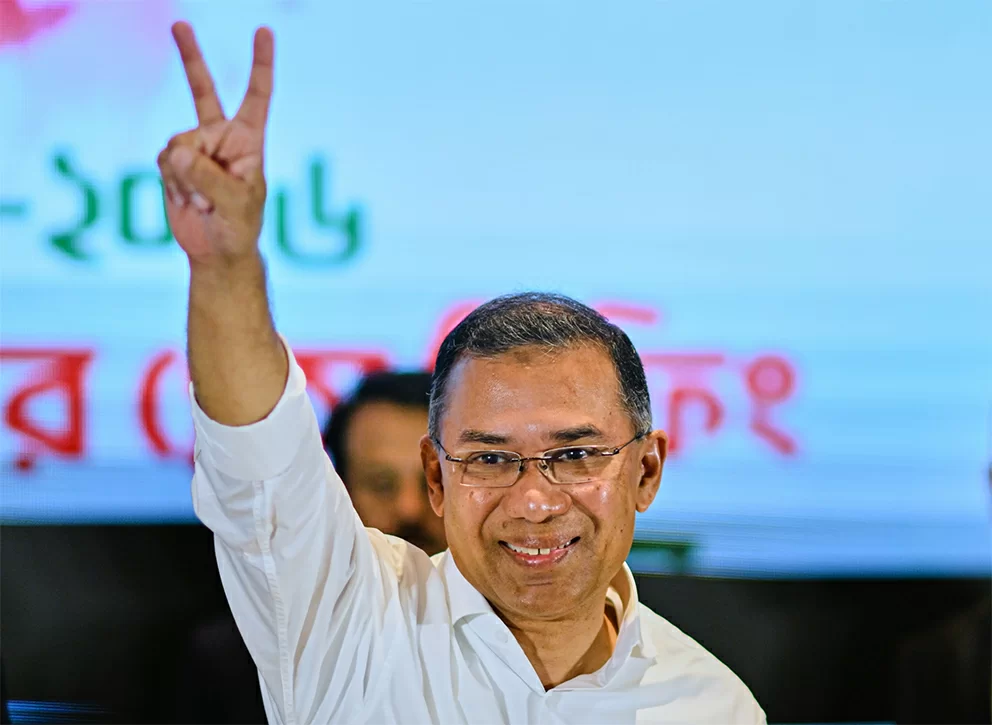
    The return of her son Tarique Rahman after nearly 17 years in self-exile last week, combined with the BNP’s position as favorite for February’s parliamentary elections, suggested a potential political resurgence that her death has now cut short.

    Khaleda Zia’s story began not as a politician but as a mother dedicated to raising her two sons. Her entry into politics came only after the 1981 assassination of her husband, military leader and president Ziaur Rahman, during a failed coup. Assuming leadership of his BNP party three years later, she vowed to continue his mission to “free Bangladesh from poverty and economic backwardness.”

    Her passing closes a monumental chapter in Bangladesh’s history while leaving unanswered questions about the nation’s political future and the resolution of the epic rivalry that shaped its democracy.

  • Politie: Aroma rond 01.30 uur ingesloten, om 06.10 uur levenloos aangetroffen in cel Keizerstraat

    Politie: Aroma rond 01.30 uur ingesloten, om 06.10 uur levenloos aangetroffen in cel Keizerstraat

    Surinamese police authorities faced intense media scrutiny during a press conference addressing the controversial death of detainee Dennis Aroma, who was found deceased in a custody cell at the Central Police Station (Keizerstraat) on Monday morning. The incident has raised serious questions about detention protocols and inmate monitoring procedures.

    According to police spokesperson Michael Elskamp, Inspector Third Class and acting Head of Public Relations, Aroma had been transported to the station at approximately 1:30 AM on December 29 following his discharge from the Academic Hospital Paramaribo (AZP). The detainee was placed in an Observation and Temporary Stay (OTS) cell, where he was discovered lifeless during routine checks at 6:10 AM.

    Police Commissioner Rachel Deekman revealed that Aroma had initially received treatment at the Emergency Department for gunshot wounds sustained during his apprehension. Authorities emphasized that OTS cells are designed for isolated detention pending further judicial proceedings, not for continuous surveillance of high-risk individuals.

    The police force acknowledged contacting Suriname’s Psychiatric Center (PCS) to determine whether Aroma had documented mental health concerns, though no medical reports indicating psychological instability were available at the time of his transfer.

    While preliminary investigations suggest suicide using bandage materials from a splint applied to his right lower leg, officials declined to provide specific details pending completion of the autopsy and formal investigation. The Capital Crimes Division, assisted by Forensic Investigation and medical professionals, is conducting a comprehensive review of the circumstances.

    During the press conference, journalists criticized the lack of transparency regarding surveillance protocols, camera monitoring, and hospital discharge decision-making processes. Police representatives stated they had come forward provisionally to address public concern and curb speculation, but definitive answers would require completion of the ongoing investigation and receipt of the official autopsy report.

  • Suriname zet stap richting gereguleerde integratie van traditionele geneeskunde

    Suriname zet stap richting gereguleerde integratie van traditionele geneeskunde

    Suriname has reinforced its commitment to incorporating traditional and complementary medicine into its national healthcare framework following participation in the World Health Organization’s second global summit on traditional medicine. The high-level gathering, convened in New Delhi, India, assembled delegates from over one hundred nations to advance the implementation of the WHO Traditional Medicine Strategy 2025–2034.

    The conference culminated in the adoption of the Delhi Declaration, which formally recognizes traditional medicine as both a shared bio-cultural heritage and an integral component of national health systems worldwide. This landmark document emphasizes evidence-based integration, rigorous regulatory standards, patient safety protocols, and meaningful engagement with indigenous communities and traditional knowledge holders.

    Suriname’s multidisciplinary delegation included officials from the Ministry of Health, Welfare and Labor, the Ministry of Foreign Affairs, International Trade and Cooperation, and the National Assembly. The nation used the platform to reaffirm its phased, responsible approach to integrating traditional, complementary, and integrative medicine within its healthcare architecture.

    On the sidelines of the summit, Surinamese representatives engaged in bilateral discussions with Indian counterparts to explore enhanced cooperation in traditional medicine. India has expressed willingness to provide technical support in regulatory development, capacity building, and knowledge exchange, with particular attention to Suriname’s multicultural demographic landscape.

    This participation signals accelerated parliamentary consideration of Suriname’s draft legislation on the Regulation and Development of Traditional and Integrative Medical Systems Industry. The move aligns with broader policy initiatives aimed at ensuring safe, regulated, and inclusive application of traditional medical practices across the nation’s diverse population.

  • China uit ernstige onvrede over sloop van Chinees monument in Panama

    China uit ernstige onvrede over sloop van Chinees monument in Panama

    China has formally expressed profound dissatisfaction regarding the demolition of a commemorative monument by local authorities in Panama’s Arraiján district, West Panama Province. The declaration came from Chinese Foreign Ministry spokesperson Lin Jian during a regular press briefing on Monday.

    The monument, originally erected to honor Chinese contributions to the construction and development of the Panama Canal—one of the world’s most vital maritime passages—was dismantled by local Panamanian officials citing safety concerns and the expiration of the land concession. The structure had stood for several years as a symbol of bilateral cooperation and friendship between China and Panama.

    The removal has sparked indignation among the local Chinese community and drawn criticism from Panama’s president. Spokesperson Lin Jian condemned the forced demolition as “highly undesirable,” emphasizing that the action severely hurt the sentiments of the Chinese diaspora in Panama and runs counter to the generally positive bilateral relations.

    The incident emerges amid ongoing efforts by both nations to strengthen collaboration across trade, infrastructure, and cultural exchanges. It remains unclear whether Panamanian authorities intend to relocate the monument or establish an alternative memorial site. The Chinese Embassy in Panama has reportedly initiated communication with local officials seeking a constructive resolution.

    This situation underscores the sensitivity surrounding symbols of international partnership and highlights the importance of preserving cultural and historical sites, particularly within the context of China’s expanding economic ties with Latin America.

    While no direct evidence links the monument’s removal to recent geopolitical statements—such as those from former U.S. President Donald Trump regarding China’s growing influence in the region—broader concerns over Chinese presence in Latin America may contribute to an atmosphere of political caution. Previous U.S. administrations have openly criticized China’s expanding role in countries like Panama, potentially heightening sensitivities around Chinese-sponsored symbols and investments.

  • Bedrijven investeren gezamenlijk in hoogwaardige training voor chemische veiligheid

    Bedrijven investeren gezamenlijk in hoogwaardige training voor chemische veiligheid

    Suriname has marked a significant milestone in industrial safety with the completion of an intensive chemical security training program, the first of its kind in the nation meeting international standards. The three-week program, concluded Monday at Bux Engineering facilities, equipped specialists with advanced techniques to handle hazardous materials and counter CBRN threats—Chemical, Biological, Radiological, and Nuclear hazards.

    Anwar Alibux, CEO of Bux Engineering, emphasized the program’s critical importance given Suriname’s regular importation of radioactive sources for medical applications and oil/gas sector operations. The training utilized specialized equipment and methodologies previously unavailable in the country, addressing significant gaps in handling explosives, laboratory chemicals, industrial cleaning agents, and mining raw materials.

    The curriculum extensively covered transport and storage protocols for dangerous substances—areas where Suriname has historically underperformed. Participants received instruction on identifying chemicals potentially misused for manufacturing chemical/biological weapons or illegal narcotics. Additional modules included oil spill cleanup procedures and emergency response techniques.

    This initiative became possible after Surinamese specialists successfully completed the international Associate Program of the Organisation for the Prohibition of Chemical Weapons (OPCW) in October. The OPCW, a United Nations-affiliated independent body based in The Hague, oversees the global chemical weapons ban.

    Twelve specialists from four private companies—Muhaarib Security NV, Yamuna NV, Suriname Drones Services NV, and Bux Engineering—participated in this inaugural session. The program will expand in 2026 to include more private enterprises and government agencies, offering modular training ranging from three days to six weeks depending on specialization.

    Alibux highlighted the urgent need for such investment: ‘Dozens of annual chemical incidents in Suriname go unreported, while improper chemical handling causes chronic health issues among laboratory and industrial workers. The critical missing element is a 24/7 HAZMAT response capability for inspections and emergencies. Currently, adequate response to chemical incidents or disasters often takes days.’

  • Trump bevestigt aanval op havenfaciliteit nabij Venezuela

    Trump bevestigt aanval op havenfaciliteit nabij Venezuela

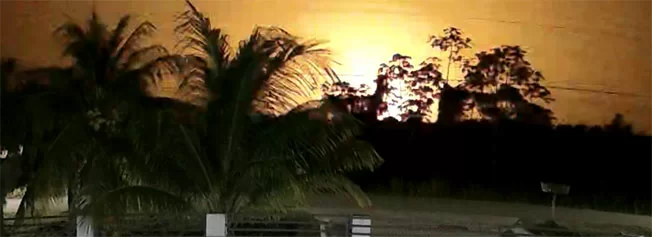
    In a significant escalation of its campaign against narcotics trafficking, the United States has conducted a military strike targeting a coastal facility in Venezuela, as confirmed by President Donald Trump during his recent public appearances. The operation marks a dramatic shift from previous interdiction efforts focused on maritime interception to direct attacks on mainland infrastructure.

    Speaking spontaneously during a radio interview with host John Catsimatidis on Friday, followed by additional comments during his Monday meeting with Israeli Prime Minister Benjamin Netanyahu in Florida, Trump revealed details of the offensive action. “We’ve struck all the boats and now the area itself,” the president stated, referencing a “major explosion in the port area where they load drugs onto boats.”

    The targeted facility, described by Trump as a major processing or launch point for drug shipments, was reportedly destroyed in an operation conducted two nights prior to his comments. While refusing to confirm whether U.S. military forces or CIA operatives executed the strike, Trump asserted, “I know exactly who it was, but I don’t want to say. But it was along the coast.”

    This development represents a substantial intensification of Washington’s pressure campaign against Venezuelan President Nicolás Maduro’s government. Since September, American forces have conducted at least 29 known attacks on suspected drug smuggling vessels in international waters of the Caribbean and eastern Pacific, resulting in over 105 casualties.

    The Pentagon has deferred all inquiries regarding the operation to the White House, which has not issued an official statement. Venezuelan authorities similarly remained silent on Trump’s claims.

    The Trump administration has increasingly characterized its anti-narcotics efforts as an “armed conflict” with drug cartels, deploying warships, bolstering military presence throughout the region, and seizing multiple oil tankers. White House Chief of Staff Susie Wiles recently indicated that Trump intends to continue “blowing up boats until Maduro gives up,” while Maduro perceives these actions as attempts to forcibly remove him from power.

    Background context reveals that Trump confirmed in early October that he had authorized CIA covert operations in Venezuela, suggesting the potential for further mainland attacks in South America as part of the administration’s comprehensive strategy to stem the flow of illicit substances into the United States.

  • Column: Waar was de hulp toen het nog kon?

    Column: Waar was de hulp toen het nog kon?

    A devastating domestic incident in Richelieu, Suriname, has escalated into a national tragedy claiming ten lives, including the perpetrator, exposing profound institutional failures across multiple sectors. The catastrophe began when a man assumed custody of five young children following their mother’s departure from the family, creating a pressure cooker environment that culminated in mass murder.

    Multiple warning signs preceded the violence, with close contacts aware of the deteriorating situation. Yet despite clear indicators of escalating tension, no effective intervention occurred. The tragedy highlights critical deficiencies in Suriname’s crisis response infrastructure, particularly the absence of 24/7 emergency hotlines and specialized agencies equipped to handle pre-criminal emergencies.

    The sequence of failures continued after the initial violence. When neighbors attempted intervention, they became additional victims. Police responding to the scene reported being forced to use lethal force against the threatening suspect, who sustained injuries before being transported to emergency care. Following medical treatment, authorities deemed him fit for incarceration.

    In a shocking development, the suspect subsequently died by suicide within his police cell using medical bandages—raising serious questions about institutional protocols. How could someone with gunshot wounds, experiencing severe psychological distress, be discharged from hospital care directly into police custody? What observation and safety measures were implemented? Who determined his suitability for detention, and who ultimately bore responsibility for his welfare?

    This case represents not isolated errors but systemic collapse across social services, mental health support, law enforcement, and judicial systems. The tragedy underscores the absence of coordinated crisis management and preventive mechanisms in Surinamese society.

    Suriname now faces urgent questions about creating functional safety networks before situations escalate into violence. The nation must establish clear protocols for overload, domestic violence, and despair cases while ensuring proper safeguards for individuals in state custody, regardless of their crimes.

    As the country declares a National Day of Mourning, the conversation must extend beyond sympathy toward concrete institutional reform. Without implementing substantive changes and learning from these catastrophic failures, society risks repeating similar tragedies through continued systemic neglect.