标签: Suriname

苏里南

  • Politieke onenigheid legt behandeling rechterlijke macht stil

    Politieke onenigheid legt behandeling rechterlijke macht stil

    A scheduled plenary session of Suriname’s De Nationale Assemblee to debate four high-stakes judicial reform bills collapsed Thursday after failing to meet the minimum attendance requirement for a legally valid meeting, forcing Assembly Speaker Ashwin Adhin to adjourn the gathering indefinitely. The breakdown of the session has laid bare deep internal rifts within the country’s ruling coalition over the proposed legislative changes.

    Under Assembly rules, at least 26 sitting members must be present to open a formal, binding debate. When roll was called, just 21 of the 34 members of the governing coalition showed up for the vote, falling far short of the required threshold. The absences were particularly stark among the six-member ABOP faction: only party representative Stanley Betterson registered his attendance. While all members of the large VHP faction were present in the parliamentary building, none signed the official attendance register in a coordinated show of opposition to the bill package.

    Originally convened at 1 p.m. local time, the session was ultimately dissolved at approximately 4:30 p.m. after hours of waiting for absent members to arrive. The mass absence of ABOP lawmakers made existing tensions within the ruling coalition over the judicial reform legislation impossible to ignore. In remarks following the adjournment, Adhin noted that negotiations over the four bills remain ongoing, adding that consultations with faction leaders and further coordination with the Suriname Court of Justice will be held to get the legislative process back on track. No new date or time for resuming the debate has been set, with the session adjourned until further notice.

    Speaking to local outlet Starnieuws, NDP faction leader Rabin Parmessar clarified that a number of NDP and NPS lawmakers are currently traveling abroad, which contributed to the attendance shortfall. He added that the VHP, the coalition’s largest bloc, still holds formal objections to key provisions of the legislative package, particularly the planned phase-out of specific institutional provisions within the national judiciary. According to Parmessar, the VHP has called for discussions on alternative policy frameworks and new transition arrangements for the reform. Follow-up talks to resolve these outstanding disagreements are scheduled for Friday, where participating parties will conduct detailed cost and impact projections for proposed amendments to the bills.

  • Trump dreigt met 50% invoerheffingen op landen die Iran bewapenen

    Trump dreigt met 50% invoerheffingen op landen die Iran bewapenen

    Just hours after the United States and Iran announced a landmark two-week ceasefire in their long-running escalating conflict, U.S. President Donald Trump has sent shockwaves through the international community with a sharp new threat: immediate 50% import tariffs on all goods from any nation that supplies military weapons to Iran.

    The announcement, made via Trump’s own social media platform, made clear no exceptions would be granted to the measure, in an explicit warning to major powers China and Russia, both of which have a history of supporting Iran’s military capacity building through past deliveries of missile technology and air defense systems. While both Beijing and Moscow have repeatedly denied supplying new weaponry to Iran in recent months, unsubstantiated accusations of ongoing military assistance to Tehran continue to circulate against Russia.

    A key legal caveat complicates Trump’s ability to implement the proposed tariffs, however. Back in February, the U.S. Supreme Court rolled back part of the broad trade authority the president had previously claimed to impose sweeping tariffs, significantly limiting his executive power to enact such measures. As a result, trade experts widely predict Trump will attempt to push the new restrictions through alternative trade policy mechanisms rather than relying on his earlier executive authority.

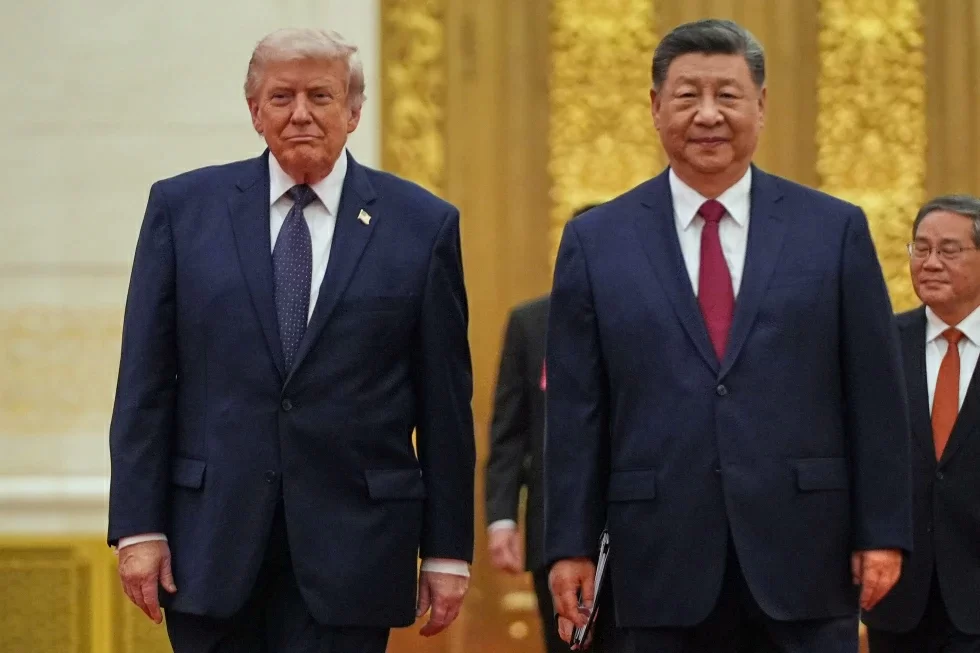
    The tariff threat has already put new strain on U.S.-China relations, one of the world’s most consequential bilateral trade partnerships. Policy analysts note that despite the hardline rhetoric directed at Beijing over the Iran issue, Trump is likely eager to avoid derailing his planned upcoming visit to China, leaving his next moves uncertain. On Thursday morning, China’s Ministry of Defense rejected accusations that Chinese entities have supplied Iran with advanced chip manufacturing equipment or satellite imagery, reiterating that Beijing maintains a neutral, peaceful stance on the Iran conflict and has repeatedly called for all parties to resolve disputes through diplomatic dialogue.

    The newly announced two-week ceasefire between the U.S. and Iran remains fragile, with both sides continuing to frame themselves as victors of the recent open conflict that sent global oil prices soaring and disrupted international financial markets. As a core condition of the truce, Iran has agreed to temporarily reopen the Strait of Hormuz, the vital chokepoint through which roughly a fifth of the world’s daily oil supplies pass.

    Tehran has put forward a 10-point framework for reaching a permanent end to hostilities, with key demands including the full lifting of international sanctions on Iran, permanent Iranian sovereignty and control over the Strait of Hormuz, and the complete withdrawal of U.S. military forces from the broader Middle East region. U.S. negotiators have called the Iranian plan “generally feasible” but noted that several core provisions remain unacceptable to Washington.

    Formal peace negotiations between U.S. and Iranian delegations are scheduled to kick off Friday in Islamabad, Pakistan, with the Pakistani government serving as the official neutral mediator. Both sides have publicly stated their goal of reaching a durable, long-term peace agreement within the 14-day ceasefire window.

    The truce faces an early major test, however. On Thursday, Iranian President Masoud Pezeshkian condemned the latest large-scale Israeli airstrikes on Lebanon, saying the attacks directly violate the newly signed ceasefire agreement and would render upcoming peace talks meaningless. He added that Iran would not abandon the Lebanese people in the face of the assault. Pezeshkian’s remarks came after the deadliest single day of Israeli attacks on Lebanon since the outbreak of conflict with Hezbollah last month, which killed more than 250 people on Wednesday alone.

    Beyond the geopolitical tensions, Trump’s new tariff threat represents a continuation of his administration’s strategy of using trade measures as a tool of geopolitical pressure on Iran’s global partners. If implemented, the new tariffs would further complicate already strained global trade relations that have been roiled by repeated tariff disputes and sanctions in recent years.

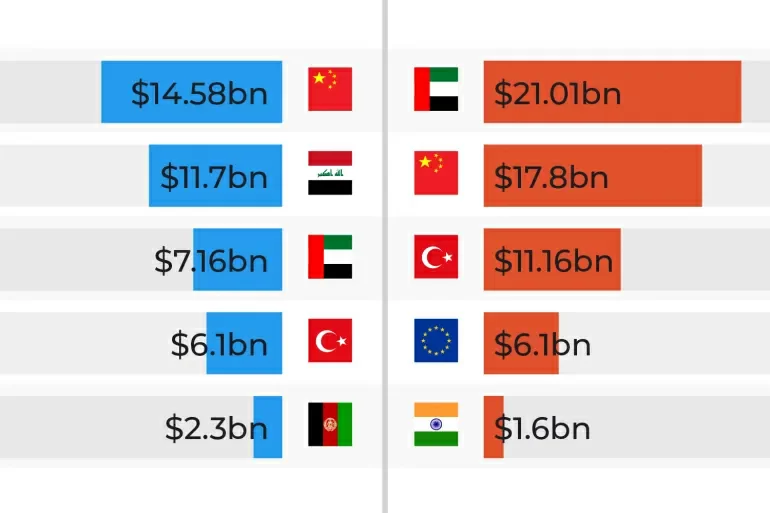
    U.S. imports from China have already fallen dramatically since the start of Trump’s first trade war with Beijing, dropping from a 2018 peak of $538.5 billion to just $308.4 billion in 2025. Imports from Russia have also plummeted following sweeping sanctions imposed after the 2022 invasion of Ukraine, though certain key strategic commodities such as palladium still enter the U.S. market. The U.S. Chamber of Commerce is currently preparing new additional tariffs on Russian palladium imports, in response to alleged dumping practices by Russian exporters.

  • SLM schort vaste vluchten naar Barbados op, inzet voortaan seizoensgebonden

    SLM schort vaste vluchten naar Barbados op, inzet voortaan seizoensgebonden

    Surinam Airways (SLM), the national carrier of the South American nation Suriname, has announced that it will halt its scheduled regular flight operations between its hub in Paramaribo and Bridgetown, Barbados, effective April 19, 2026. The airline confirmed that the decision to pause the bi-weekly route, which previously operated every Sunday and Wednesday, was driven by a combination of operational performance challenges and shifting commercial market demands.

    This route adjustment forms a core part of SLM’s broader company-wide initiative to optimize its entire route network, the carrier explained. Under the optimization strategy, the airline is realigning its available capacity and flight frequencies across all routes to better match current travel demand patterns, while boosting overall operational efficiency across its business.

    Contrary to initial speculation that the route would be cut entirely, Barbados will remain a key part of SLM’s long-term route network. Following the April 19 suspension of regular services, the carrier will shift to a seasonal service model for the destination, with flights only operated during peak travel periods and in conjunction with major annual events hosted on the Caribbean island. The first seasonal operating window under the new model will run from July 1, 2026, through January 15, 2027.

    The shift in service model has resulted in a number of pre-scheduled flight cancellations in the interim period between April 19 and the launch of the first seasonal window. Affected flights include all services between April 19 and May 10, the flight scheduled for May 17, and all services from May 24 through June 28. Notably, the services operated on May 13 and May 20, designated by flight numbers PY331 and PY332, will remain operational and operate according to their original published schedules.

    SLM has confirmed that all passengers holding confirmed tickets for travel after April 19 on the suspended route are being proactively notified of the schedule changes. Passengers will be contacted directly by the airline or through their third-party travel agents, who will walk them through available alternative travel arrangements. Depending on passenger preference and applicable ticket terms, eligible bookers will be offered either rebooking onto alternate services or a full refund of their ticket cost, in line with SLM’s standard customer policies.

  • Geen gastekort, nieuwe lading cilinders verwacht in mei

    Geen gastekort, nieuwe lading cilinders verwacht in mei

    Published on April 9 at 14:15, a recent update from Surinamese gas provider OGANE has clarified ongoing supply concerns that have sparked consumer complaints in recent weeks. The subsidiary of N.V. Energiebedrijven Suriname (EBS) confirmed Wednesday that the country currently faces no shortage of cooking gas, with production and distribution operations running at normal capacity.

    In response to rising consumer demand that has put mild pressure on supply chains in recent weeks, OGANE has already stepped up its daily production output to keep pace. The company also emphasized that all authorized gas sales points across the country receive daily restocks, ensuring that consumers are able to access the gas they need without disruption.

    The only ongoing challenge identified by the firm is a temporary shortage of new empty gas cylinders, a gap that has triggered widespread complaints from households that need to replace old or damaged units. OGANE moved to reassure the public that this bottleneck will be resolved next month, when a new bulk shipment of empty cylinders is scheduled to arrive in Suriname. Once the shipment comes in, stock levels will return to normal and the shortage will be eliminated.

    For consumers looking to locate their nearest authorized OGANE reseller, a full, updated directory of all sales points is available on the official EBS website.

  • Overheid kampt met personeelstekort: vraag loopt op tot honderden functies

    Overheid kampt met personeelstekort: vraag loopt op tot honderden functies

    Across Suriname’s public administration, a growing staff crisis has reached critical levels, with hundreds of vacant positions currently unfilled across multiple government departments. A long-standing public sector hiring freeze has blocked agencies from recruiting external candidates, forcing ministries to scramble to reallocate existing staff from within the government system to cover pressing gaps.

    Mike Noersalim, Minister of Agriculture, Livestock and Fisheries (LVV), confirmed the sector’s staffing challenges in an interview with local outlet Starnieuws, clarifying that his department is restricted from bringing in new hires from outside the public service. “We first conducted an internal search across our four directorates, then sent lists of our open roles to other ministries to see if we can pull available staff from elsewhere,” Noersalim explained. The minister added that LVV has itself received requests from other understaffed departments seeking to borrow its employees, but the agency cannot spare any workers: “We have critical unmet needs of our own, so we have no excess personnel to offer.

    Noersalim attributes the deepening public sector staffing shortage to a combination of overlapping factors that create persistent gaps across roles. When existing employees leave public service or earn promotions to higher positions, their departure creates new openings that must be filled, triggering a chain of shifting personnel that leaves lower-priority and entry-level roles empty. The minister highlighted one common example: cleaning staff who have moved up to administrative roles and have no interest in returning to their former positions, leaving vacant cleaning slots across agencies.

    Within LVV alone, the demand for new staff is both large and broad. Just within the Directorate of Agricultural Research, Marketing and Processing, dozens of roles remain unfilled, spanning a wide range of positions from administrative staff and policy advisors to drivers, lab technicians and agricultural inspectors.

    Beyond general vacancies, the ministry faces critical gaps in high-priority roles that directly impact public food supply. LVV urgently needs roughly 25 additional meat inspectors to conduct mandatory safety checks, a need that is expected to grow as the country’s oil and gas sector expands. A growing energy sector will bring more workers to the country and drive up overall demand for meat, making these inspection roles even more critical to protecting public health. The ministry is currently developing a targeted training program to certify new meat inspectors from existing internal candidate pools.

    Staffing pressures are also acutely felt at the district level, where there is a significant shortage of agricultural extension officers. This gap has direct, real-world impacts: it reduces the quality of support available to smallholder and commercial farmers, slowing the growth and development of the entire agricultural sector, which remains a core part of Suriname’s economy. The ministry notes that it does offer additional targeted training to internal candidates who express interest in filling open extension roles to get them up to speed for the position.

    The national public sector hiring freeze has drastically complicated efforts to fill open vacancies across all departments. Only senior leadership positions qualify for rare exemptions that allow external hiring, and all other roles must be filled through internal reallocation. Despite outreach to multiple other ministries for available staff, Noersalim says response has been extremely limited so far, leaving the vast majority of LVV’s vacancies still unfilled.

  • Iran presenteert 10-puntenplan voor beëindiging oorlog met VS en Israël

    Iran presenteert 10-puntenplan voor beëindiging oorlog met VS en Israël

    On April 8, 2026, just hours after the United States and Iran reached a two-week temporary ceasefire to pause their open conflict—mere moments before the expiration of a US ultimatum targeting Iran’s military infrastructure—Iran formally presented a 10-point proposal Wednesday to end months of escalating tensions and full-scale hostilities involving both the US and Israel. The breakthrough ceasefire comes after more than a month of open conflict that sent global financial markets into volatility and pushed international crude oil prices sharply upward. The ceasefire agreement includes a provision for Iran to temporarily reopen the strategically critical Strait of Hormuz, the chokepoint through which roughly 20% of the world’s daily oil supplies pass.

    Both sides have moved quickly to claim victory in the conflict that reshaped Middle Eastern security. US President Donald Trump has labeled the ceasefire framework a “total and complete victory” for American interests, while Iranian officials described the outcome as an “unmistakable, historic and crushing defeat of the enemy” and a defining national win for the Islamic Republic. On the streets of Tehran’s Revolution Square, crowds gathered to celebrate the breakthrough, with many waving Iranian national flags.

    Breaking down the core of Iran’s 10-point peace framework, the proposal outlines key demands that include the full lifting of all primary and secondary international sanctions imposed on Iran, permanent Iranian full control over the Strait of Hormuz, a complete withdrawal of all United States military forces from the broader Middle East region, an end to all targeted attacks on Iran and its regional allied militias, the immediate unfreezing of all Iranian sovereign assets held overseas, and a binding United Nations Security Council resolution to formally codify any final peace agreement into international law.

    Notably, the original Farsi version of the proposal includes an explicit clause calling for international recognition of Iran’s right to enrich uranium as part of its civilian nuclear program. This key line was omitted from English-language versions of the plan distributed by Iranian diplomats to international journalists, with no official explanation provided for the change.

    While President Trump has publicly called the Iranian proposal “feasible”, the plan has already sparked sharp criticism within US political and national security circles. Multiple core provisions, including permanent Iranian control of the Strait of Hormuz and recognition of uranium enrichment, have been repeatedly labeled unacceptable by senior US administration officials in past months. The demand for a full US military withdrawal from the Middle East has also faced stiff pushback from factions within both the US Congress and defense establishment.

    Regional security analysts note that while the 10-point plan offers a tangible starting point for formal negotiations, the deeply contentious nature of Iran’s core demands makes meaningful progress far from guaranteed. It remains unclear how much flexibility both Washington and Tehran are willing to show to compromise on their core red lines to reach a lasting, sustainable peace deal.

    Pakistan, which played a central mediation role to broker the ceasefire, has confirmed that the temporary truce entered into force immediately. Pakistani Prime Minister Shehbaz Sharif announced that Islamabad will host formal face-to-face peace negotiations between US and Iranian delegations, set to kick off this Friday. The stated goal of the two-week negotiating window is to reach a definitive final peace agreement before the current ceasefire is set to expire. A White House spokesperson confirmed that the US is open to holding talks in Pakistan, but noted that final logistics for the negotiations have not yet been formally finalized.

  • Bepalen onderwijsagenda is een Surinaams voorrecht

    Bepalen onderwijsagenda is een Surinaams voorrecht

    For decades, Suriname’s education system has grappled with the same persistent set of challenges: burned-out, underpaid teachers, unmotivated students, stagnant literacy and numeracy skills, and slow adaptation to the demands of modern society. When compared to how little core work has changed for professions like auto mechanics and technicians, it becomes clear that systemic transformation in education has lagged far behind where it needs to be. Even as the public widely recognizes that education is the single most future-defining investment a nation can make, there remains a widespread, long-held sense that Suriname is not unlocking the full potential of its young people.

    In an era marked by cultural pessimism, widespread distrust of governance, and a tendency to frame public frustration as unconstructive outrage, one core fact stands out: Suriname currently lacks a sufficient pool of qualified education experts to drive the urgently needed systemic overhaul the sector requires. As the nation prepares for a wave of new development in coming years, this transformation could not be more critical. Drawing on decades of firsthand experience in education reform in Suriname since returning to the country in 2000, the author argues that lifting the education system to new heights requires targeted, structured policy, a clear policy framework with actionable tools, institutional strengthening, sustainable financing, ongoing dialogue with frontline education workers, and most importantly, broad buy-in from teachers, parents, and other key stakeholders. Successful reform, he emphasizes, must follow a bottom-up approach rooted in local needs.

    Innovating education is a specialized craft, not a problem that can be solved with a quick fix or silver bullet. Even the most promising policy ideas can fail without careful, thoughtful implementation. Despite these challenges, the author remains optimistic about the future of Suriname’s education sector. Having seen both the tangible successes and unintended setbacks of reform efforts over more than two decades, he argues that moving forward with a clear, locally defined, Suriname-owned reform agenda is non-negotiable.

    A core priority of this agenda is raising public education investment to at least 20% of the national budget and 10% of the country’s gross domestic product. The author acknowledges that increased funding alone is not a panacea for all systemic ills, and recognizes the extraordinary economic pressures the current cabinet faces amid an ongoing national crisis, which has created widespread financial uncertainty. Even so, he argues that strategic investment in education and a knowledge-based economy is a foundational requirement for long-term economic recovery, making a structural increase in education and research spending unavoidable.

    Currently, per-student education spending in neighboring countries is growing far faster than in Suriname, even as the challenges facing Suriname’s education system continue to grow. To address this gap, reform leaders are developing evidence-based calculations for the structural and additional investment the sector will need for future growth. Only through sustained, broad-based investment can Suriname enable earlier education access, extend learning opportunities, remove unnecessary barriers to participation, keep teaching careers attractive, unlock the full potential of every student, and support world-class research and innovation. Clear direction and intentional future-focused policy choices are essential to achieving these goals.

    The 13-pillar roadmap laid out for Suriname’s publicly funded education and research sector aims to bring the system to regional top-tier status, with undisputed quality and up-to-date curricular content anchored by evidence-based policy that draws on ongoing research into the impact of implemented reforms. The core pillars of this plan are: 1. Universal access to education and equal opportunity for all students to maximize their unique talents through intentional talent management; 2. Investment in institutional strengthening for a National Curriculum Institute to lead curriculum development, testing, and assessment; 3. Reorienting education to motivate students to reach their potential, with a balanced focus on motivation, student well-being, and academic performance by strengthening mental skill development in curricula; 4. Ensuring students at all levels receive proper recognition for both practical and theoretical skills, aligned with labor market needs and national capacity building; 5. Normalizing lifelong learning, allowing adults to access retraining and upskilling opportunities through public education providers; 6. Making education careers attractive through competitive working conditions and dedicated opportunities for professional growth for education professionals; 7. Developing knowledge networks to position Suriname as an attractive partner for international and domestic research and innovation collaboration; 8. Expanding early childhood education and care for children aged 0–4, as a strong foundational base for lifelong learning; 9. Evaluating and updating learning outcomes with continuous learning pathways across primary, secondary, vocational, and special education; 10. Building a broad, strong culture of lifelong learning across all sectors of society; 11. Driving cultural change among education professionals to build a more collaborative sector with more attractive working conditions; 12. Developing a national science policy to support world-standard research and innovation; 13. Launching a national school renovation and construction program to bring all school facilities up to top functional condition.

    This opinion piece is written by Prof. dr. Henry R. Ori.

  • Toenemende kans op middagbuien

    Toenemende kans op middagbuien

    Dated April 9, the latest daily weather forecast outlines a day of shifting atmospheric conditions, starting with calm morning conditions and building toward scattered storm activity through the afternoon. Early in the day, the sky will feature a balanced mix of clear, sunny intervals and patchy light cloud cover, with no major disruptive weather expected through the early morning hours.

    As the day progresses, cloud cover will gradually increase across the region, raising the probability of scattered rain showers that may be accompanied by thunder. These showers are expected to develop primarily between mid-afternoon and early evening, and while they will be short-lived in most local areas, they can bring heavy, intense precipitation during their passage.

    Temperatures will climb to between 31 and 33 degrees Celsius throughout the warmest part of the day. Elevated humidity levels will push the perceived heat index higher than the recorded air temperature, creating more uncomfortable conditions for those spending extended time outdoors. Winds will stay light to moderate, blowing consistently from an eastern direction.

    Through the evening hours and into the following night, partial cloud cover will remain in place, with a small lingering chance of one isolated shower passing through. Overnight temperatures will drop to a mild 24 degrees Celsius.

    Overall, the broader weather pattern remains slightly unsettled, with ongoing warm conditions and continued chances of precipitation concentrated mainly in the afternoon and evening periods over the coming timeframe.

  • Acties universiteitspersoneel opgeschort na overleg met vicepresident

    Acties universiteitspersoneel opgeschort na overleg met vicepresident

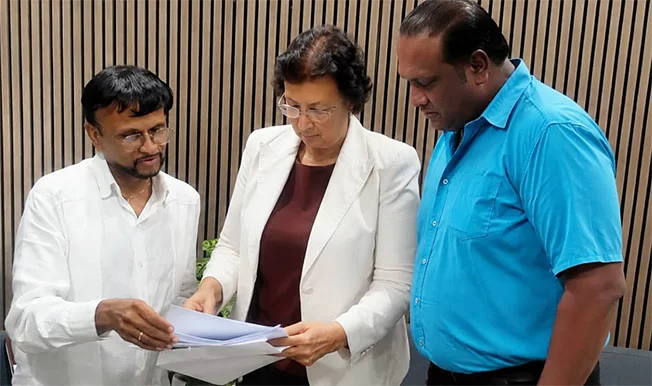
    A standoff between Suriname’s academic scientific staff and national authorities has moved toward de-escalation, after the Vakvereniging Wetenschappelijk Personeel Universiteit (VWPU), the union representing scientific staff at Anton de Kom University, agreed to suspend its industrial actions following high-level negotiations led by Surinamese Vice President Gregory Rusland. The talks, held earlier this month, brought together leadership from the university’s governing board and union representatives to address long-running grievances over working conditions and staff support that had prompted the union to ramp up protest actions in recent weeks.

    The Anton de Kom University board was led by chair Virginia Assin-Oostburg and vice chair Patrick Peneux during the discussions, while the VWPU delegation included its president Roy Badal, secretary Sunita Bipat, and treasurer Sanjeevkoemar Bisessar. Over the course of the meeting, participants thoroughly mapped out the core bottlenecks that had pushed the union to escalate its actions, centering on gaps in basic provisions for the university’s scientific workforce.

    Vice President Rusland opened the discussion by framing the issue of basic staff provisions—including competitive salaries and fair overall employment terms—as an issue that cannot be addressed in isolation. He emphasized that these demands are inherently tied to broader ongoing negotiations between the Surinamese government and national labor unions over working conditions for all public sector employees, a group that includes education workers alongside employees across other state-run sectors.

    Despite this broader context, Rusland confirmed that the government remains open to adopting targeted, immediate improvements to the working conditions of the university’s academic researchers and instructors. Specific measures tabled during the talks include institutional support for academic staff to purchase new work computers, upgrades to campus data connectivity and internet infrastructure, increased transportation stipends for faculty supervising students during off-site internships, and a limited end-of-year bonus to recognize additional academic workload.

    Under the terms of the preliminary agreement reached during the meeting, Vice President Rusland has ordered the university’s governing board to flesh out the full details of these proposed measures, with a final progress report due no later than this coming Friday. Once finalized, the proposals will be forwarded to relevant government authorities for coordination and final approval. The vice president’s office also confirmed that President Jennifer Simons has already been consulted on the framework, to ensure a coordinated, whole-of-government approach to resolving the dispute.

    Following the conclusion of productive talks, Rusland requested that VWPU leadership scale back its ongoing protest actions, a proposal that the union’s governing body put to a vote with its membership. The union ultimately approved the request, moving forward with a full suspension of all active industrial actions.

    Multiple participants in the meeting described the negotiations as taking place in a constructive, solution-focused atmosphere. Vice President Rusland emphasized that all stakeholders must uphold their shared social responsibility to advance progress for the country’s higher education sector. He stressed that collaborative effort is the only path to meaningful improvements for scientific staff, part of the government’s broader long-term goal of incrementally strengthening public services and working conditions for all Surinamese residents.

    Negotiations between the government and labor unions over broader public sector basic provisions remain ongoing, with no slowdown in discussions planned. Going forward, the government has committed to rolling out additional targeted measures in consultation with worker representatives as economic conditions allow. Officials also noted that the administration has already implemented a series of relief measures for workers and the general public, enacted to buffer the population against the impact of global economic shifts that have spilled over to affect Suriname’s domestic economy. The government has reiterated its commitment to mitigating these external impacts as much as possible within the country’s available fiscal resources.

  • Wereld reageert op ‘brutale’ Israëlische aanvallen op Libanon na VS-Iran staakt-het-vuren

    Wereld reageert op ‘brutale’ Israëlische aanvallen op Libanon na VS-Iran staakt-het-vuren

    Just hours after a two-week ceasefire between the United States and Iran was announced, Israeli forces launched devastating, wide-ranging bombardment across Lebanon that has left hundreds dead and thousands injured, sending shockwaves through the already volatile Middle East.

    Lebanese Civil Defense has confirmed that at least 254 people were killed and 1,165 more wounded in the airstrikes, which targeted locations across the country: including the Tallet al-Khayyat neighborhood of Beirut, the Bekaa Valley, the Lebanon Mountains, the coastal city of Sidon, and multiple villages in southern Lebanon. Emergency response workers and local residents have already gathered at the scene of the Beirut strike to recover victims and provide aid, according to AFP photos from the attack site.

    The Israel Defense Forces labeled the operation the largest coordinated assault on Lebanon since it launched a new military campaign in the country on March 1. IDF officials confirmed that the strikes targeted more than 100 Hezbollah command centers and military installations across the country.

    The scale of the casualties has overwhelmed Lebanon’s already strained healthcare system. Elias Chlela, head of the Lebanese Medical Association, issued an urgent call for all doctors to report to hospitals immediately to assist with the influx of wounded patients. One of Beirut’s largest hospitals also announced a critical need for blood donations of all blood types to support emergency operations.

    Dispute has already erupted over whether Lebanon falls under the scope of the newly announced U.S.-Iran ceasefire. Israeli Prime Minister Benjamin Netanyahu stated openly that Lebanon is not included in the ceasefire deal, arguing the truce does not apply to clashes with Hezbollah. U.S. President Donald Trump echoed this position, describing Lebanon as a separate case excluded from the agreement. However, Pakistan, which served as a mediator in the ceasefire negotiations, confirmed that Lebanon was intended to be covered by the truce, creating a major rift over the terms of the deal.

    Reactions from global actors and regional stakeholders have been swift and widespread: In Lebanon, Parliament Speaker Nabih Berri condemned the strikes on densely populated civilian areas as a full-fledged war crime. He noted the attack came immediately after the ceasefire announcement, calling it a serious test for the international community and a blatant violation of international law, while urging all Lebanese citizens to unite in solidarity with the victims.

    Lebanese armed group Hezbollah affirmed its inherent right to respond to the attacks, stating that the blood of its killed and wounded members will not be spilled in vain, and reaffirming its right to resist occupation. A Hezbollah member of parliament warned that the Israeli strikes constitute a serious violation of the ceasefire, and continued attacks will put the entire truce agreement at risk.

    On the Israeli side, Defense Minister Israel Katz explained that Israel intends to separate the conflict with Iran from its military campaign in Lebanon in order to fundamentally alter the situation on the ground. Netanyahu reaffirmed that Israeli operations will continue, as the ceasefire does not apply to Hezbollah targets.

    Iran’s leadership issued a stark warning that it will retaliate if Israel does not immediately halt its attacks on Lebanon. Iranian Foreign Minister Abbas Araghchi stressed that the terms of the ceasefire are clear, stating “The United States must choose: either a ceasefire, or war through Israel.” He added that the entire world is witnessing the bloodshed in Lebanon, and responsibility for any further escalation rests with the U.S.

    The U.S. maintained its position that Lebanon is excluded from the truce due to its conflict with Hezbollah, with Vice President JD Vance characterizing the disagreement over Lebanon’s inclusion as a legitimate misunderstanding of Iran’s position, in contrast to the Pakistani prime minister’s confirmation that Lebanon was part of the deal.

    Multiple regional and global governments have condemned the strikes. Qatar’s Foreign Ministry decried the brutal series of attacks as a dangerous escalation and a blatant violation of Lebanese sovereignty and international law, expressing full solidarity with Lebanon and calling on the international community to hold Israel accountable. Egypt condemned the bombardment as a premeditated attempt to undermine regional and international de-escalation efforts and plunge the entire region into chaos. Turkey’s Foreign Ministry strongly condemned the attacks, warning they will drastically worsen the already catastrophic humanitarian situation, and called on the international community to act immediately to end Israeli operations and protect civilian lives. Spanish Prime Minister Pedro Sánchez called Netanyahu’s disregard for civilian life and international law disgraceful, calling for Lebanon’s immediate inclusion in the ceasefire and the imposition of sanctions on Israel. Italian Foreign Minister Antonio Tajani expressed solidarity with Lebanon, warned the offensive could create a second Gaza conflict, and called on Israel to halt bombing and guarantee safe operating conditions for United Nations peacekeepers.

    United Nations officials issued a sharp condemnation of the strikes, calling for urgent diplomatic action to prevent further civilian casualties. The UN High Commissioner for Human Rights described the scale of destruction as appalling, and stressed that protecting civilian peace and safety must be the top priority. The International Committee of the Red Cross also expressed outrage over the deadly destruction in densely populated civilian areas, emphasizing that any regional ceasefire agreement must prioritize the safety and dignity of Lebanese civilians.