标签: Suriname

苏里南

  • Trump verwerpt Iraanse vredesvoorstellen; conflict en spanningen in Golfregio blijven hoog

    Trump verwerpt Iraanse vredesvoorstellen; conflict en spanningen in Golfregio blijven hoog

    After 10 weeks of open conflict between the United States and Iran, hopes for a swift diplomatic resolution have been dashed, leaving regional security and global energy markets on edge. On Sunday, former President Donald Trump flatly rejected Iran’s counterproposal to a U.S.-drafted peace framework, extending a standoff that has already inflicted widespread damage across the Middle East and disrupted one of the world’s most critical energy chokepoints.

    The clash, which erupted in late February, has caused extensive harm to civilian and infrastructure across Iran and Lebanon, brought most commercial shipping through the Strait of Hormuz to a near-standstill, and pushed global energy prices sharply higher. The 21-mile waterway, which carried roughly one-fifth of the world’s total oil supply before the outbreak of hostilities, remains the conflict’s most globally impactful flashpoint.

    Iran tabled its counteroffer to the U.S. proposal earlier last week, on Wednesday. The Iranian plan centers on an immediate end to all hostilities across every front of the conflict, with specific priority given to de-escalation in Lebanon, and guarantees for unimpeded commercial navigation through the blockaded Strait of Hormuz. Key demands in the proposal include war damage reparations from the U.S., formal international recognition of Iran’s territorial sovereignty over the Strait, full lifting of U.S. economic blockades and long-running sanctions on Tehran, and an end to the U.S. ban on Iranian crude oil exports.

    Within hours of the proposal’s public release, Trump rejected the plan outright via social media, writing simply: “I do not like it – COMPLETELY UNACCEPTABLE.” Markets reacted instantly: global benchmark crude prices jumped $3 per barrel within minutes of the announcement, as traders priced in prolonged disruption to energy supplies.

    The original U.S. peace framework had called for an immediate ceasefire as a first step, with negotiations on thorny core disputes including Iran’s nuclear program to follow. According to anonymous sources familiar with the discussions, Iran has already signaled willingness to compromise on the nuclear front, offering to dilute most of its stockpile of highly enriched uranium and transfer the remaining supply to a neutral third country for safekeeping. Pakistan, which has served as the primary neutral mediator between Washington and Tehran, transmitted Iran’s full peace proposal to U.S. officials following its completion.

    Despite a month-old ceasefire that had brought several days of relative calm to the region, hostile drone activity was detected over multiple Gulf Cooperation Council states on Sunday, a stark reminder that the risk of renewed escalation remains acute. Even amid the standoff, small signs of limited de-escalation emerged this week: for the first time since the conflict began, a Qatari Energy-operated liquefied natural gas carrier, the Al Kharaitiyat, completed a safe transit of the Strait of Hormuz en route to Pakistan’s Port Qasim. Iran authorized the passage as a gesture of goodwill to Pakistan and Qatar, both of which have acted as mediators in the peace talks. Separately, Iran’s semi-official Tasnim News Agency reported Sunday that a Panamanian-flagged bulk carrier, which had been turned away when it attempted to transit the Strait on May 4, was finally permitted to pass through a corridor designated by Iranian military forces.

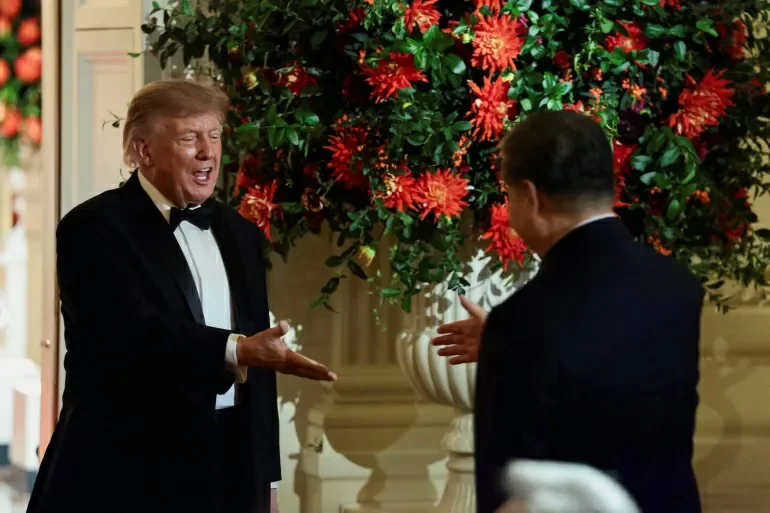
    Diplomatic pressure for a resolution is mounting as Trump prepares for an upcoming visit to China, as the ongoing conflict has already triggered a widespread global energy crunch that threatens to undermine fragile growth in the world economy. On Sunday, Trump acknowledged in a televised address that while Iran has suffered heavy military losses, it has not yet been fully defeated and hostilities are far from over. Israeli Prime Minister Benjamin Netanyahu echoed that assessment, noting that “additional work is required” to neutralize Iran’s nuclear program and ballistic missile program, adding that while diplomacy remains the preferred path forward, a military option remains on the table.

    For its part, Iran has shown no willingness to back down on its core demands. Iranian President Masoud Pezeshkian reiterated Sunday via social media that Iran “will never bend to the enemy” and will defend its national interests with unwavering resolve. In recent days, violence has actually intensified around the Strait of Hormuz even amid the ceasefire: there have been multiple reported incidents of intercepted drones over the United Arab Emirates, a drone attack on a cargo vessel in Qatari territorial waters, and active anti-aircraft operations in Kuwait. Fighting also continues unabated in southern Lebanon between Israeli forces and Iran-backed Hezbollah militias, despite a U.S.-brokered ceasefire reached on April 16. New peace talks between Israeli and Lebanese delegations are scheduled to kick off in Washington on May 14.

    Internationally, the Trump administration faces a lack of broad support for a unilateral military mission to reopen the Strait of Hormuz without a full peace agreement, with NATO allies uniformly hesitant to join such an operation. Domestically, Trump also faces growing pressure from opposition Democratic lawmakers, who are pushing legislation to force an immediate end to U.S. involvement in the conflict. Senate Armed Services Committee ranking member Jack Reed, the panel’s top Democrat, issued a scathing rebuke of the administration’s handling of the crisis Sunday, saying: “This situation has only been made worse by Trump’s own choices. Now he is desperately scrambling to find a way out.”

  • Column: Moederdag – tussen hemel en modder

    Column: Moederdag – tussen hemel en modder

    Every year as Mother’s Day rolls around, political parties across the Netherlands twist themselves into elaborate contortions to craft flowery, flattering tributes to mothers everywhere. Rhetoric of praise, admiration, and respect fills public spaces, with endless highlights of maternal strength, relentless dedication, and quiet sacrifice laid out for all to see. But this year, those pretty words proved as hollow as water – literally, in communities across the country’s northern region.

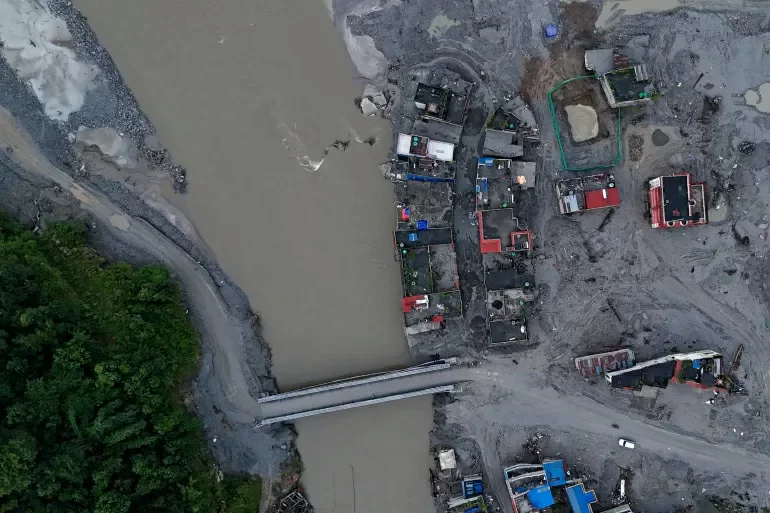
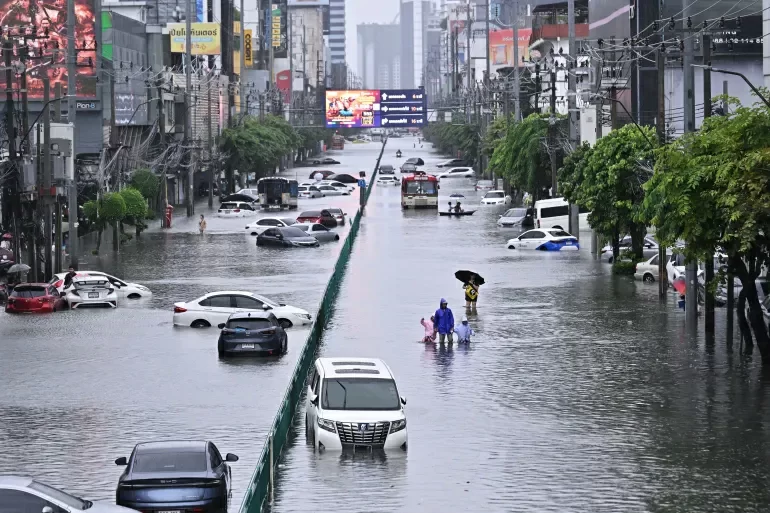
    Unrelenting rain poured through the entire night and most of the preceding day, leaving widespread street flooding that trapped thousands of residents in their homes, keeping them from traveling to visit their mothers for the holiday. Floodwaters reached knee-deep across residential neighborhoods, carrying a toxic slurry of casually discarded waste: plastic water bottles, splintered wood, food containers, aluminum beer cans, and all the everyday trash that communities so often dispose of carelessly. Drone footage captured the stark transformation clearly: where smooth asphalt once ran, murky brown floodwater now stretched as far as the eye could see, erasing the line between public streets and local canals in the northern part of the country.

    While local residents could only watch helplessly as floodwaters climbed, swallowing up yards and creeping into ground floors of homes, many local mothers who had spent days preparing small Mother’s Day ventures saw their hard work wash away alongside the flood. Bakers spent hours baking cakes and pastries to sell for the holiday, craft workers assembled handmade goods, and small vendors set up pop-up stalls along popular routes, all hoping to earn a little extra income for their own families. The rare potted plants that survived the deluge along Tourtonnelaan were the exception; most flower arrangements were completely submerged, turning the entire investment into a total failure. And even those vendors who managed to save their stock saw no customers, as flooding kept potential buyers trapped at home.

    This juxtaposition of empty celebratory rhetoric and harsh reality stretches far beyond the flooded streets of the Netherlands, however. Across the globe, millions of mothers face systemic violence, poverty, and conflict that make a celebratory Mother’s Day unthinkable.

    In Sudan, mothers and children are slowly dying from widespread starvation as conflict devastates food systems. In Gaza and Ukraine, mothers and daughters are killed in indiscriminate rocket and airstrikes. In war zones around the world, sexual violence against mothers and children is used as a deliberate weapon of war, targeting those who are most vulnerable. These are not abstract statistics: they are daily realities for millions of women who hold the role of mother.

    Can a mother trapped in besieged Gaza spare a thought for the commercialized celebration of Mother’s Day? Can a child who lost their mother in a bombing in Ukraine stop to plan a tribute to the parent they have buried? Can a mother in Pakistan who lost her son to a terrorist attack find any joy in a holiday celebrating maternal bonds? Do women living through unending civil war in Syria even allow themselves to dream of a quiet, safe day of celebration? And on Mother’s Day itself, how many mothers around the world still face the terror of domestic abuse behind closed doors?

    The answer is that all these realities are happening at the same time, right this second. While families in relatively safe, wealthy regions ate cake and watched floodwaters carry away ruined flower displays, other mothers across the globe were being buried, assaulted, or simply abandoned by the international community.

    Mother’s Day is a beautiful tradition for those fortunate enough to be able to set aside the world’s harsh problems for 24 hours. But it is a mistake to pretend that a single day of flattering rhetoric and social media posts can fix the deep inequities that leave the most vulnerable mothers behind. The mothers who need the most support, a shoulder to lean on, and systemic change are rarely the ones who get flowery public tributes from politicians.

    Instead, they get floodwaters that destroy their livelihoods, silence from global leaders, or nothing at all. That is not a celebration of motherhood. That is the unvarnished reality of how the world actually works. It is worth pausing to reflect on this truth before posting another polished, perfect tribute to motherhood online.

  • Geen zicht op oplossing voor ontwatering; landbouwers dreigen alles te verliezen

    Geen zicht op oplossing voor ontwatering; landbouwers dreigen alles te verliezen

    By May 11, widespread flooding has crippled parts of Paramaribo, Wanica and Saramacca in Suriname, leaving local farmers facing catastrophic, imminent losses as decades of mismanagement and flawed policy decisions have left the region’s critical Saramaccakanaal drainage system unable to handle extreme rainfall.

    The 25-kilometer Saramaccakanaal serves as the primary drainage artery for the low-lying coastal region, connecting the Suriname River to the Saramacca River and carrying excess water away from residential areas, infrastructure and thousands of hectares of agricultural land. Just two years after a major cleanup, the canal and its feeder canals are already choked with overgrown vegetation and illegally dumped waste, cutting their capacity dramatically. When paired with record high water levels in the Saramacca River driven by intense inland rainfall, the entire system has ground to a halt.

    The key sluice gate at Uitkijk/Creola, which relies on gravity to drain water from the canal into the river, cannot operate even at low tide. For the gate to function, the river’s water level must sit lower than the canal’s, but persistent heavy rainfall has left the two levels nearly identical, eliminating the elevation difference needed to move excess water out. A small, existing pumping station only serves a fraction of the Uitkijk polder, leaving the vast majority of the region with no active water removal. Feeder canals that are supposed to channel runoff into the main Saramaccakanaal are entirely overgrown, trapping water on roads, residential plots and farmland, with water levels showing almost no sign of dropping days after the worst rain passed.

    For local farmers, the situation has already devolved into a humanitarian and economic disaster. Entire crop plantations are submerged, and growers warn that most plants will rot and become a total loss within 24 hours if water is not drained immediately. Many farmers have carried outstanding loans to plant their seasonal crops, and widespread losses threaten numerous small and mid-sized operations with bankruptcy. Frustrations run high: farmers say they have warned successive national governments about the decaying drainage infrastructure, blocked canals, and insufficient capacity for decades, but their warnings have gone unanswered. “Successive governments have left farmers to fend for themselves,” many growers said bitterly.

    Technical experts and local politicians confirm that the current crisis is rooted in long-standing structural failures and bad decision-making on a major World Bank-funded drainage rehabilitation project. The $35 million project was supposed to upgrade the Saramaccakanaal system, but lawmaker and large-scale Saramacca farmer Mahinder Jogi, from the ruling VHP party, says planners ignored critical technical advice to install two large capacity pumping stations – one at Uitkijk on the Saramaccakanaal and one at the Suriname River end.

    Jogi explains that the Creola sluice was never designed to serve as the primary outlet for flood water; it was originally built to support shipping and provide water to agricultural areas during dry seasons. Without large pumping stations, the system cannot actively push water out into the river when the water levels are aligned, leaving the region completely vulnerable during extreme rain events. Jogi also alleged that project leaders ignored expert input to prioritize contracts that benefited a small group of insiders, failing to deliver the functional flood protection the region was promised.

    Independent engineering experts agree with this assessment. Ravi Patandin, an engineer with leading Surinamese engineering firm Ilaco, told reporters that the existing gravity-based system is already at its absolute limit during periods of extreme rainfall, which are becoming more frequent and intense due to climate change. Patandin noted that gravity drainage is only possible for a few short hours around low tide, and when river levels remain elevated even at low tide, no drainage can occur at all. He added that small pumping stations would make no meaningful difference in a crisis of this scale; to properly protect the region, pumping installations with a capacity of 20 to 30 cubic meters of water per second are required, matching the large-scale system that already protects the Wakay area in Nickerie.

    Ongoing rehabilitation work on five sluice gates and one navigation lock at the Suriname River end of the canal is not scheduled for completion until August or September 2026, meaning no relief can come from that project for months. The work, which launched in 2024, has been slowed by lengthy procurement, design, manufacturing and shipping processes for replacement parts, and one sluice is already completely out of service, worsening the current backlog. Workers are keeping as many existing drainage points operational as possible in the interim, but the capacity remains far too low to handle the current flood volume. Even when the rehabilitation is complete, it will only restore roughly 60 percent of the canal’s drainage capacity, and the problem will remain unresolved until the large pumping stations are added at Uitkijk and other critical points.

    Beyond infrastructure investment, experts say chronic under-maintenance and public non-compliance have made the crisis far worse. Even after the 2024 cleanup, the canal and feeder trenches have become choked with overgrown vegetation, and large volumes of household and construction waste are illegally dumped into the waterway, further blocking flow. Patandin emphasized that regular, consistent maintenance is non-negotiable to keep the system functional, and that local communities must also take responsibility to stop dumping waste into drainage channels.

    As climate change increases the frequency of intense, short-duration rain events, Suriname’s flat coastal region will remain extremely vulnerable to repeated catastrophic flooding unless the government implements long-term structural fixes. Experts warn that temporary patchwork measures will no longer be enough to protect communities and the critical agricultural sector: without expanded pumping capacity, fully functional sluices, and consistent long-term maintenance, flooding events will only grow more severe with each passing rainy season. Right now, losses are mounting by the day as floodwaters remain stagnant across thousands of hectares, leaving farmers waiting for a rescue that experts warn will not come for months.

  • Ondanks wateroverlast veel belangstelling voor moederdagactiviteit PL

    Ondanks wateroverlast veel belangstelling voor moederdagactiviteit PL

    On Sunday, torrential downpours and widespread street flooding across multiple neighborhoods threw significant logistical hurdles in the way of a Mother’s Day celebration organized by the Surinamese political party Pertjajah Luhur (PL) at its Mangrovestraat headquarters. Even with the severe weather conditions forcing widespread travel disruptions, community members still turned out at the party’s center to take part in planned activities and browse offerings at the PL Volkswinkel, the party’s public retail outlet.

    Persistent rainfall left many access routes nearly impassable, resulting in a wave of delayed arrivals for event volunteers. In multiple instances, event organizers had to rely on last-minute improvisation to keep the day’s program running on schedule, according to senior PL figure Bronto Somohardjo. In an interview following the event, Somohardjo noted that the party and volunteers had no choice but to adapt to the circumstances as they were, framing the difficult conditions as an unexpected test of the group’s cohesion. “We had to make do with what we had,” he said, adding that challenges like the Sunday downpour ultimately highlight the deep solidarity and commitment that participants and party members bring to community events.

    Beyond weather-related disruptions, Somohardjo emphasized that the strong public turnout for the celebration sends a clear message about growing economic pressures facing Surinamese households. The high level of public interest in the event and the offerings of the low-cost PL Volkswinkel, he argued, reflects widespread unmet demand for affordable essential goods, as families across the country continue to struggle with rising cost-of-living expenses.

  • FC Barcelona kampioen na zege in El Clásico op Real Madrid

    FC Barcelona kampioen na zege in El Clásico op Real Madrid

    One of the most anticipated fixtures in global football delivered a title-deciding story for the ages on Sunday, as FC Barcelona clinched their 29th Spanish La Liga championship with a statement 2-0 victory over eternal rivals Real Madrid at a sold-out Camp Nou.\n\nFrom the opening whistle, coach Hansi Flick’s side controlled the tempo of the match, turning in a dominant performance that left Real Madrid with few clear scoring opportunities all night. The first breakthrough came early in the first half from English forward Marcus Rashford, who etched his name into El Clásico history with a stunning direct free-kick goal. Rashford’s strike marked the first time a Barcelona player had scored directly from a free kick against Real Madrid in the iconic fixture since Lionel Messi achieved the same feat back in 2012.\n\nShortly after Rashford opened the scoring, Barcelona doubled their lead through a polished team attacking move. Dani Olmo provided a precise assist to set up Ferran Torres, who calmly slotted the ball home to put Barcelona 2-0 up before halftime. The second half saw no additional goals from either side, but Barcelona maintained firm control of the pitch and protected their lead without conceding major threats to Carlo Ancelotti’s Real Madrid side.\n\nHeading into the match, Barcelona only needed a draw to secure the league crown, but the side made clear their intention to claim the title in style against their biggest rivals. The result caps off a remarkable season for Flick’s Catalan side, who entered El Clásico on the back of a 10-match winning streak in La Liga that had already built them a comfortable lead at the top of the table over Real Madrid.\n\nThe match carried extra emotional weight for the Barcelona camp, as Flick had suffered the loss of his father just days before kickoff. After Torres scored the second goal, the winger immediately ran to the touchline to embrace his grieving manager, and Barcelona supporters paid tribute to Flick throughout the 90 minutes in a moving show of solidarity.\n\nFor Real Madrid, the defeat brings a disappointing end to their title challenge. The Madrid side was hampered by key absences, with star forwards Kylian Mbappé and Federico Valverde both sidelined as they were not fully fit to feature in the high-stakes fixture. After the final whistle, thousands of celebrating Barcelona players and fans packed the Camp Nou pitch to mark the historic title win, capping off a season that will go down in the club’s folklore.

  • Moederdag in het water: De prijs van jarenlang verval en politieke laksheid

    Moederdag in het water: De prijs van jarenlang verval en politieke laksheid

    On May 10, widespread flooding paralyzed large swathes of Suriname, as weeks of continuous monsoon rainfall turned urban streets into rushing rivers, submerged residential yards, and destroyed entire agricultural harvests. What makes this disaster particularly devastating for local communities is that it was entirely avoidable: the annual rainy season arrives on schedule every year, yet systemic neglect of critical water management infrastructure has turned a routine seasonal event into a humanitarian and economic crisis.

    Residential neighborhoods across the country are grappling with waist-deep floodwaters that have seeped into homes, trapping many residents indoors and forcing them to salvage belongings amid rising tides. In the northern district of Suriname, resident Esselien described the crisis as the worst she has ever experienced, as floodwaters poured through the doors of her property. Another local, Kiran, had prepared special Mother’s Day treats to deliver to her mother, but was forced to abandon the plan after her street became a stagnant, lake-like floodplain.

    The damage extends far beyond residential disruption, hitting small business owners and agricultural producers the hardest. Farmers across rural Suriname have watched months of cultivation work disappear underwater, with entire vegetable crops rotting in the fields before they could be harvested. Many farmers point to longstanding failures in regional water management: one grower lamented that sluice gates are often not opened during low tide to allow floodwater to drain out to sea. Others note that regional drainage ditches have been left unmaintained for decades, becoming choked with overgrown weeds, illegal waste dumping, and debris that blocks water flow entirely. Even as floodwaters rise, these long-unaddressed infrastructure gaps prevent any effective drainage of inundated land.

    Small businesses that rely on the annual Mother’s Day shopping rush have also been ruined by the disaster. Vendors across the country had already set up temporary street stalls to sell flowers, baked goods, holiday treats, and gifts for the occasion, investing thousands of dollars in inventory ahead of the busy sales weekend. But with streets submerged and residents focused on protecting their homes from flooding, no customers have arrived. Perishable goods including fresh flowers and baked goods are already spoiling, leaving vendors facing crippling losses with no path to compensation.

    Local residents and analysts alike blame the crisis on decades of administrative indifference and broken political promises. Every election cycle, candidates vow to renovate outdated drainage infrastructure and clear clogged waterways, but once votes are counted, the sense of urgency evaporates. This year, the disaster comes just days after Suriname marked 160 years of representative democracy, a bitter irony for flood victims who note that parliamentarians, most of whom live on high, flood-free ground, have shown little empathy for their struggle.

    Beyond government inaction, the crisis is also exacerbated by growing public carelessness toward the living environment: illegal dumping of plastic, household waste, and large debris across the country has slowly turned drainage ditches into informal landfills, leaving nowhere for excess rainwater to go. Suriname has fallen into a dangerous pattern of only responding to flooding after neighborhoods are already submerged, relying on last-minute emergency fixes instead of proactive, long-term infrastructure maintenance.

    But floodwaters do not wait for committee meetings, official memos, or public tender processes. When critical maintenance is delayed for decades, the public always ends up paying the price. Today, that cost is being borne by farmers who have lost their livelihoods, small business owners who have lost their holiday income, and working families who have lost their homes and belongings to floodwaters. As rain continues to fall, a shared anger has grown across affected communities: this is not a natural disaster. It is the entirely predictable result of years of institutional neglect, and no one has stepped forward to compensate victims for their losses.

  • Suriname en Indonesië breiden samenwerking uit met training in voedselverwerking

    Suriname en Indonesië breiden samenwerking uit met training in voedselverwerking

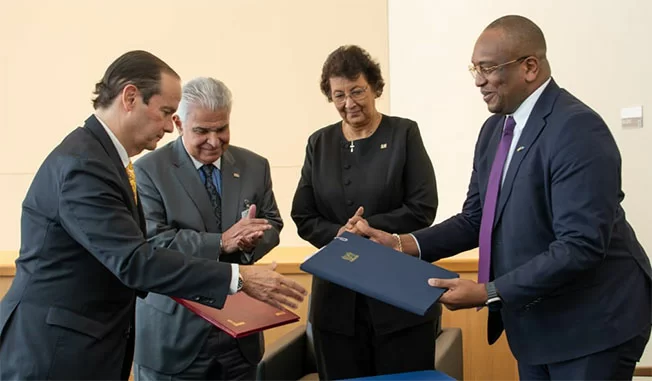
    In a diplomatic move aimed at deepening bilateral agricultural cooperation, the governments of Suriname and Indonesia formalized a new partnership agreement on Friday, establishing a targeted training initiative focused on food processing and agro-industry development. The accord marks a tangible step forward in advancing shared goals of sustainable agricultural growth and economic diversification for both nations, with a specific focus on building local capacity in the Caribbean region.

    The signing ceremony brought together senior representatives from both sides. On behalf of Suriname’s Ministry of Foreign Affairs, International Trade and Cooperation (BIS), acting director of Foreign Affairs Luziano Truideman put pen to paper on the agreement. Indonesian ambassador to Suriname Agus Priono signed for the Indonesian side, completing the formalization of the partnership. A commemorative photo of the two officials following the signing was captured by BIS photographers.

    Organized by Indonesia’s official development agency Indonesian AID/LDKPI, the training program is tailored to build expertise in the processing and product diversification of mango and breadfruit, two staple tropical agricultural crops relevant across Caribbean nations. The two-week intensive program is scheduled to run from May 31 to June 14, 2026, hosted at the Politeknik ATI Padang based in West Sumatra, Indonesia. Suriname will send two delegates to participate in the full program, gaining hands-on skills and technical knowledge to bring back to their domestic agricultural sector.

    According to a statement from Suriname’s BIS, the new agreement represents a meaningful deepening of longstanding bilateral cooperation between Suriname and Indonesia across three core priority areas: agricultural development, food processing, and institutional capacity building.

    For Suriname specifically, the partnership opens a valuable new opportunity to acquire advanced technical knowledge and industry expertise in agro-processing and value addition for locally produced agricultural goods. Suriname’s domestic policy priorities place strong emphasis on expanding sustainable food production and broadening the country’s economic base beyond traditional sectors, and participating officials noted that this training initiative aligns perfectly with those national development goals.

    Beyond structured classroom and practical training sessions, the program will also include an official working visit to Indonesia’s capital Jakarta. During the visit, participating delegates will gain on-the-ground practical experience, and engage in direct knowledge exchange with leading Indonesian research institutions and industry experts specializing in food processing and agro-industrial development.

  • Veranderende consumptiegewoonten in China kunnen Amazone-regenwoud beschermen

    Veranderende consumptiegewoonten in China kunnen Amazone-regenwoud beschermen

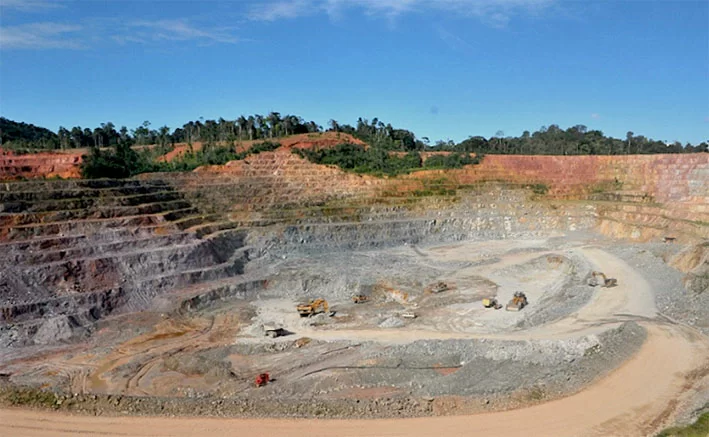
    Against a backdrop of growing global concern over Amazon deforestation tied to agricultural trade, a group of leading Chinese beef importers has made a landmark commitment to source deforestation-free certified beef from Brazil, challenging long-held assumptions about China’s approach to global commodity purchasing. The initiative, led by Xing Yanling, chair of the Tianjin Meat Industry Association, marks a visible shift toward sustainability in one of the world’s largest agri-food trade relationships. During an April visit to the Brazilian Amazon region, Xing expressed admiration for the region’s rich ecosystems, framing her trip as far more than a casual tourist visit. Under her leadership, importers handling roughly 40% of all China’s Brazilian beef imports have pledged to purchase 50,000 tons of certified deforestation-free beef before the end of 2025. This volume accounts for approximately 4.5% of Brazil’s projected total beef exports to China for the year. For years, conventional wisdom has held that China prioritizes low prices above all else when sourcing bulk commodities like soy and beef from South America. This new pledge upends that narrative, signaling that one of the most powerful players in global commodity trade is willing to pay a premium for more sustainable, responsibly sourced supply chains. The private sector commitment builds on years of policy action from the Chinese government to address the environmental footprint of its international trade. In 2019, China updated its forestry laws to ban trade in illegally harvested timber, and in 2023, the country signed a joint agreement with Brazil to end trade linked to illegal deforestation. Even before the latest industry commitment, major Chinese state-owned agribusiness COFCO had already laid out a goal to eliminate deforestation from its entire supply chain starting last year. Beef production is widely recognized as one of the agricultural commodities most closely linked to Amazon deforestation, particularly in Brazil’s northern rainforest regions. Environmental research group MapBiomas estimates that 90% of all deforested land in the Brazilian Amazon is immediately converted to cattle pasture. As Chinese consumer awareness of environmental issues grows alongside rising purchasing power, demand for traceable, more eco-friendly food products has surged. The new initiative relies on the “Beef on Track” certification label developed by Brazilian non-profit Imaflora, which allows end consumers and buyers to verify that beef is fully traceable, sourced from legal land, and free of deforestation links. Impressively, the Tianjin-based importers have agreed to pay a 10% premium for beef that meets the certification’s strict standards, which also include prohibitions on slave labor. While the initiative holds enormous potential to drive systemic change in the Brazil-China beef trade, it faces significant, well-documented challenges. Brazil’s current cattle tracing systems are vulnerable to fraud, a common scam known as “cattle laundering” where illegal cattle raised on deforested land are mixed with legal cattle to enter the supply chain. Industry experts note that widespread upgrades to tracing infrastructure could take years to implement. Additionally, Brazil implemented a new import quota for beef bound for China this year, adding extra pressure to the already constrained market. Reactions within Brazil’s beef industry have been divided. ABIEC, the country’s leading beef export association, has raised concerns that adding an extra certification layer could complicate market operations and has called for alignment with existing industry systems. Even so, Imaflora emphasizes that the certification is designed to reward existing sustainable efforts and open new market opportunities, rather than create unnecessary barriers for producers. “This certification recognizes the work that companies are already doing to guarantee sustainability and traceability,” explained Marina Guyot, a representative of Imaflora. The “Beef on Track” certification is expected to be fully available to meat processors, retail supermarkets, and importing companies by the end of the year, opening what could be a transformative new chapter in sustainable bilateral trade between Brazil and China.

  • Nieuwe RvC Telesur onder leiding van Nagisch Algoe treedt maandag aan

    Nieuwe RvC Telesur onder leiding van Nagisch Algoe treedt maandag aan

    A major leadership shakeup is set to take place at Suriname’s state-owned telecommunications provider Telesur, with the entire current supervisory board (Raad van Commissarissen, RvC) set to be officially dismissed and a new five-member board appointed during the company’s upcoming Annual General Meeting of Shareholders (Algemene Vergadering van Aandeelhouders, AVA).

    The planned reshuffle, confirmed by the meeting’s official agenda and a formal memorandum from Suriname’s Council of Ministers, will be held on May 11 at the President’s Cabinet, chaired by President Jennifer Simons. The dismissal of the sitting supervisory board and the appointment of its replacement are among the core items on the meeting’s working schedule.

    According to the Council of Ministers’ document, dated May 7, 2026, the national government has formally approved the exit of the current board, with official gratitude extended to members for their past service to the company. The outgoing supervisory board was led by president-commissaris Sanjay Raghoebarsingh, and included six additional members: Richel Apinsa, Ferrucio Hira, Paulus Abena, Sonia Bron, Ravish Isrie and Remie Oosterwolde.

    The new supervisory board will be composed entirely of five male appointees. Nagish Algoe will take on the role of president-commissaris, with the remaining board seats filled by Luciano Wijdenbosch, Frans Eersteling, Alexander Deel and André Daal.

    This leadership transition at Telesur is not an isolated change. It forms part of a broader wave of governance restructuring across multiple state-owned enterprises in Suriname, implemented following the inauguration of the country’s new ruling government.

  • Surinamer en Guyanees opgepakt met ruim 45 kilo cocaïne en vuurwapen

    Surinamer en Guyanees opgepakt met ruim 45 kilo cocaïne en vuurwapen

    In a major anti-narcotics operation carried out in Guyana on Friday, law enforcement officers from the country’s Customs Anti-Narcotics Unit (CANU) have seized more than 45 kilograms of cocaine and an unlicensed submachine gun, arresting two men – one Surinamese national and one Guyanese national – in connection with the international drug trafficking plot.

    The raid targeted a residential property in Springlands, a town located in the Corentyne region of eastern Guyana, along the country’s border with Suriname. According to official statements and local media reports, CANU agents launched the operation after receiving credible intelligence about illegal drug activity at the address. When officers arrived at the scene, they encountered the two suspects in the property’s yard, standing near two unmarked brown cardboard boxes.

    A subsequent search of the boxes uncovered 40 brick-shaped packages wrapped for smuggling. When law enforcement opened one of the packages for field testing, they discovered a white powdery substance that returned a positive result for cocaine. The entire seizure weighed approximately 45.6 kilograms. CANU officials estimate that this cocaine shipment has an approximate street value of 1.575 million euros, equal to nearly 1.9 million U.S. dollars, if it had reached illegal markets in Europe. The seizure was originally reported by local Guyanese outlet Demerara Waves, with additional details confirmed by Suriname-based media Starnieuws.

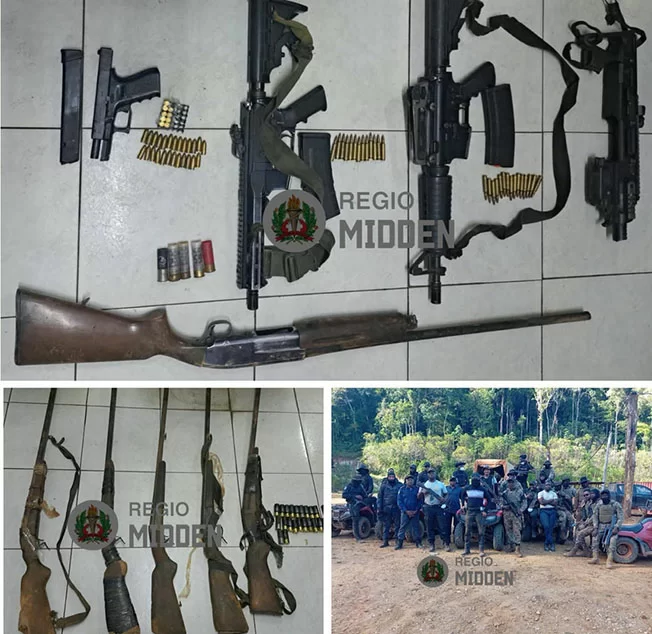
    A follow-up search of the entire residential property turned up an illegal firearm: a black Uzi submachine gun, along with a stock of ammunition. Neither suspect was able to produce a valid license for the weapon, a requirement under Guyanese gun control laws.

    Preliminary investigations into the smuggling network have outlined the alleged structure of the operation. Investigators say the 35-year-old Surinamese suspect, identified as Amrishkoemar Mathoera from Nickerie, a Surinamese district on the shared border with Guyana, transported the cocaine shipment across the border into Guyana. The 32-year-old Guyanese suspect, named Ravindra Sanakumar, received the drugs and stored them at his Springlands residence ahead of onward shipment to Europe, according to initial findings.

    Following their arrest, both suspects were transported to CANU headquarters for processing. The entire cocaine shipment, collected drug evidence samples, and the unlicensed firearm have been confiscated as evidence for the ongoing investigation.

    In a statement following the operation, CANU emphasized that this seizure is part of the agency’s ongoing, sustained campaign to disrupt transnational drug trafficking and crack down on the illicit arms trade in the country. The agency noted that actionable intelligence gathering and cross-border regional cooperation remain critical tools to protect Guyana’s borders and preserve the country’s national security, as criminal networks continue to use South American border territories as transit routes for cocaine destined for European consumer markets.