标签: Suriname

苏里南

  • Premier: Haïti te onveilig voor presidentsverkiezingen in augustus

    Premier: Haïti te onveilig voor presidentsverkiezingen in augustus

    Port-au-Prince, Haiti – A fresh political and security crisis has deepened in Haiti, as Prime Minister Alix Didier Fils-Aime confirmed Monday that the deteriorating security situation across the Caribbean nation makes it impossible to hold the planned August presidential election. This long-delayed vote, which would mark Haiti’s first presidential election in a decade, has once again been thrown into uncertainty by escalating gang activity that has paralyzed much of the country.

    For years, successive Haitian administrations have postponed national elections, as powerful armed gangs have steadily consolidated control over the capital Port-au-Prince and expanded their territorial influence into rural and central regions. Over the past five years alone, gang-related violence has killed thousands of civilians and displaced more than one million Haitians from their homes, creating one of the world’s worst humanitarian displacement crises in the Western Hemisphere.

    Speaking in an interview with the editor-in-chief of Le Nouvelliste, Haiti’s oldest continuously operating newspaper, Fils-Aime stressed that the basic security conditions required for voters to cast ballots freely simply do not exist by the scheduled August timeline. “The security prerequisites simply are not in place to hold a vote in August,” he stated, while adding that he still holds out hope that a democratic vote can be held before the end of 2025, with a new democratically elected president inaugurated no later than February 7, 2027.

    Fils-Aime took office as prime minister on February 7 of this year, a date long symbolic of presidential power transitions in Haiti – a tradition that has repeatedly been broken by leaders seeking to extend their terms in office. The current political vacuum that allowed gangs to expand their power traces back to the 2021 assassination of former president Jovenel Moïse, who was killed while postponing national elections. His assassination left a gaping leadership void that gangs exploited to seize control of nearly 80% of the capital, according to recent United Nations estimates.

    Election preparations have been upended by the expanding security collapse. Gangs have strengthened cross-factional alliances and pushed into new regions, leaving national authorities unable to guarantee the safety required for a free and fair vote. Making the political calculus even more difficult, both the United Nations and the United States have tied critical security assistance to the Haitian government directly to progress on holding elections, creating significant external pressure to stick to the original schedule despite the growing risks.

    Voter registration was originally scheduled to launch on April 1, and the Haitian electoral council had planned the first round of voting for August 30, with a runoff round scheduled for December. More than 280 political parties have already received official approval to participate in the vote, a number Fils-Aime argues is excessive. “We are not going to hand voters an encyclopedia of candidates to sort through,” he said. “Choice is a good thing, but too much choice is not inherently necessary. I would prefer to see a field of 10 to 15 presidential candidates.”

    The prime minister added that the national government is currently holding negotiations with all major political blocs to reach a consensus on an election roadmap, but he confirmed that the government is still not satisfied with the budget proposal put forward by the electoral council, creating another roadblock to moving forward.

    As political leaders negotiate, Haitian business and community leaders are sounding the alarm over a new wave of brutal gang attacks across the country. Delphine Gardere, CEO of Rhum Barbancourt, Haiti’s iconic 154-year-old rum manufacturer, announced that one of her employees was shot and killed in the capital just the night before the prime minister’s interview, the latest victim of ongoing gang intimidation and violence targeting workers and economic activity.

    Haiti has struggled with systemic security breakdown for decades, a crisis that has been amplified by overlapping political instability and a deepening economic collapse. The 2021 assassination of Moïse accelerated gangs’ takeover of large swathes of the country, with armed factions now controlling most major urban centers and large stretches of rural territory. This ongoing violence does not only derail the country’s democratic transition; it also disrupts basic access to food, healthcare, and livelihoods for millions of Haitian civilians.

    The international community, including the UN and U.S., has conditioned much of its security and humanitarian support on progress toward holding a credible democratic election, making the timing of the election process an extremely high-stakes issue for the Haitian government.

    As the situation remains highly unpredictable, any further delay to the long-awaited presidential vote risks triggering deeper political polarization and widespread social unrest. At the same time, public pressure is growing across Haiti for leaders to find a path that can restore basic stability and security, allowing the country to finally install a democratically elected government after more than a decade of unfulfilled democratic transitions.

  • Wurggreep van mamio-regeringen: Na suiker, bauxiet, goud en offshore olie geen ontwikkeling!

    Wurggreep van mamio-regeringen: Na suiker, bauxiet, goud en offshore olie geen ontwikkeling!

    Suriname remains trapped in a neocolonial stranglehold under what commentator Jack Menke terms “mamio-regeringen” — coalition governments that prioritize patronage over national progress, perpetuating what is widely known as the resource curse across the small South American nation. Writing in a critical opinion piece published May 12, Menke argues that after decades of exploitation centered on sugar, bauxite and gold extraction, a new term of mamio-led government would put even the potential economic gains from offshore oil development completely out of reach for ordinary Surinamese people.

    Menke defines a mamio government as a fragmented “patchwork failure”: a loose coalition of competing political parties that never coalesce into a unified, functional administration with a clear development vision. According to his analysis, this pattern of failed coalition governance has repeated consistently across successive Surinamese administrations, dating back to the adoption of the country’s 1987 constitution. A troubling core dynamic, Menke notes, is that political parties have steadily accumulated more power over the decades even as public trust in these institutions has collapsed to near-zero among the Surinamese population.

    Legislative changes have only reinforced this imbalance of power, Menke argues. The 1988 Political Organizations Act, the 2005 recall law, and the 2024 ban on pre-electoral coalitions have all consolidated control over government formation in the hands of large established parties and their financial backers. Smaller parties, which often maintain more robust internal democratic practices, have been systematically squeezed out of meaningful representation in the political system.

    Against this backdrop, state-owned enterprises (SOEs) have become a central locus of corruption, mismanagement and patronage, Menke says. The public has been repeatedly confronted with high-profile scandals in SOEs spanning agriculture, forestry and transportation sectors, yet almost all of these cases fade away without meaningful accountability after temporary, half-baked fixes from politicians and self-styled experts. While the current governing coalition inherits most of these conflicts from previous administrations, Menke documents that endless infighting, embezzlement and mismanagement persist across both governing coalition partners and opposition parties within the current system.

    At the root of the crisis, Menke explains, is the practice of dividing up leadership positions in government agencies and state-owned enterprises as political spoils for coalition party members, rather than appointing qualified, competent leaders. He outlines three core factors that sustain the “mamio curse” on Suriname’s SOE sector: first, the flawed legacy of pre-independence strategies that relied on unproductive state-owned entities and joint ventures with foreign multinational corporations; second, the failure to address systemic problems, which Menke attributes to short-term political self-preservation and competing economic interests that allow scandals to fester without resolution; and third, the ongoing pattern of visonless mamio governments leaving mountains of unresolved problems for successive administrations to muddle through. As of 2026, Menke notes, more than 150 Surinamese state-owned enterprises are effectively looted, drained and operating at a sustained loss. He points to the Suriname Landbouw Maatschappij (SLM) as a notable example: decades of chaos, mismanagement and financial scandal have left the state agricultural firm a poorly grounded experiment that continues to operate without any sustainable foundation.

    The exposed scandals that reach public attention are only the tip of the iceberg, Menke emphasizes: the entire mamio political system is structured to perpetuate itself, regardless of whether parties hold power in coalition or sit in opposition. The core function of a mamio government is the deliberate division of control over central government ministries, directorates, overseas diplomatic posts and SOEs, with positions filled by unqualified party loyalists and political opportunists seeking personal gain rather than public good.

    Menke argues that the long-term cost of clinging to this colonial-era economic model, which centers resource extraction as the core policy priority for all mamio governments, is stunted development and entrenched systemic inequality. By delaying progress on collective land rights while facilitating multinational exploitation along neocolonial lines, successive governments have fueled persistent conflict with Indigenous and Maroon communities across the country. The outsized legal power granted to political parties, combined with their deep ties to illegal activity, failing SOEs and private economic interests, blocks the formation of functional, productive coalitions and derails any path to sustainable national development. Even well-intentioned, honest government leaders are ground down by the system, Menke says, eventually falling back on counterproductive micromanagement within this rotten neocolonial political structure.

    In Menke’s view, there is only one path to meaningful development for Suriname: the entire existing political system must be fundamentally rebuilt. To achieve this overhaul, he argues that targeted extra-parliamentary pressure from the Surinamese public is the only viable lever for change. Menke outlines that voters frustrated with the status quo have multiple options to exercise their opposition: casting a regular ballot for change, submitting a blank protest vote, discarding their ballot or joining collective direct action to push for systemic reform.

  • Column: Pompen of verzuipen

    Column: Pompen of verzuipen

    Across the agricultural districts of Wanica and Saramacca in Suriname, smallholder farmers are watching their livelihoods rot underwater as government bureaucracy drags its feet on life-saving flood mitigation. For these producers, endless seminars, crisis committee meetings, and press conferences full of empty buzzwords like “assessment”, “coordination” and “integrated strategy” mean nothing when their crops are literally submerged in standing water. What they need is dry farmland — and they need it now.

    The crisis unfolding across hundreds of hectares of cultivated land stems from long-standing neglect of the region’s drainage infrastructure. At the Uitkijk sluice in Creola, the structure designed to redirect excess water from the Saramaccakanaal to the Saramaccarivier cannot function properly: river water levels remain equal to canal levels even at low tide. What makes this failure even more bitter is that a $35 million rehabilitation project for the 25-kilometer canal connecting the Saramacca and Suriname rivers was already completed, yet farmers have seen no relief from chronic flooding.

    Agriculture Minister Mike Noersalim has openly acknowledged that most local vegetable crops cannot survive more than 24 hours of submersion without total loss. Even with this knowledge, government officials continue to focus on slow, bureaucratic damage assessments, while losses mount by the hour. This mismatch between urgent need and glacial government action has left farmers furious. What is the point of counting damaged crops, they ask, when their entire income is already drowning?

    When local farmers gathered for an emergency press conference to demand action, their expectations were straightforward: they wanted to hear that additional excavators would be deployed to clear clogged drainage canals the same day, that blocked trenches and outfalls would be opened immediately, that emergency pumps would be brought in to drain floodwater, that a dedicated registration point would be set up for impacted producers, and that emergency aid would be prepared for small independent farmers who have no steady salary, no formal employment, and no social safety net to fall back on.

    None of these commitments were delivered. Instead, farmers left with the same vague promises: crisis plans still in development, future seminars to discuss the issue, and new committees to review the problem. For context, of the more than 40 main drainage canals marked A and B in the Saramaccapolder and Kwarasan districts, fewer than three have been cleared in recent years. This is the outcome of decades of deferred maintenance, overgrown canals clogged with weeds, and successive governments kicking the problem down the road. Billions have been borrowed, countless plans have been drafted, endless meetings have been held, but no lasting, structural solutions have ever been implemented.

    The glaring contradiction between the current administration’s rhetoric and on-the-ground reality is impossible to ignore. President Jennifer Simons identified agriculture as a top national priority during her New Year’s address to the Suriname Association of Economists, framing the agrarian sector as the core of her government’s economic policy, and the key to achieving national food security, price stability, job creation, and broad-based prosperity.

    But as local farmers know well, agriculture cannot be protected with speeches alone. It requires functional drainage infrastructure, operational pumps, consistent routine maintenance, clear long-term vision, and rapid action when crisis hits — none of which have been forthcoming amid bureaucratic gridlock. Already, vegetable prices across Suriname have spiked in response to the crisis, and the situation is set to worsen. When entire harvests are lost to flooding, widespread scarcity follows, driving up market prices for all consumers. In the end, it is not just farmers who will pay the price for government inaction: every citizen in Suriname will feel the impact at grocery stores.

    This failure also raises larger questions about Suriname’s ambitions for the agricultural sector. How can the nation seriously market itself as the “breadbasket of the region” when entire farmlands turn into stagnant reservoirs after every heavy rainfall? How can the government attract foreign and domestic investment to agriculture when a single day of heavy rain can wipe out a farmer’s entire annual investment? How can policymakers persuade young people to pursue careers in farming when they see smallholders lose everything with no insurance, no protection, and no compensation from the state?

    The reality for Suriname’s smallholder farmers today is brutally simple: it is pump or drown. Right now, there is no pumping. The Suriname government must recognize that this is no longer a theoretical water management problem. It is a full-blown social and economic crisis that directly threatens the livelihood security of thousands of people. A farmer survives off what the land produces. And right now, that land is completely underwater.

  • Regering kondigt crisisaanpak aan voor wateroverlast

    Regering kondigt crisisaanpak aan voor wateroverlast

    Suriname’s government has moved quickly to confront escalating flood emergencies that have submerged residential and agricultural areas across Paramaribo, Wanica, Saramacca and multiple other districts, announcing the formation of a special interdepartmental crisis commission during an urgent press briefing held Monday.

    Public Works and Spatial Planning Minister Stephen Tsang outlined the multiple overlapping causes of the deepening crisis during the briefing, explaining that while unprecedented extreme rainfall triggered the current disaster, years of systemic neglect and decay of critical water management infrastructure created the conditions for widespread flooding. “We are not just fighting against extreme weather,” Tsang told reporters. “We are also fighting against illegal filling of drainage canals, unauthorized discharge networks and widespread dumping of solid waste that clogs our water systems.”

    Tsang painted a grim picture of the state of the country’s flood management infrastructure, noting that government inspection teams found dozens of non-functional pumping stations, locks dating back to the colonial era that have been stuck shut for years, and roads that were constructed without any comprehensive drainage planning. The minister said he began touring key infrastructure sites as early as 5:00 a.m. Monday, and found that pumping stations along the Sommelsdijckkreek and Boomskreek had gone offline due to power outages operated by the national utility EBS. Other sites were facing outages caused by failed transformers and pump intakes blocked by accumulated debris. If all pumping infrastructure had been fully operational, Tsang confirmed, floodwaters in the northern districts would have already receded by Monday.

    In addition to long-deferred maintenance, Tsang pointed to actions by private citizens that have directly exacerbated flooding risks. He cited a recent incident at the Clevia lock, where local residents forcibly opened a lock gate because they were unwilling to wait five minutes for the official operation, causing permanent damage to the structure. Illegal dumping, unauthorized filling of drainage trenches and unapproved construction along water channels all restrict water flow, turning routine rainfall into major flood events, he added.

    The newly formed crisis commission brings together representatives from multiple government agencies including the Ministry of Public Works, Ministry of Agriculture, the National Coordination Center for Disaster Management (NCCR) and district-level commissioners. The body has been given an urgent mandate to address immediate flood threats and prepare formal policy recommendations for the Council of Ministers by Wednesday.

    To ramp up immediate response efforts, all operational pumping stations are now running at full capacity. The government is also partnering with the private sector to source additional mobile pumps and excavation equipment, with local businesses already donating machinery and resources to the effort. Even prison inmates have been deployed to manually clear debris from clogged drains and drainage trenches. Tsang warned that the outlook for the coming days remains poor, with forecasters predicting another round of heavy rainfall on Thursday, May 14, driven by a strong El Niño pattern that is amplifying precipitation across the region.

    The agricultural sector has already borne the brunt of the disaster, with Agriculture, Livestock and Fisheries Minister Mike Noersalim confirming that farmland across nearly every district has been inundated. Hard-hit areas include major agricultural regions in Saramacca, Nickerie, Commewijne and parts of the interior. Agricultural extension officers are currently conducting on-the-ground assessments to calculate the full scale of crop damage. Noersalim noted that many staple crops cannot survive more than 24 hours of continuous submersion, making rapid drainage improvements critical to preventing catastrophic, irreversible losses.

    For rural communities in Suriname’s interior, the disaster risks escalating into a full food security crisis, according to NCCR. Flooding has already submerged subsistence farm plots in multiple southern Suriname villages, and officials warn that if flood waters do not recede soon, the country could face widespread food shortages within four to six weeks.

    Beyond immediate emergency response, the government has announced plans to move beyond temporary fixes and implement long-term structural reforms to address repeated flooding. Tsang emphasized that the administration is developing a multi-year plan for a full overhaul of the coastal plain’s drainage system, which will consolidate existing fragmented plans into a single national master plan after a full review of current infrastructure gaps.

    The government is also considering stricter enforcement measures and new legislation to crack down on pollution and unauthorized construction along drainage channels and canals. The proposed new rules will allow authorities to impose harsher penalties on individuals who block critical flood infrastructure or build without permits in designated drainage areas. Moving forward, all new land development projects will only receive government approval if they include modern, code-compliant drainage infrastructure, Tsang confirmed. The administration is also working to source affordable pumping stations for low-lying neighborhoods such as Sophia’s Lust, where flooding is a chronic recurring problem that cannot be solved by just clearing existing trenches.

    To help residents access emergency support, the government has launched a dedicated hotline for acute flood emergencies at the number 844-2646. Residents can report severe flooding or situations requiring immediate intervention through the line. At the same time, the government is calling on residents to take personal responsibility by avoiding dumping waste in canals and drainage ditches, and taking proactive steps to limit damage to homes and personal property.

  • Universiteit bereikt belangrijke mijlpaal met accreditatie Bachelor Bouwkunde

    Universiteit bereikt belangrijke mijlpaal met accreditatie Bachelor Bouwkunde

    Suriname’s leading higher education institution, Anton de Kom University of Suriname (AdeKUS), has marked a major milestone in advancing academic quality across its programs, as its Bachelor of Civil Engineering program under the Faculty of Technological Sciences (FTeW) has secured full accreditation from the National Accreditation Organization (NOVA).

    Awarded on May 6, 2026, the accreditation is valid for a six-year term and serves as independent validation of the program’s high educational standards, as well as the university’s long-standing commitment to continuous quality improvement across all academic offerings. Following this successful accreditation outcome, AdeKUS now boasts 26 fully accredited academic programs – a clear metric that reflects growing national and international confidence in Suriname’s higher education sector.

    Launched just 19 months prior to the accreditation, in October 2024, the Bachelor of Civil Engineering program falls under the infrastructure study track within FTeW. Its curriculum is designed to cover core industry competencies including civil works design and management, advanced construction materials and technologies, and urban planning. A key distinguishing feature of the program is its intentional focus on eco-friendly, energy-efficient design principles, aligning the coursework with pressing global trends in environmental engineering and climate adaptation.

    The program’s pedagogical framework is built around the concept of system thinking, which trains students to approach complex engineering challenges from an integrated perspective starting in their first year of study. Through interactive learning formats and hands-on practical assignments, students develop both sharp analytical capabilities and on-the-job skills to resolve real-world civil engineering problems effectively. This skill-focused design not only creates a solid foundation for graduates pursuing advanced master’s degrees at international institutions, but also prepares them for immediate entry into the regional and global workforce.

    Accreditation brings a wide range of tangible benefits for students, faculty, and the broader Surinamese society. For enrolled students and future graduates, the NOVA accreditation guarantees that their degree carries international recognition, confirming they received education that meets global quality benchmarks. This directly improves their employability and expands their options for further study, both within Suriname and at institutions abroad.

    For AdeKUS as an institution, the successful accreditation acts as a catalyst for ongoing improvement, encouraging the university to continue innovating its curricula and teaching practices to meet evolving industry needs. It also strengthens transparency and builds greater trust among industry employers and national and international academic partners.

    More broadly, the accreditation of this program supports long-term national development in Suriname by producing highly qualified engineering professionals who can contribute to the country’s sustainable infrastructure expansion and inclusive economic growth. With this latest achievement, AdeKUS reinforces its position as the country’s leading knowledge institution, consistently adapting its programs to meet both societal demands and international academic standards.

  • Olieprijzen stijgen na Trumps afwijzing van Iraanse vredesreactie

    Olieprijzen stijgen na Trumps afwijzing van Iraanse vredesreactie

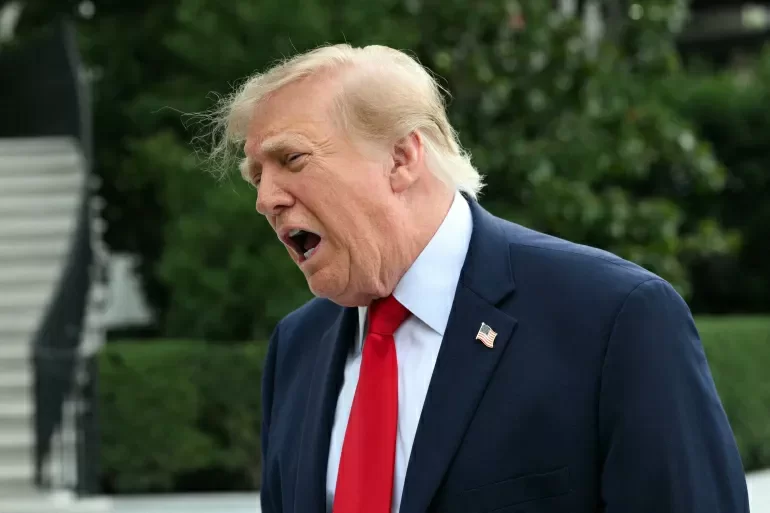
    Global energy markets saw sharp upward movement in oil prices on Monday, triggered by former U.S. President Donald Trump’s public rejection of Iran’s response to a U.S. peace initiative, which he labeled “unacceptable.” The renewed geopolitical friction has amplified market anxiety over prolonged supply disruptions, as the strategically critical Strait of Hormuz remains largely closed to commercial shipping – a development that ripples directly through global energy pricing.

    In early midday trading, Brent crude climbed $1.81, or 1.8%, to settle at $103.12 per barrel, while U.S. West Texas Intermediate (WTI) crude gained $1.55, or 1.6%, to hit $96.97 per barrel. Earlier in the trading session, both benchmarks hit intra-day peaks, with Brent touching $105.99 per barrel and WTI reaching $100.37 per barrel. This rally comes on the heels of a roughly 6% price drop last week, driven by investor optimism that the 10-week-old conflict between the U.S. and Iran would be resolved quickly.

    John Evans, an oil market analyst at PVM Oil Associates, cautioned that despite encouraging signals from backchannel diplomatic talks, the gap between Washington and Tehran remains far too wide for an immediate breakthrough. “We do not expect any breakthrough before Trump’s visit to Beijing this week, where he will press Chinese leadership to put greater pressure on Iran to compromise,” Evans explained. Trump is scheduled to arrive in Beijing on Wednesday for high-level talks with Chinese President Xi Jinping, where Iran tensions and other key geopolitical issues will top the agenda.

    Over the weekend, Saudi Aramco CEO Amin Nasser issued a warning that the ongoing conflict has already cut off roughly 1 billion barrels of oil from global markets over the past two months. Even if the Strait of Hormuz reopens to full traffic immediately, Nasser noted it will take considerable time for global energy markets to rebalance and stabilize. Alongside this forecast, energy traders expect Saudi oil exports to China to decline further in June, driven by elevated prices and reduced production commitments.

    Shipping tracking data from analytics firm Kpler confirms that three oil tankers have recently transited the Strait of Hormuz with their AIS tracking transponders disabled, a security measure to avoid targeted attacks. Separately, a second Qatari liquefied natural gas (LNG) vessel is en route to Pakistan, with an expected arrival on May 12. Japan is set to receive its first delivery of crude oil from Central Asia on Tuesday since the conflict began, marking a small step toward diversifying the nation’s energy supply away from Gulf routes.

    Analysts at JPMorgan have projected that Brent crude will average roughly $97 per barrel throughout 2026, with little room for rapid price normalization even after the Strait of Hormuz fully reopens. Before the U.S.-Iran conflict erupted, the 2026 average price sat at around $85 per barrel, marking a nearly 14% increase in baseline pricing. U.S. independent shale producer Diamondback Energy has already positioned its portfolio to capitalize on prolonged volatility, purchasing options that profit from a widening price gap between WTI and Brent – a strategy that would deliver returns if the U.S. moves to restrict domestic crude oil exports.

    The geopolitical uncertainty roiling oil markets has also spilled over into global gold and equities markets, triggering a flight to safe-haven assets. Gold prices edged slightly higher on Monday, as investors continued to view the precious metal as a reliable store of value amid conflict and economic uncertainty. Gold traded near $4,700 per ounce, representing a 0.5% gain from Friday’s closing price.

    Global stock exchanges saw a tone of cautious optimism on Monday. While ongoing pressure from the energy crisis and geopolitical tensions keeps market volatility elevated, some sectors have benefited from rising commodity prices. Energy and raw material producers posted clear gains on the day, while technology and consumer goods stocks held relatively steady. Market participants are now closely monitoring developments around Iran and the upcoming Trump-Xi summit, as any escalation or de-escalation of tensions will have an immediate, direct impact on global financial markets.

  • RvC moet koers Telesur verder versterken

    RvC moet koers Telesur verder versterken

    Suriname’s leading state-owned telecommunications provider, Telesur (Het Telecommunicatiebedrijf Suriname), has formally installed a new Board of Commissioners (Raad van Commissarissen, RvC) in a ceremony held Monday at the President’s Cabinet during the company’s annual General Shareholders’ Meeting.

    Nagish Algoe has been appointed to lead the new governing body as president-commissioner, joining fellow board members Ludciano Wijdenbosch, Frans Eersteling, Alexander Deel and Andre Daal. The inauguration ceremony was led by Raymond Landveld, Minister of Transport, Communication and Tourism (TCT), who was authorized to act on behalf of Suriname President Jennifer Simons. Simons was unable to attend the event due to unstated circumstances.

    Speaking through the Communication Service of Suriname, Minister Landveld expressed full confidence in the experience and capabilities of the newly assembled board. He emphasized that the government expects the commissioners to oversee steady, accelerated growth and modernization of the state-owned enterprise, which plays a critical role in Suriname’s digital and economic infrastructure.

    In his first public remarks following his appointment, president-commissioner Algoe noted that no concrete policy agreements had been finalized at the time of the inaugural meeting. However, he confirmed that attendees held productive discussions on the current operational progress of Telesur and the growing challenges facing the global and regional telecommunications sector, which is undergoing rapid technological transformation.

    Algoe outlined the new board’s core priorities moving forward, stating that the body will focus heavily on advancing technological innovation across the company and upgrading the quality of customer service delivered to Surinamese communities. “We will conduct a deep dive into the internal challenges facing the company and explore actionable strategies to lift Telesur to new heights of performance,” Algoe said.

  • Trump en Xi Jinping bereiden gesprekken voor over Iran, nucleaire wapens, handel en AI

    Trump en Xi Jinping bereiden gesprekken voor over Iran, nucleaire wapens, handel en AI

    On the eve of a landmark bilateral meeting that could reshape the trajectory of U.S.-China relations, U.S. President Donald Trump and Chinese President Xi Jinping are preparing to sit down for their first in-person talks in more than half a year. The two-day summit, scheduled to kick off Thursday in Beijing, will tackle a sprawling agenda spanning everything from geopolitical hotspots like Iran and Taiwan to emerging global competition in artificial intelligence and global nuclear non-proliferation, according to senior U.S. officials. A top item on the agenda includes a potential extension of a critical trade agreement governing rare earth mineral exports that has kept bilateral trade tensions in check for months.

    Trump is set to arrive in the Chinese capital Wednesday, marking his first visit to the country as U.S. president since 2017. The overarching goal of the summit is to stabilize bilateral relations, which have been pushed to their breaking point in recent months by escalating trade disputes, growing friction over the U.S.-Israel conflict with Iran, and a wide range of other lingering policy disagreements.

    Diplomatic observers widely expect the two world powers to reach agreement on establishing new bilateral forums designed to boost cross-border trade and direct investment. Chinese officials are also preparing to announce new purchases of U.S. Boeing aircraft, American agricultural goods, and U.S. energy exports, according to sources familiar with the meeting’s planning. Formal unveiling of plans for a dedicated Trade Council and Investment Council is on the table, though the finer details of the new bodies will still require further negotiation after the summit concludes.

    One of the most consequential pending issues is the potential extension of the existing rare earth export truce between Beijing and Washington. While a final deal may not be locked in during this week’s talks, U.S. officials have expressed cautious confidence that the current agreement, reached last fall, will be extended to avoid new disruptions to global supply chains that rely on Chinese rare earth exports, a critical input for everything from electric vehicle batteries to defense technology.

    Beyond trade and economic cooperation, the summit will dive deep into a series of long-simmering sensitive geopolitical issues that have fueled decades of tension between the two global powers. Iran remains a core point of disagreement: China maintains deep economic and diplomatic ties to Tehran, and is one of the largest importers of Iranian crude oil. The U.S. is pushing China to use its considerable influence to pressure Iran into entering a peace agreement with Washington to end the ongoing conflict that reignited in February following U.S. and Israeli military strikes on Iranian targets.

    U.S. concerns over China’s deepening strategic partnership with Russia will also be raised during the talks. U.S. officials have repeatedly raised alarms over reported Chinese shipments to Russia, including dual-use goods that can be repurposed for military applications, and have suggested the possibility of lethal weapons transfers as well.

    Taiwan remains one of the most intractable sticking points in the bilateral relationship. Beijing claims the self-governing, democratically ruled island as an inalienable part of its sovereign territory, and has significantly expanded military patrols and exercises in the Taiwan Strait in recent years. The U.S., meanwhile, remains Taiwan’s primary security partner and arms supplier, and U.S. officials confirm that longstanding U.S. policy toward the island will not change during the summit.

    Trump’s national security advisors have also raised growing alarms over the rapid development of cutting-edge artificial intelligence systems in China, and are pushing to open a formal bilateral dialogue on AI governance during the summit. The goal of these talks would be to establish clear communication channels to prevent misunderstandings or unintended conflicts stemming from the unregulated development and deployment of advanced AI.

    On the issue of nuclear arms control, Beijing has maintained a notably cautious stance. According to a senior U.S. official, the Chinese government has made clear it has no current interest in opening formal nuclear disarmament negotiations with the U.S.

    The last in-person meeting between Trump and Xi took place last October on the sidelines of the APEC (Asia-Pacific Economic Cooperation) summit in Busan, South Korea. At that meeting, the two leaders agreed to a temporary pause in the escalating bilateral trade conflict that had roiled global markets. That conflict had seen the U.S. impose sweeping new tariffs on Chinese imports, and sparked Chinese threats to restrict global exports of rare earth minerals, a move that would have caused massive disruption to manufacturing and tech sectors worldwide.

    In a separate development earlier this year, the U.S. Supreme Court ruled in February that Trump exceeded his legal authority when imposing many of his global import tariffs. Despite that ruling, Trump has pledged to reimpose many of the tariffs through alternative legal pathways in the coming months.

  • LVV  biedt agrariërs snellere resultaten bij bodemonderzoek

    LVV biedt agrariërs snellere resultaten bij bodemonderzoek

    Suriname’s agricultural sector is stepping into a new era of efficient, data-driven farming thanks to a new initiative rolled out by the country’s Ministry of Agriculture, Livestock and Fisheries (LVV), in partnership with the World University Service of Canada (WUSC). At the heart of the program are portable soil nutrient tester kits that cut down wait times for soil analysis results from months to less than a single working day, bringing life-changing improvements to small-scale and commercial farmers across the country.

    Before the introduction of these portable kits, the process of soil nutrient testing was notoriously slow and cumbersome. Agricultural extension officers based in rural districts across the country, including Nickerie, Coronie, Wanica, and Saramacca, were required to collect soil samples from local farms and ship them all the way to the capital city of Paramaribo for laboratory analysis. According to LVV extension officers, this process could take anywhere from three to six months to complete. By the time the test results were returned, planting seasons had often already passed, farmers had already harvested their crops, or many had moved forward with plans to plant a new crop, rendering the delayed analysis useless for informed decision-making.

    The new portable tester kits eliminate this entire delay. Extension officers can now conduct full nutrient analysis on-site directly after collecting soil samples, sharing accurate, actionable results with farmers the same day. All test findings are officially documented in a personalized agricultural report that is given directly to the participating farmer, and the entire testing and advisory service is provided completely free of charge by LVV.

    Soekarina Ardjosentono, a senior researcher in the Ministry’s Department of Soil Research and Agrohydrology, explained that two key benefits set the new system apart from the old process: unmatched speed and the ability to deliver far more targeted, context-specific advice to farmers. To ensure widespread, consistent use of the new technology, the Ministry has rolled out sequential training programs for extension officers across all regions. Trainings for extension staff in the northern districts of Wanica, Saramacca, and Paramaribo have already been completed, with training for officers in the western districts of Nickerie and Coronie wrapping up just last week.

    William Waidoe, LVV’s Deputy Director for the Western Region, noted that the faster testing framework enables extension officers to guide farmers far earlier in the planning process, before farmers make costly investments in seeds, fertilizer, and new planting. With immediate access to clear data on their soil’s nutrient profile, farmers can make timely, informed decisions about the type and amount of fertilizer to apply at each growth stage of their crops, matching inputs to their soil’s exact needs.

    Netasha Badal, an LVV extension officer based in Nickerie, one of the country’s key agricultural regions, emphasized the practical, on-the-ground difference the kits have made. “Previously, we had no option but to send samples off to Paramaribo. By the time we got the results back, in many cases the farmer had already planted or even harvested their crop,” Badal explained. “Now, we can share results and give targeted advice on appropriate fertilizer in a fraction of the time.”

    Revillio Vriesde, an extension officer and acting district lead for LVV in Coronie, echoed this sentiment, calling the new system a major step forward for the region’s farming community. “Where farmers once waited three to six months for results, they can now get full data the same day we collect their sample,” Vriesde noted.

    The portable soil nutrient tester kits were donated to the Ministry by WUSC as part of the organization’s climate-smart agriculture programming in Suriname. Varsha Boejharat, WUSC’s Climate Smart Agriculture Officer, explained that the donation and accompanying training program were developed in direct response to feedback from local farmers who identified slow soil analysis as a major barrier to more productive, sustainable farming. Accurate, timely soil analysis is foundational to sustainable farming: it gives farmers clear insight into key nutrient levels, including nitrogen, potassium, and phosphorus, that determine crop health and yield. With this data in hand, farmers can not only select the right fertilizer regimen for each growing stage but also decide which crop varieties are best suited to their land, reducing unnecessary input costs and boosting overall productivity.

    The program represents a collaborative effort to bring modern, accessible agricultural technology to rural farmers in Suriname, with the goal of supporting more resilient, productive farming across the country.

  • Opnieuw nat en zwaarbewolkt; kans op onweersbuien blijft groot

    Opnieuw nat en zwaarbewolkt; kans op onweersbuien blijft groot

    After days of extreme rainfall that already saturated soils across the country, unstable atmospheric conditions are set to bring another round of erratic, stormy weather on May 11, raising fresh concerns over flooding and agricultural damage.

    Early on Monday morning, moderate to locally severe rain showers are already sweeping across inland regions, while scattered light precipitation is also expected along coastal areas. Through the remainder of the morning, persistent overcast skies will dominate. Combined with lingering moisture and limited sunlight, the conditions will create a stuffy, oppressive atmosphere for residents across the nation.

    Starting in the afternoon, the probability of more intense precipitation will climb steadily. Widespread moderate to heavy downpours are forecast to hit both coastal and inland zones, with many areas likely to see thunderstorms and localized gusty winds. Because the soil is already completely saturated from previous days of heavy rain, low-lying regions and poorly drained roadways face an elevated risk of renewed waterlogging and flooding.

    Among the most at-risk sectors are agricultural areas, which remain particularly vulnerable to additional damage from the ongoing streak of excessive rainfall, with crop losses and field saturation already reported in many hard-hit regions.