标签: Suriname

苏里南

  • Pawiroredjo: Begin bij politie en capaciteit; meerdere pg’s lossen kernproblemen niet op

    Pawiroredjo: Begin bij politie en capaciteit; meerdere pg’s lossen kernproblemen niet op

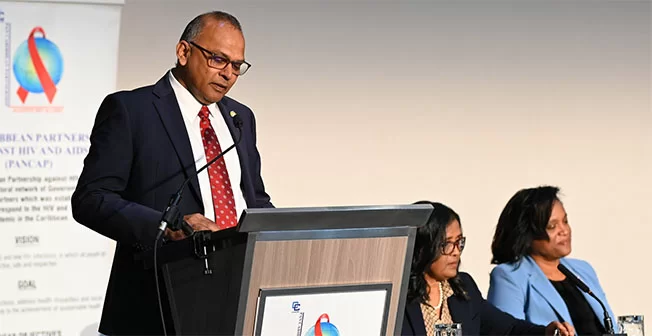
    In a comprehensive critique delivered before De Nationale Assemblée, opposition leader Jerrel Pawiroredjo (NPS faction leader) has raised substantial concerns regarding proposed constitutional amendments affecting Suriname’s Public Prosecutor’s Office and judicial system. The parliamentarian questioned the fundamental rationale behind modifying Article 146 of the constitution, noting the explanatory memorandum fails to clearly identify which specific problems the changes intend to resolve.

    Pawiroredjo emphasized that evaluating judicial system performance must begin with citizens’ daily experiences with justice, which commences not with judges but rather with police response, criminal investigation, and law enforcement operations. He cited persistent public complaints regarding extended police response times, cumbersome reporting procedures, and deficient official documentation processes.

    The opposition leader identified systemic capacity shortages as the core challenge, noting both the Public Prosecutor’s Office and judiciary have faced structural problems for years due to critical staff shortages—including court clerks, prosecutors, deputies, and judges—coupled with inadequate compensation that fails to retain expertise. He advocated for prioritizing recruitment, training, and improved remuneration instead of creating multiple prosecutor general positions.

    Regarding cassation jurisdiction, Pawiroredjo acknowledged its potential benefits for legal uniformity and development but expressed reservations about establishing a national Supreme Court. He argued such an institution would pose significant risks in Suriname’s small-scale society by diverting scarce judicial capacity from first and second instance courts where most cases are handled. Instead, he proposed joining the Caribbean Court of Justice as a more realistic and efficient alternative.

    Pawiroredjo also cautioned against eliminating the Prosecutor General’s nomination input in appointment processes, warning this could lead to selections based on non-professional criteria and increase vulnerability to external influence. He further criticized proposals to lower the age limit from 70 to 65 as historically inconsistent and potentially disruptive without careful analysis of outflow, continuity, and capacity implications.

    The parliamentarian additionally opposed removing the constitutional anchoring of the Prosecutor General’s instruction authority toward police officials, describing this as a serious weakening of the prosecutorial foundation. He concluded that while modernization is necessary, uncontrolled interventions risk causing more damage than they aim to repair.

  • MCP heropent winkel en breidt assortiment verder uit

    MCP heropent winkel en breidt assortiment verder uit

    In a significant move marking its 65th anniversary, Suriname’s state-owned dairy enterprise Melkcentrale N.V. (MCP) has officially reopened its flagship store on Van Idsingastraat, signaling a new chapter of modernization and territorial expansion. The reopening ceremony, presided over by Director Monché Atompai, represents the company’s strategic pivot toward product innovation and operational growth.

    The newly revitalized store, previously operated by third-party tenants, has been brought back under MCP’s direct management. Customers can now access the complete range of MCP products, including offerings from subsidiary companies MCP Agro (fruit products) and MCP Aqua (bottled drinking water).

    Beginning February 9th, MCP will introduce new product lines developed through collaborations with local fruit farmers. The company is concurrently engaging with the Ministry of Regional Development to integrate interior region farmers into its supply chain, promoting inclusive economic participation.

    Enhancing customer convenience, MCP has implemented telephone and digital ordering systems allowing consumers to place orders for subsequent pickup. This modernization effort aligns with the company’s broader service improvement initiatives.

    Looking toward future growth, Director Atompai revealed ambitious expansion plans targeting multiple districts including Nickerie, Marowijne, and interior regions such as Tapanahony and Atjoni. These developments represent both financial and geographical scaling for the state enterprise.

    The comprehensive revitalization strategy underscores MCP’s commitment to local production enhancement, sustainable growth, and improved societal service delivery through modernized retail operations and expanded territorial presence.

  • Projecten tot  US$ 150.000 mogelijk voor Surinaamse landbouwers

    Projecten tot US$ 150.000 mogelijk voor Surinaamse landbouwers

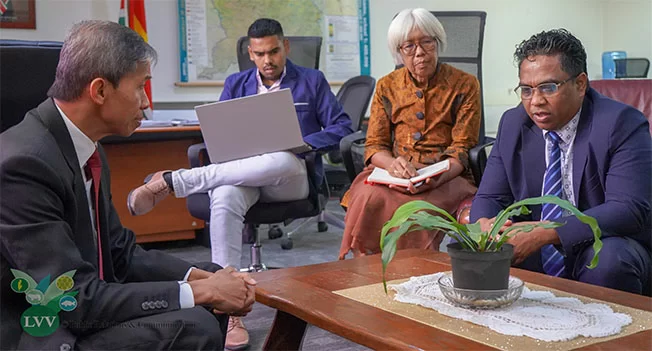
    Suriname’s agricultural sector is set to receive significant support through a new cooperation agreement with Turkey’s official development agency. During a high-level meeting between Suriname’s Minister of Agriculture, Livestock and Fisheries Mike Noersalim and Turkish Ambassador Ayse Selcan Sanli, both parties established a framework for agricultural development projects worth approximately $150,000.

    The Turkish Cooperation and Coordination Agency (TIKA), operating under Turkey’s Ministry of Culture and Tourism, will facilitate the initiative. The partnership will prioritize specific sectors identified by Suriname, including cassava, highland rice, and banana production. Both officials acknowledged Suriname’s logistical challenges but reaffirmed their commitment to strengthening the country’s agricultural infrastructure.

    Minister Noersalim proposed implementing projects in collaboration with TIKA and an experienced regional development partner, citing Peru and Colombia as potential candidates. TIKA confirmed its role as a bridge builder, connecting Surinamese institutions with Turkish and international knowledge centers through their agricultural experts.

    The development program focuses on capacity building through specialized training programs for both technicians and farmers, emphasizing climate resilience, food security, and value addition to raw products. Global examples of TIKA’s projects include greenhouse construction (as implemented in Montenegro), agricultural production support, and administrative unit development. The agency also provides direct assistance to vulnerable communities, including indigenous groups and women’s cooperatives, through equipment donations for processing products such as blackberries into juice or jam.

    The application process requires Suriname to take initiative by submitting priority projects to TIKA for feasibility assessment before presentation to headquarters. Approved projects will receive support through in-kind donations of equipment and machinery, requiring detailed specifications and need justifications.

    Minister Noersalim highlighted critical shortages in specialized personnel, particularly veterinary assistants, and emphasized the need for accelerated vocational training. Agro-processing stimulation remains a high priority to add value to local products like tropical fruits. Specific focus areas include mango, banana, cassava, and highland rice, alongside revitalizing traditional crops including cocoa, coffee, citrus, pineapple, and passion fruit.

    The agreement concludes with LVV appointing a focal point to formalize one or two concrete project proposals according to TIKA procedures. Technical online discussions will follow, with plans to organize a joint working group meeting to advance the partnership.

  • Fernandez wint presidentschap Costa Rica, partij boekt ruime parlementaire meerderheid

    Fernandez wint presidentschap Costa Rica, partij boekt ruime parlementaire meerderheid

    In a sweeping electoral triumph, right-wing populist candidate Laura Fernandez has secured Costa Rica’s presidency with a commanding lead, capturing nearly 45% of votes with 88% of ballots counted. The protégé of incumbent President Rodrigo Chaves has successfully avoided a runoff election while her Sovereign People’s Party (PPSO) is projected to secure 30 out of 57 parliamentary seats—a substantial legislative gain that promises significant governance advantages.

    Addressing supporters in San José, Fernandez declared the dawn of a new political era, proclaiming the end of Costa Rica’s ‘second republic’ and the beginning of a ‘third republic.’ She committed to continuing President Chaves’ hardline security policies and populist agenda, despite constitutional prohibitions on immediate presidential reelection. Fernandez indicated she would incorporate Chaves into her administration in an unspecified capacity.

    Her primary opponent, centrist politician Álvaro Ramos, conceded after securing approximately one-third of votes, pledging conditional support while maintaining critical oversight. Progressive candidate Claudia Dobles trailed significantly with less than 5% voter support.

    The election occurred against a backdrop of escalating security concerns, with murder rates reaching record highs during Chaves’ presidency. Despite this, Chaves maintained remarkable 58% approval ratings, with many citizens citing security and public health as paramount concerns.

    Fernandez’s victory aligns with a broader regional trend of right-wing populist ascendancy across Latin America, mirroring recent electoral successes in Chile, Ecuador, and Honduras. Political analysts attribute her triumph largely to potent security rhetoric that resonated with voters’ safety concerns.

    Since her election, Fernandez has prioritized strengthening security forces and combating corruption—key campaign pledges. Her administration has announced plans for enhanced legislation against organized crime and investments in modern policing technology.

    The international community has responded with mixed reactions: some nations welcome the outcome as potential stabilization, while others express concerns about possible civil rights restrictions and democratic erosion given Fernandez’s populist approach and association with Chaves’ controversial repressive measures.

    Significant economic challenges persist, with inflation and unemployment remaining pressing issues. While Fernandez has committed to fostering economic growth and job creation, specific policy details remain undefined, leaving economic stakeholders awaiting concrete implementation plans.

  • Brunswijk: onafhankelijkheid pg mag niet worden uitgehold

    Brunswijk: onafhankelijkheid pg mag niet worden uitgehold

    In a significant parliamentary address today, Ronnie Brunswijk, Vice-Chairman of Suriname’s National Assembly and leader of the ABOP faction, issued a stern warning regarding proposed reforms to the country’s Public Prosecution Service. The prominent politician asserted that current legislative proposals risk undermining the independent position of the Attorney General, potentially compromising the nation’s judicial integrity.

    Brunswijk, serving on the committee of rapporteurs, articulated deep concerns during the parliamentary debate about measures that would weaken existing safeguards surrounding the appointment, authority, and continuity of the Attorney General’s position. He emphasized that the Public Prosecution Service was deliberately structured as a single, hierarchical entity led by a lifetime-appointed Attorney General specifically to shield prosecution decisions from political interference.

    The proposed elimination of institutional filters in the Attorney General’s appointment process drew particular criticism, with Brunswijk highlighting how such changes could jeopardize the legitimacy, authority, and internal stability of the entire prosecutorial system. While acknowledging the necessity of judicial reform, the parliamentarian insisted that changes to the judicial system and Public Prosecution Service must be approached comprehensively rather than through fragmented legislative proposals.

    Additional concerns were raised regarding proposals to lower the retirement age for Public Prosecution Service members and measures that would place time pressure on the Court of Justice during appointment advisory processes. Brunswijk argued these changes would undermine institutional continuity, experience, and balance within the judicial framework.

    Although expressing support for the introduction of cassation jurisprudence, the ABOP leader cautioned that essential choices regarding supervision, composition, and competencies remain inadequately anchored in the proposed reforms. He further questioned the establishment of a College of Attorneys General, suggesting this structure is ill-suited to Suriname’s scale and could create ambiguous responsibilities.

    Brunswijk concluded by calling for judicial reforms to incorporate lessons from other legal systems, emphasizing that respect for independence, political restraint, and clear division of responsibilities must form the foundation of any constitutional democracy.

  • Goud en edelmetalen populair ondanks recente koersdaling

    Goud en edelmetalen populair ondanks recente koersdaling

    Investors worldwide are demonstrating unprecedented confidence in gold-related assets, channeling massive capital into precious metal funds during January 2025. According to comprehensive data from LSEG Lipper, exchange-traded funds (ETFs) specializing in gold and other precious metals attracted $4.39 billion in new investments, marking the eighth consecutive month of net inflows.

    The remarkable trend extends to gold mining companies, with mining-focused ETFs receiving $3.62 billion—the highest monthly allocation since records began in 2009. The cumulative effect has resulted in a staggering $91.86 billion flowing into these funds throughout 2025, representing an eightfold increase compared to the entire previous year.

    This surge occurs against a backdrop of significant market volatility. Despite the substantial capital inflows, gold prices experienced a sharp 10% correction over two trading days following recent record highs. The price decline coincided with increased margin requirements implemented by CME Group after Kevin Warsh’s nomination as the new Federal Reserve Chair triggered substantial selling across metal markets.

    Leading the inflow activity, SPDR Gold Shares ETF secured $2.58 billion in new investments, while SPDR Gold MiniShares Trust attracted $1.79 billion and iShares Gold Trust received $696 million. Among mining ETFs, VanEck Gold Miners ETF led with $539 million, followed by iShares S&P/TSX Global Gold Index ETF with $312 million and VanEck Junior Gold Miners ETF with $114 million.

    Market analysts at J.P. Morgan maintain a bullish long-term outlook despite recent fluctuations, noting that gold continues to demonstrate stronger appreciation as a real-value asset compared to financial instruments. This perspective is echoed by UBS Global Wealth Management’s Chief Investment Officer Mark Haefele, who anticipates continued growth in demand from both central banks and institutional investors throughout 2025.

    While acknowledging potential downside risks due to current premium levels, Haefele recommends moderate gold allocations within diversified portfolios and suggests that escalating political or financial uncertainties could drive prices toward $5,400 per ounce.

  • 42 militairen bevorderd; uitvoering defensiebeleid

    42 militairen bevorderd; uitvoering defensiebeleid

    In a significant move to strengthen national security infrastructure, Suriname’s Defense Ministry has elevated 42 military personnel to higher ranks during a formal ceremony presided over by Defense Minister Uraiqit Ramsaran. The February 2nd promotions represent a concrete implementation of the country’s 2026 defense policy focused on organizational reinforcement from within.

    Minister Ramsaran emphasized that these advancements serve dual purposes: recognizing individual dedication and discipline while demonstrating tangible execution of announced policy initiatives. The minister specifically highlighted the improvement of military legal status as a cornerstone of the ongoing modernization efforts, with additional promotions scheduled throughout the coming months.

    Army Commander Werner Kioe A Sen reinforced the gravity of these advancements, stating that rank elevation signifies increased responsibility rather than mere privilege. Many promoted personnel have served under challenging operational conditions, including deployments in remote interior regions and along national borders.

    Military leadership articulated that motivated and valued personnel form the foundation of a professional, reliable, and resilient defense force—essential components for maintaining Suriname’s national security and stability. The promotions align with broader strategic goals to enhance operational capacity through investment in human capital and institutional strengthening.

  • Heftig interruptie debat hervorming OM: ‘Er is geen vertrouwen in de pg’

    Heftig interruptie debat hervorming OM: ‘Er is geen vertrouwen in de pg’

    A contentious parliamentary session in Suriname’s National Assembly has exposed deep divisions over proposed constitutional reforms affecting the judicial system and Office of the Attorney General. The debate, which unfolded during Friday’s session, revealed fundamental disagreements between governing and opposition parties regarding the future of Suriname’s legal framework.

    NDP Assembly Member Michael Marengo delivered the most striking criticism, declaring that Surinamese society has lost confidence in the current Attorney General and warning that the nation faces a profound “crisis of trust” in its judicial institutions. This blunt assessment set the tone for a heated exchange that crossed party lines.

    The core disagreement centers on two competing visions: the governing NDP faction advocates for establishing a domestic third judicial instance, while the opposition VHP party supports joining the Caribbean Court of Justice (CCJ). NDP Member Ann Sadi expressed concerns that CCJ membership would primarily benefit wealthy Surinamese citizens due to high costs and accessibility barriers, creating a two-tier justice system.

    VHP representative Krishna Mathoera pressed for concrete details about the proposed College of Attorneys General, questioning how many members it would contain, what safeguards would prevent political influence, and how the organization would function practically. Meanwhile, NDP members Jennifer Vreedzaam and Tashana Lösche argued that systemic reform is necessary to strengthen institutions rather than target individuals, suggesting that a distributed responsibility model could reduce vulnerability to pressure and selective enforcement.

    The most vehement opposition came from VHP Assembly Member Mahinder Jogi, who characterized the proposed college as a form of “political interference” that would increase pressure on the Office of the Attorney General. Jogi asserted the concept was unsuitable for Suriname’s context and would ultimately prove unworkable.

    In response to the emotional debate, initiator Raymond Sapoen (NDP) emphasized that constitutional amendments require pragmatic rather than emotional approaches. He clarified that the reform seeks to modernize an outdated system centered on a single Attorney General—a model he described as “no longer of this time”—while explicitly denying any personal targeting of current officeholders. Sapoen indicated that specific operational details would be established through subsequent legislation, with the current focus being on creating constitutional flexibility for future restructuring.

  • Mexicaanse president Sheinbaum belooft humanitaire hulp naar Cuba te sturen

    Mexicaanse president Sheinbaum belooft humanitaire hulp naar Cuba te sturen

    Mexican President Claudia Sheinbaum has declared her administration’s intention to dispatch humanitarian assistance to Cuba this week, including essential food supplies and other critical aid materials. This announcement came shortly after former U.S. President Donald Trump claimed to have instructed the Mexican leader to suspend oil deliveries to the Caribbean nation.

    Speaking at a public engagement in the northern state of Sonora on Sunday, President Sheinbaum clarified that her Thursday telephone conversation with Trump did not involve discussions regarding Cuban affairs. She emphasized her government’s commitment to resolving “all matters pertaining to oil shipments to Cuba through diplomatic channels for humanitarian considerations.”

    This diplomatic stance emerges against the backdrop of shifting energy dynamics in the region. Following the U.S. military operation in early January aimed at ousting Venezuelan President Nicolás Maduro, the South American nation suspended its declining oil exports to Cuba. This development subsequently elevated Mexico to Havana’s primary supplier of both crude oil and refined petroleum products.

    Mexican oil has long served as a crucial economic lifeline for Cuba. According to the most recent Pemex report, Mexico shipped approximately 20,000 barrels per day to Cuba from January through September 30, 2025. However, satellite tracking data analyzed by University of Texas Energy Institute expert Jorge Piñon indicates that following U.S. Secretary of State Marco Rubio’s September visit to Mexico City, these shipments decreased to roughly 7,000 barrels daily.

  • Column: Onze gezondheid begint bij onszelf: de strijd tegen chikungunya

    Column: Onze gezondheid begint bij onszelf: de strijd tegen chikungunya

    Suriname faces a mounting public health crisis as chikungunya virus resurges after more than a decade, exposing critical failures in environmental management and community responsibility. The Aedes aegypti mosquito—known vector for multiple diseases—is thriving in urban areas due to widespread accumulation of discarded containers and stagnant water sources.

    Health authorities have launched emergency response measures, including targeted waste collection in neighborhoods reporting the highest infection rates. This intervention comes as citizens experience characteristic symptoms including high fever and severe joint pain, creating significant healthcare pressures.

    Historical context reveals a concerning regression: previously effective environmental inspection systems that methodically documented household compliance with sanitation standards have gradually eroded. While the environmental service department remains operational, its enforcement capabilities have diminished over time despite the growing threat.

    The current outbreak underscores a painful reality that environmental cleanliness constitutes the first line of defense against vector-borne diseases. Each improperly discarded plastic bottle and abandoned container serves as potential breeding ground for mosquitoes, which require minimal water for reproduction.

    Public health experts emphasize that government action alone cannot resolve the crisis. Community participation is essential—from reporting illegal dumping to maintaining clean residential surroundings. The article calls for renewed social accountability, urging citizens to confront neighbors whose negligent practices endanger collective wellbeing.

    This health emergency demonstrates the inseparable connection between environmental stewardship and disease prevention. Sustainable solutions require cultural shift toward recognizing that public health begins with individual responsibility for maintaining clean streets, yards, and communities.