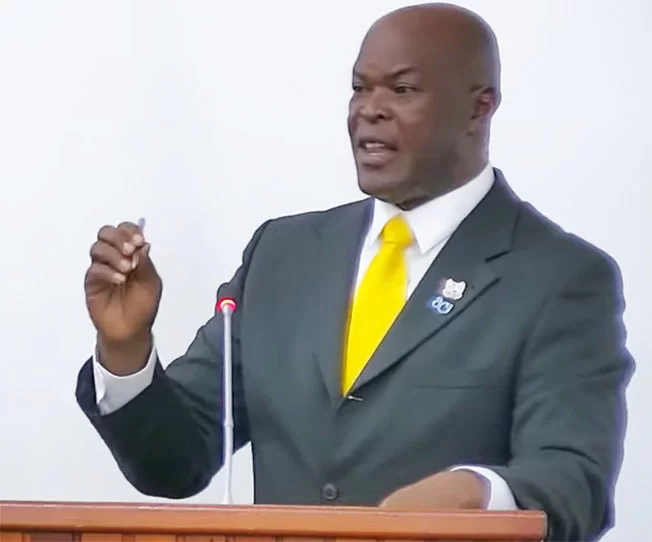
In a significant parliamentary address today, Ronnie Brunswijk, Vice-Chairman of Suriname’s National Assembly and leader of the ABOP faction, issued a stern warning regarding proposed reforms to the country’s Public Prosecution Service. The prominent politician asserted that current legislative proposals risk undermining the independent position of the Attorney General, potentially compromising the nation’s judicial integrity.
Brunswijk, serving on the committee of rapporteurs, articulated deep concerns during the parliamentary debate about measures that would weaken existing safeguards surrounding the appointment, authority, and continuity of the Attorney General’s position. He emphasized that the Public Prosecution Service was deliberately structured as a single, hierarchical entity led by a lifetime-appointed Attorney General specifically to shield prosecution decisions from political interference.
The proposed elimination of institutional filters in the Attorney General’s appointment process drew particular criticism, with Brunswijk highlighting how such changes could jeopardize the legitimacy, authority, and internal stability of the entire prosecutorial system. While acknowledging the necessity of judicial reform, the parliamentarian insisted that changes to the judicial system and Public Prosecution Service must be approached comprehensively rather than through fragmented legislative proposals.
Additional concerns were raised regarding proposals to lower the retirement age for Public Prosecution Service members and measures that would place time pressure on the Court of Justice during appointment advisory processes. Brunswijk argued these changes would undermine institutional continuity, experience, and balance within the judicial framework.
Although expressing support for the introduction of cassation jurisprudence, the ABOP leader cautioned that essential choices regarding supervision, composition, and competencies remain inadequately anchored in the proposed reforms. He further questioned the establishment of a College of Attorneys General, suggesting this structure is ill-suited to Suriname’s scale and could create ambiguous responsibilities.
Brunswijk concluded by calling for judicial reforms to incorporate lessons from other legal systems, emphasizing that respect for independence, political restraint, and clear division of responsibilities must form the foundation of any constitutional democracy.