标签: Suriname

苏里南

  • Rosebel Community Fund ondersteunt 15 sociale instellingen met kerstgiften

    Rosebel Community Fund ondersteunt 15 sociale instellingen met kerstgiften

    In a significant holiday philanthropic initiative, the Rosebel Community Fund (RCF), established by Zijin Rosebel Gold Mines, has extended financial support to fifteen social institutions across multiple districts in Suriname. Each organization received a Christmas grant of US$2,500 during a ceremonial event held Thursday at the Ballroom Prince venue.

    RCF Chairman Soetjipto Verkuijl emphasized the fund’s commitment to recognizing organizations operating under challenging circumstances. “These groups perform essential work that deserves both recognition and support,” Verkuijl stated. “Providing encouragement during the holiday season represents our commitment to standing with those who serve our communities.”

    The annual Christmas Event, maintained since 2022, serves multiple purposes: acknowledging social institutions, appreciating their dedication, and offering participants a moment of respite from their demanding responsibilities.

    Beneficiary organizations span various social services, including children’s homes (Johanna, Elim van de Heer, and Sukh-Dhaam), the Mr. Huber Foundation, the National Foundation for the Blind and Visually Impaired, and institutions serving physically and mentally disabled individuals. Additional recipients include the Kennedy Foundation, Mytylschool, Lotjeshuis, Huize Tyltyl, and several girls’ hostels including Balingsoela, Siswa Tama, Wisma Karijawatie, and Soender Singh, along with the Elizabethshof Student House.

    The RCF primarily focuses on community development around the Brokopondo district gold mining operations. Verkuijl revealed that the fund has invested over US$2 million in socio-community projects throughout the past year, spanning healthcare, education, and small business development support.

    Among notable ongoing initiatives is the development of an educational complex with accompanying dormitory facilities, representing the fund’s commitment to sustainable improvement of educational infrastructure in the region.

  • Minister Pokie: Georganiseerd patroon misstanden rond Moni Karta

    Minister Pokie: Georganiseerd patroon misstanden rond Moni Karta

    Suriname’s Minister of Social Affairs and Housing Diana Pokie has revealed extensive and organized corruption within the Moni Karta program, the government’s flagship anti-poverty initiative. During a high-level government briefing, Pokie disclosed that both ministry officials and employees of the Surinamese Postal Savings Bank (SPSB) are implicated in what she described as a deeply rooted pattern of systematic misconduct.

    The minister confirmed that disciplinary measures, including terminations, have already been implemented at the banking institution following the detection of irregularities. While exact numbers of implicated individuals remain undisclosed pending official documentation from SPSB, Pokie emphasized the complexity of the scheme that cannot be resolved within months.

    Multiple investigations are currently underway, with several formal complaints already filed with authorities. In a significant operational shift, employees directly involved with matters under investigation will be placed on mandatory leave starting January 2nd, effectively suspending an entire department and potentially disrupting service continuity.

    Pokie asserted that all necessary evidence exists to prosecute offenders once investigations conclude. The coordinated response involves multiple government agencies working to address the corruption while preventing further harm to vulnerable citizens who depend on the financial assistance program.

    The minister stressed that restoring public trust in the welfare system remains the highest priority, with protection of legitimate beneficiaries guiding all subsequent actions. The government faces the dual challenge of rooting out corruption while maintaining essential services for Suriname’s most economically disadvantaged populations.

  • Simons: schuldherschikking noodzakelijk om financiële stabiliteit te waarborgen

    Simons: schuldherschikking noodzakelijk om financiële stabiliteit te waarborgen

    Surinamese President Jennifer Simons has announced a critical debt restructuring agreement that prevents the nation from facing unsustainable foreign debt obligations within the coming years. The breakthrough came following intensive negotiations with major creditors including Staatsolie, TotalEnergies, and Bank of America.

    During a presidential palace press conference on Friday, Simons emphasized that restructuring foreign debt was not merely a policy choice but an absolute necessity. Without intervention, Suriname would have faced crippling interest payments starting in 2027 that would have severely pressured both the national budget and exchange rate stability. The country faced approximately $150 million in interest payments alone for debt servicing.

    The successfully negotiated arrangement postpones loan repayments until after 2028, providing immediate relief for foreign currency reserves and preventing excessive pressure on the exchange rate. This strategic move forms part of a broader government initiative to avoid prematurely committing future revenues to debt obligations.

    In a significant parallel development, the government has fully settled the Value Recovery Instrument (VRI) debt, ensuring that oil royalties will be entirely available for Suriname’s use from 2028 onward. President Simons stressed that these funds must be allocated toward structurally strengthening national finances rather than new consumptive expenditures.

    Simultaneously, authorities are engaged in discussions with China to restructure existing debt arrangements, aiming to align payment obligations with the country’s actual financial capacity.

    Beyond debt management, the administration is implementing comprehensive tax system reforms. Noting that Suriname generates comparatively lower tax revenues than regional counterparts, the government has initiated the reform and autonomization of the tax authority. This overhaul aims to achieve more efficient revenue collection, broaden the tax base, and reduce structural deficits.

    President Simons articulated the inseparable connection between debt restructuring and tax reform, noting that together these measures should establish greater financial stability, restore confidence, and create foundations for sustainable economic development. She acknowledged that the full impact of these restructuring efforts will only become apparent in coming years as the effectiveness of new agreements in creating sustainable payment obligations and additional budgetary space becomes evident.

  • Nieuwe wet in de maak om crimineel vermogen af te pakken

    Nieuwe wet in de maak om crimineel vermogen af te pakken

    Suriname’s governing coalition has presented a transformative legislative proposal to the National Assembly designed to significantly strengthen the country’s anti-corruption framework. The Illegally Obtained Advantage Deprivation Act (Wet Ontneming Wederrechtelijk Verkregen Voordeel) represents a comprehensive legal overhaul enabling prosecutors to confiscate criminal proceeds even when concealed through sophisticated financial schemes or complex ownership structures.

    This landmark legislation supplements the existing Penal Code and Code of Criminal Procedure, addressing critical deficiencies in Surinamese law enforcement identified by international monitoring bodies. The explanatory memorandum accompanying the bill characterizes organized crime—including systemic corruption, narcotics trafficking, money laundering, and human trafficking—as an existential threat to national stability and institutional integrity.

    Prosecutors will operate under judicial supervision within an expanded investigative framework permitting exhaustive financial examinations. The scope encompasses bank accounts, cryptocurrency wallets, real estate holdings, vehicles, securities, and any assets where suspects maintain de facto control regardless of nominal ownership.

    A pivotal innovation introduces the principle of wealth discrepancy: when investigations reveal assets substantially exceeding legitimate income sources, courts may compel suspects to provide convincing explanations for these disparities. Failure to satisfactorily account for unexplained wealth creates legal presumption of criminal origins.

    The legislation also establishes value substitution seizure mechanisms, allowing authorities to confiscate equivalent-value assets when original criminal proceeds have been transferred abroad, laundered through third parties, or already expended.

    Notably, the law breaches banking confidentiality under strict judicial authorization requirements, extending disclosure obligations to accountants, insurers, and notaries public. Proponents emphasize these provisions include robust safeguards against abuse while remaining essential for investigating contemporary money laundering techniques.

    The legal framework aligns Suriname with international conventions including the UN Convention Against Corruption (UNCAC) and UN Convention Against Transnational Organized Crime (UNTOC), while implementing recommendations from the Financial Action Task Force (FATF) regarding confiscation procedures and financial investigations.

    According to official documentation, the act specifically addresses deficiencies highlighted by the Caribbean FATF, including inadequate cryptocurrency regulations, insufficient information sharing protocols, and limited capabilities for tracing and freezing illicit assets.

    Government officials position this legislation as signaling Suriname’s determination to eliminate its reputation as a safe haven for criminal proceeds, simultaneously enhancing law enforcement capabilities and restoring public confidence in judicial institutions.

  • OM  niet gekend bij initiatiefwetten: ‘Ongehoorde gang van zaken’

    OM niet gekend bij initiatiefwetten: ‘Ongehoorde gang van zaken’

    Suriname’s judicial system faces mounting tension as Prosecutor General Garcia Paragsingh has publicly denounced the government’s exclusion of the Public Prosecution Service from legislative processes directly affecting its operations. The controversy stems from two recently proposed laws that would fundamentally reshape the nation’s prosecution apparatus, including the establishment of a College of Prosecutors General.

    In an unprecedented rebuke, Paragsingh revealed that the Public Prosecution Service learned about these significant judicial reforms through media reports rather than official channels. She characterized this exclusion as “unheard of and incompatible with democratic constitutional principles,” describing the government’s approach as imposing and even dictatorial in nature.

    The proposed College of Prosecutors General has drawn particular criticism. Paragsingh questioned whether proper preliminary research was conducted regarding the prolonged duration of court cases, emphasizing that her office bears no responsibility for delays once cases reach trial proceedings. “The role of the Public Prosecution Service as dominus litis ends when the case is called to session by the bailiff,” she stated, noting that prosecutors lose all control over case duration once proceedings begin.

    Additional concerns were raised regarding plans to lower the retirement age for prosecutors to 65 while maintaining a 70-year retirement threshold for the President and members of the Court of Justice. Paragsingh challenged this discrepancy, questioning why the Prosecutor General—who is similarly affiliated with the Court of Justice—should not receive equal treatment.

    The Public Prosecution Service emphasized that careful governance requires consulting relevant institutions and stakeholders before implementing legislation that directly affects them. The organization expressed profound dismay at learning about these consequential reforms through a press conference, with Paragsingh asserting that such procedures violate fundamental democratic principles.

  • Ingrijpende wijzigingen wet over leeftijd en leiding OM

    Ingrijpende wijzigingen wet over leeftijd en leiding OM

    The governing coalition in Suriname’s National Assembly has introduced landmark legislative amendments to overhaul the Judicial Positions Act, addressing constitutional inconsistencies from previous reforms. The proposed legislation aims to realign the appointment process for the Attorney General with constitutional mandates while restructuring retirement provisions for prosecutorial officials.

    Central to the initiative is the restoration of constitutional safeguards in the Attorney General’s appointment process. The amendments explicitly require mandatory consultation with the Court of Justice before any appointment, rectifying an omission in the 2024 legislative revision that bypassed Article 141(2) of Suriname’s Constitution. This procedural reinforcement strengthens institutional checks and balances between government branches, ensuring the judiciary’s independence remains protected.

    A significant pension reform reverses the 2024 decision that raised the retirement age for all Public Prosecution Service members to 70 years. The new legislation returns the retirement age to 65 for both the Attorney General and prosecutorial staff, acknowledging the unintended consequences of equalizing retirement ages between judicial and prosecutorial branches. While prosecutors won’t revert to the previous 60-year threshold, the adjustment restores the deliberate distinction between sitting magistrates (judges) and standing magistrates (prosecutors) that lawmakers argue is essential for institutional balance.

    Notably, the proposal introduces a collegiate leadership model, replacing the single Attorney General position with a prosecutorial college. This structural change aims to distribute authority and enhance collaborative decision-making within the Public Prosecution Service.

    President Jennifer Simons expressed support for the coalition-sponsored initiative during a government press conference, indicating executive backing for the constitutional alignment. The reforms represent a deliberate effort to correct perceived imbalances in judicial-executive relations while reinforcing constitutional governance mechanisms.

  • Simons wil snellere rechtspraak met cassatie en meerdere pg’s

    Simons wil snellere rechtspraak met cassatie en meerdere pg’s

    Surinamese President Jennifer Simons has announced significant judicial reforms requiring constitutional amendments to establish a cassation court system. During a government press conference held today, Simons revealed that the constitutional changes would create the legal foundation for cassation proceedings, while specific implementation details—including structure and organization—would be determined through subsequent legislation.

    The President emphasized that multiple institutional models remain under consideration, including establishing a domestic cassation chamber, forming partnerships with foreign courts, or developing hybrid solutions. This strategic approach deliberately avoids immediate alignment with external judicial bodies like the Caribbean Court of Justice. “The Constitution will create the possibility; the final implementation will be subject to further discussion,” Simons stated, indicating ongoing consultations with the Court of Justice and legal experts.

    Addressing chronic delays in criminal case processing, Simons endorsed expanding the College of Attorneys-General to include multiple prosecutors and advocates-general. She identified insufficient capacity as a primary contributor to judicial backlog, noting that some cases remain unresolved for years with severe consequences for affected individuals. “We’re dealing with human lives. Justice must not only be correct but also timely,” the President asserted.

    While acknowledging current judge shortages, Simons confirmed that specialized training programs have been initiated to enhance judicial capacity. These workforce development efforts are considered essential for ensuring the effectiveness of broader justice system reforms.

    The President expressed strong support for initiative laws submitted by National Assembly members, noting alignment with government policies aimed at strengthening the rule of law and making judicial processes more efficient and equitable. These comprehensive reforms represent Suriname’s most substantial judicial modernization effort in recent years.

  • Coalitie wil College van Procureurs-Generaal

    Coalitie wil College van Procureurs-Generaal

    The Dutch governing coalition has introduced groundbreaking legislation to fundamentally restructure the nation’s prosecutorial system. The proposed initiative law would replace the current single Prosecutor General position with a College of Prosecutors General comprising between two to four members.

    This reform represents a significant institutional strengthening of the prosecutorial function within the Dutch judicial system. Where the Prosecutor General was previously exclusively attached to the Court of Justice, the new framework expands this role to include the Supreme Court (Hoge Raad), which is also being introduced into the judicial structure.

    The College will be formally designated as the head of the Public Prosecution Service, representing the state in legal matters and overseeing judicial police operations. The legislation additionally proposes lowering the mandatory retirement age for prosecutors from 70 to 65 years.

    This reorganization addresses what coalition members describe as decades of organizational fragmentation within the Public Prosecution Service and its previous dependence on ministerial directives. The new framework establishes clear, centralized authority intended to create a more robust institutional foundation.

    The explanatory memorandum accompanying the sweeping proposal indicates that the current structure provides insufficient opportunities for the Public Prosecution Service to develop institutionally. By explicitly linking the Prosecutor General to both the Supreme Court and strengthening the College, the system aims to better prepare for:

    – Increasingly complex criminal cases involving political and economic dimensions
    – Cassation procedures requiring superior legal quality
    – More independent operations, particularly in sensitive cases

    The proposed constitutional amendment would fundamentally alter the Prosecutor General’s position within the judicial organization. The modification of Articles 141 and 142 would replace the phrase ‘the Prosecutor General at the Court of Justice’ with ‘the Prosecutor General at the Supreme Court and at the Court of Justice’ throughout legal texts.

    This dual anchoring positions the Prosecutor General at a crucial junction between the highest factual instance (Court of Justice) and the future highest judicial authority in law (Supreme Court). The reform makes clear that the Public Prosecution Service will no longer merely play a supporting role within the Court but will become an integral component of the new cassation hierarchy, effectively creating the only functionary institutionally connected to both top levels of the judiciary.

  • ICAO biedt steun voor modernisering luchtvaartsector

    ICAO biedt steun voor modernisering luchtvaartsector

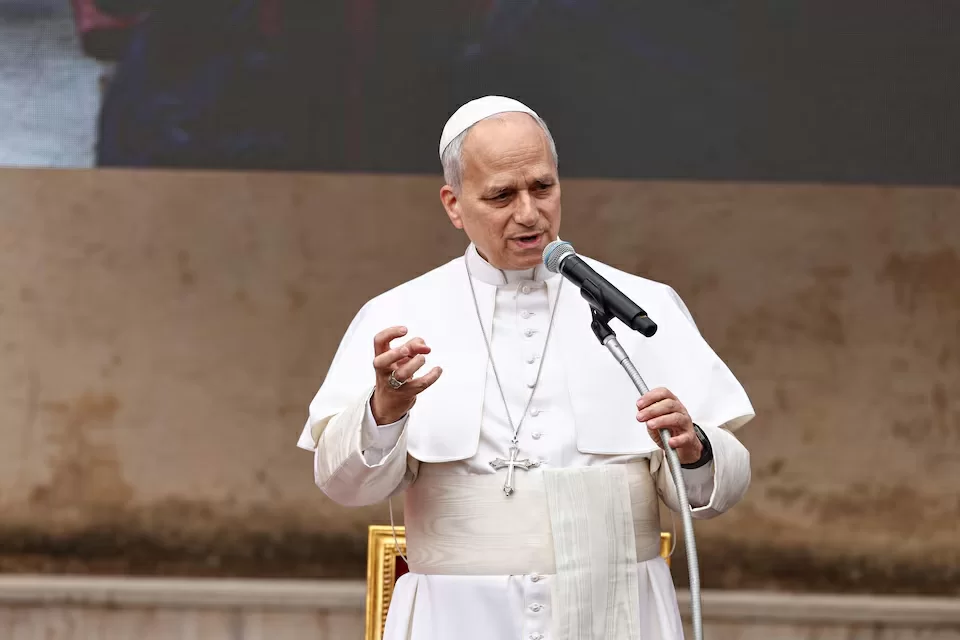
    Suriname’s aviation sector has secured committed international backing for comprehensive regulatory modernization and technical capacity building. Fabio Rabbani, Regional Director of the International Civil Aviation Organization (ICAO), confirmed this strategic support following high-level consultations with President Jennifer Simons on Thursday.

    The pivotal meeting addressed critical challenges facing the nation’s aviation infrastructure and outlined necessary measures to ensure safety standards, sustainable development, and sectoral growth. ICAO has pledged to guide Suriname through enhancing regulatory frameworks, safety protocols, and operational capabilities.

    Rabbani emphasized that his mission specifically aimed to assess governmental commitment at the highest levels. ‘I came to Suriname to hear and understand the leadership’s vision and level of commitment regarding safety and capacity within Surinamese airport management,’ Rabbani stated. He expressed confidence in the sector’s prospects for stable expansion, noting that ICAO’s technical assistance remains ‘structurally available,’ according to Suriname’s Communication Service.

    Central to the agreements reached was Suriname’s commitment to establishing both formal and informal collaborative channels with ICAO. Priority areas include updating the Civil Aviation Safety Act, reinforcing oversight mechanisms, and implementing sustainable aviation solutions.

    The high-profile meeting included Minister Raymond Landveld of Transport, Communication and Tourism, NV Airport Management Director Vijay Chotkan, CASAS Director Brian De Souza, Aviation Department Head Cindy Toemin, and Presidential Advisor Faizel Baarn.

    Baarn highlighted the sector’s strategic significance: ‘Aviation serves as the national gateway. With oil and gas development progressing, increasingly more processes will depend on aviation infrastructure.’

    Despite acknowledging structural challenges including financing constraints, acquisition of modern equipment, and training qualified personnel—processes requiring multi-year development—Baarn expressed optimism due to governmental dedication and President Simons’ persistent advocacy.

    Tangible outcomes are anticipated within six months, including parliamentary consideration of the new aviation legislation in the National Assembly.

  • Zonder Constitutioneel Hof staan mensenrechten op losse schroeven

    Zonder Constitutioneel Hof staan mensenrechten op losse schroeven

    In a stark warning issued on International Human Rights Day, prominent human rights attorney Milton Castelen has declared that Suriname’s fundamental rights protection system faces severe jeopardy due to the continued inactivity of the nation’s Constitutional Court. The court has remained non-operational since May 7, 2025, after both the government and National Assembly failed to appoint new members in a timely manner.

    Castelen emphasized that this year’s UN theme, “Human Rights, Our Every Day Essentials,” precisely highlights what is currently failing in Suriname. While human rights should form the foundation of daily life, they are often treated as abstract legal concepts rather than practical necessities affecting education, healthcare, equal treatment, and legal protection.

    The human rights advocate detailed how Suriname continues to struggle with inclusivity, with persistent exclusion occurring across society based on disability, gender, gender identity, sexual orientation, political affiliation, origin, residence, or ethnicity. These systemic issues regularly result in violations of rights to equal treatment, education, healthcare, and personal freedom through legislation, policy, or daily practice.

    “When these rights are compromised, lives are directly impacted,” Castelen stated. “Human rights are not luxury topics; they determine the quality of our existence.”

    The absence of a functioning Constitutional Court has created a critical gap in Suriname’s legal system, as the institution plays a vital role in reviewing laws and decisions against constitutional provisions and international human rights treaties. Citizens currently have no recourse to challenge legislation or administrative decisions, representing a direct erosion of the rule of law.

    While human rights protection constitutes a shared responsibility among government, parliament, judiciary, civil organizations, media, and citizens, Castelen noted that the court’s prolonged inactivity has shifted this balance. With state institutions failing their fundamental duties, NGOs, human rights organizations, and the press now carry an increasingly heavy burden to raise awareness and pressure the government into action.

    Castelen characterized International Human Rights Day as “a serious wake-up call” for Suriname, urgently calling upon the government and National Assembly to immediately complete the appointment process for the Constitutional Court. “Human rights constitute our daily living conditions,” he concluded. “Every day that the Constitutional Court remains inactive, the foundation of our society is further undermined.”