标签: Suriname

苏里南

  • Hofpresident Rasoelbaks geïnformeerd over opname derde instantie in Grondwet

    Hofpresident Rasoelbaks geïnformeerd over opname derde instantie in Grondwet

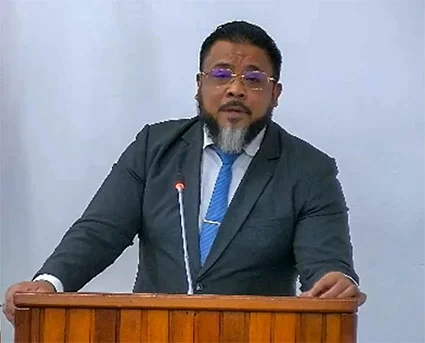
    Suriname’s judicial landscape may undergo significant transformation as six parliamentarians have submitted initiative proposals to establish a third-tier cassation court within the country’s legal system. The proposed constitutional amendments, introduced on Thursday, aim to create a Supreme Court or similar high judicial authority, though the current Court of Justice President Iwan Rasoelbaks confirms his institution hasn’t been formally consulted in the legislative drafting process.

    President Rasoelbaks clarified that while National Assembly President Jennifer Simons informed him about plans to constitutionally anchor the third instance, substantial consultations regarding implementation details would occur later through secondary regulations. The Court of Justice will thoroughly examine the proposed legislation once formally submitted for judicial review, after which lawmakers will receive comprehensive advisory input.

    The judicial leader emphasized the court’s longstanding support for cassation jurisdiction, noting that such reform would enhance legal development and broaden societal legal protection. For several years, the Court of Justice has independently researched possibilities through a specialized task force comprising local and international experts. This think tank produced two comprehensive options presented earlier this month to both the National Assembly and the President, with reports publicly available on the court’s website for transparent public access.

    The proposed models include conditional accession to the Caribbean Court of Justice’s appellate jurisdiction with a civil law chamber, or alternatively, establishing a domestic Supreme Court grounded in civil law tradition. Rasoelbaks stressed that any future cassation court wouldn’t function as a factual instance but would focus exclusively on reviewing proper legal application, while the Court of Justice would maintain its position as Suriname’s highest factual jurisdiction.

    Three of the four submitted initiatives concern constitutional modifications to judicial organization, with the fourth addressing the judicial branch’s legal status. This separation of competencies between factual and cassation jurisdictions aims to foster credible, thorough jurisprudence and legal evolution, according to the Court President.

  • Nieuwe wet moet Surinaams natuurbeheer moderniseren

    Nieuwe wet moet Surinaams natuurbeheer moderniseren

    Suriname’s parliamentary coalition has introduced groundbreaking legislation aimed at fundamentally transforming the nation’s approach to environmental protection and resource management. The ‘Sustainable Nature Management’ initiative law represents a comprehensive overhaul of the country’s outdated 1954 Nature Protection Act, addressing contemporary ecological challenges while acknowledging economic realities.

    With approximately 93% forest coverage and ranking among the world’s most biodiverse nations, Suriname faces critical decisions regarding conservation amidst growing economic pressures. While internationally recognized as a High Forest Low Deforestation country, recent data reveals deforestation rates are climbing to approximately 0.06% annually. Mining operations account for the majority (73%) of forest loss, followed by infrastructure development and urbanization—trends that not only cause ecological damage but directly impact indigenous and tribal communities through habitat disruption and land use conflicts.

    The proposed legislation shifts from strict conservation toward sustainable management principles, recognizing nature as both ecological treasure and economic resource under stringent conditions. The core philosophy establishes that those who benefit from nature must contribute to its preservation. Innovative mechanisms include nature tourism concessions, payments for ecosystem services, and provisions for designating private lands as protected areas—all aimed at stimulating green growth while reducing economic dependence on oil and gold.

    A cornerstone of the new framework is the enhanced role of the National Environmental Authority (NMA), which will coordinate nature management, oversee protected areas, supervise concessions, and enforce regulations. The Environmental Fund will be expanded to finance nature management projects accessible to government agencies, local communities, and private managers alike.

    Perhaps the most transformative aspect is the formal incorporation of the Free, Prior and Informed Consent (FPIC) principle, requiring explicit approval from indigenous and tribal communities for protected areas, buffer zones, or concessions within their territories. The law further recognizes traditional knowledge and enables communities to submit proposals for independently managed protected areas, elevating their role from stakeholders to full partners in environmental stewardship.

    Aligned with IUCN guidelines and international biodiversity treaties, the legislation introduces modern enforcement mechanisms including administrative coercion, fines, and criminal sanctions for serious violations. It explicitly grants citizens and organizations access to objection and appeal procedures against NMA decisions, strengthening legal protection and transparency.

    This legislative initiative represents Suriname’s attempt to solidify its international reputation as a forest-rich biodiversity haven while promising greater participation, enhanced protection, and the integration of conservation with economic development. Its ultimate success will depend on implementation factors including adequate capacity, political will, and genuine community engagement—determining whether it becomes a paper reform or a foundational pillar of Suriname’s future environmental policy.

  • Henk ten Cate nieuwe bondscoach nationale herenselectie

    Henk ten Cate nieuwe bondscoach nationale herenselectie

    The Surinamese Football Association (SVB) has officially announced the appointment of Dutch manager Henk ten Cate as the new head coach of the men’s national team. This strategic decision positions the experienced international manager to lead Suriname through the critical World Cup qualifying play-offs scheduled for March 2026.

    Ten Cate brings extensive international coaching credentials to the role, having previously worked with top European clubs including Barcelona, Chelsea, and Ajax. His appointment signals SVB’s commitment to leveraging global expertise as Suriname pursues qualification for the 2026 FIFA World Cup.

    According to the football association, Ten Cate’s tactical acumen and leadership qualities align perfectly with the organization’s ambition to elevate the national team’s competitive level. SVB officials expressed confidence that his proven track record in high-pressure environments will optimally prepare the squad for their upcoming challenges.

    General Manager Brian Tevreden will collaborate closely with Ten Cate in the coming weeks to finalize squad selection and develop a comprehensive preparation program ahead of the decisive playoff matches. The technical staff will also be expanded with additional assistant coaches to strengthen the support system around the national team.

    This appointment represents a significant milestone in Surinamese football as the nation seeks to qualify for its first World Cup tournament. The March 2026 playoffs represent the final hurdle in Suriname’s journey to potentially secure a place in global football’s premier competition.

  • Initiatiefwet: ‘muilkorfartikelen’ schrappen uit strafrecht, vrije meningsuiting centraal

    Initiatiefwet: ‘muilkorfartikelen’ schrappen uit strafrecht, vrije meningsuiting centraal

    A landmark legislative initiative currently before Suriname’s National Assembly proposes the comprehensive elimination of eight controversial articles from the country’s Criminal Code. Submitted in March 2022 by assembly members Ebu Jones and Tashana Lôsche, the bill targets provisions widely criticized as suppressing free speech and political dissent.

    The targeted statutes—Articles 152, 153, 154, 157, 158, 159, 173, and 174—criminalize various forms of expression including insult, undermining state authority, and criticism of public officials. Proponents argue these colonial-era provisions fundamentally contradict both Suriname’s constitutional free speech protections under Article 19 and its international human rights commitments, particularly the American Convention on Human Rights and the Universal Declaration of Human Rights.

    In their explanatory memorandum, the legislators characterize freedom of expression as the ‘cornerstone of a free and democratic society,’ asserting that without robust protections for critical speech, genuine democratic governance remains unattainable. The proposed reforms aim to align Suriname’s legal framework with its democratic aspirations by preventing the criminal justice system from being weaponized against political opponents or dissenters.

    Civil society organizations including the Surinamese Association of Journalists have long documented the chilling effect these provisions exert on public discourse. Media professionals, activists, and ordinary citizens reportedly self-censor due to fears of prosecution, particularly during periods of political tension. The legislation’s prolonged stagnation since March 2022 raises questions about parliamentary commitment to fundamental rights reform amid ongoing national debates about democratic renewal and rule of law.

    If adopted, the law would take immediate effect upon promulgation, marking a historic shift toward a legal system that protects rather than punishes free expression. The Assembly now faces a defining choice: embrace reforms befitting a modern democracy or maintain a legal framework that keeps free expression under perpetual threat of criminal prosecution.

  • Aanpak illegale goudwinning Brownsberg grote uitdaging voor regering

    Aanpak illegale goudwinning Brownsberg grote uitdaging voor regering

    Surinamese authorities are grappling with persistent illegal gold mining operations within the protected confines of Brownsberg Nature Park, acknowledging the complex challenge without immediate solutions. President Jennifer Simons addressed journalists during a Friday press conference, revealing that combating these activities proves particularly difficult as perpetrators “believe they are above the law.”

    While recognizing that gold extraction will continue in the broader Brownsberg region, Simons emphasized that such operations must remain outside the park’s official boundaries. The government has scheduled comprehensive dialogues for the coming week involving multiple stakeholders, including various ministries, military and police representatives, the Nature Conservation Foundation Suriname (Stinasu), and non-governmental organizations.

    This environmental crisis spans over two decades, with the President indicating the problem extends beyond mere gold extraction, though she refrained from identifying specific individuals or groups involved in these unlawful practices. Large-scale deforestation caused by both artisanal and industrial mining operations has significantly damaged the protected ecosystem.

    Minister of Natural Resources David Abiamofo reported increased government presence in the area during November 6-10, resulting in the identification of illegal operators and confiscation of unauthorized equipment through coordinated efforts with local law enforcement. The minister advocates establishing a permanent settlement within the park to enhance security measures, with ongoing discussions currently underway with Stinasu and other relevant parties.

    President Simons supports regulated gold mining outside protected areas while stressing the need for improved organization and increased state revenue generation from Brownsberg’s natural resources.

  • Recensie: Tomas Ross: Nacht over Paramaribo

    Recensie: Tomas Ross: Nacht over Paramaribo

    Dutch author Tomas Ross, pseudonym of Willem Hogendoorn, reaffirms his status as a master of the ‘faction’ genre with his latest novel ‘Night Over Paramaribo.’ This gripping 460-page thriller delivers both heart-pounding suspense and a penetrating examination of Suriname’s complex history and its intricate ties with the Netherlands.

    The narrative boldly incorporates real political figures including former Surinamese president Desi Bouterse and his wife Ingrid, current president Chan Santokhi and first lady Mellisa, alongside Dutch politicians such as Hans van Mierlo and even Prince Bernhard. Ross presents their achievements and flaws with unflinching candor.

    At the core of the plot lies a provocative question: Why did the Netherlands never attempt to arrest Bouterse despite multiple opportunities? The answer points toward potential Dutch involvement in the 1980 coup, referencing Colonel Valk and a secret document known as Operation Black Tulip. This document, allegedly held by Bouterse in a secure box obtained from a former Dutch embassy employee, becomes the story’s central MacGuffin—a potential tool for blackmailing the Dutch government.

    Following Bouterse’s death in late 2024, the box is stolen from his villa, triggering an international manhunt involving spies, secret agents, and rival factions. The action moves dynamically from Suriname to various European locations, featuring brutal confrontations across the Netherlands, France, and Spain.

    The final act returns to Suriname, where Bouterse’s loyalists, the Unity Council, prepare a new coup dubbed Operation Silver Arrow. Protagonists Lex Hansen and Suzy Ling find themselves in a desperate race against time as they hurry toward Paramaribo, coinciding with a multinational military exercise involving Suriname, the Netherlands, the United States, and France—which Ross ingeniously portrays as the coup’s actual execution.

    While grounded in historical fact, Ross skillfully incorporates fictional elements, including a car rental company in Snesi Kondre and the improbable rental of a motor yacht in an inland village for navigating the treacherous Marowijne River. This deliberate blending of fact and imagination enhances the story’s intrigue.

    Ross demonstrates exceptional narrative pace and precision throughout. His vivid depictions of Paramaribo’s atmosphere, the Surinamese jungle, and European urban landscapes create an immersive reading experience. The potent combination of political intrigue, espionage, and personal drama establishes ‘Night Over Paramaribo’ as a standout thriller that maintains relentless tension despite its complex cast of characters.

  • STS Nickerie naar Georgetown voor internationaal scholenvoetbal

    STS Nickerie naar Georgetown voor internationaal scholenvoetbal

    The Surinamese Technical School (STS) from Nickerie district has commenced its journey to Guyana as Suriname’s official representative at the prestigious KFC Goodwill School Football Tournament 2025. This international U18 competition, scheduled from December 14-21 in Georgetown, marks the third consecutive year of Surinamese participation in the regional sporting event.

    Strategic selection positioned STS Nickerie as the national delegate due to both their athletic merit and geographical significance. The team earned this distinguished opportunity by securing the district championship title in Nickerie, which shares a border with host nation Guyana. Organized by the Petra Organization, the tournament stands as one of the Caribbean’s most respected scholastic football competitions.

    The Surinamese squad, comprising 19 players under 18 years old, will compete against elite youth teams from multiple nations including Guyana, Jamaica, Brazil, and the Bahamas. Under the guidance of head coach Michel Dors and assistant coach Razack Lorenzo, the students aim to demonstrate their athletic prowess on an international platform.

    This initiative has been orchestrated by the Foundation School Sports Federation Suriname, an operational branch of the Ministry of Youth Development and Sports (JOS). The participation aligns with Suriname’s national policy to enhance youth sports development through international exposure, providing young athletes with competitive opportunities that foster both personal growth and national pride.

  • Coalitieleden willen verbod op kansspelen

    Coalitieleden willen verbod op kansspelen

    In a landmark decision, Suriname’s National Assembly is poised to implement comprehensive legislation prohibiting all forms of online monetary gambling activities. The coalition government has introduced the ‘Prohibition of Online Games of Chance and Digital Gambling Prevention Act,’ marking a significant shift in the nation’s approach to digital entertainment regulation.

    The legislation emerges from growing concerns about the proliferation of mobile gambling services, social media betting platforms, and international gambling websites operating without regulatory oversight. Parliamentarians describe the measure as an essential intervention to protect citizens, particularly youth and socially vulnerable groups, from gambling addiction, financial exploitation, and money laundering schemes.

    Suriname’s existing gambling regulations, including the 1939 Hazard Games Act and 1960 Lottery Act, were drafted during the pre-internet era, creating substantial legal gaps that foreign and anonymous operators have exploited to target Surinamese players without restriction.

    The prohibition is absolute and applies equally to providers and participants. Surinamese citizens accessing offshore gambling platforms through VPNs, proxies, or other circumvention tools will face criminal charges. Telecommunications providers including Telesur and Digicel must implement real-time gambling traffic detection and blocking systems based on standards established by Suriname’s Telecommunication Authority (TAS).

    The law extends beyond gambling participation to encompass all promotional activities. Advertising, sponsorship arrangements, influencer marketing, and digital promotion of gambling services are strictly prohibited. Financial institutions, payment platforms, and fintech companies must decline transactions associated with digital gambling activities, with the Central Bank of Suriname developing detailed detection guidelines.

    A novel digital enforcement mechanism requires nationwide blocking orders within 24 hours of TAS identifying gambling websites, applications, or data streams. The Minister of Justice retains authority to demand additional measures, including application removal from digital marketplaces and termination of transaction pathways.

    Four institutions will share oversight responsibilities: the Gaming Control Board Suriname (coordination), Central Bank of Suriname (financial flows), TAS (technical detection and blocking), and Public Prosecution Service (criminal enforcement).

    This legislative approach aligns Suriname with international trends, referencing restrictive measures implemented in India, Trinidad & Tobago, and the Netherlands. The government emphasizes the measure’s consistency with Caribbean Financial Action Task Force recommendations and international anti-money laundering guidelines.

    Violators face severe penalties including fines up to SRD 10 million and imprisonment. Corporate entities risk minimum fines of SRD 5 million, potential temporary or permanent closure, and 50% penalty enhancements for repeat offenses. Prosecution will utilize existing procedures under the Economic Offenses Act.

    The legislation specifically exempts educational and recreational games without monetary stakes. Loot boxes are prohibited only when virtual items possess economic tradability, preventing commercial games from establishing profit-driven gambling dynamics.

    Beyond protectionist measures, the law represents a modernization of Suriname’s digital legal framework, aiming to enhance consumer protection, combat cybercrime, and strengthen national financial integrity.

  • Officiële erkenning inheemse volken als wet ingediend bij DNA

    Officiële erkenning inheemse volken als wet ingediend bij DNA

    Lawmakers from Suriname’s governing coalition have introduced landmark legislation to formally recognize indigenous communities as the nation’s original inhabitants through constitutional amendment. The proposed bill, submitted to the National Assembly, establishes that the presence and profound connection of indigenous peoples with the land constitute an inseparable component of Suriname’s national identity and historical narrative.

    According to the explanatory memorandum accompanying the legislation, this recognition transcends symbolic significance, serving as a constitutional anchor for protecting and promoting indigenous rights. These encompass territorial claims, linguistic preservation, cultural heritage, and self-determination principles that have previously lacked explicit constitutional foundation.

    The initiative addresses a decades-long legal and societal void wherein Suriname’s Constitution contained no specific provisions regarding the status of indigenous populations, despite their historically undisputed presence and role in nation-building. The proposed constitutional modification aligns with international treaties and standards binding to Suriname, including the International Covenant on Civil and Political Rights, the Universal Declaration of Human Rights, the American Convention on Human Rights, and the UN Declaration on the Rights of Indigenous Peoples.

    This constitutional recognition will provide directional guidance for future legislation, policy development, and judicial interpretations across multiple domains: land rights protocols, consultation mechanisms for major development projects, native-language education systems, and cultural preservation frameworks. The government acknowledges that Suriname has been inhabited since time immemorial by Kalina, Lokono, Trio, Wayana, Akurio, and Warao peoples, whose cultural traditions, community structures, and spiritual relationships with natural environments form essential elements of national identity, despite their continued marginalization.

    By embedding this recognition within the Constitution’s preamble, the measure establishes a robust legal foundation for subsequent reforms, including potential legislation governing collective land rights—a longstanding unresolved issue. Legislators characterize the initiative as both a necessary and equitable step that delivers historical validation while harmonizing domestic legal frameworks with international obligations. The proposal further establishes groundwork for a more inclusive society and contributes to national reconciliation within a post-colonial context.

  • Staatsolie brengt petroleumkennis Suriname samen in nieuwe GeoAtlas

    Staatsolie brengt petroleumkennis Suriname samen in nieuwe GeoAtlas

    Suriname’s state-owned energy company Staatsolie has unveiled a comprehensive geological publication that consolidates decades of petroleum research into a single authoritative reference. The GeoAtlas of Suriname represents a monumental achievement in documenting the nation’s oil and gas potential, offering stakeholders an integrated overview of the country’s petroleum geology.

    During a ceremonial presentation on Friday, President Jennifer Simons received the first printed copy of the groundbreaking publication. In a symbolic gesture, the president then presented an edition to Sirahmpersad Eduard ‘Eddie’ Jharap, the founding director and visionary behind Staatsolie, to whom the atlas is dedicated.

    The GeoAtlas stands as a tribute to Jharap’s pioneering work as both geologist and industry architect. Under his leadership from Staatsolie’s establishment on December 13, 1980, until his retirement in 2005, the company evolved from an ambitious concept into an integrated national oil enterprise with international partnerships. His guiding philosophy of ‘Confidence in One’s Own Abilities’ continues to shape the company’s operational ethos.

    This comprehensive geological compilation resulted from the collaborative efforts of multiple generations of earth scientists inspired by Jharap’s vision. The research team synthesized over a century of exploration data to create detailed descriptions of Suriname’s subsurface structures and their development. The publication presents cutting-edge insights into the presence and potential of both onshore and offshore oil and gas reserves.

    According to Staatsolie officials, the GeoAtlas delivers both scientific significance and practical utility. Investors gain access to a clear, integrated perspective on Suriname’s petroleum geology within a single document, while the accessible language makes it suitable for broader audiences interested in the nation’s natural resources.

    The digital version of the GeoAtlas of Suriname is now available free of charge through Staatsolie’s official website, democratizing access to this valuable geological knowledge.