标签: Suriname

苏里南

  • Verspreide regenbuien vooral in de middag

    Verspreide regenbuien vooral in de middag

    Meteorological conditions across the region are exhibiting classic rainy season characteristics, featuring warm and humid atmospheric conditions with daytime temperatures reaching 29-31°C. Evening and overnight periods will provide modest relief as mercury levels drop to approximately 23-24°C.

    The day will commence with intermittent sunshine and light cloud cover across many areas. As the morning progresses into afternoon hours, cloud density is forecast to intensify significantly. Scattered rainfall and thunderstorm activity is predicted to develop, particularly across inland regions and southern territories. Coastal zones will experience slightly reduced precipitation probability, though localized showers remain a distinct possibility.

    Moderate northeasterly winds will periodically deliver refreshing breezes, though high humidity levels may still create muggy and oppressive conditions. During precipitation events, winds may become gusty and unpredictable, with temporary visibility reduction occurring in affected areas. The combination of thermal conditions and atmospheric moisture creates characteristic tropical discomfort despite occasional wind-driven cooling effects.

  • VS lanceert plan voor stabilisatie en oliecontrole in Venezuela

    VS lanceert plan voor stabilisatie en oliecontrole in Venezuela

    The United States has formally articulated a comprehensive three-phase strategy for Venezuela focused on stabilization, economic recovery, and political transition, according to Secretary of State Marco Rubio. This development follows Saturday’s controversial capture of Venezuelan leader Nicolás Maduro by American forces.

    The blueprint commences with establishing stability through interim authorities collaborating closely with Washington. Subsequently, American oil corporations will receive guaranteed access during the reconstruction phase, ultimately transitioning to a democratically elected government chosen by the Venezuelan people.

    President Donald Trump issued stern warnings of potential additional military interventions should emerging leadership figures from Maduro’s circle resist American demands, which predominantly center on securing Venezuelan oil resources. The administration aims to refine and market up to 50 million barrels of Venezuelan crude, with US forces continuing seizure operations against oil tankers linked to Venezuela.

    Secretary Rubio emphasized Washington’s substantial control over the interim government, asserting that oil revenue would be meticulously managed through US-controlled accounts to prevent corruption and benefit Venezuelan citizens.

    The initiative has encountered sharp bipartisan criticism. Democrats have condemned the approach as ‘oil kidnapping’ and denounced the lack of transparency. Former House Speaker Nancy Pelosi questioned the absence of public hearings regarding operational costs and motivations, while Senator Chris Murphy characterized the plan as ‘insane’ and condemned it as a violent oil seizure scheme.

    Republican dissent emerged concurrently, with Representative Don Bacon stressing the necessity of installing legitimately elected leadership and cautioning that excessive focus on oil could undermine broader American objectives.

    Energy Secretary Chris Wright highlighted the critical importance of controlling Venezuela’s oil market to stabilize the economy and rebuild the energy sector. The strategy involves initially marketing stored oil reserves followed by future production sales, with revenues administered through American-supervised accounts. Wright confirmed ongoing discussions with US oil companies regarding their participation in Venezuela’s long-term production restoration.

    Venezuela possesses the world’s largest oil reserves yet suffers from chronically low production due to prolonged mismanagement and investment deficits. Wright anticipates short-term production increases through advanced technology and equipment, though full recovery to historical production levels would require years.

    Washington recently announced a $2 billion crude oil export agreement with Caracas, interpreted as Venezuelan officials acquiescing to Trump’s demands under threat of further military action. American refining companies responded favorably, with stock appreciations observed in major corporations including Marathon Petroleum, Phillips 66, and Valero Energy.

    The White House has scheduled a Friday meeting with executives from ExxonMobil, ConocoPhillips, and Chevron regarding their anticipated involvement in the reconstruction process, though these corporations remain reticent in public statements.

    The US proposal has elicited mixed global reactions, raising concerns about sovereignty violations, economic interests, and Venezuela’s future trajectory. Coming developments will prove decisive for both Venezuela’s stability and international stakeholders’ regional influence.

  • Column: Regelmatig wandelen

    Column: Regelmatig wandelen

    Thousands of Surinamese citizens from all age groups undertook an extraordinary predawn pilgrimage across the Wijdenboschbridge on January 8th, transforming the infrastructure project into the nation’s largest participatory fitness event. The annual walking tradition saw participants converging on Commewijne as early as 5:00 AM, with all attendees required to commence their journey by 7:00 AM, demonstrating remarkable dedication to this increasingly popular wellness ritual.

    This massive turnout reveals a substantial public demand for accessible physical activities that current offerings fail to satisfy. While the bridge walk has successfully mobilized citizens who might otherwise remain sedentary, its current format as a standalone annual event represents a missed opportunity for broader public health advancement.

    Organizational stakeholders, particularly the national athletics association, could leverage this demonstrated enthusiasm to develop structured movement initiatives. Practical constraints understandably prevent frequent bridge closures, but alternative approaches could replicate the event’s success through decentralized community-based programs.

    A proposed framework suggests regular neighborhood walking events organized at the ressort level, complemented by quarterly district-wide gatherings. Such structured programming would provide ongoing mental health benefits through stress reduction while simultaneously addressing Suriname’s growing obesity concerns.

    The consistent thousands-strong participation indicates deep-seated public appetite for organized physical activity. Rather than relying solely on government coordination, neighborhood associations and non-governmental organizations could spearhead these initiatives, potentially transforming a singular annual phenomenon into sustained movement supporting national physical and mental wellbeing.

  • Hanisha Jairam nieuwe Surinaamse ambassadeur in New Delhi

    Hanisha Jairam nieuwe Surinaamse ambassadeur in New Delhi

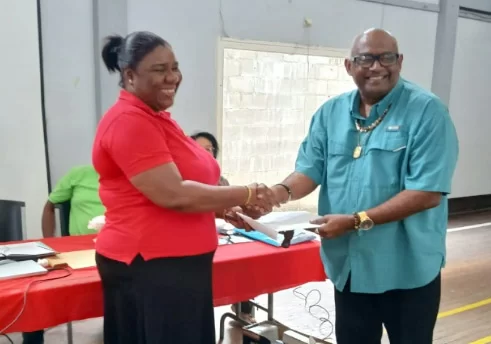
    The Republic of Suriname has designated Hanisha Jairam as its next extraordinary and plenipotentiary ambassador to New Delhi, India. The Ministry of Foreign Affairs, International Business, and International Cooperation has formally submitted the necessary documentation to Indian authorities to initiate the agrément process—a mandatory diplomatic procedure required before the appointment can be finalized.

    Jairam, a member of the National Democratic Party (NDP), will succeed current ambassador Arun Hardien in representing Surinamese interests in India. She brings substantial administrative and policy expertise from her extensive career in government and educational sectors. Currently serving as district administrator at the Ministry of Regional Development, Jairam has previously held roles as an educator and board member within various organizations.

    Her academic qualifications include a Master’s degree in Business Administration with a finance specialization, complemented by additional training in policy development, leadership, and governance. Jairam also previously served as president-commissioner at Canawaima, further demonstrating her executive capabilities.

    Upon successful completion of the agrément process with Indian authorities, Jairam will be officially sworn in and commence her diplomatic duties as Suriname’s chief representative in India, strengthening bilateral relations between the two nations.

  • VS neemt Russische tanker met Venezolaanse banden in beslag

    VS neemt Russische tanker met Venezolaanse banden in beslag

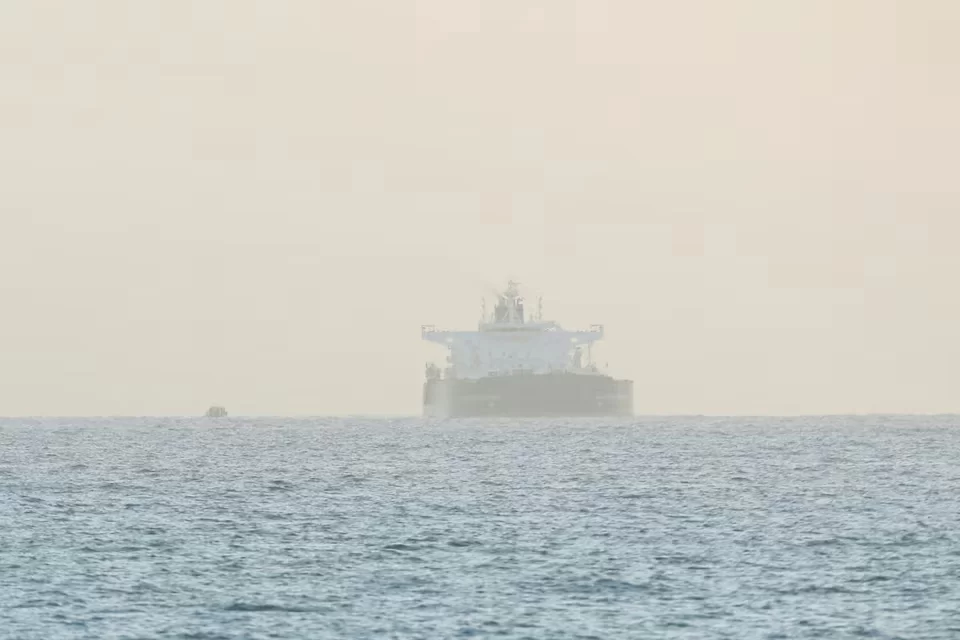
    In a significant escalation of maritime tensions, the United States has seized the Russian-flagged tanker Marinera (formerly known as Bella-1) in international waters. This decisive action forms part of President Donald Trump’s aggressive strategy to regulate oil supply across the Americas and pressure Venezuela’s socialist government toward alignment with US interests.

    The seizure occurred following a dramatic two-week pursuit across the Atlantic Ocean, during which the vessel was tracked by US Coast Guard and military assets. The operation gained additional complexity as Russian submarines and naval vessels were observed in the vicinity, creating a tense standoff between the world powers.

    Russia has issued a vehement diplomatic response, condemning the seizure as a gross violation of international law and characterizing it as an unlawful, politically motivated act. The Kremlin has demanded immediate clarification from Washington and warned that such actions risk significantly heightening international tensions, particularly given existing strains over the Ukraine conflict.

    This incident represents the latest development in America’s sustained pressure campaign against Venezuela since the deposition of Nicolás Maduro. US authorities have systematically blocked sanctioned vessels from entering or exiting Venezuelan waters, targeting the OPEC member’s crucial oil exports.

    The Marinera had previously attracted attention last month when it refused boarding attempts and subsequently reflagged under Russian registry. In a parallel operation, US Coast Guard units intercepted another fully-loaded tanker, the Sophia, with Venezuelan connections near Northeast South America—marking the fourth such interception in recent weeks.

    Russian state broadcaster RT aired footage showing US helicopters circling the Marinera, reporting apparent attempts to board the sanctioned vessel, which was reportedly empty at the time of seizure.

  • VS grijpt Venezolaanse olie, wereld reageert scherp

    VS grijpt Venezolaanse olie, wereld reageert scherp

    In a significant geopolitical shift, the Trump administration has secured an agreement to redirect Venezuela’s oil shipments originally destined for China, marking a dramatic turnaround in Washington’s approach to Caracas. The deal, which involves importing and refining up to $2 billion worth of previously sanctioned Venezuelan crude, represents President Trump’s strategic maneuver to gain control over the South American nation’s substantial oil reserves.

    While Nicolás Maduro’s socialist allies maintain power in Venezuela, interim President Delcy Rodriguez is navigating a delicate balance between condemning Maduro’s recent abduction and initiating cooperation with Washington under Trump’s pressure. Sources within state oil company PDVSA indicate negotiations have advanced significantly, though Caracas has yet to officially confirm the export agreement.

    The United States announced plans to process and sell approximately 50 million barrels of oil previously immobilized by American sanctions. President Trump declared via Twitter that proceeds would remain under his administration’s control, purportedly benefiting both the Venezuelan people and US interests. This anticipated supply increase triggered an immediate market response, driving crude prices down by approximately 1%.

    China has vehemently condemned Washington’s actions, with Foreign Ministry spokespersons labeling the US a ‘bully’ and accusing it of gross violations of international law and Venezuelan sovereignty. As last year’s importer of nearly 390,000 daily barrels of Venezuelan oil, China is now reportedly considering increased imports from Iran and Russia according to trading sources.

    The US military intervention in Venezuela, which targeted Maduro’s capture, has drawn international condemnation from Russia, China, and other Venezuelan allies. Washington’s partners express particular concern over the precedent of abducting a sitting head of state, especially amid Trump’s additional threats toward Mexico and Greenland.

    Recent operations in Caracas resulted in dozens of casualties, including 23 Venezuelan soldiers and 32 members of Cuban military and intelligence services. Maduro, who has ruled since 2013, denied drug trafficking charges in a US court Monday while maintaining his claim as Venezuela’s legitimate president.

    Despite ousting Maduro, the US appears temporarily prioritizing cooperation with his senior allies to ensure stability, focusing particularly on revitalizing the oil industry through American corporate involvement. Political reforms and prisoner releases seem secondary concerns for now.

    Venezuelan opposition leader María Corina Machado, currently in exile, seeks to return for what she believes would be a victorious free election. Meanwhile, Washington warns high-ranking Maduro-era officials including stubborn Interior Minister Diosdado Cabello and Defense Minister Vladimir Padrino, both under US sanctions and criminal prosecution.

    The US is additionally pressuring Venezuela to expel advisors from China, Russia, Cuba, and Iran, while Russia has deployed naval vessels to escort an aging oil tanker attempting to circumvent American blockade measures.

    Recent Atlantic Ocean confrontations saw the US Coast Guard attempting to seize a Venezuela-related oil tanker after extended pursuit, with Russian naval ships operating nearby—highlighting ongoing tensions surrounding sanction enforcement and control over Venezuelan oil exports.

  • Toename griepgevallen: ministerie roept op tot extra waakzaamheid

    Toename griepgevallen: ministerie roept op tot extra waakzaamheid

    Health authorities in Suriname have sounded the alarm over a significant surge in influenza cases across the nation. The Ministry of Health, Welfare, and Labor (VW&A) has issued an urgent public health advisory calling for heightened vigilance and strict adherence to preventive measures to curb further viral transmission.

    According to the ministry’s latest assessment, implementing basic yet effective hygiene practices can substantially reduce infection risks. Critical recommendations include frequent handwashing with soap and water, utilizing alcohol-based sanitizers, practicing respiratory etiquette by coughing or sneezing into elbows, and proper disposal of used tissues. The advisory also emphasizes avoiding close contact with individuals displaying flu-like symptoms.

    Citizens experiencing influenza symptoms are urged to remain home and wear face masks when public interaction is unavoidable. The ministry further underscores the importance of maintaining healthy lifestyle practices—adequate rest, balanced nutrition, proper hydration, and regular physical activity—to bolster immune defenses.

    For those already affected, health officials recommend sufficient rest and increased fluid intake including water, tea, and soup. While paracetamol may alleviate fever and pain, aspirin is strongly discouraged for pediatric cases. Maintaining hand hygiene and respiratory etiquette remains crucial even during illness to prevent community spread.

    The ministry specifically advises immediate medical consultation when fever persists beyond three days, respiratory difficulties emerge, severe chest pain develops, or symptoms suddenly worsen. Elderly populations and individuals with chronic health conditions require particular vigilance due to elevated complication risks.

    Emphasizing collective responsibility, the Health Ministry asserts that proactive compliance with preventive measures can significantly mitigate influenza’s societal impact and better protect vulnerable demographic groups during this ongoing outbreak.

  • Veel uitdagingen voor nieuwe rvc van de SMS

    Veel uitdagingen voor nieuwe rvc van de SMS

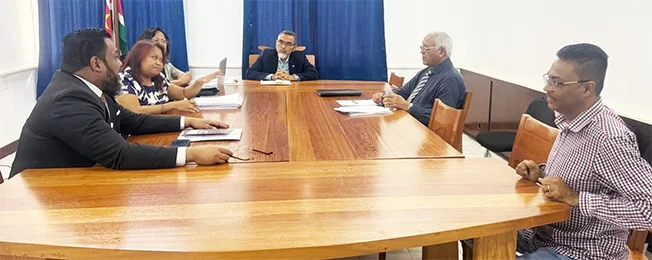
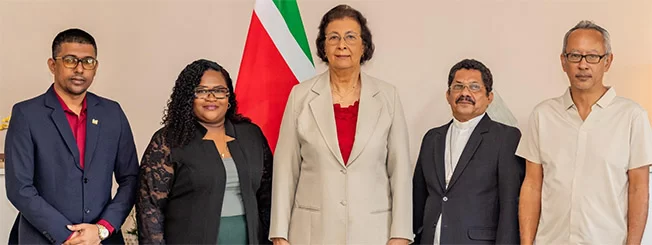
    Suriname’s state-owned Shipping Corporation (SMS) is undergoing a strategic transformation under new leadership, with Transport Minister Raymond Landveld outlining an ambitious vision for the company’s role in the nation’s emerging oil and gas sector. During the official installation of the new Board of Commissioners at the Cabinet of the President on Tuesday, Minister Landveld emphasized the corporation’s shifting focus from traditional vessel operations toward specialized services including bunkering operations for Staatsolie N.V.

    The minister highlighted significant opportunities arising from Suriname’s growing oil and gas developments, noting that maritime transport will play a crucial role in supporting extraction operations. “With increased gas and oil exploitation underway, vessels will become essential transportation assets,” Landveld stated, pointing to the sector’s potential for substantial growth.

    A key development mentioned was the November 2025 agreement between Suriname and French Guiana concerning the ferry La Gabrielle, which currently facilitates cross-border transportation with SMS personnel operating the vessel. Landveld also identified pressing needs for expanded domestic ferry services, particularly between Paramaribo and Meerzorg in Commewijne, where existing smaller ferries struggle to meet commuter demand.

    However, the minister acknowledged significant challenges in vessel acquisition and operational readiness. “Substantial investments are required for cargo transport to drilling platforms,” he noted, referencing aging vessels that demand considerable resources to become service-ready.

    The newly appointed board, led by President-Commissioner Lenie Josafath-Eduards, includes members Richenel Vrieze, Ritesh Khoesial, Charisma Bijlhout, Ajay Piarelal, Ceraïf Petres, and Geving Weeks. Their primary mandates include optimizing financial management and capitalizing on emerging opportunities within the maritime sector.

  • Machado belooft snelle terugkeer en prijst Trump na val Maduro

    Machado belooft snelle terugkeer en prijst Trump na val Maduro

    Venezuela faces a complex political transformation following the dramatic removal of President Nicolás Maduro by US forces. Opposition leader Maria Corina Machado has announced her imminent return to the country, expressing confidence in her movement’s ability to secure overwhelming electoral victory in free elections. The 58-year-old Nobel Peace Prize recipient, who fled Venezuela in October, praised President Donald Trump’s “courageous vision” in dismantling what she termed Maduro’s “narcoterrorist regime.

    Despite these developments, significant uncertainties persist. The Trump administration appears to be pursuing cooperation with interim President Delcy Rodríguez and other high-ranking officials from Maduro’s government—a strategy that has caused disappointment among opposition factions. This approach, reportedly advised by CIA officials, aims to maintain stability during the transition period.

    Machado faces ongoing legal challenges, including investigations for allegedly inciting military rebellion. She has vehemently criticized Rodríguez, accusing her of designing systems of torture, corruption, and drug trafficking while serving as Maduro’s liaison with allies Russia, China, and Iran.

    The economic dimension adds further complexity, with Venezuelan and US officials discussing resuming oil exports to American refineries. Venezuela’s oil sector, possessing the world’s largest reserves of approximately 303 billion barrels of heavy crude, has suffered years of decline due to mismanagement, underinvestment, and sanctions.

    International reactions remain divided. Russia, China, and Venezuela’s regional allies have condemned the intervention—the largest US military action in Latin America since the 1989 Panama invasion. Meanwhile, UN human rights officials warn that the operation sets a concerning precedent that powerful nations may act without international consensus.

    As Venezuelan authorities patrol streets and report military casualties from the operation, the nation stands at a crossroads between potential democratic restoration and continued political instability.

  • OAS-topman Ramdin roept lidstaten op tot gezamenlijke actie rond Venezuela

    OAS-topman Ramdin roept lidstaten op tot gezamenlijke actie rond Venezuela

    WASHINGTON – Organization of American States (OAS) Secretary General Albert Ramdin has issued a compelling call for transformative action regarding Venezuela’s ongoing political crisis. Speaking before the OAS Permanent Council during a special session addressing recent developments in Venezuela, Ramdin emphasized that the regional body must evolve beyond mere declaratory forums into a mechanism for coordinated, principled, and sustained intervention.

    Ramdin articulated that multilateralism and inter-American cooperation have become indispensable in an increasingly complex global landscape. He underscored that the OAS Charter and inter-American legal framework constitute binding obligations rather than voluntary guidelines for member states. The Secretary General asserted that when democratic principles, human rights, and fundamental tenets of international law face erosion, the hemisphere must respond with collective action.

    Expressing profound solidarity with the Venezuelan population, Ramdin characterized support for Venezuela as both a moral imperative and strategic necessity. “A stable, democratic, and prosperous Venezuela serves the interests of all member states,” he declared, emphasizing the inalienable right of Venezuelans to determine their government and leadership through representative democratic processes.

    While advocating for robust engagement, Ramdin cautioned member states against actions that might exacerbate tensions or deepen regional divisions. He highlighted the strength of the inter-American system lies in nations’ ability to collaborate constructively despite divergent political and ideological perspectives.

    The OAS stands prepared to play an active role within its mandate, respecting principles of sovereignty and non-intervention. Ramdin positioned the organization as a potential “honest broker” capable of facilitating dialogue and mediation to reduce tensions and promote peaceful solutions – provided such assistance is requested by member states and Venezuela.

    Additionally, Ramdin confirmed the OAS will maintain its monitoring of Venezuela’s human rights situation and continue publicly identifying violations, with particular attention to political prisoners. He reiterated support for the Inter-American Commission on Human Rights’ request to conduct an on-site visit to Venezuela.

    The Secretary General outlined concrete OAS mechanisms available to support democratic restoration, including facilitating inclusive dialogue among Venezuelan stakeholders, strengthening democratic institutions and rule of law, supporting structural reforms, and assisting with electoral preparation and observation. The organization could also provide support regarding migration challenges and vulnerable populations in coordination with international partners.

    Ramdin concluded with grave concern about recent reports of repression and political persecution, stating that “repression cannot be tolerated anywhere in the hemisphere.” He urged continued collective engagement, open communication, and peaceful lawful solutions benefiting both Venezuela and regional stability.