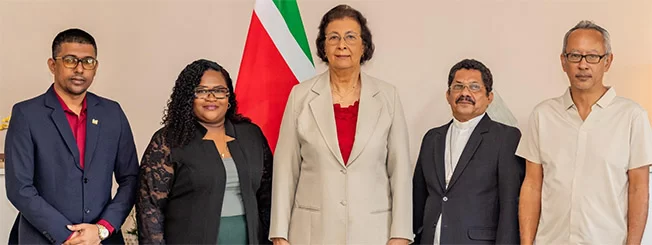
On April 15, Bishop Karel Choennie held a high-stakes meeting with Suriname President Jennifer Simons focused squarely on protecting and preserving the iconic monumental buildings that define Paramaribo’s historic city center. At the core of the discussion was the urgent need for targeted financial assistance to make critical restoration work possible, with Choennie pushing for concrete policy changes including full value-added tax exemptions and relief from other levies for property owners.
The talks covered both the specific ongoing restoration of the Poortgebouw located on Monseigneur Wulfinghstraat and the broader systemic challenges facing the upkeep of the nation’s irreplaceable cultural heritage. Choennie emphasized that preserving these historic landmarks is far more than a cultural mission — it is a significant financial burden that private owners cannot be expected to bear alone. As the leader of the Roman Catholic Church, which ranks as one of the largest private owners of historic real estate in Suriname, Choennie brought firsthand experience of these costs to the meeting.
According to communications officials from the Suriname government, the bishop formally requested that the presidency implement immediate tax relief for active restoration projects. In response, President Simons confirmed that her administration is already developing a comprehensive master plan for the revitalization of Paramaribo’s downtown district. She noted that a special presidential commission tasked with evaluating policy solutions is expected to deliver its final findings within a two-week window. The commission’s recommendations will ultimately form the basis for new legislation or a presidential executive order that will formalize financial support structures for monumental property owners.
Choennie reiterated that these historic buildings are the backbone of Paramaribo’s downtown identity, shaping the unique cultural character that draws residents and visitors alike. “If the government requires owners to keep these buildings in their original historic state, it must match that requirement with meaningful financial support,” the bishop stated during the meeting.
The president’s proposed framework already includes two key support mechanisms: interest-free loans specifically for exterior facade repairs, and low-interest loans for more extensive interior and structural renovations. Choennie expressed clear support for this targeted approach, arguing that it creates tangible opportunities to make Paramaribo’s downtown a more attractive and welcoming public space. “A more beautiful, well-preserved city draws more visitors and investment,” he noted. “Our goal should be to turn the downtown core into a space where residents are eager to gather, walk, and relax.”
Even as the plan moves forward, Choennie drew attention to the unique practical and financial hurdles that come with maintaining A-status monuments — the most historically significant and at-risk properties. The iconic wooden cathedral of Paramaribo, for example, faces exorbitant upkeep costs that far outstrip any potential revenue from commercial use. Structural constraints, elevated fire risk, and limited nearby parking all make it difficult to repurpose these historic spaces for profitable commercial activities.
“The traditional wooden construction and original floor plans make it extremely challenging to install modern infrastructure that businesses require,” Choennie explained. “That inherently limits the revenue potential for owners, even when the building is structurally sound.”
The bishop also highlighted the important work of private-sector and grassroots urban renewal initiatives, which have already purchased and restored dozens of at-risk historic properties across the downtown. Moving forward, he argued, sustained structural collaboration between the national government and private owners is the only way to stop further deterioration of Paramaribo’s historic core and secure its future for coming generations.