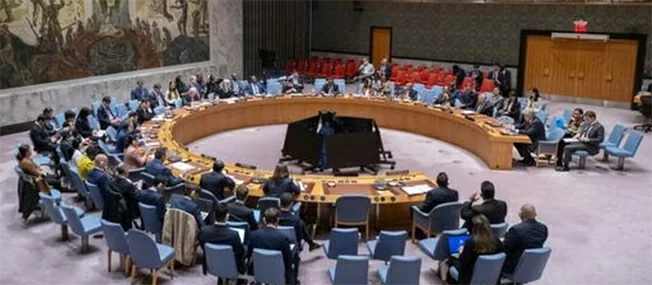
The United Nations (UN) has expressed deep concern over rising tensions in the Caribbean region following recent US military strikes on vessels allegedly involved in drug smuggling. The UN warned that these actions risk destabilizing the region and escalating conflicts with Venezuela. The operations, which resulted in at least 21 fatalities, were justified by the US as ‘anti-drug operations’ conducted in international waters. However, Venezuela vehemently condemned the strikes, declaring a state of emergency and accusing the US of violating international law. The incident has drawn widespread criticism, with Russia and China joining other nations in condemning the US during an emergency session of the UN Security Council. Both countries accused Washington of unlawful military interventions in the Caribbean. The UN has called for restraint from both the US and Venezuela, emphasizing the need for de-escalation, respect for sovereignty, and the use of diplomatic and multilateral channels to resolve conflicts.
标签: Suriname
苏里南
-
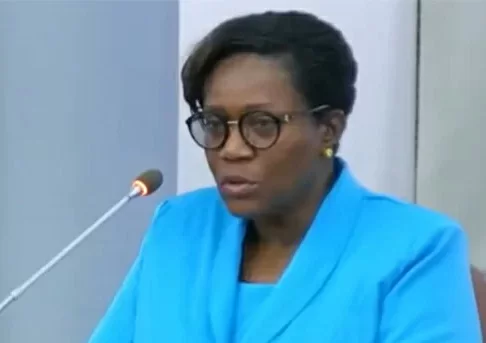
Wijnerman woont jaarvergadering IMF/Wereldbank bij
The 2025 Annual Meetings of the International Monetary Fund (IMF) and the World Bank commenced on Monday, October 13, in Washington, D.C., and will continue through Saturday, October 18. Suriname’s Minister of Finance & Planning, Adelien Wijnerman, is leading a delegation to participate in this pivotal global event. The meetings serve as a critical platform for discussions on pressing economic issues, including debt reform, climate action, development strategies, macroeconomic policies, and financial stability. The Surinamese delegation is set to engage in bilateral talks, attend plenary sessions, and participate in key agenda items such as the Development Committee and International Monetary and Financial Committee meetings, regional briefings, and press conferences. Suriname, having recently completed an IMF Extended Fund Facility (EFF) program, aims to focus on institutional strengthening, securing investment flows, promoting sustainable growth, and monitoring external risks during the meetings. The outcomes of these discussions could significantly influence future financing opportunities, international partnerships, and policy support for Suriname amidst a rapidly evolving global economic landscape. Minister Wijnerman anticipates providing further updates as the week progresses.
-
Wisselvallig weer met kans op lokale buien
Today’s weather in Suriname will feature a mix of sunshine, cloud cover, and localized showers, particularly in the coastal and inland regions. The weather patterns remain influenced by moist air masses from the east and slight atmospheric instability over the Amazon region. In the coastal districts, including Paramaribo, Wanica, and Commewijne, the morning will be partly cloudy to slightly overcast. By the afternoon, localized rain and thunderstorms may develop, followed by temporary clearings. Temperatures are expected to peak around 32°C, with high humidity levels reaching up to 90%. In the western parts of the country, such as Nickerie and Coronie, conditions will remain predominantly dry with sunny intervals, though brief showers may occur along the coastline in the late afternoon. The eastern regions, including Albina and Galibi, will experience increased cloud cover and light rain during the afternoon and evening. Inland areas like Brokopondo, Stoelmanseiland, and Apoera will stay warm and humid, with temperatures climbing to 34°C. Localized thunderstorms may develop towards the end of the day, especially near mountainous and riverine zones. Winds will blow from the east to southeast at speeds between 10 and 25 km/h.
-
Wereldleiders in Egypte voor Gaza-top over wapenstilstand en gijzelaarsruil
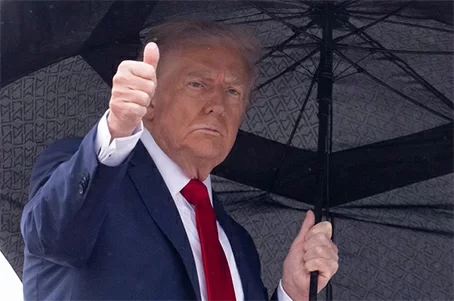
World leaders convened on Monday in the Egyptian resort town of Sharm El-Sheikh for an international Gaza summit, aiming to broker a definitive ceasefire agreement and the phased release of hostages in the Gaza Strip. The conference follows months of intensive diplomacy, with the United States, under President Donald Trump, playing a pivotal role in mediating between Israel and Hamas. Diplomatic sources reveal that a draft agreement is on the table, outlining a step-by-step ceasefire, prisoner exchanges, and humanitarian access to affected areas. Attendees include U.S. President Trump, Egyptian President Abdel Fattah al-Sisi, Israeli Prime Minister Yoav Gallant, representatives from Hamas mediated by Qatar and Turkey, and observers from the United Nations and the European Union. The talks focus on three key points: a lasting ceasefire binding both Israeli and Palestinian parties to halt military operations; the phased release of hostages and Palestinian prisoners under international monitoring; and a humanitarian reconstruction program led by Egypt, the UN, and the World Bank to rebuild Gaza’s infrastructure. Sources in Washington suggest the first group of hostages could be released as early as Monday evening, pending confirmation of security conditions by both sides. While the summit offers a potential breakthrough, skepticism remains regarding compliance with the agreement. Israel insists that any ceasefire depends on ‘complete guarantees that Hamas retains no military capacity,’ while Hamas demands ‘an end to the blockade of Gaza.’ President Trump, departing for Egypt, expressed confidence in being ‘close to a historic agreement,’ calling it ‘a moment of hope after months of suffering.’ International observers describe the Sharm El-Sheikh meeting as ‘the most concrete chance for peace since the conflict erupted in 2023.’
-
Column: Gedeelde verantwoordelijkheid: de lijm van onze toekomst
A nation with a shared past and a shared future also bears a shared responsibility. This is not merely an ideal but an indispensable necessity. The choices we make, the leaders we elect, and the way we interact with each other and our environment shape not only our lives but also the lives of future generations. Surinamers, we are collectively responsible for the direction our country takes. This responsibility extends beyond the political arena to our daily interactions with our elders, the care we give to our natural environment, and the nurturing of our youth. These are all pieces of a larger mosaic in which each of us plays a role. Avoiding this responsibility means undermining the very foundation of our society. Leadership is a shared duty. We choose our leaders, but they act on our behalf. Therefore, we cannot merely point fingers at politicians; we must also look inward. Are we the examples we expect from our leaders? Do we listen to each other, even when opinions differ? Do we make space for the voices of the vulnerable? Do we cherish the earth that sustains us and protect the heritage that has shaped us? This responsibility is especially palpable as our country reflects on 50 years of independence. Fifty years of building together, of struggle and progress, but also of lessons and challenges. This anniversary is a moment of reflection: what have we endured together, what have we achieved together, and what legacy are we leaving for those who follow us? It is a reminder that our future is not guaranteed but is the result of our collective efforts. This is particularly relevant as a new economic future dawns with the promise of an oil boom. While this development could bring prosperity and growth, its success depends on our collective care and responsibility. It requires sustainable thinking, fair distribution, and the preservation of our natural resources. Only by acting together, with consideration for both people and the environment, can we ensure that this new source of wealth becomes a blessing for everyone, now and in the future. Shared responsibility also means not turning a blind eye to the problems that affect us but tackling them together. Whether it’s social inequality, climate change, or raising children in an increasingly complex world, these challenges can only be overcome if we find common ground in our shared duty. Every individual, every community, every institution has a role to play. And it starts close to home. How do we treat our elders? With respect and care, or do we too often leave them to their fate? What do we do with the nature around us? Do we see it as an inexhaustible resource, or do we realize that our future depends on how we treat it? And most importantly, what values are we passing on to our children, who will carry our society forward? Shared responsibility is the glue that binds us. It is the understanding that we are stronger together, that our future is not the sum of separate individuals but of a collective that supports and challenges each other. It is a call to actively contribute to a society where everyone matters, where we learn from the past to create a just future. Without this shared responsibility, a nation loses its cohesion and, with it, its future. Therefore, let us not wait for others to act but start today—with small steps, with conscious choices. Together, we are the architects of tomorrow.
-
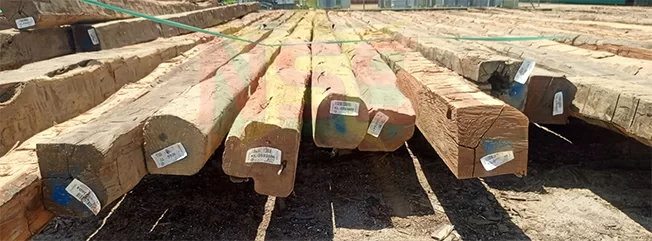
SBB wijst verzoek EBS af: bijna 1000 bruinhartpalen in beslag genomen
The Foundation for Forest Management and Supervision (SBB) has declined a request from Suriname’s Energy Companies (EBS) to lift the seizure of a large batch of brownheart timber. The decision was communicated in a letter from SBB Director Ruben Ravenberg to EBS General Director Leo Brunswijk, which was obtained by Starnieuws. The investigation into the allegedly illegally obtained timber is ongoing, and SBB has emphasized its legal obligation to inform the Attorney General of suspected violations. The first interim report was submitted to the Attorney General and the government last Wednesday. SBB continues its work, meticulously inspecting each piece of timber. As of October 6, 508 seizures had been made after inspecting 1,444 pieces of timber, bringing the total number of seizures to nearly 1,000. In the letter, Ravenberg referenced EBS’s October 3 request, which cited ‘public interest’ as the reason for lifting the seizure. However, SBB rejected the request, stating that all citizens, including state-owned enterprises like EBS, must adhere to the law and cooperate in combating illegal activities that cause irreparable damage to forests. SBB also highlighted that previous cases of illegally harvested brownheart timber at EBS’s landing site have already been transferred to the Public Prosecutor’s Office. Additionally, SBB inspectors were denied access to the EBS site on Bethesdaweg multiple times. When it was discovered that more allegedly illegal brownheart timber was brought to the site on September 29, SBB sought assistance from the Environmental Crime Unit. SBB is working to conclude the investigation swiftly, after which the full dossier will be handed over to the Public Prosecutor’s Office. Only then can EBS submit its request to the Attorney General. SBB reiterated its willingness to advise EBS on future purchases and verify information regarding brownheart timber offerings in advance.
-

Column: Borrelpraat no. 893
In a multifaceted geopolitical landscape, the anticipated release of hostages by Hamas on Monday has sparked intense discussions about the broader implications of the Israeli-Palestinian conflict. The situation is further complicated by the role of international actors, including the United Nations, and the internal political dynamics within Israel and Palestine. Critics argue that the two-state solution is increasingly untenable, with Israeli settlements on the West Bank and aggressive military actions in Gaza exacerbating tensions. The UN’s perceived ineffectiveness, particularly due to the veto power in the Security Council, has been a point of contention, with calls for reform to address global conflicts more effectively. Domestically, Israel faces scrutiny over its handling of illegal immigrants and internal dissent, with some labeling the country as a de facto dictatorship. Meanwhile, the potential displacement of millions of Palestinians from Gaza raises concerns about humanitarian crises and the capacity of other nations to absorb refugees. The discussion also touches on historical and ongoing internal conflicts within other nations, such as the struggles for land rights and autonomy among indigenous and Maroon communities in Suriname. The broader narrative underscores the complexities of achieving peace and stability in a world fraught with competing interests and unresolved historical grievances.
-
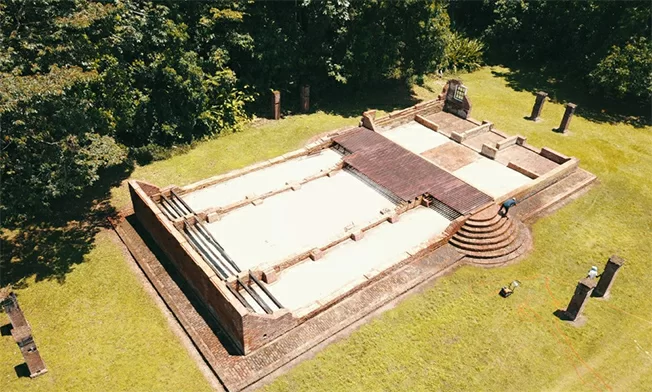
340 jaar Beraha VeSalom Synagoge: 12-10-1685 – 12-10-2025
On October 12, 1685, the Beraha VeSalom (BVS) Synagogue, a monumental structure in Jodensavanne, Suriname, was officially inaugurated. This synagogue, whose name translates to ‘Blessing and Peace,’ stood as the heart of the Jewish village and left a lasting impression on visitors due to its grandeur and architectural significance. It was the first synagogue of architectural importance in the Western Hemisphere. Over the centuries, BVS has been extensively documented in writings, paintings, and prints, often depicted from a distance. Approximately 240 years ago, its centennial was celebrated with great pomp in the presence of Governor Wichers, members of the Council of Police and Justice, and numerous dignitaries from Paramaribo. Beyond its religious function, BVS served as a courthouse for minor legal cases, an archive, and a meeting space for the church board. It also acted as a fortress against attacks by maroons, with armed Jewish men preparing for potential assaults during significant religious observances like Yom Kippur. Historical records reveal that on September 30, 1790, Jodensavanne was thrown into turmoil due to a rumored maroon attack, prompting the local militia to guard the synagogue. The construction and maintenance of this once-imposing building were carried out by enslaved individuals, whose contributions are now being honored by the Jodensavanne Foundation as part of the 340th-anniversary commemoration. The foundation has planned several activities to mark this milestone, including the publication of articles, exhibitions, and volunteer programs, all aimed at celebrating the legacy of the Beraha VeSalom Synagogue.
-
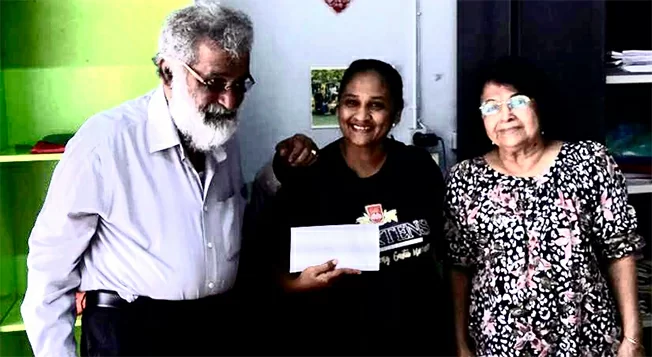
Onze eigen O.S. Maretraite
In a heartfelt tribute to their alma mater, the parents of Aashna Kanhai recently visited Openbare School Maretraite, a school that has been a cornerstone of their family’s educational journey for generations. The visit, marked by the symbolic handing over of an envelope to the school’s principal, Juffrouw Makdoembaks, was a gesture of gratitude and support for an institution that has shaped the lives of their children and grandchildren. The school, celebrating its 65th anniversary this year, has long been a beacon of discipline, community, and holistic education.
-
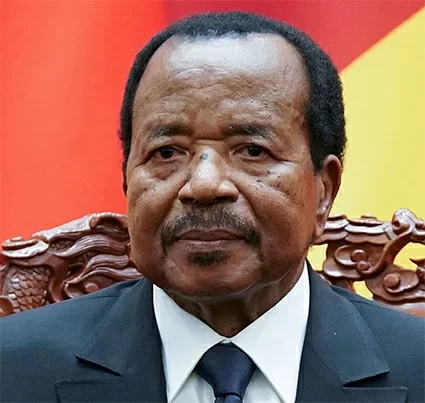
Kameroen kiest president: Paul Biya (92) maakt kans op achtste termijn
Cameroon’s citizens headed to the polls today for a pivotal presidential election, with 92-year-old Paul Biya vying for an unprecedented eighth term. Biya, who has held power for over four decades since 1975, remains the frontrunner despite his advanced age, largely due to the dominance of his ruling Cameroon People’s Democratic Movement (CPDM) over the state apparatus. The election unfolded under tight security, particularly in the English-speaking regions, where separatist groups have long challenged central authority. Reports of low voter turnout and isolated incidents emerged in some districts, but the overall process remained calm. The Electoral Commission (ELECAM) anticipates announcing official results within 15 days, with the Constitutional Council set to validate the outcome by October 26. Biya’s primary challengers include Cabral Libii, leader of the Cameroon Party for National Reconciliation (PCRN), who appeals to the youth with promises of reform, and opposition leader Maurice Kamto, who contested the 2018 election results. International observers, including representatives from the African Union, emphasized the importance of transparency and peaceful acceptance of the results. A victory for Biya would further cement his status as Africa’s longest-serving president, even as Cameroon grapples with economic inequality, security challenges, and political discontent.