标签: Suriname

苏里南

  • Staatsolie start seismisch onderzoek in ondiep zeegebied

    Staatsolie start seismisch onderzoek in ondiep zeegebied

    Suriname has initiated a comprehensive seismic survey in its shallow offshore waters, marking a significant advancement in the nation’s energy exploration efforts. The project, spearheaded by Staatsolie Maatschappij Suriname N.V., involves collaboration with China’s Bureau of Geophysical Prospecting (BGP Offshore) and Norwegian/American firm Tomlinson Geophysical Services Inc. (TGS).

    Covering approximately 2,000 square kilometers in coastal regions near Saramacca and Coronie, the survey will operate at water depths ranging from 20 to 50 meters. Over a two-month period, the initiative will gather high-quality geological data to map potential oil and gas reserves beneath the seabed.

    The specialized vessel BGP Prospector will deploy an advanced array of eight six-kilometer-long streamer cables, submerged nine meters below the surface. These cables will capture reflected sound waves to create detailed subsurface imagery. Support vessels will ensure safety by maintaining distance between the research operation and local fishing activities.

    This project operates under a multi-client agreement model, allowing the consortium to sell collected data to third parties while Staatsolie retains ownership. This innovative approach enables access to premium geological information without bearing full financial burden, while generating revenue through data sales.

    The environmental aspects of the survey have been rigorously addressed through an approved Environmental Management and Monitoring Plan (MMMP). From August to October this year, extensive consultations were conducted with local communities, fishermen, and stakeholders from Coronie and Saramacca, with their feedback incorporated into the final environmental framework.

    This seismic investigation aligns with Suriname’s recent Open-Door Offering initiative, designed to attract international energy companies to invest in the country’s emerging offshore exploration opportunities.

  • Column: Twee paspoorten, één waarheid

    Column: Twee paspoorten, één waarheid

    Fifty years after Suriname gained independence from the Netherlands, one contentious issue remains persistently relevant: the Dutch passport. This document has evolved beyond mere travel authorization to become a tangible manifestation of unresolved historical inequalities stemming from the colonial era that continue to shape contemporary societal dynamics.

    The practical advantages of possessing a Dutch passport create a stark divide among Surinamese citizens. Those holding the coveted burgundy-colored document enjoy unparalleled mobility, visa-free access to numerous countries, enhanced consular protection, and greater economic opportunities. In contrast, Surinamese passport holders face significant barriers, including arduous visa application processes, intense scrutiny of financial standing, and implicit questioning of their credibility when seeking international travel.

    This disparity becomes particularly evident during international transit. At airports like Schiphol, Dutch passport holders can freely exit transit areas, rest in hotels, or explore during layovers. Meanwhile, those without equivalent travel documents may remain confined to transit zones for up to twenty-four hours—a physical manifestation of the inequality embedded in citizenship hierarchies.

    The phenomenon extends beyond travel logistics into societal participation. Surinamese-Dutch citizens actively contribute to Suriname’s organizational structures and public discourse, yet retain the security of European Union protection when risks emerge. This dynamic creates an implicit power asymmetry where emotional connection to Suriname doesn’t necessarily translate to shared vulnerability or consequence.

    Language and cultural expressions further reveal enduring colonial mentalities. Phrases like “That’s just Indian stories” (dismissing narratives as exaggeration) or “When black man eat, black man sleep” (implying laziness) perpetuate harmful stereotypes rooted in colonial justification narratives. These linguistic patterns continue to devalue indigenous knowledge systems and reinforce hierarchical thinking.

    The ongoing debates surrounding passport privileges ultimately transcend practical concerns about mobility, touching upon fundamental questions of dignity, recognition, and equal treatment. The emotional connection to Surinamese identity exists independently from the geopolitical value of one’s citizenship documents, yet the world continues to make consequential distinctions based on passport colors.

    Addressing these disparities requires honest acknowledgment of the parallel realities: the emotional landscape of national identity versus the geopolitical realities of passport privilege. Only through this recognition can meaningful dialogue begin toward establishing more equitable connections that honor both historical context and human dignity, regardless of which document one carries.

  • Energiebanenhub voor Granmorgu-project gelanceerd

    Energiebanenhub voor Granmorgu-project gelanceerd

    Suriname’s energy sector received a significant workforce development boost on Thursday with the official launch of Energy Jobs Suriname, a digital employment platform initiated by TotalEnergies. The innovative portal immediately features 142 available positions while serving as a centralized hub for Surinamese citizens seeking opportunities within the country’s rapidly expanding energy industry.

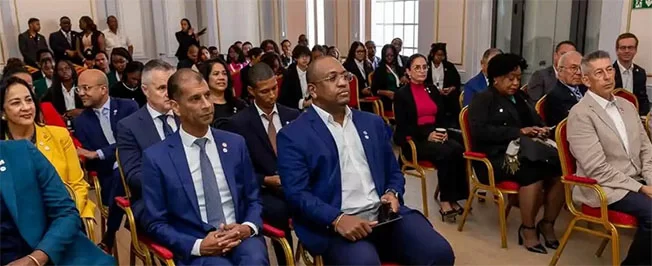
    The unveiling ceremony gathered government ministers, educational institution representatives, major contractors, and international energy companies, marking a pivotal moment in efforts to enhance local participation in Suriname’s emerging energy economy. The platform constitutes a core component of TotalEnergies’ local content program, which encompasses 14 strategic pillars designed to elevate Surinamese knowledge, skills, and economic engagement.

    TotalEnergies EP Suriname General Manager Artur Nunes-da-Silva emphasized the platform’s role in increasing transparency and providing direct access to energy sector opportunities. “Energy Jobs Suriname transcends being merely a website—it represents a gateway to career possibilities and a concrete step toward integrating local talent into our industry’s growth,” Da Silva stated during the launch event.

    The platform currently showcases 437 identified positions within the sector, with 142 vacancies immediately available. Seven major corporations—TotalEnergies, Staatsolie, SBM Offshore, Halliburton, OneSubsea, Weatherford, and CCC Group—have contributed these initial openings, with additional companies expected to join as the sector expands in coming months.

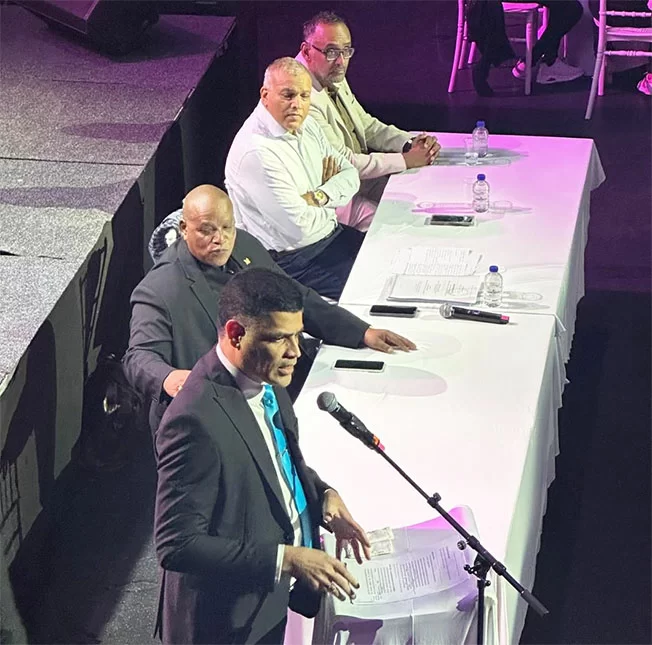
    Education, Science, and Culture Minister Dirk Currie praised the initiative as a crucial advancement in national capacity building. “This platform bridges our people’s ambitions with opportunities in one of Suriname’s most vital sectors. It represents more than an instrument; it embodies a partnership between education, industry, and talent,” Minister Currie remarked.

    The platform’s introduction coincides with growing recognition of Suriname’s need to address workforce qualification gaps. Industry representatives during a panel discussion highlighted shortages in skilled technicians, engineers, operators, and specialized professionals, emphasizing the critical importance of education and practical training.

    Halliburton’s Operations Manager for Suriname and Trinidad & Tobago, Santiago Zambrano Figuerroa, noted the increasing importance of data analysis, automation, and digital competencies in modern oil and gas operations. Meanwhile, SBM Offshore’s Suriname Country Entry Manager Pierre Gaté emphasized that floating production storage and offloading (FPSO) vessels will require a broad spectrum of technical positions that Surinamese workers could fill with proper training.

    Staatsolie Hydrocarbon Institute Director Vandana Gangaram Panday identified structural challenges, noting that only 60% of Suriname’s potential workforce currently participates actively, with many youths failing to complete secondary education. “Without improvement, a significant gap will emerge between industry requirements and Suriname’s capabilities,” Gangaram Panday warned.

    Oil, Gas, and Environment Minister Patrick Brunings discussed the platform’s strategic significance within Suriname’s broader economic transition. According to Minister Brunings, revenues and knowledge from the oil sector should establish foundations for “Suriname 2.0″—a diversified economy incorporating green industries, agriculture, ICT, and sustainable energy.

    The Energy Jobs Suriname platform ultimately aims to evolve into a comprehensive national employment hub, extending beyond oil and gas to support emerging industries that will ensure economic sustainability. As Suriname prepares for its Granmorgu offshore oil development project, the platform represents a crucial mechanism for ensuring that energy sector benefits genuinely reach the Surinamese population.

  • President: Beroepsonderwijs is motor voor diversificatie economie

    President: Beroepsonderwijs is motor voor diversificatie economie

    President Jennifer Simons of Suriname has declared vocational education the fundamental driver for broadening the nation’s economic base. During an orientation visit to the Natural Technical Institute (Natin) on Thursday, accompanied by Education Minister Dirk Currie, Simons emphasized that technical training must reduce dependency on emerging oil and gas revenues and strengthen other productive sectors.

    Simons observed student demonstrations at the institute while arguing that despite oil and gas opportunities, Suriname must avoid single-sector dependency. She advocated for enhanced development in agro-industry, tourism, and manufacturing to reduce import reliance. The President also stressed the necessity of discipline and strong work ethics, noting: ‘While oil and gas revenues flow in, relatively few work directly in that sector. We must produce enough skilled professionals to develop other industries.’

    Education Minister Currie reinforced that Technical Vocational Education and Training (TVET) should not be considered a secondary option but rather a crucial national investment. He referenced the ‘Three Cs’ principle—Competence, Craftsmanship, and Character—asserting that character development is indispensable for thriving in a rapidly evolving global landscape. ‘The world demands individuals who can execute, construct, and innovate. Competence and craftsmanship take you far, but character carries you much further,’ Currie emphasized.

    Natin Director Iwan Ganga disclosed that the institution currently enrolls over 2,700 students across 18 specialized programs. This year, Natin expanded to Moengotapoe to improve accessibility. Ganga cautioned against excessive focus on oil and gas, stating: ‘We must prevent creating a society with unidirectionally trained professionals. We aim to respond to significant demand from other sectors, including agriculture.’

    The presidential visit concluded with a tour of newly upgraded facilities, including practical workshops partially equipped by oil companies and Staatsolie. The institute will host another high-profile delegation next week—the Dutch royal couple during their December 1-3 visit to Suriname.

  • LVV ondersteunt SO/VSO Welgedacht C met extra plantjes en praktijkbegeleiding

    LVV ondersteunt SO/VSO Welgedacht C met extra plantjes en praktijkbegeleiding

    In a significant educational enhancement initiative, Suriname’s Ministry of Agriculture, Animal Husbandry, and Fisheries (LVV) has substantially expanded its support for special needs education through a strategic plant donation program. The LVV Wanica resort in Lelydorp, under the leadership of Resort Manager Ruben Piroe, has donated 150 vegetable plants to the SO/VSO Welgedacht C School, building upon a previous donation of 60 plants that brings the total contribution to 210 plants.

    This initiative directly aligns with Agriculture Minister Mike Noersalim’s vision to provide additional opportunities for children, particularly disadvantaged students, while stimulating practical skill development from an early age. The Welgedacht C School, located in the Wanica C resort, offers specialized education at both primary and secondary levels, with older students participating in vocational training programs including horticulture, carpentry, woodworking, construction, and culinary skills.

    The ministry has identified a critical need for professional guidance in implementing horticultural activities within the school’s curriculum. Due to spatial constraints on the school premises, optimizing the educational garden presents significant challenges. In response, the LVV Wanica D resort has committed to close collaboration with LVV Wanica C to provide expert support in garden design and maintenance, ensuring maximum utilization of available space for practical education despite area limitations.

    LVV officials emphasize that such initiatives are fundamental to youth development, particularly within special education frameworks. The ministry maintains its commitment to supporting educational institutions through knowledge transfer, material resources, and professional guidance to enhance students’ practical skills and future prospects. This comprehensive approach aims to foster self-sufficiency and agricultural expertise among young learners while addressing educational disparities through hands-on learning experiences.

  • Suriname zoekt nieuwe economische koers op zee tijdens UNIDO-top

    Suriname zoekt nieuwe economische koers op zee tijdens UNIDO-top

    At the UNIDO General Conference in Riyadh, Suriname’s Minister of Economic Affairs, Entrepreneurship and Technological Innovation Andrew Baasaron presented his nation as an emerging strategic partner for countries and corporations investing in sustainable maritime development. Rather than focusing on national policy measures, Minister Baasaron emphasized Suriname’s blue economy as a collaborative zone where foreign expertise, regional innovation, and local entrepreneurship could mutually reinforce one another.

    The minister extended formal invitations to businesses, research centers, and multilateral institutions to establish partnerships with Suriname that combine economic growth with environmental conservation. He specifically highlighted opportunities in marine and riverine biodiversity applications, noting potential in novel biotechnological concepts ranging from pharmaceutical extracts to sustainable biomaterials.

    Suriname seeks to modernize its fisheries sector through partners who can introduce advanced systems, traceability technologies, and international best practices. This modernization effort aims to meet global sustainability standards while maintaining market access. Similarly, the aquaculture sector welcomes joint ventures developing innovative, environmentally friendly production models focused on high-value species with low ecosystem impact.

    The minister also outlined ambitions for eco- and river-tourism, inviting investment in nature-friendly tourist infrastructure that positions local communities—including Indigenous and Tribal peoples—as full economic participants rather than mere stakeholders.

    Infrastructure modernization formed another key pillar, with Suriname seeking technical and financial partners for digitalization, climate-resilient port facilities, and restoration of natural defenses like mangroves. Minister Baasaron concluded by framing Suriname’s blue economy as an international agenda—a framework for partnerships that help build a carbon-neutral, resilient economy while establishing Suriname as a proactive regional player connecting innovation, sustainability, and economic progress through oceanic and riverine resources.

  • Winti-organisatie vraagt Ashanti-koning publieke excuses voor rol in slavernij

    Winti-organisatie vraagt Ashanti-koning publieke excuses voor rol in slavernij

    The inaugural Afro-Surinamese religious organization Tata Kwasi ku Tata Tinsensi, established in May 2005, has issued a profound statement addressing historical accountability amid the current visit of Ashanti King Otumfuo Osei Tutu II to Suriname. While acknowledging the symbolic significance of this historical encounter, the organization emphasizes that certain uncomfortable truths must be confronted regarding Africa’s complicity in the transatlantic slave trade.

    The organization highlights that historical records definitively establish the Ashanti Kingdom as principal trading partners with Dutch colonial powers, actively participating in the capture and sale of enslaved Africans. They contend that this painful legacy cannot be overlooked during the king’s diplomatic visit without addressing ancestral responsibilities.

    Tata Kwasi ku Tata Tinsensi insists that the Ashantehene, as leader of his people, must publicly acknowledge this historical role and express profound remorse to descendants of enslaved Africans in Suriname. The organization calls for a collective cleansing of what they term ‘internal baggage’ stemming from ancestral actions that violated human dignity.

    The statement graphically details the horrific circumstances under which captives were transported from inland regions to coastal forts like Elmina—often by their own tribal members—enduring burned villages, physical injuries, and family separations before being traded at fortress gates and loaded onto slave ships.

    Noting that Surinamese descendants rightly demand accountability from the Dutch state and monarchy, the organization maintains equal standards should apply to African leaders whose ancestors actively participated in the trade. They argue that without public acknowledgment and healing, what they metaphorically call ‘Africa’s maternal womb’ will find no peace.

    In a broader context, the organization revealed parallel efforts to address the Vatican’s historical role, referencing Pope Nicholas V’s 1452 authorization allowing Portugal and Spain to trade Africans as commodities—a decision that initiated centuries of suffering and dehumanization.

  • Suriname en VS markeren 50 jaar partnerschap met jubileumpublicatie

    Suriname en VS markeren 50 jaar partnerschap met jubileumpublicatie

    Suriname and the United States commemorated five decades of diplomatic relations during a formal ceremony at the U.S. Embassy on November 26, 2025. The event featured addresses by Surinamese President Jennifer Simons and U.S. Ambassador Robert Faucher, who reflected on the historical evolution and future prospects of bilateral ties between the two nations.

    The gathering included distinguished guests from the private sector and members of the American Chamber of Commerce of Suriname (AmCham). The diplomatic relationship was formally established on November 26, 1975, exactly one day after Suriname gained independence, when the United States under President Gerald Ford officially recognized the newly sovereign nation.

    President Simons recalled the historical significance of this partnership: “This relationship was born the day after our independence. From the very beginning, Suriname could count on American support through educational programs, medical missions, and security cooperation.” She further emphasized the economic importance of the collaboration, noting that “American companies have invested in Suriname for fifty years—not just with capital, but through knowledge transfer and job creation. During various periods, they have served as pillars of our national economy.”

    Ambassador Faucher reaffirmed the United States’ commitment to deepening bilateral relations and presented President Simons with a special anniversary publication titled ‘Common Past, Shared Future: United States and Suriname — 50 Connections.’ The ambassador described the compilation as “fifty stories demonstrating how Americans and Surinamese have influenced each other for centuries,” characterizing the publication as both a tribute to the past and an inspiration for future cooperation.

    President Simons concluded with a message to citizens of both nations: “Let us move forward with wisdom and unity to write the next chapter together—a chapter of cooperation, respect, and shared ambitions.”

  • DCs willen strenger optreden tegen vervuiling na Srefidensi

    DCs willen strenger optreden tegen vervuiling na Srefidensi

    District Commissioners Marlon Budike of Paramaribo-North and Ruchsana Ilahibaks of Paramaribo-Central have expressed general satisfaction with the cleanup efforts in their respective areas following the Srefidensi celebrations. While both officials would have preferred immediate cleanup after the festivities, the process could only begin once the public had fully dispersed. They emphasized that maintaining a clean city is a shared responsibility of every citizen.

    Budike noted his contentment with the cleanup operations in key locations such as the Palmentuin, Grote Combéweg, and the entertainment district. Agreements were made in advance with event organizers, particularly for the Palmentuin, to ensure minimal post-event complaints from the community. “We aimed to reduce community grievances as much as possible after the celebrations,” Budike stated.

    Ilahibaks highlighted that in Paramaribo-Central, celebrations continued into the early morning, delaying the start of cleanup crews until the public had left. She pointed out that event organizers are legally obligated to clean up the premises as per their permits but stressed that this is impossible while activities are ongoing. “We may decide to deny future permits if rules are not followed. Our focus will be on ensuring immediate cleanup once events conclude,” Ilahibaks told the Suriname Communication Service.

    Both commissioners underscored that keeping the city clean is not solely the government’s responsibility but also that of its citizens. By properly disposing of waste or taking it with them, revelers can make a significant contribution. Budike and Ilahibaks called for greater societal awareness and responsible waste management practices.

  • Dodelijke flatbrand in Hongkong eist 44 levens; bouwdirecteuren aangehouden

    Dodelijke flatbrand in Hongkong eist 44 levens; bouwdirecteuren aangehouden

    A devastating fire that engulfed multiple high-rise buildings in Hong Kong’s Tai Po district on Wednesday has claimed 44 lives, marking one of the deadliest residential fires in the city’s recent history. The blaze, which rapidly spread through the apartment complexes, left 45 individuals critically injured and 279 others still unaccounted for. Witnesses described the flames as overwhelming, with one survivor recalling, ‘It felt like the fire was coming from all directions at once. We had no time to spare.’ Emergency exits were quickly filled with smoke, trapping many residents. The fire reportedly originated on the lower floors of one tower before spreading to adjacent buildings under unclear circumstances. Authorities have arrested three construction company employees—two directors and a technical advisor—on suspicion of gross negligence related to the building’s safety standards. Investigations revealed the use of highly flammable polystyrene panels, which blocked windows and significantly accelerated the fire’s spread. Inferior construction materials, failing to meet local safety regulations, were also discovered on-site. As the fire continued to rage on Thursday, hundreds of families anxiously awaited news of their missing loved ones at an impromptu identification center. The Hong Kong government has opened temporary shelters for displaced residents and announced a comprehensive investigation into building code compliance and oversight procedures. Housing Minister Anthony Ching emphasized the urgency of the inquiry, stating, ‘We must determine exactly what went wrong. Safety is paramount, and there will be consequences for any failures.’ The tragedy has reignited debates over the safety of older and under-construction residential buildings in Hong Kong, where high population density and limited space often lead to rushed and substandard construction projects.