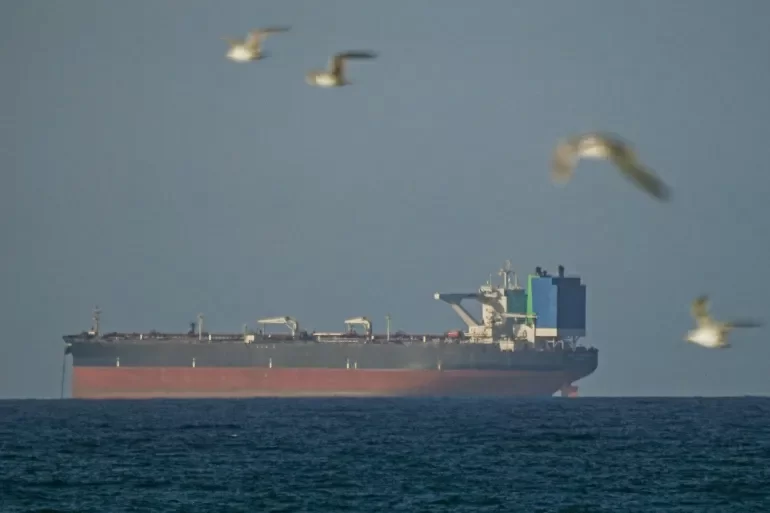
Weeks after a temporary two-week ceasefire between the United States and Iran that kept the critical Strait of Hormuz partially open, a cargo vessel waits off the coast of Oman to traverse the chokepoint. But this image of uncertainty is far from an isolated incident: geopolitical power struggles are rapidly unraveling the decades-old rules-based order that has kept global maritime trade secure and predictable, analysts warn. The warning comes after a sudden policy proposal from Indonesia that sent shockwaves through global shipping and insurance markets last week. Indoneisan Finance Minister Purbaya Yudhi Sadewa suggested imposing transit tolls on commercial vessels passing through the Strait of Malacca, a key global trade chokepoint, explicitly drawing inspiration from recent Iranian actions in the Strait of Hormuz. While Jakarta quickly walked back the controversial suggestion, industry analysts say it exposed a growing, dangerous shift: the once-stable system of open maritime navigation is becoming increasingly risky, costly and overtly politicized. “We have not seen the oceans this unsettled and dangerous since nations first came together to agree on shared rules for maritime navigation,” said Elisabeth Braw, a senior fellow at the Atlantic Council. For centuries, maritime shipping carried inherent risks, from piracy to rogue attacks. But in the decades following World War II, the international community built a comprehensive framework of treaties and agreements designed to guarantee open, safe passage for commercial vessels across global waterways. The results have been transformative: the World Trade Organization reports that global trade grew from roughly $60 billion in the 1950s to more than $25 trillion last year, with 80 percent of all global trade by volume moving across the world’s oceans. Today, however, experts agree that actions from major global powers including the United States, Iran, Russia and China are systematically undermining the rules that made this growth possible. The most high-profile flashpoint right now is the Strait of Hormuz, the narrow chokepoint through which roughly a fifth of global oil supplies pass. Starting in March, Iran restricted passage for dozens of vessels after joint strikes by the U.S. and Israel on Iranian targets. On April 13, the U.S. imposed a full maritime blockade on Iranian vessels and ports, and has since seized Iranian tankers near the strait and detained other vessels across the Indo-Pacific that it accuses of carrying sanctioned Iranian crude. In response, Iran has seized unauthorized vessels attempting to transit the strait and opened fire on multiple commercial ships passing through the waterway. These escalating tit-for-tat actions have worsened the ongoing global energy crisis, pushing oil and natural gas prices to multi-year highs. “Even without a full closure of the strait, requirements for transit approval and constant political pressure create massive cost increases and widespread uncertainty,” said Jack Kennedy, senior analyst at S&P Global. Kennedy pointed to a recent incident off the coast of Oman, where a container ship was fired on by an Iranian military patrol boat, leaving the vessel’s bridge damaged. He described the attack as “calculated use of force to demonstrate control without shutting down all traffic entirely,” a tactic that creates uncertainty across the entire shipping industry. Tensions are now spreading to other critical maritime infrastructure, including the Panama Canal. Earlier this week, the U.S. and multiple South American and Caribbean nations accused China of using “targeted economic coercion” against Panamanian-flagged vessels, claiming Beijing is detaining Panamanian ships in its ports as part of a broader effort to politicize maritime trade and undermine regional sovereignty. China has forcefully rejected the accusations, calling the U.S. claims hypocritical. A spokesperson for China’s Ministry of Foreign Affairs noted that the U.S. occupied the Panama Canal for decades and repeatedly violated Panama’s sovereignty, pointing to a long history of American interference in the region. The latest dispute comes after Panama’s Supreme Court canceled a concession held by a Hong Kong-based firm to operate two major ports along the canal, a move widely viewed as the result of U.S. pressure to roll back Chinese influence around the strategic waterway. Experts note that the vast majority of global maritime trade still operates within the existing legal framework, but the number of high-profile political exceptions is growing at an alarming rate. In recent years, maritime disruptions have become increasingly strategic and organized. Russian control of large swathes of the Black Sea during its full-scale invasion of Ukraine triggered global food shortages by blocking grain exports. In the South China Sea, China has been repeatedly accused of intimidating commercial vessels to enforce its disputed territorial claims, allegations Beijing has repeatedly denied. “Maritime action has always been a tool to exert pressure on an adversary’s economy and military. What has changed is the scale: the volume of container trade and the size of the global fleet mean disruptions ripple across the entire global economy far faster than ever before,” explained Jean-Paul Rodrigue, a maritime trade expert at Texas A&M University. Non-state actors have also amplified risk in global waterways. Houthi attacks on commercial shipping in the Red Sea have forced major shipping lines to reroute vessels around the Cape of Good Hope, adding thousands of miles of extra travel and billions in extra costs. The biggest long-term risk, analysts agree, is the precedent being set by increasingly frequent violations of the existing rules. The cumulative effect of these developments is a clear shift away from predictable, rules-based navigation toward a system where access, costs and safety are increasingly determined by power, influence and political interests. Non-state groups have also exploited gaps in international enforcement: the International Maritime Bureau’s latest report shows global piracy incidents have already reached their highest level in five years this year. These geopolitical tensions translate directly to tangible costs for global consumers. Vessel rerouting increases fuel consumption and transit times, pushing up operating costs for shipping lines. Insurance premiums and risk surcharges have skyrocketed in high-tension areas, and even short detentions or inspections can create cascading delays across global supply chains. As a result, shipping lines are increasingly reconsidering their routes, flag registrations and port calls to minimize political exposure. “The biggest risk is the precedent that emerges when multiple nations test boundaries through selective enforcement, new permitting requirements or tolls in international straits. When that becomes normalized, outcomes depend entirely on power dynamics and bilateral negotiations, not shared rules,” Kennedy said.
标签: Suriname
苏里南
-

FOLS vraagt meer waardering voor onderwijsgevenden
On May 1, Suriname joins global Labour Day observances to honor the dedication, resilience and unwavering commitment of all working people who keep the nation’s social and economic systems running. This year, the Federation of Organizations of Teachers in Suriname (FOLS) has chosen the national observance to amplify the voices of the country’s education workforce, calling attention to the relentless daily efforts educators put forth to build Suriname’s future.
Day after day, teachers across Suriname show up to classrooms to nurture the nation’s youth, the cornerstone of the country’s long-term development. Even amid persistent challenges — from strained institutional resources to widespread economic pressure that has raised the cost of living for all households — educators have continued to prioritize their students’ growth. But FOLS, led by chair Bernice Barron, warns that sheer hard work and persistence are no longer enough for teachers to bear their growing daily burdens.
Barron’s organization emphasizes that it is long past time for Suriname’s educators to receive the tangible, meaningful recognition they deserve. A warm ceremonial greeting on Labour Day, the federation argues, means little when teachers struggle to cover monthly household bills and teach in outdated, inadequate classroom facilities that do not support student learning.
FOLS has laid out three core pillars that constitute real appreciation for the teaching profession. First, it demands fair compensation and benefits: a living wage and secondary employment terms that align with the heavy responsibility and societal importance of teaching. Second, it calls for improved working environments, including safe, supportive learning spaces at every education level, from primary school through higher education. Third, the federation is pushing for clear long-term career security, so teachers can focus entirely on their core mission of educating students without constant financial and professional anxiety.
Crucially, FOLS stresses that this campaign is not a request for special favor, but a demand for what teachers are legally and ethically owed. The organization is calling on national and local authorities to implement permanent, structural improvements to the education system’s employment provisions, so that Suriname’s educators can continue to carry out their vital work with dignity.
-
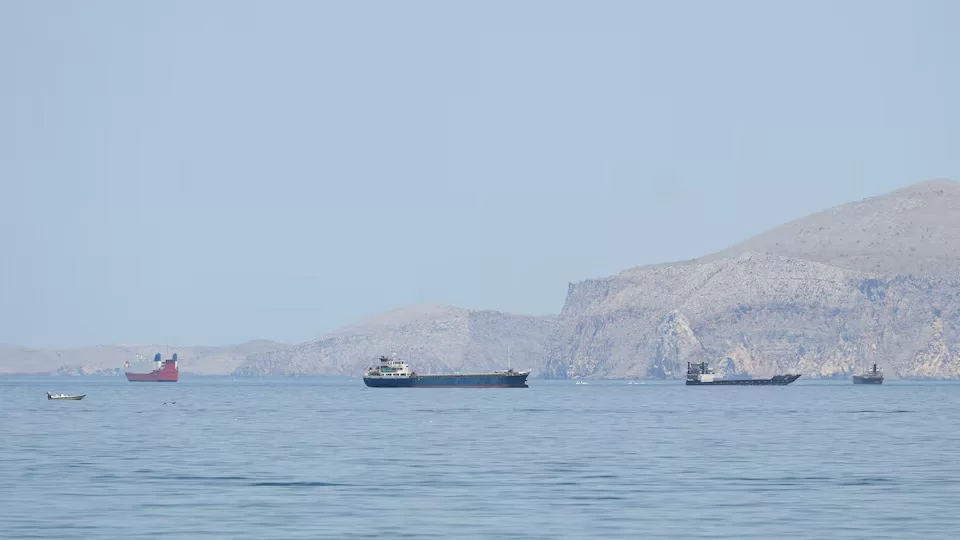
Olieprijzen dalen licht na nieuw Iraans voorstel voor onderhandeling
Global crude oil prices edged lower on Friday, after Iran submitted a new proposal for diplomatic talks with the United States via Pakistani mediators, but market benchmarks remained on track to lock in strong weekly gains as geopolitical tensions in the strategically critical Strait of Hormuz keep supply risks elevated.
Brent crude futures for July delivery fell 26 cents, or 0.2%, to settle at $110.14 per barrel on Friday. U.S. West Texas Intermediate (WTI) crude futures for the same contract period dropped a sharper 1.7%, or $1.83, to reach $103.24 per barrel. Even with this weekly pullback, Brent is set to notch a 4.2% gain across the full trading week, while WTI is on pace for an even larger 9.2% weekly increase. On Thursday, Brent’s June contract hit an intraday peak of $126.41 per barrel, the highest price recorded since March 2022, before pulling back from the multi-year high.
The new negotiation proposal, confirmed by Iran’s state-run news agency IRNA, was delivered to Pakistani intermediaries on Thursday in an effort to restart stalled diplomatic talks between Tehran and Washington. The breakthrough in diplomatic outreach triggered a small pullback in crude prices, as investors bet reduced geopolitical risk could ease supply disruptions. However, broader market uncertainty has kept prices supported, with the situation in the Strait of Hormuz remaining extremely volatile.
Tensions in the key waterway began escalating after joint U.S.-Israeli strikes on Iran in late February, which prompted Iran to restrict passage through the strait and led the U.S. Navy to block Iranian oil exports. Around 20% of the world’s daily oil and liquefied natural gas supplies pass through the strait, making any disruption a major shock to global energy markets. While a ceasefire has been in place since April 8, the security situation remains precarious, with neither side backing down from their positions.
Senior regional officials have amplified concerns over the stalemate this week. A top United Arab Emirates official publicly stated deep distrust of Iran on Friday, warning that Tehran cannot be trusted to uphold unilateral agreements around free passage through the strait, reflecting widespread mutual suspicion across regional and global powers. Just a day earlier, a senior commander with Iran’s Islamic Revolutionary Guard Corps threatened “long and painful strikes” against U.S. military positions in the region if Washington resumes offensive attacks on Iran, a comment that sent prices spiking higher during Thursday’s trading session before the later pullback.
Adding to market volatility, an unnamed U.S. official confirmed that President Donald Trump received a briefing on Thursday outlining plans for potential new military operations against Iran. The proposed actions are intended to increase pressure on Tehran to speed up diplomatic negotiations and bring the ongoing conflict to a close, according to the official.
Ole Hansen, a senior market analyst at Danish investment bank Saxo Bank, noted that the sharp swing in prices on Thursday highlights the extreme volatility roiling global energy markets right now. “Thursday’s sharp reversal shows a market that is cautiously climbing higher, but can pull back quickly whenever any hint of positive diplomatic news emerges,” Hansen explained. “This has created exceptionally challenging trading conditions for market participants.”
-
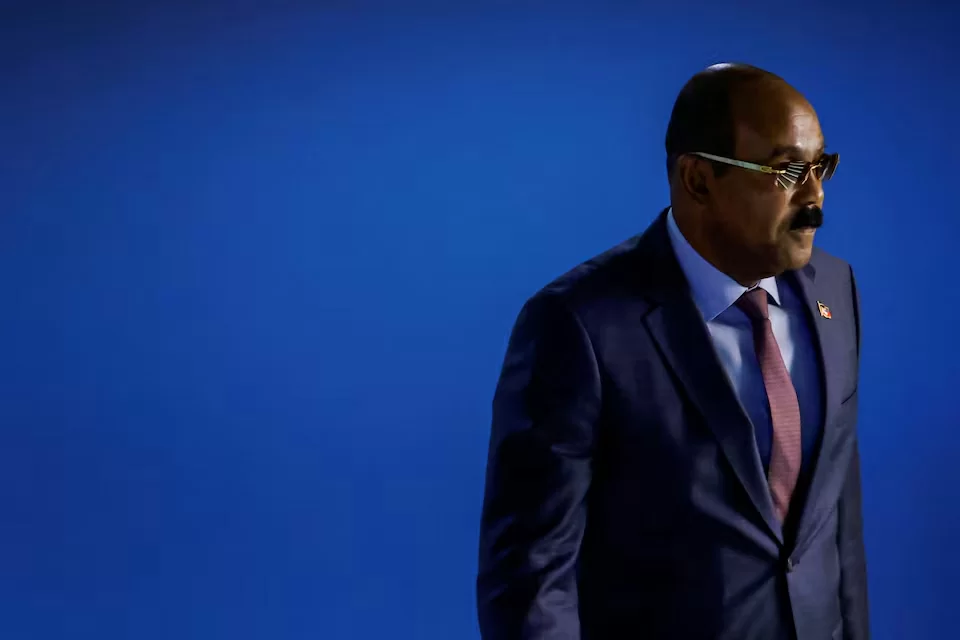
Premier Gaston Browne wint vierde termijn met belofte van economische groei
In a decisive election outcome that reshapes the political landscape of the Caribbean twin-island nation, Gaston Browne, the incumbent Prime Minister of Antigua and Barbuda, has secured a landslide victory to earn a fourth consecutive term in office, according to preliminary official election results.
Browne’s ruling Antigua and Barbuda Labour Party expanded its parliamentary majority dramatically, winning 15 out of the 17 available legislative seats. The main opposition bloc, the United Progressive Party, was left with just a single seat in the new parliament, a stark drop in its political representation following the election held on Thursday.
Shortly after the preliminary results were announced, the Labour Party released a statement via social media expressing gratitude for the public’s mandate. “We are humbled and honored by your support and trust,” the party said.
The 59-year-old prime minister, a former banker and entrepreneur who has led the Labour Party since 2014, centered his entire re-election campaign on a platform of delivering sustained economic stability and driving growth through targeted foreign investment. Browne anchored his policy credibility on two key achievements of his previous administration: the robust post-pandemic recovery of the country’s critical tourism sector, and the large-scale expansion of national infrastructure that has unlocked new economic opportunities across the islands.
The election campaign was significantly shaped by an international dispute that emerged earlier this year. In January, the United States announced a temporary freeze on visa processing for applicants from Antigua and Barbuda, a move that delivered a major blow to many residents who regularly travel to the U.S. for work and family visits. Washington’s decision stemmed from longstanding concerns over Antigua and Barbuda’s popular Citizenship by Investment (CBI) program, which grants nationality to foreign investors in exchange for major capital contributions to the country. U.S. authorities have warned that bad actors and criminal networks could exploit the program to gain visa-free access to U.S. territory.
Browne’s administration moved quickly to address these concerns throughout the campaign, emphasizing that the government has maintained close collaborative working relations with U.S. authorities and has already implemented sweeping reforms to make the CBI program more transparent and secure against misuse.
In a strategic political move that surprised many regional observers, the Labour Party called the snap election two years earlier than its constitutionally required end date, arguing that the country needed a fresh mandate to navigate ongoing global economic and geopolitical crises. Prior to the snap vote, the party held a nine-seat majority in the outgoing parliament, a margin that has now more than doubled in the latest result.
A full second recount is scheduled for Friday to formalize and confirm the final official election result. Independent international election observers are on the ground monitoring the entire post-vote process to ensure compliance with international democratic standards.
-
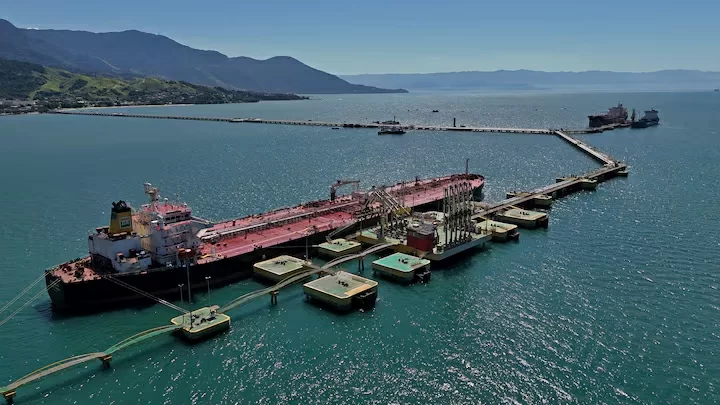
Petrobras stopt olie-export naar VS in eerste kwartaal
A dramatic shift in global crude oil trade flows has taken shape in the first three months of 2026, as Brazil’s state-owned energy giant Petrobras has completely halted all crude oil and product exports to the United States. This sudden disruption is a direct consequence of the sweeping market changes sparked by the ongoing conflict in Iran, which has upended traditional supply chains and shifted demand patterns across the globe.
The most notable realignment of trade routes has left China as Petrobras’ overwhelmingly dominant export market. During the first quarter of 2026, China absorbed roughly 62% of all crude oil exported by the Brazilian energy major, cementing its position as the company’s core trading partner. This marks a sharp jump from the first quarter of 2025, when China accounted for just 33% of Petrobras’ total exports. A key driver behind this surge in purchases was the prolonged closure of the Strait of Hormuz, a critical global chokepain for oil shipments that connects the Persian Gulf to international markets. In March alone, Chinese buyers snapped up record volumes of Brazilian crude to offset lost supply from Middle Eastern exporters.
India has stepped into the role of Petrobras’ second-largest customer, taking roughly 15% of the company’s total exports in the first quarter, up marginally from 14% in the same period a year earlier. Petrobras has publicly framed India as a “strategic market”, highlighting the South Asian nation’s status as the world’s second-largest importer of seaborne crude oil, a key position that creates long-term growth opportunities for Brazilian exports.
This dramatic expansion of exports to China and India has come at the expense of other key regional markets. The rest of Asia saw its share of Petrobras exports plummet from 28% in Q1 2025 to just 8% in the first three months of this year. Alongside the full halt to US exports – which previously held a 3% share of Petrobras shipments – exports to Europe also fell sharply, dropping from 19% a year earlier to just 8% in the most recent quarter.
Against this shifting trade landscape, Petrobras has ramped up domestic production significantly. The company’s total domestic oil output climbed roughly 16% year-over-year to hit 2.58 million barrels per day in Q1 2026. Total combined sales of oil, natural gas, and refined products also rose around 12% from a year earlier, reaching 3.22 million barrels per day over the period.
Global oil markets have remained highly volatile in recent weeks, driven entirely by growing supply uncertainty stemming from the US-Iran conflict. At the opening of trading on Thursday, US West Texas Intermediate (WTI) crude climbed 41 cents, or 0.43%, to hit $105.50 per barrel, after hitting an intraday peak of $110.93 earlier in the session – the highest price recorded since April 7. By market close, however, WTI had pulled back to settle at $105.07 per barrel, a drop of $1.81, or 1.69%, from the previous session.
Despite the day’s volatile price swings, both WTI and global benchmark Brent crude are on track to notch their fourth consecutive monthly gain. This sustained upward trend reflects widespread market concern that the ongoing conflict in Iran could disrupt global oil supplies for an extended period, keeping upward pressure on prices through the coming months.
-
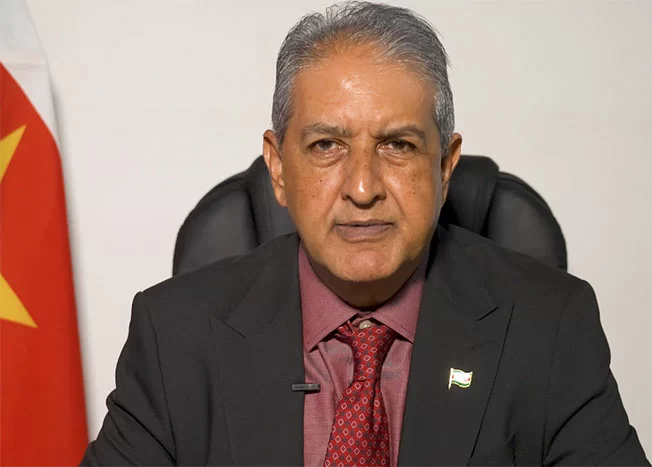
Jadnanansing: Arbeid verdient waardering en eerlijke beloning
On the annual observance of Labor Day, Raj Jadnanansing, Deputy Minister of Suriname’s Ministry of Health, Welfare and Labor, has issued a formal message paying tribute to all working people across the South American nation who contribute daily to the country’s ongoing development and nation-building efforts.
In his official address, Jadnanansing emphasized that work forms the irreplaceable foundation of three core pillars of national progress: sustainable economic expansion, inclusive social development, and the preservation of individual human dignity. Going beyond a basic definition of work as the completion of routine tasks, he noted that employment grants people personal autonomy, long-term financial security, and the critical opportunity to build a better future for both themselves and their family members. Every worker, regardless of their occupation, job role, or sector of employment, makes an equally valuable contribution to Suriname’s overall advancement, the deputy minister added.
Jadnanansing extended explicit recognition to workers across every major industry in Suriname, including healthcare, education, construction, retail and services, mining, agriculture, and white-collar office sectors. He stressed that the consistent dedication and hard work of these individuals lay the groundwork for all social progress and economic growth that the country achieves.
At the same time, the deputy minister framed Labor Day as an occasion for reflection on the remaining challenges facing Suriname’s labor market. He openly acknowledged that gaps persist in ensuring fair working conditions, living wages, safe workplace environments, and accessible upskilling and training opportunities for all workers. To address these gaps, Jadnanansing confirmed that his ministry remains committed to improving the employability of Surinamese citizens through partnerships with key local institutions including the SAO, SPWE, SHTTC, and RACO. These efforts are designed to help Surinamese workers take full advantage of emerging economic opportunities, particularly in fast-growing new sectors such as sustainable energy and the country’s expanding oil and gas industry.
In addition to outlining government action, Jadnanansing called on employers, workers, and national trade union movements to continue collaborating to build a shared culture of open dialogue, mutual respect, and collective problem-solving. He noted that only through this kind of collaborative approach can Suriname achieve long-term, sustainable progress that benefits all segments of society.
Looking ahead to Suriname’s expected period of major economic transformation, the deputy minister reaffirmed that the national government will continue to advance policy and legislation that prioritizes social justice. He emphasized that all workers and their families must receive a fair share of the benefits from future economic growth, ensuring that development is inclusive rather than concentrated among a small subset of the population.
-

Column: De beste vriend van wantrouwen
Sometimes, it is not formal legislation, policy documents or official government procedures that reveal the deepest flaws of a country’s political culture, but small, unorthodox, and controversial incidents. The public uproar surrounding Jean “Saya” Mixon, an entrepreneur linked to Suriname’s Minister of Justice and Police Harish Monorath, is a striking case in point.
Monorath confirmed to local outlet Sign-in TV that Mixon, who accompanied him during an official visit to the Geyersvlijt police station, was one of his four personal advisors. He clarified that the role is unpaid and that Mixon does not have an official office at the ministry, adding that he holds the authority to appoint advisors to his team as he sees fit.
The revelation immediately ignited fierce backlash across social media and political circles. When Minister of Internal Affairs Marinus Bee told parliament on Thursday that Mixon could not hold an advisory position under the government’s formal appointment rules, many hoped Monorath’s misstep would be corrected transparently and properly. Instead, the parliamentary debate ended with the controversy more unresolved than when it began.
Despite sharp criticisms and widespread demands that Monorath acknowledge and fix his error, the minister avoided meaningful accountability. He only conceded that Mixon does not hold an advisory position in a legal, formal sense — a semantic dodge that he treated as a full resolution to the controversy, as if clever wording could erase the reality of Mixon’s public role alongside a top cabinet official. To compound the confusion, Monorath added that Mixon is part of his “intelligence network.”
This vague statement leaves a host of critical questions unanswered. Is this an official government role? An informal private network? A personal trust position? An information source? Who provides oversight for this position, what official powers come with it, and why was a person in this vague role openly accompanying the minister on an official visit to a police facility?
Across all modern governments, the term “intelligence” is never casual. It relates directly to information gathering, national security, risk assessment, and confidentiality — core functions of state that demand clear protocols, strict oversight, and no room for ad-hoc political improvisation. When a cabinet minister treats this area lightly, it creates dangerous uncertainty about where the line between formal state authority and private political networks is drawn.
Without issuing a public condemnation of Mixon as an individual, it is impossible to ignore that he is widely known as a controversial figure in Suriname. While legal status — whether convicted or acquitted of past charges — matters, good governance demands more than just adherence to the letter of the law. It requires political wisdom, moral judgment, and an acute awareness of public trust and institutional reputation. For a Minister of Justice and Police, the question of what signal an appointment sends to the public is non-negotiable.
When a minister responsible for law enforcement openly appears alongside a controversial entrepreneur with an undefined official status, it fuels public doubt. That doubt spreads beyond ordinary citizens to police officers, international diplomatic partners, and foreign investors. No one argues that ministers should cut themselves off from informal contacts outside formal government structures; governance naturally draws insight from all layers of society. But those relationships should be managed discreetly, carefully, and with full awareness of associated risks, not paraded openly on official stages as if there is nothing out of the ordinary about the arrangement.
The argument that Mixon does not draw a government salary is also no reassurance. Influence does not always come with a formal paycheck. Proximity to political power is often far more valuable than a regular wage. Access to top officials, informal status, expanded personal networks, and future political favors can deliver far more influence than a formal employment contract.
Beyond the immediate controversy, this incident exposes a deeper pattern in Suriname’s governance culture: the normalization of informal advisors, personal confidants, and associates of top political leaders who operate entirely outside formal regulatory and oversight structures. No one knows exactly what these figures do, but their presence is an open secret across the political system.
Suriname is a small, vulnerable nation that faces intense international scrutiny over its management of border control, anti-money laundering efforts, drug trafficking, counter-terrorism financing, and institutional resilience. Any hint of unclear informal power structures weakens the country’s standing on these critical global issues.
Parliament also deserves criticism for its handling of the controversy. While both coalition and opposition lawmakers raised legitimate questions, the body ultimately accepted Monorath’s semantic dodge about Mixon’s formal legal status. When the country’s highest oversight body settles for wordplay instead of accountability, it robs itself of its purpose and becomes nothing more than a toothless tiger.
It is fair to question whether the current government understands how fragile public and international trust in Suriname’s institutions really is. In an era of transnational organized crime and costly reputational damage, Suriname cannot afford to allow shadowy power centers to exist alongside formal state authority. Monorath had a clear opportunity to bring clarity to the situation, and instead he delivered confusion — the oldest and most reliable ally of public distrust.
-
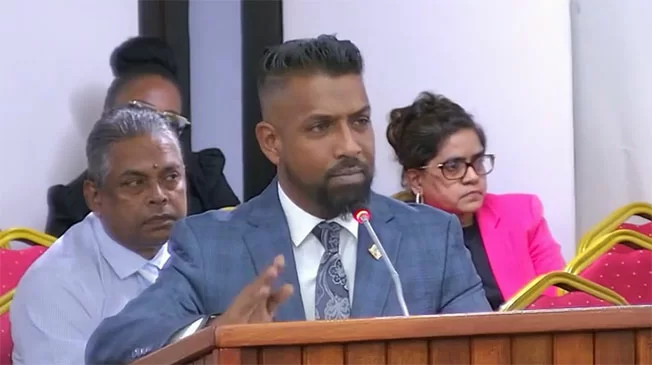
Coalitie en oppositie keren zich tegen Monorath om ‘Saya-affaire’
A major political firestorm has erupted in Suriname after Justice and Police Minister Harish Monorath confirmed controversial entrepreneur Jean ‘Saya’ Mixon would serve as one of his four official policy advisers – drawing sharp criticism from both ruling coalition and opposition lawmakers in the National Assembly on Thursday. The controversy has ignited fierce debate over government integrity, transparency, and the authority of Suriname’s law enforcement leadership, with senior ruling party officials publicly distancing themselves from the minister’s remarks.
The scrutiny of Monorath’s announcement gained additional urgency due to Mixon’s well-documented public history of legal trouble. The entrepreneur was previously at the center of a high-profile national criminal case involving charges of money laundering, forgery, and fraud. While a Surinamese court acquitted Mixon of money laundering charges in November 2024, prosecutors were ruled inadmissible on the remaining counts. Following the verdict, Mixon publicly stated he would remain a supporter of the ruling VHP party.
Coalition lawmaker Raymond Sapoen of the NDP, one of the ruling coalition partners, openly expressed “deep concern and disappointment” over Monorath’s public confirmation of Mixon’s role as policy adviser. Sapoen emphasized that the minister’s unvetted announcement has severely eroded public trust in the Ministry of Justice and Police.
VHP party legislator Krishna Mathoera also issued a clear rebuke of the situation, noting that a minister leading the country’s justice and policing portfolio has a special obligation to exercise extreme care when making public statements. Mathoera argued that demonstrating true leadership would require Monorath to simply admit he made a misstep, and pressed the minister to clarify whether Mixon has been granted access to classified information or any special privileges within the ministry.
Opposition NPS lawmaker Poetini Atompai pushed back aggressively against attempts to frame the relationship as a casual informal information-sharing arrangement. “When we are talking about sensitive intelligence, nobody talks about it publicly,” Atompai stated, arguing that officials cannot hide behind informal relationship excuses after publicly naming Mixon as an official adviser. He warned that Suriname could suffer lasting international reputational damage from this kind of unregulated appointment, particularly at the ministry responsible for upholding the rule of law.
NPS parliamentary leader Jerrel Pawiroredjo echoed the call for clarity, demanding a straightforward answer from the minister. “Parliament only wants one clear answer: Is he your adviser, yes or no?” Pawiroredjo said, rejecting attempts to muddy the issue with semantic debates or technical fine print.
Only ABOP lawmaker Edgar Sampie came to Monorath’s defense, arguing that it is common practice for ministers to seek informal input from private citizens, business owners, and subject-matter experts without formal government appointments. Sampie claimed the entire controversy has been unnecessarily blown out of proportion, noting that Mixon’s campaign propaganda work for the VHP during recent elections did not raise objections at the time.
After facing sustained criticism from assembly members and an initial round of unsatisfactory answers from Monorath, Interior Minister Marinus Bee – speaking after consultations with Vice President Gregory Rusland – requested a parliamentary recess to resolve the confusion. Bee publicly corrected Monorath’s earlier remarks, stating that Mixon has never received an official appointment as an adviser, no official executive order was ever issued, and no formal appointment process was completed.
Following the recess, Monorath walked back his original statement, acknowledging that Mixon “is not an adviser under the formal definition of the law.” The minister clarified that he regularly consults with a wide range of private citizens and receives input from across Surinamese society, but Mixon has never been given a formal paid position or access to government facilities for an advisory role.
Despite the minister’s attempts to clarify and defuse the situation, the heated parliamentary debate made clear that public and cross-party trust in Monorath has already sustained significant damage. The most notable development of the confrontation was that sharp criticism and public distancing came not only from opposition lawmakers, but from senior members of the ruling coalition itself.
-
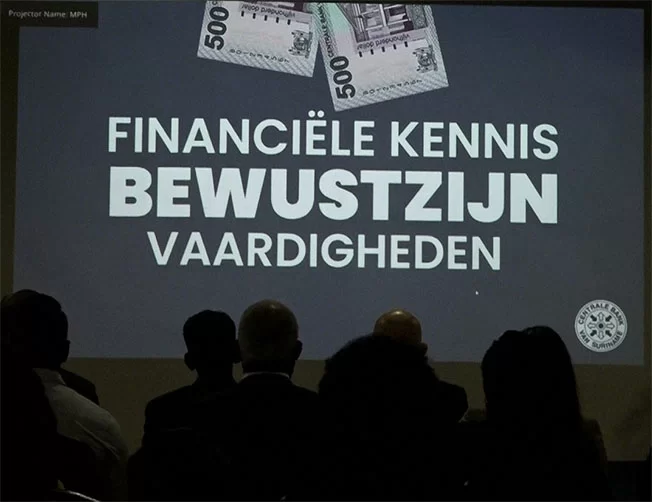
CBvS lanceert digitale leeromgeving voor financiële educatie
A 2022 study conducted by the Central Bank of Suriname (CBvS) has laid bare a critical gap in the country’s financial capability: 40 percent of the national population lacks sufficient knowledge to understand basic financial concepts. To tackle this widespread challenge, CBvS Governor Maurice Roemer officially launched the Digitale Leeromgeving (DLO), a free digital financial education pilot project hosted on the central bank’s official website, on April 30. Students from the Christelijk Pedagogisch Instituut Suriname became the first group of users to explore the new platform ahead of its wider public rollout.
The DLO is structured around four core thematic pillars that cover key aspects of everyday finance: the broader domestic financial landscape, personal financial planning and management, money handling and digital transactions, and the relationship between financial risk and reward. The platform’s modular learning resources are designed to build practical, actionable financial skills, including how to create and stick to a monthly budget, build long-term savings habits, borrow responsibly, and plan for large life expenses. Following the pilot period, the CBvS plans to refine the platform’s content and functionality based on user feedback, with a long-term goal of sharing the open educational system with other public and private organizations across Suriname.
Dirk Currie, Suriname’s Minister of Education, Science and Culture, emphasized the transformative potential of the initiative during the launch, urging participating students to take full advantage of the free resource. “Take advantage of every initiative that helps improve your chances of future success,” Currie said. “This is one of those opportunities.”
For his part, Governor Roemer outlined the three core missions driving the DLO project: boosting public financial self-sufficiency, expanding equitable access to formal financial services across all population groups, and encouraging responsible long-term financial behavior among Surinamese citizens. Roemer stressed that the pilot launch is only the first step in addressing the country’s financial literacy gap, noting that the 2022 CBvS study uncovered an additional unexpected trend: even people who already have access to formal financial services often fail to utilize the tools and opportunities available to them. “So there is still a great deal of room for improvement,” he added.
Right now, the DLO is in a controlled, phased testing phase. During this period, development teams will gradually refine the platform’s features, educational content, and overall user experience to meet public needs. As a result, access to the platform is currently limited, and its functionality and content availability may shift during testing. Once the pilot phase is completed and all adjustments are made, the DLO will be opened up to a broader audience across Suriname.
-

Drie zorginstellingen starten gezamenlijke opleiding voor ouderenzorgprofessionals
On April 30, three prominent elderly care institutions in Suriname launched a collaborative joint learning program designed exclusively for frontline care professionals working in senior care services. Spearheaded by the leadership team of Prinses Margriet Seniorenresort, the initiative brings together Woonzorg Centrum Wiesje, Bejaardencentrum Majella, and the originating institution itself to pool resources, expand collective expertise, and raise the standard of care for older adults across the region.
The program was developed from a core belief that cross-institutional collaboration and open knowledge sharing are foundational to building a resilient, future-ready elderly care sector. Curated to address the most pressing and relevant challenges facing modern senior care, the opening module of the program focuses specifically on improving quality of life for people living with dementia. This topic was selected as a core pillar of the curriculum, as it demands deepened expertise and practical, actionable tools for frontline care providers to deliver more compassionate, effective support.
Over the coming months, the program will cover a wide range of complementary topics tailored to the specific needs of the three participating institutions, including foundational care skills, disease pathology, patient-provider communication, and ethical decision-making in complex care scenarios. A unique feature of the learning initiative is its rotating venue model: all program sessions will be hosted in turn at each of the three organizations’ facilities. This arrangement gives participating care professionals the chance to observe peer practices firsthand, exchange on-the-ground insights, and learn directly from each other’s established workflows and innovative approaches.
The full program is on track to be completed by the end of 2026. Upon successful completion of all required modules and assessments, participants will receive an official certificate recognizing their commitment to professional development and the new competencies they have gained through the program.
This collaborative initiative marks a meaningful step forward for the professionalization and cross-sector cooperation of elderly care services across Suriname, setting a model for how local care institutions can work together to address shared challenges and improve outcomes for the aging population.