标签: Suriname

苏里南

  • Hof beslist: Vervolging Hoefdraad rechtmatig

    Hof beslist: Vervolging Hoefdraad rechtmatig

    The Court of Justice in Suriname has ruled that the 2020 decision by the National Assembly (DNA) to place former Minister Gillmore Hoefdraad under formal accusation was lawful. This decision, made after nearly five years of legal battles, renders Hoefdraad’s civil lawsuit against the State, the National Assembly, and the Public Prosecution Service (OM) inadmissible. Hoefdraad, who remains a fugitive, had contested his prosecution, which stemmed from his alleged involvement in the high-profile case concerning the Central Bank of Suriname (CBvS).

    Hoefdraad and his legal team argued that the National Assembly’s decision was unlawful, as the parliament, then led by Jennifer Simons, had previously decided not to prosecute him during the second term of the NDP government. However, following the May 2020 elections, then Attorney General Roy Baidjnath Panday resubmitted a request to prosecute Hoefdraad. The new parliament, led by Marinus Bee and comprising a coalition of VHP, ABOP, NPS, and Pertjajah Luhur, approved the prosecution. Hoefdraad claimed this decision was politically influenced, asserting that the parliament could not revisit a prior decision unless new evidence emerged—a condition not met in this case.

    In 2023, Hoefdraad was convicted in absentia, alongside other key figures, including former CBvS Governor Robert van Trikt and legal director Faranaaz Hausil. All defendants appealed their convictions, while Hoefdraad continued his civil case to challenge the legitimacy of his prosecution. The court handling the criminal appeal has completed its investigation but awaits the outcome of this civil case, which has been delayed multiple times.

    Hoefdraad’s lawyer, Murwin Dubois, argued that a favorable ruling in the civil case could have impacted the criminal proceedings. Notably, Interpol refused to extradite Hoefdraad to Suriname, removing him from its wanted list and barring Suriname from using its channels, citing the prosecution as politically motivated. With the Court’s ruling affirming the legitimacy of the prosecution, the path is now clear for a final verdict in the criminal appeal.
  • VES: Gezondheidszorg centraal in jaarrede; samenhang en uitvoeringskracht blijven onbenoemd

    VES: Gezondheidszorg centraal in jaarrede; samenhang en uitvoeringskracht blijven onbenoemd

    In the 2025 State of the Nation Address, the President of Suriname dedicated nearly 20% of the speech to healthcare, outlining key priorities such as strengthening primary care through Regional Health Services (RGD) and emergency clinics, advancing digitalization, reforming the State Hospital Fund (SZF), the Bureau of Public Health (BOG), and the Suriname Medicines Bureau (BVGS), and enhancing nursing and medical capacity. Specific attention was given to pediatrics, mental health, inland healthcare, and financial reward systems. However, the Association of Economists in Suriname (VES) criticized the address for lacking coherence, arguing that the listed priorities remained disjointed without a unifying framework, mirroring the shortcomings of previous administrations. VES emphasized the need for an integrated approach in its periodic publication INZICHT. The VES advocates for a shift from the traditional model of primary care to integrated care units, where prevention, diagnosis, treatment, and aftercare are systematically linked by disease profile. This approach promises greater cohesion, measurable outcomes, and cost control. For instance, ‘s Lands Hospitaal could evolve into a specialized Mother and Child Center, consolidating perinatal care, pediatric care, and gynecology to enhance quality, outcomes, and resource efficiency. Similarly, the Psychiatric and Neurological Center Suriname could become a national hub for mental, neurological, and addiction care, reducing wait times and improving treatment results. The VES also proposed linking RGD posts and emergency clinics to specialized care pathways for conditions like diabetes, cardiovascular diseases, infections, cancer, lung disorders, eye conditions, and movement disorders, making prevention an integral part of the care process. This model would optimize personnel deployment, create jobs, and enable higher salaries. The SZF could transition to bundled payments, rewarding quality and outcomes rather than volume, while the BOG could become a national data and knowledge center, eliminating the need for a separate healthcare authority. Specialized centers in Paramaribo would serve as hubs for a broader network, with hospitals in Atjoni, Wanica, and Albina playing key roles. Telemedicine and digitalization would extend high-quality care to inland areas. Care pathways would address the shortage of nurses and specialists by leveraging foreign expertise and better coordination, creating thousands of jobs for nurses, lab technicians, dietitians, physiotherapists, medical-technical staff, and data analysts. This approach would increase patient capacity, improve care quality, and provide financial room for better staff compensation. While the State of the Nation Address presented fragmented priorities, the VES’s care pathway model offers a cohesive and sustainable alternative, capable of modernizing Suriname’s healthcare system and ensuring its affordability.

  • Simons: Punt achter Decemberzaak; geen gratieverzoek, geen discussie

    Simons: Punt achter Decemberzaak; geen gratieverzoek, geen discussie

    In a recent press conference, President Jennifer Simons of Suriname addressed the ongoing discussions surrounding the December case, clarifying that she has not received an official pardon request from the four men convicted in the trial. She emphasized that her office has only received a letter from their lawyer, Irvin Kanhai, and not a signed petition from the individuals themselves.

    President Simons underscored that a pardon request must be a personal act, requiring the direct involvement and signature of the convicted individuals. This principle aligns with the nearly 1,000 pardon requests submitted in anticipation of Suriname’s 50th anniversary of independence. ‘A pardon is a request from the detainee themselves. As long as that is not on my desk, I know nothing about it,’ she stated. She further clarified that unsigned letters do not qualify as formal pardon requests.

    The President noted that she has received numerous pardon requests from other detainees, all of which were processed through the Ministry of Justice & Police and met all necessary requirements, including the signatures of the applicants.

    Regarding the December case, President Simons declared it legally closed. ‘What I personally think, or what you personally think, no longer matters. The judge has made the decision; the case is over,’ she responded to a question. She assured that the human rights of all detainees, including the four convicted individuals, are being respected but reiterated that she sees no reason to reopen the matter.

    ‘We forget no one, including these four individuals. But neither you nor anyone else will get me to reopen this drama,’ she firmly stated. President Simons concluded by emphasizing her focus on the future of Suriname, stating, ‘I carry an entire country on my shoulders. The situation is not easy, but I continue to work to provide a better life for all Surinamese people.’

  • NPS: Gratieverlening decemberveroordeelden niet aan de orde

    NPS: Gratieverlening decemberveroordeelden niet aan de orde

    The National Party of Suriname (NPS) has vehemently denied allegations that it has agreed within the coalition to grant pardons to those convicted in the December murders case. In a formal statement, the party labeled such claims as ‘utterly false.’ The NPS clarified that it has taken note of media reports suggesting its support for clemency but firmly rejected these assertions. The party reiterated its stance that the convictions not only upheld the rule of law but also delivered justice to the victims’ families and society at large. The NPS emphasized that granting pardons is not under consideration. Instead, the party remains focused on Suriname’s development and the welfare of its citizens, pledging to uphold a robust legal system where the protection of citizens is paramount.

  • Offshore-capaciteit versterkt in aanloop naar GranMorgu-project

    Offshore-capaciteit versterkt in aanloop naar GranMorgu-project

    Suriname’s offshore industry is gearing up for a transformative phase as the GranMorgu project, set to commence production in 2028, takes center stage. This ambitious initiative aims to bolster local expertise, enhance logistical capabilities, and align with international offshore standards. Recently, TotalEnergies, in collaboration with the Maritime Authority of Suriname, hosted the Supply Vessel Services Technical Workshop at the Marriott Hotel. The two-day event attracted over seventy participants, including local businesses, technical experts, and international partners, fostering collaboration, knowledge exchange, and operational readiness. The workshop focused on the critical role of supply vessels and maritime support within the offshore value chain, a cornerstone of TotalEnergies’ future production activities. Hercules Medeiros, Field Operations Manager, emphasized the importance of Surinamese involvement, stating, ‘A project of this scale cannot succeed without the active participation of Surinamese companies, government agencies, and professionals.’ TotalEnergies has made local engagement a key pillar of its sustainable development strategy, linking oil production in Suriname to training, certification, and business development. The company aims to equip Surinamese professionals and enterprises to participate in the global offshore industry. By integrating international safety and environmental standards into local operations, TotalEnergies seeks to contribute to Suriname’s economic growth and sustainable development goals. The workshop featured technical sessions, practical discussions, and assessments of local readiness for offshore operations. The GranMorgu project in Block 58 is one of the largest investments in Suriname’s recent history and is expected to position the country as a regional energy hub.

  • Gajadien: VHP heeft geen nieuwe naam nodig, maar echte hervorming

    Gajadien: VHP heeft geen nieuwe naam nodig, maar echte hervorming

    The proposed name change of the Progressive Reform Party (VHP) has not been widely discussed within the party, according to Deputy Chairman Asis Gajadien. He emphasized that, as far as known, the idea stems from party leader Chan Santokhi and does not represent an official stance or decision by the party’s governing bodies. Santokhi mentioned the proposal during a radio interview on ABC. Gajadien stated that the VHP does not need a new name but rather genuine reform. ‘If the party wants to maintain its role as a broad people’s movement, it must stop focusing on symbolic changes and instead prioritize structural reforms: more internal democracy, honest leadership, and credible renewal,’ he told Starnieuws. The deputy chairman warned that without a course correction, any name change would remain an empty gesture—a façade that fails to address underlying challenges. ‘The VHP has a rich history, but its future depends on its willingness to regain the people’s trust. Not by changing names, but through actions and leadership that serve the people,’ Gajadien stressed.

  • Nieuwe RvC’s moeten orde scheppen binnen parastatalen LVV

    Nieuwe RvC’s moeten orde scheppen binnen parastatalen LVV

    In a significant move to enhance governance and operational efficiency, three parastatal companies under Suriname’s Ministry of Agriculture, Livestock, and Fisheries (LVV) have appointed new Boards of Commissioners (RvC). The Food and Agriculture Industries (FAI) N.V., Suriname American Industries Ltd (SAIL) N.V., and N.V. Suriname Zwaar Materieel (SURZWAM) saw their new RvCs officially installed by Minister Mike Noersalim on Thursday. The appointments mark a strategic effort to improve oversight and accountability within these state-owned enterprises. The newly appointed RvC for SURZWAM includes John Lecton as President-Commissioner, alongside Shyamkoemar Santoe, Albertino Resopawiro, Djoewandah Hardjomohamad, Avinash Hira, Ben Woodly, and Hendrik Setrowidjojo. Similarly, FAI’s RvC comprises Indredat Gangaram Panday as President-Commissioner, supported by Stephanie Kramawitana, Gaitrie Behari, Juan Soerotono, Robert Tembong, Wínish Imansoenadi, and Igan Atipa. SAIL’s board is led by Gordon Touw Ngie Tjouw as President-Commissioner, with members Steve Semoedi, Dimitri Tamsaran, Priya Charan, Rudy Soerodimedjo, Ivan Sancho, and Henk Lemmert. Minister Noersalim emphasized that the RvCs’ responsibilities extend beyond oversight to include conducting quick scans of each company’s financial and operational health. These audits aim to uncover irregularities and ensure transparency, particularly as Suriname prepares for increased oil production revenues. The minister highlighted that under the new Civil Code, both directors and commissioners can be held accountable for mismanagement. The quick scans are part of a broader government initiative to address financial inefficiencies and reduce reliance on subsidies. Noersalim stressed the importance of strengthening these institutions to ensure long-term sustainability and effective resource management.

  • President benadrukt klimaatrechtvaardigheid en solidariteit tijdens Caricom-top

    President benadrukt klimaatrechtvaardigheid en solidariteit tijdens Caricom-top

    During the Caricom Inter-Sessional Meeting held on Thursday, President Jennifer Simons of Suriname emphasized the urgent need for regional unity in addressing climate change and restoring stability in Haiti. Accompanied by Foreign Minister Melvin Bouva, President Simons represented Suriname at the virtual summit, where Caribbean leaders discussed pressing regional and global issues. The meeting, attended virtually from the Presidential Cabinet, served as a crucial platform for dialogue on climate change, security, the Haitian crisis, and Caribbean solidarity. Suriname highlighted its unique role as a carbon-negative nation, with vast forest areas contributing significantly to global climate health. Minister Bouva stressed that countries actively preserving the environment deserve fair compensation and sustainable climate financing. The leaders also addressed the ongoing crisis in Haiti, with Suriname expressing solidarity and support for international efforts to restore democracy, human rights, and security. Bouva affirmed Suriname’s commitment to contributing to stabilizing measures in alignment with UN resolutions. Additionally, the summit focused on regional security challenges, including maritime incidents and drug trafficking. President Simons underscored the importance of peace through dialogue and cooperation. Suriname is set to assume the chairmanship of the Council for Foreign and Community Relations (COFCOR), positioning the country to play a pivotal role in shaping the regional foreign policy agenda. Bouva reiterated Suriname’s belief in collaboration, dialogue, and solidarity as essential for building a future of peace, sustainability, and mutual benefit.

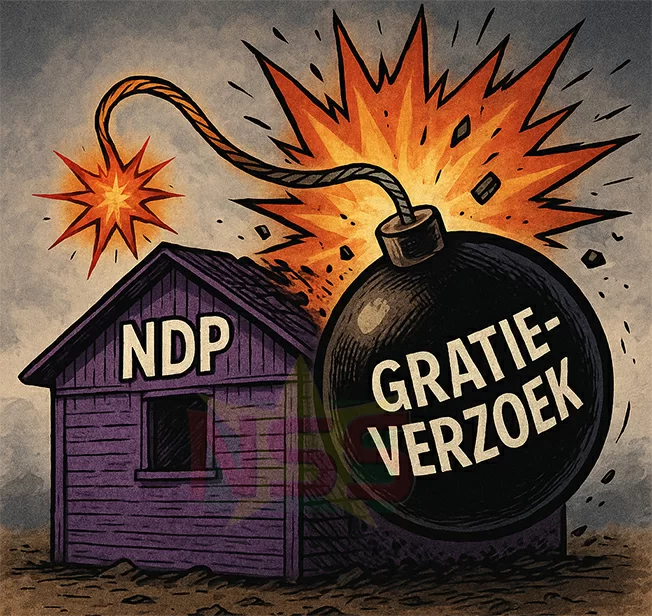
  • Column: Ondoordacht gratieverzoek ontsteekt kruitvat in NDP-barak en bedreigt politieke stabiliteit

    Column: Ondoordacht gratieverzoek ontsteekt kruitvat in NDP-barak en bedreigt politieke stabiliteit

    The recent call by Ramon Abrahams, Deputy Chairman of the National Democratic Party (NDP), for pardons for four individuals convicted in the December Murders has reignited old wounds and risks triggering an internal crisis within the party. Initially perceived as an act of loyalty to former leader Desi Bouterse, the move now threatens to weaken President Jennifer Simons politically and destabilize the fragile equilibrium of Suriname. During a commemoration event for Bouterse’s 80th birthday on October 13, Abrahams urged clemency for three imprisoned convicts and one fugitive, Iwan Dijksteel, who remains at large. Bouterse’s lawyer, Irvin Kanhai, added weight to the appeal by announcing he had submitted a pardon request to the President’s Cabinet on behalf of the convicts. President Simons, present at the event, appeared visibly surprised and stated she had not seen the request, leaving her unable to take a stance. The speech drew immediate backlash, both from society and within the NDP, as it reopened the unhealed trauma of the December Murders, a national tragedy. Critics labeled Abrahams’ remarks as ill-timed and politically tone-deaf, with some suggesting the move was poorly coordinated with Simons. The incident has exposed a growing rift within the NDP between a hardline faction loyal to Bouterse and a moderate group aligned with Simons, who seeks to restore the party’s image and maintain the ruling coalition. Simons now faces a delicate balancing act: as party leader, she cannot ignore the wishes of her colleagues, but as president, she must consider the sentiments of her coalition partners and the public. Coalition members like the NPS and A-20 are unlikely to support pardons for the December Murders convicts, given the symbolic weight of such a decision. While humanitarian arguments for clemency exist—three of the convicts are elderly and in poor health—the broader societal context, including the unresolved grief of victims’ families, complicates the matter. The situation is further muddied by conflicting reports about the legitimacy of the pardon request, with the convicts denying they authorized Kanhai to act on their behalf. This raises questions about internal power dynamics and whether the pardon issue is being weaponized in a factional struggle. Simons’ leadership is being openly tested, and some party members appear willing to undermine her if she does not align with their agenda. The irony is that Bouterse once warned that the NDP’s greatest threat would come from within—a statement that now rings prophetic. As Suriname grapples with significant economic challenges, including mounting debt and hopes for future oil revenues, the country’s political stability is once again jeopardized by internal strife and unresolved historical grievances. What Suriname needs is calm, clarity, and leaders who use the past as a lesson for the future, not as a weapon. Abrahams’ call, however, serves as a stark reminder of how thin the veneer of reconciliation remains.

  • Wijnerman uit Washington DC: Donorcoördinatie cruciaal voor duurzame resultaten

    Wijnerman uit Washington DC: Donorcoördinatie cruciaal voor duurzame resultaten

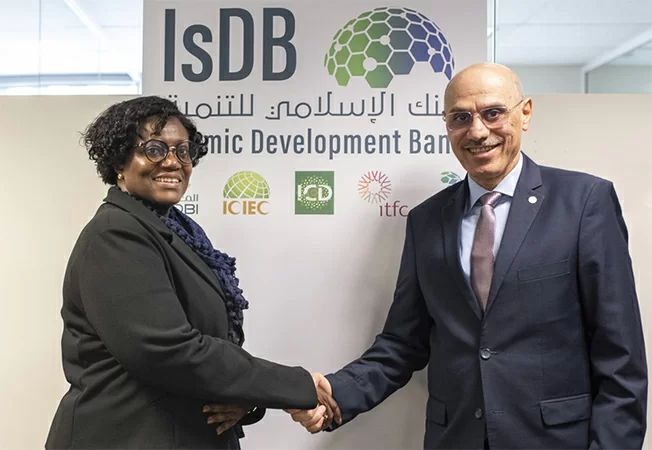
    During the annual World Bank and International Monetary Fund (IMF) meetings in Washington D.C., Suriname’s Minister of Finance and Planning, Adelien Wijnerman, engaged in critical discussions aimed at bolstering the nation’s economic framework. The minister met with key international partners, including the IMF, the Islamic Development Bank (IsDB), the World Bank Group, and the International Islamic Trade Finance Corporation, to address Suriname’s macroeconomic challenges.