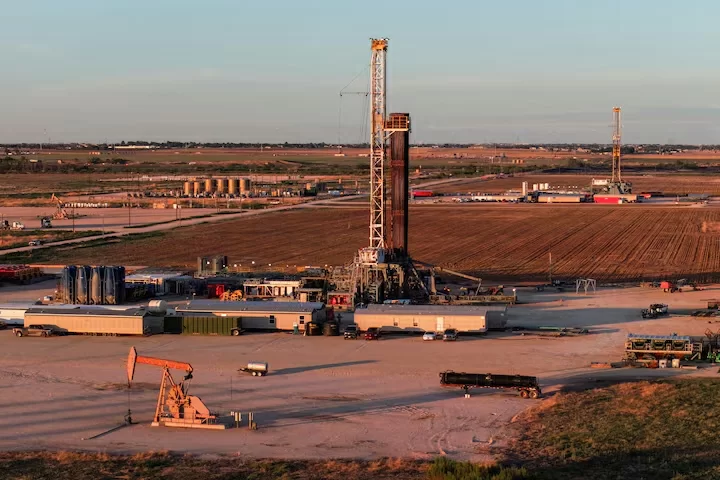
Global crude oil prices recorded a mild uptick on Thursday, as market participants held their breath ahead of a high-stakes bilateral meeting between U.S. President Donald Trump and Chinese President Xi Jinping scheduled for later the same day. All trading attention remained firmly fixed on evolving developments tied to the ongoing conflict in Iran, a major driver of global energy market volatility.
标签: Suriname
苏里南
-
Column: Grote verliezer en lachende derde
More than a month after the controversial sports passport dispute erupted, the future of Suriname’s ambitious national football initiative Natio Nieuwe Stijl (NNS) remains shrouded in uncertainty, with the project now teetering on the edge of collapse after a series of crippling setbacks.
The legal battle that sparked the crisis was launched by Dutch football club NAC Breda, which challenged the status of players linked to NNS. Last week, a Dutch court ruled against NAC Breda, clearing the way for the remainder of the Dutch domestic football season to proceed as scheduled without disruption. But for NAC, the defeats have piled up rapidly: the ruling was not the only blow, as the club has already been officially relegated to the Keuken Kampioen Divisie, the second tier of Dutch professional football.
For the wider dispute, the immediate crisis has eased in the Netherlands. The Royal Dutch Football Association (KNVB) opted not to issue disciplinary sanctions to any parties involved, and all players have now regained full access to their club facilities. But the damage to NNS has already been done, with the entire development trajectory of the initiative brought to an abrupt halt by months of lingering uncertainty.
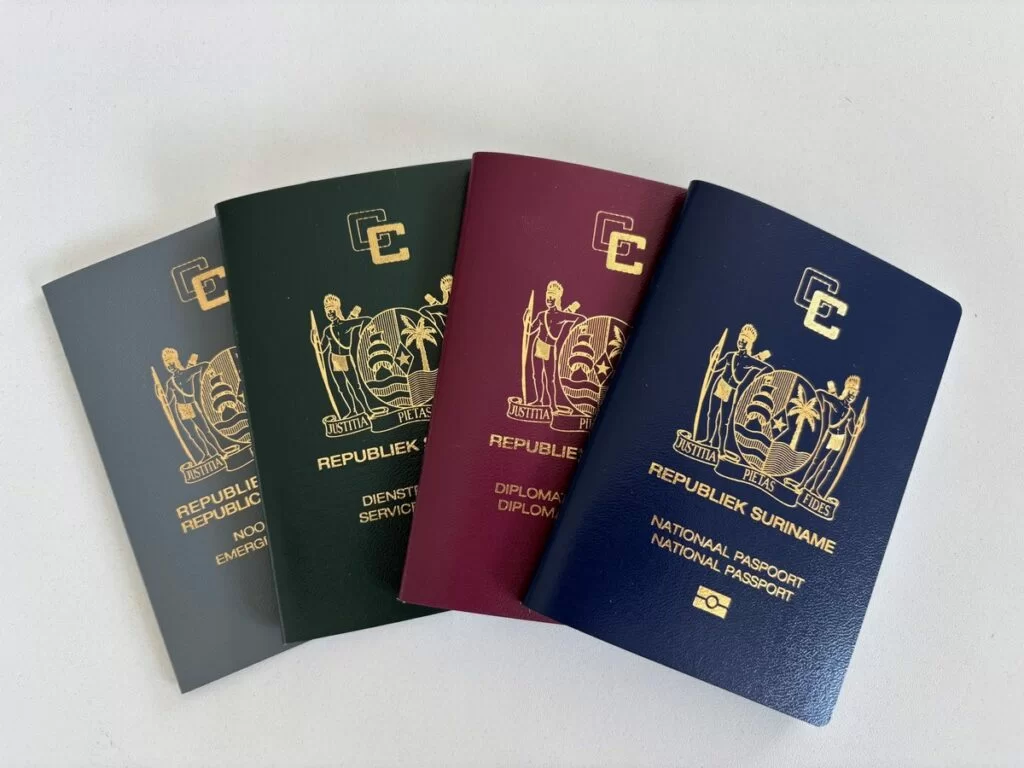
While the situation has stabilized in the Netherlands following the court ruling and procedural updates from the Immigration and Naturalisation Service (IND), uncertainty continues to deepen in Suriname, where responsible officials have remained completely silent on the status of the crisis. The controversy centers on a group of NNS-linked players who have been stripped of their Dutch citizenship after obtaining Surinamese nationality to be eligible to represent the Suriname national team. To date, there has been no public update on the status of ongoing legal efforts to resolve the players’ status, leaving the Surinamese football community completely in the dark. This silence has struck a particularly discordant note with fans, who were previously told that NNS was a people-led project built for the Surinamese public.
Across the board, analysts now warn that NNS has been pushed to a dead end by the crisis, confirming it as the unambiguous big loser of the entire passport affair. Despite promising progress the initiative made over the past two years in building up the Suriname national team’s competitive depth and quality, the affair is expected to trigger a rapid decline in the team’s performance. For players eligible to represent both nations, the choice is a clear one: when forced to pick between a multi-year commitment to playing for Suriname and retaining Dutch citizenship that comes with significant professional and personal benefits, almost all will opt to keep their Dutch status. This dynamic is already drying up the pool of eligible talent for NNS, with fewer top players willing to commit to representing the Suriname national side going forward.
In response to the crisis, the report urges Suriname’s football leadership to keep all legal options open, warning against blindly relying on Dutch legal experts who may not prioritize Suriname’s best interests in the dispute.
The biggest winners of the current standoff are Eredivisie top-flight clubs and the KNVB itself. It is an open secret that top Dutch clubs have long been reluctant to release their talented players for international duty with NNS. Many players who have taken time off to play international matches for Suriname in the past returned to their clubs to find reduced playing time, or no spot in the squad at all. With players now increasingly hesitant to commit to Suriname over retaining Dutch citizenship, the KNVB no longer faces the risk of losing high-quality talent to the Suriname national team.
The next key milestone for the future of the “NNS construction project” will come in September, when the next round of Nations League matches kicks off. That window will reveal whether the initiative can get back on track, or if it will have to be scrapped entirely after the damage of the passport affair.
-
Johnny Kasdjo wordt vandaag tot DNA toegelaten namens VHP
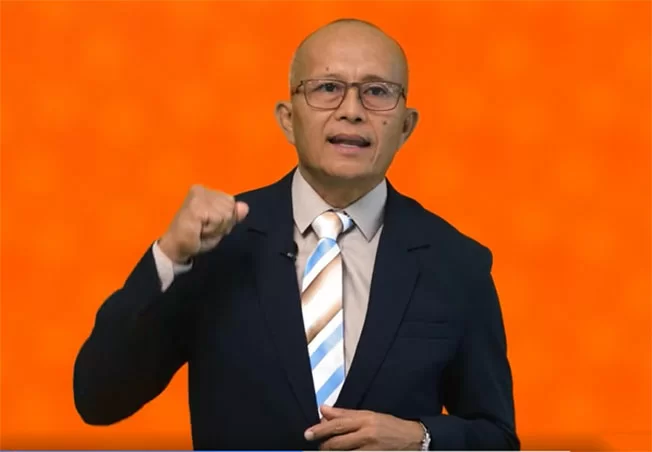
Nearly one year after Suriname’s general elections, a long-awaited parliamentary vacancy is being filled this May 14, following the passing of veteran Progressive People’s Party (VHP) leader and sitting lawmaker Chan Santokhi. Johnny Kasdjo, a community-focused candidate from the Commewijne district, will be formally sworn in as a new member of the National Assembly (DNA) during a plenary session scheduled to kick off at 9:00 a.m. local time.
Kasdjo’s path to parliament follows a chain of events set in motion by last year’s election cycle. During the May 2025 vote, Kasdjo occupied the 18th spot on the VHP’s party candidate list. The party ultimately secured 17 seats in the election, leaving Kasdjo just outside the threshold for a parliamentary seat, with no immediate path to representation. Santokhi’s passing earlier this year opened an unexpected vacancy, triggering a sequential shift in the VHP candidate rankings that elevates Kasdjo to fill the empty seat.
Hailing from the Commewijne region, Kasdjo built his local profile during the 2025 election campaign around a platform rooted in “integrity and decisive action,” urging voters to support him based on this commitment to principled governance. He has shared publicly that Santokhi personally reached out to invite him to join the VHP, and he made the decision to align with the party after being inspired by the late leader’s approach to public service.
In the months leading up to his swearing-in, Kasdjo has centered his work on addressing local issues across his home district of Commewijne. Known as a socially engaged community advocate, he has provided direct support to vulnerable communities in areas facing hardship across the region. In last year’s general election, he earned 968 individual votes from constituents.
Beyond Kasdjo’s formal admission to the legislative body, Wednesday’s parliamentary agenda includes two other key scheduled sessions. Lawmakers will continue progressing on two priority pieces of legislation: the Country Law and the Fire Department Bill, moving both policy proposals through their next stages of legislative review.
-
STVS verwerft exclusieve uitzendrechten WK 2026 voor Suriname
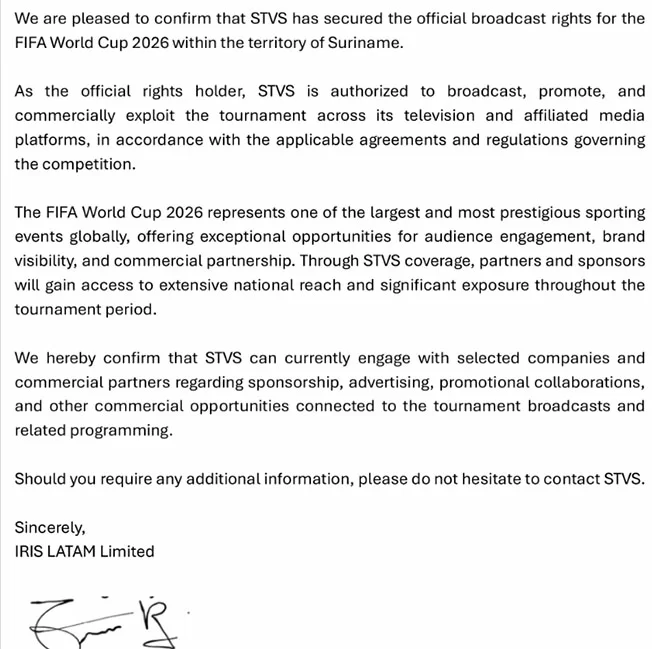
Suriname’s national public broadcaster De Surinaamse Televisie Stichting (STVS) has received official confirmation that it will act as the exclusive licensee and broadcaster for the 2026 FIFA World Cup across the South American nation. The landmark agreement grants STVS full exclusive rights to air the world’s biggest football tournament across television, radio, and digital social media platforms within Suriname’s borders.
In an official press statement released this week, STVS announced that the confirmation came via formal documentation from FIFA and regional rights handler IRIS LATAM Limited. The FIFA correspondence confirms that IRIS LATAM holds authorization to issue sublicenses for broadcast rights across the Latin American and Caribbean region, including Suriname. IRIS LATAM has separately issued written confirmation formally awarding STVS the exclusive rights to the 2026 men’s World Cup for the Surinamese market.
The 2026 FIFA World Cup, the first 48-team iteration of the tournament in history, is scheduled to take place across June and July 2026, co-hosted by three North American nations: the United States, Mexico, and Canada. In preparation for the tournament, STVS has outlined plans to deliver comprehensive, all-encompassing coverage for Surinamese football fans, including exclusive live match broadcasts, in-depth pre- and post-match analysis, on-the-ground reports from the host nations, and custom special programming tailored to local audiences.
STVS has also issued a formal intellectual property notice regarding World Cup content. The broadcaster stressed that no unapproved use of 2026 World Cup visual or audio material for commercial purposes is permitted without prior written consent from STVS. A limited exception applies for journalistic news use, allowing outlets to use up to 15 seconds of World Cup match footage for news segments.
Industry analysts note that the agreement cements STVS’s long-held position as Suriname’s leading national broadcaster for major international sporting events, expanding its track record of delivering top-tier global sports content to domestic audiences. For Surinamese football fans, the deal guarantees free-to-access domestic coverage of the 2026 tournament, eliminating uncertainty around broadcast access ahead of the opening match.
-
Volksgezondheid: risico op hantavirus in Suriname momenteel zeer laag
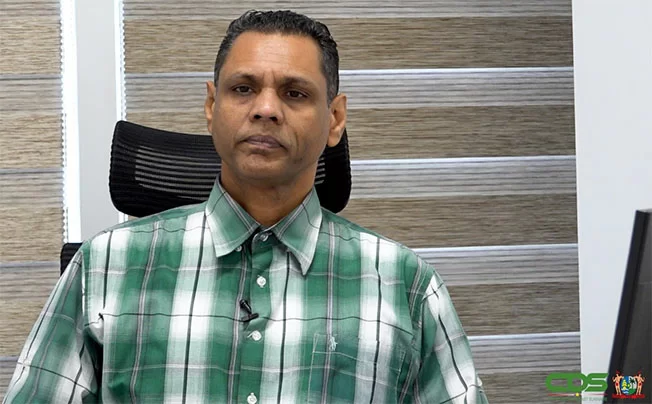
Following an international hantavirus scare linked to a recent cruise ship infection that resulted in one fatality, Suriname’s Ministry of Public Health, Welfare and Labor is reassuring the public there is no cause for panic, while urging heightened awareness across the country.
Rakesh Gajadhar Sukul, Director of Public Health of Suriname, confirmed that the overall risk of a hantavirus outbreak for Suriname and other Caribbean nations remains low, despite global concern sparked by the incident involving a Netherlands-registered cruise vessel. Two passengers on the ship developed flu-like symptoms that rapidly progressed into severe pneumonia, with one patient ultimately succumbing to the infection. Subsequent testing confirmed the cause was hantavirus, which the couple contracted after exposure to infected rodents during a trip to Argentina.
Gajadhar Sukul shared official guidance via the Suriname Communication Service, explaining that hantavirus is primarily transmitted through the urine, feces, and saliva of infected rodents. The Caribbean Public Health Agency (CARPHA) has corroborated the assessment that regional risk is limited, a conclusion that is largely based on the fact that the specific rodent species that carry the virus are not native to the Caribbean region.
The director emphasized that hantavirus is not a newly emerging pathogen; medical science has documented the virus since the 1950s. After exposure, symptoms develop between one and six weeks, starting with flu-like indicators including fever, fatigue, and muscle aches. In severe cases, the infection advances to life-threatening severe pneumonia. Of particular note, the Andes variant involved in the cruise ship incident can spread between humans through close contact, and carries a 35% to 40% mortality rate for severe cases.
Suriname’s health authorities are currently focusing their efforts on prevention and public hygiene. While the virus-carrying rodents are not present locally, Gajadhar Sukul stressed that Suriname must remain alert to other rodent-borne diseases already present in the region, such as Weil’s disease. The ministry is calling on all communities to avoid contact with rodents and maintain clean living environments. Simple preventive measures including sealing gaps and openings in residential structures, storing food in secure rodent-proof containers, and preventing waste accumulation can drastically lower the risk of any rodent-borne infection, according to the official.
In addition to community hygiene guidance, the Suriname government has partnered with the Maritime Authority of Suriname (MAS) to implement stricter inspections for shipping and import activities. This enhanced screening is designed to prevent new pathogens from being introduced to the country’s borders.
Gajadhar Sukul noted that while drastic large-scale public health measures are not justified at this time, sustained vigilance remains a critical priority. “We need to keep the virus out of our borders, while also ensuring we can deploy a rapid response if any suspected cases do arise,” he said.
Beyond hantavirus, the ministry continues to prioritize public health monitoring and education for other common vector-borne diseases endemic to the region, including dengue, Zika, chikungunya, and malaria. “We urge all residents to follow official public health guidance, and help eliminate conditions that create breeding grounds for rodents. This is how we protect not just ourselves, but our entire community,” the public health director stated.
-

OPEC verlaagt voorspelling voor wereldwijde groei olieconsumptie in 2026
On May 13, 2026, the Organization of the Petroleum Exporting Countries (OPEC) announced a downward revision to its 2026 global oil consumption growth projection, citing ongoing economic and supply chain disruptions sparked by the war in Iran. The adjustment aligns OPEC’s outlook with earlier bearish forecasts from leading energy bodies, including the International Energy Agency (IEA), which had tightened its own estimate of reduced global oil use earlier the same day.
Under the new projections, OPEC now forecasts global oil demand will grow by 1.17 million barrels per day (bpd) in 2026. That marks a 210,000 bpd cut from the cartel’s prior forecast of 1.38 million bpd growth. In a contrasting move, the organization upgraded its 2027 demand growth estimate by 200,000 bpd, bringing the new projection to 1.54 million bpd. Even amid heightened geopolitical instability concentrated in the Middle East, OPEC reaffirmed its view that the global economy remains resilient, leaving its broader economic growth projections unchanged.
The ongoing conflict in Iran has effectively closed the Strait of Hormuz, one of the world’s most critical chokepoints for global oil trade, which carries roughly a fifth of all globally traded oil out of the Middle East. The closure has pulled millions of barrels of oil off international markets, triggering a sharp spike in global fuel prices. Rising energy costs have placed intense pressure on household budgets and business operating expenses, pushing governments around the world to implement emergency fuel conservation measures and draw down strategic petroleum reserves to cool prices.
For the second quarter of 2026, OPEC projects average global oil consumption will hit 104.57 million bpd, a slight downward adjustment from the 105.07 million bpd forecast it released in its previous monthly report. This is not the first cut to the Q2 2026 forecast: the projection was already trimmed by 500,000 bpd in OPEC’s prior monthly outlook.
The Strait of Hormuz disruption has also derailed pre-existing production plans agreed by OPEC+, the expanded coalition of oil-producing nations that combines OPEC members and independent allies including Russia. The group had agreed to ramp up collective oil production starting in April 2026, but the closure of the key trade route forced a reversal of that plan. Data shows OPEC+ collective oil production fell by 1.74 million bpd in April compared to March, settling at an average of 33.19 million bpd. This figure excludes production from the United Arab Emirates, which formally withdrew from OPEC on May 1.
-
OWRO werkt aan ontwatering getroffen gebieden; kampt met tekort aan middelen
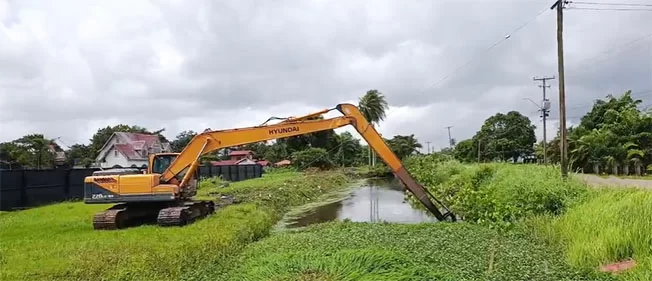
In the wake of severe Sunday rainfall that triggered widespread flooding across low-lying communities in Suriname, the country’s Ministry of Public Works and Spatial Planning (OWRO) has launched urgent drainage clearance operations across the hardest-hit regions, progressing through key outlet pipelines as crews work against constrained resource limits to mitigate flood damage.
Work has already been completed on clearing pipelines 7A and 8A, with the ministry’s Drainage Division now shifting focus to Pipeline 10A – a project that is expected to bring much-needed flood relief to the residential area of Sophiaslust. Additional clearance work is also ongoing in Manjadam (Domburg), Welgedacht C, Kasabaholokreek, and along Abigaëlslustweg, targeting the most acutely waterlogged zones.
Vinodh Ramautar, head of the Drainage Division, told local reporters that core clearing operations are being run in-house by the ministry, with a small number of private contractors also supporting targeted outlet clearance projects. However, severe resource gaps are slowing the response: the ministry currently only operates one long-arm excavator, and two additional machines have been borrowed from the Ministry of Agriculture, Livestock and Fisheries to supplement the fleet. There are not enough available resources to deploy more heavy equipment to speed up work across all affected areas.
Longer-term plans to address chronic drainage issues have already been drafted and submitted, calling for the clearance and upgrading of 200 kilometers of drainage outlets and trenches across Paramaribo and Wanica districts, but the proposal has not yet received final approval. Without additional funding and equipment, Ramautar explained, the division cannot address the flood-related complaints flooding into the department. Crews prioritize on-site assessments before deploying limited machinery, to ensure teams focus on the most urgent crisis points first. “We are inundated with complaints, and we are doing everything possible to alleviate the worst distress,” Ramautar stated.
At present, a private contractor is carrying out outlet clearing work in Pontbuiten and Winti Wai. Two weeks ago, the ministry completed drainage work in Rehamal, but the intervention has proven insufficient to resolve persistent flooding. A new contract has now been signed with a private contractor to carry out additional work, which has not yet started, alongside a separate contract for the deployment of a sewage suction truck. Drainage improvement work is also underway along Hendrikstraat, near Tweede Rijweg, where multiple residential properties have been submerged by floodwater.
Ramautar emphasized that additional funding and heavy equipment are critical to addressing the full scope of the country’s drainage problems. The ministry does not own a sewage suction truck of its own, forcing it to rely on private contractors for this key work, and it is impossible to clear all drainage pipelines across the country with current resources. While the long-term national drainage plan calls for full clearing of all drainage pipelines, crews are currently limited to clearing pipeline mouthings wherever possible to maximize water flow into the Saramaccakanaal and reduce local flood buildup.
-
Cultuurdragers zien Heritage Month als stap naar meer nationale eenheid
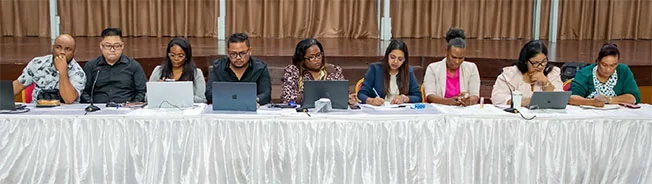
In a series of collaborative consultation sessions held at Suriname’s Congress Hall, cultural leaders, civil society organizations, and youth representatives have united around building momentum for the country’s first-ever National Heritage Month, scheduled to launch this coming August. Organized by the Presidential Working Group for Heritage Month, the two-day gathering held earlier this week centered on the unifying theme “However we came together here – how we move forward together”, framing the inaugural event as a landmark step for the South American nation’s diverse social fabric.
Nearly all participants expressed enthusiastic support for the initiative, echoing a shared belief that the month-long celebration will strengthen national unity, foster a collective sense of shared identity, and reinforce social cohesion across Suriname’s famously multicultural population. Renowned Surinamese author and historian Cynthia McLeod emphasized that the initiative fills a critical gap, given the nation’s layered, centuries-long history and extraordinary cultural diversity. For McLeod, it is essential that all Surinamese people develop a deep awareness of their collective inherited heritage, and gain tools to pass these cultural narratives down to future generations. She also publicly called for organizers to turn Heritage Month into an annual recurring tradition, rather than a one-off event.
Beyond its social and cultural value, McLeod noted that Suriname’s unique cultural diversity holds enormous untapped potential for the country’s tourism sector. “Our heritage is so fantastic, so diverse, and yet together we form this beautiful Suriname,” she told attendees, urging all segments of Surinamese society to actively participate in the full schedule of planned activities for the inaugural month.
Tanuya Manichand, a respected cultural bearer, dance instructor, and oral storyteller, echoed McLeod’s support, framing the broad stakeholder consultation process itself as a promising first step. She pointed out that the high level of engagement from cultural leaders and community groups across the country demonstrates clear public demand for a dedicated, ongoing platform that centers culture and collective identity as core national priorities. Like McLeod, Manichand stressed that the event should not remain a one-time project, noting “We need to build something that people can keep looking forward to year after year.” She added that the celebration should maintain a clear focus on answering two core questions: What does it mean to be Surinamese, and what shared values bind the nation’s diverse communities together?
Florence Jamin-Wangsabesari, chair of the Suriname Pencak Silat Association, brought the perspective of a practice already recognized globally as intangible cultural heritage. Pencak Silat, the traditional Indonesian martial art, has deep roots in Suriname’s multicultural communities, and Jamin-Wangsabesari explained that her association does not just promote the discipline as a sport – it uses it as a living tool to preserve shared cultural heritage, which is already recognized by UNESCO. She emphasized that cross-ethnic, cross-cultural collaboration is central to the success of any national heritage initiative, and argued that young people must be more actively included in cultural programming to prevent long-held traditions from fading over time. In line with this goal, her association already brings Pencak Silat programming directly to Surinamese schools to reach new generations.
Rachel Pinas, chair of the 2026 Presidential Working Group for Heritage Month, confirmed that youth engagement is a core priority from the earliest planning stages. “Young people are the future heritage bearers, and they are the ones who will carry our cultural stories forward for the next generation,” she explained, noting that all feedback and ideas shared by youth participants during the consultation sessions will be integrated directly into the final planning and execution of the inaugural Heritage Month.
Youth participants have responded overwhelmingly positively to being included in the early planning process. Ceejay Wiebers, one of the young attendees at the consultation, noted that bringing the next generation into the process early is critical to preventing cultural loss, as young people will be the ones stewarding these traditions going forward. Urvin Doekoe, representing The Colors Foundation Suriname, added that the Heritage Month initiative aligns perfectly with his organization’s core work, which centers on supporting youth and elevating the cultural heritage of Suriname’s Maroon and Indigenous communities.
-
Monorath: Elektrische voertuigen moeten eindelijk wettelijk geregeld worden
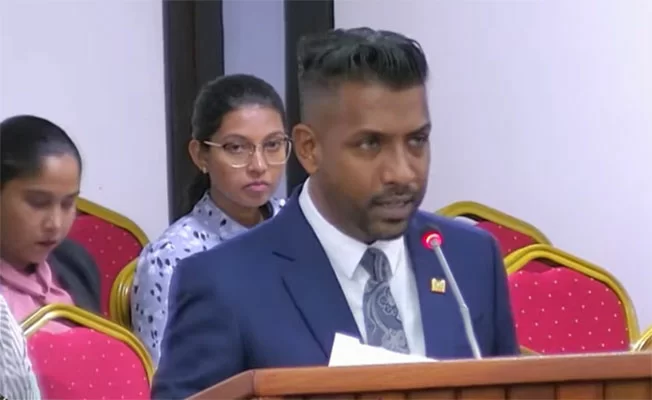
On Tuesday, Suriname’s Minister of Justice and Police Harish Monorath mounted a robust defense of proposed amendments to the country’s 1971 Road Act during a sitting of the National Assembly, framing the legal updates as a critical step to close long-standing regulatory gaps for the fast-growing electric vehicle segment.
Monorath told lawmakers that Suriname currently lacks a clear, modern legal framework to govern e-bikes, electric mopeds, and other light electric vehicles, a gap that has undermined law enforcement efforts and put public road safety at risk. Outdated existing legislation, he emphasized, has not kept pace with rapid technological innovation in the transportation sector, leaving ambiguity around which traffic rules apply to electric vehicle operators and how violations should be addressed through the judicial system.
Under the proposed changes, all electric vehicles will be formally brought under the scope of the Road Act and the Motor Vehicle Liability Insurance Act. This adjustment will not only allow criminal prosecution for traffic violations committed by electric vehicle operators but will also formalize mandatory insurance requirements for all EV owners.
The revised regulatory framework will introduce clear, separate definitions for key EV categories, Monorath confirmed. Pedal-assisted e-bikes will be capped at a maximum speed of 25 kilometers per hour, while electric mopeds will be allowed to reach top speeds of up to 45 kilometers per hour.
The minister acknowledged that the Surinamese government currently does not have a complete count of e-bikes operating in the country, as many are imported in disassembled parts to avoid registration requirements. To address this, the government is developing a dedicated license plate system for e-bikes that will allow officials to clearly distinguish these vehicles from other road users.
Monorath also outlined ongoing preparations to implement the new rules, noting that law enforcement currently lacks the specialized equipment needed to conduct technical inspections of electric vehicles. Required testing equipment, including dynamometers and speed measurement tools, has already been ordered, and additional training will be provided to police officers and other implementing agencies to build capacity for enforcement.
Once the amended act enters into force, existing electric vehicle owners will receive a 12-month grace period to complete required inspections and secure mandatory insurance, Monorath announced. Public education campaigns will also be rolled out in three languages – Dutch, Sranantongo, and Spanish – to ensure all road users understand the new regulatory requirements.
During the National Assembly debate, lawmakers raised significant concerns about enforcement capacity, pointing out that existing traffic inspections are already under-resourced and inconsistent. Monorath acknowledged that consistent enforcement will remain a long-term challenge, but stated that stepped-up patrols, new equipment, and additional resourcing for the Suriname Police Force will collectively improve overall road safety outcomes.
The minister also flagged an additional unaddressed risk: the Suriname Fire Department currently lacks specialized equipment to safely extinguish electric vehicle battery fires. Additional specialized resources will need to be allocated for this purpose in coming years, he added.
Following the first round of debate, the sitting was adjourned until next Tuesday, to allow the committee of rapporteurs led by ABOP lawmaker Stanley Betterson and assembly members to conduct a second round of deliberations on the proposed amendments.
-
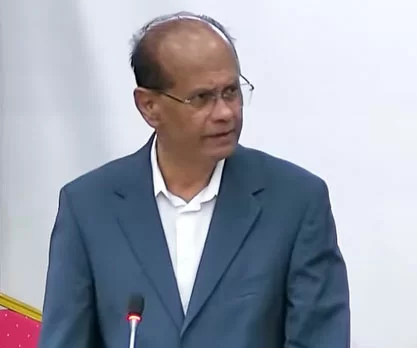
Parmessar terug in DNA na ziekenhuisopname wegens chikungunya
Less than two weeks after being hospitalized for an unexpected acute illness, National Democratic Party (NDP) parliamentary faction leader Rabin Parmessar has made a full recovery and returned to his post in Suriname’s National Assembly (De Nationale Assemblée, DNA), where he was formally welcomed back by fellow legislators in a plenary session held Tuesday.
DNA Speaker Ashwin Adhin opened the Tuesday session by extending warm greetings to Parmessar on behalf of the entire legislative body, expressing sincere relief and joy at his return to parliamentary work. “We could not be happier to have you back among us once again,” Adhin said in his opening remarks.
In his first public address since his hospitalization, Parmessar thanked the dozens of colleagues, supporters and medical staff who extended support to him during his recovery. He specifically credited the quick response from fellow DNA members who arranged for immediate medical care when he first became ill, a timely intervention that he said made a major difference in his treatment outcome.
Parmessar confirmed Tuesday that official test results completed earlier that day confirmed he had been infected with chikungunya, a mosquito-borne viral infection that causes severe joint pain, fatigue and other acute symptoms. He emphasized that he would not have been able to recover so quickly without the constant support he received from the parliamentary community and medical teams. “It is only because of the thoughtful, prompt care and support from everyone that I am able to stand here again today,” Parmessar said.
The NDP leader also extended special thanks to clinical staff at Suriname’s Academic Hospital, where he received treatment. He noted that his return to work coincided with International Nurses Day, using the opportunity to highlight the critical work of nurses and frontline medical staff across the country, who continue to deliver care under challenging working conditions.
“I feel incredibly blessed to have received such outpouring of attention, high-quality care, and warmth from every single person during my illness,” Parmessar added, closing his remarks.