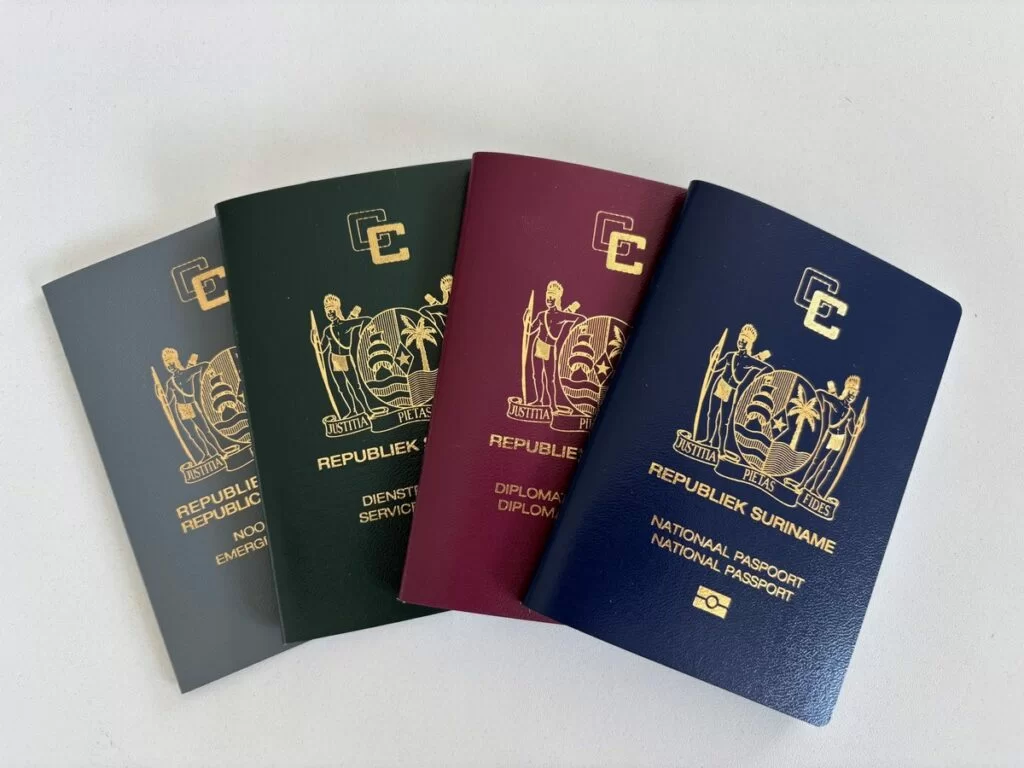
More than a month after the controversial sports passport dispute erupted, the future of Suriname’s ambitious national football initiative Natio Nieuwe Stijl (NNS) remains shrouded in uncertainty, with the project now teetering on the edge of collapse after a series of crippling setbacks.
The legal battle that sparked the crisis was launched by Dutch football club NAC Breda, which challenged the status of players linked to NNS. Last week, a Dutch court ruled against NAC Breda, clearing the way for the remainder of the Dutch domestic football season to proceed as scheduled without disruption. But for NAC, the defeats have piled up rapidly: the ruling was not the only blow, as the club has already been officially relegated to the Keuken Kampioen Divisie, the second tier of Dutch professional football.
For the wider dispute, the immediate crisis has eased in the Netherlands. The Royal Dutch Football Association (KNVB) opted not to issue disciplinary sanctions to any parties involved, and all players have now regained full access to their club facilities. But the damage to NNS has already been done, with the entire development trajectory of the initiative brought to an abrupt halt by months of lingering uncertainty.
While the situation has stabilized in the Netherlands following the court ruling and procedural updates from the Immigration and Naturalisation Service (IND), uncertainty continues to deepen in Suriname, where responsible officials have remained completely silent on the status of the crisis. The controversy centers on a group of NNS-linked players who have been stripped of their Dutch citizenship after obtaining Surinamese nationality to be eligible to represent the Suriname national team. To date, there has been no public update on the status of ongoing legal efforts to resolve the players’ status, leaving the Surinamese football community completely in the dark. This silence has struck a particularly discordant note with fans, who were previously told that NNS was a people-led project built for the Surinamese public.
Across the board, analysts now warn that NNS has been pushed to a dead end by the crisis, confirming it as the unambiguous big loser of the entire passport affair. Despite promising progress the initiative made over the past two years in building up the Suriname national team’s competitive depth and quality, the affair is expected to trigger a rapid decline in the team’s performance. For players eligible to represent both nations, the choice is a clear one: when forced to pick between a multi-year commitment to playing for Suriname and retaining Dutch citizenship that comes with significant professional and personal benefits, almost all will opt to keep their Dutch status. This dynamic is already drying up the pool of eligible talent for NNS, with fewer top players willing to commit to representing the Suriname national side going forward.
In response to the crisis, the report urges Suriname’s football leadership to keep all legal options open, warning against blindly relying on Dutch legal experts who may not prioritize Suriname’s best interests in the dispute.
The biggest winners of the current standoff are Eredivisie top-flight clubs and the KNVB itself. It is an open secret that top Dutch clubs have long been reluctant to release their talented players for international duty with NNS. Many players who have taken time off to play international matches for Suriname in the past returned to their clubs to find reduced playing time, or no spot in the squad at all. With players now increasingly hesitant to commit to Suriname over retaining Dutch citizenship, the KNVB no longer faces the risk of losing high-quality talent to the Suriname national team.
The next key milestone for the future of the “NNS construction project” will come in September, when the next round of Nations League matches kicks off. That window will reveal whether the initiative can get back on track, or if it will have to be scrapped entirely after the damage of the passport affair.