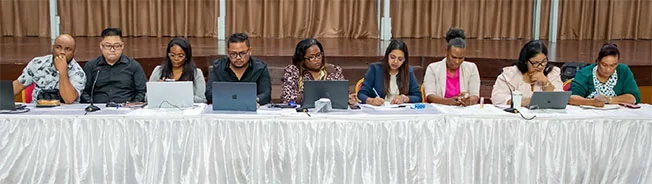
In a series of collaborative consultation sessions held at Suriname’s Congress Hall, cultural leaders, civil society organizations, and youth representatives have united around building momentum for the country’s first-ever National Heritage Month, scheduled to launch this coming August. Organized by the Presidential Working Group for Heritage Month, the two-day gathering held earlier this week centered on the unifying theme “However we came together here – how we move forward together”, framing the inaugural event as a landmark step for the South American nation’s diverse social fabric.
Nearly all participants expressed enthusiastic support for the initiative, echoing a shared belief that the month-long celebration will strengthen national unity, foster a collective sense of shared identity, and reinforce social cohesion across Suriname’s famously multicultural population. Renowned Surinamese author and historian Cynthia McLeod emphasized that the initiative fills a critical gap, given the nation’s layered, centuries-long history and extraordinary cultural diversity. For McLeod, it is essential that all Surinamese people develop a deep awareness of their collective inherited heritage, and gain tools to pass these cultural narratives down to future generations. She also publicly called for organizers to turn Heritage Month into an annual recurring tradition, rather than a one-off event.
Beyond its social and cultural value, McLeod noted that Suriname’s unique cultural diversity holds enormous untapped potential for the country’s tourism sector. “Our heritage is so fantastic, so diverse, and yet together we form this beautiful Suriname,” she told attendees, urging all segments of Surinamese society to actively participate in the full schedule of planned activities for the inaugural month.
Tanuya Manichand, a respected cultural bearer, dance instructor, and oral storyteller, echoed McLeod’s support, framing the broad stakeholder consultation process itself as a promising first step. She pointed out that the high level of engagement from cultural leaders and community groups across the country demonstrates clear public demand for a dedicated, ongoing platform that centers culture and collective identity as core national priorities. Like McLeod, Manichand stressed that the event should not remain a one-time project, noting “We need to build something that people can keep looking forward to year after year.” She added that the celebration should maintain a clear focus on answering two core questions: What does it mean to be Surinamese, and what shared values bind the nation’s diverse communities together?
Florence Jamin-Wangsabesari, chair of the Suriname Pencak Silat Association, brought the perspective of a practice already recognized globally as intangible cultural heritage. Pencak Silat, the traditional Indonesian martial art, has deep roots in Suriname’s multicultural communities, and Jamin-Wangsabesari explained that her association does not just promote the discipline as a sport – it uses it as a living tool to preserve shared cultural heritage, which is already recognized by UNESCO. She emphasized that cross-ethnic, cross-cultural collaboration is central to the success of any national heritage initiative, and argued that young people must be more actively included in cultural programming to prevent long-held traditions from fading over time. In line with this goal, her association already brings Pencak Silat programming directly to Surinamese schools to reach new generations.
Rachel Pinas, chair of the 2026 Presidential Working Group for Heritage Month, confirmed that youth engagement is a core priority from the earliest planning stages. “Young people are the future heritage bearers, and they are the ones who will carry our cultural stories forward for the next generation,” she explained, noting that all feedback and ideas shared by youth participants during the consultation sessions will be integrated directly into the final planning and execution of the inaugural Heritage Month.
Youth participants have responded overwhelmingly positively to being included in the early planning process. Ceejay Wiebers, one of the young attendees at the consultation, noted that bringing the next generation into the process early is critical to preventing cultural loss, as young people will be the ones stewarding these traditions going forward. Urvin Doekoe, representing The Colors Foundation Suriname, added that the Heritage Month initiative aligns perfectly with his organization’s core work, which centers on supporting youth and elevating the cultural heritage of Suriname’s Maroon and Indigenous communities.