标签: Suriname

苏里南

  • Milieuorganisaties waarschuwen: Grootschalige sojateelt bedreigt Surinaams oerbos

    Milieuorganisaties waarschuwen: Grootschalige sojateelt bedreigt Surinaams oerbos

    A coalition of environmental organizations in Suriname has issued an urgent warning about planned large-scale soybean cultivation that poses a severe threat to the country’s primary forests. The allocation of 113,000 hectares of agricultural land, including 50,000 hectares dedicated to soybean production, risks the loss of over 7% of Suriname’s forest cover, potentially jeopardizing its status as the “greenest country on Earth.”

    The Green NGO Collective delivered an open letter to parliament highlighting how massive agricultural expansion contradicts the government’s own “Green Development Strategy,” which explicitly identifies large-scale agriculture as the worst-case scenario for the nation’s environmental future. The groups detailed numerous ecological concerns, including deforestation, biodiversity loss, soil and water contamination from agricultural chemicals, and disruption of critical watersheds essential for rice field irrigation.

    Environmentalists note that these developments directly conflict with Suriname’s official 50-year structural vision, which excludes large-scale agriculture in primary forests and concentrates farming activities in traditional agricultural zones such as Nickerie, Coronie and Saramacca.

    The coalition is demanding parliamentary clarification on how massive agricultural concessions in pristine forests align with both national policy and international environmental agreements. They emphasize that deforestation not only causes environmental damage but could also trigger social conflicts by displacing indigenous communities and undermining their traditional ways of life.

    While acknowledging potential economic benefits from large-scale agriculture, the organizations warn of unequal profit distribution, increased dependence on foreign corporations, and the loss of sustainable economic potential in the long term. Additionally, environmental degradation could lead to higher healthcare costs due to pollution-related health issues in affected regions.

    The environmental groups remain open to dialogue and hope for a constructive government response to collaboratively develop a sustainable future for Suriname that balances economic development with environmental preservation.

  • Iran waarschuwt voor olieprijs van $200 per vat terwijl het handelsvaartuigen aanvalt

    Iran waarschuwt voor olieprijs van $200 per vat terwijl het handelsvaartuigen aanvalt

    The Middle East faces a severe energy crisis as Iran threatens to drive oil prices to $200 per barrel amid escalating military conflicts. This warning comes as the International Energy Agency (IEA) recommends the largest-ever release of strategic oil reserves—400 million barrels—to mitigate one of the most significant oil shocks since the 1970s.

    The conflict, which began nearly two weeks ago with joint U.S.-Israeli airstrikes, has resulted in approximately 2,000 fatalities, primarily Iranians and Lebanese. The war has expanded into Lebanon and caused substantial disruption to global energy markets and maritime transport. Iranian Revolutionary Guard forces have targeted commercial vessels in the Gulf, with three ships struck recently after ignoring Iranian commands. A Thai-flagged bulk carrier was set ablaze, leading to crew evacuations and three missing persons.

    Despite intense aerial bombardments described by the Pentagon as the most severe since the war began, Iran demonstrated its capacity to retaliate with attacks on Israeli and Middle Eastern targets. Israel’s Defense Minister stated that military operations would continue “without time limits until all objectives are met,” while former President Trump suggested the campaign might be nearing its conclusion.

    The Strait of Hormuz, a critical oil export route, remains unsafe for shipping due to Iranian mine placements, strengthening the blockade. Iran warned that economic and trade centers in the region could become legitimate targets if attacks persist.

    Oil prices, which nearly reached $120 per barrel earlier in the week, fell to around $90 before surging nearly 5% on Wednesday due to renewed tensions. Wall Street’s major indices declined as investors grappled with the prospect of prolonged conflict.

    The U.S. State Department issued warnings about potential Iranian attacks on American oil and energy infrastructure in Iraq. Meanwhile, the FBI alerted the public to possible Iranian drone attacks on the U.S. West Coast, though Trump expressed confidence in U.S. defenses.

    Despite calls from Turkey and European nations for a ceasefire, both U.S. and Israeli objectives remain focused on crippling Iran’s regional power projection capabilities and nuclear program. Iranian military spokesperson Ebrahim Zolfaqari emphasized the country’s intent to inflict prolonged economic shock through oil market disruption.

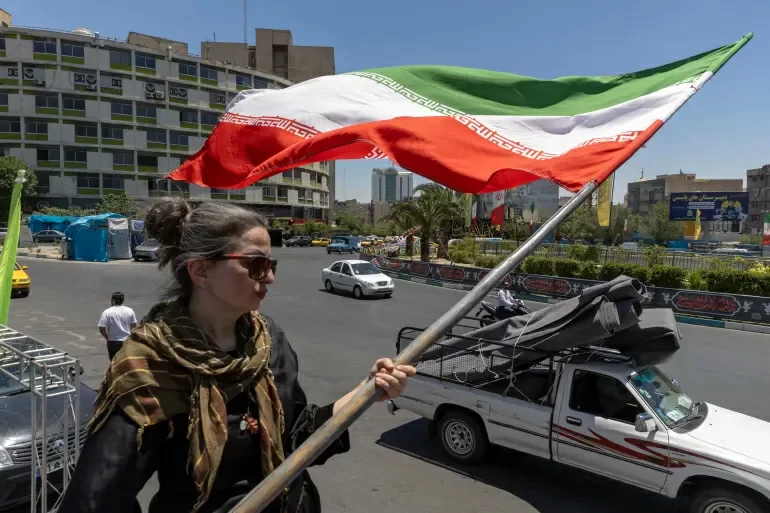
    Internal dynamics in Iran show resilience despite external pressure. Mass funeral processions were held for fallen commanders, including Supreme Leader Ayatollah Ali Khamenei. Tehran residents have adapted to nightly bombardments and environmental hazards, while Iranian authorities warned against domestic protests.

    Kurdish opposition leader Abdullah Mohtadi claimed tens of thousands of young Iranians are prepared to revolt if supported by the U.S., though Israeli officials privately acknowledge the regime’s likely survival.

  • Column: Compleet slagveld

    Column: Compleet slagveld

    A championship final between Brazilian football clubs Cruzeiro and Atlético Mineiro deteriorated into unprecedented violence, resulting in a world record 23 red cards being issued during what became one of the most disgraceful incidents in football history.

    The match, initially anticipated as a showcase of elite athletic competition, turned violent following a contentious collision between an attacker and goalkeeper. The goalkeeper, reacting to what he perceived as reckless play, physically threw the opposing player to the ground, triggering a mass brawl that engulfed nearly all players on the field.

    What ensued resembled a street fight more than professional sports, with players exchanging punches and kicks that left several participants injured. The referee struggled to maintain control as players demonstrated complete disregard for authority and sportsmanship, violating FIFA’s long-standing principles of respect and fair play.

    This incident shattered the previous record for red cards in a single match, which had stood for over seventy years when 22 players were ejected during another Brazilian fixture. The spectacle stood in stark contrast to football’s celebrated role as a unifying force in Brazilian culture, instead revealing the dangerous consequences when rivalry overshadows sportsmanship.

    Football analysts and officials are calling for severe sanctions beyond financial penalties, including extended suspensions for participants. The incident has sparked urgent discussions about implementing stricter measures to prevent such outbreaks of violence and preserve the integrity of the sport.

  • Steeds meer landen zien hoogste benzineprijzen sinds VS-Iran oorlog

    Steeds meer landen zien hoogste benzineprijzen sinds VS-Iran oorlog

    A widespread fuel crisis has emerged across global markets, with at least 85 countries reporting significant gasoline price increases since the commencement of US-Israel military operations against Iran on February 28. The conflict has triggered substantial disruptions in global energy supplies, particularly affecting nations dependent on the Strait of Hormuz for oil imports.

    In the United States, average gasoline prices have surged by 20 percent according to AAA Fuel Prices data, climbing from $2.94 per gallon in February to $3.58 currently. Several states have exceeded the $4 per gallon threshold, with California reaching prices above $5 per gallon—the highest recorded level in over two years.

    Asian economies have experienced the most dramatic price escalations. Vietnam recorded the most severe increase at nearly 50 percent, followed by Laos (33%), Cambodia (19%), Australia (18%), and the United States (17%). The region’s particular vulnerability stems from its heavy reliance on the Strait of Hormuz, which has remained virtually closed since conflict initiation. This critical maritime passage serves as the primary route for Persian Gulf oil exporters to access international waters.

    Japan and South Korea face exceptional exposure, importing 95% and 70% of their oil respectively from the Gulf region. Both nations have implemented emergency measures: Japan has prepared strategic oil reserves for potential release, while South Korea has instituted maximum price controls on gasoline and diesel for the first time in three decades.

    The situation proves even more critical in South Asia, where nations like Pakistan and Bangladesh possess limited financial buffers and smaller strategic reserves. Bangladesh has closed all universities to conserve energy, while Pakistan has implemented a four-day workweek for government offices, shuttered educational institutions, and mandated 50% work-from-home arrangements.

    G7 finance ministers convened an emergency meeting to address the escalating energy crisis. French President Emmanuel Macron proposed releasing 20-30% of strategic emergency reserves to alleviate consumer pressure. Economists warn that rising oil prices directly increase shipping and transportation costs, creating logistical and supply chain challenges that affect every sector of the global economy.

    Concerns are mounting regarding potential stagflation—a combination of rising inflation and increasing unemployment historically associated with major oil shocks. Each significant oil price surge throughout modern history (1973, 1978, 2008) has preceded global recessions.

    The crisis extends beyond transportation fuels, as petroleum products form the foundation of countless everyday items including plastics, synthetic fabrics, cosmetics, and household detergents. Furthermore, the global food supply chain heavily depends on natural gas for fertilizer production, threatening agricultural yields and food security worldwide.

    Crude oil prices have increased approximately 50% since the initial attacks, with analysts anticipating further price hikes as more countries report monthly adjustments in April.

  • Regering en bedrijfsleven bespreken economische impact wereldwijde ontwikkelingen

    Regering en bedrijfsleven bespreken economische impact wereldwijde ontwikkelingen

    President Jennifer Simons of Suriname convened a crucial meeting with top business representatives on Tuesday to address the mounting economic challenges stemming from international market volatility. The high-level discussion focused on developing strategic measures to mitigate the adverse effects of rising costs and global uncertainties on national production and state revenues.

    In attendance were key figures from Suriname’s most influential business associations: the Surinamese Business Association (VSB), the Association of Surinamese Manufacturers (ASFA), and the Association for Small and Medium Enterprises in Suriname (AKMOS). The dialogue centered on analyzing the global economic climate and its specific implications for Surinamese production sectors, alongside the financial stability of both corporations and government coffers.

    VSB Chairwoman Rekha Bissumbhar highlighted the severity of the situation, noting that escalating oil prices and international transportation disruptions have significantly driven up costs for goods and production. “Global developments are affecting us all,” Bissumbhar stated. “With oil prices soaring and transportation to Suriname becoming increasingly challenging, we must collaboratively devise solutions to maintain uninterrupted production.”

    The meeting addressed Suriname’s rising production costs and living expenses triggered by worldwide inflation. Participants explored various containment strategies, including sourcing alternative input materials to curb price increases. Discussions also examined how different economic sectors could contribute to stabilizing state revenues during this period.

    Beyond existing key industries, emphasis was placed on economic diversification through sectors such as agro-industry, tourism, aviation, mining, and oil and gas. Particular attention was given to small and medium-sized enterprises (SMEs) in agriculture and agro-processing, with proposals to create enhanced incentives for scaling operations and achieving greater self-sufficiency.

    Business leaders unanimously agreed that close cooperation between government, private sector, and civil society organizations is essential to navigate current economic challenges and foster sustainable development.

  • Minister Misiekaba: bestuur SZF heeft volledig mandaat om orde te herstellen

    Minister Misiekaba: bestuur SZF heeft volledig mandaat om orde te herstellen

    Health Minister André Misiekaba has publicly endorsed the governing board of Suriname’s State Health Insurance Fund (SZF), granting them full authority to address organizational irregularities following the leak of an internal staff memorandum. In an exclusive interview with Starnieuws, Minister Misiekaba characterized the disclosure of internal matters as deeply regrettable, employing a local proverb to emphasize his point: “Whoever damages their nose, damages their face” – suggesting staff members ultimately harm their own institution through such actions.

    The minister revealed that an ongoing investigation into previous operational developments within SZF has prompted the continued suspension of director Rudrakanth Oemraw. According to ministerial statements, dozens of employees were recently hired outside established staffing frameworks and salary scales, violating statutory procedures that explicitly reserve these decisions for the board’s authority.

    Minister Misiekaba clarified that according to SZF’s statutes, the board holds ultimate managerial responsibility, possessing the legal mandate to review and potentially override directives from management. The board has received concerning reports regarding terminated employment contracts of individuals potentially crucial to the ongoing investigation, raising additional questions about procedural compliance.

    “The board consequently possesses full mandate to restore operational stability,” Misiekaba stated, emphasizing that both management and staff must adhere to the board’s statutory responsibilities. The minister stressed the critical importance of allowing the internal investigation to proceed without interference to ensure its thorough completion.

  • Chili: Nieuw president moet economische storm trotseren te midden van wereldwijde onrust

    Chili: Nieuw president moet economische storm trotseren te midden van wereldwijde onrust

    Chilean President José Antonio Kast assumes office Wednesday amidst mounting global economic challenges that threaten to undermine his ambitious reform agenda. Elected in December on promises of robust economic growth and deregulation, Kast now confronts a dramatically altered international landscape shaped by the Iran conflict’s disruptive impact on worldwide markets.

    Political analyst Kenneth Bunker of San Sebastian University warns that current volatility in exchange rates, inflation, and economic growth may significantly complicate implementation of Kast’s plans. “If the anticipated growth rate fails to materialize, numerous policy measures could face substantial delays,” Bunker cautioned.

    As the world’s largest copper producer and second-largest lithium supplier, Chile remains particularly vulnerable to international commodity price fluctuations. Copper prices surged from below $10,000 per ton in June 2025 to a peak of $13,618 by January’s end, generating hundreds of millions in additional treasury revenue. Pre-conflict estimates suggested Chile could gain up to $4 billion from elevated copper prices, though recent weeks have seen prices drop 8% from their peak before showing slight recovery.

    The nation’s economic challenges are compounded by its status as one of Latin America’s largest oil importers. With crude prices approaching $120 per barrel since the conflict’s onset, Chile faces intensified inflationary pressures. An Oxford Economics report identifies Chile among the hardest-hit regions globally—alongside Central and Eastern Europe and India—with inflation potentially increasing by 0.4 to 1.7 percentage points in the second quarter.

    University of Santiago economist Marcela Vera emphasizes Chile’s structural vulnerability: “Our economy possesses limited financial protection mechanisms and remains heavily dependent on free trade agreements and primary exports.” Despite initial market optimism that propelled the Chilean stock market (IPSA) to a 65% year-on-year peak in January, subsequent declines exceeding 10% have occurred, with the peso losing approximately 5% of its value since February.

    Chile’s fuel price stabilization fund (MEPCO) operates to cushion price hikes through three-week adjustment cycles, though JPMorgan analysis indicates the mechanism cannot fully neutralize rising oil price effects. December inflation expectations have been revised upward to 3.6%, with risks tilted toward further increases.

    Vera warns that prolonged conflict could transform temporary economic disruptions into chronic conditions: “The impact extends beyond higher oil prices to include elevated logistics costs and a stronger dollar.” President Kast now faces the formidable challenge of delivering on economic growth promises within an increasingly volatile global economic environment.

  • Onrust bij SZF: staf uit zorgen over terugdraaien personeelsbesluiten

    Onrust bij SZF: staf uit zorgen over terugdraaien personeelsbesluiten

    Senior staff members at the Dutch National Health Fund (Staatsziekenfonds, SZF) have issued a formal letter to the executive board expressing profound concerns about what they describe as inappropriate administrative interference in personnel matters. The controversy stems from a recent board decision to reverse terminations of employees during their probation periods, a move that has triggered significant internal unrest within the organization.

    The letter underscores fundamental questions regarding the separation between administrative responsibility and operational management within the 45-year-old institution. Staff representatives emphasize that throughout SZF’s history, line managers and department heads have traditionally held the authority to assess employee suitability for their positions.

    According to the dissenting staff members, the board’s intervention undermines professional management practices and internal governance structures. They argue that while supervisors remain accountable for employee performance and work quality, they are being stripped of the necessary decision-making autonomy to effectively manage their teams.

    Additionally, the letter raises serious transparency concerns regarding recent hiring practices within the fund. Reports indicate nearly one hundred new appointments have occurred in recent weeks, with questions emerging about recruitment and selection procedures. In certain instances, positions appear to have been created specifically to accommodate individuals, while job levels and compensation packages seem disproportionate to required competencies and the existing organizational structure.

    The staff’s concerns echo earlier warnings expressed by the responsible minister in the National Assembly regarding SZF’s financial situation. Simultaneously, healthcare providers are reporting growing apprehension about the fund’s administrative and organizational stability.

    Against this backdrop, staff members are urgently appealing to the board to reconsider and reverse its decision. They maintain that careful, transparent, and consistent personnel policies are essential to safeguarding professional management and ensuring the quality of service delivery within the healthcare system.

  • Na groen licht president: Grassalco trekt stekker uit Guysure-activiteiten in Guyana

    Na groen licht president: Grassalco trekt stekker uit Guysure-activiteiten in Guyana

    In a significant corporate restructuring move, Suriname’s state-owned mining company Grassalco has officially terminated all third-party contracts held by its subsidiary Guysure in Guyana. The decision comes with written authorization from President Jennifer Simons, granting full approval to resolve this financially burdensome operation.

    Grassalco’s supervisory board chairman Berto Sampie confirmed to Starnieuws that the Guyana operations were creating unsustainable financial pressure on the state enterprise. Monthly expenditures exceeded $300,000, including $275,000 for port facilities alone, with additional costs for expatriated workers and rental properties.

    The termination process will follow a two-month notice period, with ongoing discussions already initiated with Pritipalsingh Port in Guyana regarding the removal of Grassalco equipment from the premises. This measured approach aims to ensure an orderly winding down of operations.

    Financial scrutiny has intensified around Guysure, established in 2021 with over $10 million in investments. The company’s ownership structure reveals concerning details: shares are held by four Grassalco employees, including suspended CEO Wesley Rozenhout, while a Guyanese legal advisor owns 20% without being a Grassalco employee—raising questions about corporate governance.

    Preliminary investigations indicate irregularities in Guysure’s establishment, including backdated documentation and missing share transfer records to Grassalco. Decisions regarding share structure recovery and the $10 million investment remain pending, with Sampie noting that ‘the final word on this matter has not yet been spoken.’

  • Cubaanse artsen verlaten Guyana en regio na toenemende druk van VS

    Cubaanse artsen verlaten Guyana en regio na toenemende druk van VS

    Cuban authorities are preparing to recall their medical brigade from Guyana following the Guyanese government’s decision to pay Cuban doctors and nurses directly rather than routing the majority of payments through the Cuban government. This move comes after years of criticism from the United States, which has condemned Cuba’s medical missions as a form of forced labor.

    Guyana’s Health Minister Frank Anthony stated Monday that Cuba has chosen to terminate the nearly 50-year-old program. The Cuban contingent, comprising over 200 medical professionals, has been instructed to prepare for departure from Guyana. Despite the governmental rupture, Guyana remains open to contracting individual Cuban doctors who wish to remain in the country.

    This development reflects a broader regional pattern. Jamaica recently ended its decades-long medical agreement with Cuba due to disputes over direct payments to physicians. Similarly, Cuban doctors departed Honduras after the government suspended its contract with Cuba citing regulatory non-compliance. Other nations including the Bahamas, Antigua, Dominica, and Saint Lucia are considering adjustments to their payment structures for Cuban medical personnel.

    Concurrently, diplomatic tensions are escalating. Cuba recently closed its embassy in Quito after Ecuador declared Cuba’s ambassador and staff persona non grata, giving them 48 hours to leave the country. Ecuador also recalled its ambassador from Havana. This move signals Ecuador’s alignment with the United States, which is working to strengthen its influence in Latin America while further isolating Cuba.

    The United States has implemented various measures to pressure the Havana regime, including blocking oil shipments to Cuba. This combined economic, diplomatic, and political pressure is resulting in a significant reversal of Cuba’s longstanding medical and diplomatic cooperation throughout the region.

    The withdrawal of medical teams from Guyana and other nations, coupled with the embassy closure in Ecuador, marks a rupture in Cuba’s international standing and will have far-reaching implications for healthcare delivery and diplomatic relations across Latin America and the Caribbean.